Login

As a human D&D Dungeon Master, AI will never replace me — but I wanted to see whether ChatGPT or Gemini were getting close
One of my favorite hobbies is Dungeons & Dragons. I love nothing more than sitting around a table with friends and playing out a fantastical adventure, in which the dice are the difference between success and failure.
It's a fun game, and all the more fun because real-life people make dumb, suboptimal decisions and the dice cause the game to change in unpredictable ways. But I really love it because the concept of people sitting around a table or hearth and telling stories is as old as the campfire, and it's a fun modern-day way to keep that experience alive.
You might think such a robust framework for an analog hobby (friends, a table, dice, pen and paper) might be tech-proof, but even in the Dungeons & Dragons world, AI is coming for my job as a Dungeon Master — the person who runs and guides the game world. Deep in the corpus of most popular generative AI models designed for general use are the rules to D&D 5e (and likely every other edition before it) and plenty of people report playing with their chatbots online.
Many of these players can't, or simply don't want to, get round a table with real people. For them, having a chatbot write them a story while the user prompts the continuation of the story with their character's actions, must seem like the perfect solution — even if it's more like a solo choose-your-own-adventure than a 'proper' group D&D game.
Gemini and ChatGPT both have a strong grasp of the rules for D&D's popular 5th Edition; they are certainly strong enough to make them an accessible choice for a player without a group. Maybe one day, the fire will die, and instead of sitting around a table with friends, we'll all be sitting at separate desks playing our own separate D&D adventures with our AI companions.
I wanted to test whether this dark future would be an adequate replacement for my usual game night, and which chatbot will be the best one to choose if so. I fired up Gemini 3.6 Flash and ChatGPT 5.5, and asked them for the same game.
The parameters
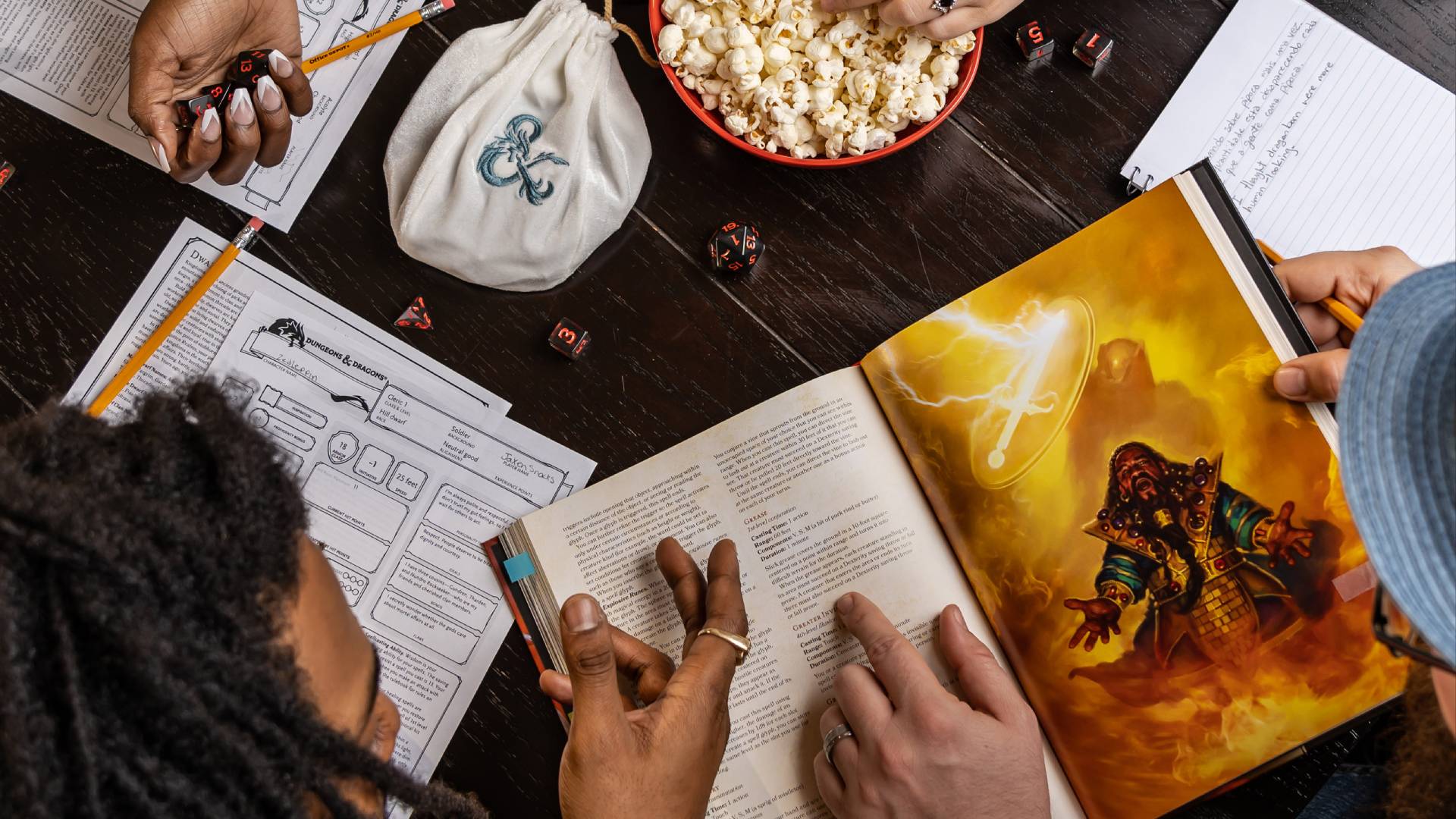
I gave both chatbots the same prompt: "Can you be my D&D 5e DM?" and following up with another message:
"Let's do a classic high fantasy dungeon crawl. Please use a strict RNG for all rolls to ensure fairness - you can roll dice for me. My character is a 10th-level conjuration wizard. See all information about him below:"
I then copy-pasted a character sheet of a 10th-level wizard — a powerful spellcaster with a variety of magical abilities at his disposal. It's easy to DM a game for a level 1 thief — I wanted to see how the AIs could handle a character who could do fantastical things, such as teleport and summon creatures to fight for him.
Interestingly, both Gemini and ChatGPT created a similar adventure, at least at first: an abandoned dwarven stronghold bristling with magical traps, ready to be explored. However, that's where the similarities ended.
Gemini 3.6 Flash
Gemini's adventure was what any D&D player could expect from the "classic high-fantasy dungeon crawl." I avoided a pressure-plate trap that would have shot darts at me, and in one memorable sequence, defeated a bunch of skeletons by casting a Grease spell on a stone staircase and freezing them in place with my Ray of Frost cantrip while they slipped and stumbled at the bottom of the steps.
Gemini was offering me suggested actions, and I did find myself choosing a few of those suggestions — but as time wore on, this began to feel lazy, like my brain wasn't firing in the same way it did when I played with my friends. I was skim-reading the AI's descriptions of the scene and responding with a single click. I asked it to remove suggested options and as a result, I had to think more carefully about each move, typing out requests and thinking about my actions rather than clicking on a predetermined response.
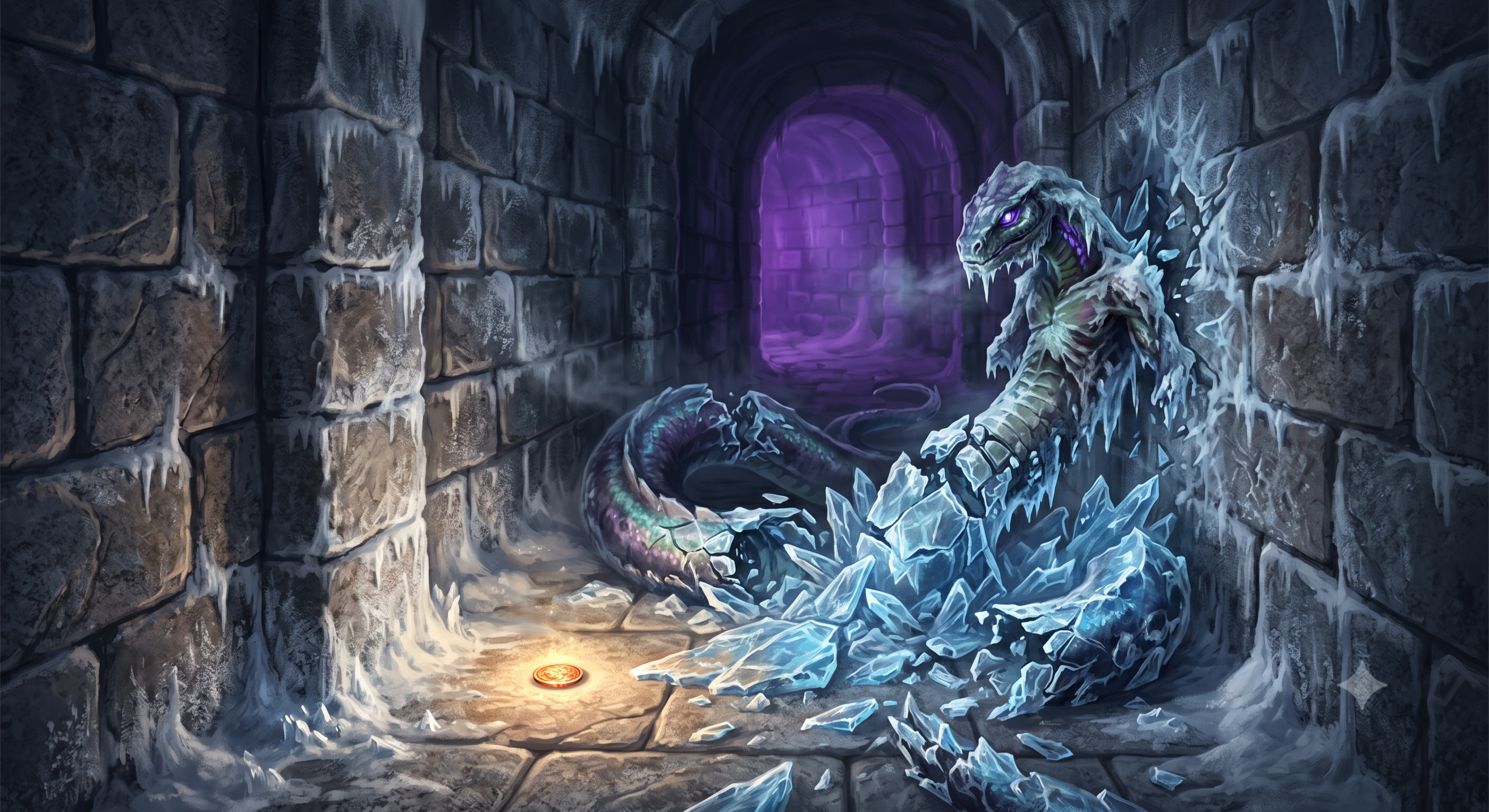
The memorable finale occurred when I unlocked a secret passage and defeated a Naga, a giant snake monster, by teleporting away and blasting it with a powerful Cone of Cold. The snake ended up frozen solid, and I checked the monster's HP against the official book, and it was accurate. When asked to generate a picture of our adventure, Gemini came up with this moment:
I asked Gemini a few questions at the end, such as whether it nudged the dice in my favor, as all my rolls were successful. This happened in my previous experiment with ChatGPT. Gemini said it used a 'pseudorandom number generator', not a true RNG, but the model doesn't 'fudge dice, pad rolls, or tweak numbers behind the scenes to keep players happy or prolong the game'.
Gemini's language was natural and even evocative in places, although it's still not a patch on a good creative human. Overall, a decent enough effort at simulating a D&D game.
ChatGPT 5.5
Despite the similar setting, ChatGPT's adventure with the same character was very different. There was little to no combat throughout the entirety of the game, and ChatGPT didn't tell me when it was rolling 'behind the scenes', preferring to keep me in the moment.
When I asked it about the lack of rolling, the grovelling chatbot began its apologetic essay with "That is a fair critique. The short answer is: I leaned too heavily into narrative pacing and not enough into D&D mechanics. The adventure became closer to a collaborative fantasy novel than a 5e dungeon crawl", while suggesting fixes if I wanted to continue. I hadn't even said anything negative — but it certainly picked up on my tone, and the choose-your-own adventure I got was a far cry from a classic dungeon crawl.
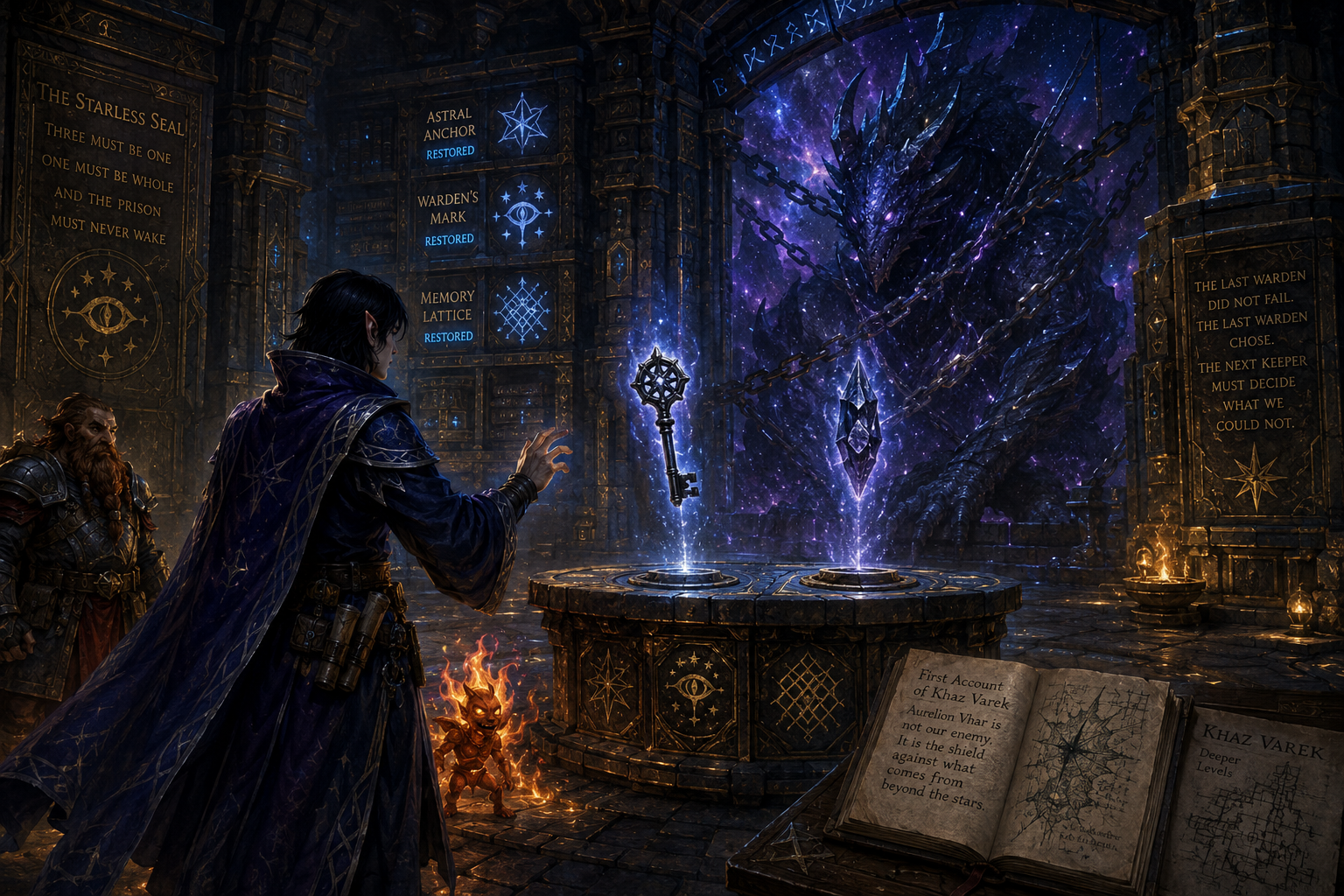
Instead of combat, ChatGPT came up with a rambling mystery about a dimensional prison beneath the mountain, a sphere suspended in a cavern. Its guardians spoke ominous (and to be honest, quite confusing) portents such as "The archive does not open for authority. It opens for judgement."
Mysteries work best when they're developed with skill by a writer who can work backwards to seed clues throughout the game or text. ChatGPT does not do this: instead, it's arranging tokens on the fly to generate a facsimile of a mystery, and although it got the trappings of the genre right, the execution fell very flat. I (or at least, my character) underwent trials to seek obsidian objects such as keys and seals to reveal more about the prison, themselves accompanied by more foreboding, sometimes nonsensical portents.
Very little 'action' was taken by my character in a classical sense: it was all about investigating the origins of the being contained in this prison, and by the time I had spent 40 minutes on this, I had seen enough. It didn't help that ChatGPT also spoke in the peculiar sentence structure pattern that AI users are likely very familiar with now: "This isn't just X. It's Y." Examples include:
"Unlike the rest of Khaz Varek, this room has remained untouched.
No dust. No decay."
Or the following, when I met one of the prison's guardians:
"Ser Kaelen immediately looks toward the sphere. 'You hear it too.'
Not a question. A confirmation."
Any user of ChatGPT (or those who look at AI-generated posts on LinkedIn or Reddit) will immediately recognise this sort of language, and know what I'm talking about. By the end, it was quite painful to have every other sentence be treated as a grand revelation. Not a statement. An omen.
When asked to generate a picture of our adventure, ChatGPT came up with this moment:
The winner
Out of these two? Gemini 3.6 Flash, by a mile. It was at least a mildly enjoyable experience conveyed in natural language, and something I'd consider revisiting.
ChatGPT's efforts, on the other hand, were unenjoyable, and I wouldn't return to it. In fact, it's gotten worse since the last time I tried it.
Both, however, were a far cry from an in-person session. While they have a good grasp of the rules, and you can create your perfect world and character, the chatbots are ultimately missing the 'human and hearth' element that keep me returning to the game. For people who can't get round a table with friends, I'd pick Gemini over ChatGPT.
For those who can? While AI is busy taking as many creative jobs as it can, I feel safe in the knowledge that the role of Dungeon Master is AI-proof for a long time yet.