❌

Reading view

This May Be the Most Damning Single Fact in Tesla’s Quarterly Earnings Report

Tesla’s latest earnings report was very bad news for the company. In the second quarter, it made $1.1 billion in net profit, less than the $1.2 billion it reported a year earlier. Vehicle sales were up, but profits remain about a quarter billion short of expectations, and the automaker’s cash flow is negative for the first time in over two years.

But the real blow has been the slow rollout of its Robotaxi service. Elon Musk has staked his automaker’s future on fully autonomous vehicles, promising investors it would help push Tesla’s valuation to an eyebrow-raising $30 trillion — approximately the gross domestic product of the United States, for perspective.

And importantly, he promised to get this done quickly. Before launching Tesla’s first Robotaxi service in Austin last summer, Musk estimated that over 1,000 of the self-driving cabs would be roaming the streets “within a few months.”

Now, a year later, Tesla doesn’t even have a hundred Robotaxis in operation. And its efforts seem to actually be regressing. According to a new chart the company released Wednesday, the Robotaxi network racked up fewer miles from paying customers in the second quarter than it did in the first.

The chart, which may be the most dismal single aspect of the entire earnings cycle, misleadingly displays this data as cumulative miles to make it appear like the Robotaxi service is steadily growing. 

But TechCrunch broke it down, finding that in the first quarter, Tesla’s driverless cabs carrying paying passengers drove around 1.1 million miles, but fell to just 700,000 miles in the second — cratering by over a third.

The misleading chart isn’t the only way Tesla has tried to dress up its stalling efforts. A day before releasing the earnings report, it announced that it was expanding to two more cities in Florida, Tampa and Orlando — without sharing the size of those fleets, Electrek noted.

It should tell you something that Tesla has gone to great lengths to keep the size of its operation under wraps. In June, Bloomberg reported that its fleet size across all cities was just 59 robotaxis. Only third of those are fully unsupervised; the other vehicles have a human safety monitor sitting in the front seats.

It’s also tried to play up its seemingly spotless safety record. Before the report, the official Tesla account on X bragged that there were “0 notable incidents across over 380,000 miles traveled by Robotaxi.”

But Tesla doesn’t define what a “notable incident” is. Its vehicles have regularly been caught driving erratically and at times dangerously. Only a day after launching in Tampa, one of its Robotaxis was spotted blundering the wrong way down a one way street in the city.

Musk has frequently emphasized that he’s “paranoid about safety” to explain why progress has moved slowly, while at the same time promising to scale things up rapidly. In January he projected that the Robotaxis would cover half the US population by the end of the year.

But investors are running out of patience. Tesla shares plunged by 15 percent on Thursday after the earnings were released, in part due to frustration over the Robotaxis’ laggard progress, and another three percent on Friday.

“More ​is needed to show that Tesla’s capabilities are inflecting” on robotaxis, Barclays analysts said in a note per Reuters, noting that Tesla didn’t provide new expansion targets ​and “hasn’t met previously laid out targets.”

More on Tesla: It’s Looking Like the Cybertruck Is the Biggest Flop in Automotive History

The post This May Be the Most Damning Single Fact in Tesla’s Quarterly Earnings Report appeared first on Futurism.

  •  

It’s Looking Like the Cybertruck Is the Biggest Flop in Automotive History

The Cybertruck is a flop. 

For all of Tesla CEO Elon Musk’s grandiose claims that the pickup would be an “apocalypse-proof” tank capable of winning its driver style points wherever they go, it’s instead earned a reputation for being incredibly unreliable and just about the opposite of “easy on the eyes” — probably because you can imagine the numerous sharp edges that define its low-poly design poking you in them as soon as you see it.

Most unforgivable in the capitalist society Musk champions, it hasn’t sold well. He once estimated that Tesla would sell up to 500,000 Cybertrucks annually, but it hasn’t even come close to that number in the nearly three years since it first started shipping, and at this point it probably won’t in its entire lifetime.

So, yes. It’s a flop. But could it also be the greatest flop in American automotive history?

A new piece from Bloomberg makes the case, comparing the Tesla vehicle to the misfortunes of Ford’s Edsel, which was first introduced in 1957 and discontinued just two years later. After spending years building up hype for the car, Ford predicted selling 200,000 units in its first year, but ended up selling less than a third of that. 

That’s comparable to expectations versus reality of the Cybertruck. In fact, the Cybertruck is actually doing worse in key ways. Tesla’s annual sales target was 250,000 units, but it didn’t even crack 40,000 sales in its first year. And like the Edsel, it’s sold less with each successive year, with barely 7,100 registered in the US in 2026 so far, according to S&P Global Mobility data — despite Musk juicing those figures by selling Cybertrucks to his own companies.

And like the Cybertruck, the Edsel’s unusual design was also widely mocked. The most notorious feature was its vertical grille, which many jokesters compared to a toilet seat. A review in Time magazine sealed its fate by observing that it looked like “an Oldsmobile sucking a lemon.”

“For most people it was just downright ugly,” Don Sherman, a journalist and auto historian, told Bloomberg.

The exterior wasn’t the only weird — and doomed — thing about the Edsel. In it, Ford debuted a new “Teletouch” push-button shift placed in the center of the steering wheel — yep, right where most cars have a horn button. It confused drivers and frequently malfunctioned. 

(And spiritually, it’s hard to ignore, the Teletouch evokes Tesla’s insistence on hiding features that traditionally have physical buttons in a central touch screen.)

The Edsel is generally cited as the American automotive industry’s biggest disaster. But the projected annual sales target compared to actual sales is actually worse for the Cybertruck. It may be time to put a new car on this ignominious throne.

But will Tesla discontinue the Cybertruck the same way Ford dropped the Edsel? Maybe not. The Cybertruck is a point of pride for Musk and has become synonymous with his vision. Garrett Nelson, an equity analyst at CFRA Research, thinks it’s more likely the truck will “fade away.”

“It’s possible that they try to do some sort of redesign, or come up with a different variant to try to boost sales,” Nelson told Bloomberg, “but we think that would really be a futile effort.”

More on Tesla: Tesla Stock in Freefall After Disastrous Earnings Report

The post It’s Looking Like the Cybertruck Is the Biggest Flop in Automotive History appeared first on Futurism.

  •  

Tesla Stock in Freefall After Disastrous Earnings Report

Shares of Elon Musk’s embattled carmaker Tesla slid over 13 percent Thursday morning after posting dismal second quarter results the night before.

The stock is hovering at around $324 at the time of writing, down over 15 percent over the last five days and about 28 percent year to date.

The company missed Wall Street expectations, despite its core automotive segment generating just over $20 billion in revenue, up 23 percent from a year ago. However, the company’s gross profits dropped as operating expenses climbed far quicker than revenue, in large part thanks to AI-related capital expenses and other research and development — an intimately familiar refrain for the tech world in 2026.

In other words, investors are growing increasingly wary of Musk’s reinvention of his car business. The almost-trillionaire is trying to shift the company’s focus from selling cars to robotaxis, a humanoid robot called Optimus, and AI — a series of major undertakings that’re clearly weighing it down financially after multiple quarters of major losses.

Worse yet, Tesla’s woes are clearly having knock-on effects on his rocket company as well. SpaceX’s stock has had a bruising month since hitting an all-time high after going public in mid-June. An aborted Starship test launch and Musk’s dubious plan for orbital data centers have investors betting against the company in incredible numbers.

During Wednesday’s earnings call, the company claimed that production of its Optimus humanoid robot remains on track, but didn’t elaborate beyond promising that production is starting “soon.”

“This is going to be the hardest product to scale manufacturing that we’ve ever made at Tesla, because everything on the robot is new,” Musk said.

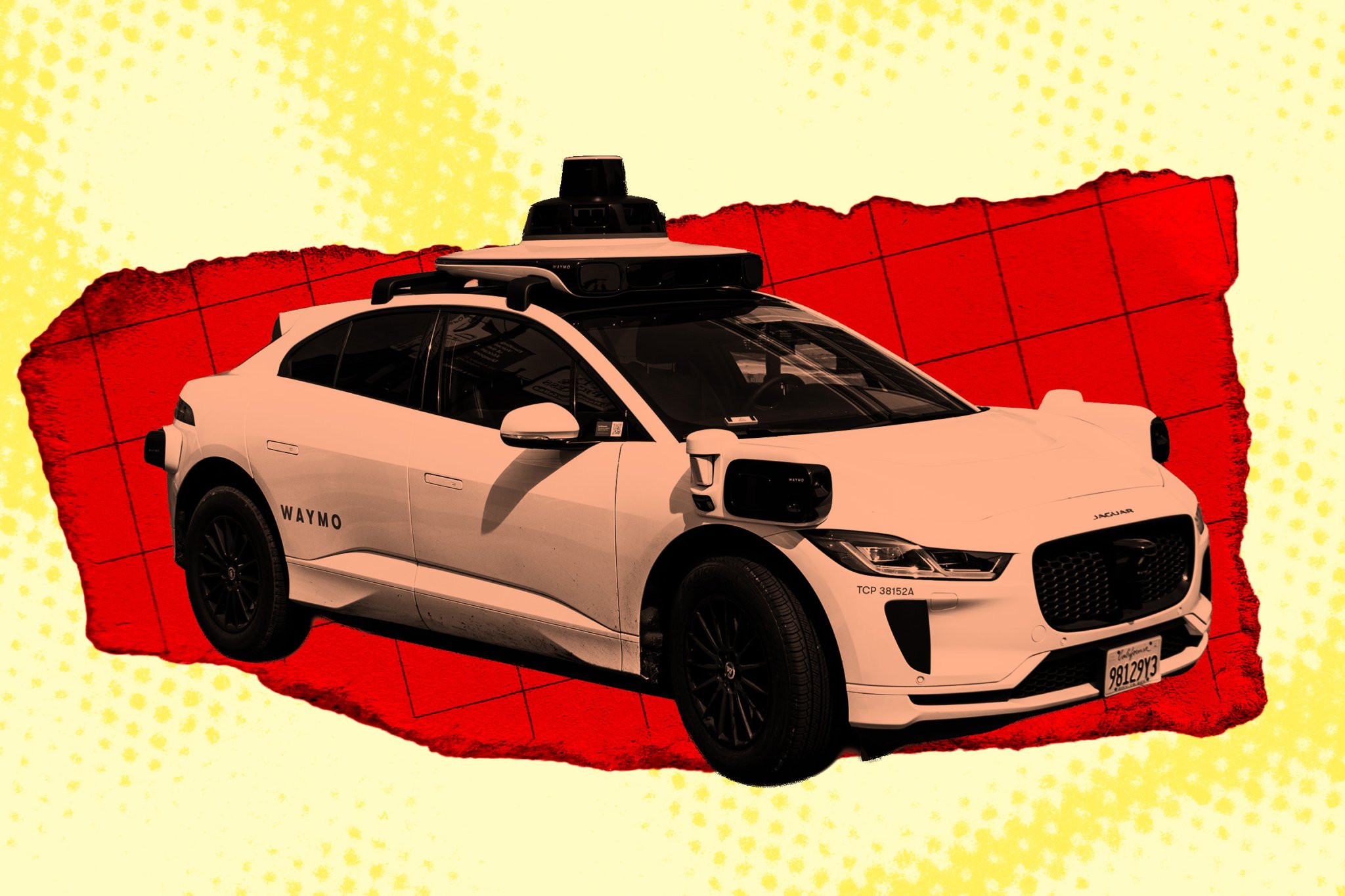
Tesla’s robotaxi service is also being rolled out to six major metropolitan areas across the country, but continues to lag far behind its key competitor, Alphabet’s Waymo.

Despite slightly more optimistic vehicle sales numbers, the company continues to burn through billions of dollars to keep all of those new plates spinning.

The elephant in the room during this week’s call was the long-rumored possibility of Musk merging Tesla and SpaceX — a doubling down on his portfolio that could set up some of the most unbelievable financial drama in economic history.

The mercurial entrepreneur didn’t rule out the possibility, saying that “we can’t talk about combining companies on an earnings call.”

“It’s got to be done with the appropriate process,” he added.

More on Musk: Elon Musk Says His Goal Is for SpaceX to Be Worth More Than the Entire Earth

The post Tesla Stock in Freefall After Disastrous Earnings Report appeared first on Futurism.

  •  

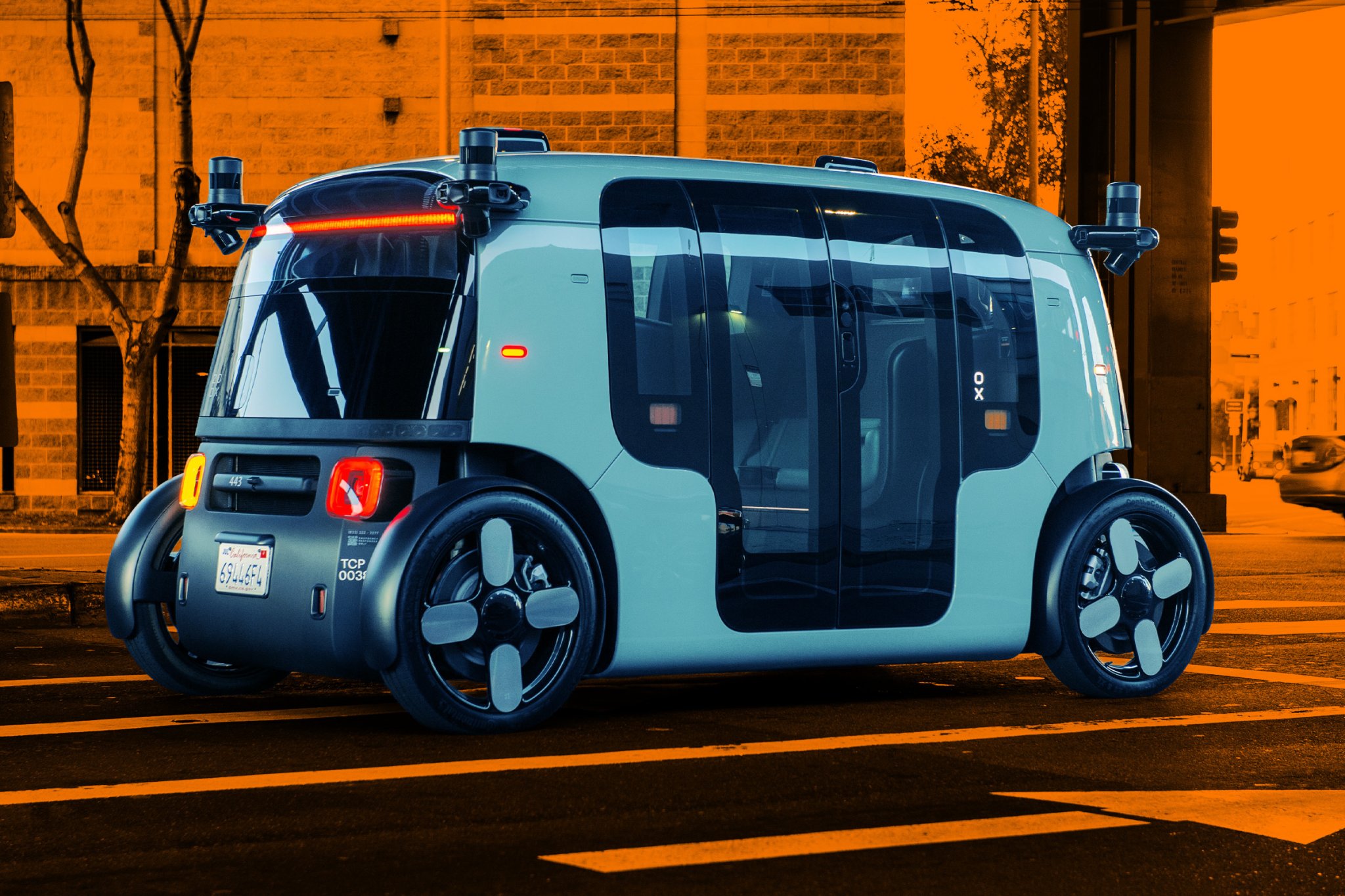
Amazon’s Robotaxi Company Recalls Its Fleet After One of its Cars Got Confused by Heavy Smoke

Zoox, the Amazon-owned robotaxi company, issued a recall after one of its self-driving cars blundered into a cloud of heavy smoke near a fire scene that emergency workers were responding to, and became confused.

The recall, in the form of a software update, will affect its entire fleet of 105 autonomous robotaxis. 

The patch “enhances the existing capability of detecting active [emergency] scenes by adding the ability to detect and respond to heavy smoke in certain situations,” Zoox told TechCrunch in a statement.

While you wouldn’t be remiss for thinking this was related to the wildfire smoke covering much of the eastern US right now, the recall highlights how self-driving cars still struggle to respond to unpredictable conditions.

In a report filed with the National Highway Traffic Safety Administration, Zoox said that during the June 20 incident, one of its robotaxis “encountered heavy smoke that obscured an active emergency fire scene that was not cordoned off with cones.”

Though it should have avoided the smoke cloud, the vehicle, which wasn’t carrying any passengers, “braked hard while attempting to steer away before coming to a stop,” the company added. Eventually, a teleoperator intervened and helped reverse the robotaxi away from the scene, allowing first responders to place traffic cones to block off two of the three lanes. CNBC reported that the incident occurred in Las Vegas, where Zoox is currently offering free rides.

It’s not the first time robotaxi companies have landed in hot water for impeding emergency responders. 

San Francisco Police were forced to help move immobilized Waymo robotaxis that piled up in roadways in intersections during a city-wide power outage last year. Emergency responders complained they’d become glorified “roadside assistance” for the vehicles. In March, a Waymo robotaxi blocked an ambulance from responding to the scene of a deadly mass shooting in Austin, Texas.

These mounting incidents led NHTSA administrator Jonathan Morrison to send a strongly-worded letter to robotaxi companies, calling their cars’ interference with emergency responders “unacceptable.”

“Let me be clear: the inability to detect and appropriately respond to such situations represents a functional insufficiency,” he wrote. “Emergency scenes are not rare or extreme ‘edge cases.'”

“To state it bluntly: an AV that cannot safely interact with first responders is a danger to the general public,” he added.

More on robotaxis: Robotaxis Are Turning Passengers Into Horrible and Entitled Menaces to Society

The post Amazon’s Robotaxi Company Recalls Its Fleet After One of its Cars Got Confused by Heavy Smoke appeared first on Futurism.

  •  

Robotaxis Are Turning Passengers Into Horrible and Entitled Menaces to Society

Robotaxis are multiplying across the US, and as they do, a not-so-flattering pattern is riding shotgun. Not only do robotaxi companies themselves put a significant strain on public resources, they’re training the public to act just as entitled as they are.

As a recent article by Bloomberg points out, riders hopping into driverless cabs from Waymo, Tesla, and Zoox are treating driverless trips as a license to unwind.

With no human behind the wheel, riders feel like they have no social contract to follow. As a result, they’re turning robotaxis into trash cans, leaving behind spilled drinks, food scraps, and in some cases, bodily fluids like vomit for the next unlucky sap.

Granted, it’s probably easier said than done to clean a mess from a robocab once it’s been made: as one unfortunate Waymo rider discovered in May, the vehicles will sometimes speed off within seconds of dropping you off, even if you have bags in the trunk.

Others are using their robotaxi rides as roving sleep pods. It’s tough to say how common this particular behavior is, but Bloomberg notes that first responders in Austin, Texas got so many calls about dozing riders during Waymo’s first nine months in the city that they had to invent a new category just for “sleepers.”

Elsewhere, people are treating their self-driving cars more like party buses. In April, a Tesla driver was arrested after police found him passed out behind the self-driving wheel, having polished off a buffet of wine coolers and pizza before dozing off.

Sure, none of this will really affect you unless robotaxis are part of your daily commute. But as discussion around the robotaxi’s broader impact on society grows more urgent, it’s worth noting that hailing one seems to put you in a league with some of the worst riders currently in the game.

More on robotaxis: Drivers Trapped for Hours in Hopeless Gridlock as Waymos Brick on Major Holiday

The post Robotaxis Are Turning Passengers Into Horrible and Entitled Menaces to Society appeared first on Futurism.

  •  

Man Sucked Out of Airplane, Dangles by Seatbelt

It pays to buckle up.

A passenger on Ryanair — because of course — had his insistence on keeping his seat belt fastened abruptly validated when the window next to him suddenly “detached” and sucked the bulk of his body out of the plane.

Witnesses told Agence France-Presse that the man, a tourist from Serbia en route from Thessaloniki in Greece to Memmingen in Germany, had to be pulled in by the other passengers. Yes, several of them.

“Most of us had fallen asleep, we had closed our eyes. There was a noise, like a tyre bursting,” one of them told Radio Thessaloniki, per AFP. “We immediately realized there had been a decompression. There were screams… for a moment I thought someone had accidentally opened the emergency door.”

“The masks dropped and there was a strong smell,” she added. “The head and shoulders of one passenger were outside the window. Fortunately, he hadn’t taken off his seat belt.”

Per AFP, Greek media reported that the window was broken by a piece of debris that came off one of the plane’s engines, causing the cabin to decompress. 

Ryanair in a statement described the incident anticlimactically. The plane “returned to Thessaloniki shortly after take-off when a passenger window detached during the flight. The aircraft landed normally and the passengers returned to the terminal.” An apology would’ve been nice, maybe.

Nearly getting airplane-keelhauled by the wind gods could take quite the toll physically and mentally. The man was hospitalized with friction burns, but thankfully authorities said he was in good condition otherwise.

You may remember a similar incident occurred over two years ago, when the door panel on an Alaska Airlines flight suddenly blew out midair, causing a massive scandal for the plane’s manufacturer Boeing. That plane was a Boeing 737 MAX 9; the Ryanair one was a 737 NG.

More on transportation: America Trembles as Transportation Secretary Announces Plans for Air Traffic Controllers to Lean on AI Tools

The post Man Sucked Out of Airplane, Dangles by Seatbelt appeared first on Futurism.

  •  

New Jersey Poised to Ban Self-Driving Tesla Robotaxis

For many years, Tesla CEO Elon Musk has sworn up and down that the use of radar and lidar sensors for autonomous driving is a waste of time.

His counterargument has been that cameras and powerful AI-powered hardware are all you need for safe self-driving, despite plenty of evidence to the contrary.

That decision is now risking a major roadblocks for the company in New Jersey. As The Verge reports, a bill that’s coming up for a vote this year would require fully autonomous vehicles to use both cameras and at least two other sensing technologies — in most cases, lidar and radar.

If the bill were enacted, it would effectively banning Tesla’s fully autonomous fleet of Robotaxis. Other states could soon follow — including New York, which is pondering a similar bill — in a domino effect that could completely derail the automaker’s current trajectory.

“This is not anti-Tesla,” bill sponsor and senator Andrew Zwicker (D-NJ) told The Verge. “I’m pro-New Jersey safety.”

Zwicker argued that there isn’t enough evidence to suggest that a single sensor, plus software “can handle situations that humans can.”

“Can we get there? Maybe,” he told the publication. “But we’re not there yet.”

Relying entirely on cameras that can be blinded by the Sun, fog, or heavy rain is part of Musk’s major bet on AI. He has argued that adding extra sensors may end up being less safe thanks to what he called “sensor contention” in a tweet last year.

“We turned off the radars in Teslas to increase safety,” he wrote. “Cameras [for the win].”

However, Musk is largely alone in that belief. Competitors, most notably Waymo, have made major headway by relying on both cameras and other sensor tech, such as lidar and radar, which perform far better in inclement weather and the dark.

“To run 24/7 across the majority of public roads in New Jersey today, it needs lidar,” Carnegie Mellon professor and autonomous vehicle expert Philip Koopman told The Verge. “It’s pretty clear that today camera-only technology is not up to the challenge.”

Tesla’s current fleet of 42 fully autonomous Robotaxis on public Texas roads is still dwarfed by Waymo’s, which has 577 authorized robotaxis in the state, in addition to several thousand more spread across ten US metropolitan areas.

That’s despite Musk promising Tesla’s fleet would grow to hundreds of thousands by the end of this year, a characteristically brazen prediction with little bearing on reality.

The company’s slow rollout has been mired by setbacks, which Musk has rationalized is the result of Tesla being “paranoid about safety.” The EV maker has gone to great lengths to censor the circumstances surrounding the Robotaxi crashes it has reported to regulators so far.

Unsurprisingly, Tesla is already lobbying to fight the New Jersey bill. Zwicker told The Verge that company representatives are discussing the subject with lawmakers.

The EV maker has also turned to New Jersey residents, telling its customers in the state in a message that they should “contact members of the New Jersey legislature” to oppose the bill.

It’s a precarious situation, especially considering the complete lack of comprehensive federal laws providing oversight over the rollout of autonomous vehicles. Each state has been left to fend for itself, a legal patchwork that’s allowing Tesla to push forward despite safety concerns.

More on Tesla’s robotaxis: Tesla’s Robotaxis Are a Complete Disaster

The post New Jersey Poised to Ban Self-Driving Tesla Robotaxis appeared first on Futurism.

  •  
❌