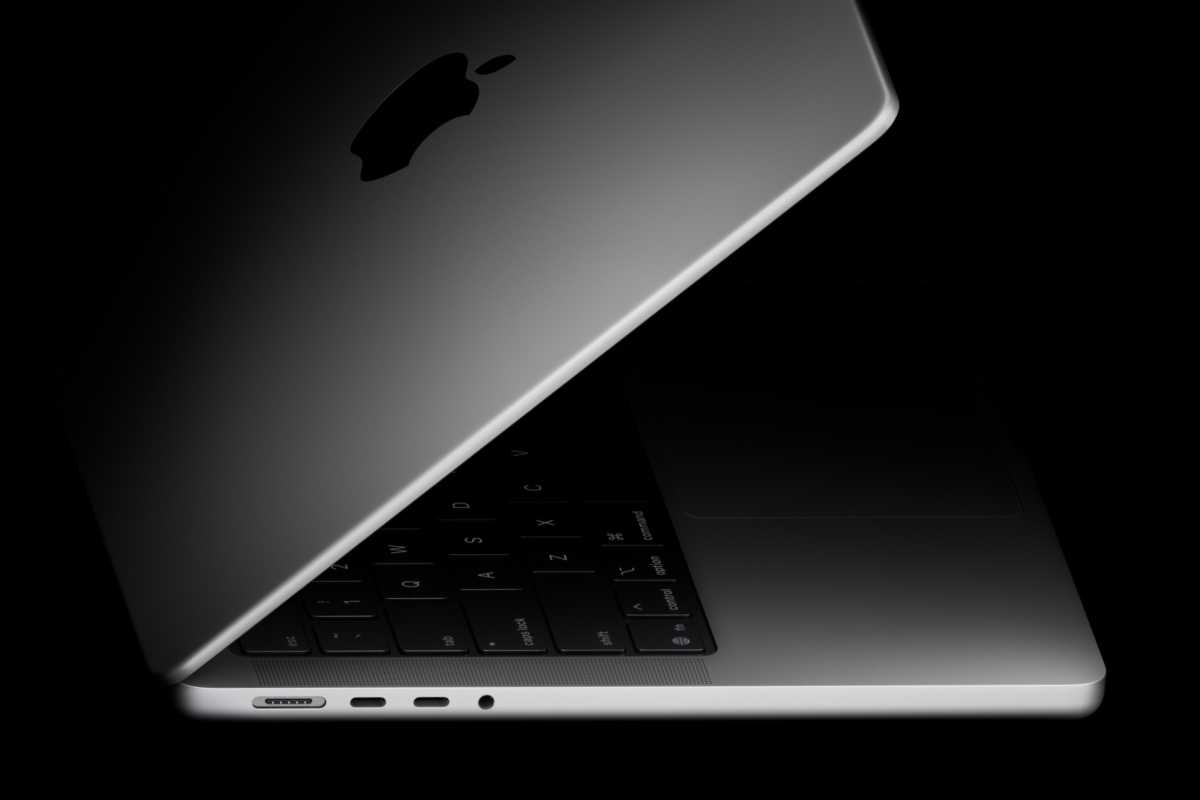
Ziemlich genau ein Jahr nach dem Start in den USA kommt Apple Care One auch nach Deutschland. Für eine Monatsgebühr von 20,99 Euro kann man damit drei Apple-Geräte versichern; gegen Diebstahl sind nun auch iPad und Apple Watch abgesichert. Das Angebot startet am 4. August.
Bisher zahlte man für jede Apple-Care-Versicherung bei Apple einzeln. Neu gekaufte Geräte konnte man direkt beim Kauf oder bis zu 60 Tage danach in die Garantieverlängerung aufnehmen. Kunden von Apple Care+ (Einzelgeräte) und Apple Care One (drei oder gegen Aufpreis von 5,99 Euro je Gerät auch mehr) erhalten neben der verlängerten Garantie schnellere und vergünstigte Reparaturen bei unabsichtlichen Beschädigungen, vorrangigen Support von Apples Experten und gratis Austausch von Batterien, sofern deren Gesundheitszustand unter 80 Prozent liegt.
Bisher war von Apple Care nur das iPhone gegen Diebstahl geschützt, jetzt gilt der Schutz vor Langfingern auch für iPad und Apple Watch. Macs sind weiterhin nicht gegen Entwenden versicherbar.
In bestehende Apple-Care-Verträge kann die Kundschaft ab dem 4. August vom iPhone oder Mac aus den Einstellungen heraus weitere Geräte in die Option Apple Care One aufnehmen. Dazu müssen sie jedoch in einem guten Zustand sein und dürfen nicht älter sein als vier Jahre.
Kunden von Apple Care One können verkaufte oder innerhalb der Familie weitergegebene Geräte selbst aus dem Bundle entfernen, um wieder neue hinzufügen zu können. Gibt man bei Apple ältere Geräte beim Neukauf in Zahlung, erfolgt der Austausch in der Police automatisch. Apple Care One gilt nur für Geräte, die an den gleichen Apple Account gekoppelt sind. Die Police auf Geräte anderer Familienmitglieder aufzuteilen, geht nicht.
Die Preise für Apple Care+ hängen vom Gerät ab: Für das iPhone 17e zahlt man inklusive Schutz vor Diebstahl und Verlust 9,99 Euro im Monat, für die Spitzenmodelle wie iPhone Air oder iPhone 17 Pro werden 14,99 Euro im Monat fällig. Für die Absicherung des Macbook Air verlangt Apple 84,99 Euro im Jahr oder einmalig 235 Euro für drei Jahre. Wer Apple Care One statt dreier Einzelverträge bucht, spart laut Apple 13,48 Euro im Monat. Erst am 15. Juli hatte Apple die Preise für Apple Care+ erhöht, die Flatrate für drei Geräte kommt gerade recht.
You could be sitting on a treasure trove of fantastic iPhone, iPad, Mac, and Apple TV games and not even know it.
Apple Arcade might be one of the most underrated gaming services on the market right now, with many Apple One subscribers not even realizing that it is included in all tiers of the service. You can also subscribe to it separately and you could even be able to access a generous free trial right now if you're reading this on a shiny new Apple device.
But what exactly is Apple Arcade, how much does it cost, what kind of games can you play on it, and, perhaps most importantly, are any of them actually good? I've spent the last week really sinking my teeth into the service in order to find out and deliver this ultimate guide to everything that you need know.
From all the basic facts to a bumper list of my personal game recommendations and even a personality quiz to match you to titles that you might like, everything here is intended to help you walk away an expert in all things Apple gaming.
I've spent the last week really getting to grips with the Apple Arcade service, trying out all of the available games and experimenting with its major features.
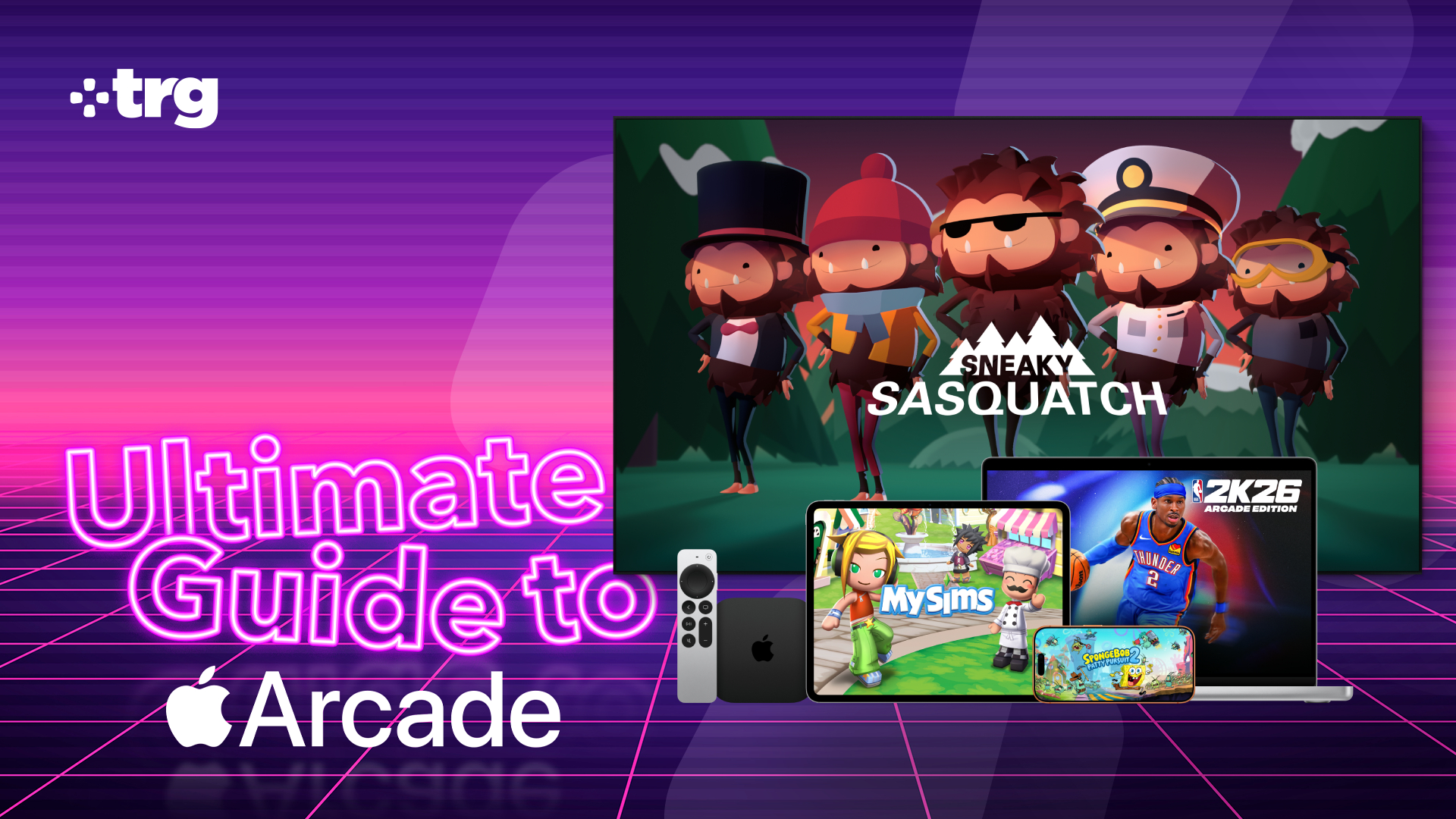
Ultimate Guide to Apple Arcade
(Image credit: Apple / Future)
This article is part of our Ultimate Guide to Apple Arcade: the definitive guide to everything that you need to know about the gaming service. Be sure to browse the full series here.
The experience has been great so far, thanks to the many console-quality games out on the platform. I'm talking titles like Sonic Dream Team, Hello Kitty Island Adventure, Cult of the Lamb, Fantasian, and so much more.
Although they're all perfectly playable with touch controls, loads of Apple Arcade games (including all of the aforementioned titles) offer full controller support. Hooking up a compatible gamepad is the perfect way to get an even more console-like experience, and really recommend getting your hands on one if you want to make the absolute best and most comfortable playing sessions.
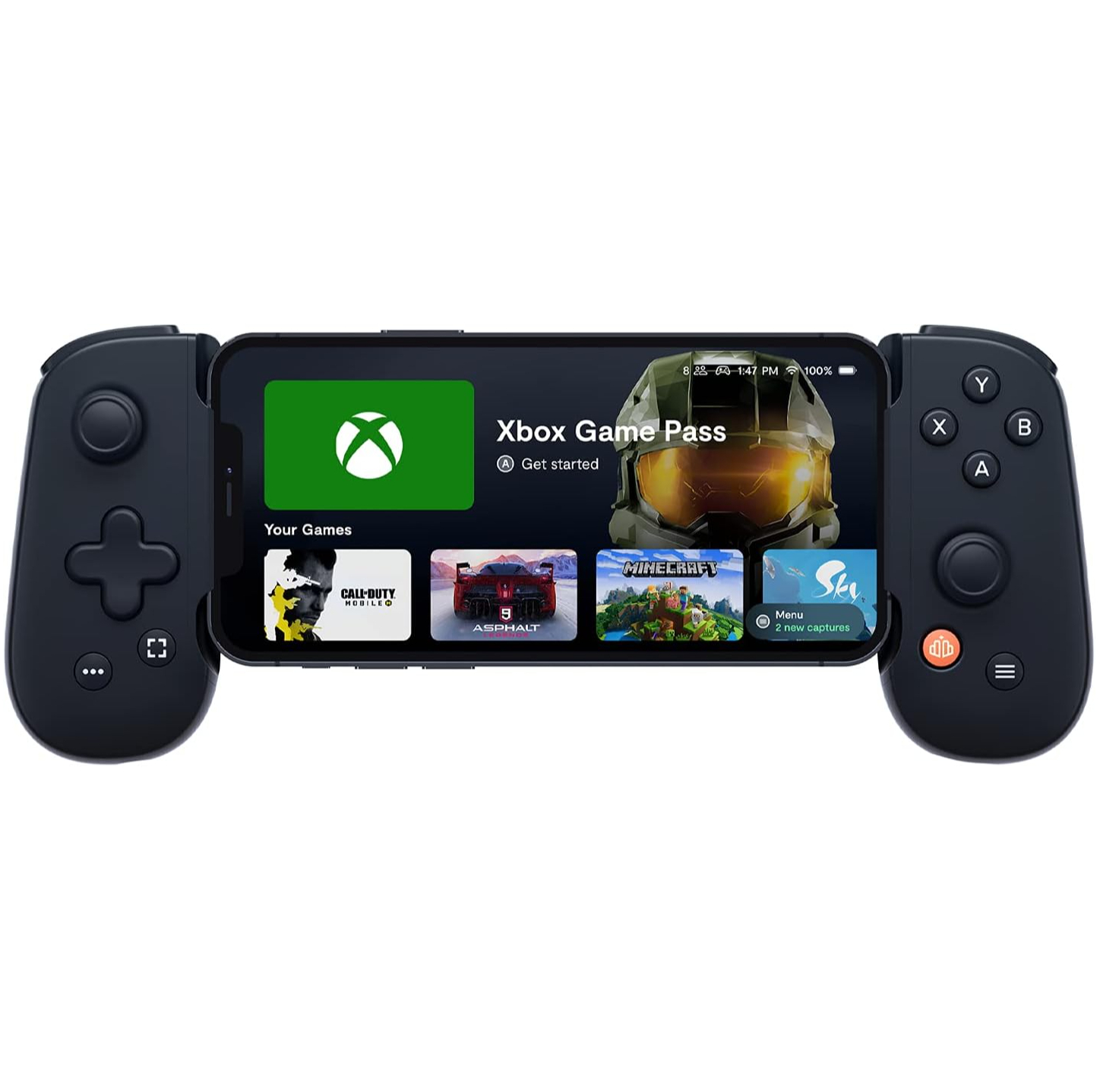
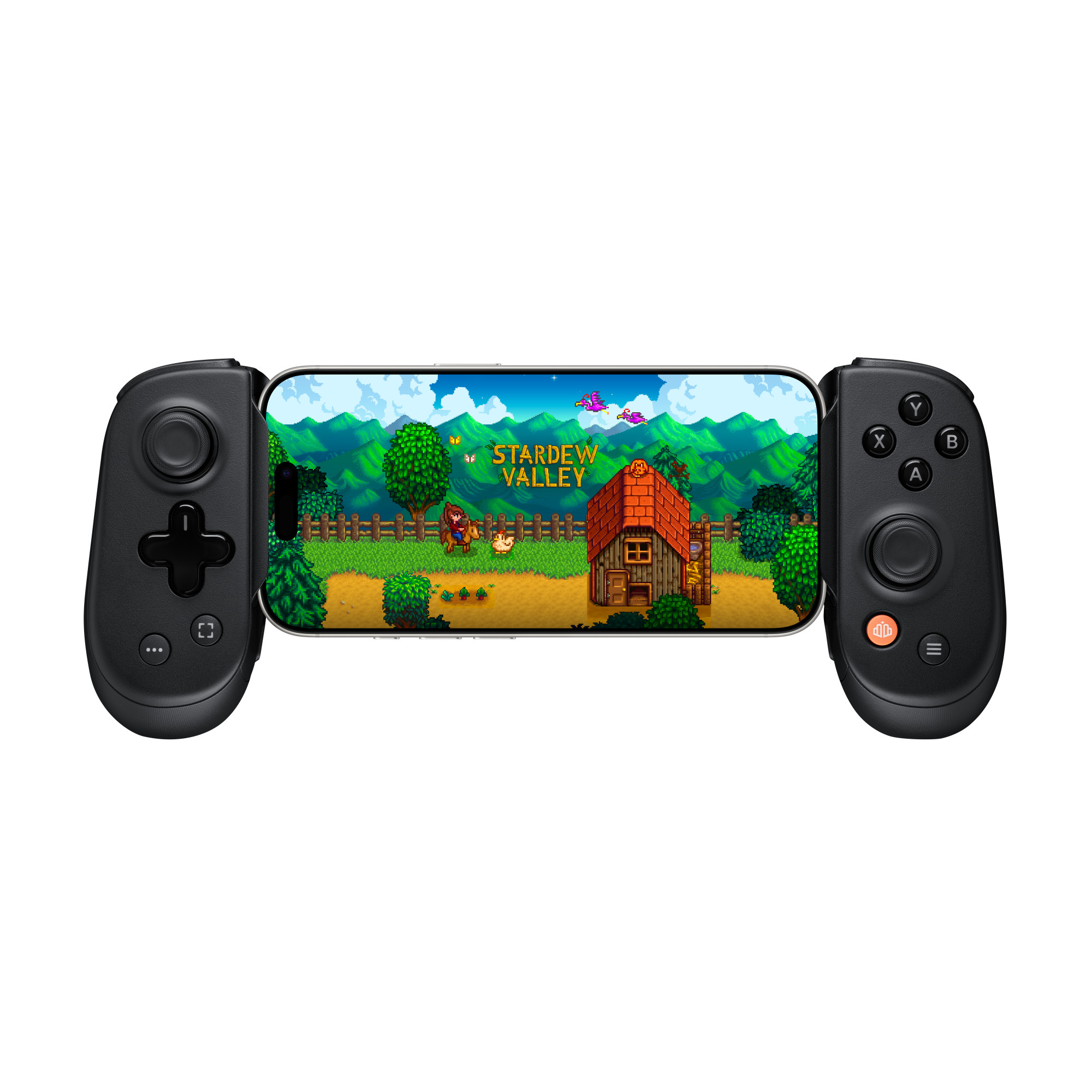
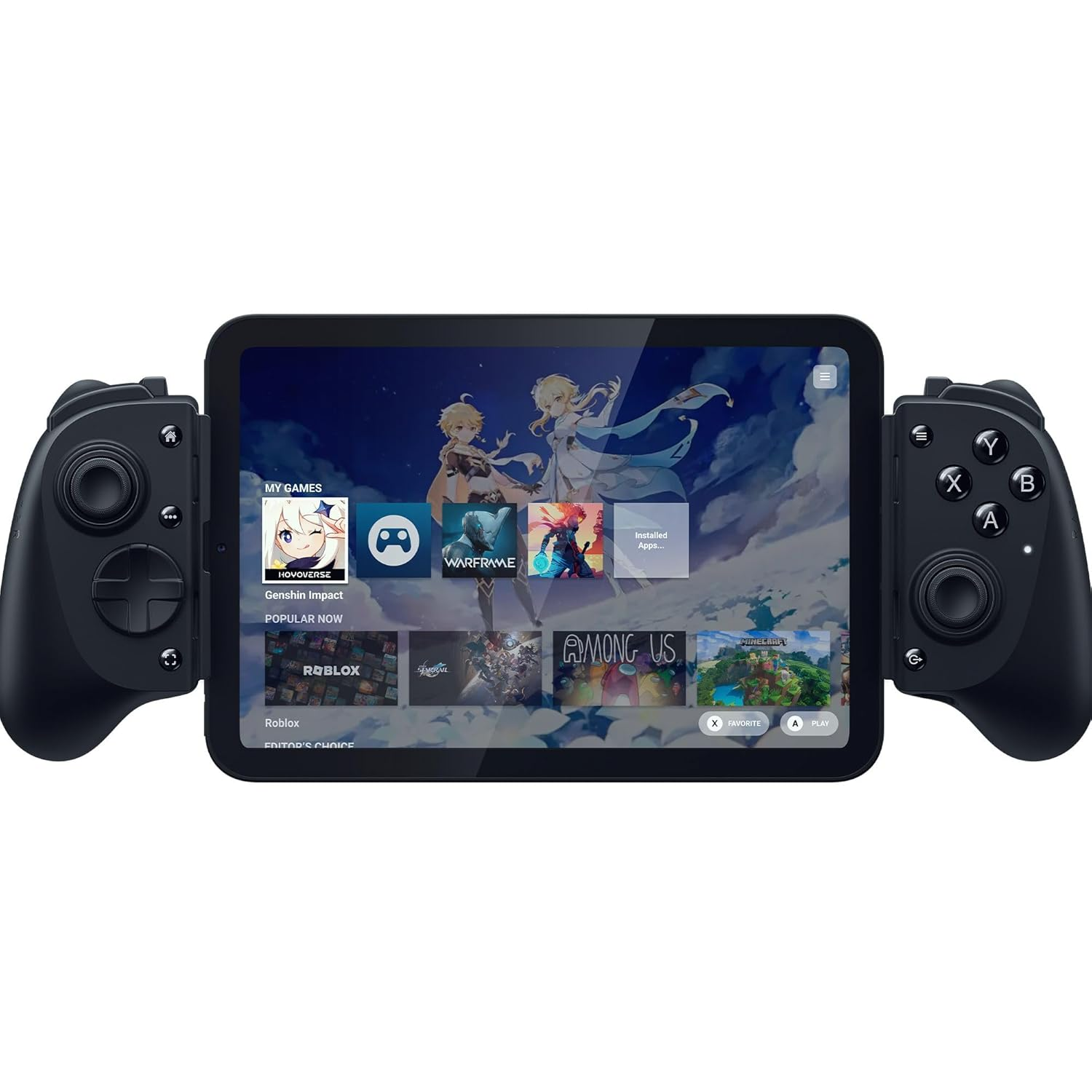
For iPhone players, I would recommend three of the best mobile controllers on the market today: the Backbone One, Backbone Pro, and Razer Kishi V3 Pro. They're all formidable choices, though each has its own distinct advantages. The Backbone One, for example, is the most portable and cheapest of the three, while the Pro and Kishi V3 Pro are more comfortable and have better software features. I've also included the GameSir G8 Plus Galileo as a worthy budget alternative, though it doesn't offer quite as seamless an experience as the others.
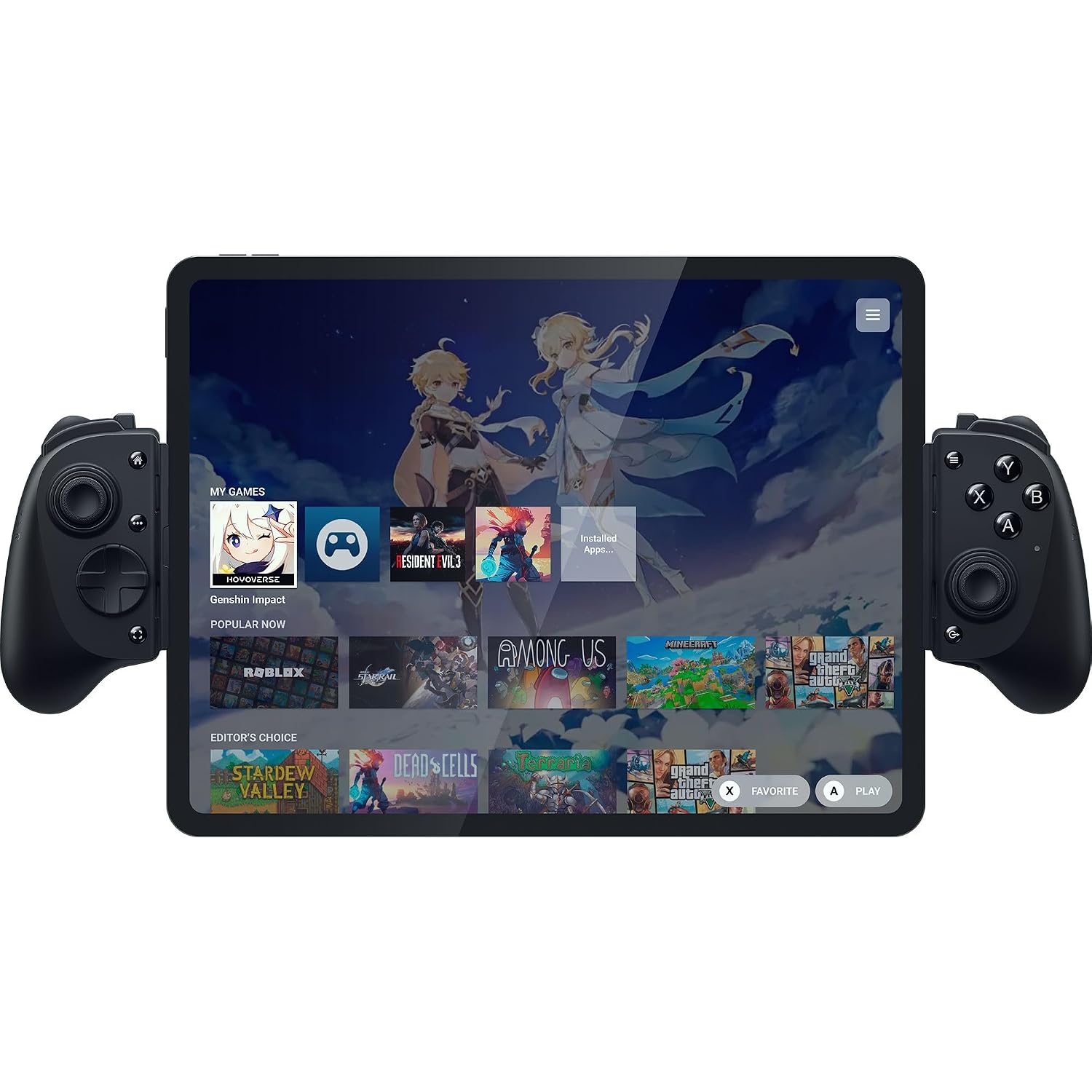
For iPad gamers, the Razer Kishi V3 Pro XL is one of the few options that's compatible with massive tablets. It can even fit the truly huge 13-inch iPad Air and Pro models.
Whether you're a die-hard mobile gamer or a newcomer to the world of portable play, Apple Arcade will likely have something for you.
Ultimate Guide to Apple Arcade
(Image credit: Apple / Future)
This article is part of our Ultimate Guide to Apple Arcade: the definitive guide to everything that you need to know about the gaming service. Be sure to browse the full series here.
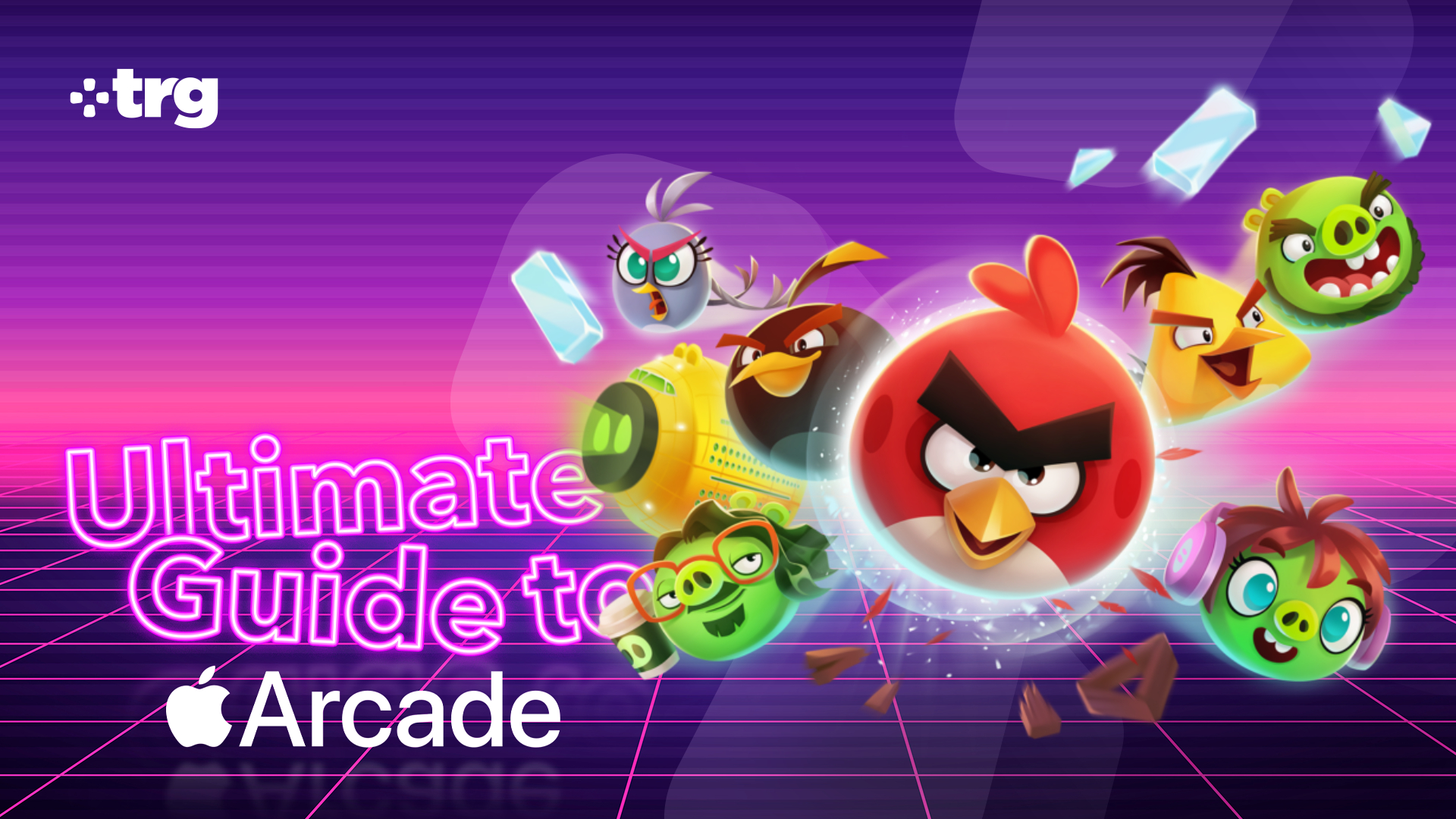
The subscription service gives you access to hundreds of games for your iPhone, iPad, Mac, or Apple TV, ranging from revamped mobile classics including Angry Birds Reloaded and Doodle Jump 2+ to original and exclusive games in massive franchises such as Sonic the Hedgehog with Sonic Dream Team. All of the included titles have absolutely zero ads and no microtransactions, meaning that they offer a more premium, console-like experience than you would get with many other App Store titles.
Most Apple phones now come with a free three-month subscription to the service, giving you the perfect opportunity to take your shiny new hardware for a whirl. Even if you're using an older device, there's still a one-week free trial that new subscribers can take advantage of, in order to see what the service offers and work out whether it's a good fit for them.
The only problem? With so many titles on offer it can be hard to know where to start, even if you're already a subscriber. That's why I've created this short personality quiz, which is designed to find out what kind of gamer you are and deliver a selection of recommendations. The recommended games have been personally tested by me, and are what I believe should suit your taste.
Did you find this quiz useful, or do you think I missed the mark with my picks? Let me know in the comments, and don't hesitate to drop your own game recommendations if you have them!
It's been a huge week for me here at TechRadar. I managed to convince my boss that it was a good idea for me to sit at my desk for five whole days and play all 200+ games available as part of the Apple Arcade service on my phone.
Ultimate Guide to Apple Arcade
(Image credit: Apple / Future)
This article is part of our Ultimate Guide to Apple Arcade: the definitive guide to everything that you need to know about the gaming service. Be sure to browse the full series here.
If it sounds like a ridiculous idea, that's because it really is. Honestly, in my rush to get paid to play some games on my phone, I don't think I actually considered just how long the task would take. That became painfully apparent when I actually started on Monday, and the fact that I was about to spend hours and hours flicking through apps set in.
Still, I managed it — even if the quest ended up sapping up all of my free time. I spent entire evenings lying on the sofa planting crops in Stardew Valley+, whole meals with one finger guiding an escaping explorer in Temple Run Legends, and my hour commute with both eyes glued to Suika Game+ . If I had just one hand free at any given time this week, I was using it to play an Apple Arcade game. Thankfully, I didn't have to drive anywhere.
Now, to be clear, I didn't spend an equal amount of time in all of them. It's easy to sink a few hours into the pixel survival action of Vampire Survivors+, for example, but literal torture to do the same in Play-Doh World (which is basically just a sensory experience for toddlers).
Still, I can now say with confidence which ones are truly worth getting into and, while the following eight picks are by no means an exhaustive list of everything worth playing on the service (just look at the honorable mentions for even more greats), they are the games I've had the most fun with so far and will coming back to time and time again in the weeks and months to come.
Top eight
8. Squiggle drop
Squiggle Drop is one of the biggest surprises I've had while exploring Apple Arcade. It's an easy-to-understand puzzler that has you drawing shapes to complete different objectives and, with basic graphics and a spartan interface, looks like a pretty simple game.
That simplicity is one of its biggest strengths, however. The controls are eminently approachable; just drag your fingers around the screen to draw, and all of the levels have multiple solutions that reward creativity and mean that you never feel like you're truly at a loose end.
There's loads of variety to boot. One mission could have you drawing a container to save a birthday cake from the rain, while another might require a more complex creation to catch an underwater fish.
With more than 250 puzzles (some of which are pretty darn difficult), rotating daily challenges, a raft of achievements to obtain, and even an in-game town that you build as you progress, it's the perfect game to pick up and play when you get a few spare moments in an otherwise busy day.
7. Lego Star Wars: Castaways
(Image credit: Gameloft)
Lego Star Wars: Castaways is yet more proof that you should never judge a book by its cover (or, I guess, an app by its icon art). What I thought was going to be a generic kids' game turned out to be a really approachable and quite charming MMO.
You create a custom Star Wars hero and drop into a shared hub world that you can explore while surrounded by other real players, before dropping into iconic locations from the movies (explained in-game as a training simulation) to battle waves of Stormtroopers, Tusken Raiders, Battle Droids, and fearsome bosses like Darth Vader either solo or with up to three friends.
There are four character classes to unlock, focusing on ranged laser blaster combat, powerful force skills, team support, and stealth, and they all have meaty upgrade trees in addition to a range of distinct weapons to try. Character customization is also strong, and you can unlock loads of different hats and outfits using currency you obtain by completing quests and missions.
I had a lovely time with it as an adult, but there are some smart safety features that make this a great pick for children as well. Your character name, for example, is chosen from a random selection of suitably Star Wars-sounding words (I foolishly flicked past 'Jar-Jar Skywalker' when it popped up as an option) and numbers. There's also no direct text or voice chat function, though you can communicate through a small selection of emotes.
6. Angry Birds Reloaded
(Image credit: Rovio)
Angry Birds is a game that needs no introduction. This legendary early App Store sensation spawned countless sequels, spinoffs, theme park rides, a TV show, and even two popular animated films with a third set to release later this year.
Reloaded is basically the definitive Angry Birds game, bringing together the levels from the classic Angry Birds and its sequels Angry Birds Seasons,Angry Birds Space, and Angry Birds Stella (the latter two aren't even available on the App Store in their original forms anymore, making this the only way to officially play them) in addition to loads of new ones.
It offers the classic bird-slinging action that made the series so popular, now spruced up with shiny new graphics that look lovely even blown up on a big screen. All of the new content means that it's a joy to dip into even if, like me, you completed all of these games back in the day.
For newcomers, it's the absolute best that the series has ever been, with the best-looking graphics, all the greatest levels, and absolutely no ad interruptions. Get it downloaded, and find out why it was such a hit.
Top five
5. Disney Dreamlight Valley Arcade Edition
(Image credit: Gameloft)
If after a busy day you just want to kick back and escape to a fantasy world, then Disney Dreamlight Valley is for you. This life simulator thrusts you into a magical town filled with iconic Disney characters that has fallen into disarray. A mysterious malevolent force is taking over in the form of dark roots that sap away memories, and it's up to you to get rid of them all and restore everything to its former glory.
From relaxing farming to designing your own cute cottage and customizing your outfits, everything here seems designed to bring nothing but the most chill vibes. There's a good sense of progression as new areas are steadily unlocked while you play, bringing the worlds of new Disney franchises into the mix.
On that note, it's hard to overstate the joy of interacting with some of the company's best characters. I've never been a massive fan of Mickey Mouse, Donald Duck, or Goofy, but even I can't stop myself from smiling when I unlock childhood favorites like Ratatouille's Remy, Wall-E's Eve, or Peter Pan's Tinker Bell.
Although you can pick up Dreamlight Valley on other platforms, the Arcade Edition comes packed with all of the latest free updates and access to the biggest paid expansions at no extra cost. It looks great and controls well on a phone, too.
4. Sid Meier' Civilization 7 Arcade Edition
The Arcade Edition of Sid Meier's Civilization 7 is the real deal, bringing all the strategic brilliance of the latest Civilization game to mobile with few real compromises aside from some missing DLC.
If you're unfamiliar with the franchise, it tasks you with building and governing a historical society from the ground up in a randomly generated world. You build cities, conquer territory, develop new technology, and interact with other competing societies. Whether you form trade alliances and live peacefully alongside your neighbours or wage war is entirely up to you.
Unlike past games, Civilization 7 added the ability for your empire to evolve, giving you the choice to swap between different cultures for unique bonuses, special buildings, or exclusive units.
The level of depth here is simply unparalleled in the mobile space, and as games can take tens of hours at a time, it's great to be able to take it all on the go.
Top three
3. Taiko no Tatsujin Pop Tap Beat
(Image credit: Bandai Namco)
Taiko no Tatsujin is a name you'll recognize if you've even been to an arcade in Japan. It's a simple but addictive rhythm game all about hitting a big drum in time with the beat, a gameplay perfectly suited for a touchscreen.
Tap either side of the on-screen drum in time with the blue icons or either side of the middle for the red ones, with bigger notes needing both sides at once. It starts off simple, but as the difficulty ramps up, beats that you have to hold are introduced, alongside ones that have you hammering the screen as quickly as possible with your fingertips.
The song selection is brilliant if, like me, you love Japanese music with a good mix of J-pop hits, Vocaloid classics, and music from popular anime. If that's not your speed, there are plenty of original songs, a whole load of classical music, a few tracks from Western blockbusters like Indiana Jones, plus viral sensations such as Baby Shark.
Nothing quite compares to the joy of mastering a song and, with so many to choose from and a wide range of difficulty levels to beat, Taiko no Tatsujin Pop Tap Beat is almost impossible to put down.
2. Sonic Dream Team
(Image credit: Sega)
What if I told you the best new 3D Sonic the Hedgehog game of the last decade was an Apple Arcade exclusive? It sounds hard to believe, but Sonic Dream Team is so good that I would recommend it even if you're not a Sonic the Hedgehog fan.
This 3D platformer has the iconic blue hedgehog navigating a series of dense worlds with impeccable dream-like visuals, hopping between floating platforms, boosting your way down high-speed rails, and dispatching enemies with homing attacks. The action certainly isn't as fast as some of the 2D Sonic the Hedgehog games, but the precise controls mean that it feels excellent nonetheless.
It's not the longest experience on Apple Arcade, lasting just a couple of hours, but it is highly replayable with six swappable characters (including a rare Cream the Rabbit appearance), each with their own distinct pacing and unique roster of abilities to experiment with, a ranking system to chase high scores, tricky challenge stages, and unlockable powers.
There are also loads of collectibles to seek out, so true completionists have plenty to chip away at even after the credits have rolled.
1. What the Golf?
If I were forced to pin down one overall favorite among everything that I played this week, then What the Golf? is the obvious choice.
It's an unapologetically ridiculous physics-based game that is only really about golf in the loosest sense. Levels are incredibly creative, and no two are the same, having you putt everything from hot dogs and cars to live horses and entire houses into the hole.
It's consistently surprising and endlessly amusing, with mechanics and even the game's perspective shifting on a level-by-level basis. It's all underpinned by an expressive, minimalist art direction, a sleek interface, upbeat music, and a barrage of punny humor. The brilliant use of haptics also deserves some credit, giving everything you punt a distinct feeling of weight to it.
In addition to a lengthy main campaign, there is a generous selection of daily courses, bonus episodes, special events, online leaderboards, and more. Indie game fans will recognize loads of crossovers and references, too. It's nothing short of a joyous time.
Even more picks
Honorable mentions
(Image credit: Sega)
I wanted to keep my recommendations concise and varied, with a good mix of genres, art styles, control methods, and so on represented. That doesn't mean that I don't have loads more recommendations, though, so here are some more strong picks that didn't quite make the full list for one reason or another.
Fantasian is a sprawling RPG adventure with a beautiful miniature art direction.
Monument Valley+ and Monument Valley 2+ are two stunning indie puzzle games that play with perspective in interesting ways.
NFL Retro Bowl '26 offers a surprisingly meaty football simulator delivered through charming pixel-art graphics.
Stardew Valley+ combines relaxing farming with social simulation as you build relationships with a cast of memorable characters in a cozy town.
Suika Game+ has you merging different fruits in an easy-to-understand puzzler that's taken the internet by storm.
Puyo Puyo Puzzle Pop is an exclusive entry in the long-running Puyo Puyo series that's filled with its trademark Tetris-like puzzle battles.
MySims and MySims Kingdom are both expansive, feature-complete ports of classic The Sims spinoff games.
Vampire Survivors+ brings the viral wave survival game to mobile — be warned that hours can vanish in the blink of an eye.
Back in the day, you could just scroll the App Store, pick out an icon or two that you liked the look of, and have a new game downloaded and ready to play in just a few moments.
Ultimate Guide to Apple Arcade
(Image credit: Apple / Future)
This article is part of our Ultimate Guide to Apple Arcade: the definitive guide to everything that you need to know about the gaming service. Be sure to browse the full series here.
Booting them up, you’re not confronted with a 29.68GB additional download that you have to stay on one screen to complete, a wall of sketchy in-app permissions to accept, or a page demanding that you sign in with some iffy third-party account — just a neat little self-contained experience designed to help you kill a few hours on the train.
Though they seemed simple, many of the best App Store games were quietly revolutionary. Angry Birds and Fruit Ninja pioneered intuitive touch-screen controls, while Doodle Jump smartly utilized the iPhone’s accelerometer to show how hardware features could become core gameplay mechanics.
Statista estimates that there are now more than 180,000 mobile games available on the App Store. But when was the last time you installed one that felt genuinely exciting, rather than like a thinly veiled scheme to force ad views, harvest personal data, or pressure you into pricey Gacha Pulls? That’s exactly where Apple Arcade comes in.
Back in time
Puyo Puyo Puzzle Pop is an incredible Apple Arcade exclusive entry in the long-running puzzle series. (Image credit: Sega)
Having spent the last week diving into all 200+ of the titles available on the service, I can’t help but think that Apple’s highly curated library of mobile titles feels like a journey back in time to the App Store’s glory days.
The whole experience is completely seamless. You sign up for $6.99 / £6.99 / AU$9.99 a month and can immediately jump into browsing the games. They’re all contained in a dedicated Arcade tab in your iPhone’s App Store, so there’s no ambiguity about whether the app you’re looking at is part of the service or not.
Although the selection here is nowhere near as expansive as the regular games tab, it feels genuinely curated and cuts out huge amounts of clutter and spam.
No matter what you like to play, there’ll be at least a few games for you. An impressive variety of genres are represented in the catalog: there are plenty of massive role-playing games (RPGs) that you can sink hours into, be that Trials of Mana+ or Final Fantasy+, fast-paced racers such as Asphalt 8: Airborne+ and Sonic Racing, head-scratching puzzlers in Monument Valley+ and Lego Builder’s Journey, and so much more.
Jetpack Joyride 2 adds new missions, weapons, upgrades, and more. (Image credit: Halfbrick Studios)
Those iconic early mobile titles I mentioned earlier? They’re back too in new and improved forms that make them a nostalgic joy to revisit. There’s a full-on Angry Birds remake with enhanced graphics and extra levels, an expanded Doodle Jump sequel that updates the hand-drawn graphics and adds new environments, and a Temple Run successor that trades the endless format for challenging levels that are better-suited for short bursts of play.
The innovation of the early App Store is there too. RPG Fantasian wows with incredible art direction that sees you exploring hundreds of beautiful real-world dioramas that were digitally scanned into the game, while bonkers sports simulator What the Golf? takes full advantage of punchy iPhone haptics to add real weight to its wacky physics challenges.
No distractions
No ads makes it easier than even to lock-in in rhythm games like Taiko no Tatsujin Pop Tap Beat. (Image credit: Bandai Namco)
The games are all entirely devoid of ads and microtransactions, so you never have to deal with a frustrating splash screen or pop-up that takes you out of the action.
This means that most of the games will work entirely offline as well, just like they did back in the day. I had practically given up playing mobile games on my commute before getting into Apple Arcade simply because it was so hard to find titles that wouldn’t kick me out the second my train went into a tunnel.
There are no sign-in screens anywhere, and most games don’t even request permission to send push notifications. Your progress will even automatically sync to the cloud so you can continue playing on your iPad, Mac, or Apple TV when you get home.
Oh, and you don’t need to worry about your privacy in all this either. Apple says that all of the games in the service have no third-party tracking software and don’t collect any advertising data. All that, to me, is certainly worth paying for.
If you're a die-hard iPhone user, then there's a strong chance that you already have access to Apple Arcade and don't take full advantage of it. The gaming service is currently included with all tiers of the Apple One subscription — an all-in-one bundle that also includes the likes of iCloud Plus, Apple TV Plus, and Apple Music in one monthly fee.
Ultimate Guide to Apple Arcade
(Image credit: Apple / Future)
This article is part of our Ultimate Guide to Apple Arcade: the definitive guide to everything that you need to know about the gaming service. Be sure to browse the full series here.
Even if you don’t pay for Apple One, a free three-month trial of Apple Arcade comes bundled with every new iPhone, iPad, Mac, or Apple TV, plus, the service is available as a standalone subscription if you don’t want it bundled with anything else. Sounds great, right? But what actually is Apple Arcade, how much does it cost, and is it really worth the price?
I’ve spent this week getting to grips with all things Apple Arcade, from diving into some of its biggest exclusive games to comparing it to other competing services, in order to bring you this comprehensive breakdown of everything you need to know about it. Read on and become an Apple Arcade expert.
What actually is Apple Arcade?
Apple Arcade is a gaming subscription service by Apple designed for its iPhone, iPad, Mac, Apple TV and even Apple Vision Pro devices. It launched in September 2019 and gives you access to a huge library of more than 200 premium games that you can download and play offline.
Unlike many titles that you might download from the App Store, Apple Arcade games are wholly devoid of both ads and in-app purchases. They are complete experiences that you can dive into without the risk of annoying interruptions or being asked to shell-out real world cash for in-game items or downloadable content (DLC).
What kind of games are included?
There are more than 200 games available on Apple Arcade, with options across a wide variety of genres. This includes a selection of high-quality original games such as fast-pace platformer Sonic Dream Team, cozy life simulator Hello Kitty Island Adventure, and beautiful role-playing game Fantasian.
There are also some ports of console and PC games, such as hit strategy game Sid Meier's Civilization 7 Arcade Edition, Disney life sim Disney Dreamlight Valley Arcade Edition, and indie roguelike Cult of the Lamb.
You will also find loads of premium versions of existing mobile titles with no ads or microtransactions in the likes of Doodle Jump 2+, Fruit Ninja Classic+, Bloons TD 6+, and much more.
You can use our quiz below for some hand-picked recommendations.
How much does Apple Arcade cost?
The Apple Arcade standard plan costs $6.99 / £6.99 / AU$9.99 a month.
You can save some cash by opting for an annual plan instead, which is $49.99 / £49.99 / AU$79.99 — a saving of $33.89 / £33.89 / AU$39.89 compared to 12 months of monthly payments.
No matter which of these two options you choose, you can share your Apple Arcade subscription with up to six family members at no extra cost.
Apple Arcade is also available as part of all Apple One tiers (Individual, Family, and Premier). Unlike Apple Arcade, Apple One is not available in an annual subscription format, so you can only pay for it on a monthly basis. You can view and compare all of the options below.
Plan
Price
Included services
Sharing limit
Apple Arcade
$6.99 / £6.99 / AU$9.99 per month
$49.99 / £49.99 / AU$79.99 yearly
Apple Arcade
Up to six users
Apple One Individual
$19.95 / £18.95 / AU$24.95 per month
Apple Arcade,Apple Music, Apple TV Plus, 50GB iCloud Plus
One user
Apple One Family
$27.95 / £24.95 / AU$34.95 per month
Apple Arcade, Apple Music, Apple TV Plus, 200GB iCloud Plus
Up to six users
Apple One Premier
$39.95 / £36.95 / AU$52.95 per month
Apple Arcade, Apple Music, Apple TV Plus, Apple News Plus, Apple Fitness Plus, 2TB iCloud Plus
Up to six users
How to claim your Apple Arcade free trial
In most regions a new iPhone, iPad, Mac, or Apple TV now comes with a three-month free subscription to Apple Arcade. The offer is only valid for 93 days (that's roughly three months), so if you have an eligible device you should consider claiming it quickly if you're interested.
To do so, simply follow these four simple steps
Open the App Store on the eligible device
Tap the Apple Arcade tab at the bottom of the screen
The offer should appear automatically
Follow the on-screen instructions to redeem it
If you're not eligible for a complimentary three-month subscription, there's no need to worry — because new subscribers can still claim a one-month trial via the App Store.
Whether you claim three months or one month, bear in mind that a valid payment method will be required in order to get set up. This will be billed at the standard subscription price when your promotional period is over, so remember to cancel your subscription if you want to avoid any charges.
Do you need a controller to play Apple Arcade games?
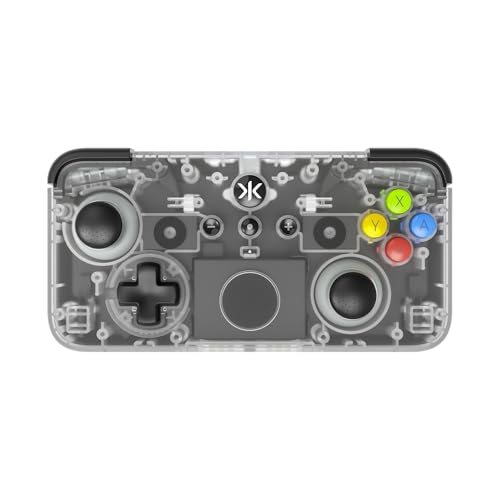
The CRKD NEO S is a good pick for Apple Arcade. (Image credit: CRKD)
You don't actually need a controller to play the majority of Apple Arcade games. On iPhone and iPad, almost every title supports full touch screen controls and can be enjoyed without any extra hardware.
If you're playing on Mac, many titles support keyboard and mouse controls.
On Apple TV, you're most likely to need a dedicated gamepad as there are only a few titles that work well with the included remote.
Of course, lots of games still allow you to use a controller on any device even if it's not strictly required and I'd recommend it if you're after an even more console-like gaming experience.
You can see some models that I've personally tested and would recommend for Apple Arcade below.
What about the competition?
If you're strictly looking for a gaming subscription service for your iPhone, then Apple Arcade doesn't really have much direct competition.
The biggest alternatives on that platform are cloud gaming services such as Amazon Luna, which you can access through your iPhone's web browser. These stream games to your phone directly from a cloud server, which means that they require a constant internet connection and cannot be accessed offline.
They also don't work too well with on-screen controls, which means a controller like the dedicated Luna Wireless Controller is required for anything but the most casual titles.
That said, cloud gaming does have some big advantages. You can access full console or PC games, including massive titles such as Fortnite, Fallout 4, or Shadow of the Tomb Raider. As they do not rely on your local hardware, they can also offer high-end graphics features such as maximum in-game settings and ray tracing — though slow or choppy internet can negate this by introducing visual artifacts.
If you have access to an Android Phone, Google Play Pass is a potential alternative. It's cheaper than Apple Arcade but similarly grants access to loads of mobile games with zero ads or microtransactions. It also includes some productivity apps, meaning that it's a little more versatile than the strictly gaming-focused Apple Arcade.
That said, its software library feels much more chaotic and less curated. It also lacks the compelling exclusive releases that I think really bring a lot of value to Apple Arcade.
Apple Arcade FAQs
Do Apple Arcade games work offline?
Yes, all Apple Arcade games work offline. This means that you can play them on your iPhone or iPad when you're out of the house and don't have a steady internet connection.
Is it worth getting Apple Arcade?
Apple Arcade can be worth getting if you frequently play mobile and want a more curated, premium experience. The lack of in-game ads and microtransactions means that you don't have to worry about annoying distractions or impulse spending, while many of the exclusive games are high-quality experiences that are worth playing.
Do I lose my games if I cancel Apple Arcade?
You will lose access to Apple Arcade games if you cancel your subscription. You don't need to worry about losing any progress, however, as your save data is stored by Apple via iCloud. This means you can pick up exactly where you left off if you resubscribe at a later date.
Can games leave Apple Arcade?
Although it is uncommon, games can leave Apple Arcade. When this happens you can keep playing the game for a short grace period, before it becomes unavailable on your device.
Apple’s iPhone captured its highest-ever second-quarter global smartphone revenue share of 49% in Q2 2026, according to Counterpoint Research’s latest Market Monitor data. The company’s smartphone revenue rose 22% year-over-year, fueled by a 13% increase in shipments and an 8% rise in average selling price (ASP), even as the broader market saw volumes decline.
Global smartphone revenue grew 7% YoY to a record $109 billion for any second quarter, despite a shipment slump. The disconnect was driven by a 17% jump in industry ASP to a Q2 record of $400, reflecting a sustained shift toward premium devices and memory-related price increases across most Android manufacturers.
Apple’s performance stood out because it largely avoided the steep price hikes that competitors implemented to offset rising bill-of-materials costs from the ongoing memory shortage. Research Director Tarun Pathak noted that growth was led by sustained demand for the iPhone 17 lineup—particularly the base iPhone 17 and iPhone 17 Pro Max—which kept the brand’s mix skewed toward premium models. “Unlike peers that pushed through steep price increases, Apple kept pricing largely stable, reflecting its ability to absorb rising BOM costs and remain insulated from the memory crisis,” Pathak said. He added that Apple will likely raise prices in coming quarters.
This pricing discipline strengthened Apple’s competitive position, enabling simultaneous gains in both volume and value while much of the market contracted. Senior Analyst Shilpi Jain observed that the industry has entered a phase where value, rather than pure shipment volume, is the primary growth lever. Rising component costs have accelerated a shift away from entry-level volume strategies toward higher-storage configurations, premium models, and financing options such as installment plans and trade-ins, especially in emerging markets.
Samsung ranked second with a 16% revenue share. Its revenue and shipments each rose 9% YoY, supported by strength in North America and the Middle East & Africa, though its ASP remained relatively flat. Xiaomi posted the steepest shipment decline among the top five brands at 26% YoY; revenue fell 17% despite a 13% ASP increase. OPPO and vivo revenues declined 10% and 11% respectively, even with ASP gains of 9% and 13%.
MacDailyNews Take: The iPhone 17 family’s continued strength allowed Apple to expand its revenue dominance in a market where premiumization and higher prices are offsetting weaker unit volumes. With memory constraints expected to persist, Apple’s ability to maintain demand without aggressive price increases positioned it as the clear standout in Q2 2026 revenue share.
Please help support MacDailyNews — and enjoy subscriber-only articles, comments, chat, and more — by subscribing to our Substack: macdailynews.substack.com. Thank you!
The Company posted quarterly revenue of $109.4 billion, up 16 percent year over year.
[…]
“Today, Apple is proud to report our strongest June quarter ever, with double-digit revenue growth across iPhone, Mac and Services, and in every geographic segment,” said Tim Cook, Apple’s CEO.
You can’t argue with the strong iPhone and Mac sales figures, and Apple specifically called out the MacBook Pro and the MacBook Neo, which Cook said “has been especially popular” and suggested that the company is still struggling to make them fast enough.
It’s admirable (and sensible) that Cook isn’t pointing fingers at anyone but customers who want Apple products, but the key phrase in his statement is “the supply chain just has less flexibility in it than normal.” This is an acknowledgement that while in the past, Apple might have been able to boost chip production from its partners, today the chip industry is maxed out thanks to the wild building of chips for AI applications.
[…]
As an aside, Cook also alluded to reports that Apple has tried to get the U.S. government to authorize purchase of RAM from some forbidden Chinese chipmakers, which has aroused political ire.
Apple has built a reputation for robust security features, so understandably, seeing an urgent pop-up saying your iPhone has been hacked can feel nerve-wracking. This deceptive tactic, often disguised as a security alert, is designed to trick users into taking harmful actions. It’s highly unlikely that your iPhone has already been compromised. However, carelessly interacting […]
Buyers hoping to upgrade to the newest iPhone flagship this fall might want to start saving a bit more money right now. A well-known tech analyst predicts that the upcoming iPhone 18 Pro and its larger Pro Max sibling could launch with a much higher price tag than last year. These upcoming models might see […]
We’ve been reporting on the supposedly imminent launch of a foldable iPhone for years. There have been strong and reliable rumors of a foldable iPhone being just two years away, dating as far back as 2018, at least. Back then, reliable reports from the likes of CNBC said Apple was going to have a folding iPhone on the market in 2020.
That became 2021, 2022, 2024, 2025… and now it’s expected to land in 2026–yes, this year!
While the rumors and reports from parts suppliers and analysts are heating up and we have more specifics than ever before, we would advise even more caution and skepticism than usual with Apple speculation. With that said, here’s what current rumors suggest about the release of a folding iPhone.
Folding iPhone rumors at a glance
Expected launch date: September 2026, but limited supply possible
Likely name: iPhone Ultra
Form factor: Book-style, opening to a landscape view about the size of an iPad mini
Many fans and pundits have got into the habit of referring to the rumored device as the iPhone Fold, but this may not necessarily be the official name. The rumors and leaks from spring 2026 onwards suggest that Apple is looking to call it iPhone Ultra.
In March, Mark Gurman at Bloomberg claimed that the folding iPhone will be one of several “Ultra” products coming this year – though not all will use “Ultra” branding, it’s certainly a possibility for the folding iPhone.
Then, in April, the Weibo account Digital Chat Station (which is hit-and-miss) said Apple is looking to use the iPhone Ultra name, too.
When will the foldable iPhone launch?
September 2026 launch expected
It is expected that Apple will introduce this new style iPhone in September 2026, along with the iPhone 18 Pro and Pro Max (but not the regular iPhone 18 which is said to be delayed until 2027).
After a report from Nikkei Asia said that Apple is somewhat behind on the production timetable, Bloomberg’s Mark Gurman claimed it’s still on track, though supplies may be limited at first. Apple is aiming to put the device on sale at the same time or “soon after” the non-folding iPhone 18 Pro models, he claims.
There is evidence that the folding iPhone could be coming soon. Sam Henri Gold, a product designer and engineer with access to the iOS 27 beta, spottedreferences in the iOS 27 framework to variables labelled “foldState” and “angleDegrees.” These are internal status values apparently designed to tell apps whether a device is folded and at what angle.
Macworld was able to independently confirm the findings. It’s difficult to see how those terms would be applicable to any existing iPhone: arguably they could use their altimeters to determine the angle they’re being held at, but they aren’t foldable.
iOS 27 framework references “foldState” and “angleDegrees” but I’m sure that’s nothing pic.twitter.com/PcYNVvymms
There may still be a bit of a wait for the folding iPhone. Barclays analyst Tim Long said in a research note that the folding iPhone will likely ship in December, a couple months after the expected September launch of the iPhone 18 Pro and Pro Max, via MacRumors.
During Apple’s Q3 earnings call, Apple CEO Tim Cook warned that “the impact from the supply constraints (will) increase significantly.” That means supplies of new products such as the iPhone Ultra could be severely limited at release. It may take longer than usual for orders to be fulfilled.
What are the biggest trade-offs for the folding iPhone Ultra
Despite its “Ultra” branding, the foldable design introduces some compromises:
No unibody construction: Dummy models will require a more segmented build due to the hinge mechanism.
Wireless charging limitations: The device may lack a traditional glass back, which could impact MagSafe or wireless charging implementation.
iOS-based software: Rather than running iPadOS, the device is expected to use a customized version of iOS, offering some productivity features without fully replacing the iPad experience.
No Face ID: Due to the very thin nature of the foldable iPhone, and the need for different front-facing cameras when folded up or unfolded, it will reportedly lack Face ID. Instead, Touch ID will be incorporated into the side button much as it is on the iPad Air’s power button.
No telephoto camera: Due to space constraints in the foldable design this iPhone may drop the telephoto camera, used for optical magnification, which will feel like a huge compromise given the anticipated high price of this iPhone.
The folding iPhone will reportedly have a Touch ID-enabled power button rather than Face ID.
IDG
What will the folding iPhone look like? How will it fold?
Book-like design with a vertical fold rumored
Intended to be an iPhone/iPad hybrid
Apple’s rumored iPhone Ultra is reportedly nearing mass production, with its design largely finalized. Here’s what current leaks suggest about how the foldable iPhone will look and how the hinge and display may work.
Book-style, iPad hybrid, design
Multiple leaks point to a book-style foldable with a large, tablet-like internal display, rather than a compact flip-phone design. The device is expected to function as a hybrid between an iPhone and an iPad.
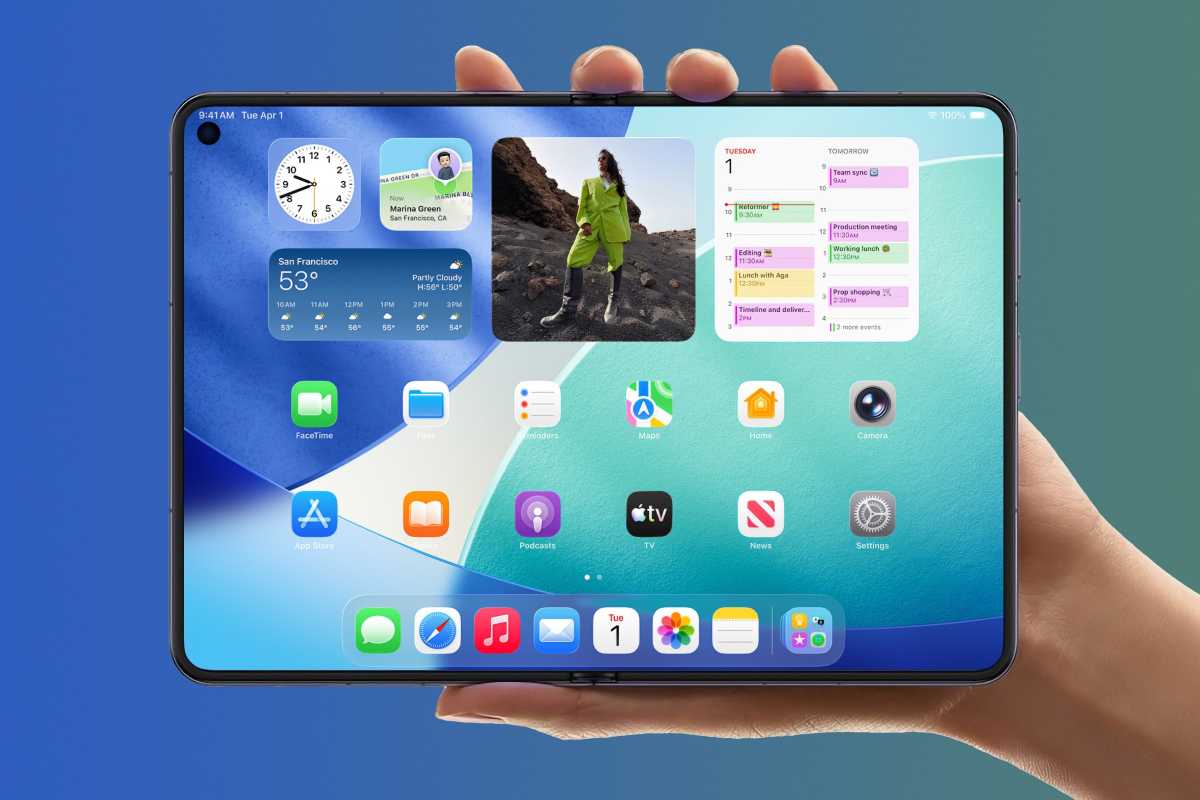
This “passport-style” design will appear noticeably squarer than a traditional iPhone when closed. When unfolded, it’s rumored to resemble an iPad mini-like screen with a 4:3 aspect ratio, offering a more expansive viewing experience.
Analyst Ming-Chi Kuo reported in 2025 that Apple’s foldable will adopt a dual-display setup, with a strong focus on achieving a near crease-free screen when opened.
Other 2025 leaks, including reports from Digital Chat Station on Weibo, also point to a vertical, book-style fold where the left and right sides close together – similar to devices like the Google Pixel 9 Pro Fold and Samsung Galaxy Z Fold.
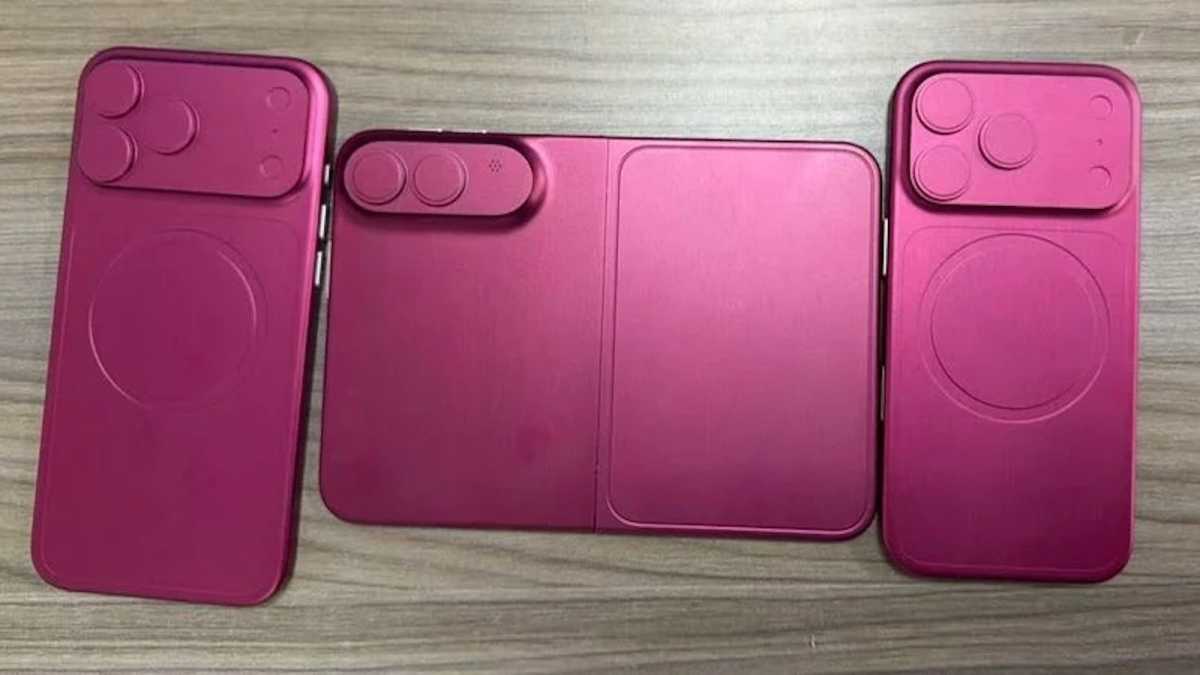
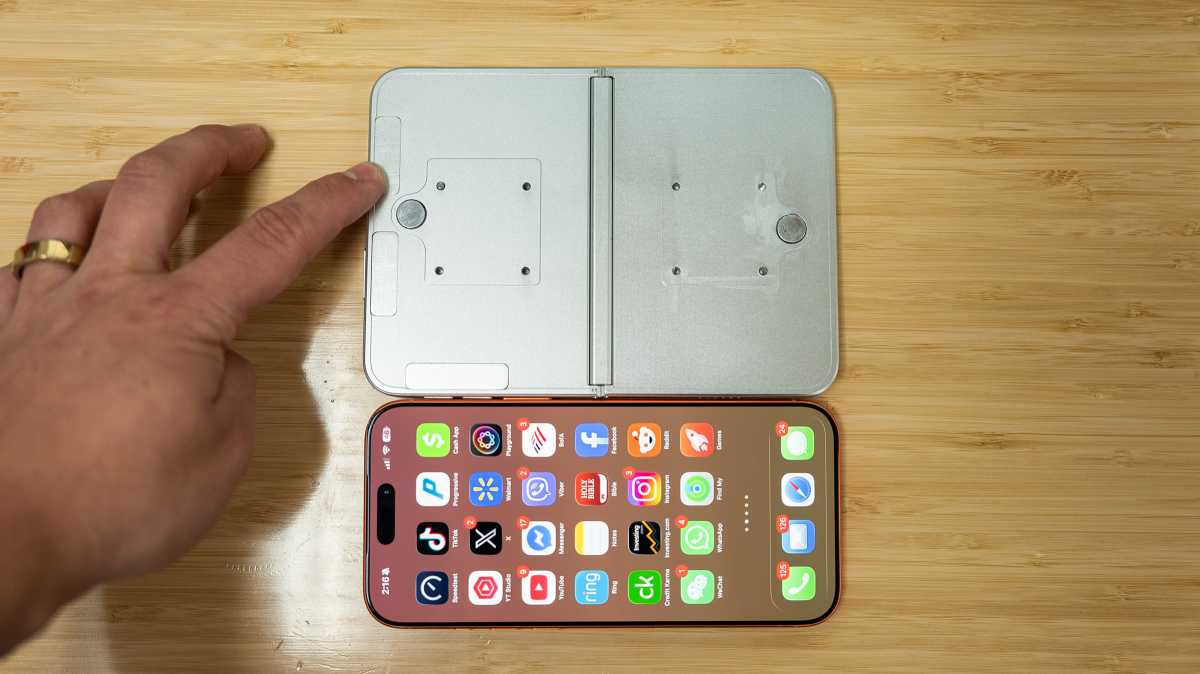
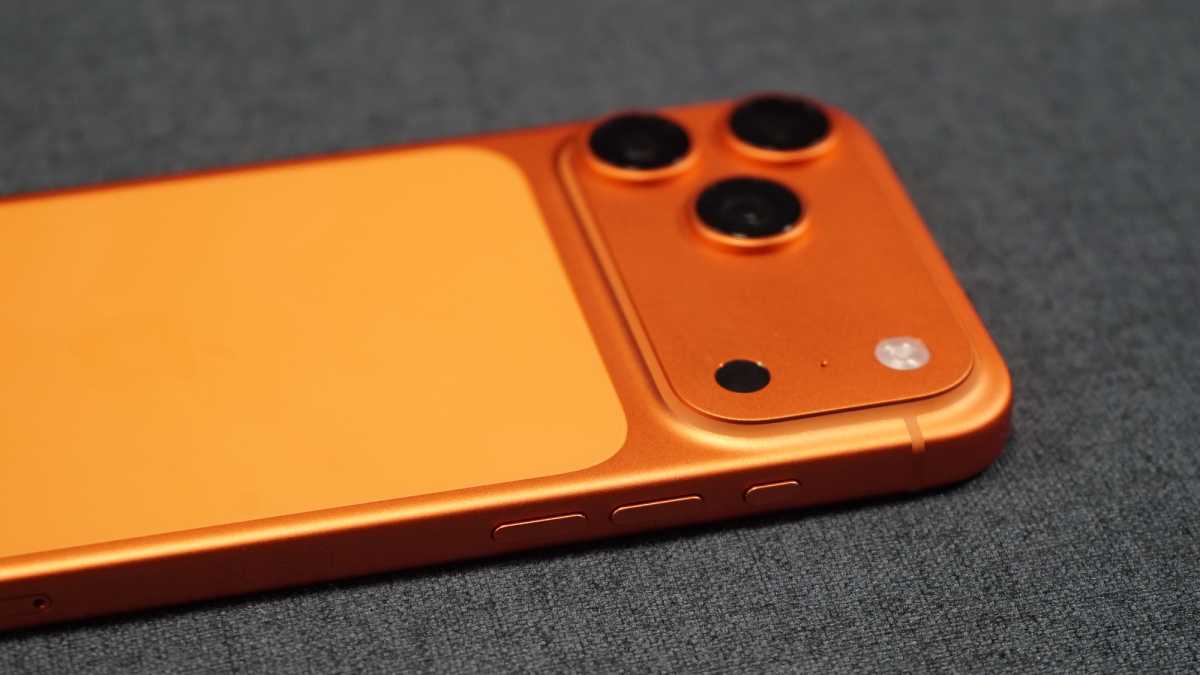
Dummy models shared by Sonny Dickson on X in April 2026, demonstrate this book-like form factor.
The latest leaks and dummy models show the wide “passport” design of the iPhone Ultra.
Sonny Dickson
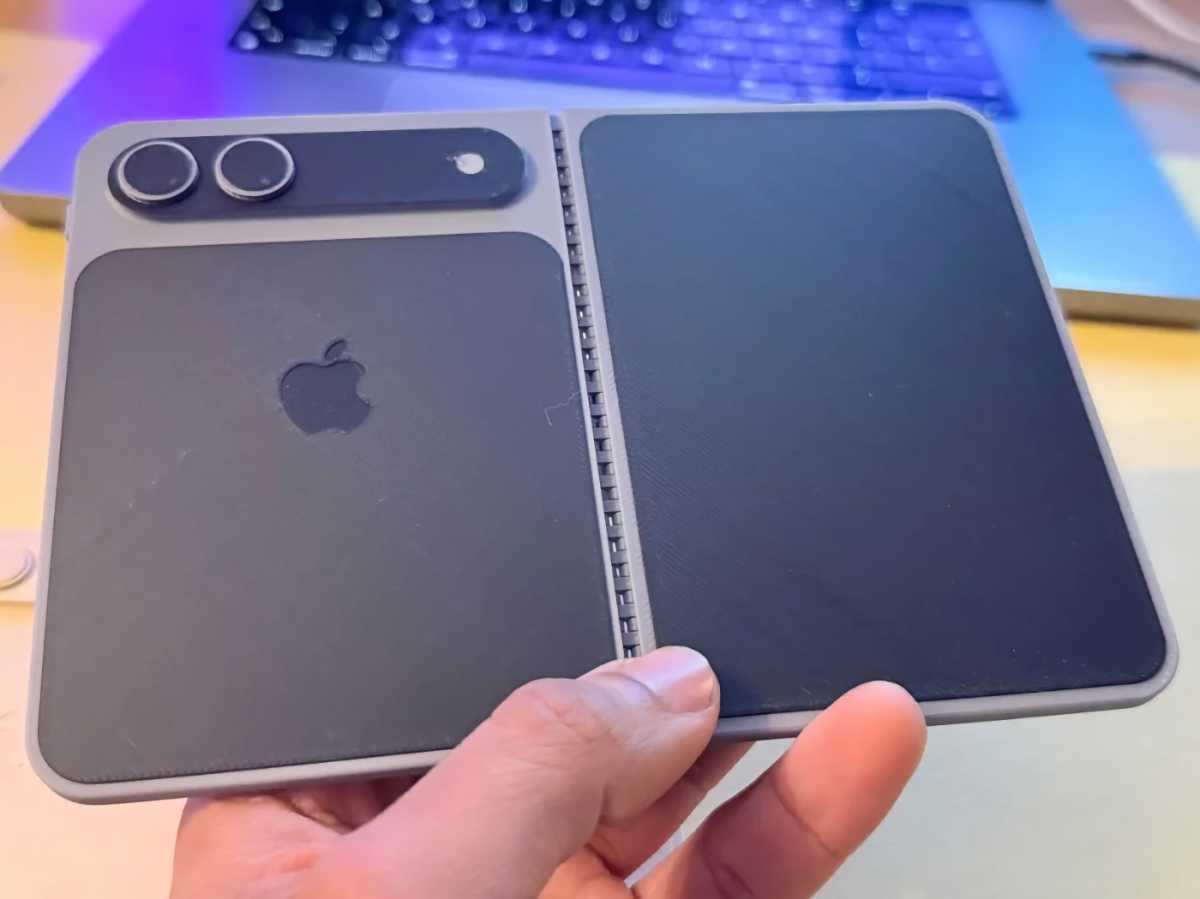
Additional dummy unit images from tech YouTuber Vadim Yuryev, further reinforce this wide, book-like “passport” design.
In December 2025, this 3D image of the iPhone Ultra, based on leaked CAD files, was created by a hobbyist and shared on MakerWorld (now removed), also aligning with these design expectations.
However, alternative concepts have existed. In 2024, The Information reported that Apple had explored clamshell-style prototypes, where the device folds top-to-bottom, similar to traditional flip phones.
This design direction may already be influencing competitors. Our colleagues on TechAdvisor report that Samsung is developing a “Galaxy Z Fold 8 Wide” with a similar 4:3 aspect ratio, potentially positioning it as a direct rival to Apple’s anticipated September 2026 launch.
How Apple is overcoming hinge design and crease reduction challenges
Adding a hinge to an iPhone introduces significant engineering challenges that Apple has spent years trying to resolve. While competitors have released multiple generations of foldables, Apple’s slower entry to the market is widely attributed to its focus on refining the hinge and delivering a more seamless user experience.
The biggest technical challenge is the visible and tactile crease where the screen folds. Apple has reportedly made this a priority, aiming to minimise it to the point of being nearly imperceptible.
Weibo leaker Instant Digital claims the iPhone Ultra’s internal design will make it the most repairable folding phone on the market, with elegant modular and stacked elements that minimize interconnects and ribbons.
As a result, the hinge is expected to be a defining feature of the iPhone Ultra, combining advanced materials and engineering to deliver a smoother, more durable folding experience.
To maintain both thinness and durability, Apple is reportedly testing high-end materials for the hinge:
Titanium alloy (rumored for structural strength)
LiquidMetal, according to Ming-Chi Kuo (March 2025), for improved durability, better screen flatness, and reduced creasing.
In July 2025, Kuo reported that Apple had developed a method to reduce crease visibility using metal support plates to better distribute and control bending stress. Apple may use this “laser-drilling metal plate technology” rather than conventional etching to create a more precise microstructure.
Apple also holds several patents for foldable mechanisms which, along with several rumored technologies, may be used:
Variable Thickness Glass: A key part of Apple’s approach is said to involve variable thickness display glass, which is thinner at the fold point to reduce stress during repeated use. This is expected to work alongside an optically clear adhesive layer, designed to further minimise strain and help prevent the visible crease that commonly develops in foldable devices over time.
Stress-Reducing Adhesive: An optically clear adhesive designed to reduce strain on the display during folding.
Ultra-Thin Profile: Expected thickness of around 4.5mm unfolded and 9.5mm folded.
Internal Support: Metal plates beneath the display to maintain a completely flat surface when opened.
In March 2026, reports suggested that Samsung Display – Apple’s primary screen supplier – has developed a near-creaseless OLED panel, showcased at CES 2026 specifically to meet Apple’s standards.
How big will the foldable iPhone Ultra be?
Approx. 9.5mm thick when folded
Approx. 4.5mm when unfolded
According to Jon Prosser in December 2025, Apple’s foldable iPhone Ultra could measure around 9.5mm when closed and just 4.5mm when open. For context, the iPhone 16 Pro Max is 8.5mm thick, while the iPhone Air measures 5.6mm.
If accurate, this would make the iPhone Ultra one of the slimmest foldables, highlighting Apple’s focus on minimising bulk despite the hinge.
However, when asked about the thickness of the iPhone Ultra in April 2026, YouTuber Vadim Yuryev said it would be “exactly 11mm”, which is larger than Prosser’s prediction. He also claimed it would be 0.36mm taller and 0.39mm wider than the iPhone 17 Pro.
Other design features
A leak from Weibo account Instant Digital in February 2026 indicates the volume buttons will be on the top edge, aligned right.
How big will the iPhone Ultra screens be?
The iPhone Ultra is widely expected to feature:
Approx. 7.7–7.8-inch internal display
Approx. 5.3–5.5-inch external display
Ming-Chi Kuo (2025) and TrendForce (July 2025) both pointed to a 7.8-inch inner and 5.5-inch outer display, while The Information later suggested slightly smaller sizes of 7.7 inches and 5.3 inches. This suggests Apple may still be refining final dimensions.
However, a December 2025 report from The Information slightly revised these figures to7.7 inches internally and 5.3 inches externally, indicating that Apple may still be fine-tuning the final dimensions.
When unfolded, the device is expected to feature a 4:3 aspect ratio, aligning it more closely with the iPad and reinforcing its positioning as a productivity-focused, hybrid device. This would be a notable departure from the tall, narrow displays seen in earlier foldables like the Samsung Galaxy Z Fold series.
This wider layout is said to:
Improve multitasking
Enhance document reading and web browsing
Deliver an experience closer to an iPad mini
What specs will iPhone Ultra offer?
A20 chip, 12GB RAM, C2 modem expected
We don’t know what processor the folding iPhone will contain, but based on the release timeline, it will probably feature an A20 or A20 Pro – some variant of the processor found in the iPhone 18 Pro.
We expect most iPhones to use Apple’s own cellular modem and Wi-Fi/Bluetooth chips by that time as well. This will probably be the new C2 modem and the N1 for Wi-Fi 7 and Bluetooth.
This iPhone is also said to have the largest battery ever, at 5,000-5,500mAh, according to Weibo leaker Fixed Focus Digital in February 2026.
The iOS 27 beta makes references to “batteries” (plural) where it used to refer to “battery” (singular), suggesting that Apple is preparing an iPhone with more than one battery. We would expect the iPhone Ultra to have a battery in each half, so this is more evidence that its release is coming soon.
What cameras will the foldable iPhone have?
The foldable iPhone is rumored to feature two 48MP rear cameras, likely a standard wide and an ultrawide, along with two front-facing cameras—one for use when the device is closed and another when it’s unfolded.
However, it may lack a dedicated telephoto lens. While this is likely due to space constraints in the foldable design, it could be seen as a notable drawback—especially for a premium “Ultra” model at a high price point.
On the back, the cameras are expected to sit on a long, thin “plateau,” similar to the iPhone Air, but in black rather than color-matched to the device.
On the front, leaks suggest a mix of one under-display camera and a second punch-hole camera. A November 2025 report from JP Morgan also claimed Apple could drop LiDAR and optical image stabilisation, though this remains uncertain.
Not all the rumors point to compromises: Tech YouTuber Vadim Yuryev claimed in April 2026 that the cameras could be physically larger than those on the iPhone 17 Pro.
How much will the folding iPhone Ultra cost?
Premium price expected: $2,000 or more
Expect the folding iPhone to be a very high-end, ultra-premium model. The very first release is said to cost $2,000 or more… maybe even as much as $2,399, more than twice the highest-end iPhone Pro Max. That’s the prediction from analyst Arthur Liao, who bases his eye-watering estimate on material costs (particularly the panel and hinge) and Apple’s high-margin business model.
The latest rumors from Weibo leakers suggest starting price of RMB 15,999 in China for the 256GB model, up to RMB 19,999 for the 1 TB model. When applying the same yuan-to-dollar ratio as other Apple products, this translates to a $1,999 starting price, up to $2,399 for the 1TB model.
FAQ
Why is Apple making a folding iPhone now?
If you’re wondering why Apple is only launching a folding iPhone now – years after Samsung introduced the Galaxy Fold in 2019 – the answer may lie in Apple’s long-standing approach to new product categories. Rather than being first to market, Apple often waits for a technology to mature before entering the space.
When Steve Jobs unveiled the original iPhone in 2007, he talked about how the rest of the market was constrained by physical keyboards and styluses, but the iPhone would instead have a multi-touch display that could change depending on the task. Apple may be taking a similar approach with foldables. The company appears to believe that display technology, durability, and consumer interest have finally reached a point where a folding iPhone could appeal to mainstream buyers rather than just early adopters.
In other words, Apple’s goal may not be to invent the foldable phone, but to make it a product that millions of people actually want to use every day.
Will the iPhone Ultra replace the iPhone Pro Max?
It is thought that rather than replace the Pro Max handsets, Apple will position the foldable as a new tier above it – similar to how the Apple Watch Ultra sits above the standard Watch lineup. That would allow Apple to maintain premium pricing without disrupting existing flagship models.
What are the tradeoffs likely to be for the iPhone Ultra
Apple may have to sacrifice some features to achieve thinness. Instead of Face ID the iPhone Ultra may revert to Touch ID on the power button.
The iPhone 18 Pro and Pro Max are expected to launch in September 2026 featuring several cutting-edge hardware advancements, including the debut of Apple’s C2 modem, and a shift to a 2nm manufacturing process for the A20 Pro chip.
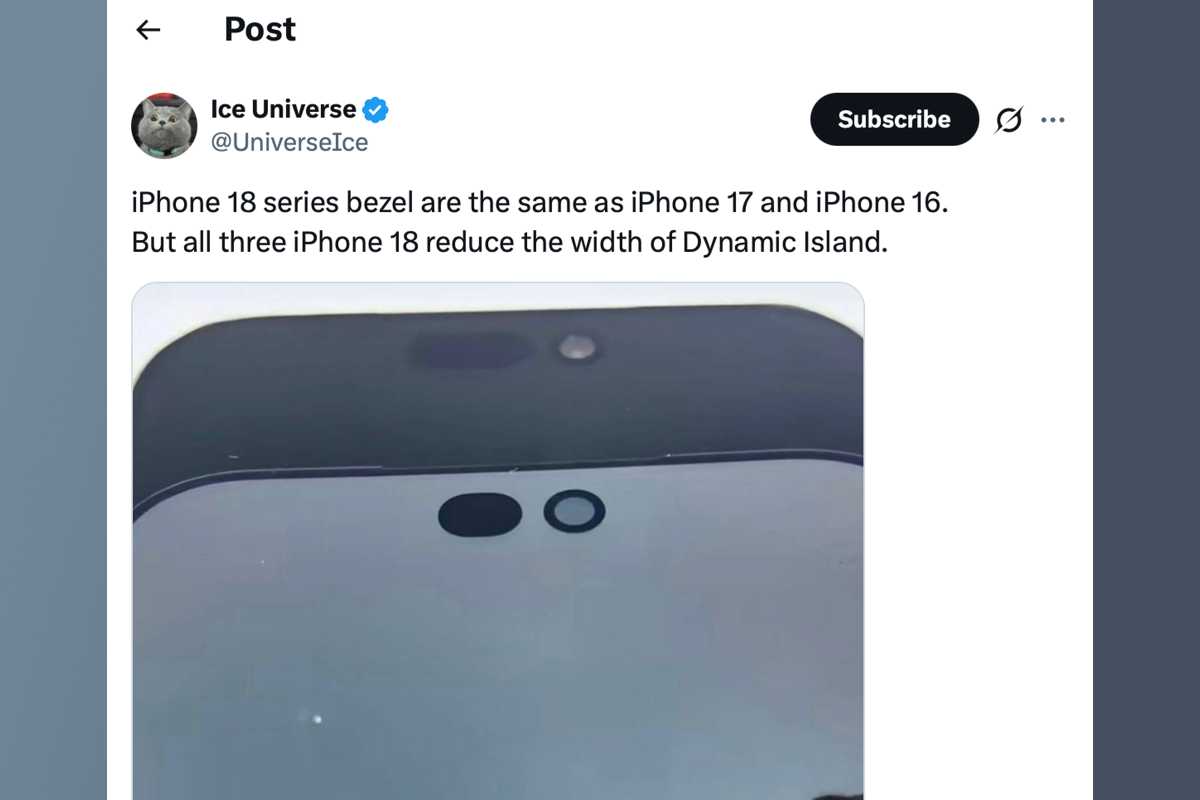
Other key rumored upgrades include a smaller Dynamic Island with under-display Face ID components and camera improvements that may include variable aperture on the Pro Max and enhanced sensors.
Alongside the iPhone 18 Pro and Pro Max Apple is said to be planning to launch the ultra-premium folding iPhone. However, in a change to the usual schedule, the company is expected to shift the launch of the iPhone 18 spring 2027 to keep the spotlight on the Pro series during its traditional September debut. Here’s a quick summary of what all the rumors and leaks say to expect from the iPhone 18 Pro and Pro Max in 2026.
What are the biggest upgrades for iPhone 18 Pro & Pro Max
Pro models launching first in September 2026, base models delayed to spring 2027
Smaller Dynamic Island likely, with some Face ID components under the display
Possible variable aperture camera (Pro Max only)
New A20 chip (2nm) for performance and efficiency gains
Apple’s own C2 modem expected across the lineup
Potential satellite internet support, for web browsing and so on, not just emergency use
How is iPhone 18 Pro/Max different from iPhone 17 Pro/Max?
Split release schedule (Pro first, base later)
Smaller or modified Dynamic Island
Possible under-display Face ID components
New modem (shift away from Qualcomm)
Camera experimentation (rumored variable aperture on Pro Max)
iPhone 18 Pro/Max vs iPhone 17 Pro/Max
Feature
iPhone 18 Pro/Max rumors
Likelihood
iPhone 17 Pro/Max
Launch date
September 2026
Very likely
September 2025
Dynamic Island
Smaller design
Credible rumor
No change since 2022 iPhone 14 Pro
Face ID
Under-display
Credible rumor
No change since 2022 iPhone 14 Pro
Modem
C2 modem
Credible rumor
Qualcomm modem
Camera
Improved aperture technology for rear. 24MP selfie cameras
Possible
All three rear cameras are 48MP, optical-quality 8x zoom. 18MP front camera.
Comparing iPhone 18 Pro rumors to current iPhone 17 Pro
When will the iPhone 18 Pro/Max launch?
Apple has not announced when the iPhone 18 lineup will launch, but based on its usual schedule, the company is expected to unveil new iPhones in September 2026.
However, multiple reports suggest Apple could significantly change its release strategy that year. Rather than launching the entire iPhone 18 lineup at once, Apple is reportedly planning to release only its premium models in September 2026: the iPhone 18 Pro, iPhone 18 Pro Max, a new foldable iPhone, and potentially an updated iPhone Air.
According to these reports, the standard iPhone 18 and iPhone 18e will follow in spring 2027. If accurate, this would mark the biggest change to Apple’s iPhone launch schedule since the lineup expanded beyond a single annual release.
A staggered rollout would allow Apple to focus attention on its highest-end devices during the holiday shopping season while giving the company a second major iPhone launch window in the first half of 2027. It would also mean that every new iPhone introduced in September 2026 would likely start at $999 or more.
As always, Apple has not confirmed these plans, and the release schedule could change before launch.
During Apple’s Q3 earnings call, Apple CEO Tim Cook warned that “the impact from the supply constraints (will) increase significantly.” That means supplies of new products, such as the iPhone 18 Pro, could be severely limited at launch. It may take longer than usual for orders to be fulfilled.
iPhone 18 Pro/Max
September 2026
iPhone Fold
September 2026
iPhone Air (2nd gen)
Spring 2027
iPhone 18
Spring 2027
iPhone 18e
Spring 2027
The anticipated launch dates for the 2026-2027 iPhones
What will the iPhone 18 Pro/Max look like and what are the color choices?
The design of the iPhone 18 Pro and Pro Max is said to resemble the iPhone 17 Pro and Pro Max, but some changes are predicted.
One possible change, shared by a Weibo leaker in September 2025, is a “slightly transparent” ceramic shield section on the back of Pro models, though details are unclear.
Macworld contributor Filipe Esposito reported that a trusted source had revealed one of the new colorways for the iPhone 18 Pro to be Dark Cherry, replacing the iPhone 17 Pro’s Cosmic Orange option.
Recent rumors claimed that the new phones will be significantly thicker than previous models, but all the evidence we have seen says that’s not the case. Instead, we expect the body to have about the same thickness as the iPhone 17 Pro/Max but with a thicker camera bump area.
A recent ransomware attack against an Apple parts supplier included images from an iPhone 18 Pro “drop test” and other parts, and they corroborate prior rumors about the overall shape and design of the phone, which is broadly the same as the iPhone 17 Pro.
Other shades are said to include: Light Blue, Dark Gray, and Silver. There was also a coffee shade rumored (via Digital Chat Station).
As with the iPhone 17 Pro, there will be no black option, according to Instant Digital.
Screen sizes are expected to remain at 6.3 and 6.9 inches. The Pro models will also retain the wider three-camera raised plateau.
Most likely: Design changes will be minimal, with the biggest visible differences limited to colors and subtle refinements.
What’s new with the iPhone 18 Pro/Max camera?
Eugen Wegmann
Apple may introduce variable aperture technology to the 48MP main camera on the iPhone 18 Pro and Pro Max (potentially only the Pro Max), allowing mechanical control over light intake and depth of field. This has long been a perk limited to high-end professional cameras.
If the rumor (from Digital Chat Station on Weibo) is true, iPhone users will be able to mechanically control how much light reaches the sensor for the first time, allowing more control over depth of field and sharpness. This could elevate portrait shots by improving the applied depth of field effect, as well as minimizing overexposure.
Wider telephoto apertures on the Pro models should also result in better low-light performance.
For some time (since January 2025) Samsung has been said to be working on a new three-layer stacked camera sensor called ‘PD-TR-Logic,’ and this could appear in the iPhone 18 series. This image sensor is expected to enhance the camera’s responsiveness, while also offering advantages such as reduced photo noise, improved dynamic range. The main Wide camera sensor is expected to be larger than usual, which offers many benefits.
The front-facing camera may also get an upgrade beyond the rumored changes to the housing (as discussed elsewhere the selfie camera may be housed in a smaller hole-punch cut out, reducing the size of the Dynamic Island). The iPhone 17 generation features 18MP sensors for the selfie camera, but this may increase to 24MP in the next generation, according to leaker WhyLab on Weibo.
More megapixels would lead to improved video calls and better low-light performance.
Most likely: Incremental improvements, with a new variable aperture feature on the Pro Max.
Will the iPhone 18 Pro/Max Dynamic Island or front camera change?
Britta O’Boyle
Apple hasn’t changed the Dynamic Island since the iPhone 14 Pro, but the iPhone 18 Pro may introduce some adjustments.
Some reports suggest Face ID components could move under the display, shrinking the Dynamic Island.
A report in December 2025 from Weibo account “Smart Pikachu” claimed that Apple is testing an under-display “micro-transparent glass panel” for some Face ID sensors. This should enable a smaller Dynamic Island for iPhone 18 Pro.
The ever-reliable Mark Gurman at Bloomberg also reported that Apple will “shrink” the Dynamic Island on the iPhone 18 models, so there’s strong evidence that some of the several sensors and emitters required for Face ID will be under the display or combined.
There have been conflicting claims that the position of the front-facing camera may also change:
In December 2025 The Information claimed Apple will put the Face ID sensors under the display, and move the front camera to the upper left corner in a punch-hole design. This would make the iPhone 18 Pro/ Max the first iPhones with a front camera in the corner.
Most likely: A smaller Dynamic Island with some components of Face ID under the glass. Smaller pill cut out for camera, remaining in central position.
Will the iPhone 18 Pro/Max display change?
Stephan Wiesend
Screen sizes should be consistent with the 6.3 and 6.9-inch displays on the current models, but reports suggest a massive jump in brightness from the current 1600 nits HDR and 3,000 nits peak.
According to Weibo leaker, Instant Digital, Chinese supplier BOE has revealed that Apple is targeting unprecedentedly high brightness requirements for the display. The Elec corroborated this, claiming BOE is struggling with iPhone OLED production so panel orders have been shifted to Samsung Display.
Most likely: An increase in brightness is expected, but there are no details yet on the extent of the improvement.
How powerful will the A20 chip in the iPhone 18 Pro/Max be?
The iPhone 18 series is expected to use a new A20 chip, built on TSMC’s N2 (2nm) process. This will represent a major architectural shift for Apple’s smartphone silicon, primarily due to the transition to a more advanced manufacturing process.
This move to a smaller process allows for more transistors in the same space, which is projected to deliver up to 15% faster performance and 30% better power efficiency compared to the A19 chip.
The iPhone 18 Pro and Pro Max models will utilize an A20 Pro variant to further differentiate their capabilities. This increased power is expected to support advanced features.
The A20 is rumored to use a new process called Wafer-Level Multi-Chip Module (WMCM) packaging to incorporate the RAM into the SoC’s package. It’s not clear what the benefit will be, but more tightly integrated RAM can mean more memory bandwidth and lower RAM latency, or better power efficiency.
Most likely: A typical Apple leap in efficiency and speed, with behind-the-scenes gains rather than dramatic user-visible changes.
Will iPhone 18 Pro/Max battery life improve?
Apple works to make battery life as long as possible every year, especially in the Pro model iPhones.
A recent report claims that the battery capacity of the iPhone 18 Pro Max will have a battery capacity of 5,235 mAh on the Nano SIM model and 5,425 mAh on the eSIM-only version. That’s about 6-8% more capacity than the current model.
The “Pro Max” variant of the iPhone gets a higher-capacity battery nearly every year, usually a couple hundred mAh more, thanks to better internal design and improving battery chemistry and manufacturing techniques. But battery life is a function of more than just battery capacity—the power use of the processor, display, and wireless radios all play an important point.
We think it’s likely the iPhone 18 Pro/Max will have higher-capacity batteries, and battery life at least as long as the iPhone 17 Pro/Max. But a significantly longer battery life is hard to predict.
Will connectivity improve (5G, Wi-Fi, satellite) with iPhone 18 Pro/Max?
iPhone 18 Pro models are rumored to feature the second generation of Apple’s in-house 5G modem, the C2 chip.
The C2 modem, which hasn’t yet launched, is expected to replace Qualcomm across Apple’s lineup. This should improve:
Efficiency
Performance
mmWave support
There are also reports that the new iPhone will gain full satellite internet support, expanding beyond emergency use. In October 2025, The Information claimed that Apple is gearing up to support 5G networks that are served from satellites.
While the iPhone has offered satellite connectivity for emergency situations for years, if this rumor is true it would allow the iPhone 18 models to have full internet access via satellite, not just emergency services.
As of April 2026, it looks like Apple is teaming up with Amazon to provide this service. Early in April, Amazon announced that it has acquired Globalstar, who was the provider of iPhone and Apple Watch satellite connectivity. So now iPhones and Apple Watches will now fall under Amazon Leo, Amazon’s satellite internet network.
The Wi-Fi/Bluetooth chip (N1) will likely remain unchanged. Apple debuted its local networking chip in the iPhone 17 line – the N1 supports Wi-Fi 7, Bluetooth 6, and Thread networking. We haven’t heard anything about an N2, and honestly, one probably isn’t needed so soon. Could Apple have an “N1X” surprise in store the way it did with the C1X? It’s possible, but so far the rumor mill expects Apple to build the iPhone 18 line with the same N1 chip as found in the iPhone 17.
Most likely: A meaningful upgrade in connectivity, especially if satellite internet expands.
How much will the iPhone 18 Pro/Max cost?
Pricing may remain the same as the current generation as no major pricing changes are currently rumored for the new iPhone 18 series.
However, the introduction of a folding iPhone could dramatically change the pricing structure, as it will reportedly have a starting price of $1,999 or more.
Current pricing is as follows:
iPhone
iPhone
Capacity
iPhone 17 Pro Max
From $1,199
256GB – 2TB
iPhone 17 Pro
From $1,099
256GB – 2TB
iPhone Air
From $999
256GB – 1TB
iPhone 17
From $799
256GB – 512GB
iPhone 17e
From $599
256GB – 512GB
FAQ
1.
When is the iPhone 18 Pro expected to launch?
September 2026.
2.
Will the iPhone 18 Pro have under-display Face ID?
It’s said that by putting some of the Face ID technology under the display Apple will be able to shrink the size of the Dynamic Island.
3.
What chip will power the iPhone 18 Pro?
Apple is expected to use the A20 chip in the iPhone 18 Pro.
4.
Is Apple changing its iPhone release schedule in 2026?
Apple is said to be planning to launch the Pro iPhone models, including a foldable iPhone in September 2026. The iPhone 18 and iPhone 18e may not arrive until spring 2027.
5.
What camera upgrades are rumored for the iPhone 18 Pro Max?
Apple is rumored to be focusing on advanced lens technology and sensor improvements for the iPhone 18 Pro and Pro Max. One prominent rumor is the introduction of a variable-aperture system in the Pro Max.
With the calendar about to change over to August, all eyes will soon be on Apple’s fall event, and with it, new iPhones. This year, we’re expecting the iPhone 18 Pro and Pro Max to arrive alongside the brand-new folding iPhone Ultra, and demand is sure to be bigger than ever.
But if you’re planning on buying one of these new products, you might not be able to. During Apple’s Q3 earnings call Thursday, Tim Cook warned that “the impact from the supply constraints (will) increase significantly” in the coming quarter. In plain English, that means supplies of new products could be severely limited.
Of course, that’s not a new thing for new iPhone launches, but it sounds like this year will be particularly bad. While Cook stressed that the current shortage is due to an “incredibly strong iPhone and Mac product cycle that has really yielded a demand beyond our expectation” and “isn’t a partner or supplier issue,” the fact of the matter is RAM is becoming very expensive and hard to get.
Cook explains that Apple sees “the market pricing for memory continuing to increase and having an increasing impact on our business.” Apple raised prices significantly last month to offset the rising costs of memory chips, but left iPhone prices stable, though they, too, are expected to rise in September.
Higher prices aside, there is sure to be tremendous demand for the new iPhones in September, especially the Ultra. And if RAM is still hard to get, that’s going to create something of a perfect storm for buyers, with stock of the iPhone Ultra likely selling out as quickly as the iPhone X and the hot new iPhone 18 color backordered for months.
Gestern hat Apple die Ergebnisse des vergangenen dritten Quartals 2026 vorgestellt und auf der Bilanzkonferenz weitere Einblicke in die kommenden Monate geteilt. Statt des schmallippigen Mottos „Wir reden nicht über künftige Produkte“ hat Tim Cook schon mal gewarnt, dass Apple wieder mal mit einer gestiegenen Nachfrage nach iPhones zu kämpfen haben wird.
Ich will noch einmal betonen, dass es nicht das Problem mit den Zulieferern oder anderen Partnern ist. Wir erleben einen unglaublich starken Mac- und iPhone-Produktzyklus, was eine Nachfrage weit über unseren Erwartungen geschaffen hat.
Das ist nicht das erste Mal, dass Tim Cook und Apples Finanzoffiziere eine ähnliche Wortwahl nutzen. Im ersten Quartal 2021, gleich nach dem Start des iPhone 12 und Mini, haben Luca Maestri und Tim Cook ausverkaufte iPhones 12 Pro erklärt: Die ersten 5G-Smartphones von Apple erzeugten einen Boom in China. Auch anderswo auf der Welt waren neue iPhones von Apple stark nachgefragt, weshalb der Hersteller das neue Jahr mit niedrigeren Beständen an Smartphones eröffnen musste.
Das iPhone 17 verkauft sich wohl auch im Sommer, neun Monate nach seiner Vorstellung, gut. Schlägt das iPhone 18 Pro in die gleiche Kerbe, ist Apple mit zwei Problemen konfrontiert, die einander noch verstärken. Zum einen ist die Nachfrage nach seinen neuen Smartphones groß, sodass das Unternehmen größere Mengen davon mindestens bis Dezember produzieren muss. Zum anderen ist der Chip-Markt quasi leergekauft; Cupertino kann nicht auf andere Hersteller zugreifen, um größere Mengen von Komponenten zu bestellen.
Wenn sich also der aktuelle Trend weiter fortsetzt, werden wir im Herbst wieder ausverkaufte Bestände des iPhone 18 Pro beobachten, trotz der gestiegenen Preise.
If the rumors are true, Apple’s next few years are shaping up to be the most exciting in a long time. The company has been working on intriguing new devices, including its first foldable iPhone, a touchscreen MacBook Pro with an OLED display, and smart home devices powered by Siri AI and Apple Intelligence.
All of this sounds amazing, but there’s just one problem. All these innovations are likely to come at a high price, especially at a time when prices are already rising due to a global shortage of RAM and other components. In the end, most people probably wouldn’t buy all or possibly any of these innovations.
But Apple’s new Upgrade program changes the script and makes it possible for even more people to get their hands on Apple’s highest-end products, even if they don’t have thousands of dollars to spend on a new laptop or phone.
Apple already has niche premium products
Apple has never been afraid to build products that only a few people can justify buying. The Mac Pro was never a product for the masses. It was an expensive computer aimed at engineers and film directors. The same applies to the XDR Studio Display and Apple Vision Pro.
Those products serve an important purpose. They demonstrate what’s technically possible, even if they aren’t expected to become best sellers. They cater to a niche market that is willing to pay a high price for them. For these users, price isn’t important.
Apple Vision Pro and the Mac Pro are both high-priced devices with limited appeal.
Thiago Trevisan/Foundry
What’s changing over the coming months is that even products on the way aren’t niche high-end devices. The rumored iPhone and MacBook Ultra are designed to be mainstream devices with high price tags, and this could have a major impact on which devices the average consumer chooses.
The iPhone has always been Apple’s most popular product. Even the Pro models, while expensive, remain attainable for many customers through financing, trade-ins, or carrier promotions. Likewise, the MacBook Pro has become the default recommendation for professionals and enthusiasts alike.
However, the rumored iPhone Ultra and MacBook Ultra suggest that Apple may be about to introduce a new product tier positioned well above its Pro models. Not simply because they are faster or more powerful, but because they are much more ambitious to build.
Innovation comes with a price
New technologies always come at a higher price. Typically, building a device with a radical new design requires new manufacturing methods, which drives up production costs. This was the case in 2017 with the iPhone X, which raised the starting price of the high-end iPhone from $649 to $999.
At the time, people were shocked by the higher price. But quickly, $999 became the new normal for a premium smartphone. Now, the iPhone 17 Pro starts at $1,099, which is only 10 percent more than the starting price Apple set for its new iPhone in 2017.
But given the current rumors, Apple’s new “Ultra” devices won’t just be a few dollars more expensive. They could cost up to twice as much as the current Pro models.
Apple’s upcoming iPhone Ultra could cost twice as much as the iPhone 17 Pro Max.
Foundry
Let’s take the iPhone Ultra foldable as an example. Flexible OLED panels remain expensive. More durable hinges require intricate engineering. Thinner batteries, custom display technologies, and increasingly complex camera systems all push manufacturing costs higher.
Based on what multiple sources have been saying, Apple’s foldable iPhone could cost as much as $2,500 depending on the configuration. That would already be $1,300 more expensive than the iPhone 17 Pro Max costs today. By comparison, Samsung now charges $2,100 for the entry-level version of the new Galaxy Z Fold Ultra and $1900 for the shorter model that mimics the rumored iPhone Ultra.
The rumored MacBook Ultra follows a similar pattern. An OLED touchscreen display with a new design, along with even more RAM and SSD storage, would significantly increase the cost of this machine compared to current MacBook Pro models.
But with Apple Upgrade, those prices aren’t nearly as eye-watering. On a 24-month lease, the iPhone Ultra would likely cost around $70 a month, while a 36-month MacBook Ultra lease would run roughly the same for a 36-month lease. That’s still not as cheap as an iPhone 17 Pro, but it’s much more affordable—and you can bet Apple will advertise it as such.
The next MacBook Pro will reportedly have a touchscreen display and an eye-watering price tag.
Apple
The products most people buy won’t stop being good
Of course, having new, high-end products in the lineup doesn’t mean everyone will need them. The current iPhone Pro models are already more than enough for most users. The latest MacBook Pro is so powerful that many buyers have never even come close to using its full potential. Even the base model iPhone has become quite appealing.
In fact, Apple itself has, in a way, anticipated that premium products would become much more expensive and has also been investing in more affordable products that meet the needs of the vast majority of people. This includes devices such as the MacBook Neo and the iPhone 17e.
Ever since we began hearing about them, it seemed as though the new Ultra products would be just like the Vision Pro: cool, futuristic products, but priced way out of reach for most buyers. Ultra products will naturally be aimed at enthusiasts, those who are willing to pay thousands of dollars for an iPhone or a MacBook that looks completely different from current devices and employs the most cutting-edge technologies. And like Vision Pro, the rumored prices didn’t leave much hope for a trickle-down effect.
But with Apple Upgrade, the barrier to entry isn’t nearly as steep. Apple doesn’t offer Vision Pro in its Upgrade program, but a $3,699 Mac (the same price as Vision Pro after last month’s price hike) costs just $76.52 per month for 36 months. Apple would have probably sold quite a few more of them if those terms were available at launch.
Apple’s next era seems genuinely exciting. It just may be an era in which more people than ever don’t own Apple’s latest products—but they still use them around every day.

 Login