 Login

RNA synthesis and substrate analog inhibition in the CCHFV polymerase
Nature, Published online: 22 July 2026; doi:10.1038/s41586-026-10913-w
RNA synthesis and substrate analog inhibition in the CCHFV polymerase
Nature, Published online: 22 July 2026; doi:10.1038/s41586-026-10913-w
RNA synthesis and substrate analog inhibition in the CCHFV polymerase
Nature, Published online: 13 July 2026; doi:10.1038/s41586-026-10869-x
Perovskite–organic tandem solar cells with a photo-transformable stabilizer
Nature, Published online: 07 July 2026; doi:10.1038/d41586-026-02110-6
Listen to Gen Z when it comes to AI in education
Nature, Published online: 01 July 2026; doi:10.1038/s41586-026-10695-1
Replication stress induces the formation of transient chromatin loops that enclose de novo heterochromatin-enriched stalled replication forks.
Nature, Published online: 17 June 2026; doi:10.1038/s41586-026-10673-7
A miniature three-dimensional optical fibre gripper enables powerful, precise micromanipulation of particles and single cells in confined spaces, bridging the gap between optical and mechanical tweezers.

© Dreamstime_Mudrius-Merfeldas_2131207041
Nature Geoscience, Published online: 11 June 2026; doi:10.1038/s41561-026-02019-9
Magmatism induced by a mantle plume bearing a relatively high proportion of dense fusible mantle material may have formed the Ontong Java Plateau, the largest extant oceanic plateau, according to thermodynamic modelling.
Nature Energy, Published online: 09 June 2026; doi:10.1038/s41560-026-02097-4
Author Correction: Stable tin–lead perovskite inks for efficient all-perovskite tandems
Nature, Published online: 03 June 2026; doi:10.1038/s41586-026-10551-2
Extensive mining activity leads to large-scale deforestation of dense tropical forests across sub-Saharan Africa, driven particularly by key energy transition minerals such as cobalt.
Nature, Published online: 03 June 2026; doi:10.1038/s41586-026-10575-8
Teosinte alleles enhance nitrogen assimilation and seed protein without lowering crop yield when expressed in modern maize, providing a powerful strategy for crop improvement to meet future population demands.
A fossil mammal tooth smaller than a grain of rice does not announce itself loudly. It must be hard won from sediment and stone. Then, under a microscope, it reveals itself – no longer just a speck of blackness but a surface of cusps, ridges and worn edges.
It is a small object, easily missed. Yet five such teeth from northern Alaska, belonging to three newly discovered species of long-extinct rodent-like mammals, hold an unexpectedly large history: of polar environments, shifting continents, winter darkness – and of mammals moving through this world that was colder, stranger and more connected than we once imagined.
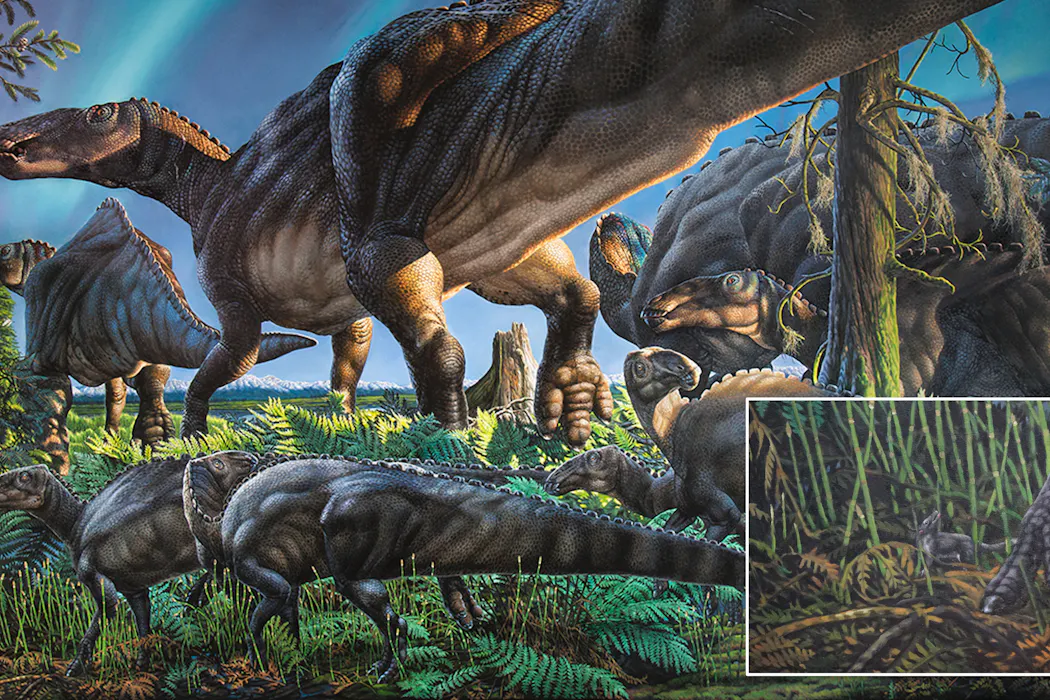
The fossil mammal teeth at the centre of my new study with US colleagues come from the Late Cretaceous Prince Creek Formation, around 73 million years ago. At that time, northern Alaska’s palaeolatitude was roughly 80-85°N (10-15° closer to the north pole than it is today).
Our discovery shows the Arctic was not simply a cold, lifeless edge of the Cretaceous world, but a place where mammals adapted, diversified, migrated and originated. It raises deeper questions about what it means for a species to be native to a place whose landscapes, climates and inhabitants are forever changing.
The Arctic is not an empty landscape now, and nor was it in the deep past. It was a distinctive and demanding biome, with months of winter darkness, freezing temperatures and strong seasonality.
Rivers crossed this landscape. Plants grew through the long light of summer. Dinosaurs lived and thrived there, and evidence suggests they reared their young in the Arctic. There was also a diversity of birds, fish and mammals: tenacious denizens of the polar dark.

Finding miniscule fossil mammals is not the kind of palaeontology that begins with a spectacular skeleton weathering from a cliff. It begins with bulk sediment. Bags and buckets of it.
The material is dug out, washed, sieved through fine screens, dried, then meticulously sorted grain by grain beneath a microscope.
Mammalian palaeontology often depends on fragments: a tooth cusp, a root, a worn edge of enamel. It asks for patience more than drama. The field site may be remote, the landscape vast, but the discovery happens at the scale of a fingertip. It is an act of attention.
The five teeth described in our new study are multituberculates: a group of rodent-like mammals that lived alongside dinosaurs. They are the longest-lived mammal group to date, with a history spanning well over 100 million years. Our own species Homo sapiens, by comparison, is only a few hundred thousand years old.
But their success was not permanent. After surviving for longer than any other mammalian lineage, multituberculates eventually vanished, with their last representatives disappearing around the Eocene-Oligocene boundary, roughly 34 million years ago.
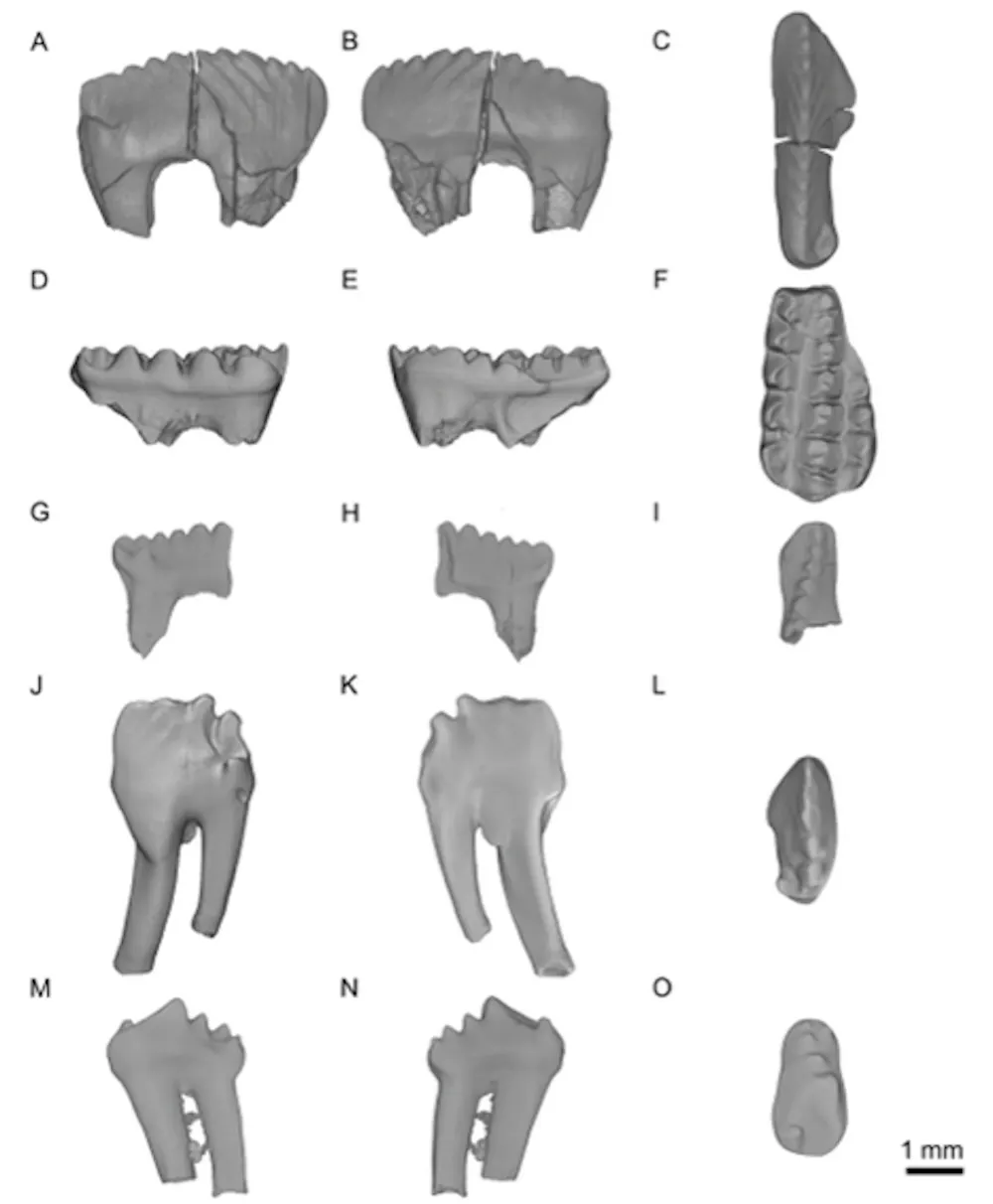
The teeth we found at Prince Creek represent three new species: Camurodon borealis, Kaniqsiqcosmodon polaris and Qayaqgruk peregrinus. The last of these sits especially close to the heart of the story.
Qayaqgruk peregrinus has close evolutionary affinities with a group of multituberculates discovered in Mongolia,, indicating that, many millions of years ago, these minute mammals moved between Asia and North America through a polar land corridor.
This was not the world of Pangaea, the single giant continent of earlier Earth history. By 73 million years ago, the continents were taking on more familiar shapes, but they had not yet settled into the map we know today.
North America was split by a shallow inland sea, and its far northwestern edge lay near northeastern Asia, creating a high-latitude corridor through which animals could move between continents.
The Arctic corridor itself was not unknown. Fossils of dinosaurs, birds and some mammals have shown that animals were migrating between Asia and North America during the Cretaceous.
But for multituberculates, the picture was much less clear. Their fossil record left open whether they crossed between the continents early and repeatedly, or only later in the Cretaceous. Qayaqgruk peregrinus helps close that gap.
Its name draws on the language of the Iñupiat, Alaska Native people, from the region where the fossils were found. Qayaq is a legendary Iñupiaq hero and wanderer whose journeys are told in The Epic of Qayaq.
Many of its Mongolian relatives carry the suffix -baatar, meaning hero in Mongolian, so the name also links its Alaskan discovery to its Asian evolutionary affinities.
Kaniqsiqcosmodon polaris is the oldest known member of the Microcosmodontidae family of multituberculates, suggesting this lineage, later known from North America, may have had a polar origin. Camurodon borealis represents the northernmost known occurrence of the North American family Cimolomyidae.
Five teeth are not a complete ecosystem, but they are enough to show these mammals were not occasional strays at the edge of their range. They belonged to the Arctic.
Survival in this environment was not a passive condition. Multituberculates survived through the end-Cretaceous mass extinction, 66 million years ago, when as much as 75% of all life on Earth went extinct, including the non-avian dinosaurs.
The adaptations that helped these ancient Arctic species live though deep winter cold, short dark days and seasonal scarcity may have given them advantages when the world’s ecosystems were devastated.
This is not to say the Arctic was a refuge in any simple sense. Evolution is rarely simple – it is full of bottlenecks and unexpected openings. But tiny mammals already adapted to seasonal scarcity may have carried some advantages into a disrupted world.
The Alaskan multituberculates did not belong to the Arctic because they had always been there, or because their lineages had never moved. They belonged because they were part of that ecosystem for a time: shaped by its dark, its cold, its flora, its fauna, its seasons and its routes of passage.
Fossils make this kind of belonging harder to define, but more interesting. They give the word indigenous, at least when we use it for species, a chronology: deep time shows that belonging is not always a matter of original presence, but of ecological participation across changing landscapes.
These five multituberculate teeth from the Prince Creek Formation are small enough to vanish in a pinch of sediment. Yet in their enamel are continents, seasons, darkness, ancestry and journeys.
They show that the ancient Arctic was not an evolutionary margin. It was a living biome, a passage between worlds, and part of the deep history of mammalian evolution.

Sarah Shelley does not work for, consult, own shares in or receive funding from any company or organisation that would benefit from this article, and has disclosed no relevant affiliations beyond their academic appointment.
Nature Geoscience, Published online: 01 June 2026; doi:10.1038/s41561-026-01996-1
Global soil mineral data from orbital spectroscopy reduce uncertainty in dust’s solar radiative impact and improve estimates of Earth’s energy imbalance, according to analyses integrating high-resolution soil composition into Earth system models.
Nature Energy, Published online: 26 May 2026; doi:10.1038/s41560-026-02077-8
Low-bandgap tin–lead perovskites can boost solar cell efficiency but degrade quickly due to tin oxidation. Here the authors add proton-scavenging additives that stabilize inks for over 300 days, enabling 24.06% single cells and 29.56% certified tandem efficiency.
It may sound too bizarre to be true but the Amazon molly (Poecilia formosa), a fish that inhabits rivers, lakes and swamps in Mexico and Texas, exists over much of its range in populations that are 100% female. In 1932, the Amazon molly became the first known vertebrate to reproduce by cloning itself, producing all-female populations. A new genetic study has given scientists insights into the longstanding mystery about how and why this happens.
The proportion of females in the human population is roughly 50%. A few countries such as Maldives (38% female) and Moldova (54% female) diverge from this, but these differences can largely be explained due to male immigration and emigration. However, much more dramatic sex ratios are found in the animal kingdom. Kentish plover bird populations, where males care for offspring, comprise only 14% female, and sea turtle populations, where sex is determined by temperature often exceed 75% female.
Most animal species reproduce sexually. This involves the fusion of two gametes, the sperm and egg, that develops into an embryo. A process, known as recombination, randomly shuffles the genetic material from the mother and father. This produces increased variability in the offspring, and new combinations of traits. The genetic diversity improves the chances of survival for the species if its environment changes.
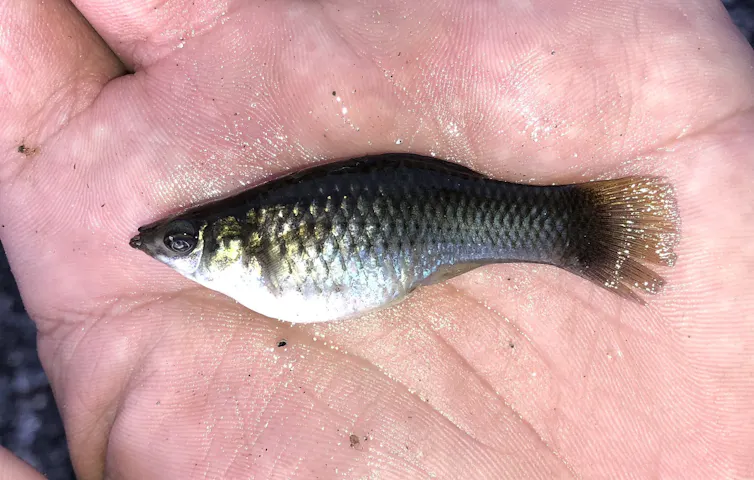
But the Amazon molly reproduces asexually, where there is no mixing of genetic material. This reduces genetic diversity, making populations vulnerable to extinction – if one Amazon molly is susceptible to a disease, they all are.
And there is another problem to being identical. Asexual species are more likely to accumulate harmful mutations. This phenomenon, known as Muller’s ratchet, predicts that clones should go extinct within 10,000 years. Yet, the Amazon molly, – a hybrid that arose through sexual reproduction between a female Atlantic molly (P. mexicana) and a male sailfin molly (P. latipinna) – has survived for over 100,000 years.
So, what is the secret to their sustained existence?
Gene conversion is a process where one version of a gene is replaced by another. In most species, such as humans, it is used to repair damaged DNA. However, in the Amazon molly, gene conversion has slowed Muller’s ratchet. The new study found that gene conversion appears to play the same role as recombination. This essentially enables the fish to purge harmful mutations and preserve beneficial ones. Indeed, despite reproducing asexually, the Amazon molly shows differences in body shape between populations, demonstrating evolution in response to its local environment.
The Amazon molly reproduces via a process called parthenogenesis, also known as “virgin birth”, where young are produced from an unfertilised gamete. This allows rapid growth of successful genotypes, the genetic blueprints of organisms, as all of the Amazon mollies can reproduce without finding a mate. As such, animals created via virgin births can colonise habitats quickly.
Parthenogenesis can be obligative, like in the Amazon molly, where it is the only means of reproduction. But, it can also be facultative, where species can switch between sexual and asexual reproduction. For example, the marbled crayfish, reproduce sexually in their native range but rapidly establish themselves in new habitats asexually, often from a single female.
The Amazon molly has a type of parthenogenesis known as gynogenesis where sperm is required to stimulate development of the unfertilised egg. So, the Amazon molly still needs to “mate” each time she reproduces, but the sperm is not incorporated into the offspring.
The Amazon molly mates with males from species closely related to them, which reproduce sexually. Although the genes of these males are not passed on to the next generation, it is still advantageous for them. That’s because female animals often follow trends when it comes to selecting a mate. So when the female fish of their own species see the males with an Amazon molly, they are more likely to mate with them.
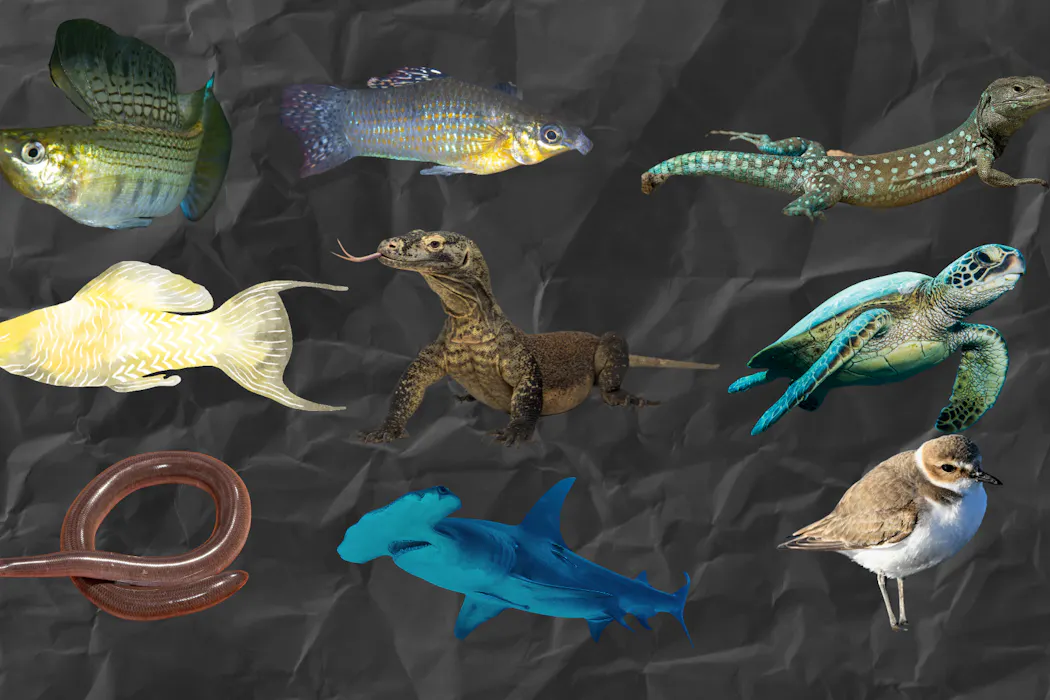
Parthenogenesis is common in invertebrate animals, including ants, bees and wasps. It is less common in vertebrates but has been found in other fish, amphibians, reptiles including the Komodo dragon, birds such as Californian condors and sharks for example hammerheads.
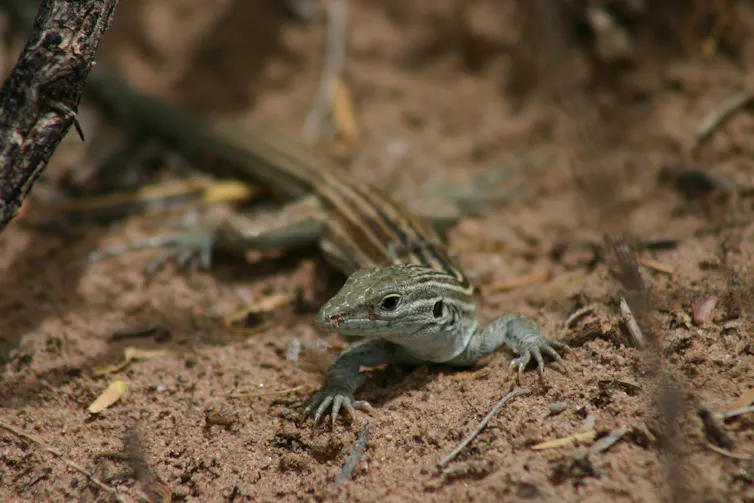
Other all-female parthenogenic vertebrates include the whiptail lizards, where almost a third of species are comprised solely of females. The New Mexico whiptail lizard has even become a queer icon. Unlike the Amazon molly, these “lesbian lizards” do not need sperm from a male to stimulate egg development. They just need to engage in mating behaviour to stimulate ovulation, bypassing males completely.
Some blue-spotted salamanders have reproduced asexually for several million years. Although the all-female populations of the salamanders reproduce in a similar way to the molly fish, requiring sperm to stimulate development, they are kleptogenic. This means that they replace a portion of the mother’s DNA with a portion of DNA from the male’s sperm, incorporating a small amount of his genetic material into the offspring. This facilitates the genetic diversity that has enabled the salamanders to survive for so long.
Like the Amazon molly, the Brahminy blind snake, also known as the flowerpot snake due to its habit of burrowing in potted plants, is the only other known vertebrate that breeds exclusively via parthenogenesis.
The snakes have three copies of each chromosome, rather than the usual two, probably due to an error in cell division at some point in the evolutionary history of the species. Increased numbers of chromosomes have been found in many species, including salmon with four copies, and sturgeon fish with eight copies.
Increased numbers of chromosomes generates increased genetic diversity, which probably explains how the blind snake clones have survived for so long.
There could be more all-female animals out there yet to be discovered. After all, up until a few years ago we didn’t know that female snakes have two clitorises.

Louise Gentle works for Nottingham Trent University.
 Open Access
   This article is licensed under a Creative Commons Attribution 3.0 Unported Licence.

