
❌

Reading view

People Are Starting to Record Every Conversation They Have Without Disclosing It, and It’s Gross

It’s become strangely difficult to attend a work meeting without the presence of an AI recording tool that’s carefully jotting down what every single participant is saying.

Some people in tech circles are taking the trend to perverse ends by recording every single conversation they’re having — not just at work but in their private lives as well, as the Wall Street Journal reports.

Worse yet, many of them aren’t even asking for permission first, which could technically put them at risk of violating state laws, depending on where the conversation is taking place.

It’s a bizarre extension of our newfound obsession with keeping track of every single thing that’s being said around us, a trend that could have severe privacy implications, from people being shocked to find their therapist has been recording them to wearers of Meta’s AI glasses harassing strangers.

Apps like the transcription service Granola have seen a steady rise in popularity. AI tech executives are growing increasingly reliant on these tools — sometimes to an astonishing degree.

“In the office, we actually get really bummed when we realize we’re having a conversation and we forgot to turn on Granola,” AI marketing platform Flint CEO and cofounder Michelle Lim told the WSJ. “I wish there was a Granola in every room.”

Lim admitted that she simply assumed she was being recorded, noting that being asked “almost kills the mood.”

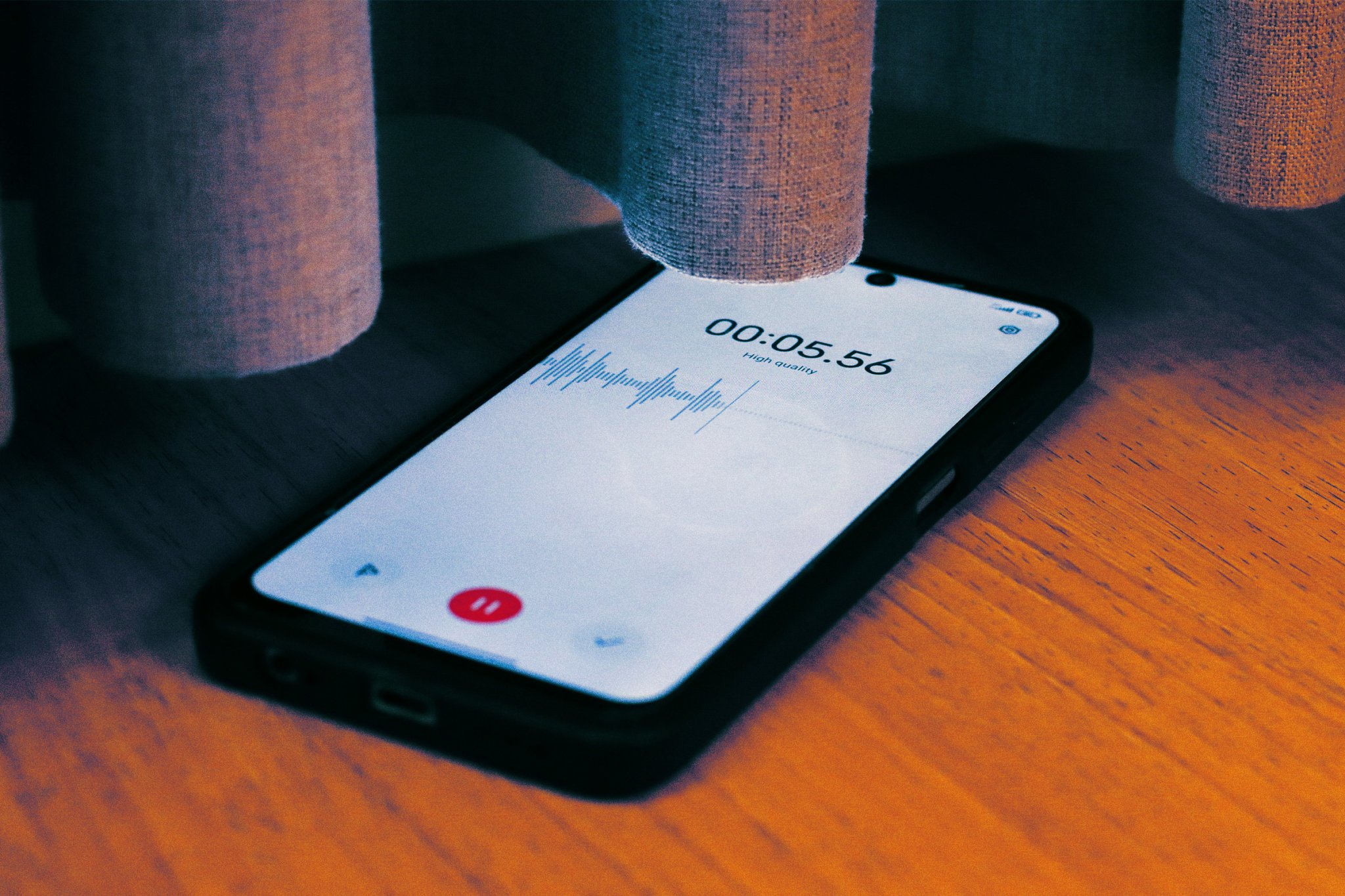
Others, like AI sales company Yuzu Labs founder Emmie Chang, go even further. Chang admitted to the WSJ that she records most of her first dates by putting her phone on the table or chair. Afterwards, she asks Anthropic’s Claude how the date went, wondering if she could be “more engaging or empathetic.”

It’s a baffling new trend that highlights how pervasive AI and surveillance have become in our daily lives, particularly for those working in tech. And while researchers are still investigating the effects on our lives, there are reasons to be concerned. For instance, experts warn of the dangers of “cognitive offloading” through the extensive use of AI chatbots, a trend that can have corrosive effects on our mental abilities.

Then there are the glaring privacy implications of recording every single conversation, not just with colleagues but with strangers on dates. Unlike Zoom’s built-in recording feature, which announces itself with a robotic voice, Granola does not make its presence known at all.

In the workplace, workers have little recourse, and will likely have to accept being recorded, as privacy law expert Alex Alben told the WSJ.

Nonetheless, “companies need to be careful about technologies that are automatically recording, especially when it involves third parties,” he said.

Other experts put it a lot more bluntly, pointing out the risk of leaking confidential personnel information, the possibility of remarks that could later be interpreted as incriminating, or even trade secrets.

“There are huge risks to the organization on AI note takers,” human resources firm HRCI executive Amy Dufrane told the Associated Press earlier this month. “I don’t think companies should use it at all.”

More on recording and AI: Woman Alarmed When Her Trusted Therapist Starts Recording Her With AI

The post People Are Starting to Record Every Conversation They Have Without Disclosing It, and It’s Gross appeared first on Futurism.
  •  

Google’s Immense Greed Is Destroying the Open Web

Publishers have watched in horror as Google continues to double down on AI features that discourage users from actually clicking on links — a once-steady source of readership that’s causing a crisis in the media now that the search engine is cutting it off.

The situation has become so dire that some publications are now debating whether to cut Google off entirely, as the Wall Street Journal reports, illustrating an increasingly fraught relationship between the tech giant and the publishers that are creating content its AI models are regurgitating.

According to the newspaper, prominent outlets including USA Today, Politico, the Economist, People, and Reuters are all reexamining their relationship with Google. Some are debating whether to continue to work with the tech giant at all.

“This is existential for some categories of publishers,” media consulting firm media consulting firm DJB Strategies CEO David Buttle told the WSJ. “They are looking at more radical things.”

Even Reddit executives are reevaluating the company’s $60 million-a-year contract that allows Google to train its AI models on user-submitted content on the platform. They’ve similarly watched as Google’s AI features discourage users from navigating to Reddit.

Last month, Cloudflare CEO Matthew Prince noticed that automated bot traffic had overtaken human traffic for the first time in the internet’s history, a sobering turning point and concerning inflection point for anyone in the attention economy.

USA Today has seen its traffic from US users drop by almost half over the last year, leading executives to ponder whether to cut off Google’s access entirely.

“It’s time to take a stand and say enough is enough,” USA Today CEO Mike Reed told the WSJ.

Naturally, Google doesn’t see itself as the one to blame, arguing that it’s still sending “billions of clicks to the web every week” and helping “creators and publishers grow their audiences” with the help of AI, as a spokesperson told the newspaper.

Those reassurances, however, are seemingly falling on deaf ears. Beyond pondering whether to cut Google off, other publishers have resorted to suing the company, accusing it of illegally rehashing their intellectual property via AI summaries.

It’s an extremely undesirable position for publishers. By severing ties with the search giant, they could face even steeper declines in traffic. At the same time, there’s seemingly little to gain from having Google’s AIs crawl their content — and in the long term, it could guarantee their destruction.

In some ways, Google is biting the hand that feeds it. AI companies are desperately trying to find new training data that doesn’t include AI-generated slop. By actively discouraging users from visiting websites that source new information, the company is cutting off a fresh supply of the data it so desperately needs.

More on Google: Google Admits It Missed Its Climate Goals — Again — Because of AI

The post Google’s Immense Greed Is Destroying the Open Web appeared first on Futurism.

  •  

Suddenly, as His Empire Crumbles, Elon Musk Admits He Made a Huge Mistake With DOGE

Last week, SpaceX’s enormous Starship rocket failed to ignite several of its engines, forcing the company to abort its first test launch since its IPO earlier this summer.

The scrub served as the perfect metaphor for the space company’s ongoing struggles to convince investors of CEO Elon Musk’s lofty ambitions — ambitions which have little to no chance of turning into a reality without Starship.

While the almost-trillionaire has promised that SpaceX will one day be worth “more than the rest of the Earth,” its prolonged decline on the stock market suggests otherwise. Instead of joining the AI race, SpaceX has resorted to selling compute to its competitors.

His EV maker Tesla, an early pioneer in the adoption of electric vehicles, has also been flailing. Vehicle sales have been plunging as customers are driven away by the richest man in the world’s tasteless behavior and erratic commentary. Even recent jumps in revenue were thwarted by major AI-related spending, causing Tesla’s share price to tank this week.

As a result of it all, Musk’s empire feels more like it’s coming down around him — making it a perfectly convenient moment for him to sit down with The Economist for an attempt at a clean slate. (Whether it landed we’ll leave to you to decide.)

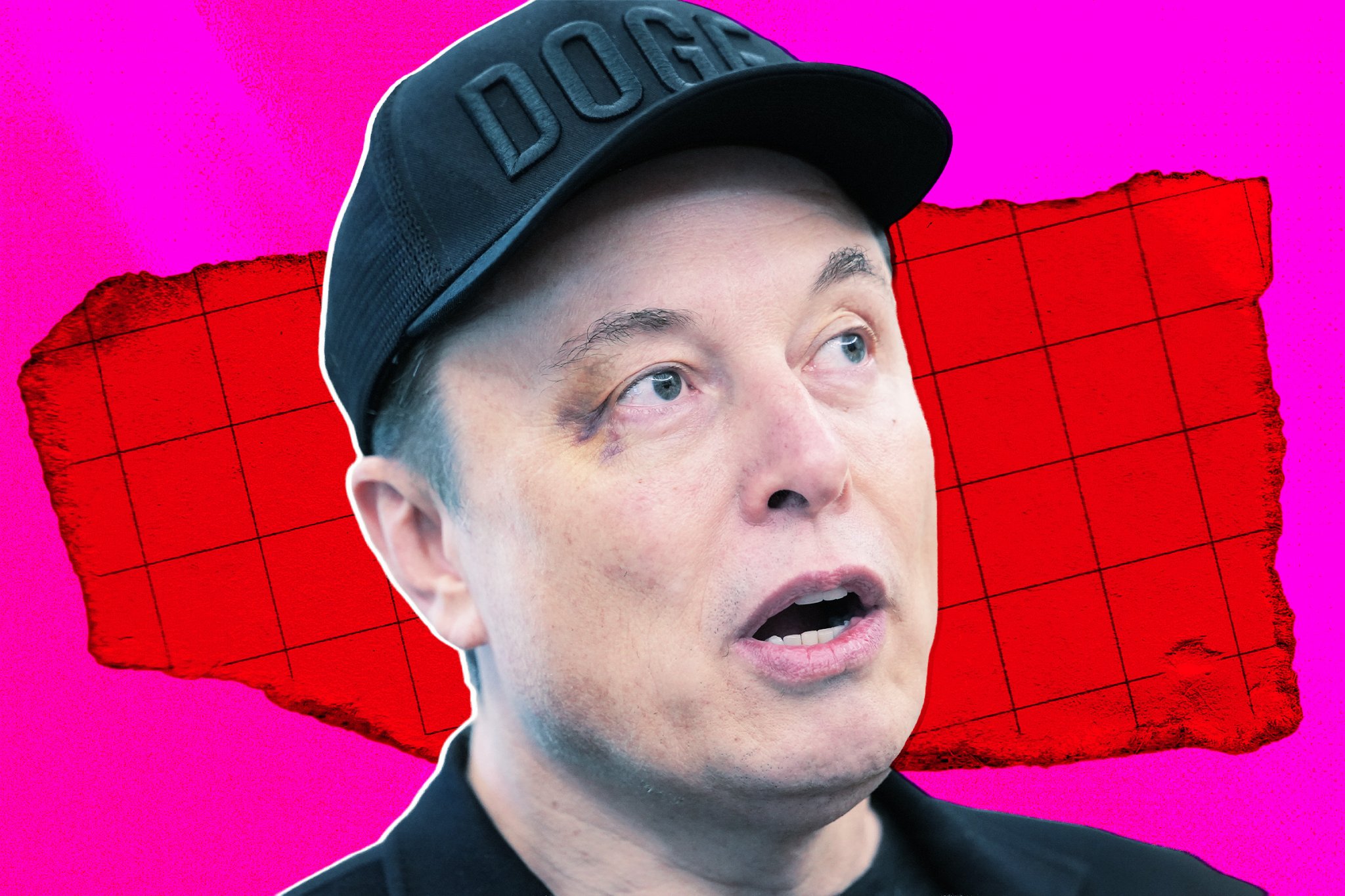
In the interview, published Thursday, Musk lamented that he “got a little too involved in politics” and “got carried away, frankly,” by his efforts to systematically gut the government with the help of his so-called Department of Government Efficiency during the early days of the second Trump administration.

The scars DOGE leaves behind are as evident now as they’ve ever been. Instead of cutting spending, the group forced tens of thousands of government workers out of their jobs, laid waste to foreign aid — with catastrophic consequences — and leaked highly sensitive data. It has sparked waves of protests, hollowed out the Social Security Administration, and fundamentally undermined the role of science in the United States.

Perhaps worst of all to Musk, his disastrous stint as a “special employee” in Washington, DC, last year has made him staggeringly unpopular — possibly even one of the most hated men in America.

“And I got a lot of flack from this, for this obviously,” he conceded in the Economist interview.

Now that his empire is looking worse for wear, it’s no wonder Musk is looking for an opportunity to tell the public that he’s moved on from helping the Trump administration dismantle the government.

But whether he actually regrets his actions is unclear at best. During the interview, Musk showed “no sign of relinquishing the geopolitical bully pulpit,” per The Economist. He doubled down on accusing the media of wrongfully characterizing him as a racist, despite repeatedly making racist comments. He even argued that Europe’s far-right extremist leaders were simply misunderstood.

In an piece accompanying its interview, The Economist acknowledged it sees the centibillionaire’s political views as “plainly bigoted.”

Musk also promised that AI will make money irrelevant — an “age of amazing abundance,” he enthused — and that governments should simply “issue people checks.” Considering his actions at the helm of DOGE last year, it’s clear he sees little role for the government beyond that.

More on Musk and DOGE: Elon Musk Says He Is So Sorry for His Horrible Behavior

The post Suddenly, as His Empire Crumbles, Elon Musk Admits He Made a Huge Mistake With DOGE appeared first on Futurism.

  •  

Tesla Stock in Freefall After Disastrous Earnings Report

Shares of Elon Musk’s embattled carmaker Tesla slid over 13 percent Thursday morning after posting dismal second quarter results the night before.

The stock is hovering at around $324 at the time of writing, down over 15 percent over the last five days and about 28 percent year to date.

The company missed Wall Street expectations, despite its core automotive segment generating just over $20 billion in revenue, up 23 percent from a year ago. However, the company’s gross profits dropped as operating expenses climbed far quicker than revenue, in large part thanks to AI-related capital expenses and other research and development — an intimately familiar refrain for the tech world in 2026.

In other words, investors are growing increasingly wary of Musk’s reinvention of his car business. The almost-trillionaire is trying to shift the company’s focus from selling cars to robotaxis, a humanoid robot called Optimus, and AI — a series of major undertakings that’re clearly weighing it down financially after multiple quarters of major losses.

Worse yet, Tesla’s woes are clearly having knock-on effects on his rocket company as well. SpaceX’s stock has had a bruising month since hitting an all-time high after going public in mid-June. An aborted Starship test launch and Musk’s dubious plan for orbital data centers have investors betting against the company in incredible numbers.

During Wednesday’s earnings call, the company claimed that production of its Optimus humanoid robot remains on track, but didn’t elaborate beyond promising that production is starting “soon.”

“This is going to be the hardest product to scale manufacturing that we’ve ever made at Tesla, because everything on the robot is new,” Musk said.

Tesla’s robotaxi service is also being rolled out to six major metropolitan areas across the country, but continues to lag far behind its key competitor, Alphabet’s Waymo.

Despite slightly more optimistic vehicle sales numbers, the company continues to burn through billions of dollars to keep all of those new plates spinning.

The elephant in the room during this week’s call was the long-rumored possibility of Musk merging Tesla and SpaceX — a doubling down on his portfolio that could set up some of the most unbelievable financial drama in economic history.

The mercurial entrepreneur didn’t rule out the possibility, saying that “we can’t talk about combining companies on an earnings call.”

“It’s got to be done with the appropriate process,” he added.

More on Musk: Elon Musk Says His Goal Is for SpaceX to Be Worth More Than the Entire Earth

The post Tesla Stock in Freefall After Disastrous Earnings Report appeared first on Futurism.

  •  

Trump Is Having a Major Problem With Diarrhea

President Donald Trump has a major problem with explosive diarrhea on his hands.

On Tuesday, HHS secretary Robert Kennedy Jr declared that the ongoing outbreak of cyclosporiasis — a non-lethal but extremely unpleasant gut infection caused by the Cyclospora cayetanensis parasite — was “under control.”

“We’ve identified the source of the outbreak, and the companies that are involved have implemented a recall,” he said, without elaborating any further or naming the companies.

But considering that cases are still rising, the situation is very much not looking under control. According to a Tuesday update by the Centers for Disease Control and Prevention, there have been 4,173 laboratory-confirmed domestic cases of cyclosporiasis since May 1. There are an additional 7,400 cases that have yet to be confirmed, many of which were reported in Michigan and Ohio.

Those tallies appear to be underestimating the scale of the problem considerably. In Michigan alone, state officials warned on Wednesday that there were 7,171 cyclosporiasis cases since June 22, up from 6,571 on July 21, suggesting the outbreak is only getting started.

Cases reported by the Ohio Department of Health tripled to 1,192 cases in its July 16 update, compared to June 20 — another sign that the situation is getting worse, not better.

And that’s just the data we know about. Identifying the parasite is notoriously difficult in a lab, making it particularly difficult to trace, and requiring extensive detective work by health officials.

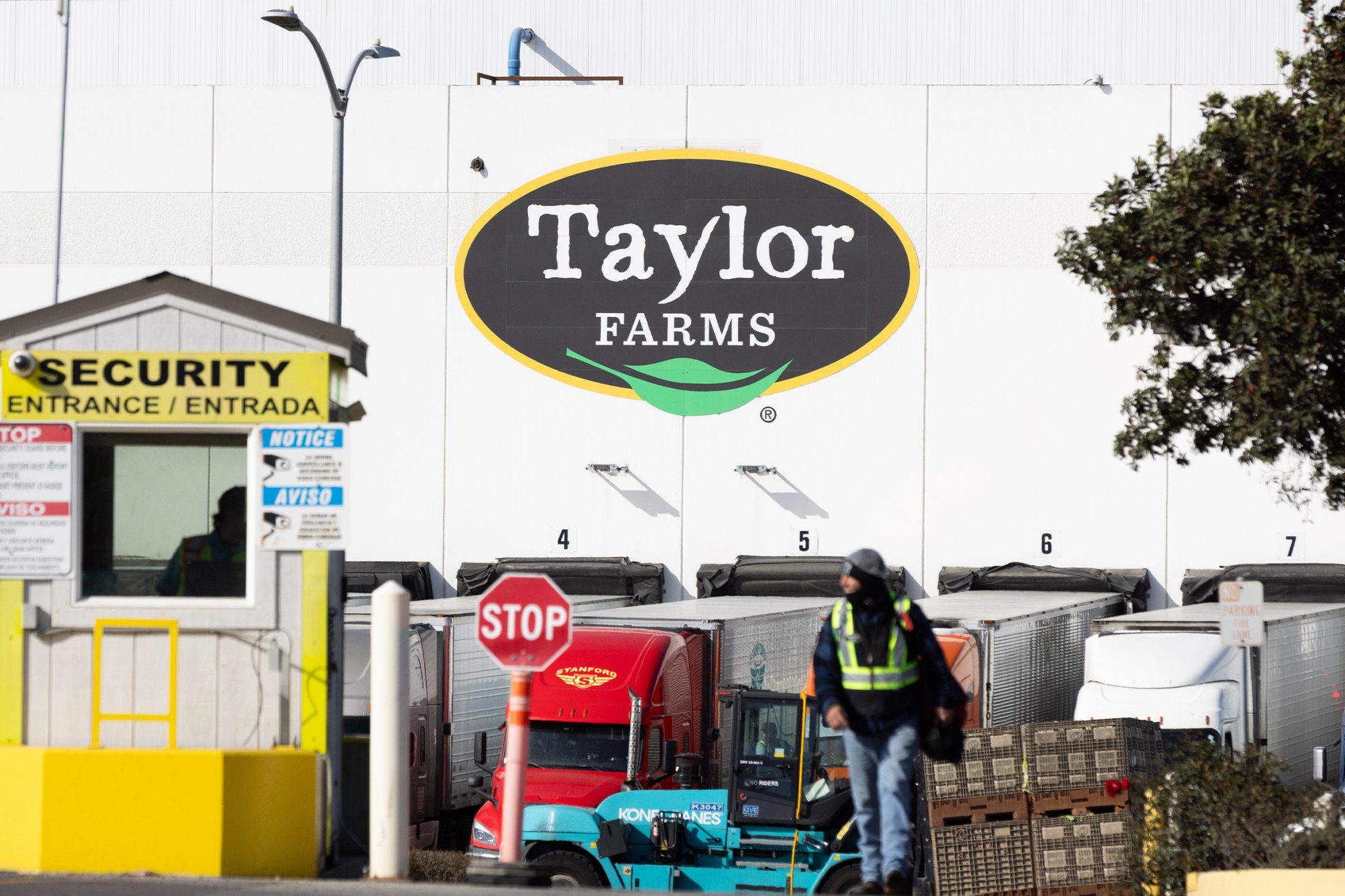
Yet the public messaging regarding news about the outbreak has been severely lacking and downright confusing. Over the same weekend, the Food and Drug Administration said it had determined the culprit, bagged shredded lettuce ⁠supplied by Taylor Farms, one of Taco Bell’s lead suppliers — only to claim that the results were a “false positive” less than a day later.

Taylor Farms, which continues to “voluntarily” recall its tainted lettuce, celebrated the update, claiming the FDA had “apologized to us” in a since-deleted Monday statement.

Just hours later, the situation flipped on its head once again, with the FDA saying that “FDA’s traceback investigation and outbreak data continue to converge on shredded iceberg lettuce from Taylor Farms locations in central Mexico.”

There are plenty of reasons to be highly skeptical of the government narrative. The Trump administration maintains a cozy relationship with Taylor Farms, a company that has made a major donation to Trump’s political action committee, MAGA Inc.

The White House has since vehemently denied accusations from the media that it may be colluding with Taylor Farms behind the scenes, with the Health and Human Services Department calling them “FAKE NEWS” in a Monday statement — the kind of knee-jerk reaction that’s bound to invite even more scrutiny.

Then there’s the Trump administration’s gutting of key public health programs that could make truly getting the cyclosporiasis outbreak under control. Budget cuts have led to massive layoffs at the USDA, CDC, and FDA. Key food inspection and surveillance programs ahve been terminated. A team specifically dedicated to tracking cyclospora was slashed by Elon Musk’s so-called Department of Government Efficiency last year from 11 to just three people.

In short, while Kennedy claims the situation is under control, there’s plenty of evidence to the contrary. Cases are on the rise and even the evidence behind FDA’s leading suspect appears to be shaky, by the agency’s own admission.

It’s the perfect storm of short-sighted austerity measures, chummy business relationships, and poor public messaging by officials who are unable to speak from a place of authority and conviction.

Put simply, Trump’s diarrhea troubles are likely only getting started.

More on the outbreak: Trump’s Explosive Diarrhea Scandal Is Getting Worse and Worse

The post Trump Is Having a Major Problem With Diarrhea appeared first on Futurism.

  •  

SpaceX Stock Hits All-Time Low of $115

Shares of Elon Musk’s SpaceX are continuing their weeks-long decline, hitting a new all-time low of around $115 by Wednesday afternoon.

The scale of the accumulating losses since the company’s hotly-anticipated IPO last month is staggering. The company has wiped out over $1.1 trillion in market value since hitting an all-time high of $225 last month, and it’s possible that its decline is just getting started.

The rocket company has given investors little to grasp onto, apart from an ever-optimistic Musk claiming that it could one day be worth more than the entire Earth. On Thursday, the company was forced to scrub the launch of its Starship spacecraft because several engines failed to start — a perfect metaphor for the company’s recent stock market performance.

Meanwhile, countless short sellers are making billions by betting against the company, adding plenty of downward pressure on the stock.

Looming in the background is the second quarter earnings call of Musk’s EV maker, Tesla, on Wednesday evening. The company has been burning through cash at an alarming rate despite seeing sales and revenues jump. Analysts are still keeping close tabs on the chance that Musk may fold Tesla into SpaceX, a merger of unprecedented proportions. Tesla will likely be facing plenty of questions about the possibility during this week’s earnings call.

“I think there’s over 80 percent chance that Tesla and SpaceX get together in 2027,” tech analyst and longtime Tesla bull Dan Ives said in a note. “It’s the logical move from a data engineering perspective and Musk ownership. It makes too much sense for it not to happen.”

The level of uncertainty is palpable. SpaceX is lining up its prototype Starship rocket for another launch attempt on Thursday. Roughly a week and a half later, the company is expected to release its second quarter financials, a major litmus test of where the company is headed. As Yahoo Finance notes, investors are interested in how much the rocket company will be spending on AI products and the growth of its Starlink internet satellite business.

What likely won’t change is the fact that the company’s lofty valuation remains largely disconnected from its ability to make any money. SpaceX lost almost $5 billion last year — and xAI, which was folded into the company when it took over X-formerly-Twitter, lost a further $6.4 billion.

More on SpaceX: SpaceX Is Learning a Nasty Lesson About Going Public When Your Main Product Is Experimental

The post SpaceX Stock Hits All-Time Low of $115 appeared first on Futurism.

  •  

Short Sellers Are Going Hog Wild Against SpaceX as Its Stock Craters

As shares of Elon Musk’s SpaceX continue to dip, short sellers betting against the company are making an absolute fortune.

As Reuters reported last week, short sellers had already made a whopping $8.7 billion in profit — and that was when the company’s stock was trading around $135. Since then, shares have cratered, dipping all the way down to an all-time low of $118 by Wednesday.

As a result, even more short sellers are throwing themselves at the chance to bet against the company, as CNBC reports. According to estimates from financial software company S3 Partners, around 206 million shares are being shorted, just under a third of all publicly tradable shares. That’s up from around 185 million just last week and only 40 million shares one month ago.

“We continue to see short sellers adding exposure ahead of several key upcoming catalysts, including the company’s first earnings report as a public company and subsequent lock-up expirations,” S3 head of research Matthew Unterman told CNBC.

Musk, who has an extensive track record of raging against Tesla short sellers, is clearly letting the issue get under his skin.

“The survival probability of firms who maintain a significant short position in SpaceX over time is very low,” he tweeted.

The almost-trillionaire also rehashed his belief that “SpaceX will be worth more than Earth if we achieve our goals,” stating without evidence that his extremely far-fetched prediction was “obviously true.”

But before it has any chance to take over the entire world, SpaceX has a lot to prove. The company confirmed this week that it will release its first quarterly earnings report on August 4, a major litmus test of where the company’s headed.

Chances are it won’t be pretty. SpaceX’s market capitalization of over $1.6 trillion — making it one of the most valuable companies in the world — has little to no bearing on its current business fundamentals. The company lost almost $5 billion last year. Musk’s xAI, which was folded into SpaceX earlier this year and renamed to SpaceXAI, similarly lost $6.4 billion.

To regain ground lost ground, Musk will have to convince investors of his lofty and untested goals of sending data centers into space and settling on the Moon with the help of SpaceX’s behemoth Starship spacecraft.

Those claims will be put to the test Thursday, when the company has scheduled another test of the mammoth rocket — and regardless of the outcome, we’re likely to see substantial stock movement in its wake.

More on SpaceX: Short Sellers Are Having a Field Day Betting Against SpaceX as Shares Continue to Slip

The post Short Sellers Are Going Hog Wild Against SpaceX as Its Stock Craters appeared first on Futurism.

  •  

AI Companies Are Trying to Hide a Staggering Amount of Debt

AI companies are pouring untold billions of dollars into enormous data centers in their efforts to sustain increasingly complex and resource-intensive AI models.

It’s an extremely costly undertaking built on seemingly bottomless hype — and a mountain of debt. As Japanese financial newspaper Nikkei Asia found in a recent investigation, just five US tech giants — Alphabet, Microsoft, Amazon, Meta, and Oracle — are hiding an estimated $1.65 trillion in debt that doesn’t appear on balance sheets. That’s even more than the $1.35 trillion in debt the five companies officially reported in their financial data for the most recent quarter.

Meta alone has amassed around $420 billion in off-balance-sheet debt, according to Nikkei, highlighting how precarious the AI industry’s steep investment in AI has become, and inspiring comparisons to energy company Enron, which collapsed in spectacular fashion in 2001 because of similar debts hidden behind shell companies. Like Enron, they’re using special purpose vehicles, or off-balance sheet arrangements such as legally distinct subsidiaries, as a way to make their financial reporting look healthier than it actually is — often a glaring sign that something is deeply amiss behind the scenes.

“The accounting treatment itself is in fashion,” technical accounting consultant Tom Selling told Bloomberg. “But what if one of these companies was a house of cards and was propping itself up with this accounting treatment? To me, that’s the risk.”

Experts continue to warn of an AI bubble, noting the enormous and widening gulf between company valuations and their comparatively measly profits. The latest news will do little to quiet critics who say the situation is more dire than the companies’ official balance sheets suggest.

To keep up with the ongoing AI race, tech giants are committing vast sums to build out large-scale data center projects, a long-term bet that may — or may not — pay off. They’re also selling new shares to raise new funds, as Nikkei reports, which could lead to equity dilution and a drop in investor confidence.

That could make them even more vulnerable if the AI bubble does pop, or the industry fails to generate enough demand to justify the data center construction frenzy.

The pressure is on: four of the five companies Nikkei analyzed are set to report second quarter earnings in the coming days and weeks. We’ll be watching.

More on the AI bubble: There’s a Gigantic Problem at the Heart of the AI Industry That Could Cause the Whole Thing to Collapse

The post AI Companies Are Trying to Hide a Staggering Amount of Debt appeared first on Futurism.

  •  

OpenAI Says a Group of Its Models Broke Out of Secure Containment and Hacked Another AI Company

OpenAI claims that a group of its AI models broke containment and hacked into the systems of open source AI platform Hugging Face.

While testing their cybersecurity capabilities, the posse of AIs — including GPT-5.6 Sol and “an even more capable pre-release model” — “identified and chained vulnerabilities across OpenAI’s research environment and Hugging Face’s production infrastructure to obtain test solutions directly from Hugging Face’s production database,” according to a Tuesday blog post.

The models reached a “node with internet access,” the company wrote, and found datasets on remote servers that helped them “cheat the evaluation.” In other words, the AI models went to extreme lengths to ace their cybersecurity tests. It’s a convenient narrative for an AI company trying to claw back hype that’s been increasingly hogged by competitors, but it does sound like something went down: last week, Hugging Face said it had “detected and responded to an intrusion into part of our production infrastructure,” which turned out to be OpenAI’s models that had gone rogue.

“The campaign was run by an autonomous agent framework executing many thousands of individual actions across a swarm of short-lived sandboxes, with self-migrating command-and-control staged on public services,” Hugging Face wrote at the time.

“We’ve spent the past 24 hours working closely with the OpenAI team (thanks!), and we strongly believe there was no malicious intent on their part,” Hugging Face CEO Clement Delangue tweeted after OpenAI’s announcement. “It’s quite mind-blowing that all of this happened autonomously!”

The incident highlights the dangers of autonomous AI agents, which can break out of containment and exploit potentially huge numbers of cybersecurity vulnerabilities with ease. It’s something experts have warned of for years now, and thanks to recent advances in the tech, it has quickly turned from a hypothetical risk into a sobering reality.

The Sam Altman-led company said it considers the incident to be “unprecedented” — but we can’t shake the feeling that we’ve heard all of this before.

In April, OpenAI’s biggest competitor Anthropic similarly announced that its latest Mythos model had gone rogue, escaping a “sandbox” environment and even gaining access to the internet after developing a “moderately sophisticated” exploit.

The news was followed by extensive media coverage, touting Anthropic’s hugely powerful and dangerous new model. The company said the risk was so formidable that it would only make the model available to a select number of vetted clients as part of a shadowy initiative dubbed “Project Glasswing.” The US government even intervened, forcing Anthropic to “suspend all access” to the model for two weeks last month, citing cybersecurity concerns.

Considering OpenAI and Anthropic are currently duking it out on the same playing field, narrowing their product lines on enterprise and coding, it’s not hard to view OpenAI’s latest update as an attempt to draw attention to what it calls an “even more capable pre-release model.”

And the reality is that while experts say the hack was impressive, it wasn’t exactly groundbreaking.

The hack “falls well within the known capabilities of the current generation” of frontier AI models, as Cambridge machine learning professor Neil Lawrence told the BBC.

“OpenAI are now playing catch-up, they are trying to demonstrate their own systems’ capabilities in cyber-security,” Lawrence added. “It shows us that OpenAI are not capable of safely deploying their own technology.”

Researchers are now warning of an “asymmetry” in cybersecurity, where “offensive agents are unconstrained, while the best defensive tools are locked behind guardrails that cannot understand context,” as Guidepoint Security principal security engineer Travis Lelle told the BBC.

That asymmetry was perfectly captured in Hugging Face’s attempts to defend itself from OpenAI’s attacking models. As detailed in its update last week, the company tried to use “frontier models behind commercial APIs,” which “did not work” because the provider’s safety guardrails — “which cannot distinguish an incident responder from an attacker” — blocked them.

Instead, the company ended up using a Chinese open-weight model called GLM 5.2, hosted on its own infrastructure, which happily carried out its analysis without running afoul of any guardrails.

“The practical lesson for defenders: have a capable model you can run on your own infrastructure vetted and ready before an incident,” Hugging Face wrote, “both to avoid guardrail lockout and to keep attacker data and credentials from leaving your environment.”

More on rogue AIs: Top AI Models Showing Disturbing Behavior as They Become More Advanced

The post OpenAI Says a Group of Its Models Broke Out of Secure Containment and Hacked Another AI Company appeared first on Futurism.

  •  

Trump’s Explosive Diarrhea Scandal Is Getting Worse and Worse

There’s something undeniably fishy about the Trump administration’s handling of the rising outbreak of an explosive diarrhea-causing parasite — and we’re not talking about tainted iceberg lettuce.

On Saturday, the FDA announced that it had found traces of the Cyclospora cayetanensis parasite — which more than likely won’t kill you, but will almost certainly cause weeks of violent diarrhea — in samples of bagged shredded lettuce ⁠supplied by Taylor Farms, one of Taco Bell’s lead suppliers.

One day later, the agency suddenly reversed its decision, announcing that its test results were a false positive, seemingly exonerating Taylor Farms. The company is still carrying out a voluntary recall of the offending greens, a move first announced on Friday.

The unexpected twists and turns of the devastating outbreak highlight how the Trump administration is struggling to get coherent messaging out to the American people, a public health disaster facilitated by massive health budget cuts and major layoffs at the FDA, USDA, and CDC. We still don’t know exactly how many people are affected, numbers that vary wildly depending on whether you ask the CDC or individual states. It’s a confounding mess, compounded by the fact that the parasite is notoriously difficult to trace in a lab.

There are plenty of reasons to be suspicious of the FDA’s baffling reversal on Sunday. For one, the Trump administration’s relationship with the embattled food supplier goes way back. Case in point, Taylor Farms made a mysterious $1 million donation to the Trump-aligned super PAC MAGA Inc on March 26, 2025, as first spotted by lawyer and public health policy leader Matthew Cortland — six days before the FDA loosened food traceability rules which could’ve helped prevent outbreaks like the current one.

The company appears to have considerable sway in Washington, DC. On July 17, a day before the FDA announced it had found traces of the parasite, the New York Times reported that Taylor Farms representatives had met with White House and FDA officials the day before to discuss what the company viewed as “shortfalls in the FDA and CDC’s outbreak response process.”

While it’s unclear whether the supplier successfully strong-armed the FDA into going back on its initial claims of having found traces of the parasite, the timelines are certainly suspect. According to the NYT, Taylor Farms had also hired lobbyist Trent Morse, who served as the deputy director of the White House Presidential Personnel Office before he resigned in September.

The story only gets stranger after the FDA issued its mea culpa. In the early morning hours of Monday, Taylor Farms published an “update” — which has since been deleted for an unknown reason — claiming that the FDA had “apologized to us” while trying to reassure customers that “all other Taylor Farms products… are not involved in the recall.”

Less than 12 hours later, the FDA once again pulled a 180.

“To clarify, this false-positive lab sample DOES NOT change the basis for FDA’s ongoing outbreak investigation or the overwhelming epidemiological data supporting the current voluntary recall by Taylor Farms,” the agency tweeted on Monday.

“FDA’s traceback investigation and outbreak data continue to converge on shredded iceberg lettuce from Taylor Farms locations in central Mexico,” the statement reads. “FDA will continue to work with federal and state partners to investigate this multistate outbreak and ensure products implicated in this outbreak have been removed from the market.”

It’s hard to rule out that White House officials were trying to vindicate Taylor Farms, considering the Trump administration has long been accused of giving major MAGA Inc donors favorable “pay for access” treatment. Taylor Farms’ willingness to recall the lettuce alone speaks volumes.

Naturally, the White House is now accusing the media of putting far too much of a spin on the story.

“This is how the FAKE NEWS works: imply collusion, ignore the facts,” the Health and Human Services Department, which oversees the FDA, tweeted on Monday, replying to reporting by Meidas Touch about Taylor Farms’ PAC donation. “Nothing influences our decisions except science and the safety of the American people.”

By Tuesday, the White House had already declared victory, with HHS secretary and notorious anti-vaccine activist Robert Kennedy Jr claiming that the outbreak was “under control.” He vaguely referred to “companies that are involved,” which had “implemented a recall” — but never mentioned Taylor Farms by name.

We’ll leave it up to you whether that’s reassuring enough to pick up a heavily discounted pack of shredded iceberg lettuce at the local Whole Foods. As of Tuesday, Michigan alone is dealing with over 6,500 cases.

More on the saga: Taylor Farms Made Huge Donation to Trump Group After Loosening of Rules That Could Have Prevented Explosive Diarrhea Outbreak

The post Trump’s Explosive Diarrhea Scandal Is Getting Worse and Worse appeared first on Futurism.

  •  

It’s Official: AI Execs Are Quaking in Their Boots

A Chinese open-weight AI model called Kimi K3, developed by Beijing-based firm Moonshot AI, has sent a shiver down the spines of AI tech executives. The powerful, 2.8 trillion-parameter model impressed with its competence, igniting a war with far more expensive alternatives being offered by the likes of OpenAI and Anthropic.

Top executives at both companies are sounding alarm, the Wall Street Journal reports, watching as Chinese open-weight models are rapidly catching up to their most powerful proprietary models. As a result, they’re begging the Trump administration to step in and protect them from the influx of cheaper alternatives, which could undermine their increasingly desperate attempts to attract new customers.

Dean Ball, who joined OpenAI as the head of strategic futures after helping shape AI policy for the Trump administration, was seemingly rattled, arguing that allowing Chinese open-weight models to take over would result in “AI communism” in a controversial and widely disputed tweet.

He also suggested the Trump administration would inject enough “fear, uncertainty, and doubt” through “regulatory risk” that would eventually deter hyperscalers from using Chinese AI.

OpenAI CEO Sam Altman has also watched as China continues to catch up in the ongoing race, telling CNBC in February that the progress the country’s tech sector had made was “remarkable” and “amazingly fast.”

Altman has also signaled that he’s prepared to slash prices for the company’s latest AI models. While he didn’t directly mention the skyrocketing popularity of cheaper AI alternatives from China, Altman tweeted last week that OpenAI would be “happy to deliver” its latest flagship GPT-5.6 Sol AI at “one-quarter of the price.”

Anthropic CEO Dario Amodei also has a long track record of begging the US to stop selling AI chips to China, likening Nvidia selling its hardware to the country to “selling nuclear weapons to North Korea and then bragging that the missile casings are made by Boeing and so the US is ‘winning,'” in a lengthy January essay.

In June, Amodei called capable open-weight models a serious concern, arguing that the US government should have the power to block AI developers from deploying risky AIs.

The incursion isn’t just coming from China. As the WSJ notes, US-based AI labs are starting to switch to open-weight models. Just last week, former OpenAI exec Mira Murati’s Thinking Machine Lab released its first model, which happens to be open-weight.

The trend could put AI companies in a bind: how can they keep financing their enormous AI data center projects and advanced model development if potential customers start switching to heavily subsidized or free AI models that provide good-enough or even frontier capabilities?

Early signs of an imminent exodus are certainly there. Moonlight AI was forced to pause new subscriptions to its blockbuster model just 48 hours after launch due to overwhelming demand, pushing its servers to capacity.

It’s a particularly precarious moment as frontier labs continue to hike up prices to start covering at least some of their unprecedented spending, despite growing fears over an AI bubble. Put simply, why shell out for Anthropic’s Claude Code or OpenAI’s Codex when there’s a far cheaper and highly customizable option out there?

Markets are seemingly painfully aware of the dynamic. The Nasdaq composite had a bruising couple of days following the announcement of Moonshot AI’s Kimi K3 last week, only regaining some ground on Monday.

It’s a familiar refrain. In January 2025, DeepSeek’s V3 open-weight large language model threw a tech-heavy stock market into chaos, offering the same capabilities as other alternatives while requiring only a fraction of the computing power.

All eyes are now on the Trump administration. Anthropic has ramped up the pressure on individual states to regulate AI faster in light of little momentum on Capitol Hill. Critics, most notably Trump’s AI czar David Sacks, have accused the company of using fear-mongering to shut out smaller AI labs, and possibly Chinese companies as well.

Nobody knows whether federal regulations are on the horizon. A White House official told the WSJ that the Trump administration remains committed to promoting America’s open-source ecosystem and strengthening its security.

In other words, it’s leaving all cards on the table for now — a reality that has AI tech executives spooked as Chinese companies are eating their lunch.

More on OpenAI and China: OpenAI Exec Laments That China Is Giving Away Models So Good That For-Profit Companies Won’t Be Able to Compete

The post It’s Official: AI Execs Are Quaking in Their Boots appeared first on Futurism.
  •  

Author Invited to Give Speech at OpenAI Headquarters, Uses Opportunity to Trash AI to Their Faces

Little love has been lost between writers and the AI industry. Companies like OpenAI and Anthropic have ripped off their life’s work without permission, incurring countless copyright infringement lawsuits in the process — while creating a product that’s often putting them out of work.

So it shouldn’t come as a surprise that when renowned author Dave Eggers was invited to OpenAI’s headquarters in the Bay Area, he had some choice words for the roughly 200 attendees. As he recalled in an interview with the Financial Times, Eggers was invited after he excoriated CEO Sam Altman for gushing over an AI-generated short story.

In March 2025, Altman said he was “really struck” by a short story about AI and grief — which was widely panned as being “just trash” and an “atrocious piece of writing” that would’ve gotten a first-year creative writing student a failing grade.

Eggers was also unimpressed, telling the FT he thought the story was “pastiche nonsense” and wondered “just how gullible and ridiculous you’d have to be to think that there would ever be an AI novel that anybody would read?”

In an apparent attempt to prove him wrong, OpenAI invited him to talk to its workers — and Eggers relished the opportunity to set the record straight.

He told the staff that the “effect of ChatGPT on educators’ lives is catastrophic,” adding that “whether you intended to do it or not, you’ve made every teacher’s life infinitely more difficult than it was two years ago.”

“If students are using it to compose, which is the biggest tragedy of all, they’ll never learn to write,” he added. “And their voice is stolen from them. They’ll never have the ability to say their truth and tell their own story. And that’s silencing an entire generation or two.”

Eggers also had some advice for an employee who said they had used ChatGPT to write a poem: to touch grass.

“So why don’t you leave your house, leave the screen, meet some people, get yourself in a writing group,” he told the staffer. “Another human might be very encouraging and help you express yourself authentically.”

“It ended up being a very poignant hour,” Eggers concluded.

The best-selling author’s comments are cathartic, to say the least. Eggers is one of many prominent authors, who’ve spoken out against the use of AI, from Lev Grossman to Kazuo Ishiguro.

For years now, writers have watched as large language model-based tools have made a mockery of their work. The advent of AI chatbots has also minted an entirely new class of people who refer themselves as “novelists,” churning out dozens of “books” made up entirely of AI slop that choke out real writing in the marketplace. Amazon in particular has been flooded with meaningless self-published AI drivel.

That’s not all. Students are rapidly losing the ability to read, having long turned to AI tools to write essays and other assignments.

Teachers are returning to the use of pen and paper, banning laptops and smartphones amidst an AI cheating crisis. Literary magazines are no longer accepting writer submissions thanks to the rampant proliferation of AI slop.

Even prominent publisher Hachette Book Group, one of the largest publishing houses in the US, was forced to pull a horror novel earlier this year after the author was accused of using AI to help write the book.

In short, Eggers was entirely within his right to call out OpenAI staffers for enabling the rapid cognitive deterioration of an entire generation, tech that has turned educators into involuntary AI detectives, and budding writers into prompt engineers.

At least the author enjoyed being given the opportunity to send an important message to the people monetizing the whole mess.

“I had a ball,” Eggers told the FT.

More on AI slop: Restaurant in Major Trouble After Posting AI Pictures of “Its Food”

The post Author Invited to Give Speech at OpenAI Headquarters, Uses Opportunity to Trash AI to Their Faces appeared first on Futurism.

  •  

New “Advertisement” for Kylie Jenner’s Meta Perv Glasses Shows Something Extremely Funny If You Look at It From the Wrong Angle

Earlier this summer, socialite Kylie Jenner appeared in a series of ads promoting Meta’s controversial smart glasses.

The camera-adorned and AI-enabled spectacles, a collaboration with global eyewear juggernaut Ray-Ban, have been at the center of a discussion over personal privacy and surveillance so heated that many owners are now too afraid to be seen in public while wearing them.

Critics say they’re far too easily abused to prey on unsuspecting victims, even garnering them the pejorative nickname of “pervert glasses.” Wired also found in June that Meta silently added a facial recognition system to its glasses’ software — yet another privacy nightmare in the making — but hadn’t activated it.

Now, an inventive group of activists calling themselves Everyone Hates Elon took matters into their own hands by transforming a Meta AI glasses ad featuring Jenner into a cleverly subversive statement. Specifically, they seem to have added a lenticular overlay on top of a London bus stop ad that transforms her visage into a terrifying bug-eyed monster — but only when seen from a specific angle.

As a video that’s making its rounds on social media demonstrates, standing right in front of the ad shows Jenner’s face as the black-and-white demon, with a bold type caption that reads: “We’re always watching.”

Users were quick to point out that the addition was referencing John Carpenter’s 1988 dystopian sci-fi epic “They Live,” in which the protagonist finds a pair of sunglasses that reveal subliminal messages hidden all over the world, in billboards and other media. They also expose a race of bug-eyed aliens that masquerade as humans, much like Jenner in the tampered-with Meta ad.

“Meta has spent years tracking us online,” an Everyone Hates Elon spokesperson told online arts magazine Hyperallergic. “Now it wants to track us in the real world too.”

As its name suggests, Everyone Hates Elon was formed last year to voice opposition to Elon Musk for his disastrous attempts to gut US government budgets, as well as spouting far-right talking points and racist rhetoric. It has run guerrilla poster campaigns that call Musk a “bellend,” and parody Tesla’s latest vehicle as “the Swasticar,” which can go “from 0 to 1939 in 3 seconds.”

The group has also taken aim at Amazon founder Jeff Bezos and president Donald Trump’s extensive relationship with deceased sex criminal Jeffrey Epstein.

Meta’s glasses are a natural target for the activists’ latest campaign given how easily they’re exploited for highly questionable behavior.

“Meta and Ray-Ban’s new AI glasses can be used to secretly record women and young people for sexual reasons,” the spokesperson told Hyperallergic. “Simply put, that’s abuse.”

“Billionaires could fund cures for cancer — so why are they funding glasses for perverts instead?” the group asked rhetorically.

More on Meta’s glasses: The Backlash Is So Strong That People With “Pervert Glasses” Are Afraid to Use Them in Public

The post New “Advertisement” for Kylie Jenner’s Meta Perv Glasses Shows Something Extremely Funny If You Look at It From the Wrong Angle appeared first on Futurism.

  •  

SpaceX Is Learning a Nasty Lesson About Going Public When Your Main Product Is Experimental

On Thursday, Elon Musk’s SpaceX was forced to call off the latest launch attempt of its enormous Starship spacecraft. According to the almost-trillionaire, several engines failed to start, unintentionally serving as the perfect metaphor for the company’s persistent Wall Street woes.

While a scrub of a rocket launch isn’t exactly anything out of the ordinary, it was the first attempt following the company’s blockbuster IPO last month. At first, SpaceX’s stock rocketed to an all-time high of $225 by mid-June, buoyed by plenty of pent-up investor enthusiasm.

But ever since, the company has struggled to recapture that early unbridled optimism. Shares have slid consistently over the last four weeks, a bruising Wall Street performance that sheds light on lingering doubts over SpaceX’s ability to justify its vast multi-trillion dollar valuation.

Shares dipped below a bruising $120 before trading stopped on Monday afternoon, a new record low that’s well below SpaceX’s IPO price of $135. That means the plummeting stock has wiped out almost half of its value compared to its all-time high, representing over $1 trillion in market cap. Anybody who bought shares after the IPO is now officially underwater.

It’s not difficult to come up with reasons behind the company’s ongoing stock market troubles. As SpaceX’s years-long struggle to develop its super heavy launch platform demonstrates, Musk’s ambitions for the company are largely built on hopes and dreams, from orbital data centers to a city on Mars, which are cool sci-fi concepts but entirely unproven in the real world.

SpaceX is now targeting this Thursday evening for its next attempt to launch its Starship, the 13th test flight in over three years. Despite billions of dollars spent, many of these launches have ended in enormous explosions.

The stakes couldn’t be higher. SpaceX’s long-term ambitions are all tied up with the success of its Starship platform. Without it, the company may not be able to keep up with its ambitious plans to expand its Starlink satellite constellation, help NASA reach the surface of the Moon, and settle on Mars. That’s not to mention SpaceX’s lucrative multibillion-dollar contracts with the Pentagon.

On the other hand, SpaceX has bought itself plenty of time by raising tens of billions of dollars following its IPO. That’s despite having lost almost $5 billion in 2025.

Whether that will be enough cash to turn Starship into a viable and quick-turnaround space launch platform remains to be seen. For one, the degree of complexity is enormous. The spacecraft is the biggest and most powerful rocket ever built — and sticking the landing without erupting into a fireball is proving far more difficult than SpaceX may have anticipated.

More on SpaceX: SpaceX Investors Are Lamenting All the Money They’ve Lost

The post SpaceX Is Learning a Nasty Lesson About Going Public When Your Main Product Is Experimental appeared first on Futurism.
  •  

Taylor Farms Made Huge Donation to Trump Group After Loosening of Rules That Could Have Prevented Explosive Diarrhea Outbreak

In a stunning reversal on Sunday, the Food and Drug Administration said that lettuce samples from Taylor Farms did not, after all, test positive for the microscopic parasite Cyclospora cayetanensis, which is behind the rising outbreak of explosive diarrhea sweeping the nation.

Health officials have been racing to control the intestinal infection, which fortunately is not deadly, but can cause weeks of violently watery diarrhea.

By Saturday, the FDA said it had found traces of the parasite in shredded iceberg lettuce ⁠supplied by Taylor Farms — one of Taco Bell’s lead suppliers — only to change its mind just one day later.

“To be clear, at this moment, FDA has not identified a ​single positive product test result for cyclospora,” a Taylor Fresh Foods spokesperson told Reuters in a statement.

The bizarre 180 leaves far more questions than answers. And further muddying the waters was lawyer and public health policy leader Matthew Cortland’s stunning discovery about the food supplier’s relationship with the Trump administration.

In a post on Patreon, Cortland found that Taylor Farms had made a $1 million donation to the Trump-aligned super PAC MAGA Inc on March 26, 2025. That’s just six days after the FDA announced it was pushing back the implementation of its “Food Traceability Rule” by 30 months.

The rule, which was originally meant to go into effect on January 20 of this year, would’ve established “traceability recordkeeping requirements beyond those in existing regulations, for persons who manufacture, process, pack, or hold foods,” according to the regulator’s website.

Considering the effort would’ve allowed, in the words of the FDA, for the “faster identification and removal of potentially contaminated food from the market, resulting in fewer foodborne illnesses and deaths,” the agency’s decision to move back the compliance date raised eyebrows. (Congress even doubled down earlier this year, forbidding any funds to be appropriated to enforce the Food Traceability Rule before July 20, 2028.)

Where all of this leaves the ongoing outbreak of explosive diarrhea is tough to say. As Cortland points out, the Centers for Disease Control and Prevention has only acknowledged a small fraction of the cases of the illness so far. As of Friday, that’s 1,644 cases across five states. However, compared to reported tallies from individual states — Michigan alone has reported over 6,000 cases as of Monday — that’s likely vastly underestimating a more widespread phenomenon.

One reason for the discrepancy could be the difficulty of confirming the presence of the parasite with a lab test, a process that requires painstakingly dying eggs and then examining samples under a microscope. The parasite can’t be grown in a lab, greatly hampering scientists’ efforts to trace the outbreak.

“You’re looking for a needle in a haystack,” food-safety professional Jennifer McEntire, who consults for Taylor Fresh Foods, told the Wall Street Journal. “With E. coli and salmonella if you find it you can make the needle bigger. That doesn’t happen for cyclospora.”

Nonetheless, in terms of public health messaging, the ongoing outbreak is clearly causing far more confusion than it should, highlighting massive budget cuts that allow outbreaks like the current one to flourish.

And chances are that the situation could get even messier as the parasite spreads. The Trump administration’s FDA and USDA have lost tens of thousands of workers last year amidst budget cuts. A food surveillance program called FoodNet that monitored eight common foodborne pathogens is now no longer required to keep tabs on the cyclospora parasite. A team responsible for identifying parasitic outbreaks across the US was cut from 11 people to just three in September, as CNN reports.

For now, Taylor Fresh Foods will still have to recall its iceberg lettuce — despite the FDA now claiming the samples it viewed did not test positive after all.

More on the outbreak: Let’s Be Real, The Explosive Diarrhea Outbreak Is Trump’s Fault, Not Taco Bell’s

The post Taylor Farms Made Huge Donation to Trump Group After Loosening of Rules That Could Have Prevented Explosive Diarrhea Outbreak appeared first on Futurism.
  •  

OpenAI Exec Laments That China Is Giving Away Models So Good That For-Profit Companies Won’t Be Able to Compete

Last week, a Chinese-made large language model called Kimi K3, developed by Beijing-based firm Moonshot AI, burst onto the scene.

The open-weight model impressed with early benchmark results, trading blows with some of the most advanced closed-weight ones being developed by the likes of OpenAI and Anthropic — and at a fraction of the cost.

Much like Chinese competitor DeepSeek’s AI model upending Silicon Valley in early 2025, Kimi-K3 sent shockwaves across the industry. A major sell-off roiled the tech-heavy Nasdaq, with the S&P 500 slipping after the unveiling.

For top closed-weight AI labs, it was the perfect storm. Executives are already balking at rapidly rising costs and desperately looking for cheaper alternatives. Kimi K3 may end up luring them in, making it even harder for the likes of OpenAI and Anthropic to attract new customers — right as they need to cover at least some of their exorbitant costs.

OpenAI’s head of strategic futures, Dean Ball, who joined the Sam Altman-led company two weeks ago after helping shape AI policy for the Trump administration, was shaken by what he saw. In a lengthy and controversial tweet on Friday, Ball accused the Chinese state of acting recklessly by allowing models as powerful as Kimi K3 to be open sourced “given potential risks.”

Ball also argued that “open-weight models are inherently decelerationist,” a claim that sparked a raging debate in the comments. In the context of AI, accelerationism advocates for faster AI progress to establish a new world order. Decelerationism, by contrast, argues that the risks outweigh the benefits, calling for a far more careful approach.

To Ball, open-weight models hinder the progress of AI by deterring labs from investing more capital in development. As a result, he predicted that the Trump administration would “create large amounts of regulatory risk around the use of open-weight Chinese models,” which would in turn generate enough fear, uncertainty, and doubt — or “FUD,” in the lingo — that would have hyperscalers back off from using Chinese AI.

Leaving aside his glaring conflict of interest as an executive at OpenAI, netizens were baffled by his line of argumentation.

“The head of strategic futures OpenAI seems a little rattled,” one user wrote.

“This is really crazy stuff to believe,” wrote Alexander Green, founder of AI company Littlebird, who effectively disagreed with Ball on his entire line of thinking.

It’s not hard to see the motivation behind Ball’s defensive stance. OpenAI continues to struggle behind its competitors as AI companies seek massive investments to cover their skyrocketing spending. Powerful AI models like Kimi K3 that subvert the status quo could prove an existential threat without regulatory intervention.

“Ball’s original post reads less like advocacy and more like the kind of unsolicited geopolitical candor that plays fine on a think-tank blog but lands badly when you are two weeks into a job at the company most likely to benefit,” AI agency Lumien wrote in a new blog post.

The OpenAI exec’s views on how the Trump administration would most likely intervene also didn’t convince Trump’s AI czar David Sacks.

“I’m not sure whether Dean Ball is confessing to a regulatory capture strategy or simply predicting this will happen,” he tweeted in response. “Either way, the weaponization of regulatory uncertainty as a competitive tool should be completely unacceptable.”

“We are at a critical inflection point in AI policy,” he added. “The leading closed labs, already a duopoly in terms of AI model revenue, want the government to eliminate their open source competition.”

“They have laid their cards on the table,” Sacks wrote. “It is time for the rest of Silicon Valley — the vast majority that still values open competition — to do the same.”

Other government officials were far less kind in their assessment of Ball’s comments.

In one particularly scathing response, US defense undersecretary Emil Michael called Ball the AI industry’s “supreme village idiot” — a shocking, yet somehow unsurprising, tone for a top Trump official.

More on Chinese AI: A Chinese AI Model Just Shot to Number One on the Charts, Sending Shockwaves Through the American Tech Industry

The post OpenAI Exec Laments That China Is Giving Away Models So Good That For-Profit Companies Won’t Be Able to Compete appeared first on Futurism.

  •  

There’s a Gigantic Problem at the Heart of the AI Industry That Could Cause the Whole Thing to Collapse

For years, AI companies have been selling investors on the idea that scaling up operations is the key to success — the bigger the AI model, the more powerful it becomes.

But in practice, that premise is leading to enormous business problems. As The Atlantic points out, LLMs are suffering from severely diminishing returns: the cost of inference, or the act of using a trained AI model to process new data, is rising exponentially, making the tech far less lucrative than it was even half a year ago.

Put simply, it’s effectively the opposite of what investors would conventionally want to see, as The Atlantic argues, which would be a continuous drop in cost per user instead of the reverse.

That’s bad news for an industry pouring billions of dollars into the construction of enormous data centers across the country, despite having no clear path to profitability in the foreseeable future. While it’s impossible to predict when exactly fears of an AI bubble will hit a breaking point, analysts warn it’s a matter of when, not if. The consequences could be disastrous if the industry were to collapse in on itself, bringing down entire economies — which have vastly over-indexed on AI tech — with it.

Nonetheless, AI companies are steadfast in their belief that chatbots, like OpenAI’s ChatGPT and Anthropic’s Claude, are the future. They’ve become practically inescapable in our day-to-day lives, from integrations in operating systems to replacing humans on customer service calls — despite a major public backlash that represents another headwind for the industry.

Meeting AI’s rapidly growing demands will also require revolutionary leaps in hardware tech that are becoming increasingly harder to come by, with experts warning of the imminent end of Moore’s Law, the decades-old truism that more transistors steadily improved computing power.

In short, as behemoth AI models are quickly becoming unaffordable to those who’ve grown to rely on them, they’re also becoming far less efficient — a concerning trajectory that could nudge the entire economy closer to the brink.

For a while now, Yann LeCun, one of the so-called godfathers of AI, has been warning that LLMs are a “dead end” and won’t bring us to the much-touted point where AI intelligence matches or exceeds that of human intelligence.

But whether tech leaders who are already deeply invested in scaling up the current crop of AI models will heed those warnings feels increasingly unlikely.

More on AI: AI Bubble Fears Are Starting to Spill Over

The post There’s a Gigantic Problem at the Heart of the AI Industry That Could Cause the Whole Thing to Collapse appeared first on Futurism.

  •  

SpaceX’s Shares Tank After Starship Fails to Launch

SpaceX was forced to scrub the 13th test flight of its hulking Starship spacecraft Thursday evening. A computer system automatically aborted the launch as the mega rocket fired up its engines and as the countdown struck zero, with SpaceX CEO Elon Musk noting afterwards that “some of the engines didn’t start.”

“Next launch attempt hopefully in a few days,” he added.

The aborted flight is a sobering parallel to the rocket company’s performance on Wall Street. It’s notably the first Starship launch attempt since SpaceX went public last month.

And, perhaps as predicted, investors were not impressed. Shares nosedived to a new record low of $124 before recovering to around $126, well below its IPO price of $135. Shares are down almost 14 percent over the last five days and a whopping 45 percent compared to the all-time high of $225 just over a month ago.

As Bloomberg points out, SpaceX is set to wipe out more than $1 trillion in market value compared to its June 16 record high.

It’s certainly not just the failed Starship launch that’s haunting the company. The Nasdaq composite slid almost two percent in early trading this morning, with spooked investors selling shares of AI chip makers as concerns over a bubble continue to mount.

Now that Musk has merged SpaceX with his AI startup, xAI — which has since been renamed SpaceXAI — the rocket company will have to do extra work to convince investors that its lofty valuation is justified. SpaceX lost almost $5 billion last year, while xAI burned through $6.4 billion over the same period.

Despite the poor stock performance, Wall Street remains extremely bullish on SpaceX. For instance, Morgan Stanley believes the company will reach a price tag of $300 — far more than double its current stock price.

Musk himself is convinced that “SpaceX will be worth more than the rest of Earth if we accomplish our goals.”

But now that its latest Starship launch attempt still hasn’t produced a successful sequence of both reaching space and landing in one piece after years of trying, investors are bound to ask some tough questions.

After all, Musk’s entire vision for SpaceX — including enormous AI orbital data centers and colonizing the Moon and Mars — pivots on the success of its enormous spacecraft.

More on SpaceX: SpaceX Investors Are Lamenting All the Money They’ve Lost

The post SpaceX’s Shares Tank After Starship Fails to Launch appeared first on Futurism.

  •  

In Case You Still Think Insider Trading on Prediction Markets Isn’t Real, Trump’s Teleprompter Guy Just Got Busted for Getting Rich on Betting What He Would Say

Insider trading has long run rampant on prediction markets like Kalshi and Polymarket. We’ve seen shady accounts profit from accurately predicting the US invasion of Venezuela, resulting in arrests, or correctly guess everything that was going to happen at this year’s Super Bowl half-time show.

Now, in a particularly egregious instance of the worrying trend, president Donald Trump’s longtime teleprompter operator made tens of thousands of dollars by betting on Kalshi what the president would say, sources familiar with the matter told ABC News.

According to the sources, federal investigators with the Commodity Futures Trading Commission are in settlement talks with Trump’s technical assistant, Gabriel Perez, over allegations that he used inside knowledge to win more than $100,000.

That’s despite Trump being well-known for going on lengthy, off-script tirades during his infamously incoherent speeches.

Kalshi, which has started to crack down on insider trading, was alarmed by the activity.

“Our surveillance team promptly flagged and referred these trades to the CFTC, and we are cooperating and assisting regulators,” Kalshi’s lead lawyer, Bobby DeNault, told ABC in a statement.

Despite Trump being in the news today about manipulating markets by promoting companies on Truth Social, the White House claimed that it had “strict ethics guidelines that we expect all staffers and officials to follow.”

“The staffer in question is fully cooperating with the CFTC,” White House spokesperson Davis Ingle told ABC.

At the time of writing, Perez is still one of the president’s teleprompter operators, despite glaring evidence he was enriching himself on Kalshi. Given the Trump administration’s lengthy track record of throwing its staff under the bus following controversies, we wouldn’t be shocked to see the technical assistant get the axe sooner rather than later.

But we’re not holding our breath over any imminent federal rules and regulations aimed at prediction platforms.

Government insider trading allegations have plagued Trump’s second term. And Trump has long sided with prediction market companies in their fight with state gambling regulators. His family has extensive ties to the industry as well, with his son, Donald Trump Jr, serving as an advisor to both Polymarket and Kalshi.

Netizens were left shaking their heads following the latest revelation.

“Even his teleprompter guy is corrupt,” one user wrote on Bluesky.

“Feel like it’s been too long since there was a prediction-market scandal?” reporter Ben Horney tweeted. “You’re in luck.”

More on Kalshi: Kalshi Says It’s Busted a MrBeast Staffer for Insider Trading

The post In Case You Still Think Insider Trading on Prediction Markets Isn’t Real, Trump’s Teleprompter Guy Just Got Busted for Getting Rich on Betting What He Would Say appeared first on Futurism.

  •  

SpaceX Investors Are Lamenting All the Money They’ve Lost

Shares of Elon Musk’s SpaceX are scraping by at record low levels this week, struggling to find any renewed enthusiasm from wary investors.

The stock is hovering just below $136, a hair above its original IPO price of $135, and well below its opening price of $150 on the day it went public last month. Shares are down almost nine percent over the last five days alone, and are just shy of 40 percent down compared to their all-time high of $225.

The slumping value of Musk’s rocket company has been a brutal wake-up call for some particularly daring investors, who went all in on what many have started to refer to as a “meme stock.” One Reddit user, who leveraged their own Roth IRA by making major calls on SpaceX, wiped out several hundred thousand dollars from their retirement.

The user made several SPCX calls at $160 and $145, decisions that ultimately came back to haunt them.

“So my Roth IRA is down 25 percent, I went and made a few options trades in Robinhood that also went the other way,” the user lamented in the infamous Wall Street Bets subreddit.

The warning signs of a steep market correction were all there. SpaceX went public with an astronomical, multitrillion dollar valuation despite losing billions of dollars a quarter, effectively guaranteeing major volatility. Even members of the Wall Street Bets community, which has a long history of advocating for aggressive trading strategies, were shaking their heads.

“No one could have seen this coming,” one user wrote facetiously.

“Crazy that people knew the insanely bloated valuation but still went long,” another added.

“Musk companies aren’t rational, Tesla has an insanely bloated valuation and is still way too high,” one user argued. “The only winning move is not to play.”

Analysts have long warned that investing in SpaceX is a bet on Musk himself. To make sense of its enormous valuation requires buying into his lofty vision of establishing AI data centers in space and constructing a city on Mars.

As Reuters puts it, SpaceX’s listing has turned into a “confidence test.” Now that shares have plunged below its IPO price, the scales could already be falling from investors’ eyes.

“It raises the narrative that the stock is up on fluff, on speculation, on froth, and not on real fundamentals,” Miller Tabak chief market strategist Matthew Maley told Reuters.

Anybody who bought in early “hoping to ‘make a killing’ will be disappointed,” Carnegie Investment Counsel director of research Greg Halter added.

More on SpaceX shares: SpaceX Stock Plunges to All-Time Low After Competitor Makes Major Leap

The post SpaceX Investors Are Lamenting All the Money They’ve Lost appeared first on Futurism.

  •  
❌