In the rugged, high-altitude meadows of the Eastern Himalayas in India, researchers have confirmed the presence of a tiny plant with purple-blue flowers, last documented in the country more than 150 years ago. The plant, Cyananthus hookeri, was previously recorded in India by British botanist Sir Joseph Dalton Hooker who collected some specimens from the northeastern state of Sikkim in 1867. Last year, a research team located the species at an altitude of 3,600 meters (11,811 feet) in Chuna Valley in Tawang district of Arunachal Pradesh state, also in northeast India. This milestone, documented in a recent update in Oryx, marks the first confirmed record of the species in Arunachal Pradesh and the first record from India in 158 years, the researchers write. Sudhanshu Sekhar Dash, one of the botanists on the research team from the Botanical Survey of India, told Mongabay over email that the rediscovery of Cyananthus hookeri “is an exciting and significant botanical finding.” “What impressed us most was that such a distinctive species had remained undetected despite extensive botanical exploration in the eastern Himalaya,” Sekhar Dash said. “This highlights how remote alpine ecosystems still harbor poorly documented plant diversity.” C. hookeri is a small, short plant that grows in mat-like clumps. It has densely hairy stems, and striking purple-blue flowers with hairy throats. Sekhar Dash said the plant is a highly specialized herb that’s adapted to harsh mountain climates. “It creates robust, hairy cushions that protect it from the severe mountain conditions,” he said. Despite the…This article was originally published on Mongabay
More than 40 years after sediment from a volcanic eruption filled up a stretch of the North Fork Toutle River in the U.S. state of Washington, beavers are turning the smothered waterway into a thriving wetland. However, a planned infrastructure project now threatens to undo five years of restoration progress, reports contributor Isabel Gil for Mongabay. Following the 1980 eruption of Mount St. Helens, Mark and Dawn Smith, owners of the Eco Park Resort, watched as volcanic sediment accumulated over native vegetation and wildlife along the river. The degradation was exacerbated when the U.S. Army Corps of Engineers in 1989 built a sediment retention structure (SRS) to hold back sediment to protect shipping routes and downstream communities from flooding. The structure trapped volcanic material, creating a massive sediment plain on the Smiths’ property. In 2021, the Smith family began collaborating with natural resource experts from the Cowlitz Indian Tribe, the Cascade Tribe, and conservation groups to reintroduce beavers (Castor canadensis) to the area. Emily Fairfax, an assistant professor of geography at the University of Minnesota, told Mongabay that 58 beavers have been relocated to the resort in the last five years. Many of them were at risk of being euthanized after coming into conflict with humans in other areas. The relocated beavers have established a complex network of dams and what Smith described as “honeycomb” canals, deepening ponds and allowing native willows and alders to take root. Smith said he’s seen ducks and elk return to his property. Moreover, the…This article was originally published on Mongabay
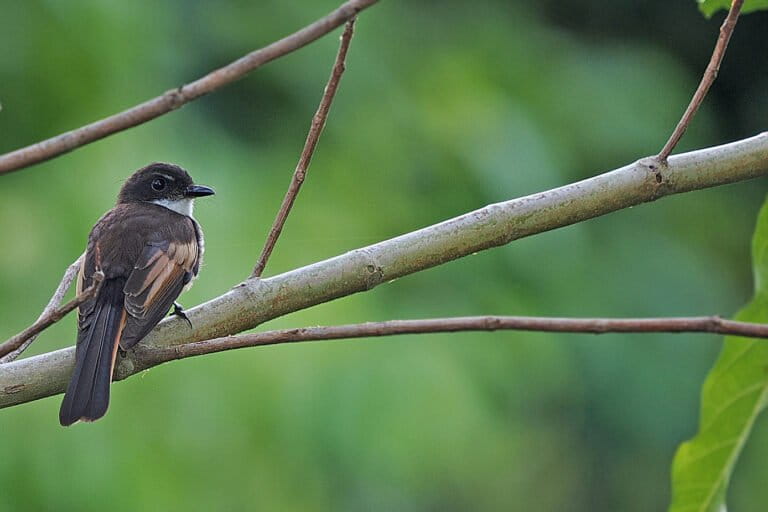
A songbird species previously thought to occur across two Indonesian islands has turned out to be two distinct species, according to a recent study. For more than 120 years, many scientists believed that Indonesia’s Babar Islands in eastern Banda Sea, and Tanimbar Islands, roughly 135 kilometers (84 miles) east of the Babar Islands, were both home to the cinnamon-tailed fantail (Rhipidura fuscorufa). But a team of researchers led by James A. Eaton of Birdtour Asia Limited and Alex J. Berryman of BirdLife International has confirmed that the songbird on Babar Islands is a distinct species, which they’ve named the cheerful fantail (Rhipidura laguceria). To confirm these findings, the researchers analyzed 19 museum specimens of birds labeled cinnamon-tailed fantail, historically collected from both Tanimbar and Babar islands. They also recorded songs of the birds on both islands, then played the recorded calls back to the wild birds 132 separate times over several years. The researchers found that physical differences between the populations on the two islands are subtle: The cheerful fantail possess slightly darker upperparts and less extensive cinnamon plumage below than the cinnamon-tailed fantail. However, their songs vary considerably. The researchers said in the study that songs of the birds on Babar typically consist of “single whistles that rise in pitch towards the end.” By contrast, the Tanimbar birds combine very short and longer whistles, which gives their songs a “much more rhythmic cadence,” with pitch that typically goes up and down. The song recording experiments also revealed that birds…This article was originally published on Mongabay
Decades of unchecked deforestation for coffee production has devastated Vietnam’s Central Highland forests, according to a new investigation by the Berlin-headquartered watchdog group Coffee Watch. Vietnam is currently the world’s second largest coffee producer, supplying nearly 40% of the world’s exports of Robusta coffee (Coffea canephora). The investigation, which analyzed satellite data and government records, found that tropical forest cover in Vietnam’s Central Highlands region, which produces 95% of the country’s coffee, plummeted from 42.8% in 1990 to just 19% by 2020. Forest loss was most rapid between 1995 and 2010, and stabilized at low levels in the 2020s, the investigation found. Much of the remaining tropical moist forest is now confined to “steeper, less accessible terrain, often at higher elevations and within formally designated protected areas,” the Coffee Watch’s report notes. Historically, government policy and international development financing incentivized the rapid expansion of coffee in the Central Highlands, according to Coffee Watch. The ecological cost has been severe, the nonprofit adds, resulting in fragmented habitats, accelerated soil erosion and a “nutrient treadmill” where farmers must use increasing amounts of fertilizer to maintain yields in exhausted soils. The Coffee Watch report notes that forest loss has affected water flow and recharge, soil stability and moisture, carbon storage and pests in the Central Highlands. It warns that 50% of Vietnam’s robusta belt could become unsuitable for coffee owing to the added impacts of climate extremes such as rising temperatures and erratic rainfall. Ly Thi Minh Hai, Vietnam country director at the…This article was originally published on Mongabay
A beekeeping initiative is enabling women in India’s Western Ghats, a biodiversity hotspot that runs parallel to India’s west coast, to strengthen their livelihoods with more reliable honey harvests. The 50 women are part of the Women for Bees project, launched in India in April 2025 by UNESCO in partnership with local nonprofit the Keystone Foundation. The project provides training and equipment to women from the Irula, Kurumba and Kattunayaka Indigenous communities across the southern states of Tamil Nadu and Kerala, reports Mongabay-India’s Arathi Menon. Traditionally, many of these communities were skilled wild honey hunters, a practice that is often risky and increasingly restricted by forest protection laws. Managed beekeeping, using hive boxes, offers a safer, more predictable alternative. The women are trained to rear the native Asian honey bee (Apis cerana indica), which is more resistant to local diseases and parasites than the commercially dominant European honey bee (Apis mellifera). A 2023 study comparing the two species suggests that, while the life cycles are generally similar, A. cerana colonies are better able to defend themselves against threats, diseases and disruptions. The economic impact of the honey harvests from the hive boxes has been immediate, providing many participants with their first taste of financial independence. Neelavathi, an Irula woman from Tamil Nadu state, has used her earnings to support her family and purchase household goods. “Since I am the beekeeper at home, my family lets me keep the income for my own needs,” she told Mongabay-India. Malavika Jayakrishnan, who leads…This article was originally published on Mongabay
The ongoing war in Iran, which began following a joint U.S.-Israeli attack on Feb. 28, has intensified the long-standing isolation of the country’s wildlife conservation community, Mongabay’s John Cannon reports. While the current war has directly hindered research and damaged educational facilities, conservationists and researchers said that decades of international sanctions and political disconnect had already crippled Iranian conservation efforts long before the first bombs fell this year. “Iran’s nature, Iranian conservationists and Iranian researchers have been isolated for a long time,” Iman Ebrahimi, deputy director of the Isfahan-based NGO AvayeBoom Bird Conservation Society, told Mongabay. “The war has made that isolation more visible, but it did not create it.” This isolation has restricted access to global funding, professional collaboration, and basic research tools such as reliable internet, academic journals and robust banking channels. AvayeBoom continues to monitor the conflict’s effect on critical habitats. During a brief ceasefire in April, the team documented at least 5,000 greater flamingos (Phoenicopterus roseus) at Maharloo Lake, a salt lake that was full of water at the time. Ebrahimi said industries and agricultural activities were possibly drawing less water from the lake. The nonprofit also works with local communities around the Arjan wetland to protect bird species like the ruddy shelduck (Tadorna ferruginea). The wetland is part of the UNESCO-listed Arjan and Parishan Biosphere Reserve, in southwestern Iran, home to thousands of species, but also illegal bird hunting. Ebrahimi expressed concern about researchers who are forced to leave the country due to a lack…This article was originally published on Mongabay
In the West African nation of Benin, Vodun, an ancient spiritual religion rooted in a deep connection between humans and nature, has become a primary tool for protecting the country’s disappearing mangroves. By invoking the authority of the Zangbéto deity, local communities and conservationists create spiritual sanctuaries that forbid the destruction of mangroves under threat of divine punishment, reports Mongabay Africa’s Jahëna Louisin. Mangroves are vital carbon sinks, capable of capturing up to four times as much carbon as terrestrial forests. Benin’s mangroves are under extreme pressure from logging, salt production, intensive agriculture and urbanization. Between 1995 and 2015, mangrove cover in the country decreased by 29%, according to a study published in 2025. To combat this loss, the NGO Eco-Bénin partners with Vodun dignitaries to designate specific areas as sacred. In the last decade, this collaboration has preserved about 500 hectares (more than 1,235 acres) of mangroves. The process involves seeking permission from the spirits through a Fâ priest, a mediator who uses a traditional spiritual language to communicate with the divine. In the video, Isidore Jinou, a 57-year-old advertising director and the son of a fisherman, emphasizes the importance of this spiritual oversight for the Mono River region in the southwestern corner of Benin. This region is home to Bouche du Roy, an estuary and one of the richest mangrove ecosystems on the Beninese coastline. “All our resources, all our wealth comes from the water,” Jinou, who was initiated into the Vodun religion 14 years ago, tells Mongabay.…This article was originally published on Mongabay
Once a lush field of green, the seagrass meadows surrounding Thailand’s Koh Libong are now largely barren stretches of sand, devastating the island’s iconic dugong population, reports Mongabay’s Carolyn Cowan. Koh Libong’s seagrass meadows were once Thailand’s largest, and a critical coastal habitat that is protected nationally. Yet, between 2020 and 2024, seagrass cover in these protected waters shrank by up to 50%. Thailand’s Department of Marine and Coastal Resources (DMCR) attributes this decline to a range of factors, from marine heat waves to river-mouth dredging. The dugong (Dugong dugon) feeds on fish, crabs and mollusks in seagrass meadows. Until recently, Koh Libong’s waters had one of Southeast Asia’s largest dugong populations. As the meadows have died off, dugong numbers have dramatically declined. Autopsies of emaciated dugongs that washed ashore suggest many deaths were due to starvation. The ecological decline in Koh Libong has also jeopardized the livelihoods of the island’s 3,000 residents, who depend on healthy nearshore ecosystems for fishing and dugong tourism. Local fisher Torfar Jongarap once harvested food by walking the shoreline. Now, to chase unpredictable catches farther out at sea, his fuel costs have tripled. “The food chain is degraded,” Torfar told Mongabay. “Before, everyone could go looking for food near to the shore. But now we all need boats.” Tipusa Sangsawang, coordinator of the Dugong Guardians, a volunteer network spanning the island’s eight villages, leads community efforts to monitor the local dugong population and manage its marine habitats. The group also collaborates with researchers from…This article was originally published on Mongabay
On Malaysia’s Penang Island, conservationist Yap Jo Leen is turning old fire hoses into lifesaving bridges that help endangered monkeys cross busy roads in residential areas. The idea took root after she witnessed a female dusky langur and her infant get struck by a vehicle in 2016, Yap told Mongabay’s Phil Jacobson and AFP’s Isabelle Leong in a joint interview. Dusky langurs (Trachypithecus obscurus) are small primates with dark gray to blackish fur, distinct large white patches around their eyes, and white fur around their mouth. The species is considered endangered on the IUCN Red List, according to the latest assessment, done in 2015. Yap said that in 2016, as a postgraduate student, she started following a family of dusky langurs that included an individual she called Ah Lai. Over the next year, she recorded several instances of the langurs trying to cross a busy road. People living in the residential areas also reported that dusky langurs and macaques frequently made road crossings. Since 2019, Yap’s organization, the Langur Project Penang (LPP), has installed three artificial canopy bridges to help the langurs cross roads safely. The bridges are all made from repurposed fire hoses donated by local fire departments. The initiative has seen remarkable success, said Yap. The first bridge they installed, known as “Ah Lai’s Crossing,” has been credited with zero langur roadkill deaths on that stretch of road. Beyond langurs, the bridge is also used by nine other wildlife species, including macaques, squirrels, and slow lorises. Yap said…This article was originally published on Mongabay
The lagoons of Mannar in northern Sri Lanka attract large flocks of pink and white greater flamingos every year, which drive a vital tourism industry in the region. However, recent fatalities of the migratory birds from collisions with power cables there have sparked urgent concerns regarding the impact of power infrastructure in the wetlands, reports contributor Malaka Rodrigo for Mongabay. Three greater flamingos (Phoenicopterus roseus) recently died in Mannar after colliding with overhead power lines. Although initial reports suspected electrocution, necropsies performed by the Department of Wildlife Conservation (DWC) veterinary surgeon Balachandran Giritharan revealed the birds’ long necks were slashed mid-flight by the cables. Conservationists warn that energy infrastructure, including proposed wind power projects, increasingly encroaches on sensitive habitats like Vankalai Sanctuary in Mannar. Flamingos are particularly susceptible to collisions with power lines due to their long necks, large wingspans and limited maneuverability, said Sampath S. Seneviratne, an ornithologist and a professor of zoology with the University of Colombo. The birds also fly in large flocks during the low-light hours of dawn and dusk, he added. The threat from power infrastructure is not limited to Sri Lanka. Flamingo fatalities due to power line collisions have been recorded in several African countries, with a report by the IUCN listing 464 flamingo deaths in South Africa alone from 1997-2019. Meanwhile, in the state of Gujarat in western India, a 2011 study reported 76 flamingos that were killed due to collisions with electric wires from 2002-2005. Other protected areas in Sri Lanka offer a cautionary…This article was originally published on Mongabay
Descendants of families forcibly displaced during the creation of Maiko National Park in the eastern part of the Democratic Republic of Congo back in the 1970s are now leading a new wave of community-led conservation. Gangala Yafali Mangusa Jr., from one such displaced family, is the head of the Bamasobha Local Community Forest Concession (CFCL), covering roughly 29,000 hectares (71,700 acres), where he oversees patrols that monitor illegal hunting, logging and mining. His team also works to strengthen coexistence between communities and the forest, and to promote sustainable management of natural resources. Mongabay-Africa contributor Jérémie Kyaswekera reports that Mangusa Jr.’s commitment stems from a history of conflict between his community and the Congolese Institute for Nature Conservation (ICCN) following the creation of Maiko National Park, home to the eastern lowland gorilla, forest elephants and chimpanzees. “At one point, park rangers from the ICCN came and set up camp, and they began patrolling, forbidding people from entering the forest and eating meat, even though these Indigenous communities had been living off meat [and fruit] for generations,” Mangusa Jr. said. That led to long-standing disagreements, forcing communities to move elsewhere, he added. The Bamasobha CFCL represents a shift toward inclusive forest management. Supported by the Peasants’ Association for the Rehabilitation and Protection of Pygmies (PREPPYG), the communities of Bamasobha developed a management plan in 2023 that balances biodiversity protection with human needs through distinct production and conservation zones. The impact has been significant: Satellite data from Global Forest Watch shows forest loss…This article was originally published on Mongabay
For more than 160 years, the Himalayan pit viper was believed to be a single species, found across the Himalayas in Pakistan, India and Nepal. Now, a new study revealed this snake is actually not one, but five distinct species, including three entirely new to science. For their analysis, the researchers conducted fieldwork to different parts of the Himalayas and collected samples of what was considered to be the Himalayan pit viper from different populations. They also examined historical specimens assigned to the Himalayan pit viper and extracted DNA from them. Their analysis of the snakes’ bodies, skeleton and DNA revealed five separate species: The Himalayan pit viper (Gloydius himalayanus) was first described in 1864. This species is now restricted to northwestern India and typically inhabits elevations between 1,000 and 3,500 meters (3,281-11,483 feet). The Chamba pit viper (G. chambensis) was originally described in 2022 from India’s Chamba District. This study extended its known range westward into the Kashmir Valley. It lives at elevations from 400-2,500 meters (1,312-8,202 feet). The Hazara pit viper (G. hazarensis) is a new-to-science species. It’s found in the Hazara region of northeastern Pakistan at elevations ranging from 1,630-2,900 meters (5,348-9,514 feet). The Hindu Kush pit viper (G. hindukushensis) is also a newly described species. It inhabits the eastern foothills of the Hindu Kush Mountains in northwestern Pakistan between 1,660 and 2,888 meters (5,446-9,475 feet). The Nepali pit viper (G. nepalensis) is new-to-science as well. This viper is distributed across western and west-central Nepal and is…This article was originally published on Mongabay
In Malawi’s Chiradzulu district, located in the southern region of the country, Diana Sitima’s farm shows how a combination of agroecology and secure land ownership can create a thriving commercial enterprise. Many neighboring farmers rely primarily on growing and selling maize. But, on her 3.5-hectare (8.6-acre) farm, Sitima combines diverse crops of fruits and vegetables with fishponds and livestock to protect soil health and reduce the need for synthetic fertilizers, reports Mongabay contributor Charles Mpaka. Sitima started farming as a side hustle in 1993 while working as an office assistant. At the time she used microloans to rent small parcels of land. By 2006, she had saved enough to purchase her own property, a move she describes as the most critical step toward her success. In 2026, Sitima’s farm is “almost 100% organic,” she says. She uses a biodigester to turn manure into biogas for cooking and to power an egg incubator, while growing aquatic ferns to supplement livestock feed. “The animals and the crops support each other in various ways,” Sitima tells Mongabay. The farm’s productivity has led to significant economic results. It generates approximately $1,200 in weekly sales and provides permanent employment for six workers. Sitima attributes her growth to persistent learning, having relied on technical advisors from the government for two decades. Beyond her own fields, Sitima serves as a mentor and the chairperson for a local chapter of the Rural Women’s Assembly (RWA), a grassroots network supporting nearly 200,000 small-scale women farmers across 11 countries in…This article was originally published on Mongabay
Following a grueling 14-day trek, a team of mountaineers and conservationists has photographed the elusive blue-fronted lorikeet in the highlands of eastern Indonesia’s Buru Island. This is only the second photographed record of the parrot in more than 100 years, according to bird conservation groups. The blue-fronted lorikeet (Charmosynopsis toxopei) is a small species found only in the island of Buru. The bird, which has a lime-green plumage, an orange beak and a pointed tail, was first identified from seven museum specimens collected in the 1920s. The avian species went undetected despite surveys conducted in the lowland and mid-elevation forests they’re described from, until it was photographed in 2014 by Craig Robson during a birding tour, according to the Search for Lost Birds project, a global partnership between the NGOs American Bird Conservancy (ABC), Re:wild and BirdLife International. In April 2026, Indonesian mountaineering group Kanal Buru, which included researchers from ABC, Birdtour Asia and Yayasan Planet Indonesia, led an expedition in Buru. They scaled the limestone terrain of Mount Kapalatmada in the west of the island to reach a 2,700-meter (8,900-foot) summit cloud forest and successfully photographed the parrot. The team also captured its high-pitched calls for the first time. “We noticed two small birds fly into a nearby tree so I picked up my binoculars to see what one of them was,” John C. Mittermeier, director of the Search for Lost Birds at ABC and part of the expedition, said in a statement by the ABC. “I short-circuited with…This article was originally published on Mongabay
Rivers are known to naturally meander, change courses, braid and branch. But as rising temperatures melt glaciers and thaw frozen ground, the courses of Himalayan rivers are shifting and changing shape much more rapidly than before, according to a new study published in the journal Science. The rising instability of the rivers could pose a risk to water security and critical infrastructure, researchers say. The Himalayas, often referred to as the “Water Tower of Asia”, provide vital water resources for nearly 2 billion people downstream. But according to the study, in the upper high Himalayan region, where several important river basins originate, temperatures have risen nearly twice as fast as the global average in the past four decades. The researchers studied three upper high Himalayan river drainage basins: Yarlung Tsangpo, Indus and Ganges. The sources of these rivers occur at elevations of nearly 5,000 meters (16,404 feet), where there is extensive glacier, ice cover and permafrost. Meltwater from these glaciers and permafrost, which is sensitive to climate warming, forms the rivers’ primary water supply. To find out how climate change is shifting and reshaping these upper high Himalayan river basins, the researchers analyzed 40 years of satellite imagery. In particular, they measured 1,079 river bends, covering roughly 1,582 kilometers (983 miles), from 1980 to 2020. Since valleys can confine and influence river movements, the researchers chose unconfined bends or meanders that flowed freely through the landscape for their analysis. Their analysis found that the rivers’ courses were shifting sideways faster…This article was originally published on Mongabay
A new book from Indigenous scholar Tyson Yunkaporta of Australia explores how human narratives dictate how modern society governs itself and, crucially, how it exploits or protects the natural world. “It’s a terrible thing to … misrepresent things, make false claims, bear false witness in a way that is bending story, the story that everybody follows,” Yunkaporta told Mongabay’s newscast host Mike DiGirolamo. Yunkaporta is a Deakin University senior research fellow and member of the Apalech clan (Wik) whose traditional lands are located in far north Queensland, Australia. His book, Right Story, Wrong Story: Adventures in Indigenous Thinking, argues that identifying and correcting “wrong stories” is key to stopping environmental exploitation. A wrong story, according to Yunkaporta, is one that acts as a deceptive “curse” by presenting an illusion as if it were real to justify the exploitation of nature and community well-being through narratives that have no connection to the land. To illustrate the “wrong story” of modern resource exploitation, Yunkaporta told Mongabay the Aboriginal folk tale of Tidalik, a giant frog who hoarded all the world’s water for himself. Yunkaporta compares Tidalik to Wall Street firms and billionaires who gamble on water futures and “park their cash” in housing, exacerbating the affordability crisis while stopping the natural flow of resources. In the legend, the animal kingdom does not “eat” Tidalik; instead, an eel makes him laugh by tying himself in knots, forcing the frog to “vomit all the water back into the land.” “A lot of people…This article was originally published on Mongabay
Every April, eastern Nepal’s Tinjure-Milke-Jaljale region sees a rush of tourists, arriving for the vibrant spring bloom of rhododendrons, the country’s national flower. The flowers have now become more than a photo backdrop; they’re part of a new, unregulated market for a “souvenir:” Unlicensed rhododendron liquor. Sold openly in reused bottles with handwritten labels, the rhododendron alcohol market operates without health testing, official tracking or sustainability monitoring, Mongabay contributor Mukesh Pokhrel reports. The Tinjure-Milke-Jaljale (TMJ) region is home to at least 26 species of rhododendron (Rhododendron spp.). It has seen a massive post-pandemic tourism surge, with local officials estimating 500,000 visitors arrived from April 1-15 this year. For some families, the seasonal sale of flower-based alcohol provides supplemental income. “Tourists want something unique from here,” said Denga Lama, a resident who produces the liquor at their home. “People buy the alcohol because it reminds them of the flowers and mountains.” Forests within the TMJ region, where rhododendron plants occur, are largely managed as community forests. Nepal’s conservation laws prohibit commercial harvesting from community forests without approval. However, legal ambiguity regarding rhododendrons grown in private gardens has left officials uncertain about enforcement. When asked about bottled rhododendron liquor, Division Forest Officer Megh Raj Rai told Mongabay it was the first time he had heard about it. Rai said that if the liquor is being produced at large scales, the lack of oversight poses potential public health risks. Certain rhododendron species contain grayanotoxins, neurotoxins that can potentially be fatal; although, the risks…This article was originally published on Mongabay
As rising temperatures, shifting rainfall, and increased pest pressure reduce yields and quality of Arabica and Robusta coffees, the two species that account for nearly all commercial production, researchers and growers are turning to overlooked coffee species for a more climate-resilient future, Mongabay-India contributor Meena Menon reports. Arabica (Coffea arabica) and Robusta (C. canephora) have long dominated the global coffee industry. Other coffee species such as Excelsa (C. dewevrei) were previously relegated to the margins of coffee plantations as boundary markers or shade trees in India. Akshay Dashrath, co-founder of the South India Coffee Company (SICC), is leading efforts to re-evaluate Excelsa for its potential resilience. According to the SICC, a British planter introduced Excelsa to India in the late 1800s as an alternative to Arabica. However, it grew tall and dense, making it an impractical crop to manage and commercialize. Dashrath’s farm in Kodagu district in Karnataka state has 60-year-old Excelsa trees that his family preserved, which are now a source for trials aimed at scaling production. His company is collaborating with the Royal Botanic Gardens, Kew to do the research. Aaron Davis, a senior research leader at the Royal Botanic Gardens, said that the dominance of Arabica and Robusta in the global markets could see major disruptions in the next decade or so from other coffee crop species adapted to altered climates. Excelsa, native to parts of Tropical and West Africa as well as Southeast Asia, is already being scaled in Uganda and Vietnam. According to Kiwuka Catherine,…This article was originally published on Mongabay
Kyrgyzstan has officially designated a massive stretch of its high-altitude landscape as a protected corridor for snow leopards and other mountain wildlife. The Ak Ilbirs ecological corridor, formalized in 2025, spans nearly 800,000 hectares (2 million acres) and was designed with the future climate in mind, Mongabay’s Liz Kimbrough reports. The corridor connects several existing protected areas in the country, as well as pastureland, forest and other ecosystems across 14 rural municipalities to ensure wildlife, including snow leopards (Panthera uncia), can move freely as climate change shifts their habitats. The project was spearheaded by the Central Asian Mammals and Climate Adaptation (CAMCA) initiative, led by the U.N. Environment Programme (UNEP) in collaboration with the Kyrgyz government, Humboldt University of Berlin, and local conservation groups including CAMP Alatoo and Ilbirs Foundation. Murat Zhumashev, director of CAMP Alatoo, said that while the Ak Ilbirs corridor carries official protected area status, it functions differently from most. “The ecological corridor in Kyrgyzstan is based on a regulatory rather than a restrictive approach,” Zhumashev and his colleague Salamat Zhumabaeva told Mongabay by email. “It builds on existing environmental legislation, but unlike strictly protected areas, it does not involve land withdrawal or the introduction of strict prohibitions.” To design the corridor, scientists at Humboldt University “applied a combination of expert local knowledge, climate predictions and technical expertise to build the narratives for the future scenarios,” Julieta Decarre from Humboldt told Mongabay by email. Under future climate emissions scenarios, more than 60% of suitable habitat for snow…This article was originally published on Mongabay
The intersection of environmental breakdown, climate change and economic instability has emerged as a primary threat to the resilience of smallholder farmers in Indonesia, according to researchers and local entrepreneurs who spoke at a recent convention. During the 2026 Asia Grassroots Forum, held in Jakarta on June 3 and 4, Alex Arnall, an associate professor for environment and development at the University of Reading, U.K., said climate change has become an “agent of exclusion,” creating a “double exposure” for farmers who must simultaneously navigate global market volatility and erratic weather. The Asia Grassroots Forum focused on building sustainable business ecosystems for smallholders. Previous research showed extreme weather events can affect farmers in southeast Asia by damaging crops, agricultural infrastructure like irrigation systems and farm equipment, and by increasing operational costs and reducing revenues. A 2024 report found that every 1% increase in average temperature raises the price of food production by 1% to 2% across Indonesia, Thailand, Vietnam, Malaysia and the Philippines. Researchers have also noted that smallholder farmers in the region face a massive financing gap, with less than one-third of the $100 billion needed annually for climate-smart adaptation, leaving them in urgent need of better access to credit, insurance and targeted financial support Drawing on his work with salt farmers in Thailand, Arnall described how even highly-skilled, traditional producers are seeing their knowledge “undermined” by sea-level rise and coastal change. “Farmers in many places … are losing trust in the weather patterns as they become more unpredictable,” Arnall…This article was originally published on Mongabay

 Login