❌

Reading view

Lightning strike on Chinese rocket captured in epic launch photo
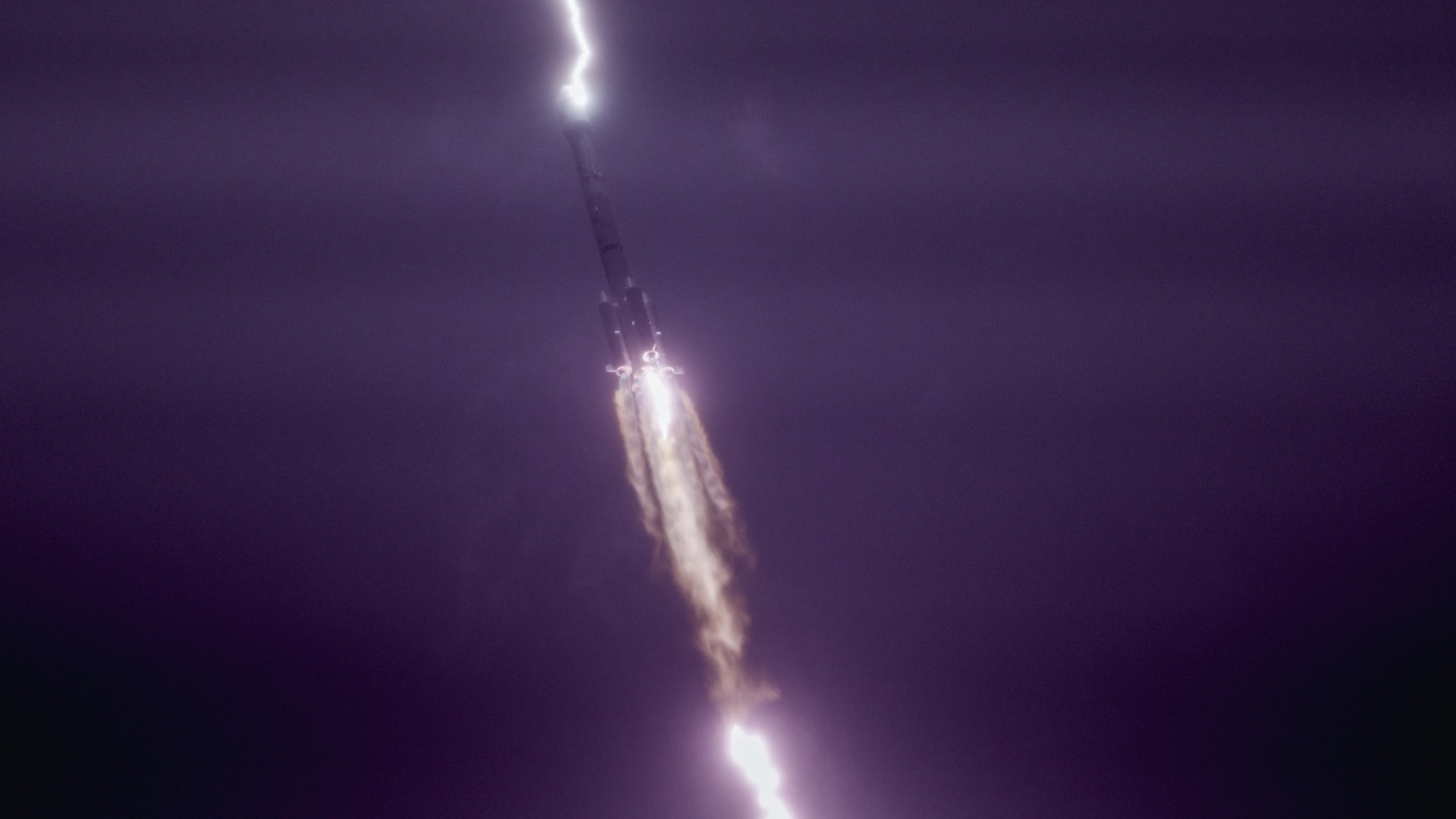
lightning strikes a rocket in the sky

A Long March-3B carrier rocket carrying the Tianlian II-06 satellite blasts off from the Xichang Satellite Launch Center on July 23, 2026 in Xichang, Sichuan Province of China. (Image credit: Zhou Quan/VCG via Getty Images)

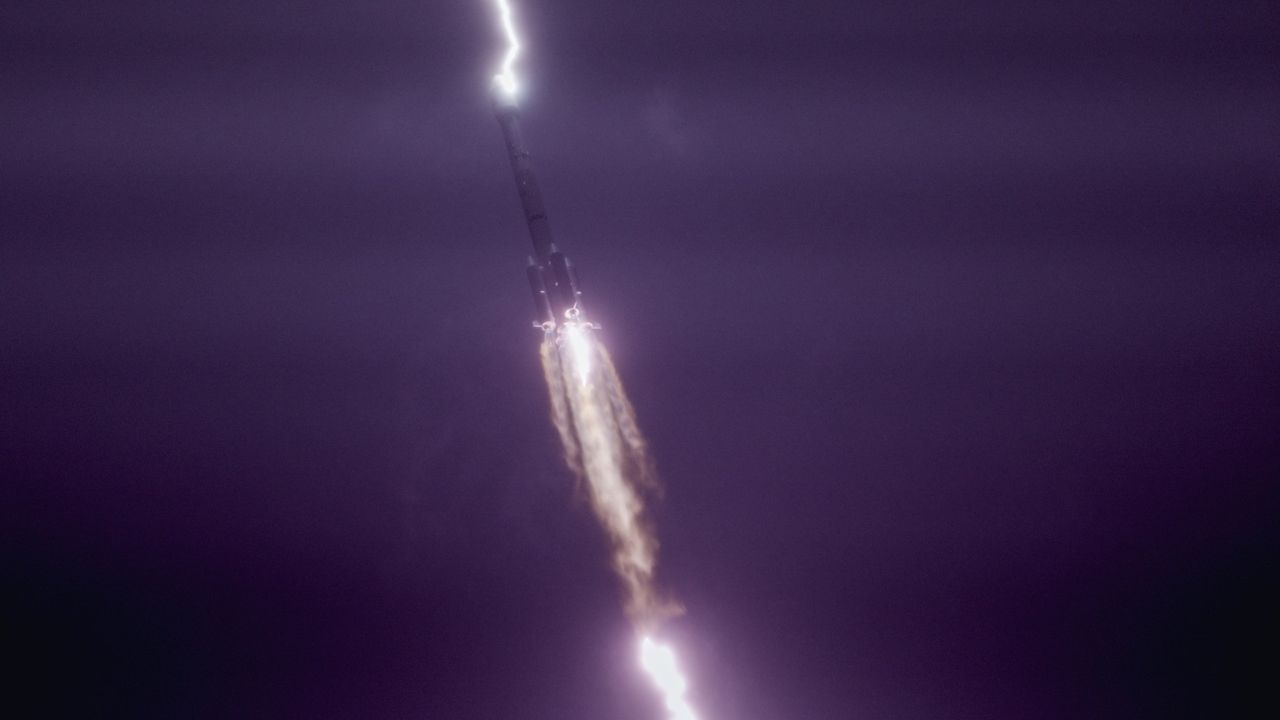
Lightning struck a Chinese rocket shortly after liftoff this week, as seen in incredible video and photographs.

A Long March-3B rocket lifted off from China's Xichang Satellite Launch Center on Thursday (July 23) carrying a communications relay satellite destined for geostationary orbit. Some 30 seconds into flight, lightning struck the rocket, leading to awestruck cries from crowds gathered nearby to watch the launch.

Despite the strike, the rocket delivered the satellite to its intended orbit as planned, according to the China Aerospace Science and Technology Corporation (CASC). The satellite will help relay communications to the nation's Tiangong Space Station and other crewed missions.

This isn't the first time lightning has struck a rocket shortly after liftoff. A lightning bolt famously struck the Saturn V rocket carrying NASA's Apollo 12 mission, the second to ever land astronauts on the moon. In fact, the rocket was struck twice.

According to a report NASA issued after the mission, some non-essential instruments and sensors experienced "permanent effects" from the strikes. Nevertheless, the mission put astronauts Charles "Pete" Conrad, Alan Bean and Richard "Dick" Gordon on the moon as planned.

More recently, lightning struck a Russian Soyuz rocket in 2019 shortly after it launched. Like in this most recent example, the vehicle was able to place its Glasnost communications satellite in orbit despite the strike.

Une fusée Longue Marche 3B vient de se prendre la foudre peu après son décollage de Xichang.Ce n'est pas la première fusée à subir ça, la Saturn V et la Soyouz-2 ont été aussi foudroyées par exemple. Aucun échec n'est lié à la foudre... pour l'instant.pic.twitter.com/vrAqaGAnnCJuly 23, 2026

But not all rockets struck by lightning fare so well. In 1987, a bolt struck the United Launch Alliance Atlas/Centaur-67 rocket, leading to a malfunction in one of the computers that guided the vehicle and "ultimately causing the breakup of the vehicle," NASA wrote in a report of the incident.

The incident led to NASA developing strict Lightning Launch Commit Criteria (LLCC) to lower the risk of strikes by further defining weather conditions that would delay launches. "Since Atlas/Centaur-67 and the rigorous implementation of the LLCC, no other launch vehicles have intercepted or triggered lightning on launch in the United States," NASA wrote in a technical paper outlining the criteria.
  •  

If space war erupts, 'none of us will be able to avoid the war zone,' warns outgoing Space Force chief in final public speech

The outgoing head of the U.S. Space Force has some stark words for his international partners.

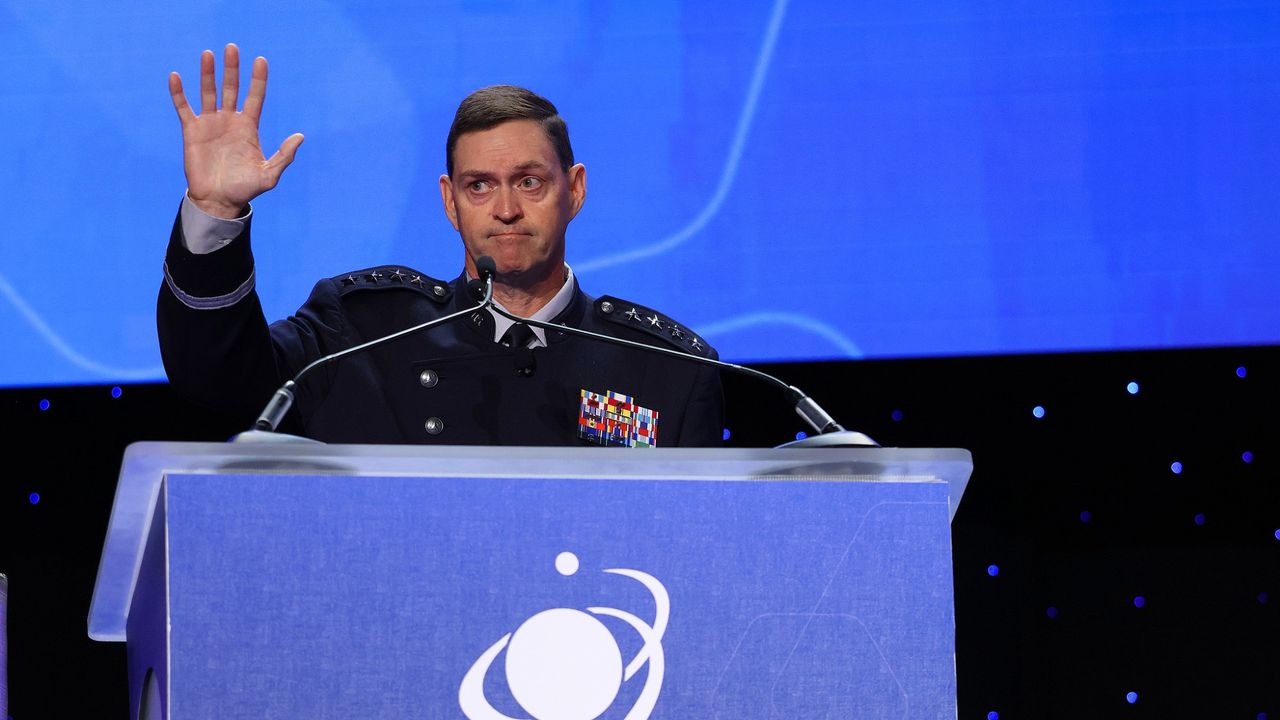
Speaking at the 2026 Global Air and Space Chiefs Conference on July 15, in what was his last public speech as Chief of Space Operations (CSO), Gen. Chance Saltzman told attendees that if an armed conflict ever reaches space, as military leaders have for years been predicting and planning for, no military or nation in the world will be spared.

"If a conflict extends into space, none of us will be able to avoid the war zone. Unlike a combat zone in the air, land or sea, we will not be able to steer clear," Saltzman said in his remarks at the conference, published by the Space Force. "Whether we want to be in the combat zone or not, orbital mechanics will put all of our space capabilities into the space war zone."

Saltzman's warning touches upon the fact that there isn't an unlimited amount of space in Earth orbit; in fact there are some crowded orbital inclinations that contain thousands of spacecraft. When a satellite or other spacecraft breaks up in one of these orbits, it can create hazards for many other spacecraft β€Šβ€” even crewed ones.

When Russia destroyed a satellite with a missile in a 2022 test, it left a dangerous debris field in orbit that persists today. The ISS has had to dodge it multiple times.

If a conflict broke out or extended to space, and that conflict involved the destruction of even just one satellite, it could potentially create a runaway effect that leaves parts of Earth's orbit unusable.

But despite the grave nature of his warning, Saltzman stressed that ultimately the shared nature of space means that all spacefaring nations should aim toward cooperation.

"We will share the consequences; therefore, we should share the responsibility for a safe, secure and stable space domain," Saltzman said, adding later in the speech that "these widespread consequences of conflict in space should make deterrence a goal for all of us."

Saltzman has stressed the need for international cooperation in prior speeches. The outgoing CSO called defending the peaceful use of space "the ultimate team sport" when introducing Space Force's International Partnership Strategy in 2025. "The domain is too big, too complex, too dynamic, for a single nation to secure alone," Saltzman said.

While head of the U.S. military's newest branch, Saltzman has seen the Space Force evolve into a fully "combat-credible" force, to use the outgoing CSO's own words.

Saltzman touted the Space Force's contributions to recent U.S. military operations earlier this year at the Space Foundation's 41st Space Symposium in Colorado Springs. "We aren't just talking about theories or plans anymore. We're talking about real operational combat, space effects and the Guardians who deliver them," Saltzman told attendees.

Saltzman is set to retire in August 2026 after serving as the Space Force's second Chief of Space Operations since 2022. President Donald Trump has nominated a replacement, Lt. Gen. Douglas A. Schiess, to serve as Saltzman's successor. Schiess has served as Deputy Chief of Space Operations for Operations since November 2025.

During a recent confirmation hearing, Schiess defended the Space Force's $71 billion budget request, stating the funds are needed to deter China's development of military space capabilities. "The 71.1 billion dollars that the president has asked for is exactly what we need," Schiess said, according to Space News.

  •  

China's space plane appears to have released a mystery object in orbit

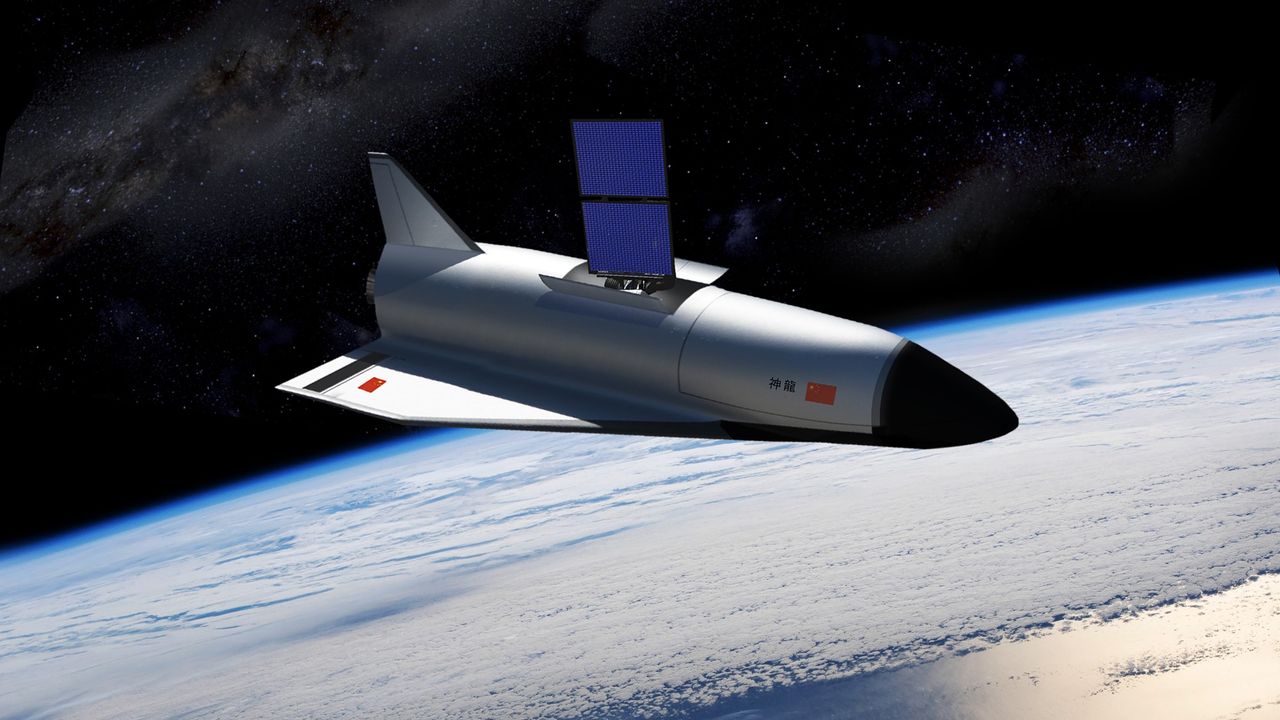
China's Shenlong space plane appears to have released a mystery object while in orbit, according to a private space surveillance firm.

Shenlong launched on its fourth mission on Feb. 6, 2026 atop a Long March 2F rocket that lifted off from China's Jiuquan Satellite Launch Center in the Gobi Desert. As with previous flights, the objectives of this mission were not disclosed to the public. But according to recent observations by the commercial orbital intelligence company LeoLabs, one part of Shenlong's latest mission appears to involve releasing an unknown object.

"At 02:30 UTC on 22 June 2026, LeoLabs detected an unknown object in the vicinity of the Chinese Shenlong reusable space plane," LeoLabs posted to X. "This object did not correlate to any other object in our catalog. It was first observed by our Tracker radar in New Zealand."

"Following additional observations across our global network and analysis via LeoLabs Delta, we have independently cataloged this object and assessed with high confidence that it was released from the Chinese space plane," the company added in the post. "This activity is consistent with sub-satellite deployments conducted by the space plane in previous missions."

Space tracker Jonathan McDowell noted on X that the object has now been catalogued by the U.S. Space Force.

Shenlong, or "Divine Dragon," is a reusable space plane that launches atop a rocket but lands on a runway like an aircraft. Its overall design is believed to be similar to the United States Space Force's X-37B, or somewhat like NASA's storied space shuttle. Exact specifications are difficult to come by, given how secretive China's space program remains about Shenlong.

Very few images exist of Shenlong, and most of what we have seen of the space plane are telescopic images of the vehicle taken from ground-based telescopes.

black-and-white images of an aircraft-like object rotating in space

Imagery of China's Shenlong space plane caught on camera in 2024 by Felix SchΓΆfbΓ€nker in Upper Austria. (Image credit: Felix SchΓΆfbΓ€nker )

This isn't the first time that Shenlong has appeared to release objects while in orbit. In June 2024, observers noticed that the space plane may have released a subsatellite or ejected an unnecessary piece of hardware as it approached the end of its mission.

Six months earlier, observers believed the space plane had ejected six objects at once, but those were later determined to be debris left over from launch.

Observers on the ground have also noticed what appear to be solar arrays extending from Shenlong, based on analysis of telescope imagery.

On previous missions, Shenlong has appeared to conduct what are known as rendezvous and proximity operations (RPO), meaning it tested the capability to maneuver close to other objects in space, according to SpaceNews.

White these RPOs can be conducted for peaceful purposes such as repairing or refueling other spacecraft, it might also be the case that space superpowers such as China and Russia are developing these capabilities to potentially tamper with adversary satellites should warfare ever make it to space. In May, two Russian satellites came within 10 feet (3 meters) of one another in orbit, following a pattern of the country testing the capabilities of these so-called "inspector" spacecraft.

There's no reason to believe the United States isn't developing its own RPO capabilities for similar reasons, and the nation has released official artwork suggesting as much.

  •  
❌