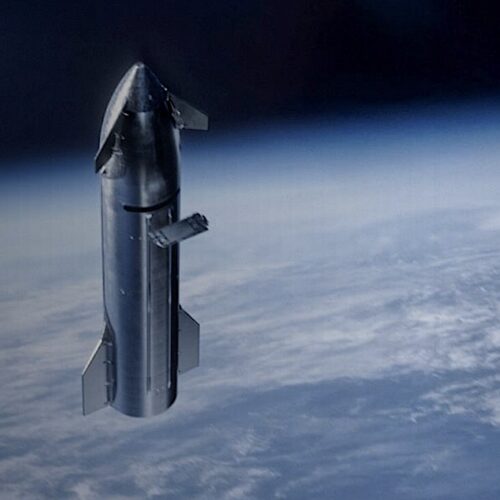
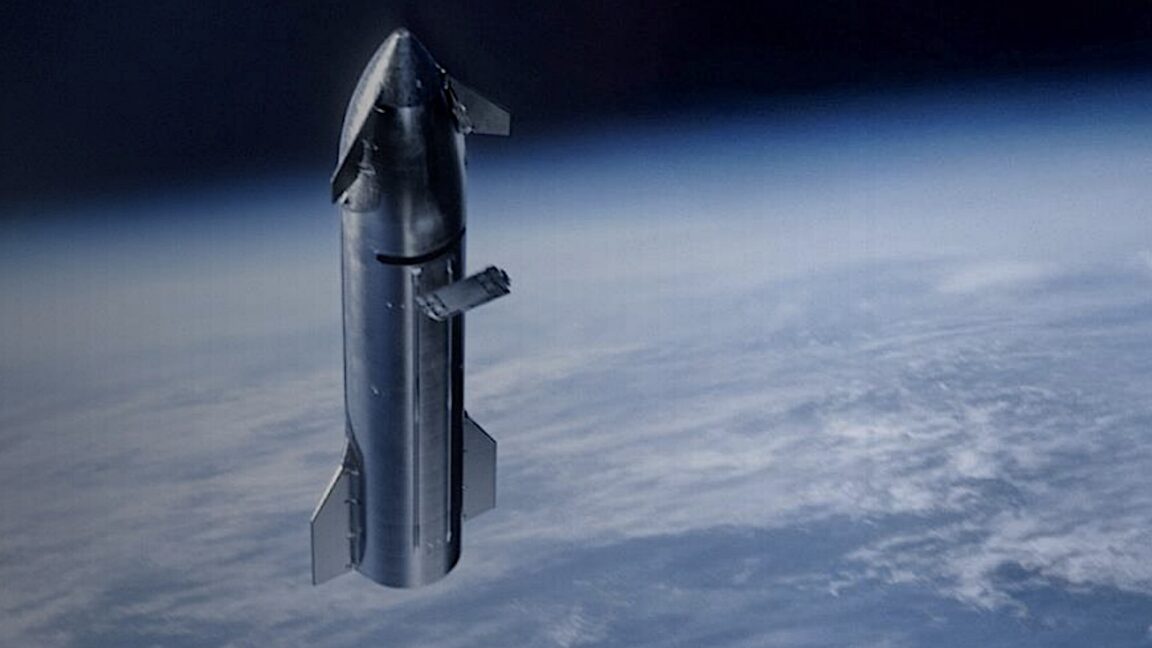
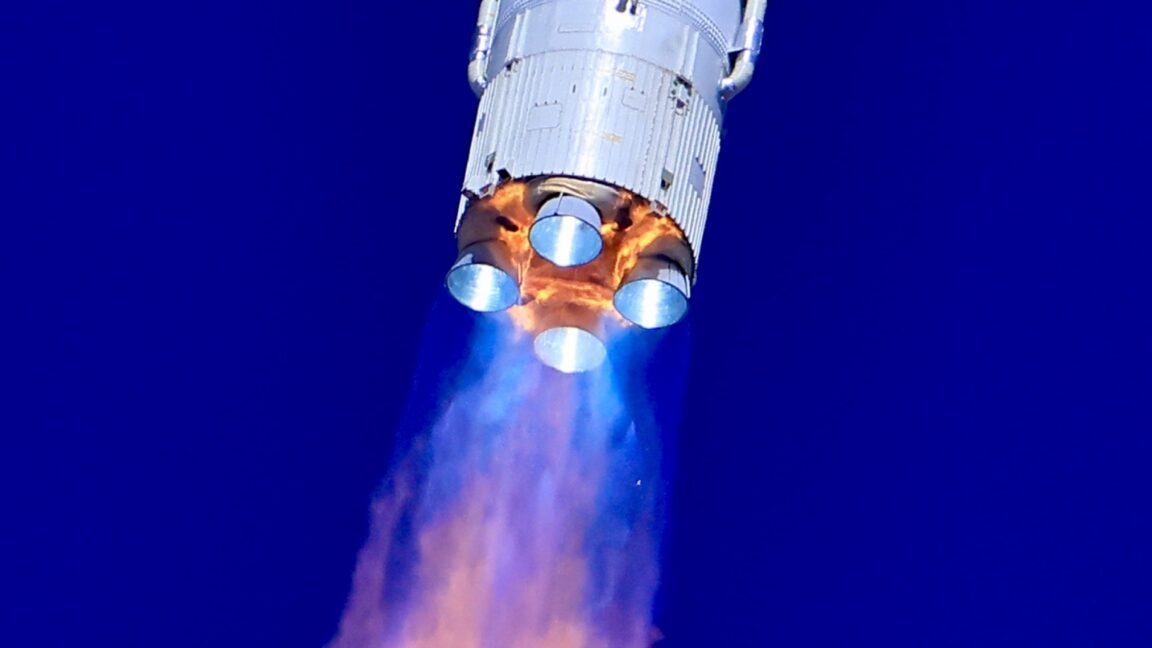
Ils photographiaient la Terre depuis l'orbite, ils ont capté un satellite Starlink en plein vol : voici l'image rare qu'on ne devait pas voir


One week ago, three widely respected European news outlets published the results of an investigation into what they described as a "joint plan" by China and Russia to "defeat Elon Musk's Starlink."
The story was the product of a long-running inquiry by The Insider, Der Spiegel, and Le Monde. Reporters at those publications said they reviewed a cache of documents detailing growing military cooperation between China and Russia. The documents covered discussions between the nuclear powers on integrated air and missile defense systems, autonomous "swarm" loitering munitions, next-generation armored vehicles, and military aviation, the report said.
According to the papers, the investigation found evidence of a partnership between China and Russia in the field of space weapons far deeper than either country has acknowledged. One particular focus for China and Russia has been developing strategies to counter SpaceX's Starlink satellite broadband network.


© SpaceX

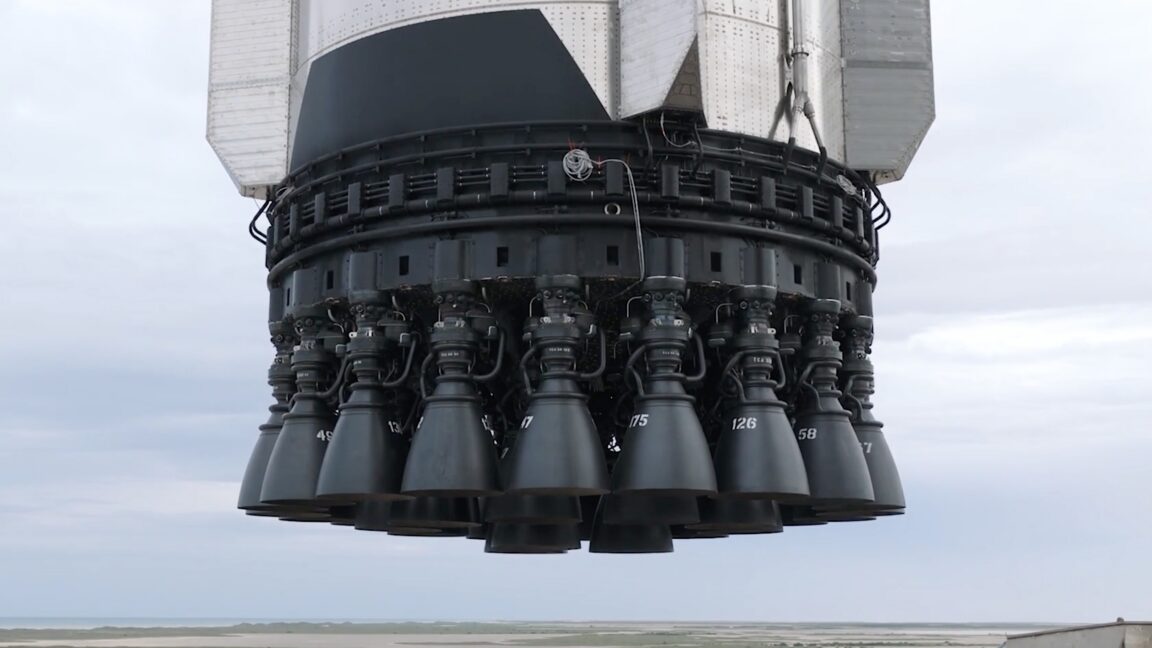
SpaceX aborted the launch of its latest Starship test flight July 16 when some of the vehicle’s engines failed to ignite.
The post SpaceX aborts Starship Flight 13 launch attempt appeared first on SpaceNews.
One week ago, three widely respected European news outlets published the results of an investigation into what they described as a "joint plan" by China and Russia to "defeat Elon Musk's Starlink."
The story was the product of a long-running inquiry by The Insider, Der Spiegel, and Le Monde. Reporters at those publications said they reviewed a cache of documents detailing growing military cooperation between China and Russia. The documents covered discussions between the nuclear powers on integrated air and missile defense systems, autonomous "swarm" loitering munitions, next-generation armored vehicles, and military aviation, the report said.
According to the papers, the investigation found evidence of a partnership between China and Russia in the field of space weapons far deeper than either country has acknowledged. One particular focus for China and Russia has been developing strategies to counter SpaceX's Starlink satellite broadband network.


© SpaceX
The next test flight of SpaceX's Starship spacecraft and Super Heavy booster could take off as soon as Thursday, and much of the hour-long mission will look a lot like the last Starship flight in May.
But there are a few key differences for this launch, set to occur during a launch window that opens at 5:45 pm CDT (22:45 UTC) on Thursday. The most notable change is the inclusion of real, functioning Starlink satellites inside Starship's cargo bay. SpaceX previously tested the ship's payload deployment mechanism using simulators mimicking the mass and dimensions of the company's next-generation Starlink Version 3 broadband satellites.
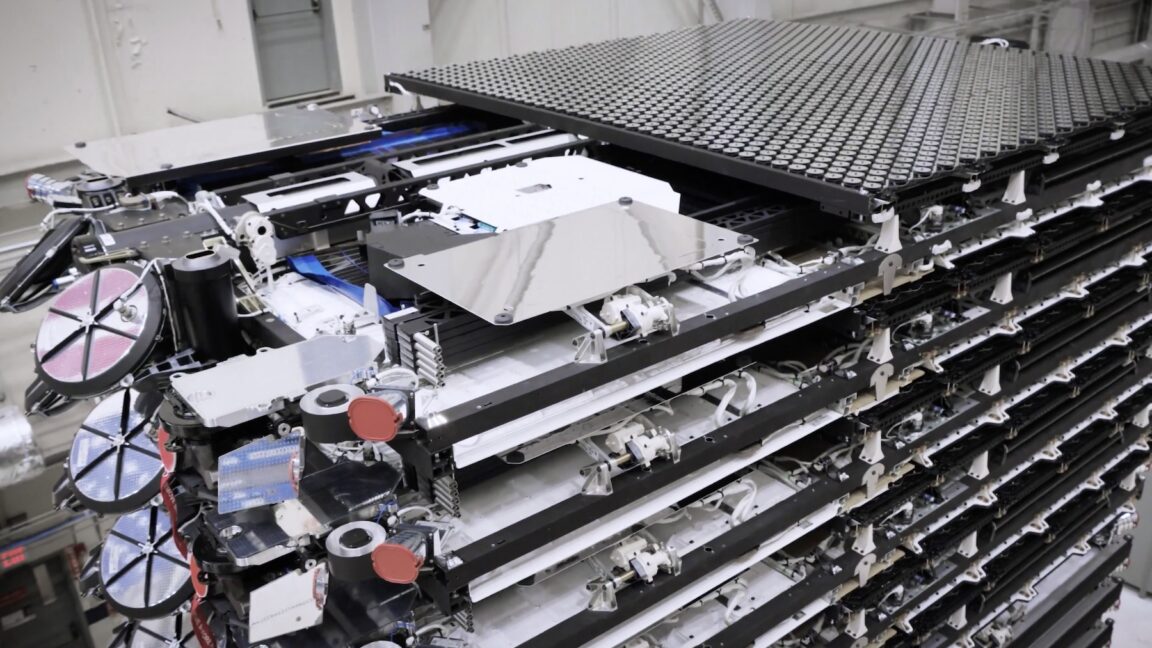
This time—Starship's 13th full-scale test flight and the second to use SpaceX's newest version of Starship—technicians have installed 20 Starlink V3 satellites into the ship's deployer, a system of pulleys and cables designed to eject a stack of satellites one at a time through an opening on the side of the spacecraft. The satellites will not be part of SpaceX's operational network, but engineers will attempt to briefly establish laser communication links between the Starlink V3s and other spacecraft flying in low-Earth orbit. If successful, these links will validate Starlink V3's interoperability with SpaceX's previous generation of Starlink satellites.


© SpaceX
It wasn't easy to find anyone outside of SpaceX clamoring for a rocket like Starship just 10 years ago. Today, the space industry can't wait for Starship to finally deliver.
With a payload capacity of more than 100 metric tons (220,000 pounds) to low-Earth orbit, SpaceX's new rocket is changing the thinking of just about everyone in the space industry. With the unrealized but potentially game-changing benefits of refueling, Starship could carry the same amount of payload to higher orbits, the Moon, or Mars.
It's important to note that Starship is still very much in its experimental phase, far from proving Elon Musk's loftiest claims about what it can do. Still, NASA and the US military are considering novel ways to use Starship to fly to the Moon or transport cargo to far-flung war zones. Scientists are eager to use its enormous volume to launch giant space telescopes. Competitors are taking notice. China, the strongest strategic adversary America has ever faced, is looking for its own Starship. Now, some US satellite manufacturers are adapting for the substantial capacity of the world's most powerful rocket.


© SpaceX

Amazon and several other non-geostationary satellite operators have formed a trade association to represent their fast-growing market, with SpaceX notably absent despite having by far the largest NGSO constellation.
The post NGSO trade association launches without industry giant SpaceX appeared first on SpaceNews.
Com mais de 155.000 observações reais de voos, o Starlink Flights identifica quais as companhias aéreas e aeronaves que já têm o serviço de internet via satélite da SpaceX instalado a bordo.
The post Starlink Flights: Descubra se o seu próximo voo tem WiFi da Starlink a bordo antes de embarcar appeared first on Tek Notícias.
A CP – Comboios de Portugal lançou um projeto-piloto com tecnologia Starlink num Alfa Pendular, inserindo-se numa vaga global que já transformou a conectividade em dezenas de companhias aéreas e operadores ferroviários europeus.
The post CP acompanha tendência mundial e inicia testes de Internet por satélite Starlink nos comboios Alfa Pendular appeared first on Tek Notícias.
Why, in the age of Starlink and Low Earth Orbit satellites, is the British state despoiling the countryside with telegraph poles, asks Joanna Gray. It's 2026 FFS.
The post Why is the British State Despoiling the Countryside with Telegraph Poles in 2026? appeared first on The Daily Sceptic.

Jio Platforms, which owns India’s largest telco, is looking to lease broadband capacity from satellite constellations to jumpstart its own sovereign LEO network in the country.
The post India’s Jio lays out sovereign LEO constellation plan ahead of IPO appeared first on SpaceNews.
SpaceX reportedly hit out at a European Commission (EC) plan for distributing satellite spectrum across the bloc, warning current proposals could directly impact connectivity with mobile devices.
Bloomberg reported it had seen a statement from Elon Musk’s rocket company which takes aim at an EC plan to offer only a third of its 2GHz frequency band to companies outside the European Union (EU), keeping the remaining amount for those based in the bloc.
The outlet said the proposal effectively excludes foreign companies, like SpaceX, from offering satellite services to governments and will directly impact the expansion of its Starlink connectivity play.
SpaceX has established a presence in Europe, striking partnerships with European operators including Deutsche Telekom and Orange to offer Starlink D2D services to customers.
However, SpaceX said the EC’s plans will split spectrum “in virtually unusable sub-divided parts”.
It apparently added intentions are inconsistent with international regulations and do not adhere to “Europe’s international obligations and economic reality”.
Ukraine concern
Another bone of contention is an EC aim to reserve airwaves for the Europe IRIS2 constellation, with SpaceX arguing this could risk poorer connectivity in Ukraine where Starlink has been used during the country’s war with Russia.
“The proposal creates a significant likelihood that Europeans will be left without direct-to-device satellite services or that new European operations will create global interference problems, including to emergency services like those in Ukraine,” read the statement.
When outlining the plans, EC EVP Henna Virkkunen said earmarking allocations to local operators would encourage diversification of suppliers and incentivise entry into the market.
She also said the 2GHz band was vital for boosting Europe’s competitiveness, security, and fits in with an ongoing drive around technology sovereignty.
The post SpaceX slams Europe satellite spectrum plan appeared first on Mobile World Live.

The upper stage from a commercial Chinese rocket that launched last week has broken apart in space, spreading debris in a heavily trafficked part of low-Earth orbit home to the International Space Station and a significant portion of SpaceX's Starlink broadband network.
The breakup occurred shortly after the Zhuque-2E rocket reached orbit on June 9 with two satellites providing direct-to-cell communications, perhaps around the time the upper stage was expected to perform a disposal burn. The US Space Force confirmed the breakup event in a post on space-track.org, a website used by the military to distribute orbit data to the public.
"The tracked pieces are being incorporated into routine conjunction assessment to support spaceflight safety," the Space Force wrote in an advisory. "There are currently no threats to human spaceflight. Analysis is ongoing."


© Wang Heng/Xinhua via Getty Images
SpaceX raised $75 billion in an historic initial public offering (IPO), pricing 555.6 million shares at $135 each with trading set to begin later today (12 June) on the Nasdaq stock exchange.
The listing is the biggest of all time, more than doubling the value of Saudi company Aramco’s stock market debut in 2019 which raised around $29 billion.
In a filing, SpaceX stated it has granted underwriters a 30-day option to purchase an additional 83 million shares, which could increase the total fundraising to $86 billion at a $1.78 trillion valuation.
Financial Times reported Elon Musk’s rocket, satellite and AI company drew orders more than three times the amount on offer, with demand coming from huge asset managers, gulf sovereign wealth funds, hedge funds and retail investors.
According to the outlet, individual investors placed orders for more than $100 billion and will be allocated around 20% to 25% of the total shares sold.
Musk is apparently keen to place smaller shareholders at the centre of SpaceX’s ownership, leaving fewer shares available for big companies and accounts that tend to be prioritised in IPOs.
Through the funds raised, SpaceX is to pump cash into a plan to establish AI data centres in space, a Musk vision that centres on overcoming energy limitations on earth. The company is also plotting new satellite constellations to fuel Starlink, while it will also pay down debt after taking a $20 billion bridging loan in March.
FT added the $1.78 trillion market value makes SpaceX the priciest of the world’s top 10 valuable companies, with its shares trading at 92 times its $19 billion revenue in 2025.
Following SpaceX’s market debut, OpenAI and Anthropic have also announced intentions to also hold a listing.
The post SpaceX raises $75B in record-breaking IPO appeared first on Mobile World Live.
A empresa espacial de Elon Musk fixou o preço a 135 dólares por ação, numa avaliação de 1,77 biliões de dólares que "pulveriza" todos os recordes anteriores. As ações da SPCX estreiam-se hoje às 14:30 (hora de Portugal continental) no Nasdaq.
The post SpaceX estreia-se hoje na bolsa com o maior IPO da história. Elon Musk pode tornar-se no primeiro trilionário do mundo appeared first on Tek Notícias.
Counterpoint Research co-founder and research VP Neil Shah warned reports India hit the brakes on licensing SpaceX’s Starlink service could be bad news for the company’s IPO.
In a post on X, the analyst pointed to the scale of the Indian market along with highlighting the connection between revenue generation and investment in space projects.
Shah argued these elements are all at risk if India halts approvals for the launch of commercial Starlink services, in turn putting a “spanner in the wheel” of SpaceX’s pending IPO.
The reported timing of India’s intentions is “really bad”, Shah wrote.
Counterpoint Research’s executive was responding to a Bloomberg article indicated India had put approval processes on ice. Authorities are concerned over reports unlicensed Starlink terminals had been used in Iran, the news outlet stated.
Shah added India’s “highly sensitive, contested borders” are another factor, making the “threat of unmonitored, untraceable satellite terminals operating on its soil” without domestic oversight an “absolute red line”.
Bloomberg noted India’s population is the biggest in the world: Shah put the proportion at 40%.
The news outlet highlighted Lauren Dreyer, VP of Business Operations at Starlink, used X to explain the company “remains in active and productive discussions” with India’s government.
Dreyer branded the speculation “misleading” and “based on unsubstantiated claims from anonymous sources”.
Shah noted the potential licensing fracas indicates sovereignty assurances are emerging as an important requirement for privately-held companies seeking to deliver space-based services in “key economies”, pointing to moves by China and the European Union covering low Earh orbit services as examples.
Bloomberg stated SpaceX is preparing an expected historic listing on 12 June.
The post India Starlink setback could impact SpaceX IPO appeared first on Mobile World Live.