A family of 18 from Gaza has won the right to come to Britain with "access to public funds" after winning a human rights challenge in the British courts.
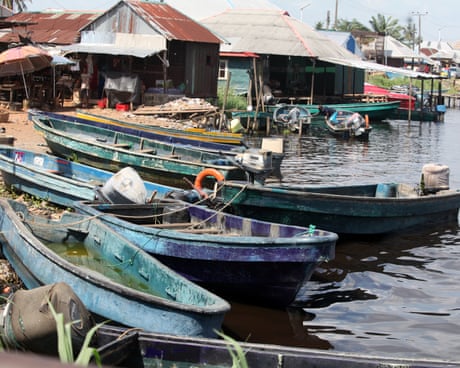
Villagers in Awoye in the Niger Delta say the ongoing pollution is causing sickness and environmental destruction, while pleas for help go unanswered
Perched on a narrow hospital cot across from her son, Bodunwa Orugbemi can hear the distant Atlantic Ocean and smell the stench of crude oil on the air drifting in from the shore. For days, her 21-year-old son has been lying in this hospital in the Niger Delta, swallowing small spoonfuls of food without being able to speak.
Seventy‑year‑old Orugbemi says Ijadopin started coughing one evening in May, inside their small wooden home in Awoye on Nigeria’s Atlantic coastline. After a few days his cough intensified, then he developed a skin irritation, followed by difficulty breathing.
For months I’ve been trying to receive my FIT payment, which should be more than £1,000
I moved into my new house 14 months ago, and soon afterwards applied to ScottishPower, with whom the solar panels are registered for a feed-in tariff (Fit), for transfer of ownership of the panels and the tariff.
After many emails back and forth, I got a response saying they had all the information required.
A Trump administration rollback of public land conservation protections is putting hundreds of Montana bison—and broader Indigenous and ecological restoration efforts—at risk.
Indigenous Peoples in Voluntary Isolation and Initial Contact (PIACI) in the Yavarí-Tapiche Territorial Corridor, one of the largest contiguous, intact forests in the Amazon and home to the world’s highest concentrations of PIACI, are under threat by extractive and large-scale industrial activities, which pose an existential threat to its inhabitants and the ecosystems they depend on. This is according to a new report co-authored by Earth Insight, the Regional Organization of Indigenous Peoples of the East (ORPIO), the Coordination of the Indigenous Organizations of the Brazilian Amazon (COIAB) and the Interethnic Association for the Development of the Peruvian Rainforest (AIDESEP). The report finds that oil and gas blocks overlap with 10% of the 16-million-hectare (39.5-million-acre) corridor, including almost 1.7 million hectares (4.2 million acres) of intact tropical moist forest, 907,000 hectares (2.2 million acres) of Key Biodiversity Areas and 713,000 hectares (1.8 million acres) of protected areas. “Pressure from hydrocarbons is increasing on the Peruvian side of the Yavarí Tapiche corridor,” Edith Espejo, senior program manager at Earth Insight and author of the report, told Mongabay over WhatsApp messages. “Our report serves as a warning for the irreversible harm that could take place if these oil blocks move into this corridor. Mining concessions within and on the peripheries of the corridor also pose a threat of encroachment and contamination of waterways.” A critical corridor for ecosystems and Indigenous communities The Yavarí-Tapiche Corridor covers Brazil’s western border states of Amazonas and Acre and Peru’s Loreto and Ucayali departments in the Amazon…This article was originally published on Mongabay
BANGKOK — Seven hundred days after activists from the environmental group Mother Nature Cambodia were imprisoned on charges widely regarded as retaliatory for their activism, 73 international and Cambodian civil society organizations have renewed calls for their unconditional release. After a trial lasting just over a month, 10 activists from Mother Nature Cambodia were sentenced on July 2, 2024, to between six and eight years in prison. Only five of the defendants attended the hearings, which saw Long Kuntha, 28, Ly Chandaravuth, 26, Phuon Keoraksmey, 25, and Thun Ratha, 34, each sentenced to six years behind bars for plotting against the government; fellow activist Yim Leanghy, 36, received an eight-year sentence for both plotting against the government and insulting the king. The five activists who did not attend the trial were sentenced in absentia. The appeals hearing for all 10 convicted activists was slated to take place on June 2, but has been postponed indefinitely by the Phnom Penh Court of Appeals. “The MNC5 are incarcerated in prisons in overcrowded and harsh living conditions, separated from each other and spread out all across Cambodia, hundreds of kilometers away from their families and legal counsel,” wrote the 73 NGOs in an open letter addressed to Prime Minister Hun Manet. “The … NGOs who have signed this letter sincerely request you take immediate action to ensure the unjust convictions of these five activists are reversed either prior to or at their upcoming appeals court hearing in Phnom Penh, and that their freedom…This article was originally published on Mongabay

 Login