❌

Reading view

Early Miocene Fossil Rewrites Family Tree of Little Carnivorous Marsupials

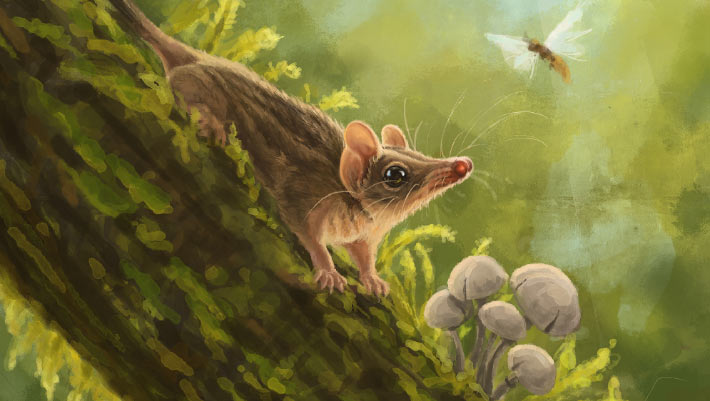
An artist’s reconstruction of Miyumba chrisdickmani in the Early Miocene rainforests of northern Australia. Image credit: Nellie Pease.

Paleontologists at the University of New South Wales have described a new genus and species of dasyurid marsupial from the Early Miocene of Australia, offering the first solid evidence that the family Dasyuridae -- which today includes quolls, Tasmanian devils and tiny antechinuses -- existed long before scientists had proof of it in the fossil record.

The post Early Miocene Fossil Rewrites Family Tree of Little Carnivorous Marsupials appeared first on Sci.News: Breaking Science News.

  •  

Did Early Snakes Burrow, Swim or Crawl? 80‑Million‑Year‑Old Fossil Suggests: All Three

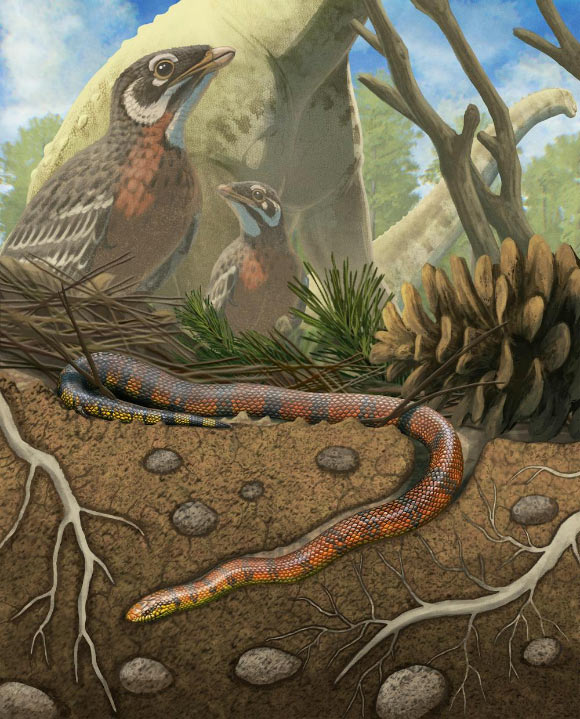
Life reconstruction of Tametara mirim. Image credit: Gabriel Ugueto.

Paleontologists have unearthed a remarkably preserved fossil snake in Brazil that is reshaping ideas about how the earliest snakes lived and complicating the long-running debate over whether their ancestors burrowed underground, swam in the sea or crawled the surface.

The post Did Early Snakes Burrow, Swim or Crawl? 80‑Million‑Year‑Old Fossil Suggests: All Three appeared first on Sci.News: Breaking Science News.

  •  
  •  
  •  

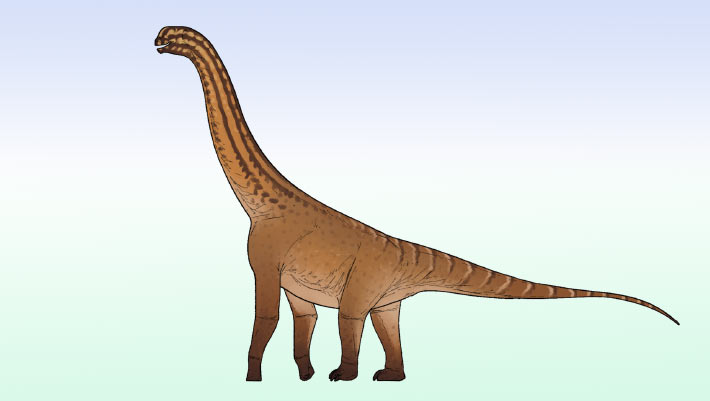
Small Sauropod Dinosaur from Jurassic Period Discovered in India

Life reconstruction of Ceratocaudia antiqua, the earliest-known macronarian neosauropod species from India. Image credit: Connor Ashbridge / CC BY 4.0.

Paleontologists in India have unearthed a partial skeleton of a diminutive, previously unknown neosauropod dinosaur from the Middle Jurassic rocks of Gujarat’s Kachchh Basin.

The post Small Sauropod Dinosaur from Jurassic Period Discovered in India appeared first on Sci.News: Breaking Science News.

  •  

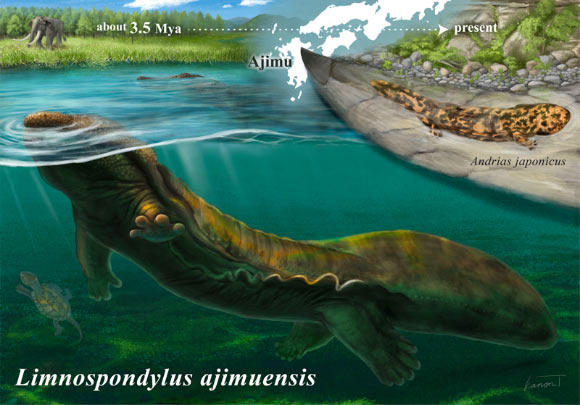
3.5-Million-Year-Old Fossil from Japan Reveals Lost Lineage of Giant Salamanders

Life reconstruction of Limnospondylus ajimuensis. Image credit: Kanon Tanaka.

A new genus and species of cryptobranchid salamander that lived in lakes in Japan about 3.5 million years ago has been identified from three fossil vertebrae, filling a major gap in the fossil record of one of the world’s oldest amphibian lineages.

The post 3.5-Million-Year-Old Fossil from Japan Reveals Lost Lineage of Giant Salamanders appeared first on Sci.News: Breaking Science News.

  •  

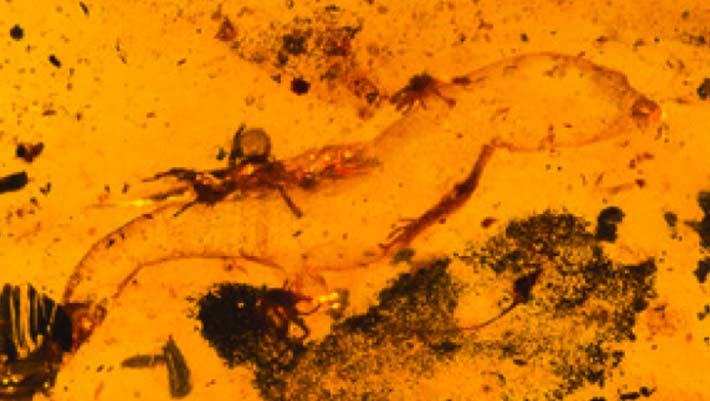
Oldest Known Male Gecko Found Preserved in Kachin Amber

Carinasquama rusmithii. Image credit: Daza et al., doi: 10.3897/sjp.145.188227.

Paleontologists have described a new genus and species of ancient gecko found in two pieces of amber from the 99-million-year-old (mid-Cretaceous) amber deposits in Kachin province, Myanmar.

The post Oldest Known Male Gecko Found Preserved in Kachin Amber appeared first on Sci.News: Breaking Science News.

  •  

Scientists May Have Finally Solved Earth’s Greatest Extinction Mystery

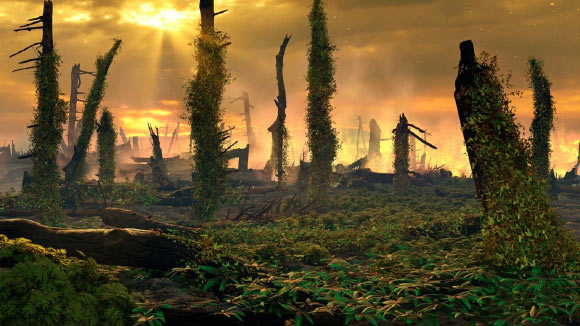
The mass extinction event known as the Great Dying, which occurred 252 million years ago, resulted in the loss of 96% of marine species, and for many years, scientists could not fully explain why certain animals disappeared while others survived.

That longstanding mystery may be closer to a resolution, thanks to a recent study in the Proceedings of the National Academy of Sciences, which suggests that differences in physiology, metabolism, and oxygen use helped determine which marine animals survived the catastrophe.

Stanford University researchers found that physiological differences largely determined which marine animals survived the end-Permian mass extinction after warming oceans lost much of their oxygen. Animals whose bodies could not meet rising oxygen demands, including brachiopods and crinoids that had long ruled the seafloor, had a hard time surviving as ocean temperatures rose and oxygen in the water dropped.

By contrast, mollusks and fish possessed body plans better suited to supplying oxygen as temperatures climbed, allowing them to survive in greater numbers.

β€œWith this study, we essentially wanted to solve the mystery of why, when you go to the beach, you collect the shells of clams and snails rather than those of brachiopods,” said lead author Jose Andres Marquez, a former PhD student in the lab of Stanford’s Erik Anders Sperling.

Marquez and his team developed a model based on species’ metabolic oxygen balance and tested it using direct measurements of oxygen use in living relatives of both ancient groups. This included brachiopods collected from the San Juan Islands in Washington. Their results revealed that the risk of extinction closely aligned with how much oxygen a species required and how effectively it could transport oxygen within its body.

A Body Built for Survival

Modern sea animals, such as bivalves, gastropods, and fish, have become more active and muscular over time. Their hunting habits demand more oxygen, even under normal conditions. Although this could seem like a disadvantage during harsh times, it actually worked in their favor. When ocean temperatures rose and oxygen levels dropped during the Permian-Triassic period, these animals already relied on features such as gills, strong blood flow, and larger muscles to get more oxygen when needed.

On the other hand, Paleozoic animals like brachiopods and crinoids were slow-moving filter feeders that thrived in low-oxygen environments when things were stable. However, as temperatures rose, they required more oxygen, and their bodies could not keep up with the demand in the now-oxygen-poor waters.

β€œOur findings show that, across different organism groups, extinctions happened at much higher rates for those more vulnerable to increases in water temperature and decreases in oxygen availability,” Marquez said.

The findings support decades of evidence from the fossil record. Brachiopods, which once accounted for thousands of species, now number about 400. In contrast, bivalves have diversified and now account for between 10,000 and 15,000 species.

Settling the Debate

Sperling previously co-authored a 2018 study that identified oxygen loss and warming as the main causes of the Great Dying. However, that earlier research used only physiological data from modern species, so the results were influenced by data from commercially important fish and crustaceans rather than from the ancient groups that have largely disappeared. The new study addresses this limitation by directly measuring the physiology of living representatives of ancient animal groups, including brachiopods.

β€œThis study is really the final nail in the coffin for what caused the Permian-Triassic mass extinction,” Sperling said.

A Familiar Climate

The environmental changes that led to the Great Dying began in oceans that were relatively cool and well-oxygenated, similar to present-day conditions. A massive release of volcanic carbon dioxide altered the atmosphere, driving global temperatures up by 8 to 12 degrees Celsius over several thousand years. By comparison, current climate projections estimate a rise of 1.5 to 4 degrees Celsius above preindustrial levels by 2100, but over a much shorter timescale. β€œThe bad news is, we are on track for Permian-Triassic levels of warming in worst-case scenario projections,” Sperling said.

By comparing more groups of marine animals, the researchers hope to determine whether the physiological patterns that shaped Earth’s greatest mass extinction could help predict which species are most vulnerable as today’s oceans continue to warm. β€œWe’re still at the point where we can change things and do something about it,” Sperling emphasized.

Austin Burgess is a writer and researcher with a background in sales, marketing, and data analytics. He holds an MBA, a Bachelor of Science in Business Administration, and a data analytics certification. His work focuses on breaking scientific developments, with an emphasis on emerging biology, cognitive neuroscience, and archaeological discoveries.

  •  

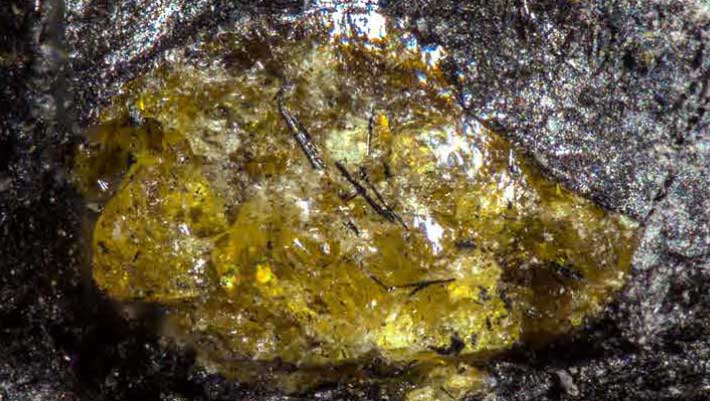
385-Million-Year-Old Amber Found in China

The Middle Devonian Hujiersite amber. Image credit: Lu et al., doi: 10.1126/sciadv.aeh1266.

Paleontologists in China have discovered what they say is the earliest confirmed pieces of amber ever found, a fossilized resin roughly 385 million years old (Middle Devonian epoch) that predates the previous record-holder by about 65 million years.

The post 385-Million-Year-Old Amber Found in China appeared first on Sci.News: Breaking Science News.

  •  

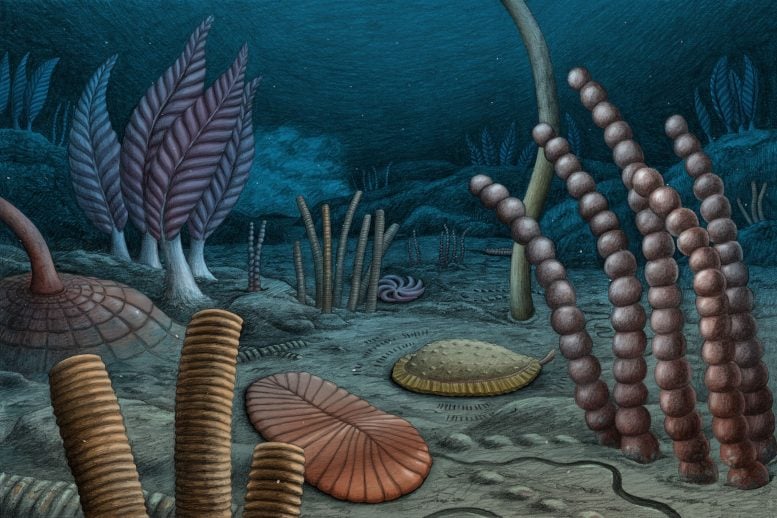
567-Million-Year-Old Fossils Suggest Animals Evolved Earlier Than We Thought

Deep Water PaleocommunityThe story of Earth’s first animals may need rewriting after ancient fossils revealed an earlier start to complex life. From butterflies to blue whales, corals, and worms, Earth is home to an incredible diversity of animals. How all of these animals evolved from earlier, simpler ancestors is one of the most exciting stories in the [...]
  •  

Scientists Discover a 5-Million-Year-Old Whale Graveyard Deep Beneath the Indian Ocean

Whale Skeleton Dark Lava RockA deep ocean whale graveyard is revealing new clues about whale evolution and the ecosystems that form around their remains. When a whale dies, its body can become the beginning of an entire deep ocean ecosystem. For a time, the carcass may drift at the surface, drawing sharks and other predators. Eventually, after weathering and [...]
  •  

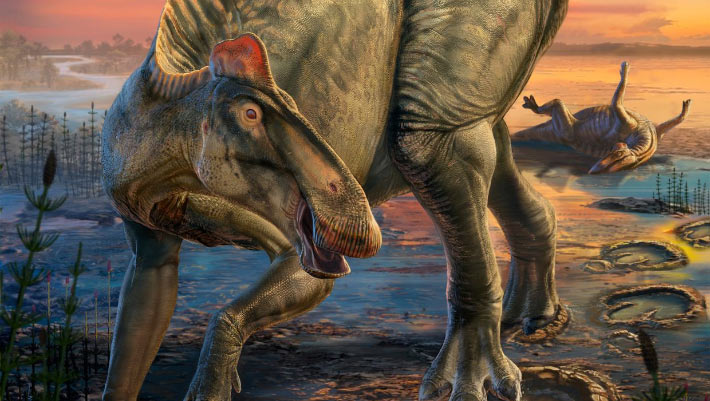
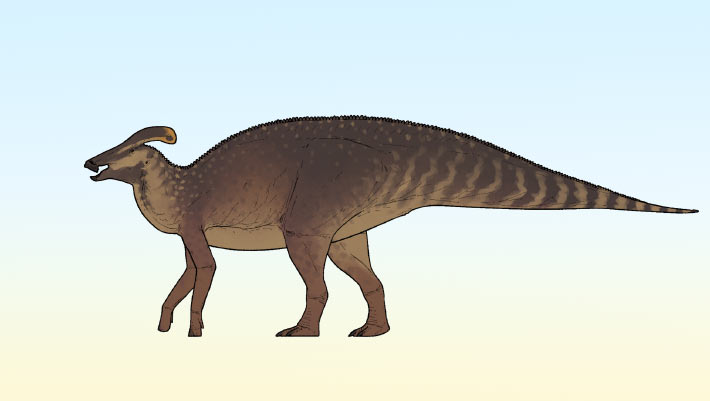
New Crested Dinosaur Species Identified in Canada

Life reconstruction of Plesiolophus warnerensis. Image credit: Connor Ashbridge / CC BY 4.0.

A new genus and species of lambeosaurine hadrosaurid dinosaur has been identified in southern Alberta, Canada, dating back 77 million years to the Campanian age of the Cretaceous period.

The post New Crested Dinosaur Species Identified in Canada appeared first on Sci.News: Breaking Science News.

  •  

Trump Sharply Cuts the Size of Two National Monuments in Utah

Native American tribes and environmental groups are expected to challenge the move to shrink the Bears Ears and Grand Staircase-Escalante National Monuments.

Β© Wolfgang Kaehler/LightRocket, via Getty Images

A hiker in the Grand Staircase-Escalante National Monument in Utah.
  •  
❌