❌

Reading view

Ancient human relative cannibalized both adults and children in a cave in Spain 850,000 years ago, fossils reveal

Cut marks suggestive of cannibalism have been discovered on the fossils of an ancient human relative in a cave in Spain, new research finds. But many of the bones from the species, known as Homo antecessor, were from adults ‪—‬ not just children, as previous discoveries had found ‪— adding a new dimension to the cannibalism that was practiced in this area 850,000 years ago.

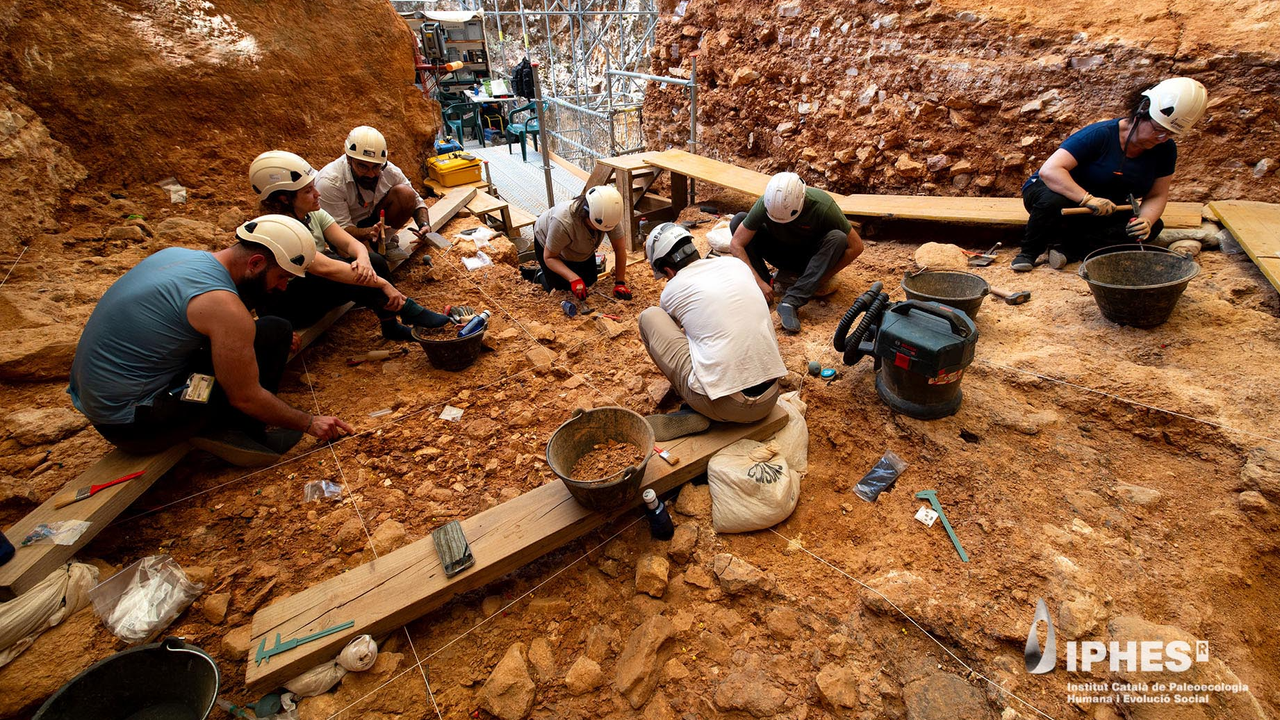
The two dozen bones and teeth were recently found in Gran Dolina cave, part of the Sierra de Atapuerca archaeological complex in northern Spain, according to a July 24 translated statement from the Catalan Institute of Human Paleoecology and Social Evolution (IPHES). Among the remains were fragments of a skull, spine, arm and leg bones, as well as three teeth from several members of the now-extinct H. antecessor, a relative of modern humans that lived in Europe between about 1.2 million and 770,000 years ago. Several of the bone fragments had cut marks from stone tools.

Over the past few decades, researchers have identified numerous cases of cannibalism at Gran Dolina, meaning H. antecessor is the oldest known human relative to eat its own group members for nutritional reasons. In a 2010 study, researchers noted that most of the evidence of cannibalism at Gran Dolina came from the bones of infants and juveniles, who would have been easier to capture and kill as the young, defenseless members of a rival group. But the newly excavated fossils have upended that assumption.

"The discovery of more adult individuals, some of whom also bear cut marks, demonstrates that cannibalism was not restricted to younger individuals," Palmira Saladié, a biological anthropologist at the IPHES who coordinated the work, said in the statement.

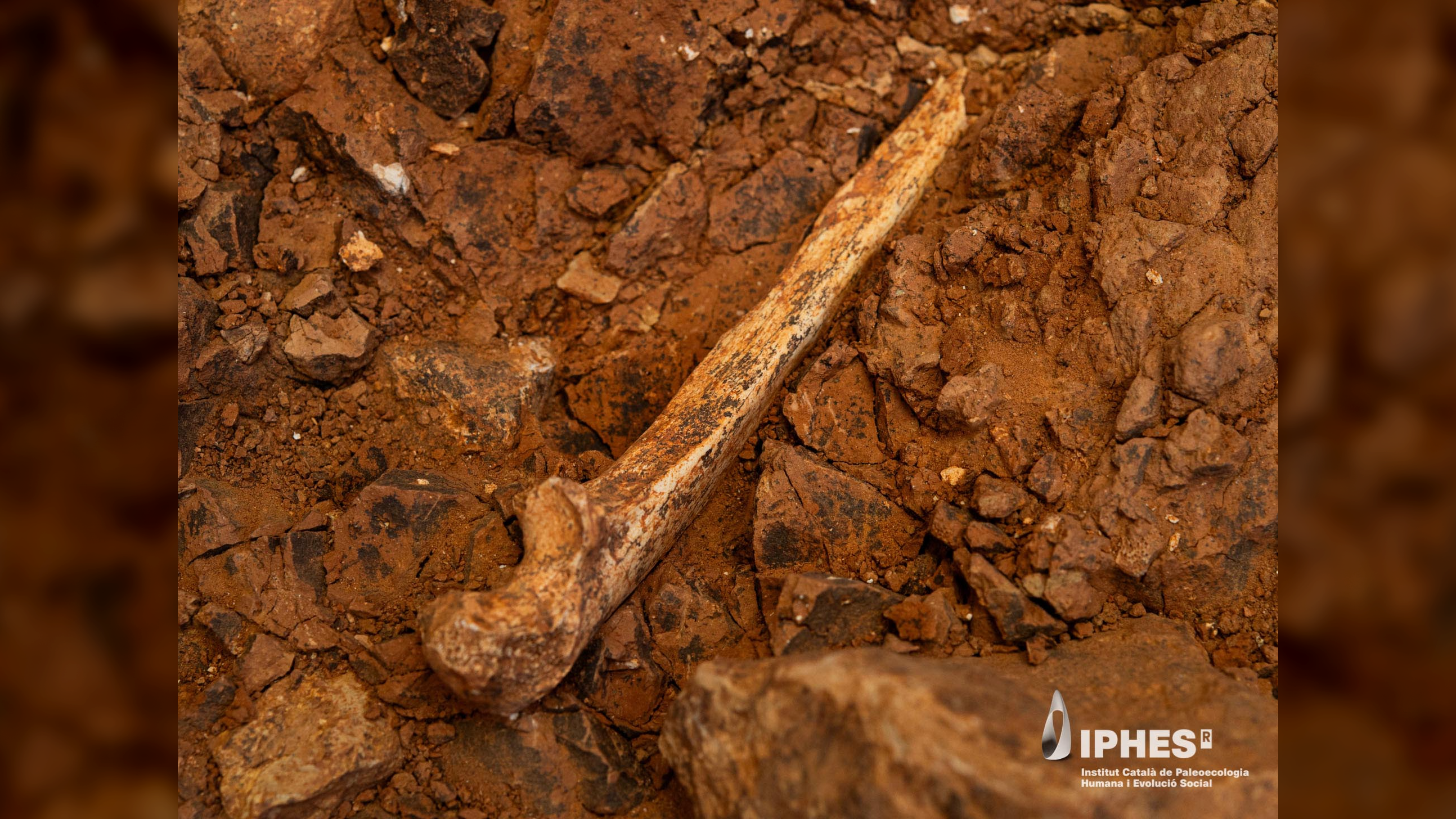
a human ulna bone lies in the orange colored dirt of a cave floor

The first-ever ulna (forearm bone) discovered from an adult Homo antecessor individual at Gran Dolina in Atapuerca, Spain. (Image credit: Maria D. Guillén / IPHES-CERCA)

The number of individuals found at Gran Dolina has now risen to at least 13, and about half of them are adults. "The increase in the number of individuals, and especially the addition of more adults, allows us to begin understanding this population from a much more complete perspective than ever before," Andreu Ollé, an archaeologist at the IPHES, said in the statement.

Excavation at Gran Dolina has also brought to light an assemblage of stone tools made from flint, quartzite and sandstone, along with animal bones from hyenas, beavers, deer, horses and rhinoceroses, according to the statement.

Evidence of cannibalism at the site is extensive. Stone tools found in the cave are consistent with the cut marks on the human bones, and the animal bones have revealed butchering techniques that were also used on humans. Some of the human bones also had human bite marks, Saladié told Live Science in 2025, which is the "most reliable evidence that the bodies found at the site were indeed consumed."

But while the practice of cannibalism at Gran Dolina has been confirmed, the reason for it is still unclear. Researchers hope the newly discovered adult bones may help them better understand the practice among H. antecessor groups.

"We have only just begun excavating this new area" at Gran Dolina, Marina Mosquera, an archaeologist at the IPHES, said in the statement, "and the first results already demonstrate its enormous scientific potential."

Further analyses on the bones are now underway to explore questions about age-related differences in cannibalism, the number and length of cannibalistic episodes, and the social organization of H. antecessor, according to the statement.

What do you know about early humans? Test your knowledge with our human origins quiz!

  •  

Science word of the day: Cenozoic

Science word of the day: Cenozoic

Pronunciation: See-noh-ZOH'-ihk

What it means: The ascendency of mammals, the birth of the Himalayas, the diversification of birds ‪—‬ Earth's in its Cenozoic era, baby!

The Cenozoic is the geological era happening right now. It started 66 million years ago with the abrupt mass extinction known as the Cretaceous-Paleogene extinction event, when a massive asteroid hit Earth and wiped out the nonavian dinosaurs. It's been a busy few tens of millions of years, ushering in such hits as Earth's first cacti, whales and most (if not all) of the Grand Canyon.

How to use it in a sentence: The Cenozoic is called the Age of Mammals, but the University of California Museum of Paleontology in Berkeley would like you to know it could have been called the Age of Teleost Fish, if mammals weren't so dang self-centered.

Can you crack our science word of the day puzzle, Chain Word?

  •  

The discovery of footprints from a hominid that lived 1.4 million years ago by a Kenyan lake reveals it could reach 180 centimeters in height

An international team of researchers has documented a set of fossilized footprints that offer an exceptional snapshot of the behavior of a group of ancient human relatives who inhabited the shores of a lake in northern Kenya. The recently published study analyzes the imprints belonging to eight individuals of the species Paranthropus boisei, an extinct […]

  •  

Scientists turn modern biobanks into a new window on human evolution

For more than a century, scientists have sought to reconstruct human evolution using diverse lines of evidence, including fossils, genetic variation across populations and ancient DNA. Building on these approaches, researchers are increasingly using large population biobanks to investigate how natural selection continues to shape the genomes of living populations.

  •  

Did Early Snakes Burrow, Swim or Crawl? 80‑Million‑Year‑Old Fossil Suggests: All Three

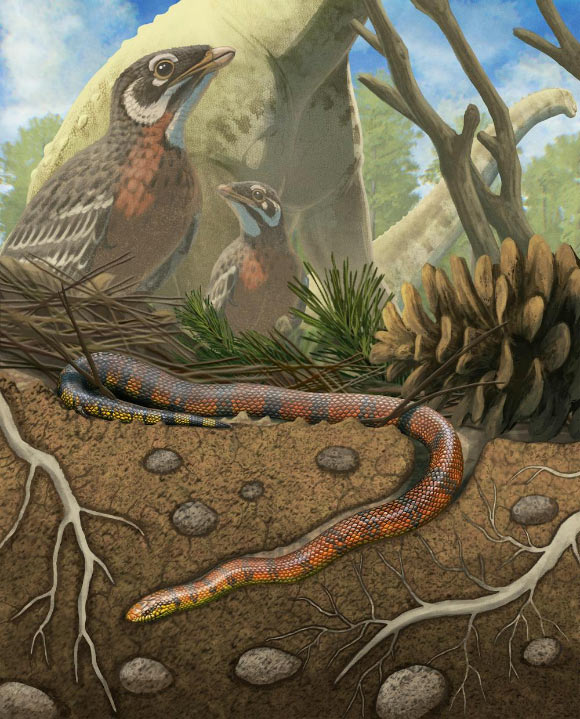
Life reconstruction of Tametara mirim. Image credit: Gabriel Ugueto.

Paleontologists have unearthed a remarkably preserved fossil snake in Brazil that is reshaping ideas about how the earliest snakes lived and complicating the long-running debate over whether their ancestors burrowed underground, swam in the sea or crawled the surface.

The post Did Early Snakes Burrow, Swim or Crawl? 80‑Million‑Year‑Old Fossil Suggests: All Three appeared first on Sci.News: Breaking Science News.

  •  

En 100 ans, voici la stupéfiante transformation observée par des chercheurs sur la forme des têtes humaines

Devant une vieille photo en noir et blanc, on met souvent l'étrangeté des visages sur le compte de la moustache ou de la pose figée. Une étude suggère une explication bien plus profonde : en un siècle à peine, la forme même de notre crâne a changé. Et la génétique n'y est pour rien.

  •  

Science word of the day: Abiotic

Science word of the day: Abiotic

Pronunciation: Ay-bye-AH'-tik

What it means: Abiotic means "without living organisms." Scientists typically use the term when referring to nonliving aspects of an ecosystem that affect organisms' growth or reproduction. Some abiotic factors might be light, water, fertilizer, nutrients or chemical elements, such as oxygen or sulfur. Others include the tides or rain. Sometimes, "abiotic" is used to describe the origin of a particular chemical. Abiotic methane, for example, comes from chemical reactions between rocks and water in Earth's crust, unlike biotic methane, which comes from decaying organic matter as well as microbes living in your gut.

How to use it in a sentence: A new "gold rush" of exploration is on for abiotic hydrogen, which forms when rocks react with water deep underground and could be a renewable, carbon-free fuel of the future.

Can you crack our science word of the day puzzle, Chain Word?

  •  

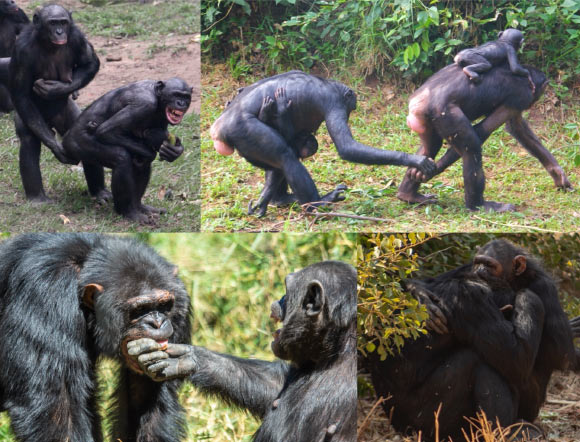
Hugs May Be an Ancient Peacekeeping Tool, Ape Study Suggests

Examples of bonobo and chimpanzee reassurance behaviors. Image credit: Z. Clay / J.S. Brooker.

In a new study of chimpanzees (Pan troglodytes) and bonobos (Pan paniscus), scientists found that embraces, touches and other reassuring gestures before competition for food were linked to more peaceful sharing, suggesting the roots of human social touch stretch back at least six million years.

The post Hugs May Be an Ancient Peacekeeping Tool, Ape Study Suggests appeared first on Sci.News: Breaking Science News.

  •  

Science word of the day: Abiogenesis

Science word of the day: Abiogenesis

Pronunciation: Ay-bye-oh-JEN'-ih-sis

What it means: Abiogenesis is the emergence of life from nonliving matter through chemical processes. Scientists still don't know exactly how abiogenesis happened on Earth. Theories range from lightning strikes that could have scrambled water, methane, ammonia and hydrogen into amino acids and sugars ‪—‬ the building blocks of life ‪—‬ to chemical reactions at deep-sea vents. Abiogenesis is not the same as spontaneous generation, which held that living organisms such as maggots formed directly from decaying matter. It was a compelling idea for anyone who had watched meat rot, but Louis Pasteur, inventor of pasteurization, disproved it in the 1860s by showing that microbes could only grow from preexisting microbes.

How to use it in a sentence: All life on Earth may owe itself to an incident of abiogenesis more than 3.7 billion years ago.

Can you crack our science word of the day puzzle, Chain Word?

  •  

Citizen Scientists Helped Reveal How Fatherhood Evolved in Spider Relatives

Paternal care is uncommon among several wild animal species, even among arthropods—the invertebrates that include insects, arachnids, and crustaceans.

Now, in a recent study in the Zoological Journal of the Linnean Society, harvestmen—also known as daddy longlegs—account for more than half of all independently evolved cases of paternal care currently documented among arthropods.

The news insights were made possible by a recent citizen science effort that significantly increased the available data about these paternal behaviors in arthropods, all within days.

Built for Fatherhood

Harvestmen are one of the most diverse arachnid groups, with more than 6,900 described species. Despite making up just 0.6% of arthropod diversity, they show more independent origins of paternal care or egg guarding than any other arthropod lineage. This concentration of paternal care makes harvestmen a key group for studying the evolution of this behavior.

Led by Glauco Machado at the University of São Paulo, the research team combined almost thirty years of fieldwork with a review of iNaturalist, a public website for sharing nature sightings. From 1936 to 2025, published studies had found parental guarding in only 80 harvestman species. However, the iNaturalist search added 85 new records: 78 showing parental care and seven showing no care, more than doubling the number of harvestman species with available behavioral data.

Machado was surprised by how quickly the platform produced results. “It’s a tremendous source of information that can improve the velocity with which we accumulate biological information,” he said. “I would never be able to do this by visiting museums around the world. It would be very expensive, very time-consuming, but here we conducted the search in only one week.”

The Evolution of Fatherhood

With the expanded dataset, the researchers were able to map parental behaviors onto a newly constructed evolutionary tree encompassing 165 species across nine families. This represented the first reconstruction of how both maternal and paternal care evolved within the superfamily Gonyleptoidea. The findings challenge the assumption that caregiving behaviors follow a single evolutionary pathway.

The analysis found that maternal care evolved only from ancestors that did not provide care, a pattern also seen in insects. Paternal care, however, appeared in two ways: once from ancestors with no care, and once from species where females already guarded eggs. This difference suggests that separate evolutionary pressures shaped the development of parental care in harvestmen.

Machado suggests that sexual selection may have driven the evolution of paternal care from maternal care. In this scenario, which the researchers describe as enhanced fecundity, females favor males that are already tending eggs.

“It’s very rare in nature, paternal care, and this behavior evolved many times independently,” Machado said. “In many species where males care for the offspring alone, the caring activity is a sexually selected behavior, which means that females prefer males that are caring for the eggs.”

The evolutionary tree also showed that parental care does not always persist across lineages. Several groups appear to have lost caregiving behavior over evolutionary time. Some harvestmen now use easier methods, like hiding their eggs or burying them under debris, to protect them without having to stay and guard them.

Limitations of Citizen Science

Machado emphasizes that experts remain essential to this process. It takes specialized knowledge to correctly identify species, tell the sex of the guarding animal, and tell real parental care apart from similar behaviors such as mate-guarding. “I think taxonomists’ role in modern science is more important than ever,” he said. “We cannot preserve a species that doesn’t have a name. And names are provided by taxonomists.”

Additionally, animals that are actively guarding eggs are more likely to be photographed than those not showing any behavior, which could make active parental care seem more common than it really is.

What Comes Next

Machado views this approach as a model for future research. More than half of the new records came from individuals without formal training in arachnology, and he anticipates similar results as researchers apply iNaturalist to other animal groups for which parental care remains poorly documented.

“I think it’s a very broad contribution for people that are working with insects, frogs, and all kinds of groups, animal groups, in which we have both maternal care and paternal care,” he said. The next mystery solved through citizen science may not involve arachnids at all.

Austin Burgess is a writer and researcher with a background in sales, marketing, and data analytics. He holds an MBA, a Bachelor of Science in Business Administration, and a data analytics certification. His work focuses on breaking scientific developments, with an emphasis on emerging biology, cognitive neuroscience, and archaeological discoveries.

  •  

Science word of the day: Autotroph

Science word of the day: Autotroph

Pronunciation: AW'-tuh-trohf

What it means: Autotrophs are organisms that can feed themselves with inorganic substances such as light (for plants) or methane (certain microbes). Autotrophs were the first single-celled life-forms to colonize the planet, thriving on chemicals bubbling up from the subsurface at deep-sea vents or figuring out how to harness the sun for energy. Heterotrophs (like you, me and all fungi), arrived on the scene later to feast on these DIY-ers.

How to use it in a sentence: Stromatolites, microbial mats built by cyanobacteria, are autotrophs that thrived in ancient shallow seas.

Can you crack our science word of the day puzzle, Chain Word?

  •  

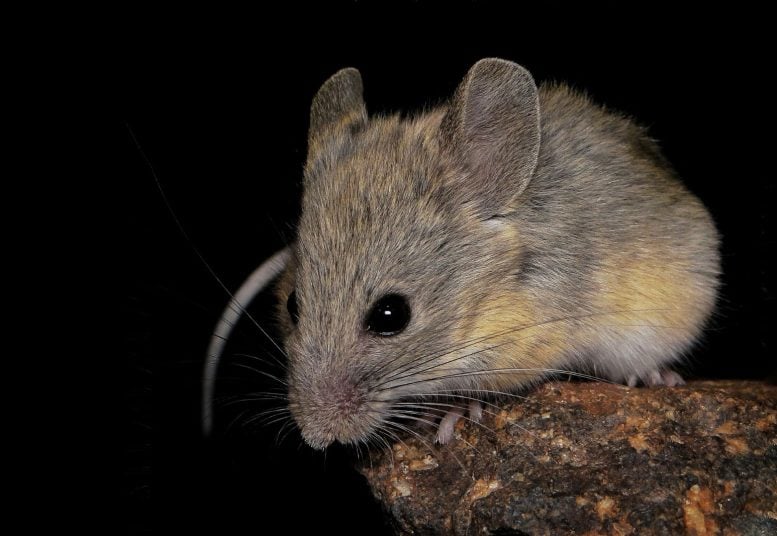
The World’s Highest-Living Mammal Is Rewriting the Limits of Life

Andean Leaf Eared MouseA leaf-eared mouse living more than 6,700 meters (22,000 feet) above sea level in the Andes has shattered assumptions about where mammals can survive. Near the summit of an Andean volcano, where the air contains barely half as much oxygen as it does at sea level, scientists found something that should not have been there: [...]
  •  

Reptile fossil found in Brazil helps shed light on the common origins of dinosaurs and crocodiles

Long before dinosaurs ruled the continents and modern crocodiles first appeared, their ancestors were already going through a decisive phase in their evolutionary history. It was in this ancient world, shortly after the greatest mass extinction in Earth's history, that a new species of fossil reptile was discovered in Brazil's inland Rio Grande do Sul state.

  •  

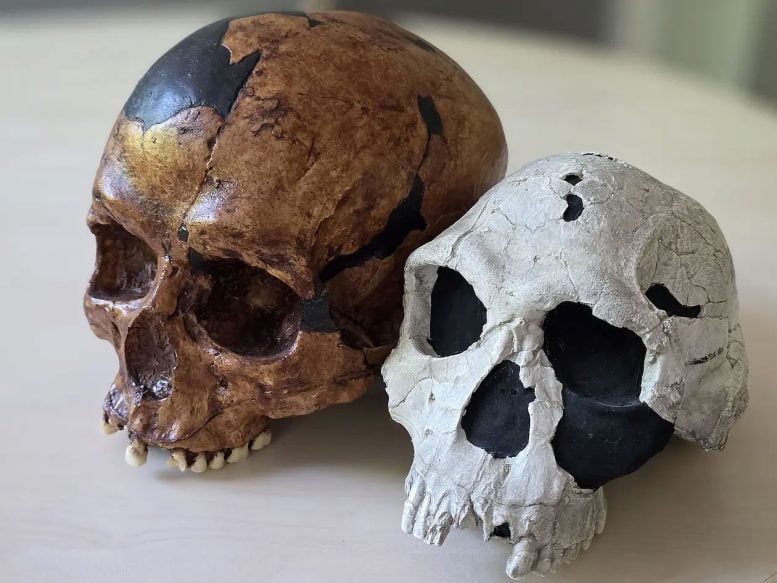
New Fossil Study Challenges the Classic Story of Human Evolution

Homo habilis Skull and an Early Homo sapiens SkullScientists say some of the traits that define modern humans may have evolved only after long-standing biological and cultural barriers were broken. Human evolution is often presented as a clear progression: brains grew larger, faces became smaller, tools improved, and our ancestors gradually became more like us. A new study suggests that this familiar story [...]
  •  

America at 250: From the Battle for Independence, to the Fight Over Artificial Intelligence

Liberty America 250 artificial intelligence

Welcome to this special star-spangled edition of The Intelligence Brief… In this installment, as America celebrates its 250th birthday amid record-breaking summer heat and mounting pressure on the nation’s power grid, we take a broader look at the technological revolutions that have shaped the United States—and the artificial intelligence revolution now poised to redefine its future. In our analysis, we’ll be looking at 1) how successive innovations transformed American society over the past two and a half centuries, 2) why artificial intelligence may represent the next great technological leap, 3) the extraordinary scientific opportunities AI is already creating alongside the risks and disruptions it presents, and 4) why the choices we make today about this transformative technology could help determine the course of America’s next 250 years. 

Quote of the Week

“America was not built on fear. America was built on courage, on imagination, and an unbeatable determination to do the job at hand.”

— Harry S. Truman

If you enjoy the news and perspectives offered by The Debrief, make sure that you aren’t missing our stories by making us one of your “preferred sources” on Google News. You can simply follow this link to add The Debrief to your list of favorites, and you can read more about Google’s preferred sources in our article here.


RECENT NEWS from The Debrief


America at 250: The Heat is On

Depending on where you are at the time you’re reading this, you may have noticed the temperature. Safe to say, summer has arrived.

One reason involves the “heat dome” that is covering much of the East Coast and the Midwest, with temperatures topping 100 degrees across large portions of the U.S., including the nation’s capital. As a result, the country’s power system is undergoing inevitable strain as extreme heat warnings have prompted grid operators to warn about surges in air-conditioning use throughout the nation, with many systems expected to operate less than optimally amid such temperatures.

All of this arrives just in time for America’s 250th birthday, with Independence Day celebrations falling on a weekend that is certain to be memorable for more than just the extreme heat, since this year’s celebration marks our nation’s semiquincentennial.

“Reaching 250 years is a significant event for any nation,” read a statement by the Sandra Day O’Connor Institute in honor of the forthcoming holiday. “It offers a chance to learn more about how the United States began, how it grew, and how it has changed over time. Every era of American history has shaped the present in some way, from early settlements to westward expansion, from war and invention to civic achievements and cultural growth.”

Something else that this special Independence Day offers us is an opportunity to reflect on how successive technological revolutions have influenced our nation’s growth since its inception, and where the cutting-edge technologies of today are likely to carry us going forward.

America’s Tradition of Technological Revolutions

We’ve come a long way since 1776. Back in the days during which the Declaration of Independence was signed, the speed of information was constrained to how fast a horse could carry its rider, or how strong the winds were that could propel a ship across water.

Under such conditions, pens and ink were used to preserve ideas on paper that could take weeks to make its way from locations like Philadelphia to other parts of the colonies. With such technological limitations, human political organization was similarly constrained.

Over the last two and a half centuries, we have seen most of those limitations fall away, with new inventions advancing progress, and eventually being overtaken by even newer, bolder ideas and inventions. Our steam engines helped remove geographic constraints, only to be replaced by aircraft, automobiles, and conveyances propelled by electrical power.

Similarly, the telegraph helped collapse the imposition of time that once hindered communication; its successors, like radio, the telephone, the Internet, Smartphones, and a host of other mobile communications technologies, have now placed instantaneous global communication at our fingertips.

And now we are on the cusp of another great American technological transition: one that very likely will rival any that came before it.

The Rise of Artificial Intelligence

It is difficult to even compare artificial intelligence to any other potentially revolution-inducing technology in our nation’s history. As America turns 250 and we look back on the progress that has brought us to the present day, one must also wonder how history will look back on the advent of this technology: will we recognize the implementation of AI as another innovation that breaks significant barriers that constrained human achievement, as time and geography once did?

Or will the advent of AI be remembered differently? Science fiction affords us alternative scenarios that most of us are quite familiar with already, and the real possibility that AI could spell trouble for us in the years ahead remains ever-present. Where things go from here, understandably, has a lot to do with the question of what humans choose to use this technology for, and how we go about implementing it.

Yes, scientific progress is accelerating, and AI is helping with that. Discoveries are arriving faster not only because scientists are working harder, but because the tools they’re using—especially AI—are helping them achieve more, and increasing our productivity and overall capability to levels that dramatically exceed what humans alone can do.

From the design of new proteins in the lab and the identification of obscure exoplanets within mountains of astronomical data, to the acceleration of materials science and a range of other fields, much of what we are seeing AI help us achieve right now bears the promise of a brighter future. But should that hopeful vision for a better future be taken for granted?

There are obvious reasons for caution, since virtually every major technological revolution brings not only opportunities, but also disruption. New sources of technology replace old ones, and thereby require new skills to be leveraged. The result of this obsolescence often extends to those in the workforce whose expertise once propelled these predecessor technologies; once the technologies have fallen out of use (sometimes with remarkable speed), the human workers once tasked with building them are left having to find new professions.

Myriad examples of similar past technological scenarios exist that encourage such concerns. Nuclear physics gave us clean energy, but also nuclear weapons; the internet connected billions of people—and each day, it enables the spread of misinformation into our homes, along with the potential for unwarranted surveillance and cybercrime.

AI will almost certainly follow a similar pattern to every other major technological revolution that America, and the world at large, has ever seen. So the question isn’t one of whether it will change our society: we already know the answer to that.

The question here has more to do with how we will use this technology, and what we will allow it to do for us—and to us—as it progresses.

Palantir CEO Alex Karp’s Interesting CNBC Interview

To conclude on a somewhat odd, yet also an extremely relevant note in the context of what we’re discussing here, some interesting exchanges aired recently on CNBC’s “Squawk Box,” during a live segment featuring Palantir CEO Alex Karp.

Anyone who watches this will understand both the relevance, as well as my choice in characterizing it as “odd,” given the strange, rambling nature of Karp’s interview (admittedly, some have been a bit less gracious in how they’ve characterized the recent appearance).

Rather than discussing Palantir and Nvidia’s recent work for the United States government in assembling its new AI infrastructure, Karp appeared to have something else on his mind: the looming prospect of a financial bubble underlying the current boom in AI technology.

“Something has gone completely wrong,” Karp said at one point during one of the rambling exchanges, where he appeared to be addressing the token model currently employed by leading AI companies amid rising costs, as industry leaders continue to seek returns on investment.

“The basic view among enterprises in this country is I’m going to chillax and waste my time with tokens,” Karp said. In another portion of the diatribe, Karp aired his concerns about how current AI models have been “irresponsibly” oversold, which he called “dangerous for everyone, which is why I can give [AI] to all your adversaries but I can’t give it to the Department of War, or I can’t safely give it to an enterprise in this country, without being certain that the Alpha of that business could transfer to this model tomorrow, i.e. I have no business, no job.”

When chided by host Becky Quick for sounding angry, Karp shot back that “This is the voice of American business that is being channeled through me.”

“Are we really going to outsource the battlefield of this country to the consensus view in Silicon Valley?” Karp also said at one point. “That is effing insane.” The entire segment can be watched here.

Uncertainty is Our Business

Although Karp’s interview was odd, to say the least, the Palantir CEO raises some important points, and as evidenced by his demeanor during the CNBC segment, much of what he discussed appears to be weighing heavily on him.

It would be safe to say that he’s probably not the only one in Silicon Valley right now experiencing a degree of unrest and uncertainty over such issues, as the current situation with AI technologies in America and around the world progresses onward into uncertain territory.

Fortunately, America’s history shows that a major driving factor in its progress has been the conviction that the next horizon is worth pursuing, even when it’s uncertain.

Yes, the unforeseeable consequences of these nascent technologies, like AI, can be sobering at times.  While it seems inevitable that the same driving forces that have driven past industrial revolutions will also drive humans to build smarter, and increasingly more powerful machines, hopefully, we will also remember that wisdom is required in knowing how to use them.

If we can do that, then perhaps America’s progress can continue for another 250 years, and the technologies we are innovating in the present day can indeed help us to build a brighter future for tomorrow.

That concludes this week’s installment of The Intelligence Brief. You can read past editions of our newsletter at our website, or if you found this installment online, don’t forget to subscribe and get future email editions from us here. Also, if you have a tip or other information you’d like to send along directly to me, you can email me at micah [@] thedebrief [dot] org, or reach me on X: @MicahHanks.

Here are the top stories we’re covering right now…

  •  

Scientists May Have Finally Solved One of Human Evolution’s Biggest Mysteries: When Our Ancestors Grew Larger

For decades, paleoanthropologists have largely agreed that somewhere along the evolutionary course from apelike ancestors to modern humans, our bodies got dramatically larger. However, one lingering mystery has been when this intense growth began.

Did our ancestors gradually grow bigger over millions of years? Did the shift coincide with the emergence of the genus Homo? Or did it occur later, after some of the earliest human species had already appeared?

A new study published in the Proceedings of the National Academy of Sciences (PNAS) argues that the answer is more complex than any single theory has suggested.

Rather than supporting a single long-standing hypothesis, researchers used a sophisticated statistical method to show that human body size likely followed two evolutionary courses simultaneously: a slow, steady increase spanning millions of years, punctuated by a much larger leap in later members of the genus Homo.

The findings help reconcile decades of conflicting research while offering one of the clearest pictures yet of how, and perhaps why, our ancestors evolved into larger-bodied humans.

“Despite its central role in hominin evolution, there is little consensus on how body size increased through time,” researchers write. “We provide strong evidence for a marked size increase in later-occurring Homo, alongside a moderate general increase over time among all hominins.”

Body size is one of the defining characteristics of an organism. In humans and our extinct relatives, it has been linked to everything from brain expansion and walking efficiency to metabolism, hunting behavior, and the ability to travel across increasingly large landscapes. Understanding when body size changed, therefore, helps researchers reconstruct not only what our ancestors looked like, but how they lived.

Yet despite decades of fossil findings, scientists have struggled to agree on the evolutionary pattern behind those changes.

Some previous studies suggested that hominins simply became larger over time. Some contended that body size remained relatively stable until the emergence of Homo. Still others have proposed that the real transformation arose only after early species such as Homo habilis, often regarded as one of the first members of our genus.

According to researchers, one reason for the disagreement is that earlier analyses typically examined these competing ideas independently. They also often failed to account for uncertainties inherent in the fossil record, including disagreements over species classification, differences in body mass estimation methods, and uncertainties in evolutionary relationships among fossil species.

To address those limitations, researchers compiled one of the largest hominin body-size datasets assembled to date, incorporating body mass assessments from 386 fossil specimens representing 21 different taxa.

They then analyzed the data using Bayesian phylogenetic generalized linear mixed models—a statistical approach that accounts for evolutionary relationships while encompassing multiple layers of uncertainty.

The team repeated its analyses across 1,000 different phylogenetic trees and 1,000 separate datasets, allowing them to test whether the overall pattern remained consistent despite uncertainties.

The results pointed to two simultaneous trends.

The first was a modest but persistent increase in body size across the hominin family as a whole. On average, body mass increased by roughly 2 pounds (0.9 kilograms) every million years, suggesting that larger bodies gradually became more common throughout human evolution.

However, the second trend proved far more dramatic.

Instead of all members of Homo becoming substantially larger, the researchers found the strongest evidence for a distinct jump in body size among later members of the genus, particularly species that appeared after Homo habilis. That pattern regularly emerged regardless of how the fossil data were analyzed.

In other words, early members of Homo may not have represented the major biological turning point scientists once assumed.

This finding disputes a common assumption that simply belonging to the genus Homo meant possessing a significantly larger body. Instead, the study suggests that some hallmark features traditionally associated with humans, including larger body size, may have evolved after the genus’s origin.

That interpretation also corresponds to broader changes that occurred later in human evolution.

Researchers note that this period coincides with evidence for more efficient upright walking, greater reliance on meat consumption, and expanding home ranges. Larger bodies may have been both a consequence of and a contributor to those behavioral and ecological shifts.

The study likewise reinforces another growing theme that evolution rarely follows a straight line.

Species such as Homo floresiensis, often nicknamed the “Hobbit” because of its diminutive stature, and Homo Naledi frequently appeared as outliers with unusually small body sizes despite belonging to relatively recent branches of the human family tree. Their existence demonstrates that body size did not simply increase in a uniform march toward modern humans.

Instead, evolution repeatedly experimented with different solutions depending on local environments and ecological constraints.

The researchers also argue that part of the longstanding disagreement over body-size evolution stems from the fossil record itself. Different studies have estimated fossil body masses using different skeletal elements, comparison populations, and statistical techniques, sometimes producing substantially different results for the same individual.

By expressly incorporating those uncertainties into their analysis, rather than treating them as fixed values, the new framework seeks to capture the range of plausible evolutionary scenarios rather than relying on a single interpretation.

Even so, researchers caution that important questions remain unresolved.

Improved fossil discoveries, more accurate body-mass estimation methods, and a better understanding of species relationships could all further refine the picture. The study also does not explicitly account for sexual size differences between males and females, which may have been greater in some early hominin species than in modern humans.

Nevertheless, the wider conclusion is intriguing.

Rather than choosing between competing theories, the evidence suggests both contain elements of the truth.

Body size did increase gradually across the hominin lineage. But the most considerable leap appears to have occurred later, after the earliest representatives of Homo had already evolved.

That conclusion may help settle one of paleoanthropology’s longest-running debates while showing how advances in statistical methods are transforming scientists’ ability to extract new insights from fossils that have often been studied for decades.

“Overall, these findings bring clarity to a fundamental question in human evolution and show how the application of rigorous phylogenetic comparative tools can unlock patterns previously hidden in the fossil record while accounting for multiple sources of uncertainty,” researchers write. “By reconciling conflicting findings within a single framework, our results clarify key evolutionary transitions and highlight the complex nature of body size change in human evolution.”

Tim McMillan is a retired law enforcement executive, investigative reporter and co-founder of The Debrief. His writing typically focuses on defense, national security, the Intelligence Community and topics related to psychology. You can follow Tim on Twitter: @LtTimMcMillan.  Tim can be reached by email: tim@thedebrief.org or through encrypted email: LtTimMcMillan@protonmail.com 

  •  
❌