❌

Reading view

This smart wearable patch vibrates to warn you of dangerous gases and toxic water

Imagine wearing a small patch that can instantly warn you if you are exposed to dangerous gases or contaminated water. Instead of sending an alert to your phone that you might not notice right away, the patch vibrates against your skin, giving you an immediate warning to move away from danger. Researchers at North Carolina […]

The post This smart wearable patch vibrates to warn you of dangerous gases and toxic water appeared first on Knowridge Science Report.

  •  

Foxconn teria iniciado produção em massa dos iPhones “18 Pro” e “18 Pro Max”

Segundo o que foi reportado por fontes de cadeia de suprimentos, a Foxconn já teria dado o pontapé inicial na produção em massa do “iPhone 18 Pro” e do “iPhone 18 Pro Max”, os próximos smartphones topos-de-linha da Apple.

A informação partiu do portal de notícias chinês MyDrivers, o qual afirmou que a principal fabricante contratada da Apple iniciaria em breve seu período de pico de contratações para dar conta desse estágio de aumento da produção em massa, já iniciado no mês de julho.

As novidades dos iPhones “18 Pro” incluem, segundo os rumores, uma redução de 35% no tamanho da Ilha Dinâmica (Dynamic Island), a implementação de uma lente com abertura variável no sensor principal de 48 megapixels — essa especulação, vale lembrar, ganhou força após a informação ser citada no vazamento da Tata Electronics, fornecedora indiana da Apple —, a estreia do chip “A20 Pro” (que poderá contar com novas tecnologias de encapsulamento) e do modem “C2” (que deverá ser compatível com redes 5G via satélite).

Pela primeira vez, a Apple deverá segregar o lançamento dos novos iPhones, separando os modelos tradicionais dos da linha Pro: tanto o “18 Pro” quanto o “18 Pro Max” deverão ser anunciados em setembro ao lado do “iPhone Ultra” — a estreia da Apple no segmento de celulares com telas dobráveis —, enquanto lançamentos como a segunda geração do iPhone Air, o “iPhone 18” e o “iPhone 18e” deverão ficar para o começo do ano que vem.

iPhone 17 Pro Max

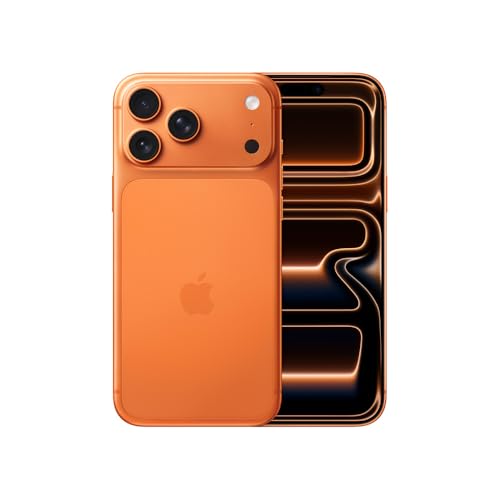
Cores: prateado, laranja-cósmico ou azul-intenso
Armazenamento: 256GB, 512GB, 1TB ou 2TB
R$ 10.999,00
R$ 12.499,00

iPhone 17 Pro

Cores: prateado, laranja-cósmico ou azul-intenso
Armazenamento: 256GB, 512GB ou 1TB
R$ 9.777,77
R$ 11.499,00

NOTA DE TRANSPARÊNCIA: O MacMagazine recebe uma pequena comissão sobre vendas concluídas por meio de links deste post, mas você, como consumidor, não paga nada mais pelos produtos/serviços usando os nossos links de afiliado.

via MacRumors

  •  

Render do “iPhone 18 Pro” exibe lente com abertura variável e reforça vazamentos

Em mais um dos seus tradicionais vídeos comentados com renders, o YouTuber Jon Prosser tratou do “iPhone 18 Pro”, previsto para chegar ao mercado no mês de setembro.

O foco da vez é a câmera com abertura variável, um dos aguardados principais diferenciais do “18 Pro” em relação ao seu antecessor.

Relembrando os feitos do Modo Retrato (Portrait Mode), Prosser explica que a abertura variável — que foi inclusiva “confirmada” pelo megavazamento da fornecedora indiana Tata Electronics — poderá contribuir com capturas de fotos mais naturais com mais ou menos profundidade de campo. Quanto menor ela for, mais borrado fica o plano de fundo (efeito chamado na fotografia de bokeh). Ele considera esse uma das maiores melhorias dos iPhones, embora pouco perceptível à primeira vista.

O restante do vídeo menciona a escolha de design pela continuidade do alumínio, as cores — fazendo coro às especulações de azul claro, cereja escuro, cinza escuro e prata —, a Ilha Dinâmica (Dynamic Island) reduzida — já abordada em outro vídeo do mesmo canal sobre o aparelho —, o chip “A20 Pro” (de 2nm, com a especulada ampliação de quase 15% em performance e 30% em eficiência energética se comparado ao A19 Pro), o empacotamento do tipo Wafer-level Multi-Chip Module (WMCM) — acoplando CPU, GPU, Neural Engine e memória na mesma placa —, a bateria de 4.288mAh no modelo menor e 5.567mAh no “18 Pro Max”, além do modem “C2”, que poderá contar com suporte ao 5G via satélite (também abordado em outro vídeo do “18 Pro”).

O vídeo encerra provocando a indagação sobre o apelo da linha em meio à estreia da linha de dobráveis da Apple com o “iPhone Ultra”, que deverá ser anunciado também em setembro.

iPhone 17 Pro Max

Cores: prateado, laranja-cósmico ou azul-intenso
Armazenamento: 256GB, 512GB, 1TB ou 2TB
R$ 10.499,00
R$ 12.499,00

iPhone 17 Pro

Cores: prateado, laranja-cósmico ou azul-intenso
Armazenamento: 256GB, 512GB ou 1TB
R$ 9.777,77
R$ 11.499,00

NOTA DE TRANSPARÊNCIA: O MacMagazine recebe uma pequena comissão sobre vendas concluídas por meio de links deste post, mas você, como consumidor, não paga nada mais pelos produtos/serviços usando os nossos links de afiliado.

  •  

This smart knitted fabric can count your steps, turn on lights, and change shape

Knitted fabrics are usually associated with warm sweaters, scarves, and blankets. But researchers at the Harvard John A. Paulson School of Engineering and Applied Sciences (SEAS) have shown that knitting can do much more than keep people warm. They have created a new type of smart fabric that can change shape, act like a switch, […]

The post This smart knitted fabric can count your steps, turn on lights, and change shape appeared first on Knowridge Science Report.

  •  

New electronic skin can be made onsite, bringing smarter robots and wearables closer to reality

Researchers in South Korea have developed a new type of electronic skin that can be made directly where it is needed, potentially opening the door to smarter robots, advanced wearable devices, and more interactive technologies. Electronic skin, often called e-skin, is a thin and flexible material filled with sensors that can detect pressure, touch, and […]

The post New electronic skin can be made onsite, bringing smarter robots and wearables closer to reality appeared first on Knowridge Science Report.

  •  

A Plastic Motor Just Defied a Century of Engineering Assumptions

Electricity Sparks Outside Concept ArtElectrostatic forces enable low-voltage actuation without relying on rare earth materials. Nearly every electric motor in modern life, from the fan on your desk to the motor in an electric vehicle, relies on magnetism. For more than a century, magnetic fields have dominated motor design because electrostatic forces were considered too weak for practical machines. [...]
  •  

Scientists Finally Uncover Why Solid-State Batteries Short-Circuit

New Unique Battery TechnologyResearchers have uncovered a critical mechanism behind battery failure in solid-state batteries, offering new insights that could help unlock safer, longer-lasting energy storage technologies. Every time a smartphone is charged or an electric vehicle is plugged in, billions of lithium ions move through a battery to store energy. Future devices could perform far better with [...]
  •  

Some Video Games May Reduce Loneliness and Increase Resilience

Video games are often criticized for keeping people glued to screens and isolated from the real world. Many parents and health experts have worried that spending too much time playing games may increase loneliness and reduce social connections. However, a new study suggests that this view may not tell the whole story. Some video games […]

The post Some Video Games May Reduce Loneliness and Increase Resilience appeared first on Knowridge Science Report.

  •  

New wearable glove lets people feel their data through heat and touch

Most of us experience data by looking at screens filled with charts, graphs and numbers. But what if you could actually feel your data instead of just seeing it? Researchers at the University of Adelaide have developed an experimental wearable glove called ThermoPhy that turns information into physical sensations. The glove uses heat, touch and […]

The post New wearable glove lets people feel their data through heat and touch appeared first on Knowridge Science Report.

  •  

Scientists create a self-powered sensor that stretches nearly seven times its length

Imagine wearing a lightweight patch that can monitor your heartbeat, breathing and movements for long periods without ever needing a battery. Or imagine robots with soft, flexible skins that can feel pressure and movement much like human skin. These ideas may be closer to becoming reality thanks to a new self-powered sensor developed by researchers […]

The post Scientists create a self-powered sensor that stretches nearly seven times its length appeared first on Knowridge Science Report.

  •  

Near Absolute Zero, This Transistor Starts Acting Like a Brain Cell

Brain AI Chip Artificial Intelligence Technology Data StreamA single transistor that behaves like a brain cell in the deep freeze could help unlock the next generation of quantum computers and space exploration systems. Researchers at the University of Hong Kong (HKU) have developed a new type of brain-inspired electronic hardware that can operate at temperatures close to absolute zero. The breakthrough could [...]
  •  

Scientists create brain-like electronic device that can sense, remember and forget

Researchers at Oregon State University have developed a new light-sensitive electronic device that works more like the human brain. The innovation could lead to artificial intelligence systems that process information faster while using much less electricity. The new device, described in the journal Advanced Functional Materials, combines three important functions into a single component: it […]

The post Scientists create brain-like electronic device that can sense, remember and forget appeared first on Knowridge Science Report.

  •  

New electronic ‘nose’ can tell when your food is spoiled

Many people rely on the sniff test to decide whether food is still safe to eat. If milk smells fine or leftovers don’t seem off, we often assume they are okay. But the human nose isn’t always reliable. Every year, millions of people in the United States become sick from food-borne germs that can grow […]

The post New electronic ‘nose’ can tell when your food is spoiled appeared first on Knowridge Science Report.

  •  

KAIST Creates Next-Generation Self-Powered Wearable Sensor withstanding 668% Stretch

In a groundbreaking advancement that promises to reshape the landscape of wearable technology and soft robotics, researchers at the Korea Advanced Institute of Science and Technology (KAIST) have developed a pioneering self-powered piezoelectric fiber sensor exhibiting unprecedented stretchability and resilience. This novel device, capable of enduring elongations up to 668%, heralds a new era of flexible sensors that can reliably monitor physiological signals over extended periods without relying on external power sources such as batteries.

Wearable medical devices designed to continuously track vital signs—heart rate, respiration, and joint movement—have long been limited by the mechanical and electrical degradation of their sensing components under repeated deformations. Traditional piezoelectric fiber sensors, which convert mechanical forces into electrical signals, often suffer from diminished performance as their thin electrode layers and fragile piezoelectric materials falter during routine bending and stretching. Overcoming this barrier, the KAIST research team led by Professor Miso Kim has introduced a transformative approach that stabilizes sensor function even after thousands of mechanical cycles.

Central to this breakthrough is the adoption of a meticulously engineered “Hierarchical Resilient Design,” wherein resilience is embedded across multiple structural levels of the sensor. This concept mirrors the elasticity of a rubber band, allowing the piezoelectric fibers to recover their original form and function after extensive stretching. The research team achieved this by dispersing elastic polymer microparticles within the piezoelectric nanofibers, creating a Velcro-like interlocking microstructure that enhances the sensor’s mechanical robustness and self-restorative capabilities.

The interface engineering between the sensor’s electrical components also proved critical. By enhancing the bonding between the piezoelectric layers and the electrodes, the team prevented delamination—a common failure mode under deformation—that typically degrades signal integrity. This strong adhesion at the material interfaces ensures continuous charge transfer and maintains stable electrical outputs even when the sensor is twisted, pressed, or stretched significantly.

One of the most remarkable aspects of the sensor’s design is its coil and knot structures. By coiling the piezoelectric fibers, the researchers capitalized on geometric extensions, enabling the sensor to stretch over six times its initial length without losing sensitivity. Furthermore, knot configurations were tested to validate sensor durability under complex and dynamic mechanical stresses such as sudden impacts or localized pressure, demonstrating stable electrical signals regardless of deformation mode.

Beyond mechanical resilience, the KAIST team integrated artificial intelligence techniques to interpret the electrical outputs from the sensor. Utilizing machine learning algorithms, they could accurately distinguish between distinct mechanical stimuli—such as bending, stretching, and pressing—offering a valuable platform for intuitive and precise biosignal monitoring in real-world environments. This capability opens new horizons for dynamic human-machine interfacing, where nuanced movement detection is critical.

What sets this breakthrough apart is its self-powered nature. Unlike conventional wearable sensors that depend on finite battery life, the piezoelectric polymer fibers harvest mechanical energy directly from body movements, converting it into usable electrical signals. This sustainable mechanism not only eliminates maintenance concerns but also allows for ultra-lightweight, unobtrusive devices suitable for long-term wear.

The implications of this technology extend well beyond healthcare monitoring devices. Electronic skins capable of mimicking human sensory reception, soft robotic actuators with sensitive feedback loops, and next-generation digital health tools could all benefit from the combination of stretchability, mechanical resilience, and stable self-generated electrical outputs demonstrated by this platform. Such multifunctional usability places this development firmly at the forefront of flexible electronics innovation.

Professor Miso Kim emphasized the significance of their approach: “By simultaneously achieving mechanical resilience and electrical reliability through fiber structure design combined with precise electrode interface engineering, we have laid the foundation for wearable devices capable of long-term operation under strenuous conditions,” she remarked. This robust design paradigm, she asserts, will empower a new generation of devices that continuously monitor biosignals with unprecedented accuracy and durability.

Published in the prestigious journal ACS Nano, the team’s research showcases both fundamental materials science and applied engineering excellence. The paper titled “Mechanically and Functionally Resilient Piezoelectric Fiber Coils and Knots for Reliable Self-Powered Sensing” details the synthesis of the nanofiber composites, the meticulous fabrication of coil and knot geometries, and a comprehensive analysis of the sensor’s electromechanical performance over extensive cyclical tests.

The scientific community has lauded this work for addressing long-standing issues in flexible sensor design. By merging nanoscale material innovations with macrostructural strategies, the KAIST team has created a versatile sensing platform that bridges the gap between laboratory prototypes and real-world applications. Their work sets a precedent for future interdisciplinary efforts aimed at wearable electronics that demand both high performance and durability.

Funded by multiple National Research Foundation of Korea initiatives, this research underscores Korea’s growing leadership in advanced materials and smart sensor development. The integration of elastic polymer microparticles within piezoelectric nanofibers, combined with interface science and architectural engineering, exemplifies the kind of holistic approach necessary to push boundaries in next-generation electronics.

Looking ahead, this resilient, self-powered fiber sensor technology could transform how we collect and interpret physiological data in ambulatory settings, enable more sophisticated prosthetics with tactile feedback, and empower soft robots with human-like sensory capabilities. As devices become lighter, more adaptable, and energy-autonomous, the convergence of materials science and artificial intelligence will accelerate innovations that make previously impossible applications a reality.

In conclusion, the KAIST team’s pioneering piezoelectric fiber sensor offers a robust and reliable solution to historic challenges in wearable sensory technology. Its remarkable combination of extreme stretchability, stable electricity generation without batteries, and intelligent signal analysis marks a significant leap forward that is poised to impact multiple sectors, from healthcare to robotics and beyond.


Subject of Research: Development of highly stretchable, mechanically resilient, self-powered piezoelectric fiber sensors for wearable devices and soft robotics.

Article Title: Mechanically and Functionally Resilient Piezoelectric Fiber Coils and Knots for Reliable Self-Powered Sensing

News Publication Date: June 18, 2026

Web References: https://doi.org/10.1021/acsnano.5c19628

References: Choi, Y. J., Park, J., Nam, J., Sim, G.-D., Kim, M.-G., & Kim, M. (2026). Mechanically and Functionally Resilient Piezoelectric Fiber Coils and Knots for Reliable Self-Powered Sensing. ACS Nano.

Image Credits: KAIST

Keywords

Self-powered sensor, piezoelectric polymer, wearable medical devices, stretchable electronics, fiber coil sensor, interface engineering, mechanical resilience, electrical stability, nanofiber composites, artificial intelligence, biosignal monitoring, flexible sensors.

  •  
❌