The plane sprayed the soy fields beside the forest. Residents of Khikatxi said the single-engine aircraft appeared several times during each harvest and passed over Wawi Indigenous Territory. They worried about pesticides reaching their water, gardens, animals, and homes. People reported itching and diarrhea. Crops weakened, streams grew cloudy, and some game animals seemed to smell of agricultural chemicals. For years, Khuiusi Khisêtjê watched the farms advance around his people’s land. In 2018 he made a decision. The community would rebuild its village ten kilometers deeper in the forest. Leaving a village is difficult. Houses must be rebuilt, paths cleared, gardens planted, and daily routines restored. The old place contained years of work and memory. Khuiusi Khisêtjê had already lived through several such upheavals. He knew what was lost when people were forced from their land. He also knew when it had become unsafe to remain. The move took the Khisêtjê farther from the expanding agricultural frontier. It was one more decision in a life devoted to the survival of his people. Khuiusi, who died in Goiânia on July 3rd, at about 80, belonged to a generation that saw the Khisêtjê come close to extinction. He was born when his people still lived beyond the settled frontiers of central Brazil. Their villages lay among rivers, forest, and savanna in a region that would later form part of the Xingu Indigenous Territory and the adjoining Wawi Indigenous Territory in Mato Grosso. Contact with outsiders brought disease, violence, and displacement. Epidemics killed…This article was originally published on Mongabay
Still from an iPhone 16 ad touting Apple Intelligence Siri features
A U.S. judge has given preliminary approval to Apple’s $250 million settlement of a class action lawsuit over the delayed launch of advanced, personalized Siri features that the company had heavily advertised. Eligible U.S. owners of the iPhone 15 Pro, 15 Pro Max, and all iPhone 16 models purchased between June 10, 2024 and March 29, 2025 may eventually receive $25–$95 per device, though a claims website is not yet live and no action is needed right now.
In June 2024, Apple previewed new Siri capabilities powered by Apple Intelligence, including understanding of a user’s personal context, on-screen awareness, and deeper per-app controls. For example, Apple showed an iPhone user asking Siri about their mother’s flight and lunch reservation plans based on info from the Mail and Messages apps.
Apple advertised those Siri features in product presentations, on its website, in a TV commercial starring actor Bella Ramsey, and elsewhere.
In March 2025, Apple delayed the launch of the personalized version of Siri, leading to the company being hit with a class action lawsuit alleging false advertising…
It is unlikely that individuals who submit a claim will still need to have physical possession of an eligible iPhone model. However, there is a possibility that proof of purchase or other information will be required, such as the device’s serial number. Exact requirements will be outlined on the settlement website, which is still not live.
MacDailyNews Note: To be eligible to submit a claim, you must reside in the U.S. and have purchased any iPhone 15 Pro or any iPhone 16 model between June 10, 2024 and March 29, 2025.
MacDailyNews Take: Apple got off easy. It ended up being effective advertising, albeit false. $250 million is just part of the marketing budget and, to Apple, it’s pocket change.
As usual, we called it correctly very early on:
When you're caught flat-footed like Tim Cook's Apple, you pop into scramble mode to try to catch up. Early on, you hit it with a big marketing flourish (WWDC24) in order to buy some more time. Then you dribble out features as they get finished & actually exist. Classic vaporware. https://t.co/I1J4y3aDNypic.twitter.com/fLKvxGj4G3
The Apple Intelligence vaporware [is] false advertising, fraud, and lies. Those will be the basis for class action lawsuits from iPhone, iPad, and Mac customers soon enough. And Apple will deserve them all. – MacDailyNews, March 14, 2025
Please help support MacDailyNews — and enjoy subscriber-only articles, comments, chat, and more — by subscribing to our Substack: macdailynews.substack.com. Thank you!
Apple is pressing its OLED panel suppliers for a substantial price reduction on displays destined for the upcoming iPhone 18 Pro Max, as soaring memory chip costs force the company to seek savings elsewhere in its bill of materials.
According to a report from Korean outlet The Elec, Apple has proposed paying around $70 per OLED panel for the iPhone 18 Pro Max. Industry estimates indicate the final supply price from Samsung Display and LG Display could settle even lower — at approximately $66.50. That represents a roughly 20% drop compared with the panels used in the iPhone 17 Pro Max.
While Apple has historically negotiated lower OLED prices with each successive iPhone generation, this year’s cut is unusually steep. The reduction comes despite increased manufacturing complexity: the iPhone 18 series is expected to incorporate Samsung Display’s latest M16 OLED material set, which improves luminous efficiency, lifespan, and color performance. Panel makers must refine processes and stabilize yields for the new materials, raising production difficulty even as prices fall.
The aggressive push for lower display costs is driven by “chipflation”—sharp increases in memory semiconductor prices. Smartphone makers across the industry are attempting to offset higher memory expenses by cutting procurement costs for other components, including displays and camera modules.
Samsung Display President Lee Cheong recently highlighted the pressure, stating at K-Display 2026 that “this year is extremely difficult because of chipflation” and that “very strong pressure is coming in to lower component and display prices.” LG Display’s president noted the company is feeling the effects but described them as manageable through ongoing cost innovation.
Market research firm UBI Research projects Samsung Display will supply 46 million OLED panels for Apple’s bar-type iPhone 18 lineup this year (2 million for the standard model, 18 million for the Pro, and 26 million for the Pro Max). LG Display is expected to provide about 41 million panels (roughly 1 million for the standard model, 19 million for the Pro, and 21 million for the Pro Max).
Apple is anticipated to launch the iPhone 18 Pro and Pro Max in September 2026 alongside its first foldable iPhone, with the standard iPhone 18 and iPhone 18e following in spring 2027. Analysts have suggested the Pro models could see starting prices of $1,299 and $1,399 respectively — up $200 from their predecessors — largely due to elevated memory and storage costs.Whether the OLED savings will help limit further price increases for consumers remains to be seen, but the negotiations underscore the intense cost pressures currently facing the smartphone supply chain.
MacDailyNews Take: In the high-stakes world of smartphone component supply, the message from Cupertino is clear and uncompromising: If you want to keep Apple’s gargantuan business, you will help them preserve their margins.
Please help support MacDailyNews — and enjoy subscriber-only articles, comments, chat, and more — by subscribing to our Substack: macdailynews.substack.com. Thank you!
The Mojave Desert may look like a flat, brown stretch of nothing between Los Angeles and Las Vegas. But threading through its rocky mountain ranges is an intricate network of wildlife movement that has sustained desert species for thousands of years. Now, scientists and advocates say a solar project approved by the state of California threatens to sever it. In April, the California Energy Commission, the state agency that oversees energy infrastructure, voted 4-0 to approve a $700 million, 1,080-hectare (2,670-acre) solar facility proposed by New Jersey-based developer VC Renewables on federal land adjacent to the Mojave National Preserve. The preserve, spanning more than 1.6 million acres, is one of the largest in the U.S. National Park System and is located in Southern California. The project, known as Soda Mountain Solar, sits in the migration corridor that desert bighorn sheep (Ovis canadensis nelsoni) use to move between mountain ranges. This large solar array would also obstruct desert tortoise (Gopherus agassizii) habitat, which has already undergone significant loss due to climate change and land developments. The energy commission’s environmental review found the project would cause significant and unavoidable harm to wildlife. Scientists and conservation advocates say the approval threatens one of the last intact desert ecosystems in California. But the commission’s final order memo states that ecological mitigation incorporated into the solar project would reduce the impacts on desert wildlife to “less than significant” and that the commission expects the project will bring more renewable energy to the state. Scientists and…This article was originally published on Mongabay
Intel forecast stronger-than-expected third-quarter revenue and profit on Thursday, fueled by surging demand for its data-center CPUs amid the agentic AI boom. Shares jumped more than 5% after hours as the company also raised its 2026 capital-spending plans, while lingering hopes of a high-profile manufacturing partnership with Apple continue to intrigue investors.
Intel expects third-quarter revenue between $15.8 billion and $16.8 billion, compared with analysts’ average estimate of $15.1 billion, according to data compiled by LSEG. Adjusted profit is expected to be 38 cents per share, compared with analyst estimates of 27 cents.
On a conference call with analysts, [CEO Lip-Bu] Tan said second-quarter developments prompted Intel to become “fully committed” to high-volume production of chips made with its forthcoming 14A manufacturing technology in 2028. Last year, Intel had warned it might be forced to abandon 14A if it could not find a major customer, which would have effectively put the U.S. out of the race to make the world’s fastest chips.
“I’m pleased to see the increasing momentum on customer engagements for Intel 14A, and I’m increasingly confident that the 14A will be a highly competitive process,” Tan said.
For the second quarter ended June 27, Intel said sales rose 25.4% to $16.13 billion and adjusted profit was 42 cents per share, compared with estimates of $14.42 billion and 21 cents per share. Adjusted gross margin came in at 41.8%, versus estimates of 38.8%…
Intel’s foundry business had $5.77 billion in second-quarter sales, compared with analyst estimates of $5.55 billion.
The unit secured Elon Musk’s Tesla as a customer for its next-generation 14A process for the “Terafab” AI chip project. Expectations of another high-profile win rose in April after President Donald Trump announced that Apple AAPL.O had agreed to make processors with Intel. Neither company has confirmed the deal.
MacDailyNews Take: Reported possibilities for Intel’s 14A node in regard to Apple Silicon (based on preliminary agreements and analyst/rumor commentary, none of which have been officially confirmed by Apple or Intel) include:
• Future iPhone A-series SoCs (e.g., successors around the A21/A22 generation) on 14A, potentially entering production toward the end of 2028.
• Certain M-series chips for Macs and iPads, though some reports lean toward earlier nodes like 18A-P for nearer-term Mac chips (around 2027) and 14A for later or higher-end parts.
The 14A node’s density and efficiency gains would suit Apple’s priorities: packing more transistors for stronger CPU/GPU/Neural Engine performance while keeping power consumption low enough for battery-powered devices. Mobile SoCs (especially iPhone chips) are often mentioned among analysts as a strong fit for new advanced nodes because of their volume and efficiency focus.
Important caveats: No official confirmation exists of which specific Apple Silicon products (if any) would use 14A, the exact mix of chips, or volume. Production is still years out, dependent on Intel successfully ramping the process and meeting Apple’s stringent yield, quality, and capacity requirements. Diversifying away from TSMC is the main strategic motive for Apple reigniting business with Intel.
Please help support MacDailyNews — and enjoy subscriber-only articles, comments, chat, and more — by subscribing to our Substack: macdailynews.substack.com. Thank you!
JAKARTA — Endi sat in front of the door leading to the second deck of a fishing boat at the Nizam Zachman fishing port in Jakarta. As he waited for the vessel to depart, the 42-year-old member shared his experience working at sea. “I only have a primary school education. I tried other jobs, like construction, but I couldn’t handle it. The pay was low,” he told Mongabay. On fishing boats, he said, crew members are paid according to their roles. Ordinary deckhands earn around 25,000 rupiah per day, or about $1.40, while the chief engineer gets up to four times that much. For a two-month voyage, that puts total earnings anywhere from 1.5 million to 6 million rupiah ($84-$334). Endi said that while this is still insufficient to support a family, he remains grateful to have work. This could improve in the near future. In April this year, the Indonesian government ratified the International Labour Organization’s Work in Fishing Convention of 2007 (also known as ILO 188), marking a major step toward strengthening labor protections in the fishing sector. The government now has one year to prepare for its implementation, including revising existing regulations governing the recruitment, training, certification, and management of fishing crews. Overall, the convention seeks to establish minimum standards for occupational safety and health, fair wages, decent working conditions, social security, legal protection, and adequate rest for workers in the fishing industry. Fishing crew members wait for their vessel’s scheduled departure from the Nizam Zachman fishing…This article was originally published on Mongabay
Fishers from western and central Ghana are renowned in the region, traveling the length of the West African coastline to cast their nets in the richest fishing grounds. These migrant fishers, relying on beach and purse seining, dry their catch to preserve them for transport to distant markets. Fish is an important dietary component for West Africans, according to Ghanaian marine biologist Issah Seidu, but its availability is under threat. “There has been a tremendous decline in fish like the tunas, anchovies, mackerel,” he told Mongabay. “And in response, the fishermen have switched gears from the traditional fishing tools to now using gillnet to target these species as their last safety net to support their livelihood.” Issah Seidu with two colleagues from his NGO, Aqualife. Image courtesy of Issah Seidu. As well as bony fish, elasmobranches — like sharks and rays, whose skeletons are made of cartilage — are much sought after. Fifty years ago, sawfish and wedgefish were widely found in shallow water along Ghana’s coast; today, both groups of elasmobranches have been fished to local extinction. Seidu, the founder of a marine conservation NGO called AquaLife, said fishers he’s interviewed for his research say sawfish haven’t been seen in Ghanaian waters since the 1980s, and it’s now been more than eight years since wedgefish were last caught. He said guitarfish, a group of rays, could be next. “Guitarfish are at a tipping point,” Seidu told Mongabay in an interview in March, “owing to their lucrative and high-value white…This article was originally published on Mongabay
A handful of animal lovers, mostly representing the youth community, spread across Bangladesh, have become crucial arsenals of the Forest Department’s wildlife crime control efforts. Despite not being assigned by the state, like the responsibilities a crime control force shoulders, the animal lovers help the Forest Department trace stressed wildlife in traps, cages or enclosures of poachers and smugglers. Primarily, they share intel information about any potential wildlife crime. Often, they join the wildlife inspectors of the department, act as undercover buyers, reach the crime scene, and help arrest the criminals. All things they do are under life threats — voluntarily. The Forest Department’s Wildlife Crime Control Unit (WCCU), established in 2012, conducted more than 3,000 raids against wildlife criminals between July 2012 and March 2026. Almost all raids were planned with volunteers’ tip-offs. Chief conservator of forests, Md Amir Hosain Chowdhury, told Mongabay: “Volunteers are our crucial partners [in wildlife conservation].” The government of Bangladesh has also recognized the collaboration between the WCCU and the volunteers. The WCCU and wildlife photographer and conservationist Faisal Bin Azad, better known as Adnan Azad, were honored with the National Wildlife Conservation Awards 2026 on July 9. Azad is one of the pioneers in non-government campaigns for nature conservation and was one of the original volunteers with WCCU. Local volunteers and Forest Department officers pose for photographs with an administration officia after two pooches were detained while possessing a macaque illegally. Image by Siddiqur Rahman Rabbi. The Forest Department on Nov. 6, 2025,…This article was originally published on Mongabay
Sawfish, a group of large marine rays, derive their name from a striking appendage: Their long, saw-like snout lined with teeth-like scales. Nature intended these fish to use their snout, also called a rostrum, to send out electric signals that shock unsuspecting prey, slice it like a sword to impale it, and devour the catch. Humans, on the other hand, use these sharp teeth as cockfighting spurs — a spiky object strapped to a game cock’s legs so it can deliver lethal blows to its opponent and win the fight. For centuries, practitioners of the sport in Latin America have carved sawfish (fam.Pristidae) teeth into spurs. But in the 2000s, as sawfish became overfished for their fins, many cockfighting associations in the region officially banned using their teeth as spurs. In 2007, all sawfish species were added to CITES, the global wildlife trade agreement, and their commercial international trade was banned. A sawfish’s rostrum is lined with sharp teeth-like scales, which are carved into cockfighting spursCredits: Vassil – CC0. A recent study, published in the journal Conservation Letters, found that international commerce in sawfish rostra and teeth continues in Latin America despite bans. Talking to cockfighting practitioners and association representatives, the researchers found most rostral teeth entering the trade came from Peru, Brazil, Ecuador, Central America and Colombia. Peru topped the list as a destination. They call for stricter law enforcement and coordination in these countries, and urge CITES to take action to curb the “hidden” trade. Although the peak…This article was originally published on Mongabay
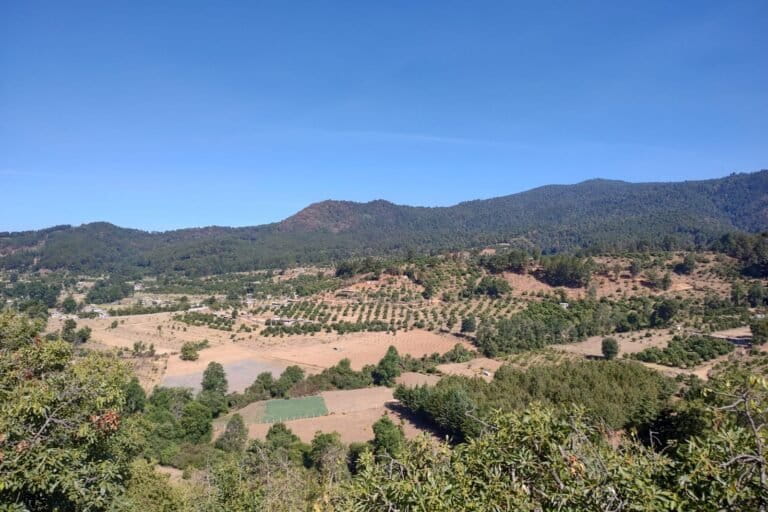
MEXICO CITY — In the heart of Mexico’s southwestern state of Michoacán, Juan Madrigal spends his free time organizing to protect the city of Uruapan’s urban ecological park, a 50-hectare (124-acre) plot of land at the edge of the Río Santa Bárbara. A state-protected area since 1995, the park’s marshlands help to purify the surrounding Cupatitzio watershed, where nine natural springs provide drinking water to approximately half a million people. According to Madrigal, the park, a habitat of the ruddy-capped nightingale-thrush (Catharus frantzii), the endangered Michoacán pocket gopher (Zygogeomys trichopus) and the endemic Pátzcuaro frog (Lithobates dunni), is a victim of neglect. “The authorities have never paid any attention to it, and it’s us citizens who’ve been speaking out,” Madrigal, who in 1993 founded Ecocentro del Río Cupatitzio, a nonprofit educational center, tells Mongabay by phone. The movement to protect the park gained momentum after it involved the ranchers that grow fruit and corn downstream, Madrigal says. “They realized the importance of us supporting each other in defending the vital sources of life,” he says. “Without trees, there is no water.” For a certain type of tree, however, the inverse occurs: Without water, there are no avocados. Defending native forests, urban or otherwise, is a small but important fight in Michoacán, where avocado orchards have replaced nearly 700,000 hectares (1.7 million acres) of tree cover, an area almost three times the size of Cape Town, between 1993 and 2023. Michoacán is the top avocado exporter in Mexico and the only…This article was originally published on Mongabay
Today – and, admittedly, always – we refer fondly to John C. Dvorak as a “bloated gasbag” on the occasion of his passing at the age of 80.
John wrote and said things, seemingly at random, basically in order to get a rise out of people, not so much because he deeply believed them. Long before the rise of social media, Dvorak was an exemplary engagement farmer, a master of outrage bait, a troll king.
He certainly prompted us to spill reams of digital ink all over our pages for many years and we’ll miss him.
Here are some of the bloated gasbag’s greatest emissions:
• The Macintosh uses an experimental pointing device called a “mouse.” There is no evidence that people want to use these things. — John C. Dvorak, 1984
• Apple should pull the plug on the iPhone… What Apple risks here is its reputation as a hot company that can do no wrong. If it’s smart it will call the iPhone a ‘reference design’ and pass it to some suckers to build with someone else’s marketing budget. Then it can wash its hands of any marketplace failures… Otherwise I’d advise people to cover their eyes. You are not going to like what you’ll see. — John C. Dvorak, 2007
• iPhone which doesn’t look, I mean to me, I’m looking at this thing and I think it’s kind of trending against, you know, what’s really going, what people are really liking on, in these phones nowadays, which are those little keypads. I mean, the Blackjack from Samsung, the Blackberry, obviously, you know kind of pushes this thing, the Palm, all these… And I guess some of these stocks went down on the Apple announcement, thinking that Apple could do no wrong, but I think Apple can do wrong and I think this is it. — John C. Dvorak, 2007
• The Apple iPad is not going to be the company’s next runaway best seller. — John C. Dvorak, 2010
• Within the decade, Microsoft should have a minimum of 300 stores. They should do as well as the Apple Stores. — John C. Dvorak, 2012
MacDailyNews Take: John, you bloated gasbag, you will be missed! R.I.P.
Please help support MacDailyNews — and enjoy subscriber-only articles, comments, chat, and more — by subscribing to our Substack: macdailynews.substack.com. Thank you!
Season four of “The Morning Show” premiered on September 17, 2025 on Apple TV.
Apple TV has confirmed that “The Morning Show” will end after a fifth season in 2027. The series, which premiered in 2019 as one of the flagship original shows for the streaming service, stars and is executive produced by Jennifer Aniston and Reese Witherspoon.
The series is produced by Media Res and executive produced by Echo Films and Hello Sunshine. Charlotte Stoudt serves as showrunner and executive producer, while Mimi Leder directs and executive produces. Michael Ellenberg executive produces for Media Res, with additional executive producers including Lauren Neustadter for Hello Sunshine and Kristin Hahn for Echo Films.
Statements from Key Participants
Jennifer Aniston, star and executive producer, said: “From the beginning, Apple has supported our vision for ‘The Morning Show.’ It’s been a privilege to work with this cast, writers, producers and crew. We’re excited to share this final season and to conclude the series intentionally.”
Reese Witherspoon, star and executive producer, said: “The past nine years producing and acting in ‘The Morning Show’ have been the honor of a lifetime. This was a show about why the newsroom matters, freedom of the press, and the role of journalists. Thank you to Apple, our writers, crew and cast.”
Zack Van Amburg, Apple’s head of worldwide video, said: “Seeing this series through from start to finish has been the joy of a lifetime. ‘The Morning Show’ helped launch Apple TV and delivered five seasons of television. We’re grateful to the entire team and look forward to the final chapter.”
Jamie Erlicht, Apple’s head of worldwide video, added: “Working with Jennifer, Reese, Michael, Mimi and Charlotte has been one of the great privileges of building Apple TV. We’re proud of the series and its impact.”
Michael Ellenberg, CEO and founder of Media Res, described the series as a significant project for the team: “We’ve been fortunate to connect with a global audience. We look forward to fans seeing the fifth and final season.”
Showrunner Charlotte Stoudt said: “For five seasons, these journalists have chased their dreams. Now we’ll see where their endeavors lead them. It’s been a privilege to write for this cast.”
Mimi Leder, executive producer and director, said: “It has been the honor and privilege of my career to bring this series from conception to conclusion. It’s been a meaningful journey.”
Cast and Production
The ensemble cast is led by Jennifer Aniston, Reese Witherspoon, Billy Crudup, Mark Duplass, Nestor Carbonell, Karen Pittman, Nicole Beharie, and Jon Hamm. Season five will include new additions Jeff Daniels, Reneé Rapp, Jesse Williams, Sean Hayes, Lizzy Caplan and others.
“The Morning Show” is showrun and executive produced by Charlotte Stoudt and directed and executive produced by Mimi Leder. It is produced by Media Res, with executive producers including Michael Ellenberg, Stoudt, Leder, Witherspoon and Neustadter for Hello Sunshine, and Aniston and Hahn for Echo Films. Zander Lehmann and Micah Schraft also executive produce.
Season four, currently streaming, is set in spring 2024 following the UBA-NBN merger and explores themes of responsibility, truth, and media in a polarized environment.
Awards and Recognition
The series has received multiple award nominations and wins. Season three earned 16 Emmy nominations, with Billy Crudup winning his second Emmy for Outstanding Supporting Actor in a Drama Series. The show has also received Critics Choice Awards, SAG Awards, and recognition from the American Film Institute.
MacDailyNews Take: For us, “The Morning Show” ended sometime early in season 3. Steve Carell’s Mitch Kessler was the glue that held our eyeballs. Without him, buh-bye.
However, despite losing us, seasons 3 and 4 both performed well enough for renewals. The show has remained culturally visible and continues to generate headlines. There have been no leaks or reports about catastrophic drops in viewership that typically precede abrupt cancellations. So, this reads as a mutual, planned ending rather than a forced cancellation due to bad numbers. Apple and the producers likely decided together that five seasons provided the right arc for the series, especially with expensive talent and a desire to end relatively strongly.
Please help support MacDailyNews — and enjoy subscriber-only articles, comments, chat, and more — by subscribing to our Substack: macdailynews.substack.com. Thank you!
Hypertensive or high blood pressure disorders are among the leading causes of maternal deaths in low-income countries. A pregnancy complication known as preeclampsia, a hypertensive disorder, is listed among the top five causes of maternal deaths in Bangladesh. For expectant women with preeclampsia, timely treatment is required; otherwise, it can lead to issues such as elevated liver enzymes, low platelet count syndrome, hepatic failure, coma or loss of life.The Sustainable Development Goals adopted by the U.N. set an ambitious target to reduce the maternal mortality rate to less than 70 per 100,000 live births by the end of 2030. While many developed nations have already achieved the U.N. target, low- and middle-income countries are yet to achieve these goals. In Bangladesh, the maternal mortality rate is 196 per 100,000 live births and rates remain significantly higher in the neighboring countries . A recent study reported an association between hypertension, preeclampsia and high-salinity drinking water. The same study argues that, in Bangladesh, preeclampsia is associated with high-salt drinking water. Epidemiological evidence links high salt intake to hypertension in both adults and children. The scarcity of safe drinking water has become a serious global issue due to agricultural expansion, sea level rise caused by global warming and population growth. The IPCC, in its sixth Assessment Report (AR6), stated that climate change affects water availability and water quality. Globally, around 4 billion people face water scarcity for at least one month each year. Storm surges and rising sea levels make it easier for…This article was originally published on Mongabay
When Mongabay Latam began publishing in 2016, the decision felt like a logical next step. Mongabay Indonesia, launched four years earlier, had shown that a locally led, local-language newsroom could build an audience for sustained environmental reporting. Spanish offered the chance to apply that approach across a region extending from Mexico through Central America and the Andes to Chile and Argentina. The political and ecological conditions varied widely, but the need was similar: important environmental stories were going unreported, or receiving attention only after a crisis became difficult to ignore. Latin America and the Caribbean are the most biologically diverse region on Earth, holding nearly half of the world’s tropical forests and unusually large shares of its mammals, birds, fish, insects, reptiles, amphibians, and plants. The Spanish-speaking countries in Mongabay Latam’s coverage area include some of the richest parts of the Amazon rainforest, the tropical Andes, Mesoamerica, the Chocó, and the eastern Pacific. These landscapes face growing pressure from mining, agriculture, infrastructure, organized crime, and climate change. Macaws in Peru. Image by Rhett Butler for Mongabay. I was also drawn to the region’s cultural and intellectual range. Latin America has produced many responses to these pressures, including Indigenous territorial governance, community forestry, new legal approaches to nature, and locally designed conservation programs. A regional news service could document environmental damage while also examining how people were responding to it. Mongabay Latam’s staff and contributors built the newsroom that followed. Editors developed the judgment, relationships, and institutional memory needed to…This article was originally published on Mongabay
IBIRAMA-LA KLÃNÕ INDIGENOUS TERRITORY, Brazil — Zág, pronounced “zã,” is the Xokleng word for the Brazilian pine. This tree species, Araucaria angustifolia, is typical of the Atlantic Forest that runs along Brazil’s south and southeastern coast, and has been evolving on the planet for about 200 million years. Each female tree produces dozens of cones, which in turn carry hundreds of seeds. Known in Brazil as pinhão, the Brazilian pine seed is a nut eaten by at least 22 animal species as well as humans, who rely on it for both nutrition and income. For some Indigenous peoples, however, it means more than food. It’s part of their culture, history, and origin myths. That’s the case for the Xokleng people, also known as the Laklãnõ, in what is today Santa Catarina state. In their villages, people are even named after the tree. “Brazilian pines are sacred to us,” says Carl Gakran, executive director of the Zág Institute. “You can’t tell the story of our people without speaking of them. Our creation myth says the protective animal was made from that tree, so it appears in the very first story.” Carl decided to do something for the pines in 2016, after learning that the species was critically endangered as a result of deforestation, urban expansion, and logging. Currently, Brazilian pine forests are estimated to cover less than 3% of their original range, which once stretched across much of the states of Paraná, Santa Catarina and Rio Grande do Sul, with small patches…This article was originally published on Mongabay
It was spring, 20 years ago now, but he remembers it clearly. On the deck of the Geco Resolution, wind tearing spray from the waves, Robert McCauley stood gazing out onto an ocean blackened by night. The ship had been firing seismic airguns all day, thunderous blasts punching through the water and into the seabed. Over time, the rhythmic boom reverberating through the hull had almost faded into the background. But then night fell, and the sound revealed itself. “Every time the airgun went off, the sea would light up,” McCauley told Mongabay. Each blast was triggering a burst of bioluminescence — dinoflagellates and other microscopic life igniting in unison. “A sheet of light would shoot out, like a wave traveling at the speed of sound. It went out for about a kilometer at least,” he said. As Australia’s leading expert in marine bioacoustics, McCauley, a research scientist at the Centre for Marine Science and Technology at Curtin University, was there to study how whales responded to the noise. But watching the bioluminescent glow pulse outward and fade, then pulse again, he found himself wondering less about whales and more about the tiny organisms that sustain them. “It made me think, what’s happening to all those little animals? How are they being stimulated? And what happens if they’re being stimulated every five or 10 seconds, repeatedly?” McCauley wondered. For decades, marine seismic surveys have echoed through the world’s oceans, largely in search of oil and gas. Research has shown the…This article was originally published on Mongabay
NEW HAMPSHIRE, U.S. — It’s a mild March night in Keene, New Hampshire, and the salamander brigade is out in full force. A constellation of flashlight beams wink and flash along a dark street, as rain falls onto the jackets and reflective vests of the assembled crew. Tonight, a veritable army of amphibians is trekking from the upland forests, where they spend the winter, toward the wetlands where they breed. In their path lies a two-lane asphalt road, North Lincoln Street. Animals need to move for a variety of reasons, but in a world crosshatched by motorways, that’s not an easy task. Each spring in Keene, wood frogs (Lithobates sylvaticus), spring peepers (Pseudacris crucifer), red-backed salamanders (Plethodon cinereus) and spotted salamanders (Ambystoma maculatum) must navigate roads to reach their natal spawning grounds. This particular road in Keene is routinely closed to cars during nights of amphibian migration. At other crossing sites in the region, volunteers are the only thing standing between these slow-moving critters and the danger posed by passing traffic. Carrying animals across the road by hand gets the job done, but it’s limited by human availability and energy. The hope has always been that “crossing brigades are the first step, not the last step,” said Brett Amy Thelen, who organizes these efforts and serves as science director for the Harris Center for Conservation Education, a regional nonprofit. That hope is being realized: Thelen and her salamander squadron are at the center of a new initiative to build small…This article was originally published on Mongabay
For much of the year, migratory songbirds were treated as temporary visitors to the tropics. They arrived from the north, spent the winter, and departed again. Ornithologists paid more attention to their journeys and breeding grounds than to the months they passed farther south. The birds were often described as transients, moving through tropical forests without becoming part of them. What they did there, and how firmly they occupied those places, remained poorly understood. Years of catching, banding, and watching them suggested a different account. In the forests of southern Mexico, individual birds returned to familiar patches and defended feeding territories. They were regular members of tropical bird communities for months at a time. A bird that appeared to be a passing visitor might return to the same small area year after year. Its life in the tropics was structured, local, and essential to its survival. Migration could not be explained only as an escape from northern winters. Its origins might instead lie in dispersal from warmer regions, as birds gradually extended their ranges toward seasonal food and breeding opportunities. John Hilton Rappole, who died on June 30th, aged 79, pursued this argument for much of his career. It became known as the dispersal theory of bird migration. The theory challenged a long-standing explanation for why birds crossed continents. His commitment to it reflected his approach to science. He relied on sustained field observation, questioned established assumptions, and was prepared to defend an idea over many years. He was less…This article was originally published on Mongabay
In just a few weeks, Colombia will have a new leader. Right-wing candidate Abelardo de la Espriella won Colombia’s runoff election on June 11 with 49.6% of the vote, securing a razor-thin victory over the left-wing candidate Ivan Cepeda, who received 48.7%. De la Espriella has promised to expand fossil fuel production and mining in the country, leaving the future of conservation in the Colombian Amazon, the fossil fuel phaseout commitments made by current President Gustavo Petro’s administration and the rights of Indigenous peoples and other traditional communities open to question. Ahead of de la Espriella’s inauguration on Aug. 7, Mongabay interviewed Marino Peña, an Indigenous Inga leader and president of the Indigenous Zonal Organization of Putumayo (OZIP), to get his take on how the incoming president’s policies might impact communities in the department of Putumayo, in southwestern Colombia. De la Espriella has also promised to reduce the state budget to a minimum and tackle violence using greater force and militarization. For communities in Putumayo, the implications of these promises hold weight. Colombia’s Putumayo region, which has historically been a drug production and trafficking hotspot, is “one of the deadliest regions in Colombia for social leaders.” Illegal mining by armed groups has also grown exponentially in recent years, fueling conflicts, violence, mercury contamination and accelerated deforestation. Due to their critical role as vocal defenders of their territories and of environmental and Indigenous rights, social leaders have frequently found themselves in the crossfire between armed groups and the state. In addition,…This article was originally published on Mongabay
BRITISH COLUMBIA, Canada — On a sunny Thursday in May, Kent Kebe had to scrape yet another bighorn sheep carcass off Highway 93/95 running through Radium, British Columbia. The necropsy confirmed what Kebe, the village’s protective service manager, already knew: A car collision killed the ram. Roadkill deaths hit this community hard. Residents love their sheep so much that the village center sports a huge steel sculpture of sheep horns that stands roughly 12-meters- (39-foot-) wide and 6-meters- (19-feet-) tall. The Big Horn Cafe on the main drag features artwork of bighorn rams and serves custom-blended “Headbanger tea.” In the 1990s, about 350 bighorn sheep (Ovis canadensis) milled around, drawn to the golf course and the grasses along the highway. “It’s like a candy store for them,” Kebe says. But by 2022, the herd’s numbers had dwindled to 140. While some sheep died from natural causes, vehicle collisions played a big role in the death toll. “There’s a tension where the sheep are the mascots of the village, but the traffic is killing them,” says wildlife scientist Clayton Lamb, who works with the nonprofit Biodiversity Pathways and the University of British Columbia. He helped bring attention to the issue in 2022. Habitat loss is a major threat to species, but highways, railways and towns impact how animals move to eat, meet and mate — and that can endanger their survival. A 2025 review in the journal Science warned that while the world aims to protect 30% of the planet by…This article was originally published on Mongabay

 Login