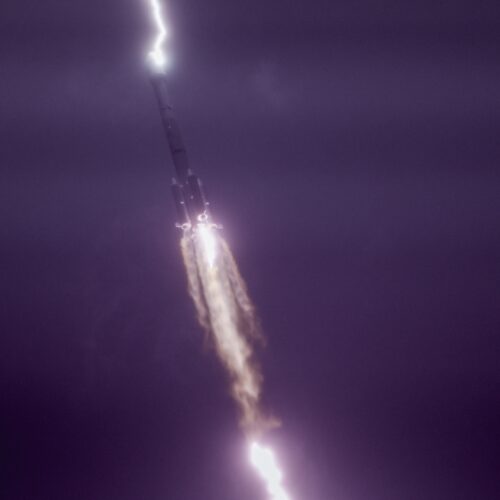
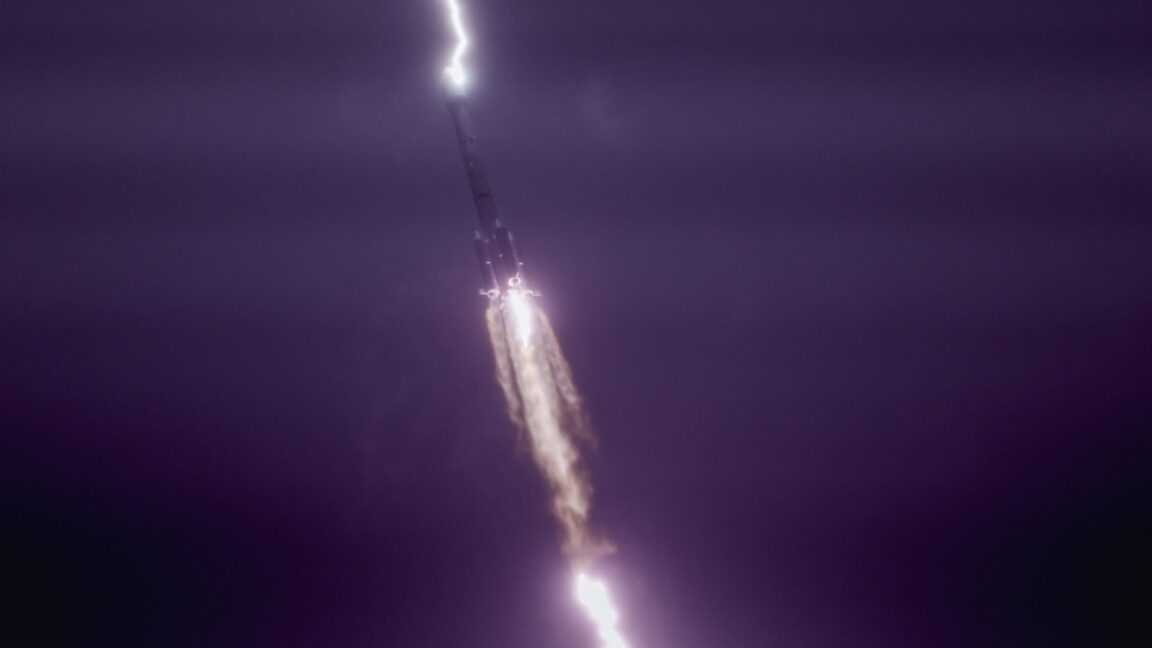
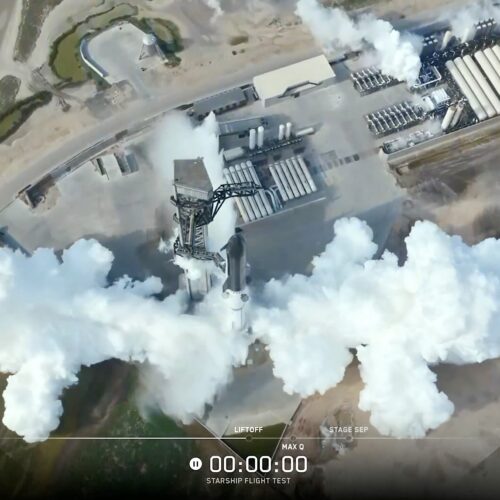
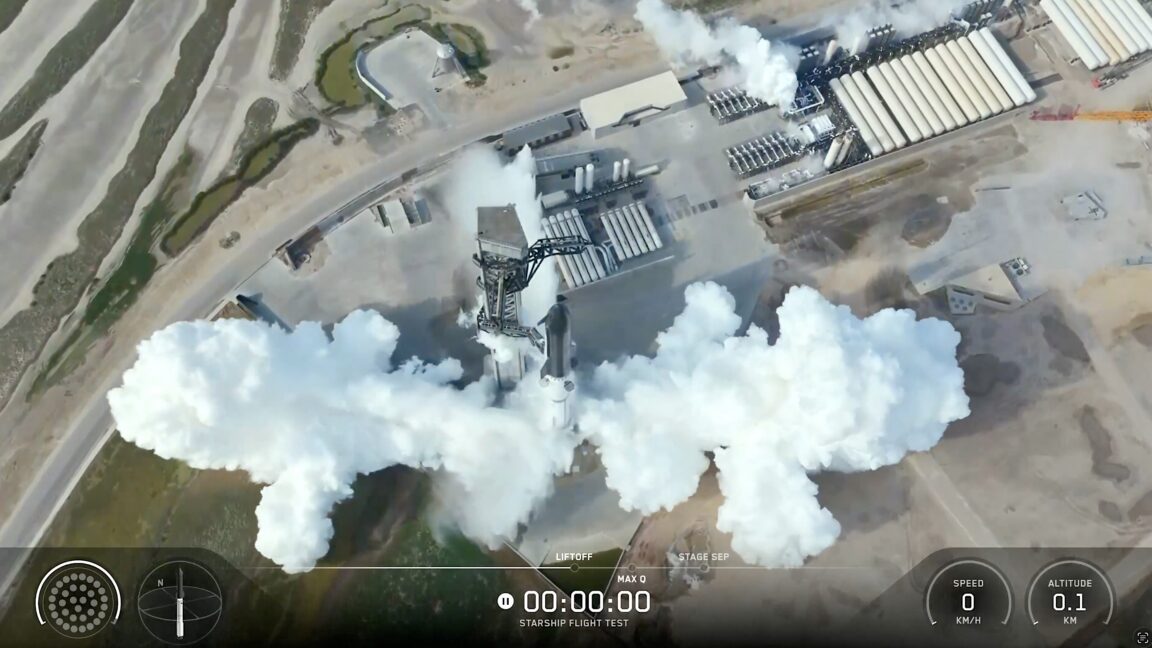
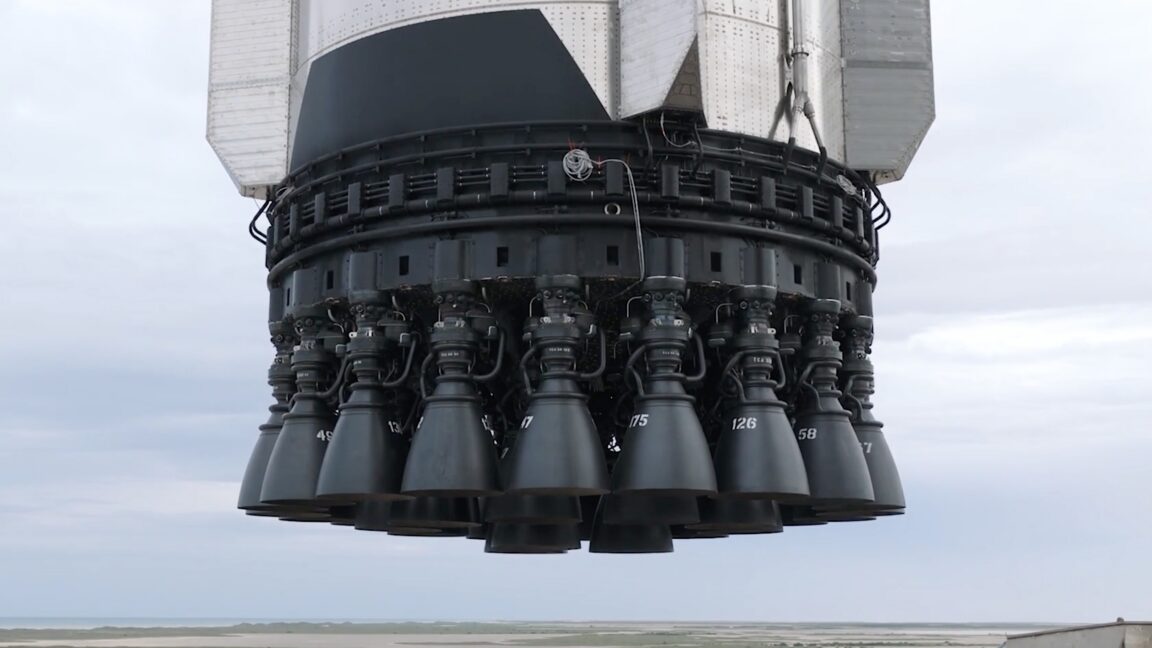
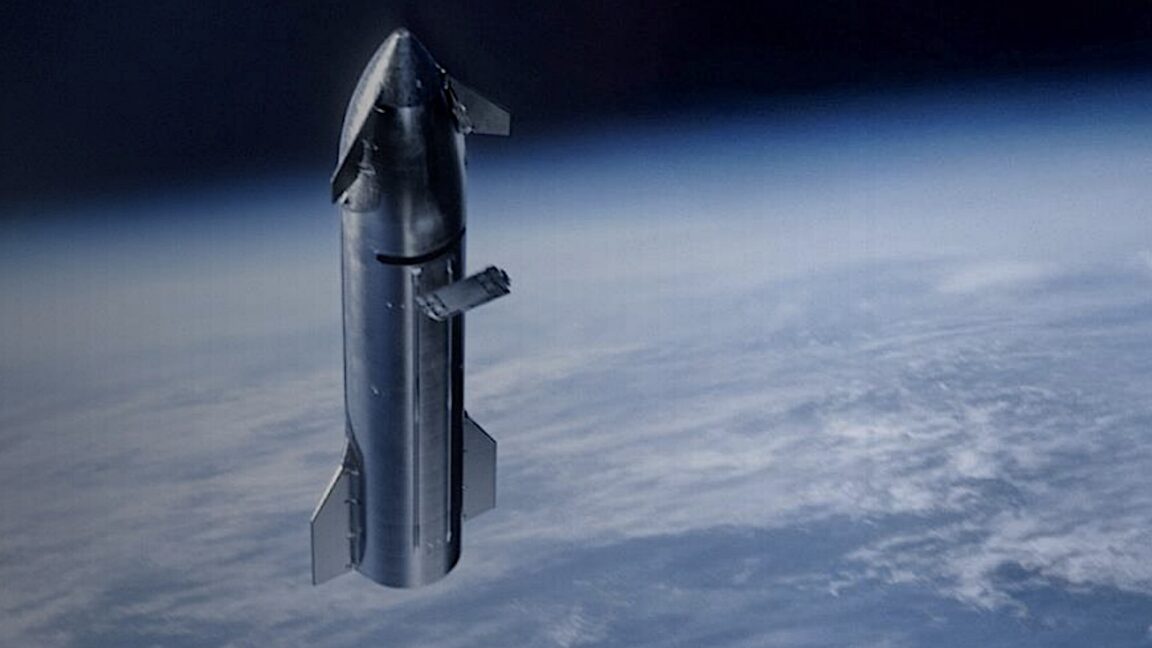
SpaceX launched Starship on its 13th suborbital test flight July 24, correcting some of the issues seen on the previous flight while deploying functioning satellites for the first time.
The company ticked off a few more boxes on the second Starship V3 flight, but appears to have had another issue relighting the booster's rocket engines.
Welcome to Edition 9.04 of the Rocket Report! We've had to wait an extra week for SpaceX to get its 13th Starship test flight off the ground. A last-second abort on July 16 led engineers to roll the booster back to its hangar in South Texas to swap out engines. Starship is now back on the launch pad. Liftoff is set for Friday evening. A flawless launch and reentry will put SpaceX on the cusp of an orbital flight later this year. Ars will have a comprehensive recap story after the completion of the test flight.
As always, we welcome reader submissions. If you don't want to miss an issue, please subscribe using the box below (the form will not appear on AMP-enabled versions of the site). Each report will include information on small-, medium-, and heavy-lift rockets, as well as a quick look ahead at the next three launches on the calendar.
India's first private rocket reaches orbit. Indian space officials celebrated the debut flight of Skyroot Aerospace’s Vikram-1 rocket, India’s first fully commercial satellite launcher, as a “grand success” Saturday after an on-target climb into a 280-mile-high orbit following liftoff from an island spaceport in the Bay of Bengal, Ars reports. The Vikram-1 lifted off from India’s primary spaceport on Sriharikota Island around midday local time. The launch was delayed more than a half-hour to resolve a last-minute technical problem. The countdown resumed, culminating in the command to ignite Vikram-1’s solid-fueled first stage booster to propel the rocket off the launch pad.
Shares of Elon Musk’s SpaceX are continuing their weeks-long decline, hitting a new all-time low of around $115 by Wednesday afternoon.
The scale of the accumulating losses since the company’s hotly-anticipated IPO last month is staggering. The company has wiped out over $1.1 trillion in market value since hitting an all-time high of $225 last month, and it’s possible that its decline is just getting started.
The rocket company has given investors little to grasp onto, apart from an ever-optimistic Musk claiming that it could one day be worth more than the entire Earth. On Thursday, the company was forced to scrub the launch of its Starship spacecraft because several engines failed to start — a perfect metaphor for the company’s recent stock market performance.
Looming in the background is the second quarter earnings call of Musk’s EV maker, Tesla, on Wednesday evening. The company has been burning through cash at an alarming rate despite seeing sales and revenues jump. Analysts are still keeping close tabs on the chance that Musk may fold Tesla into SpaceX, a merger of unprecedented proportions. Tesla will likely be facing plenty of questions about the possibility during this week’s earnings call.
“I think there’s over 80 percent chance that Tesla and SpaceX get together in 2027,” tech analyst and longtime Tesla bull Dan Ives said in a note. “It’s the logical move from a data engineering perspective and Musk ownership. It makes too much sense for it not to happen.”
The level of uncertainty is palpable. SpaceX is lining up its prototype Starship rocket for another launch attempt on Thursday. Roughly a week and a half later, the company is expected to release its second quarter financials, a major litmus test of where the company is headed. As Yahoo Finance notes, investors are interested in how much the rocket company will be spending on AI products and the growth of its Starlink internet satellite business.
What likely won’t change is the fact that the company’s lofty valuation remains largely disconnected from its ability to make any money. SpaceX lost almost $5 billion last year — and xAI, which was folded into the company when it took over X-formerly-Twitter, lost a further $6.4 billion.
On Thursday, Elon Musk’s SpaceX was forced to call off the latest launch attempt of its enormous Starship spacecraft. According to the almost-trillionaire, several engines failed to start, unintentionally serving as the perfect metaphor for the company’s persistent Wall Street woes.
While a scrub of a rocket launch isn’t exactly anything out of the ordinary, it was the first attempt following the company’s blockbuster IPO last month. At first, SpaceX’s stock rocketed to an all-time high of $225 by mid-June, buoyed by plenty of pent-up investor enthusiasm.
But ever since, the company has struggled to recapture that early unbridled optimism. Shares have slid consistently over the last four weeks, a bruising Wall Street performance that sheds light on lingering doubts over SpaceX’s ability to justify its vast multi-trillion dollar valuation.
Shares dipped below a bruising $120 before trading stopped on Monday afternoon, a new record low that’s well below SpaceX’s IPO price of $135. That means the plummeting stock has wiped out almost half of its value compared to its all-time high, representing over $1 trillion in market cap. Anybody who bought shares after the IPO is now officially underwater.
It’s not difficult to come up with reasons behind the company’s ongoing stock market troubles. As SpaceX’s years-long struggle to develop its super heavy launch platform demonstrates, Musk’s ambitions for the company are largely built on hopes and dreams, from orbital data centers to a city on Mars, which are cool sci-fi concepts but entirely unproven in the real world.
On the other hand, SpaceX has bought itself plenty of time by raising tens of billions of dollars following its IPO. That’s despite having lost almost $5 billion in 2025.
Whether that will be enough cash to turn Starship into a viable and quick-turnaround space launch platform remains to be seen. For one, the degree of complexity is enormous. The spacecraft is the biggest and most powerful rocket ever built — and sticking the landing without erupting into a fireball is proving far more difficult than SpaceX may have anticipated.
SpaceX called off a test flight of its powerful Starship rocket and Super Heavy booster as the countdown clock reached zero Thursday at the company's spaceport in South Texas.
The launch team at Starbase, Texas, just north of the US-Mexico border, aimed to launch the more than 400-foot-tall rocket at 5:45 pm local time (6:45 pm EDT; 22:45 UTC). The countdown proceeded smoothly throughout the day, culminating in the loading of more than 11.5 million pounds of liquid methane and liquid oxygen into the two-stage rocket.
But the computers controlling the countdown called an abort during the Super Heavy booster's engine startup sequence. SpaceX scrubbed the launch attempt, and engineers began preparations to drain the rocket's propellant tanks. Officials did not immediately announce when they plan to try to launch again.
Cette nuit, Starship 13 devra réussir là où le vol précédent a vacillé. SpaceX joue bien plus qu’un simple essai : ce qui se passera dans les prochaines minutes pourrait décider de la suite de son programme le plus ambitieux.
The stock has steadily fallen from the euphoric post-IPO high, showing that markets may be sobering up to the promises CEO Elon Musk made before and after SpaceX went public.
The next test flight of SpaceX's Starship spacecraft and Super Heavy booster could take off as soon as Thursday, and much of the hour-long mission will look a lot like the last Starship flight in May.
But there are a few key differences for this launch, set to occur during a launch window that opens at 5:45 pm CDT (22:45 UTC) on Thursday. The most notable change is the inclusion of real, functioning Starlink satellites inside Starship's cargo bay. SpaceX previously tested the ship's payload deployment mechanism using simulators mimicking the mass and dimensions of the company's next-generation Starlink Version 3 broadband satellites.
This time—Starship's 13th full-scale test flight and the second to use SpaceX's newest version of Starship—technicians have installed 20 Starlink V3 satellites into the ship's deployer, a system of pulleys and cables designed to eject a stack of satellites one at a time through an opening on the side of the spacecraft. The satellites will not be part of SpaceX's operational network, but engineers will attempt to briefly establish laser communication links between the Starlink V3s and other spacecraft flying in low-Earth orbit. If successful, these links will validate Starlink V3's interoperability with SpaceX's previous generation of Starlink satellites.
It wasn't easy to find anyone outside of SpaceX clamoring for a rocket like Starship just 10 years ago. Today, the space industry can't wait for Starship to finally deliver.
With a payload capacity of more than 100 metric tons (220,000 pounds) to low-Earth orbit, SpaceX's new rocket is changing the thinking of just about everyone in the space industry. With the unrealized but potentially game-changing benefits of refueling, Starship could carry the same amount of payload to higher orbits, the Moon, or Mars.
It's important to note that Starship is still very much in its experimental phase, far from proving Elon Musk's loftiest claims about what it can do. Still, NASA and the US military are considering novel ways to use Starship to fly to the Moon or transport cargo to far-flung war zones. Scientists are eager to use its enormous volume to launch giant space telescopes. Competitors are taking notice. China, the strongest strategic adversary America has ever faced, is looking for its own Starship. Now, some US satellite manufacturers are adapting for the substantial capacity of the world's most powerful rocket.
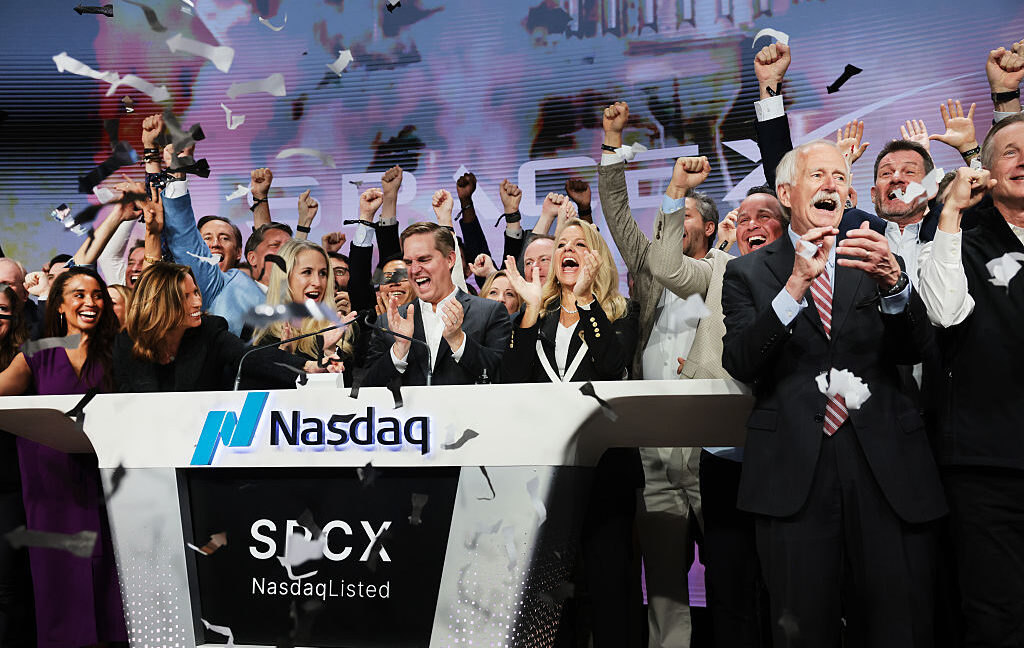
Space Exploration Technologies, better known simply as SpaceX, became a publicly traded company on Friday nearly a quarter of a century after it was founded.
The company began trading on the NASDAQ exchange in New York City at $135 a share, valuing SpaceX at nearly $1.8 trillion. By the end of the trading day the company's shares were selling at $160.95, a respectable increase of more than 19 percent.
On paper, SpaceX founder Elon Musk became the world's first trillionaire, with his personal stake in the company valued at more than $700 billion. Because of the company's stock options plan, thousands of current and former employees became overnight millionaires. Employees at SpaceX have worked remarkably hard over the last 24 years, and now they will be richly compensated for having done so.
SpaceX n'a pas toujours été l'empire industriel dirigé par un militant d'extrême-droite mégalo que l'on connaît aujourd'hui. Avant d'atteindre les sommets dans le domaine de l'aérospatial, l'entreprise avait commencé comme beaucoup d'autres.
NASA has named the astronauts who will fly the next Artemis mission, a test flight in low Earth orbit where Orion will attempt to dock with two lunar lander prototypes.

 Login