Login

Roh Tae-moon "Seven Years of Foldable Experience Will Be Difficult to Replicate"
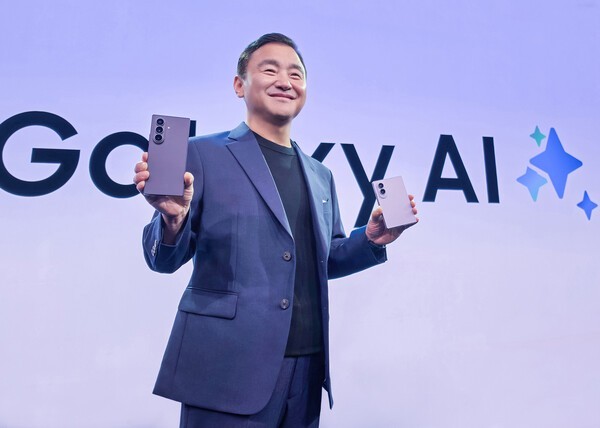
Samsung Electronics Co. is expanding its foldable smartphone lineup to three models.
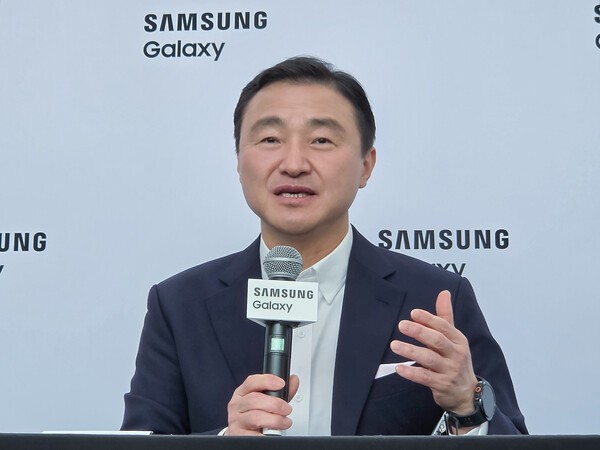
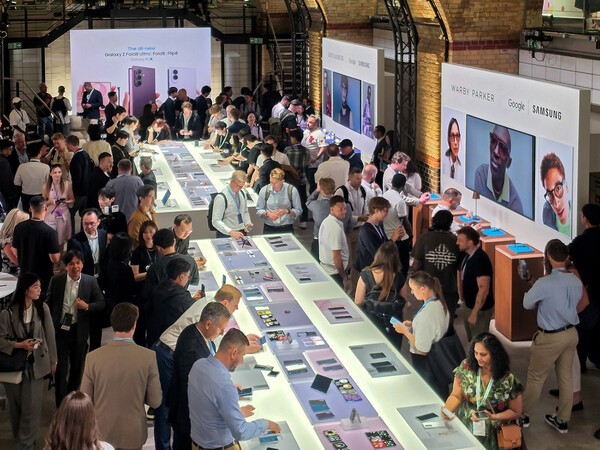
Roh Tae-moon, President, Chief Executive Officer and Head of the Device eXperience (DX) Division at Samsung Electronics, said at a media briefing held after the Galaxy Unpacked 2026 event at Old Billingsgate in London on July 22 that foldable smartphones have moved beyond introducing a new form factor and become part of consumers' everyday lives.
"Foldables have moved beyond the stage of introducing a new form factor and have become part of everyday life," Roh said. "We have broadened customer choice to meet increasingly diverse consumer expectations."
Samsung unveiled the Galaxy Z Fold8, Galaxy Z Fold8 Ultra and Galaxy Z Flip8 at the event, expanding its foldable portfolio from the two-model Fold and Flip lineup it had maintained since launching its first foldable smartphone in 2019.
◇"We Welcome More Foldable Competitors, but Seven Years of Experience Cannot Be Matched"
Roh said he expects more companies to enter the foldable smartphone market in the future.
"As the foldable market matures, more companies will enter," he said. "That means foldables are becoming mainstream and the market is expanding, which we welcome."
However, Roh emphasized that Samsung's seven years of accumulated user experience will be difficult for competitors to replicate in a short period. Foldable devices are not defined solely by folding hardware, he said, but also require the operating system, user interface and third-party applications to be optimized for different display configurations.
"The competitiveness of Samsung's foldables comes from integrating hardware innovation, Galaxy AI and the consumer experience into a single product," Roh said.
◇Galaxy AI Installed Base to Reach 800 Million Devices
Samsung aims to increase the number of devices capable of using Galaxy AI to 800 million by the end of this year, including existing devices upgraded through software updates.
"The competitive advantage of AI will not be how intelligent it is, but how well it understands users," Roh said. "People do not want to learn AI—they want it to provide practical help in their daily lives."
He said AI will evolve beyond simply answering questions into agentic AI capable of completing tasks on behalf of users.
Samsung plans to leverage both proprietary and third-party AI models. The company will use its in-house Samsung Gauss model and Bixby for Samsung applications and device functions, while deploying external models such as Google Gemini for features integrated with Google's services.
Samsung also plans to expand partnerships beyond Google. The company is already working with Perplexity and is evaluating the adoption of additional third-party AI models.
"We are not committed to a single AI solution," Roh said. "If an external AI model is suitable for the mobile user experience and services, we will adopt multiple AI models."

◇CEO-Led Organization to Accelerate Robotics Commercialization
Samsung is also moving its robotics business from research and development into commercialization. The company recently established the Robotics Experience (RX) Business Promotion Office, reporting directly to Roh, bringing together robotics technologies and personnel that had previously been spread across multiple organizations.
"We created a dedicated organization to properly begin the full-scale commercialization of the advanced development and investments we have made in robotics over many years," Roh said. "Robotics is one of the key future growth drivers for the DX Division."
Samsung previously became the largest shareholder of Rainbow Robotics and has operated its Future Robotics Task Force. The company plans to first deploy robots in manufacturing facilities to verify the technology before expanding into enterprise and consumer markets.
Samsung is also preparing a successor to the Galaxy Ring.
"We will not release new products mechanically according to a fixed schedule," Roh said. "We will launch them when innovations that satisfy consumers are ready. We are preparing Galaxy Ring 2 to deliver a new wearable experience."
◇Cost Increases Beyond Supply Chain Efforts May Be Reflected in Prices
Roh said Samsung will work closely with supply chain partners to minimize the impact of rising memory and key component costs. The company said it coordinated supply volumes and delivery schedules in advance with strategic suppliers to ensure stable production of the Galaxy Z Fold8 series.
However, Samsung left open the possibility of reflecting cost increases in product prices if they exceed what can be absorbed through supply chain optimization.
"We will not pass 100% of higher production costs on to consumers and will work with our partners to minimize the burden," Roh said. "However, if cost pressures exceed a manageable level, we will have no choice but to reflect part of the increase in the product's launch price."