❌

Reading view

Stone Tools from Armenian Cave Reveal Split Strategy for Survival 50,000 Years Ago
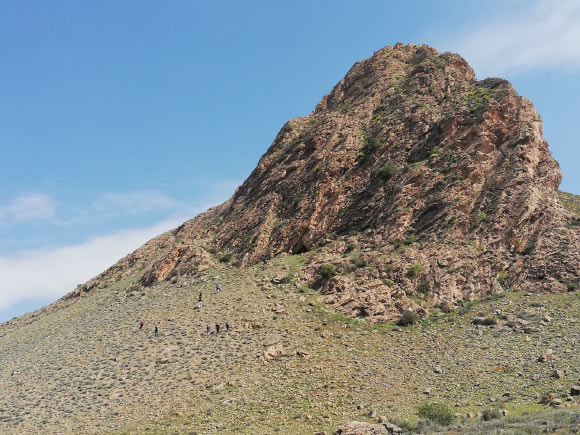
A look at Ararat-1 Cave from the bottom of the Ararat Depression. Image credit: Ariel Malinsky Buller.

Ararat-1, a modest limestone cave that lies at an elevation of 1,034 m on the eastern flanks of the Ararat Depression in central Armenia, has yielded a striking puzzle about how Middle Paleolithic humans moved across their landscape.

The post Stone Tools from Armenian Cave Reveal Split Strategy for Survival 50,000 Years Ago appeared first on Sci.News: Breaking Science News.
  •  

Hugs May Be an Ancient Peacekeeping Tool, Ape Study Suggests

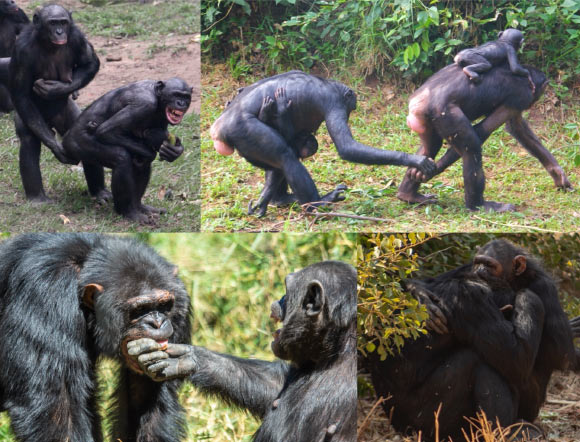
Examples of bonobo and chimpanzee reassurance behaviors. Image credit: Z. Clay / J.S. Brooker.

In a new study of chimpanzees (Pan troglodytes) and bonobos (Pan paniscus), scientists found that embraces, touches and other reassuring gestures before competition for food were linked to more peaceful sharing, suggesting the roots of human social touch stretch back at least six million years.

The post Hugs May Be an Ancient Peacekeeping Tool, Ape Study Suggests appeared first on Sci.News: Breaking Science News.

  •  

New Fossil Study Challenges the Classic Story of Human Evolution

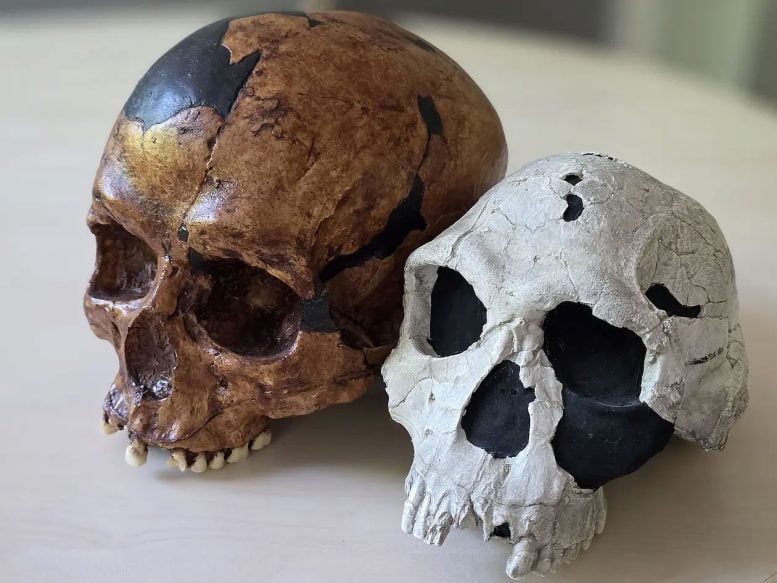
Homo habilis Skull and an Early Homo sapiens SkullScientists say some of the traits that define modern humans may have evolved only after long-standing biological and cultural barriers were broken. Human evolution is often presented as a clear progression: brains grew larger, faces became smaller, tools improved, and our ancestors gradually became more like us. A new study suggests that this familiar story [...]
  •  

Ancient Turkish Cave Reveals Neanderthals and Homo sapiens Shared Same Way of Life

A group of Neanderthals in a cave. Image credit: Tyler B. Tretsven.

ÜçağızlΔ± II Cave on TΓΌrkiye’s Mediterranean coast has yielded a rare and detailed record of two Homo species living the same way of life, one after the other, over more than 20,000 years, offering new evidence that the transition from Neanderthals to modern humans in the region was far more culturally seamless than previously understood.

The post Ancient Turkish Cave Reveals Neanderthals and Homo sapiens Shared Same Way of Life appeared first on Sci.News: Breaking Science News.

  •  

Evidence of Fire Use by Early Humans May Date Back Nearly 1.8 Million Years

Shaar et al. unveil the oldest evidence of human activity in Wonderwerk Cave, South Africa. Image credit: Michael Chazan.

Scientists have uncovered compelling new evidence that early human ancestors, likely Homo erectus, were deliberately bringing fire into Wonderwerk Cave in South Africa as far back as 1.79 million years ago.

The post Evidence of Fire Use by Early Humans May Date Back Nearly 1.8 Million Years appeared first on Sci.News: Breaking Science News.

  •  

Scientists Uncover What Kept Humanity’s First Campfires Burning 780,000 Years Ago

Gesher Benot Ya’aqov Excavation SiteRare charcoal fragments from an ancient lakeshore campsite are offering new clues about fire use, resource management, and the environmental knowledge of some of humanity’s earliest fire users. Long before cities, farms, or written language existed, some of humanity’s ancestors had already discovered a resource that would transform the course of human evolution: fire. But [...]
  •  

Acheulean Toolmakers Chose Their Stone with Surprising Precision

A reconstruction of Homo longi in his habitat. Image credit: Chuang Zhao.

Geochemical analysis of 780,000-year-old stone tools from Israel suggests Acheulean (or Acheulian) hominins repeatedly sought specific basalt sources, revealing sophisticated planning and deep knowledge of their landscape.

The post Acheulean Toolmakers Chose Their Stone with Surprising Precision appeared first on Sci.News: Breaking Science News.

  •  

Upright Walking and Larger Brains May Explain Why 90% of Humans Favor Their Right Hand

Reconstruction of Homo erectus.

New research from the University of Oxford and the University of Reading suggests bipedalism and expanding brain size helped drive the overwhelming dominance of right-handedness in humans.

The post Upright Walking and Larger Brains May Explain Why 90% of Humans Favor Their Right Hand appeared first on Sci.News: Breaking Science News.

  •  
❌