❌

Reading view

Scientists Discover New Monkey Species in Democratic Republic of Congo

Colobus congoensis. Image credit: Daniel Rosengren, Frankfurt Zoological Society.

Researchers have identified and formally described a new species of the African monkey genus Colobus living in the remote interior of the Democratic Republic of Congo, marking only the fifth new monkey species found on the continent in the past 75 years.

The post Scientists Discover New Monkey Species in Democratic Republic of Congo appeared first on Sci.News: Breaking Science News.

  •  

Gene edit boosts rice safety while preserving high harvest yields

Cadmium (Cd) contamination is a growing threat to food safety, and rice is one of the most vulnerable crops. Because rice plants can accumulate cadmium from contaminated soils more readily than many other staples, Cd can become a major dietary exposure route for large parts of the world’s population. Yet attempts to lower cadmium often create trade-offs—reducing uptake of essential nutrients or weakening plant performance.

A new study from Okayama University, Japan, and collaborating researchers in China reports a precision-editing strategy designed to avoid those trade-offs. The team focused on the rice metal transporter gene OsNramp5, which is known to move metals such as manganese and cadmium, and used base-editing to search for a beneficial point mutation within the gene rather than disabling it.

Using adenine and cytosine base editors, the researchers generated more than 1,600 genome-edited rice lines and screened them for reduced cadmium accumulation. Their saturation mutagenesis approach targeted OsNramp5 to identify variants that kept normal plant physiology while limiting Cd buildup in grain.

The key breakthrough was the I441T substitution: changing isoleucine to threonine at amino acid position 441. This single change reduced cadmium levels in both shoots and brown rice without altering gene expression, protein abundance, or the subcellular localization of the transporter.

Importantly, the mutation did not come at the cost of micronutrients. Field trials on cadmium-contaminated soil showed a 48% decrease in cadmium concentration in brown rice, from 0.14 mg/kg in wild type to 0.07 mg/kg in the edited plants, while iron, manganese, and zinc levels remained essentially unchanged.

The researchers then explored the mechanism behind the selective effect. Although OsNramp5 transports multiple metals, the I441T mutation shifted its selectivity—enhancing zinc transport preference. Increased zinc accumulation in root cells promoted competitive inhibition against cadmium during root-to-shoot movement.

Instead of completely blocking cadmium uptake, the edited transporter selectively limited cadmium translocation, reducing grain contamination while preserving essential mineral delivery. The team supported these conclusions with physiological assessments, gene and protein analyses, yeast transport assays, and agronomic evaluation.

Overall, the work demonstrates how precision genome editing can address a long-standing breeding challenge: lowering toxic metal accumulation without disrupting nutrient homeostasis. The researchers propose that the OsNramp5I441T allele could accelerate development of safer rice varieties for mildly contaminated regions.

Subject of Research: Not applicable
Article Title: Genome-edited rice variety with low-cadmium accumulation in the grain
News Publication Date: 18-Jun-2026
Web References: http://dx.doi.org/10.1073/pnas.2610609123
References: DOI: 10.1073/pnas.2610609123 (Proceedings of the National Academy of Sciences)
Image Credits: Credit: Professor Jian Feng Ma from Okayama University, Japan

Keywords: cadmium, rice, OsNramp5, base editing, genome editing, metal transporters, food safety, micronutrients, zinc competition, plant breeding

  •  

Un requin inconnu capable de « marcher » vient d’être découvert dans des eaux peu profondes

Une nouvelle espèce de requin vient d'être identifiée dans les eaux de Papouasie-Nouvelle-Guinée. Sa particularité ? Comme les autres rares « requins marcheurs », il utilise ses nageoires pour se déplacer sur les récifs peu profonds, une adaptation étonnante qui intrigue les scientifiques. 

  •  

VivaTech : ce drone-dirigeable français pourrait changer la surveillance des réseaux

La start-up française HyLight a fait voler son drone dirigeable HyLighter au-dessus des Champs-Élysées le 14 juin 2026, à l'occasion des 10 ans du salon VivaTech. Un coup d'éclat médiatique pour une technologie « Made in France », qui entend remplacer les hélicoptères et drones thermiques dans...

  •  

Peste : ces tombes révèlent une épidémie plus ancienne et plus terrible qu’imaginé

Bien avant les grandes pandémies médiévales, la peste frappait déjà les populations humaines. En Sibérie, des chercheurs ont identifié la plus ancienne infection connue à Yersinia pestis, vieille de 5 500 ans. Une découverte qui suggère que cette maladie pouvait déjà provoquer des épidémies...

  •  

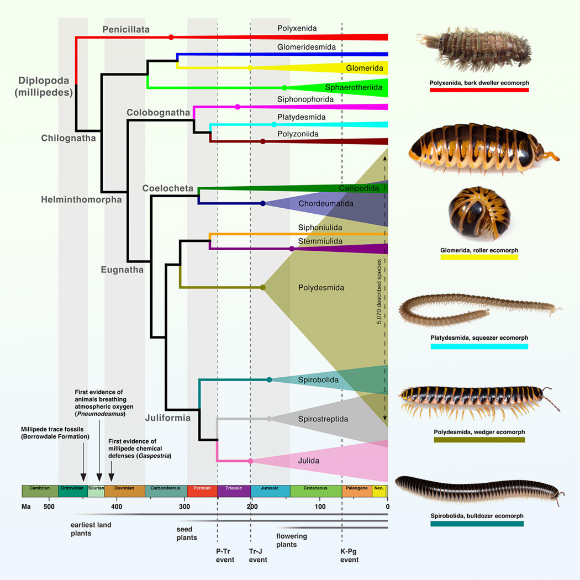
Entomologists Reconstruct Evolutionary History of Millipedes

To date, 14,232 millipede species have been described, with at least as many still awaiting discovery. Image credit: Vasquez-Valverde et al., doi: 10.1016/j.cub.2026.05.035.

Two elusive groups of millipedes, Siphoniulida and Siphonocryptida, were the last missing pieces in the evolutionary history of Earth’s oldest land animals, according to a team of entomologists led by Virginia Tech.

The post Entomologists Reconstruct Evolutionary History of Millipedes appeared first on Sci.News: Breaking Science News.

  •  

Derrière le sac en « cuir de T. rex » qui affole les enchères, voici ce que le luxe vend réellement

Entre prouesse biotechnologique et storytelling de luxe, un sac à main présenté comme fabriqué en « cuir de T. rex » vient de faire son apparition sur le marché des enchères parisiennes. Affiché à plusieurs centaines de milliers d’euros, l’objet invoque la paléontologie et des fragments de...

  •  

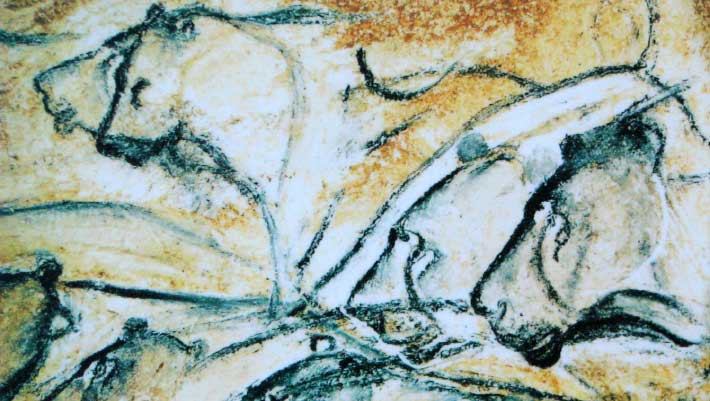
Study: Cave Lions were Distinct Species that Occasionally Bred with Ancestors of Today’s Lions

Cave lions painted in the Chauvet Cave, France.

The extinct Eurasian cave lion (Panthera spelaea) and today’s African and Asian lions (Panthera leo) belong to separate evolutionary lineages that diverged roughly 1.7 million years ago -- far earlier than previously thought, according to an analysis of 12 cave lion genomes spanning more than 100,000 years.

The post Study: Cave Lions were Distinct Species that Occasionally Bred with Ancestors of Today’s Lions appeared first on Sci.News: Breaking Science News.

  •  
  •  

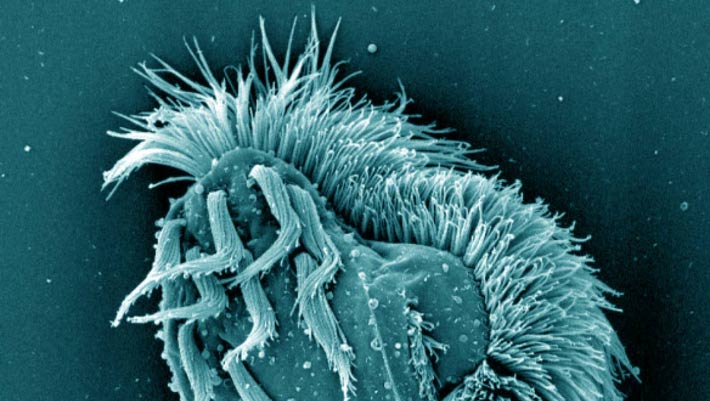
When Food Runs Short, This Single-Celled Organism Turns into Giant Cannibal to Survive

Euplotes gigatrox. Image credit: Ben Larson & Samuel Lord.

Euplotes gigatrox, a new species of ciliate collected from a seawater filtration system on the Caribbean Island of Curaçao, can transform into a cannibalistic ‘supergiant,’ raising new questions about the complexity of life at the microscopic scale.

The post When Food Runs Short, This Single-Celled Organism Turns into Giant Cannibal to Survive appeared first on Sci.News: Breaking Science News.

  •  
❌