 Login

Which AI systems actually read the live web, and why it decides your GEO
I asked 16 AI assistants 50 health questions. One read 147 web pages, another read zero. That split decides your whole GEO strategy. Here is why.


O Google apresentou hoje novas variantes para a geração 3.0 dos modelos de inteligência artificial generativa do Gemini. Mais especificamente, foram lançados o Gemini 3.6 Flash, o 3.5 Flash-Lite e o 3.5 Flash Cyber.
A maior novidade é justamente o 3.6 Flash, que agora é o principal modelo “rápido” da empresa. Ele foi projetado com base em feedbacks dos usuários do 3.5 Flash e visa oferecer um equilíbrio ideal entre eficiência e qualidade.
Today we’re expanding the Gemini family with three new models built to be faster, more token efficient, and reliable at scale.
— Google (@Google) July 21, 2026
Meet the new Gemini models ↓ pic.twitter.com/hVYNQqxgjd
Na prática, o 3.6 Flash gasta 17% menos tokens de saída para tarefas semelhantes, bem como precisa de menos etapas de raciocínio e menos chamadas de ferramentas para concluir fluxos de trabalho compostos por várias etapas.
Essa eficiência também vem acompanhada de um preço menor. Custando US$1,50 por milhão de tokens de entrada e US$7,50 por milhão de tokens de saída, o 3.6 Flash reduz o custo total por tarefa executada por agentes, tornando-os mais baratos para desenvolver e operar.
Ele também é mais preciso em programação, avança significativamente em ML 1Machine learning, ou aprendizado de máquina., apresenta maior capacidade de interação com computadores e um melhor desempenho em tarefas envolvendo conhecimento.

Além disso, o novo modelo tem proteções reforçadas contra usos indevidos relacionados a materiais químicos, biológicos, radiológicos e nucleares (CBRN) e ataques cibernéticos.
Continuando os investimentos na família de modelos 3.5, o Google apresentou hoje o 3.5 Flash-Lite como o “modelo mais rápido da família”, desenvolvido para tarefas de baixa latência e alto volume de processamento.
Altamente superior ao Gemini 3.1 Flash-Lite, seu antecessor direto, ele gera 350 tokens de saída por segundo e custa apenas US$0,30 por milhão de tokens de entrada e US$2,50 por milhão de tokens de saída.

O 3.5 Flash Cyber, por sua vez, é o 3.5 Flash rodando no sistema de IA do Google voltado à segurança (o CodeMender) e ajustado para encontrar e corrigir falhas de cibersegurança com um baixo custo por token.

Ele será disponibilizado inicialmente apenas para governos e parceiros confiáveis por meio de um programa piloto de acesso limitado para que eles encontrem e corrijam possíveis vulnerabilidades críticas.
Além disso, o Google também afirmou que sua equipe de desenvolvedores já está focada na construção do Gemini 4 — o pré-treinamento mais ambicioso para essa nova geração, inclusive, já começou.


Seguindo a onda cada vez mais popular dos agentes de inteligência artificial (IA), mais um aplicativo focado na execução de modelos capazes de realizar tarefas em nome do usuário surgiu recentemente: o Open Minis.
Disponível para iPhones, iPads, Macs e Apple Vision Pros, o aplicativo se integra perfeitamente ao ecossistema da Maçã — o que permite fazer tarefas para muito além das que um chatbot tradicional faria.
Posts relacionados
Você pode fazer coisas como controlar acessórios do HomeKit, gerenciar calendários, lembretes, mídias e arquivos, bem como acessar dados disponíveis no aplicativo Saúde (Health) ou o hardware do dispositivo.
Para que tudo isso seja possível, o Open Minis possui um ambiente Linux que roda de forma isolada e o permite executar scripts, usar interfaces de linha de comando ou até mesmo um navegador web integrado.

Para usá-lo, você precisa conectar algum modelo de IA suportado (Claude, GPT, Gemini e OpenRouter) ou endpoints compatíveis com a OpenAI. Também é possível criar fallback de modelos para casos de falha.
Capaz de lembrar preferências e contextos de conversas anteriores para aprender os gostos do usuário, o app mantém todas as chaves de API 1Application programming interface, ou interface de programação de aplicações. no dispositivo e não coleta nem envia nenhum dado a terceiros.
Uma espécie de concorrente do LM Studio, que recentemente ganhou suporte a agentes, o app pode ser baixado gratuitamente — seu custo será exclusivamente com créditos para os modelos de IA que for usar.
via MacStories


Com o recém-lançado P8L, a TCL tenta trazer para um segmento mais acessível características tipicamente presentes nos seus modelos de topo. Tecnologia Mini LED, 144 Hz, Google TV com Gemini e sistema de som 2.1 da ONKYO são só alguns dos argumentos de "peso" deste televisor.
The post TCL 65 P8L é um televisor QD-Mini LED com Google TV que surpreende na qualidade de imagem e no gaming appeared first on Tek Notícias.
Good things take time, but not all things that take time are good. The jury is still out on the Google Home Speaker, but it certainly took a while to arrive. After announcing its new speaker last August, Google finally has a release date. The company's first new smart home speaker in years will launch on June 25, and you can preorder it today for $100.
The generically named Google Home Speaker is Google's first home audio device in almost six years. The last one was the Nest Audio, which debuted back in September 2020. The new device is small and round—an oblate spheroid, technically. It's covered in a partially recycled fabric available in four colors: hazel, porcelain, jade, and berry (jade and berry are limited to the US). Google says the device produces "360-degree sound" for a uniform listening experience anywhere in a room.
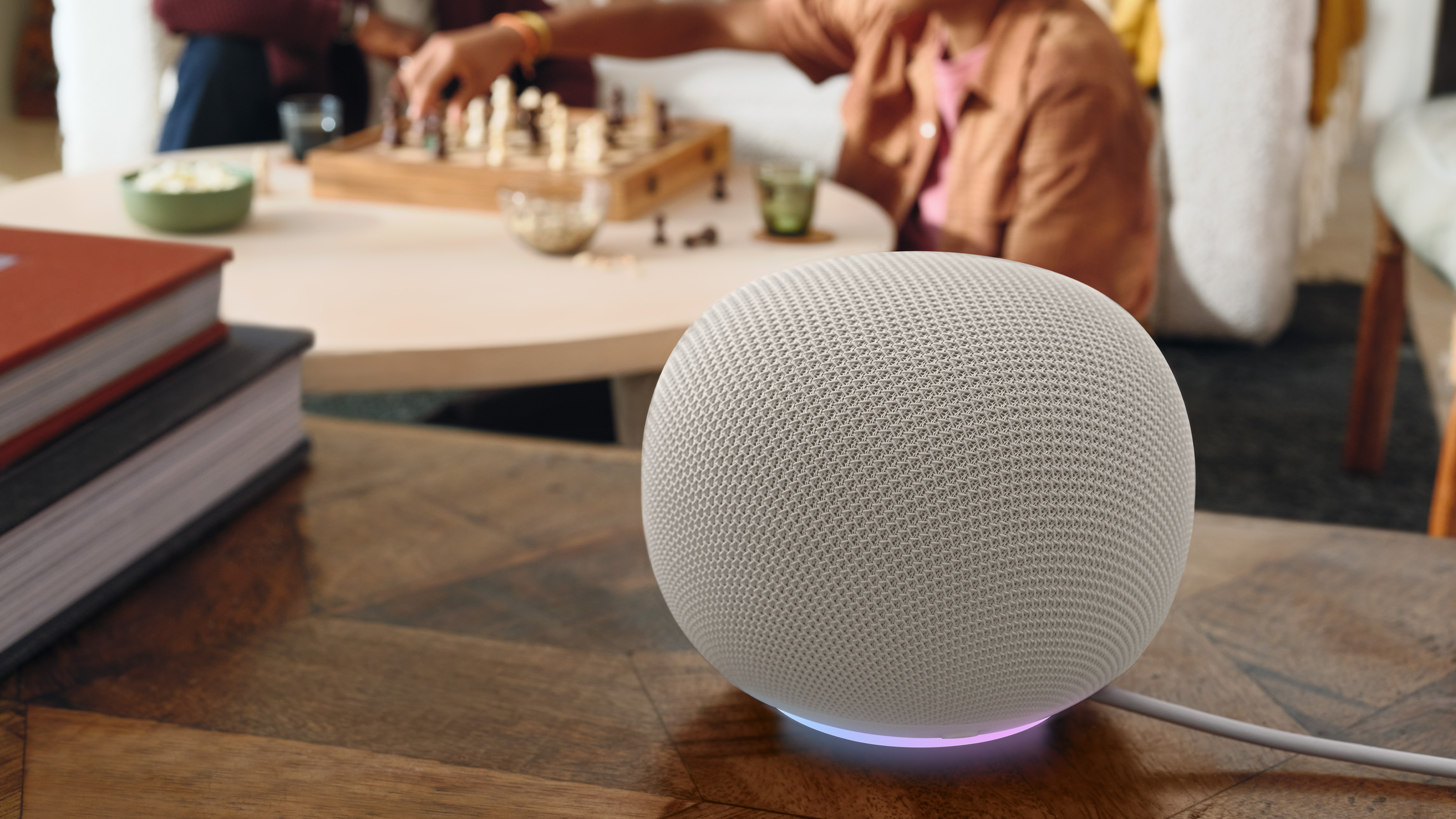 Google is into lighting effects again.
Credit:
Google
Previous Google speakers included Assistant-style illuminated lights, but the Google Home Speaker features a light ring around the bottom that glows when the device is listening, "thinking," or responding. This is becoming a trend with Google. The company will require a similar glowing lightbar embellishment on the upcoming Googlebook laptops. There are three far-field microphones distributed around the speaker that will pick up your speech, and there's a mute switch when you don't want it listening for the "OK Google" trigger.
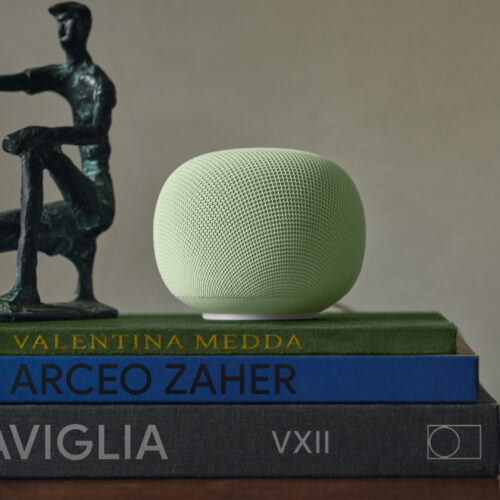
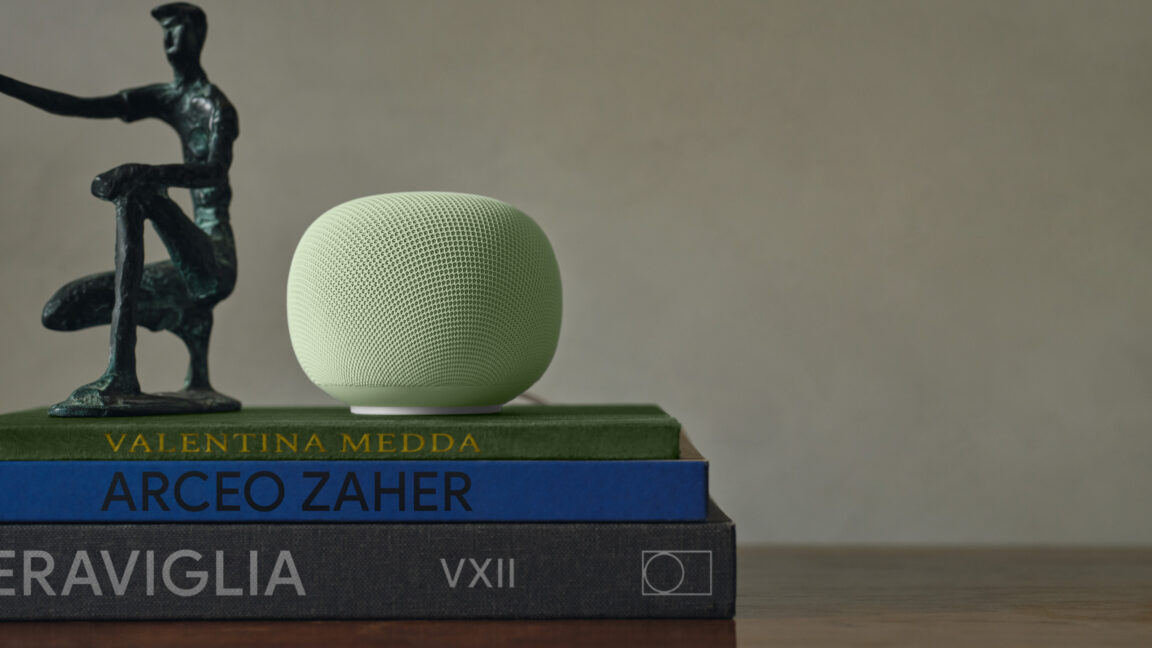
Good things take time, but not all things that take time are good. The jury is still out on the Google Home Speaker, but it certainly took a while to arrive. After announcing its new speaker last August, Google finally has a release date. The company's first new smart home speaker in years will launch on June 25, and you can preorder it today for $100.
The generically named Google Home Speaker is Google's first home audio device in almost six years. The last one was the Nest Audio, which debuted back in September 2020. The new device is small and round—an oblate spheroid, technically. It's covered in a partially recycled fabric available in four colors: hazel, porcelain, jade, and berry (jade and berry are limited to the US). Google says the device produces "360-degree sound" for a uniform listening experience anywhere in a room.
Google is into lighting effects again.
Credit:
Google
Previous Google speakers included Assistant-style illuminated lights, but the Google Home Speaker features a light ring around the bottom that glows when the device is listening, "thinking," or responding. This is becoming a trend with Google. The company will require a similar glowing lightbar embellishment on the upcoming Googlebook laptops. There are three far-field microphones distributed around the speaker that will pick up your speech, and there's a mute switch when you don't want it listening for the "OK Google" trigger.
The US Department of Defense has a lot of congressionally mandated homework to do every year involving hundreds of required reports on various national security topics. But Pentagon officials have been proudly describing a new shortcut—using generative AI tools to write such reports for Congress.
Pentagon Chief Technology Officer Emil Michael highlighted AI-generated reports to Congress as a key example of how the Department of Defense—stylized as the Department of War under the Trump administration—has adopted generative AI during an event hosted by the Hudson Institute think tank in Washington, DC, on June 12. The Pentagon has made AI tools, starting with Google Cloud’s Gemini for Government, widely available to members of all six military branches through the department’s bespoke GenAI.mil platform since December 2025.
“I have to report to Congress every year on this thing,” Michael said. “Let me load all the papers onto it and have it draft me a congressional report that would otherwise take 200 hours of staffing time and do it in five hours.”


© SAUL LOEB / AFP via Getty Images


One year after Gemini IV astronaut Edward H. White completed NASA’s first spacewalk the agency prepared for a demanding second excursion. Originally scheduled for Gemini VIII, the extravehicular activity (EVA) was reassigned to Gemini IX-A after that mission ended early, with Gene Cernan taking on the task.
On June 5, 1966—the mission’s third day—Cernan exited the spacecraft and quickly found himself fighting his own equipment. His spacesuit was so rigid that even simple movements required intense effort. He struggled to complete the simplest maneuvers.
Within minutes, Cernan was exhausted and sweating profusely. His spacesuit was cooled only through the circulation of oxygen and as he worked to complete the goals of the EVA, his helmet fogged over completely, obstructing his view and his heart rate rose to about 180 beats per minute. As concerns grew that he might lose consciousness, the EVA was called off and Cernan’s spacewalk ended after two hours and eight minutes.
When Gemini IX-A returned to Earth, doctors found that Cernan had lost 13 pounds during the three-day mission, most of it water lost during his EVA.
The challenges Cernan faced that day reshaped NASA’s approach to spacewalking. His experience directly influenced improved training methods, refined EVA procedures, and precipitated advances in spacesuit design—key steps in preparing astronauts for lunar surface missions just a few years later.
Credit: NASA
Segundo a Google, o Gemini Go é uma versão mais leve do assistente inteligente, concebida para os smartphones Android com especificações mais modestas. A substituição do Google Assistant nos modelos equipados com Android Go será disponibilizada de forma faseada.
The post Gemini ganha uma versão mais leve para substituir o Google Assistant nos smartphones com Android Go appeared first on Tek Notícias.
