❌

Reading view

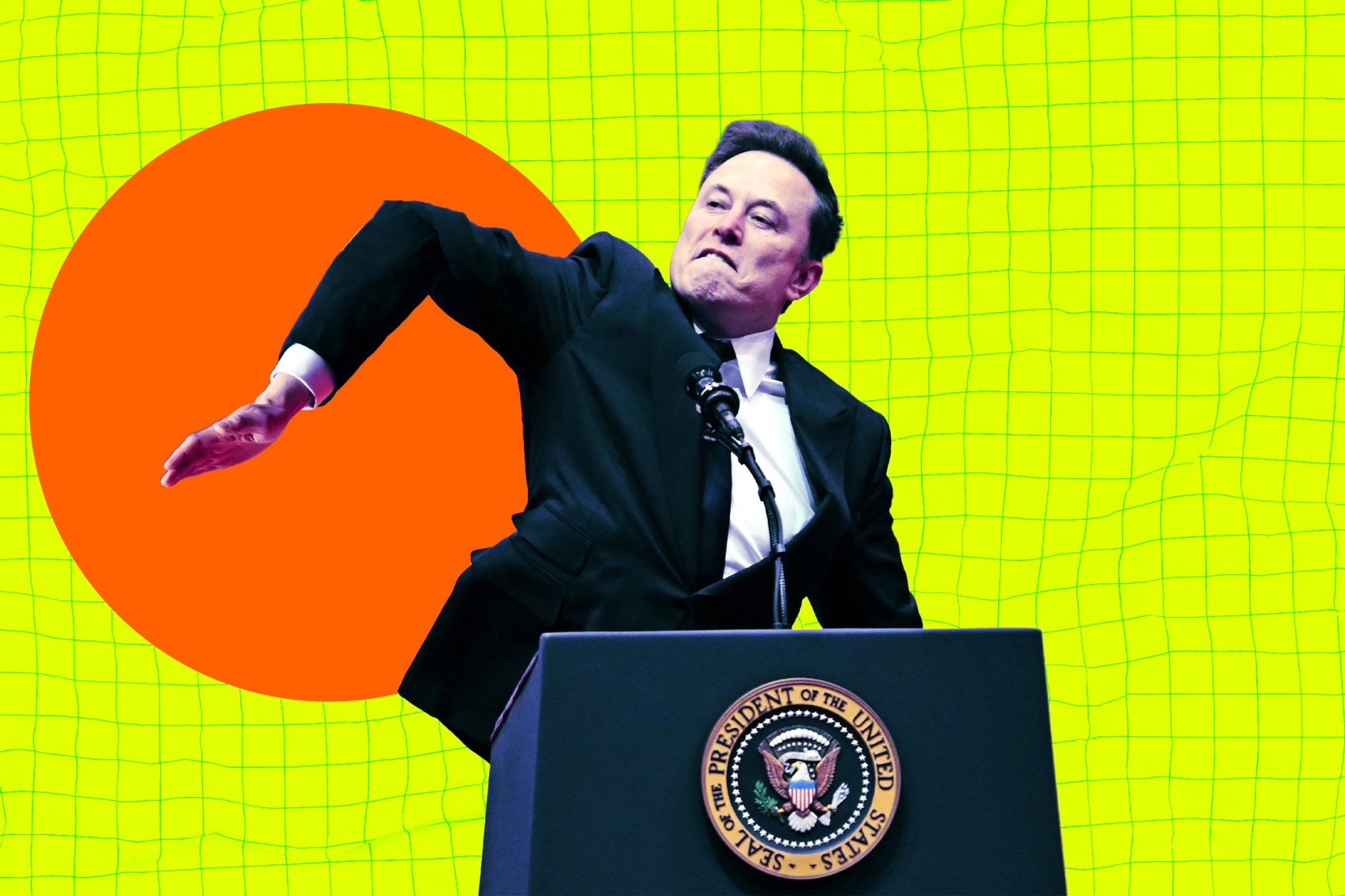
SpaceX Investors in Meltdown Over All the Money They’ve Lost

Elon Musk’s SpaceX is many different things to many different people — but one thing that it definitely isn’t is a get-rich-quick scheme.

Since its debut on the public tickers back in early June, SpaceX shares have sunk from a high of over $225 to a dismal $110 today, as compounding failures and overvaluation fears take their toll. Overall, SpaceX is down nearly 30 percent compared to its opening stock price of $150 — and all those day-one rubes are now seeing red.

“Elon has ruined me,” one Redditor posted on r/WallStreetBets, along with a screenshot showing a loss of nearly $455,000 CAD on thousands of SpaceX shares. “He was supposed to take us to Mars and burn short sellers. Still holding 7300 shares. Please Elon fly again.”

On Musk’s X-formerly-Twitter, investor’s spirits, like his rockets, weren’t any higher.

Under a post showing off SpaceX’s Starship at sunset, dejected Musk acolytes moped about their fortunes, begging the company to get its act together.

“It sure would be cool if this stops crashing… 30 percent short interest and down 40 percent on the month,” one fanboy groused. “I believed in you and lost over 20k in a month. I really hope that it comes back.”

On Thursday, when SpaceX announced it was delaying the launch of Starship’s thirteenth test flight by a day, commenters were quick to point out that the update came just minutes after US stock markets closed. (The stock continued sinking the next day, falling more than another 3 percent by press time.)

“Notice they wait until market close now,” one poster quipped.

“Sure,” said another user, “wait till market close to announce…lol…as if we didn’t know what the weather was going to do hrs in advance.”

With that major test now scheduled for Friday evening, it remains to be seen whether a successful test will be enough to win back investors. On the flipside, a high-profile failure now could severely compound the company’s woes, putting SpaceX even further from the $2 trillion valuation Musk has promised. Time will tell.

More on SpaceX: China Is Catching Up With SpaceX Fast, Landing First Reusable Rocket Booster on Offshore Platform

The post SpaceX Investors in Meltdown Over All the Money They’ve Lost appeared first on Futurism.

  •  

Investors Laying Groundwork to Profit Massively When Economy Collapses

Another glowing red indicator just lit up on the control panel steering the US economy: short sellers have placed a nearly unprecedented magnitude of bets against the domestic stock market.

A new analysis by the firm S3 Partners has found that short interest in the S&P 500 is now the highest it’s been since the company began compiling that data in 2010, Business Insider reports. In all, S3 found that roughly 3.7 percent of the S&P’s free float — meaning the total market value of shares available to the public for trading — is now tied up in short interest.

That’s a significant number, almost double the short interest in the S&P at the same time last year. For context, BI notes that roughly 3.8 percent of the S&P was hedged against itself right before the 2008 financial crisis, adding to a growing number of data points suggesting the economy is due for a major reckoning.

Stripping it down to plain English, this is a glaring indication that institutional investors are trying to get ahead of the AI financial bubble, which accounts for roughly 60 percent of the index’s growth since April. And the fact that a growing number of investors aren’t just exiting positions, but are actively betting against the US stock market is a massive tell.

For years, a few brave economists and financial analysts have pointed to the fact that the amount of money being spent on AI continues to rise as evidence that the AI bubble is unsustainable.

The thing is, investors are fine with rising costs if there’s enough revenue coming in to justify the spending, which for AI development has already eclipsed $1.6 trillion as of 2026. But whether we’re looking at data centers, digital ad revenue, or the cost of inference, the kind of revenue growth needed simply isn’t there, as the leading tech companies play an increasingly expensive game of kick-the-can-down-the-road.

This is the situation that has investors — and plenty of regular people — nervous about the AI financial bubble. A perfect example can be found in Google’s parent company Alphabet, which reported its first quarter of negative free cash flow this week. The company likewise raised its capital expenditure expectations by a cool $5 to $25 billion, CNBC reported, sending investors running for the hills as the long-promised AI revolution remains a world away.

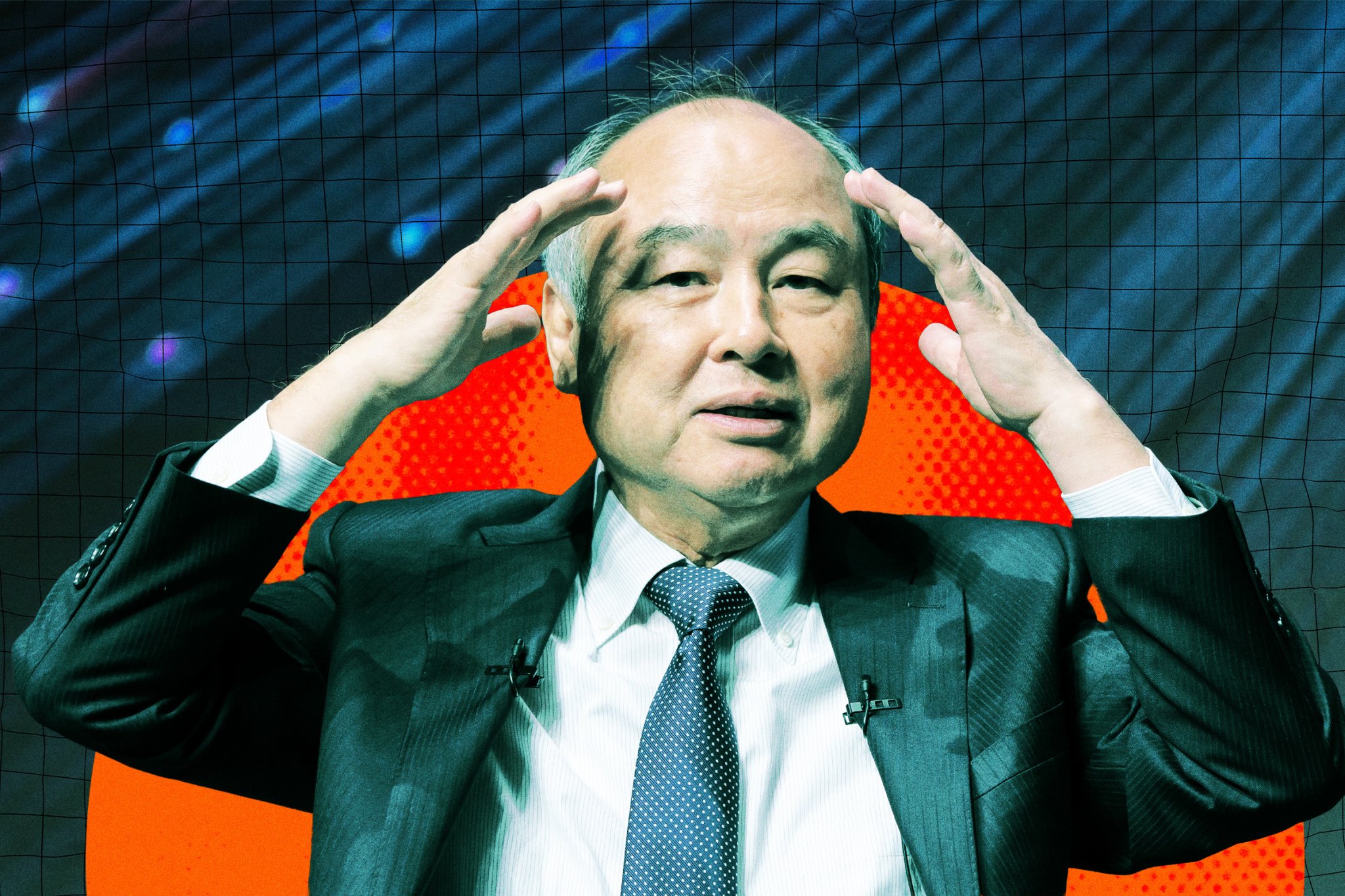
More on the AI bubble: SoftBank CEO Says You’re Too Stupid to Understand What’s Going on If You Believe the AI Bubble Is Real

The post Investors Laying Groundwork to Profit Massively When Economy Collapses appeared first on Futurism.

  •  

Suspicious Bets on Polymarket Suggest Something Fishy Was Happening During the World Cup

While the rest of us were busy rooting against Argentina, suspicious things were afoot on gambling markets related to the World Cup.

The Group of Copenhagen, an international sports integrity body, has flagged seven suspicious bets on platforms including Polymarket, which it says could be related to match manipulation.

The full report hasn’t been released yet. But sources told The Athletic that some of the bets that raised “irregularities” include the nearly $4.8 million placed on Polymarket for Spain not to defeat Cape Verde in their group stage match-up. The game ended in a goalless draw, in one of the first major shocks of the tournament.

Another Polymarket bet that raised suspicion was “Will Folarin Balogun play against Belgium?” which was opened on the same day, July 2, that the US striker received a red card against Bosnia and Herzegovina.

A red card means a player is suspended for at least one game, and the Belgium matchup was the US’s next. In a now-scandalous twist, FIFA’s Disciplinary Committee made the unprecedented move of suspending Balogun’s suspension, allowing him to play the next game. 

This wasn’t announced until July 5 — and it soon came to light that the decision was made after US president Trump personally called FIFA president Gianni Infantino to complain about the red card; later, Trump praised the deferral of Balogun’s ban as a “great decision.”

Heightening the suspicions, sources told The Athletic that the Group of Copenhagen report found no other markets like the one opened for Balogun were opened for any of the other 14 players who were shown a red card during the World Cup.

FIFA’s own Integrity Task Force, however, doesn’t see any signs of nefarious activity. In a report published Tuesday, it concluded there was “no suspicious betting activity or indications of match manipulation in connection with any fixture,” per The Athletic.

The Group of Copenhagen, by contrast, said it’s found seven “yellow notices” in bets related to the World Cup, which it explains are flagged for reasons including “unexplained fluctuations in odds, rumours on social media or source information.” (Yellow notice ranks below orange and red, the highest level of notice.)

Right now, no specific allegations are being made. But the Balogun bet could be seen as a sign of insider trading. The Trump administration has already been hit with several similar scandals related to prediction markets, including a White House teleprompter who’s being investigated for allegedly making over $100,000 by placing bets on Kalshi related to Trump’s speeches.

It’s possible that the Group of Copenhagen is flagging the bets for reasons other than manipulation, according to Christian Kalb, a gambling industry expert who formerly worked with the organization. Instead, it could be because platforms like Polymarket are being used by hedging markets, as what might be the case with the bets placed over the Spain versus Cape Verde match.

“If you are a traditional bookmaker, there will be matches when everyone bets on a very strong favourite to win. So maybe, from a bookmaker’s perspective, there are too many people betting on this outcome,” Kalb told The Athletic. “If they are a small company, this may be a risk: so they could use a prediction market like Polymarket to hedge that risk.”

More on gambling: A New Type of Gambling Scandal Is Sweeping Through Sports

The post Suspicious Bets on Polymarket Suggest Something Fishy Was Happening During the World Cup appeared first on Futurism.

  •  

Shinhan Bank Says Validating AI Is More Important Than Deploying It

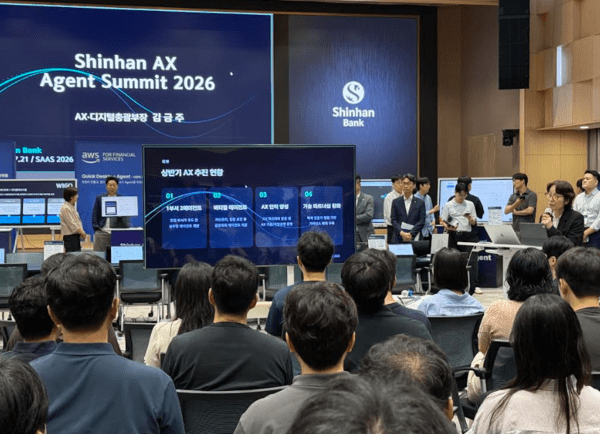
Kim Geum-ju, head of AX and Digital at Shinhan Bank, speaks during the Shinhan AX Agent Summit 2026 held at the bank's headquarters in central Seoul on July 21. (Photo: Shinhan Bank)

Shinhan Bank held its Shinhan AX Agent Summit 2026 on July 21 at its headquarters in Seoul, bringing together employees from across the Shinhan Financial Group, domestic and international technology companies, and academic experts to discuss the future of AI in financial services.

The event was designed to objectively assess the bank's current AI agent capabilities, compare them with global technologies and financial industry use cases, and identify future priorities for advancing AI transformation (AX) in banking.

The exhibition was organized into five zones, allowing participants to explore the latest AI technologies from domestic and international companies alongside Shinhan Financial Group's own AI agent developments.

The bank showcased the latest AI agent technologies and deployment cases from global financial institutions, while also exhibiting 18 AI agents developed by Shinhan Bank's AX Innovation Leaders and business units using the bank's proprietary AI platform. An additional three AI agents developed by affiliated companies within the Shinhan Financial Group were also on display.

"Financial AI transformation is not simply about adopting new technologies," a Shinhan Bank official said. "What matters more is objectively evaluating the current state of AI and continuously validating that it can be used safely and effectively in real business operations."

The official added that the bank plans to identify areas for improvement through feedback from external experts and frontline employees while continuing to enhance its financial AI agents.

  •  

South Korea Launches Blockchain-Based Deposit Token Payment Infrastructure Project

The South Korean government said on July 22 that it will accelerate the rollout of blockchain-based digital payment infrastructure. (Image: Korea Internet & Security Agency)

South Korea's government has launched a project to expand blockchain-based digital payment infrastructure centered on deposit tokens, aiming to reduce payment processing costs for small businesses while accelerating the adoption of digital financial services.

The Korea Internet & Security Agency (KISA) and the Ministry of Science and ICT announced on July 22 that they held a joint launch ceremony at KISA's Seoul headquarters for the Deposit Token-Based Payment Infrastructure Expansion Project, one of this year's selected Blockchain Innovation Leading Projects. The initiative is intended to accelerate the deployment of blockchain-based digital payment infrastructure.

The project is part of the government's demonstration program to identify and promote blockchain-based services with significant economic and social impact, including support for local businesses and the creation of new markets. This year's open competition selected the deposit token payment infrastructure project, which seeks to ease payment fee burdens for small merchants, following evaluation by an external panel of experts. To expand the use of deposit tokens and maximize the project's impact, the government will collaborate with related organizations, including the Ministry of Finance and Economy and the Bank of Korea.

The Korea Financial Telecommunications & Clearings Institute (KFTC) will serve as the lead organization, working with a private-sector consortium comprising nine commercial banks, eight payment service providers and two major merchant partners. KFTC will connect the existing payment infrastructure with the Bank of Korea's Project Hangang platform to enable deposit token payments while overseeing service development and pilot operations. The total project budget is 9.6 billion won.

The project's primary objective is to extend the institutional experience gained through the Bank of Korea's Project Hangang, which demonstrated central bank digital currency (CBDC)-based deposit tokens, into consumer-facing payment services. The government expects the initiative to deliver tangible benefits, including lower payment costs for small businesses. In addition, KFTC plans to work with the Ministry of Finance and Economy to expand the use of deposit tokens into public-sector financial activities, such as government operating expenses.

A key feature of the initiative is that it leverages existing payment infrastructure rather than requiring an entirely new payment network. By integrating with current payment terminals and online payment systems, consumers will be able to make payments using bank-issued deposit tokens through dedicated digital wallet applications. Authorities are also considering the introduction of physical payment cards. Merchants, including small businesses, will be able to accept deposit token payments without replacing their existing payment terminals.

The government expects that establishing a deposit token-based payment and settlement system will improve settlement speed and operational efficiency, enabling lower merchant transaction fees and reducing financial burdens on small business owners.

The Ministry of Finance and Economy also plans to incorporate deposit tokens into a pilot program for government business expenses. Looking ahead, the ministry intends to work with the Ministry of Planning and Budget's fiscal management organizations, including the Korea Public Finance Information Service, to develop a treasury management model linked to the government's dBrain digital fiscal management system for broader public fund administration.

The Ministry of Science and ICT said the project will create practical blockchain applications that the public can directly experience while expanding opportunities for blockchain companies—including small and medium-sized enterprises, startups and information technology firms—to participate in system development, operation and commercialization, thereby strengthening South Korea's blockchain ecosystem. Of the project's 9.6 billion won budget, approximately 3 billion won will be allocated to development, operations and promotional activities involving SMEs, startups and IT companies. Participating commercial banks and other consortium members also plan to undertake related projects worth approximately 4.5 billion won alongside the main initiative.

  •  

Short Sellers Are Going Hog Wild Against SpaceX as Its Stock Craters

As shares of Elon Musk’s SpaceX continue to dip, short sellers betting against the company are making an absolute fortune.

As Reuters reported last week, short sellers had already made a whopping $8.7 billion in profit — and that was when the company’s stock was trading around $135. Since then, shares have cratered, dipping all the way down to an all-time low of $118 by Wednesday.

As a result, even more short sellers are throwing themselves at the chance to bet against the company, as CNBC reports. According to estimates from financial software company S3 Partners, around 206 million shares are being shorted, just under a third of all publicly tradable shares. That’s up from around 185 million just last week and only 40 million shares one month ago.

“We continue to see short sellers adding exposure ahead of several key upcoming catalysts, including the company’s first earnings report as a public company and subsequent lock-up expirations,” S3 head of research Matthew Unterman told CNBC.

Musk, who has an extensive track record of raging against Tesla short sellers, is clearly letting the issue get under his skin.

“The survival probability of firms who maintain a significant short position in SpaceX over time is very low,” he tweeted.

The almost-trillionaire also rehashed his belief that “SpaceX will be worth more than Earth if we achieve our goals,” stating without evidence that his extremely far-fetched prediction was “obviously true.”

But before it has any chance to take over the entire world, SpaceX has a lot to prove. The company confirmed this week that it will release its first quarterly earnings report on August 4, a major litmus test of where the company’s headed.

Chances are it won’t be pretty. SpaceX’s market capitalization of over $1.6 trillion — making it one of the most valuable companies in the world — has little to no bearing on its current business fundamentals. The company lost almost $5 billion last year. Musk’s xAI, which was folded into SpaceX earlier this year and renamed to SpaceXAI, similarly lost $6.4 billion.

To regain ground lost ground, Musk will have to convince investors of his lofty and untested goals of sending data centers into space and settling on the Moon with the help of SpaceX’s behemoth Starship spacecraft.

Those claims will be put to the test Thursday, when the company has scheduled another test of the mammoth rocket — and regardless of the outcome, we’re likely to see substantial stock movement in its wake.

More on SpaceX: Short Sellers Are Having a Field Day Betting Against SpaceX as Shares Continue to Slip

The post Short Sellers Are Going Hog Wild Against SpaceX as Its Stock Craters appeared first on Futurism.

  •  

OpenAI Appears to Be Missing Its Sales Goals by a Vast Margin

Even as the AI bubble becomes a mainstream talking point on Wall Street, tech companies continue to peddle the fantasy that AI is poised to become an almost magical money-maker. Case in point, OpenAI wants you to believe that by 2030, it’ll be raking in $100 billion a year just from ads alone — even though it’s currently struggling to reach just $1 billion.

That massive gulf was observed in a new analysis from marketing consulting firm Emarketer, first flagged by AdWeek, which found OpenAI is on pace to undershoot its own five-year ad revenue projections by a whopping 90 percent. In fact, Emarketer’s take is even more devastating than that: it estimates the entire addressable market for chatbot advertising — the maximum amount of money up for grabs overall — at $5.4 billion.

That figure isn’t just bad news for OpenAI, but for every giant tech company, all of which are jockeying for a piece of the AI ad pie. In 2026, Emarketer projects that the combination of OpenAI, Microsoft, Google, and Amazon will bring in under $1 billion in ad revenue. For context, OpenAI had projected that its AI ad revenue alone would hit $2.5 billion by the end of this year.

It all adds up to a difficult question for investors. If the top AI companies — which have burned over $1.6 trillion building AI so far — can’t even hit OpenAI’s meager projection for 2026, what hope do they have of hitting their projections four years from now?

To hit that number, AdWeek observes, OpenAI needs three miracles to happen all at once. First, advertisers have to abandon decades worth of infrastructure built around search engines and social media and put all their advertising budgets into chatbots. Once that happens, OpenAI has to out-muscle previous ad-sales giants like Google and Meta, while the entire AI-ad market balloons from just a six-figure stream in 2026 to a raging, 12-figure river by 2030.

Basically, OpenAI will have to make a lot of history to justify these numbers. And whether it can do so is no small matter: according to OpenAI’s own forecasts, advertising is supposed to make up 36 percent of the company’s total revenue by 2030. If the AI lab can’t make the math work, the company’s five-year financial story falls apart, and with it, a major bullet point justifying one of the largest financial bubbles the world has ever seen.

More on OpenAI: Lawsuit Alleges That ChatGPT Encouraged Suicide of Woman Who Walked Into Traffic

The post OpenAI Appears to Be Missing Its Sales Goals by a Vast Margin appeared first on Futurism.

  •  

There’s a Gigantic Problem at the Heart of the AI Industry That Could Cause the Whole Thing to Collapse

For years, AI companies have been selling investors on the idea that scaling up operations is the key to success — the bigger the AI model, the more powerful it becomes.

But in practice, that premise is leading to enormous business problems. As The Atlantic points out, LLMs are suffering from severely diminishing returns: the cost of inference, or the act of using a trained AI model to process new data, is rising exponentially, making the tech far less lucrative than it was even half a year ago.

Put simply, it’s effectively the opposite of what investors would conventionally want to see, as The Atlantic argues, which would be a continuous drop in cost per user instead of the reverse.

That’s bad news for an industry pouring billions of dollars into the construction of enormous data centers across the country, despite having no clear path to profitability in the foreseeable future. While it’s impossible to predict when exactly fears of an AI bubble will hit a breaking point, analysts warn it’s a matter of when, not if. The consequences could be disastrous if the industry were to collapse in on itself, bringing down entire economies — which have vastly over-indexed on AI tech — with it.

Nonetheless, AI companies are steadfast in their belief that chatbots, like OpenAI’s ChatGPT and Anthropic’s Claude, are the future. They’ve become practically inescapable in our day-to-day lives, from integrations in operating systems to replacing humans on customer service calls — despite a major public backlash that represents another headwind for the industry.

Meeting AI’s rapidly growing demands will also require revolutionary leaps in hardware tech that are becoming increasingly harder to come by, with experts warning of the imminent end of Moore’s Law, the decades-old truism that more transistors steadily improved computing power.

In short, as behemoth AI models are quickly becoming unaffordable to those who’ve grown to rely on them, they’re also becoming far less efficient — a concerning trajectory that could nudge the entire economy closer to the brink.

For a while now, Yann LeCun, one of the so-called godfathers of AI, has been warning that LLMs are a “dead end” and won’t bring us to the much-touted point where AI intelligence matches or exceeds that of human intelligence.

But whether tech leaders who are already deeply invested in scaling up the current crop of AI models will heed those warnings feels increasingly unlikely.

More on AI: AI Bubble Fears Are Starting to Spill Over

The post There’s a Gigantic Problem at the Heart of the AI Industry That Could Cause the Whole Thing to Collapse appeared first on Futurism.

  •  

Apple shares hit new all-time closing and intraday highs

Apple logo

In Nasdaq trading today, shares of Apple Inc. (AAPL) rose $0.48 to $333.74 to hit a new all-time closing high. Apple’s all-time intraday high was also set today at $334.98.

Apple’s 52-week low stands at $201.50.

Today’s trading volume for AAPL shares was 63,196,563 versus Apple’s average trading volume of 54,686,906 shares.

Apple’s PE Ratio currently stands at 40.40.

Apple currently has a market value of $4.902 trillion, making it the world’s second-most valuable company.

The top five U.S. publicly-traded companies, based on market value:

  1. NVIDIA (NVDA) – $4.912T
  2. Apple (AAPL) – $4.902T
  3. Alphabet (GOOGL) – $4.231T
  4. Microsoft (MSFT) – $2.925T
  5. Amazon (AMZN) – $2.659T

Selected companies’ current market values:

• Taiwan Semi (TSM): $2.252T
• Tesla (TSLA): $1.488T
• Meta Platforms (META): $1.695T
• Berkshire Hathaway (BRK-A): $1.087T
• Walmart (WMT): $906.425B
• Advanced Micro Devices (AMD): $909.696B
• Intel (INTC): $552.056B
• Cisco (CSCO): $473.938B
• Netflix (NFLX): $310.883B
• SoftBank (SFTBF): $220.206B
• IBM (IBM): $275.786B
• Dell (DELL): $254.787B
• Disney (DIS): $166.045B
• Sony (SONY): $122.428B
• Adobe (ADBE): $90.177B
• Spotify (SPOT): $98.65B
• Nokia (NOK): $69.447B
• Hewlett-Packard (HPQ): $20.961B
• SiriusXM (SIRI): $9.937B
• BlackBerry (BB): $6.06B
• Sonos (SONO): $1.727B
• Liquidmetal (LQMT): $0.181B
• RealNetworks (RNWK) was delisted from U.S. exchanges on December 21, 2022 and is no longer publicly traded.🍩

Apple all-time high (AAPL) via NASDAQ here.

MacDailyNews Take: To the moon, Alice. To the moon!


Please help support MacDailyNews — and enjoy subscriber-only articles, comments, chat, and more — by subscribing to our Substack: macdailynews.substack.com. Thank you!

Support MacDailyNews at no extra cost to you by using this link to shop at Amazon.

Like 🙂 or dislike 🙁 this post below!

The post Apple shares hit new all-time closing and intraday highs appeared first on MacDailyNews.

  •  

Apple shares hit new all-time closing and intraday highs

Stock chart

In Nasdaq trading today, shares of Apple Inc. (AAPL) rose $5.76 to $333.26 to hit a new all-time closing high. Apple’s all-time intraday high was also set today at $334.68.

Apple’s 52-week low stands at $201.50.

Today’s trading volume for AAPL shares was 59,624,981 versus Apple’s average trading volume of 54,664,537 shares.

Apple’s PE Ratio currently stands at 40.40.

Apple currently has a market value of $4.895 trillion, making it the world’s second-most valuable company.

The top five U.S. publicly-traded companies, based on market value:

  1. NVIDIA (NVDA) – $5.023TT
  2. Apple (AAPL) – $4.895T
  3. Alphabet (GOOGL) – $4.325T
  4. Microsoft (MSFT) – $2.980T
  5. Amazon (AMZN) – $2.688T

Selected companies’ current market values:

• Taiwan Semi (TSM): $2.109T
• Meta Platforms (META): $1.683T
• Tesla (TSLA): $1.469T
• Berkshire Hathaway (BRK-A): $1.055T
• Walmart (WMT): $913.508B
• Advanced Micro Devices (AMD): $816.833B
• Dell (DELL): $253.543B
• Intel (INTC): $487.421B
• Cisco (CSCO): $431.883B
• Netflix (NFLX): $313.073B
• SoftBank (SFTBF): $223.341B
• IBM (IBM): $206.051B
• Disney (DIS): $173.009B
• Sony (SONY): $124.819B
• Spotify (SPOT): $98.404B
• Adobe (ADBE): $93.544B
• Nokia (NOK): $57.897B
• Hewlett-Packard (HPQ): $22.077B
• SiriusXM (SIRI): $10.54B
• BlackBerry (BB): $5.357B
• Sonos (SONO): $1.679B
• Liquidmetal (LQMT): $0.135B
• RealNetworks (RNWK) was delisted from U.S. exchanges on December 21, 2022 and is no longer publicly traded.🍩

Apple all-time high (AAPL) via NASDAQ here.

MacDailyNews Take: Onward amd upward, Cupertino soldiers!


Please help support MacDailyNews — and enjoy subscriber-only articles, comments, chat, and more — by subscribing to our Substack: macdailynews.substack.com. Thank you!

Support MacDailyNews at no extra cost to you by using this link to shop at Amazon.

Like 🙂 or dislike 🙁 this post below!

The post Apple shares hit new all-time closing and intraday highs appeared first on MacDailyNews.

  •  

Apple shares hit new all-time closing and intraday highs

Apple logo

In Nasdaq trading today, shares of Apple Inc. (AAPL) rose $12.64 to $327.50 to hit a new all-time closing high. Apple’s all-time intraday high was also set today at $328.72.

Apple’s 52-week low stands at $201.50.

Today’s trading volume for AAPL shares was 58,741,821 versus Apple’s average trading volume of 54,375,570 shares.

Apple’s PE Ratio currently stands at 39.70.

Apple currently has a market value of $4.810 trillion, making it the world’s second-most valuable company.

The top five U.S. publicly-traded companies, based on market value:

  1. NVIDIA (NVDA) – $5.147T
  2. Apple (AAPL) – $4.810T
  3. Alphabet (GOOGL) – $4.526T
  4. Microsoft (MSFT) – $2.939T
  5. Amazon (AMZN) – $2.743T

Selected companies’ current market values:

• Taiwan Semi (TSM): $2.195T
• Meta Platforms (META): $1.667T
• Tesla (TSLA): $1.483T
• Berkshire Hathaway (BRK-A): $1.073T
• Walmart (WMT): $913.03B
• Advanced Micro Devices (AMD): $871.377B
• Intel (INTC): $518.281B
• Cisco (CSCO): $469.977B
• IBM (IBM): $273.502B
• Dell (DELL): $275.78B
• Netflix (NFLX): $310.925B
• SoftBank (SFTBF): $218.098B
• Disney (DIS): $166.688B
• Sony (SONY): $122.34B
• Spotify (SPOT): $99.839B
• Adobe (ADBE): $91.669B
• Nokia (NOK): $65.958B
• Hewlett-Packard (HPQ): $22.653B
• SiriusXM (SIRI): $10.487B
• BlackBerry (BB): $6.286B
• Sonos (SONO): ~$1.98B
• Liquidmetal (LQMT): ~$0.135B
• RealNetworks (RNWK) was delisted from U.S. exchanges on December 21, 2022 and is no longer publicly traded.🍩

Apple all-time high (AAPL) via NASDAQ here.

MacDailyNews Take: Gaudy (yet still woefully undervalued)! To the moon, Alice. To the moon!


Please help support MacDailyNews — and enjoy subscriber-only articles, comments, chat, and more — by subscribing to our Substack: macdailynews.substack.com. Thank you!

Support MacDailyNews at no extra cost to you by using this link to shop at Amazon.

Like 🙂 or dislike 🙁 this post below!

The post Apple shares hit new all-time closing and intraday highs appeared first on MacDailyNews.

  •  

Apple shares hit new all-time closing and intraday highs

Apple logo

In Nasdaq trading today, shares of Apple Inc. (AAPL) rose $1.99 to $317.31 to hit a new all-time closing high. Apple’s all-time intraday high was also set today at $323.45.

Apple’s 52-week low stands at $201.50.

Today’s trading volume for AAPL shares was 41,376,714 versus Apple’s average trading volume of 54,682,654 shares.

Apple’s PE Ratio currently stands at 38.42.

Apple currently has a market value of $4.660 trillion, making it the world’s second-most valuable company.

The top five U.S. publicly-traded companies, based on market value:

  1. NVIDIA (NVDA) – $4.930T
  2. Apple (AAPL) – $4.660T
  3. Alphabet (GOOGL) – $4.302T
  4. Microsoft (MSFT) – $2.904T
  5. Amazon (AMZN) – $2.660T

Selected companies’ current market values:

• Taiwan Semi (TSM): $2.195T
• SpaceX (SPCX): $1.833T
• Tesla (TSLA): $1.483T
• Meta Platforms (META): $1.667T
• Berkshire Hathaway (BRK-A): $1.073T
• Walmart (WMT): $913.03B
• Advanced Micro Devices (AMD): $871.377B
• Intel (INTC): $518.281B
• Cisco (CSCO): $469.977B
• Netflix (NFLX): $310.925B
• IBM (IBM): $273.502B
• Dell (DELL): $275.78B
• SoftBank (SFTBF): $218.098B
• Disney (DIS): $166.688B
• Sony (SONY): $122.34B
• Spotify (SPOT): $99.839B
• Adobe (ADBE): $91.669B
• Nokia (NOK): $65.958B
• Hewlett-Packard (HPQ): $22.653B
• SiriusXM (SIRI): $10.487B
• BlackBerry (BB): $6.286B
• Sonos (SONO): ~$1.98B
• Liquidmetal (LQMT): ~$0.135B
• RealNetworks (RNWK) was delisted from U.S. exchanges on December 21, 2022 and is no longer publicly traded.🍩

Apple all-time high (AAPL) via NASDAQ here.

MacDailyNews Take: To the moon, Alice. To the moon!


Please help support MacDailyNews — and enjoy subscriber-only articles, comments, chat, and more — by subscribing to our Substack: macdailynews.substack.com. Thank you!

Support MacDailyNews at no extra cost to you by using this link to shop at Amazon.

Like 🙂 or dislike 🙁 this post below!

The post Apple shares hit new all-time closing and intraday highs appeared first on MacDailyNews.

  •  

Data Centers Are Making Electricity Brutally Expensive for the Public

Despite a financial situation more reminiscent of a Ponzi scheme than a technological revolution, the data center boom is continuing at a rapid pace, bringing novel kinds of biological contamination, ear-splitting noise, and unprecedented levels of pollution to communities across the US.

Those environmental burdens also come with a financial one: skyrocketing demand for electricity, which is increasing the cost of utilities for renters and homeowners alike.

According to a report by Monitoring Analytics, an independent monitor for the largest transmission company in the US, PJM, data center demand is expected to drive over $23 billion in customer price increases by 2028. That eye-watering figure, first spotted by Fortune, is a direct result of the country’s old and confusing electrical infrastructure, which ultimately leaves regular people, not the tech industry, holding the bag.

Whether they’re data centers, factories, or other large facilities, Fortune points out that local regulators and transmission companies like PJM have a hard time figuring out who’s responsible for rising energy demand. While a small power line from a data center campus to a nearby substation is easily billed to the data center, figuring out who to invoice gets harder further on down the line, particularly with shared infrastructure like the substation itself, or the long-distance transmission lines connecting to it.

Though utility companies can and do charge data centers for the electricity they use, Fortune observes that the facilities undergirding the AI boom can “fine tune” their electricity use minute-by-minute, gaining an edge that the average consumer could only dream of.

Because many utility companies charge based on a system of “peak demand” — a measure of a customer’s energy usage at the exact moment the collective grid hits peak demand — data centers have gotten into the habit of scaling down right when the grid measures highest demand. That’s not because they’re actually trying to use less power, but because that narrow window is what determines how high their bill will be. In reality, their overall usage remains the same.

This is more or less the scenario that played out in a Bitcoin mining operation in Texas, where the company Riot Platforms agreed to cut its power use on hot summer days, only to ramp back up massively at night. In exchange, the company negotiated for a lower flat electricity rate overall, and even snagged some state subsidies meant to encourage responsible energy use.

Load-shifting like this can genuinely help the grid, but it also means companies with the ability to game the system get rewarded with subsides that an average household will never get. And because companies are merely changing when they suck their juice — not how — subsidized load-shifting ends up being a poor strategy for reducing electrical use overall.

And while data centers are just the most contemporary example of this practice, the shrewd manipulation of US energy markets by for-profit corporations dates back decades. That may not be comforting news for citizens scrambling to hold data center firms accountable in the here-and-now, but it should at least give them an idea of where to start looking for inspiration.

More on data centers: New York Becomes First State to Ban AI Data Centers

The post Data Centers Are Making Electricity Brutally Expensive for the Public appeared first on Futurism.

  •  

AI Bubble Fears Are Starting to Spill Over

Yet another domino appears to be falling as part of the Rube Goldberg machine that will eventually pop the AI investment bubble.

Earlier this month, economic forecasters were sounding the alarm that overspending on AI was at a level far more severe than Black Tuesday, the day that jump-started the worst economic catastrophe in the history of the industrial economy. Now, investors seem to be coming to that same conclusion all on their own.

This week, Taiwanese semiconductor giant Taiwan Semiconductor Manufacturing (TSMC) posted its second-quarter earnings results, revealing a staggering revenue of over $40 billion — a record-breaking sum for the company.

While that should come as welcome news to investors, the results had the exact opposite effect, sending shares of TSMC stocks tumbling by four percent. That in turn led the tech-heavy Nasdaq 100 index to fall by 1.4 percent Thursday, compounding losses from Wednesday, Bloomberg reported.

The issue seems to be TSMC’s revision to its capital expenditure. As the key manufacturer for chip design company Nvidia — arguably one of the most pivotal players in the AI boom — TSMC is a major bellwether for investor confidence around the buzzy tech.

The trouble is that, in addition to posting record revenue, the Taiwanese chip firm raised its 2026 spending forecast to a range of $60-64 billion, up from $52-56 billion. That shift will test how much more spending investors are willing to stomach on AI, a technology that has yet to justify the nearly $1.6 trillion spent developing it over the past decade.

Zooming out, the market’s response seems to indicate a few things. For starters, good news is clearly not enough to maintain confidence in the tech industry’s ability to make AI a financial success. It likewise signals that belief in the AI bubble is no longer confined to a few brave contrarians, but is becoming a mainstream narrative, as investors grow wary of an industry which promises the Moon, yet only seems to deliver hot air.

More on the AI bubble: Tech Billionaires Are Quietly Rooting for AI Bubble to Collapse

The post AI Bubble Fears Are Starting to Spill Over appeared first on Futurism.

  •  

Short Sellers Are Having a Field Day Betting Against SpaceX as Shares Continue to Slip

SpaceX bears are smelling blood in the water. As its stock languishes below its IPO price  — at press time, $131 — short sellers are going all in against the company, hoping to make a killing off of CEO Elon Musk’s faltering pull on investors.

As CNBC reports citing data from S3 Partners, 185 million SpaceX shares are now sold short, which is nearly 29 percent of its publicly tradable shares, when it was around only five to seven percent three weeks ago.

It’s one of the highest levels of short selling for a company in its first month of being publicly traded, Ihor Dusaniwsky, a managing director at S3, told Bloomberg.

“The recent price weakness has spurred short selling as well as the anticipation of lockups expiring soon,” he added, referring to the additional SpaceX shares that will soon be tradeable and will play a large role in how the stock performs.

SpaceX priced its IPO at $135 a share and seemed to set the tone when its price rose to $150 on its opening day and powered past $200 in the days that followed. Those blockbuster gains were short-lived, however. Its price has steadily declined over the past month, losing a third of its value since its peak.

Investors have questioned Musk’s vision for the company — which includes an ambitious pivot to building orbital AI data centers — while its path to profitability remains unclear. Last year, the company lost nearly $5 billion.

Musk’s decision to combine SpaceX with his AI startup xAI before the IPO has also exposed the rocket company to xAI’s numerous controversies, such as its chatbot Grok being used to generate millions of nonconsensual sexualized images of real people. Before, the public fascination around spaceflight had helped shield SpaceX against anti-Musk sentiment.

Off the back of this waning enthusiasm, short sellers have seen their paper profits surge to $3.88 billion, Bloomberg reported Wednesday.

But the next few months could be a key turning point for the stock’s performance — or further sink its hopes. Only a small percentage of SpaceX’s shares were made available when the company went public as a measure to prevent insiders from quickly cashing out and crashing the stock price. But around half of its shares will be unlocked from now until December, dwarfing what’s currently available.

If investors dump those unlocked shares, it could send SpaceX’s stock tumbling. Experts have warned that this period of gradually unlocking stocks could be considerably volatile— which isn’t exactly reassuring, given the company’s recent performance.

More on SpaceX: SpaceX Investors Are Lamenting All the Money They’ve Lost

The post Short Sellers Are Having a Field Day Betting Against SpaceX as Shares Continue to Slip appeared first on Futurism.

  •  

SoftBank CEO Says You’re Too Stupid to Understand What’s Going on If You Believe the AI Bubble Is Real

With hundreds of billions of dollars still flowing into the tech industry, it’s becoming harder and harder to deny the reality that the US economy is enmeshed in a financial bubble of incredible proportions. As recent polls have shown, the majority of Americans don’t only agree that there is an AI bubble, they’re increasingly concerned about it as well.

One man who isn’t swayed is Japan’s richest investment mogul, SoftBank CEO Masayoshi Son. Speaking at his company’s annual corporate conference in Tokyo, Son groused that any talk of an AI bubble is “absurd,” adding that he’s willing to waste trillions of dollars a year for decades if that’s what it takes to make AI a financial success.

“Asking if AI is a bubble is absurd. I don’t think people who ask that ‌question know ⁠what AI is about,” Son said to conference attendees, as Reuters reported. “Every year $5 trillion, or 800 trillion yen, you might ​think that’s a lie, but I am confident that’s what it will cost.”

Son has previously said he thinks it’s “blasphemy against AI if you say it’s a bubble,” claiming that the tech’s “potential will be unlocked.”

But whether the tech industry can ever make AI financially viable is a particularly sensitive issue for SoftBank. The investment bank has lavished ChatGPT maker OpenAI with nearly $65 billion so-far, a spend so enormous that it forced major credit ratings agencies to downgrade SoftBank’s standing over the last few months.

As S&P Global’s analysts wrote when they downgraded SoftBank’s outlook from “neutral” to “negative” in March, the “liquidity of SoftBank Group’s investment portfolio will worsen because OpenAI now accounts for a bigger share of it.”

In particular, S&P warned against the exact path CEO Son seems to be doubling down on.

“The additional investment will further reduce SoftBank Group’s financial capacity, in our view,” S&P’s credit report explained. “We estimate that the additional investment in OpenAI will knock nearly four percentage points onto the company’s [loan-to-value] ratio, worsening this key financial metric.”

These invectives evidently haven’t spooked Son, who once predicted that AI superintelligence would exist by 2035.

Now, he’s adding five years to that prediction: “The business model will be viable because by 2040,” Son said, “if AI revenue ​makes up 20 percent of global GDP, spending 800 trillion yen a year is a rounding error.”

More on AI: Americans Increasingly Alarmed About Tech Industry’s Looming AI Bubble

The post SoftBank CEO Says You’re Too Stupid to Understand What’s Going on If You Believe the AI Bubble Is Real appeared first on Futurism.

  •  

In Case You Still Think Insider Trading on Prediction Markets Isn’t Real, Trump’s Teleprompter Guy Just Got Busted for Getting Rich on Betting What He Would Say

Insider trading has long run rampant on prediction markets like Kalshi and Polymarket. We’ve seen shady accounts profit from accurately predicting the US invasion of Venezuela, resulting in arrests, or correctly guess everything that was going to happen at this year’s Super Bowl half-time show.

Now, in a particularly egregious instance of the worrying trend, president Donald Trump’s longtime teleprompter operator made tens of thousands of dollars by betting on Kalshi what the president would say, sources familiar with the matter told ABC News.

According to the sources, federal investigators with the Commodity Futures Trading Commission are in settlement talks with Trump’s technical assistant, Gabriel Perez, over allegations that he used inside knowledge to win more than $100,000.

That’s despite Trump being well-known for going on lengthy, off-script tirades during his infamously incoherent speeches.

Kalshi, which has started to crack down on insider trading, was alarmed by the activity.

“Our surveillance team promptly flagged and referred these trades to the CFTC, and we are cooperating and assisting regulators,” Kalshi’s lead lawyer, Bobby DeNault, told ABC in a statement.

Despite Trump being in the news today about manipulating markets by promoting companies on Truth Social, the White House claimed that it had “strict ethics guidelines that we expect all staffers and officials to follow.”

“The staffer in question is fully cooperating with the CFTC,” White House spokesperson Davis Ingle told ABC.

At the time of writing, Perez is still one of the president’s teleprompter operators, despite glaring evidence he was enriching himself on Kalshi. Given the Trump administration’s lengthy track record of throwing its staff under the bus following controversies, we wouldn’t be shocked to see the technical assistant get the axe sooner rather than later.

But we’re not holding our breath over any imminent federal rules and regulations aimed at prediction platforms.

Government insider trading allegations have plagued Trump’s second term. And Trump has long sided with prediction market companies in their fight with state gambling regulators. His family has extensive ties to the industry as well, with his son, Donald Trump Jr, serving as an advisor to both Polymarket and Kalshi.

Netizens were left shaking their heads following the latest revelation.

“Even his teleprompter guy is corrupt,” one user wrote on Bluesky.

“Feel like it’s been too long since there was a prediction-market scandal?” reporter Ben Horney tweeted. “You’re in luck.”

More on Kalshi: Kalshi Says It’s Busted a MrBeast Staffer for Insider Trading

The post In Case You Still Think Insider Trading on Prediction Markets Isn’t Real, Trump’s Teleprompter Guy Just Got Busted for Getting Rich on Betting What He Would Say appeared first on Futurism.

  •  

Prices Already Spiking at Trump’s Mysterious Gas Stations That Promised Cheap Fuel

Liberty-loving patriots who got themselves amped up about president Trump’s new gas stations are in for a rude surprise.

When the White House announced the “Freedom Fuel” network last week, it bragged that the price at the pump would be just $3.47 per gallon — in honor, of course, of “our 47th president.”

But using data on the gas price tracking platform GasBuddy, The Hill found that the locations had prices that were at least $3.57 per gallon, with multiple videos on social media reflecting the same.

Unless Trump is planning to be president again four decades from now, we’d say this attempt to glorify himself has missed the mark.

Though some Freedom Fuel prices are lower than the national average — which is hovering around $3.80, according to the AAA — they’re still fluctuating as much as what you’d see at a typical gas station. One location in New Jersey climbed past the national average to $3.89 on Wednesday, before falling again to $3.57. Some had prices as high as $4.49.

A White House representative acknowledged that Freedom Fuel wasn’t immune to the routine fluctuations of a volatile market, not to mention local pricing.

“The prices at the gas stations will fluctuate — possibly coming down even further — depending on the market and the location,” the representative told CBS News.

Experts have needled the stunt, convinced that it won’t work out in the long-term.

“Stations selling at this price, it’s not sustainable,” GasBuddy’s head of petroleum analysis Patrick De Haan told the Philadelphia Inquirer last week, noting rising crude oil prices after Trump rekindled aggressions with Iran. “Generally, when losses happen, somebody’s got to pay for it.”

How Freedom Fuel is subsidizing the cost of its cheap gas is unclear. What company is running the locations is equally opaque. Some customers said that the Freedom Fuel stations were simply existing gas stations that were rebranded.

If nothing else, it speaks to the chintziness of Trump’s self-aggrandizing projects during his second term in office. In his first year, he heavily promoted a meme coin owned by his family, the value of which immediately plummeted. He also tried to hype the launch his own “Trump Mobile” network by teasing a new purportedly made-in-the-US smartphone, which turned out to be a repackaged Chinese device.

More on finance: Trump Fans Confused by How Their Investments in His Crypto and Stock Are Now Worth a Tiny Fraction While He’s Getting Richer

The post Prices Already Spiking at Trump’s Mysterious Gas Stations That Promised Cheap Fuel appeared first on Futurism.

  •  

OpenAI Strikes Bold Deal With Kalshi to Mix Together the Most Hated Technologies in Existence: AI and Prediction Markets

Is it not enough to simply watch the beautiful game, unadorned?

These days you might use an AI chatbot to keep abreast of what’s happening in the World Cup. And that AI chatbot, in a sign of the times, might try to shove prediction market odds in your face as another way of ostensibly keeping you up to speed. Because are you really getting the full picture if you don’t know where a bunch of gamblers fall on the outcome?

This is exactly what OpenAI is doing. The Sam Altman-led company quietly struck a deal with Kalshi, which lets you bet on outcomes far beyond sports, to show its prediction market data in ChatGPT, the New York Times reported.

It’s perhaps the inevitable melding of two of the most divisive innovations to come out of the tech industry in recent years.

Searching France and Spain on ChatGPT ahead of their quarterfinal clash on Tuesday returned a graphic that showed that Les Bleus had a 60 percent chance of winning, according to the reporting. (We hope no one acted on that information.) Asking about the England and Argentina game on Wednesday showed that the Three Lions had a 54 percent chance of coming out on top.

Neither side promoted the deal, and the graphic is tellingly light on branding. There are no logos and no outbound links. The only sign of the collab is a small notice in the bottom left corner stating, “Source: Kalshi.”

This is the first partnership of its kind for OpenAI. The company recently updated its help page to stress that users “cannot place bets through ChatGPT,” with the Kalshi data being limited to “queries related to the 2026 World Cup,” according to the NYT.

Zooming out, it’s another sign of prediction markets laundering their image by glomming themselves onto other, more credible brands. In January, Kalshi partnered with CNN to provide its real-time prediction data on the news network’s broadcasts. Its rival Polymarket entered into a similar partnership with Dow Jones, the publisher of The Wall Street Journal, that same month. Both have also partnered with Google to show their data in search results.

Unlike traditional betting platforms, prediction markets don’t frame what they provide as gambling: they provide markets, not bets. They allow you to wager on all kinds of real-life events, ranging from the geopolitical outcomes to the completely trivial. Polymarket lets you bet on the destruction caused by wildfires and the use of nuclear weapons, for example, while also giving you the chance to make a buck on whether Cristiano Ronaldo will cry at the World Cup. (He did.)

Their fuzzy legal framework, plus their Wild West approach to gambling, has led to numerous controversies. Suspiciously timed bets on massive events like the US’s capture of ousted Venezuelan president Nicolás Maduro have raised concerns of rampant insider trading and put pressure on lawmakers to crackdown on the platforms. Arrests have been made in some cases, but these have been rare.

Put simply, for OpenAI, it may be somewhat risky to associate itself with all this baggage, which might be why the Kalshi collaboration is very limited — at least for now.

More on: Grim New Prediction Market Lets Gamblers Bet on Raging Wildfires

The post OpenAI Strikes Bold Deal With Kalshi to Mix Together the Most Hated Technologies in Existence: AI and Prediction Markets appeared first on Futurism.

  •  
❌