 Login

Should We Make Daylight Saving Time Permanent?
More light at the day’s end comes at a price: much later winter sunrises across much of the U.S. Scientists have documented consequences for public health and the economy.

 Researchers are turning toxic, centuries-old ammunition into highly efficient and cheap solar panels.

© Michael Hickey/Getty Images
Guardian analysis found the removals coincided with the Trump administration’s push to weaken efficiency rules
As millions of Americans prepare for another brutal heatwave, it’s now harder to find information about ways to stay cool while saving energy and keeping utility costs down.
At least 1,662 Department of Energy webpages offering guidance on protecting the electrical grid during heatwaves have gone dark as of 3 July, according to a Guardian analysis of a list of deleted URLs provided by researchers at the Internet Archive, a non-profit that hosts a repository of more than a trillion archived webpages.
Continue reading...
© Illustration: Guardian Design

© Illustration: Guardian Design

© Illustration: Guardian Design
They suck up energy and water, and blast out heat. Just who is better off from all this investment – aside from tech bros?
The two great existential threats of our time – the climate crisis and AI – come hurtling together in the explosion of datacentres across Australia and around the world.
You can hardly avoid hearing about them these days, either with awed reverence of the promised benefits to humankind or with fear and anger given the implications for the climate, inflation, jobs and even housing affordability.
Continue reading...
© Photograph: Jono Searle/AAP
© Photograph: Jono Searle/AAP

© Photograph: Jono Searle/AAP

© The New York Times
Energy secretary hails £100bn milestone in this parliament and says it is ‘only the start of what we want to achieve’
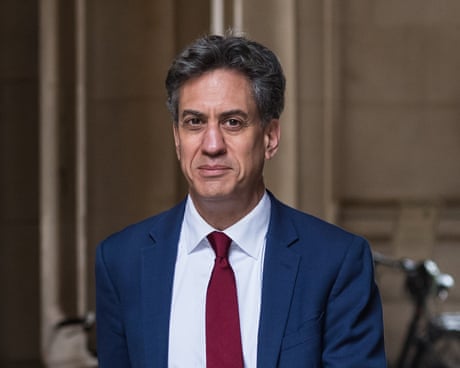
Ed Miliband has hailed a boost to UK jobs and growth as government data reveals that private sector companies have pledged more than £100bn in investment into the green economy so far in this parliament.
Offshore wind, solar power and the electricity grid make up the bulk of the planned investment, most of it between 2024 and 2031, which will go to all regions of the UK and comes from a mixture of UK companies and overseas sources including the EU and Japan.
Continue reading...
© Photograph: Anadolu/Getty Images
© Photograph: Anadolu/Getty Images

© Photograph: Anadolu/Getty Images
Najib Razak walked into Kajang Prison outside Kuala Lumpur on 23 August 2022, the first Malaysian prime minister ever to be jailed, after the Federal Court upheld a 12-year sentence and a 210 million ringgit fine tied to the looting of a state investment fund he himself had chaired. Investigators had traced roughly $681 million into his personal AmBank accounts, money that prosecutors said originated in 1Malaysia Development Berhad — better known as 1MDB — the sovereign wealth vehicle Najib launched in 2009 to develop the Malaysian economy.
The fund was supposed to build power plants and finance affordable housing. Instead it became the largest kleptocracy case the U.S. Department of Justice had ever pursued, with at least $4.5 billion siphoned through a daisy chain of shell companies, offshore banks, and a Hollywood film studio.
The story is partly about a politician. It is mostly about how a single bank account became the evidentiary spine of a global financial scandal.
Najib became prime minister of Malaysia in April 2009. Within months he had converted a Terengganu state investment outfit into 1MDB and installed himself as chair of its advisory board, with sign-off authority over major transactions. The pitch was ambitious — strategic infrastructure, partnerships with Gulf sovereign funds, a sovereign wealth approach modeled on Singapore’s Temasek.
Behind the brochures, something else was being built. Between 2009 and 2014, 1MDB raised more than $10 billion in bonds, much of it underwritten by Goldman Sachs, which collected close to $600 million in fees on three bond offerings — an extraordinary multiple of what a sovereign-linked deal would normally pay. Hong Kong regulators later fined Goldman $350 million for its role in the offerings.
Money flowed out of the fund almost as fast as it came in.
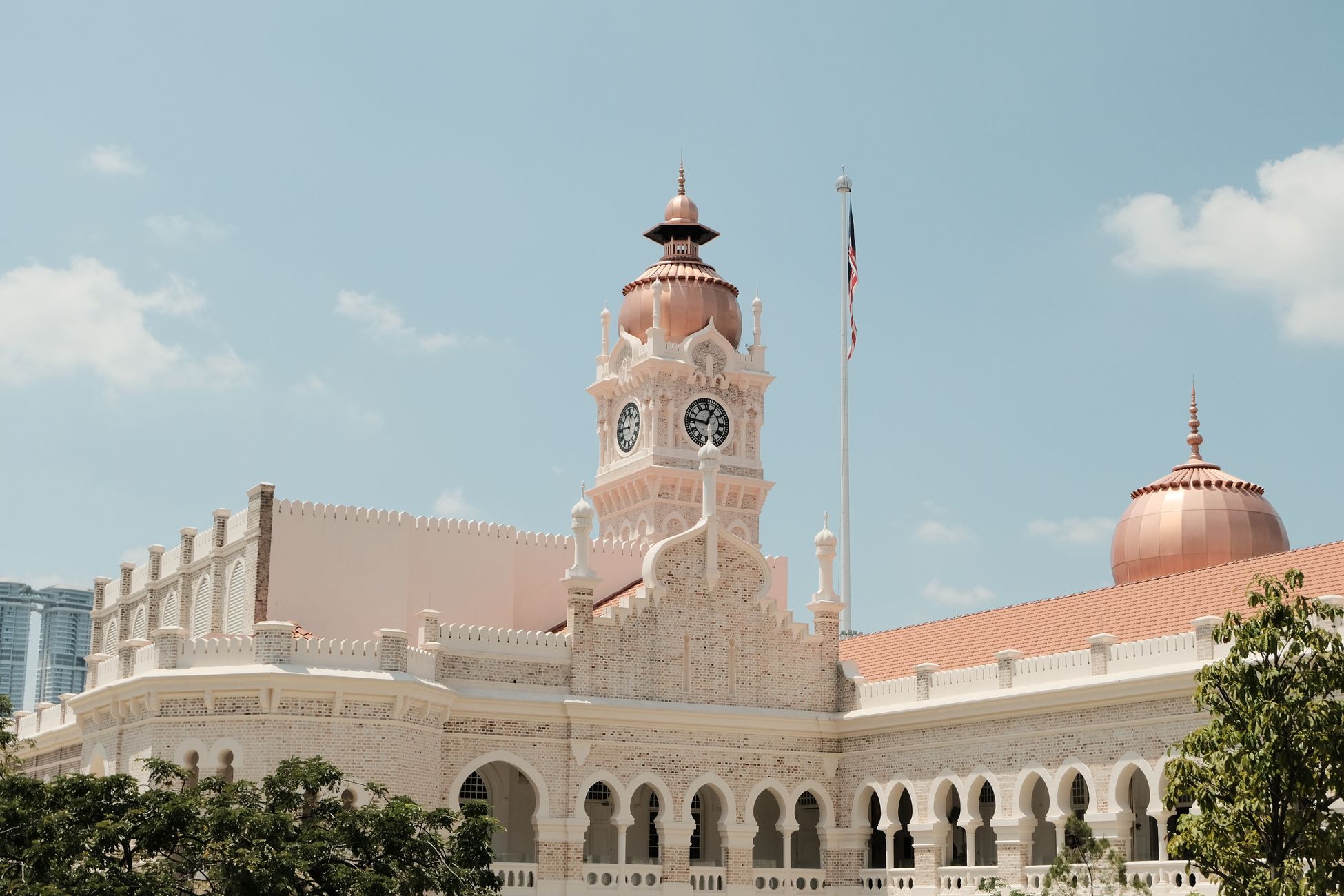
In March 2013, weeks before a general election, two transfers totaling roughly $681 million landed in Najib’s personal accounts at AmBank in Kuala Lumpur. The transfers came through Falcon Private Bank in Singapore, originating from a British Virgin Islands shell called Tanore Finance Corporation.
When the Wall Street Journal first reported the deposits in July 2015, Najib’s office did not deny the money had arrived. The official explanation, repeated for months, was that the funds were a personal donation from the Saudi royal family to support Malaysia’s fight against the Islamic State.
Saudi officials never publicly confirmed the gift. U.S. prosecutors later traced the money back not to Riyadh but to 1MDB itself, routed through a chain of accounts in Switzerland, Luxembourg, and Singapore designed to obscure its origin.
The architect of the scheme, according to filings by the U.S. Department of Justice and Malaysian prosecutors, was a Penang-born financier named Low Taek Jho, known as Jho Low. He held no official position at 1MDB. He carried no government title. But he moved between Najib’s inner circle, Abu Dhabi’s sovereign wealth funds, and Hollywood producers with a fluency that prosecutors described as the operational core of the fraud.
Low spent some of the diverted money on a $250 million superyacht called the Equanimity, on Picassos and Basquiats, on a stake in EMI Music Publishing, and on financing the 2013 film The Wolf of Wall Street through Red Granite Pictures — a company co-founded by Najib’s stepson Riza Aziz. The Department of Justice would later seek to claw back the film’s profits as proceeds of crime.
Low has been a fugitive since 2016. Malaysian authorities believe he is in China. He denies wrongdoing.
When Malaysian police raided properties linked to Najib and his wife Rosmah Mansor in May 2018, days after his shock election defeat to Mahathir Mohamad, the inventory read like an auction catalog. Officers seized 12,000 pieces of jewelry, 567 handbags including 272 Hermès Birkins, 423 watches, and 234 pairs of sunglasses. The total estimated value reached 1.1 billion ringgit, roughly $273 million at the time.
One pink diamond necklace alone was valued at $27 million.
The seizure became a visual shorthand for the case. Physical objects — handbags, watches, real estate — anchor abstract financial crimes in the public imagination in a way that SWIFT codes and shell-company structures never can. A spreadsheet doesn’t make the news. A wall of Birkins does.
The 12-year sentence Najib began serving in 2022 stems not from the full 1MDB case but from a smaller subsidiary called SRC International. Prosecutors proved that 42 million ringgit, about $10 million, flowed from SRC into Najib’s personal accounts between 2014 and 2015.
High Court judge Mohamad Nazlan Mohamad Ghazali convicted him on all seven charges in July 2020 — one count of abuse of power, three counts of criminal breach of trust, and three counts of money laundering. The Court of Appeal upheld the verdict in December 2021. The Federal Court, Malaysia’s highest, dismissed his final appeal on 23 August 2022.
He was driven from the courthouse straight to Kajang Prison the same afternoon.
The far larger 1MDB trial — the one dealing directly with the funds that flowed into his personal accounts — ran on for years afterward. On 26 December 2025, the Kuala Lumpur High Court convicted Najib on four counts of abuse of power and 21 counts of money laundering over more than $700 million channeled from 1MDB into his accounts, and sentenced him to a further 15 years in prison along with a fine of 11.4 billion ringgit — the new term to begin only after his current sentence ends. His lawyers filed an appeal against the conviction and sentence within days.
The U.S. Department of Justice filed civil forfeiture actions seeking to recover more than $1.7 billion in 1MDB-linked assets — paintings by Van Gogh and Monet, a Bombardier jet, penthouses in New York and London, the Equanimity yacht, and rights to The Wolf of Wall Street. By 2024, settlements and recoveries had returned more than $1 billion to Malaysia.
Switzerland, Singapore, and Luxembourg opened their own investigations. Falcon Private Bank lost its Singapore license. BSI Bank was shuttered. Several private bankers received prison sentences ranging from a few weeks to four and a half years.
Goldman Sachs settled with the U.S. government for $2.9 billion in 2020 — at the time the largest penalty ever paid under the Foreign Corrupt Practices Act. The bank’s Malaysia unit pleaded guilty. Two former Goldman bankers, Tim Leissner and Roger Ng, were convicted in connection with the scheme.
The legal turning point in the SRC case was not testimony or whistleblower documents. It was the bank account itself. Najib’s defense argued he believed the money in his AmBank accounts was a Saudi donation. The court rejected that defense partly because the volume of deposits, withdrawals, and transfers passing through the accounts — and the fact that they continued long after the supposed donation purpose had lapsed — was inconsistent with any innocent reading.
A prime minister with sign-off authority over a sovereign fund, receiving nine-figure sums from offshore shells into his personal account, then spending portions of that money on credit-card bills and political expenses, leaves a paper trail that even sympathetic judges cannot ignore.
The gradual normalization of small ethical breaches can make the larger ones feel routine to the people committing them. A donation here. A consulting fee there. A bank account that no one ever questions.
Najib is now an inmate at Kajang Prison, the same facility that once held opposition leader Anwar Ibrahim on charges Anwar maintained were politically motivated. The symmetry is not lost on Malaysians.
In February 2024, the Pardons Board chaired by then-king Sultan Abdullah halved Najib’s sentence to six years and reduced his fine from 210 million ringgit to 50 million. He then spent more than a year arguing that a royal addendum issued alongside the pardon entitled him to serve the rest of that term at home. In December 2025 the High Court ruled the addendum was not legally enforceable, and in April 2026 Najib withdrew his appeal against that decision, closing off the house-arrest bid.
The transition from high status to incarceration describes a particular kind of disorientation — not just the loss of liberty but the collapse of the deference structures that previously shaped every interaction. For a man who spent nine years as prime minister, addressed as Yang Amat Berhormat, the transition to a numbered uniform and a 6 a.m. roll call is its own kind of sentence.
Of all the figures in the 1MDB case — the $4.5 billion siphoned, the $2.9 billion Goldman penalty, the $1.7 billion in U.S. asset seizures, the 1.1 billion ringgit in jewelry — the one that keeps coming back is the original $681 million that arrived in a politician’s personal bank account in March 2013.
It is a small number compared to the total fraud. It is, by the reckoning of the prosecutors who built the case, among the largest sums ever traced into the personal account of a sitting head of government anywhere in the world.
The wire transfer took seconds. The reckoning took the better part of a decade to reach him. And with a second conviction now stacked on the first — under appeal, but handed down — the years Najib has left in Kajang to think about how it ever got that far stretch well beyond the sentence that first put him there.
The post Najib Razak, the Malaysian prime minister who chaired 1MDB, was jailed over the looting of the state fund — and the roughly $681 million that landed in his personal bank account became the evidentiary spine of a global financial scandal appeared first on Space Daily.

Miranda Kerr handed jewelry to the U.S. Department of Justice in 2017, including a heart-shaped pink diamond that had been given to her by Malaysian financier Jho Low, after federal investigators traced the gems to money allegedly siphoned from the Malaysian sovereign wealth fund 1MDB. The Australian model told prosecutors she had no idea the gifts were bought with stolen money and surrendered them voluntarily once the chain of custody was explained.
The heart-shaped pink diamond was reportedly purchased from New York jeweler Lorraine Schwartz. The rest of the haul Kerr returned — earrings, a pendant, a bracelet — pushed the total package toward what court filings described as a multimillion-dollar parcel of stones that had moved from Geneva safes to a model’s jewelry box to, finally, an evidence locker in Washington.
None of it would have been remarkable in the world of celebrity gifting if the money behind it had been clean. It wasn’t.
1Malaysia Development Berhad was a sovereign wealth fund set up by then–Prime Minister Najib Razak, ostensibly to drive long-term economic projects across Malaysia. U.S. prosecutors say billions of dollars were diverted out of the fund through a chain of shell companies, fake consulting fees, and forged bond documents.
The Department of Justice called it one of the largest kleptocracy cases it had ever brought. The money funded penthouses in Manhattan and London, a superyacht called the Equanimity, Picassos and Basquiats, and — improbably — much of the production budget for the 2013 Martin Scorsese film The Wolf of Wall Street, a movie about financial fraud.
At the center of the spending was Low Taek Jho, known as Jho Low, a young Penang-born financier with no formal title at 1MDB but enormous influence over how its money moved. He has denied wrongdoing and remains a fugitive, last reported to be living under Chinese protection.
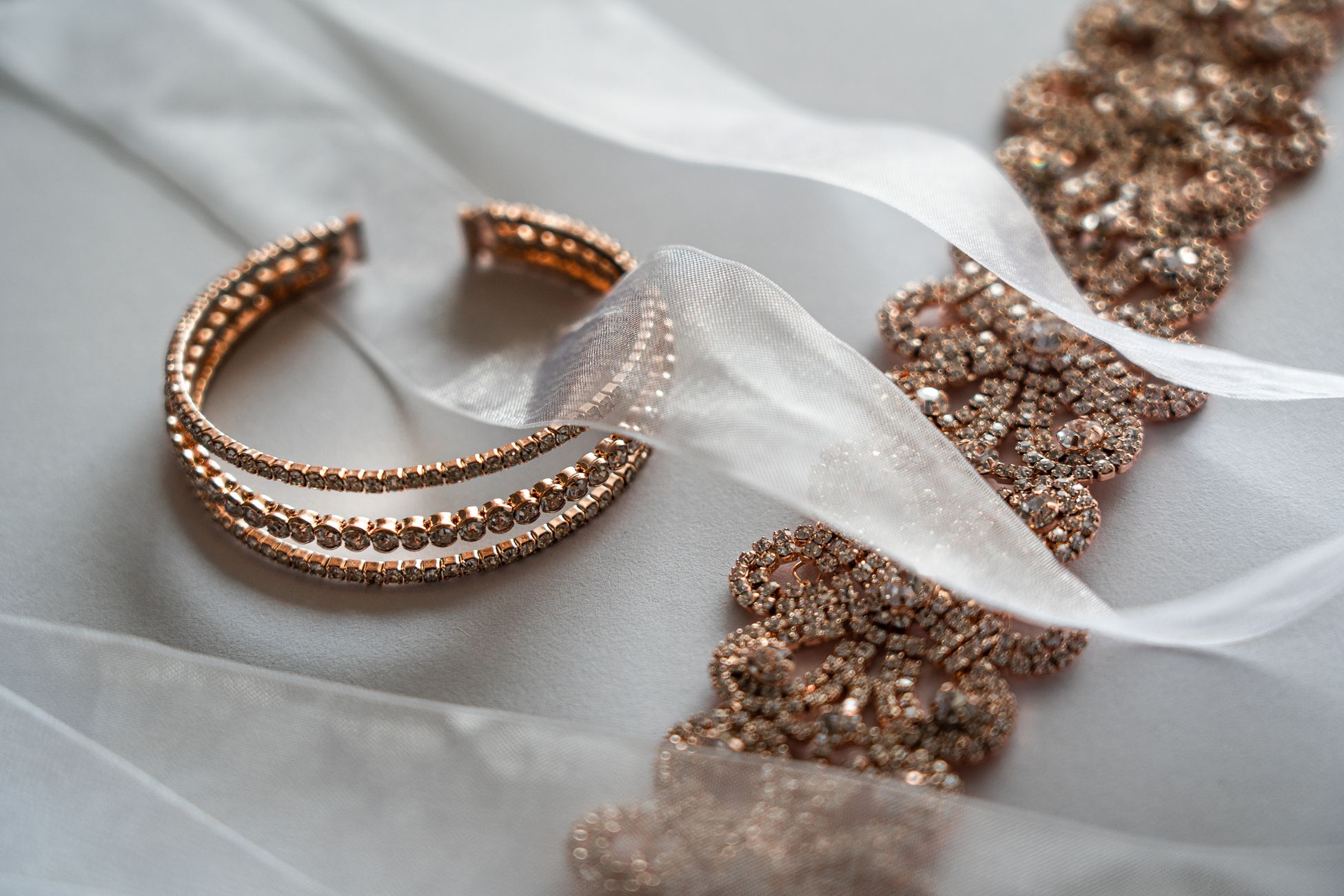
Kerr and Low met in the early 2010s. According to filings unsealed by the DOJ’s Kleptocracy Asset Recovery Initiative, Low gave her a series of high-end pieces from Lorraine Schwartz over several months — including earrings, a heart-shaped diamond pendant, and a diamond bracelet.
The heart-shaped pink diamond was the centerpiece. Pink diamonds of that size are vanishingly rare — the Argyle mine in Western Australia, which produced most of the world’s pink diamonds, shut down in 2020, and stones in the multi-carat range routinely sell for tens of millions at auction.
Kerr stopped seeing Low and married Snapchat co-founder Evan Spiegel in 2017. By the time the DOJ contacted her, the jewelry had been sitting in her possession for several years.
The unit that came knocking was a specialized DOJ team launched to chase stolen foreign-government funds parked in U.S. assets. Its method is unusual: rather than waiting to extradite a suspect, it files civil forfeiture suits against the assets themselves — a yacht, a painting, an apartment, a diamond — and lets the property owner contest the claim.
That structure is why Kerr’s name appeared in court documents at all. The jewelry, not the model, was the legal defendant. Returning the pieces removed her from the proceeding entirely.
Actor Leonardo DiCaprio, who starred in The Wolf of Wall Street and had also received gifts from Low, separately handed over items including artwork. Both Kerr and DiCaprio cooperated; neither was accused of any wrongdoing.
The phrase voluntary disclosure carries specific legal weight in U.S. white-collar practice. Federal prosecutors offer reduced penalties — sometimes full non-prosecution — to individuals and companies that hand over assets or information before being formally charged. The IRS runs its own version, and recent reporting suggests the agency is trying to revive its Voluntary Disclosure Practice after years of low participation.
The Southern District of New York, which has handled many of the largest financial-crime cases of the past decade, recently formalized its own framework. In February 2026, SDNY announced a new corporate enforcement and voluntary self-disclosure program aimed at companies that come forward early with evidence of misconduct.
The Commodity Futures Trading Commission followed in May with a similar cooperation policy for commodities-market participants. The pattern is consistent across agencies: hand things over fast, and the penalty curve bends.
Kerr’s surrender of the jewelry in 2017 was the celebrity-shaped version of the same move.
The DOJ sold the returned 1MDB assets — including the Kerr jewelry, DiCaprio’s artwork, real estate in Beverly Hills and Manhattan, and the seized superyacht — and repatriated the proceeds to Malaysia. By the most recent DOJ accounting, substantial sums have been returned to the Malaysian government in what represents one of the largest civil-forfeiture recoveries in U.S. history.
The pink heart-shaped diamond was auctioned privately. Its current whereabouts are not public.
The Equanimity, the superyacht Low commissioned, was seized by Indonesian authorities at the DOJ’s request and sold to Malaysian casino operator Genting. It now sails under the name Tranquility.
Najib Razak, the former prime minister at the center of the scheme, was voted out of office in 2018 after nearly a decade in power — an election upset driven in large part by public anger over 1MDB. He was convicted in 2020 on multiple charges including criminal breach of trust, abuse of power, and money laundering, and sentenced to prison.
Najib has continued to deny knowing the money was stolen, insisting Jho Low misled him. In 2024, his sentence was reduced by Malaysia’s pardons board, a decision that drew significant domestic criticism.
Goldman Sachs, which underwrote bond issuances for 1MDB, paid billions of dollars in settlements to the Malaysian government and pleaded guilty in 2020 to violating the Foreign Corrupt Practices Act. Its Malaysian subsidiary pleaded guilty to conspiracy to bribe foreign officials.
1MDB has become a kind of teaching case for bank compliance teams, partly because the money moved through so many supposedly well-monitored institutions before reaching jewelers, art dealers, and yacht brokers. Modern anti–money-laundering programs lean heavily on transaction monitoring, beneficial-ownership checks, and what compliance specialists call enhanced due diligence on politically exposed persons.
The next phase, industry analysts argue, will be heavier use of AI for pattern detection. A recent Compliance Week piece describing how banks will stay ahead of financial crime in 2026 argues that real-time analytics and behavioral models are replacing the old rules-based screens that 1MDB-era transactions slipped through.
That shift creates its own problem: opaque models that flag transactions without showing their work. Financial regulators have started pressing institutions to use systems that can explain a decision in human-readable terms, a push that one Forbes Technology Council piece frames as the need for transparent, trustworthy AI in financial decision-making.
Low himself has never been arrested. U.S. prosecutors indicted him on money-laundering and bribery charges. Malaysia and Singapore have also issued warrants. He is widely reported to be living in Shanghai or Macau, and a 2019 Wall Street Journal book co-authored by reporters Tom Wright and Bradley Hope, Billion Dollar Whale, documented his attempts to maintain a luxury lifestyle in transit between safe jurisdictions.
In 2019, he agreed to a civil settlement with the DOJ to forfeit hundreds of millions of dollars in assets — without admitting wrongdoing — including a Bombardier jet, a Beverly Hills hotel stake, and various real estate parcels.
Kerr’s handover is, in dollar terms, a rounding error against the billions the DOJ traced. The heart-shaped diamond was one of thousands of objects that money bought before it was caught.
What it captures is the geometry of modern financial crime — stolen sovereign wealth becoming a stone, the stone becoming a gift, the gift becoming evidence, the evidence becoming a wire transfer back to the country it came from. The diamond moved through Geneva, New York, Los Angeles, and Washington before its proceeds settled, eventually, back in Kuala Lumpur.
Somewhere it is being worn again, by someone who probably doesn’t know where it has been.
The post Model Miranda Kerr returned roughly $8 million in jewelry — including a heart-shaped pink diamond — to U.S. investigators tracing gifts allegedly bought with stolen 1MDB cash appeared first on Space Daily.
Andy Burnham has won Makerfield – and the bond market is watching closely. Gilt yields surged when his name was first floated as leader, and they have already climbed even higher as he closes in on Number 10.
The post Andy Burnham vs the Bond Market appeared first on The Daily Sceptic.
Top 10% generate climate and biodiversity damage bill that exceeds economies of most countries, say researchers
The environmental damage bill racked up by the highest-consuming 10% of the world’s population has reached up to $5.7tn a year – larger than the economy of every country except the US and China, a study has found.
Mega-consumers in this group are concentrated in the global north, accounting for more than half the population of the US and 40-45% of people in the EU.
Continue reading...
© Photograph: Francis R Malasig/EPA

© Photograph: Francis R Malasig/EPA

© Photograph: Francis R Malasig/EPA

© Vincent Alban/The New York Times

Humans have always gazed up at the moon in wonder. A generation ago, NASA astronauts did the extraordinary and touched down on its surface, planting an American flag and igniting […]
The post America’s next economic frontier is 240,000 miles away appeared first on SpaceNews.

© Jenny Kane/Associated Press
Assistant minister agrees concerns over resource usage are legitimate but argues Australia cannot ignore ‘consequential’ economic wave
Get our breaking news email, free app or daily news podcast
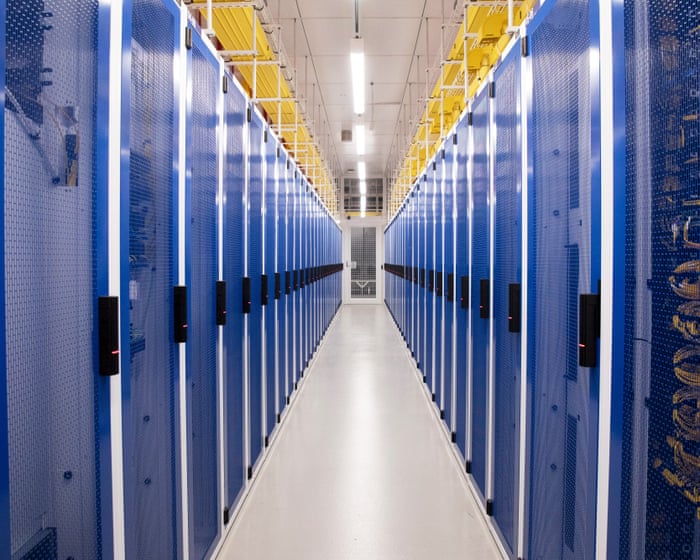
Australia should learn from the mistakes of the resources boom and set the terms for the AI and datacentres boom, the assistant minister for the digital economy, Andrew Charlton says.
Growth in datacentres has exploded in the past two years, Charlton told the Sydney Institute on Wednesday night, with 44 projects in the pipeline in New South Wales alone seeking 11GW of capacity on the electricity grid.
Continue reading...
© Photograph: Bloomberg/Getty Images
© Photograph: Bloomberg/Getty Images
© Photograph: Bloomberg/Getty Images

Across the stories today, a common thread emerges: the growing gap between urgent environmental realities and the systems—political, economic, and social—struggling to keep pace with change.
This tension plays out most starkly in the realm of climate health impacts. New research warns that heat-related hospitalizations could double by 2040, while a super El Niño threatens to deepen global economic inequality through cascading climate disruptions. Behind the numbers are real communities adapting in real time. In Pacoima, a working-class Los Angeles neighborhood sandwiched between highways and heavy industry, residents like Jose Luis Salas are mounting their own defense against air pollution, installing shoebox-sized monitoring devices that track what they breathe daily.
Yet the day’s coverage also points to growing momentum around practical solutions gaining real traction. Solar energy quietly surpassed coal in U.S. electricity generation for the first time this May—a milestone that arrived not through grand announcements but through the steady accumulation of rooftop panels and utility-scale installations. Britain cleared a major bottleneck by offering grid connections to over 700 clean energy projects, while new data reveals the country’s green economy now employs over one million workers across a £100 billion sector.
The stories reveal how environmental challenges are increasingly driving innovation at the community level. In Guatemala’s Western Highlands, approximately 60 communities are reviving ancient Maya agricultural wisdom, creating homemade biopesticides from aromatic plants to replace expensive chemical alternatives. Similarly, 120 women farmers in Malawi’s Chiradzulu district have transformed traditional maize cultivation by adding organic fruits and vegetables now in high demand from urban buyers—though their success is shadowed by a troubling reality: their bees, crucial pollinators for food security, are mysteriously disappearing.
It’s a reminder that progress and pressure often arrive together. Colombia enacted groundbreaking legislation requiring detailed cattle tracking to prevent deforestation-linked beef from reaching markets, while Indonesia’s magnificent hornbills face accelerating threats from both habitat loss and an illegal online pet trade. The contrast illustrates how conservation gains in one area can be undermined by emerging threats in another.
Perhaps most telling is how wealth continues to complicate climate action. New research from Greenpeace reveals that the ultra-rich drive a quarter of global emissions not through private jets—their visible symbols of excess—but through their investment portfolios and asset ownership. Meanwhile, chemical companies are quietly pushing “immunity laws” across 15 states to shield themselves from health-related lawsuits, even as communities bear the costs of environmental damage.
The space program offers its own metaphor for these broader tensions. NASA’s latest astronaut selections for Artemis missions reflect both ambition and limitation—crews training for missions that won’t reach the Moon, while hundreds of women gathered at the AeroWomen conference to prepare for space careers in an industry still taking shape.
As the week unfolds, all eyes will be on whether these parallel tracks—accelerating environmental pressures and emerging solutions—can converge into the systemic changes scientists say are necessary. Today’s stories suggest we’re living through a period when local innovation and global challenges are both intensifying, creating opportunities for breakthrough and breakdown in equal measure.
The post Rare African Bird Makes Historic UK Debut While Communities Transform Lawns Into Wildlife Havens — Today’s Environmental Briefing for Wed, Jun 10 2026 first appeared on EnviroLink Network.
Mariana Mazzucato’s new book setting out the case for ‘managed capitalism’ fails to address the risks of government over-reach identified by Friedrich Hayek (who isn’t even in the index), says Dr Tilak Doshi.
The post Mariana Mazzucato’s Latest Plea For Do-Gooders and Busybodies to Have Even More Influence Over the Economy is Predictably Unpersuasive (Unless You’re Ed Miliband) appeared first on The Daily Sceptic.


© Loren Elliott for The New York Times
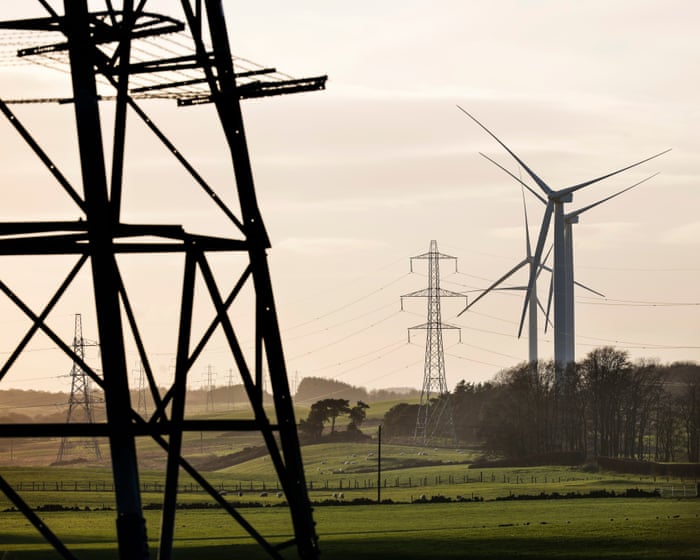
Regulator could do us all a favour with clear multi-year forecasts and breakdowns of electricity pricing
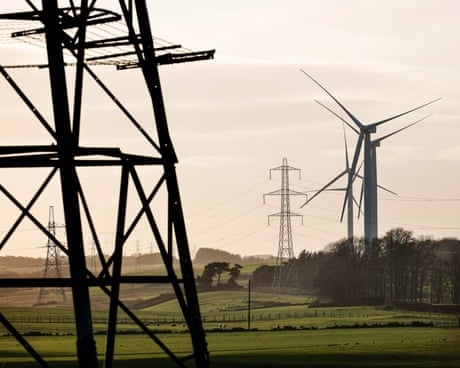
It is easy to predict where the energy regulator will set the next quarterly price cap on Wednesday. It’s just a matter of tracking wholesale prices in Ofgem’s relevant backward-looking “observation period”. Energy consultant Cornwall Insight thinks the typical household bill be £1,850, an increase of £209 from the previous quarter. It will be surprising if it is out by more than a few quid.
One can also make a fair guess at the regulator’s messaging. It will talk about the unavoidable impact from the surge in energy prices that followed the closure of the strait of Hormuz. It may also say the increase would be even greater than 13% without the additional wind and solar generation on the system these days. Fair enough. Gas sets the wholesale price of electricity only 60% of the time now, down from 90% not long ago.
Continue reading...
© Photograph: Murdo MacLeod/The Guardian
© Photograph: Murdo MacLeod/The Guardian
© Photograph: Murdo MacLeod/The Guardian
