❌

Reading view

Hanwha Ocean Signs Joint Design Agreement for US Strategic Sealift Vessel
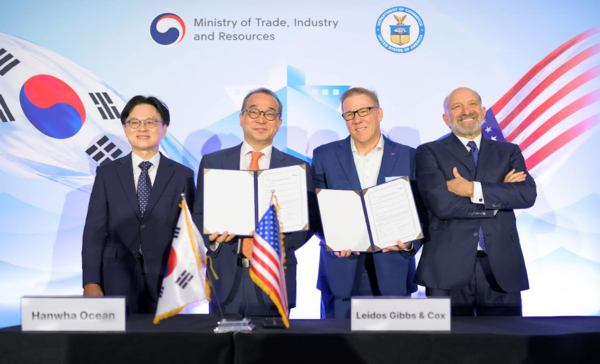
(From left) Kim Jung-kwan, Minister of Trade, Industry and Resources; Jeong In-seob, president and head of Management Support at Hanwha Ocean; Mike Rickels, vice president of Leidos Gibbs & Cox; and Howard Lutnick, US Secretary of Commerce.

Hanwha Ocean has signed a joint design agreement with a US naval architecture firm to develop the Fast Sealift vessel, expanding its collaboration with the US shipbuilding industry beyond ship construction to design, workforce development and supply chain initiatives.

The company announced on July 24 that it signed one professional services agreement for the joint design of a global strategic sealift vessel and two memoranda of understanding (MOUs) covering shipbuilding workforce development and supply chain cooperation during the opening ceremony of the Korea-US Shipbuilding Cooperation Center in Washington, D.C. on July 23.

Hanwha Ocean signed the professional services agreement with Leidos Gibbs & Cox, a US naval architecture company, to jointly design the strategic sealift vessel. The agreement expands the partnership beyond the memorandum of understanding signed in April, which focused on strengthening shipbuilding capabilities for the US Navy and allied naval forces, into the joint design phase.

A Fast Sealift vessel is a dual-use platform that operates as a commercial cargo ship during peacetime and can rapidly transport military equipment and supplies during emergencies.

The companies plan to combine Hanwha Ocean's naval shipbuilding expertise with the design capabilities of Leidos Gibbs & Cox to pursue opportunities in both the US and global naval vessel markets. Gibbs & Cox has designed more than 70% of the US Navy's surface combatants built since World War II.

Hanwha Ocean also signed an MOU with Hanwha Philly Shipyard and Delaware County Community College to cooperate on shipbuilding education and workforce development. Under the agreement, the partners will develop instructor training programs for US shipbuilding workers and help expand the pool of skilled labor.

"We will expand cooperation in the areas the United States needs most by leveraging our local production base and play a central role in the MASGA project," said Jeong In-seob, president and head of Management Support at Hanwha Ocean.
  •  

LIG D&A, Babcock Sign Strategic Cooperation Agreement at Farnborough Airshow 2026

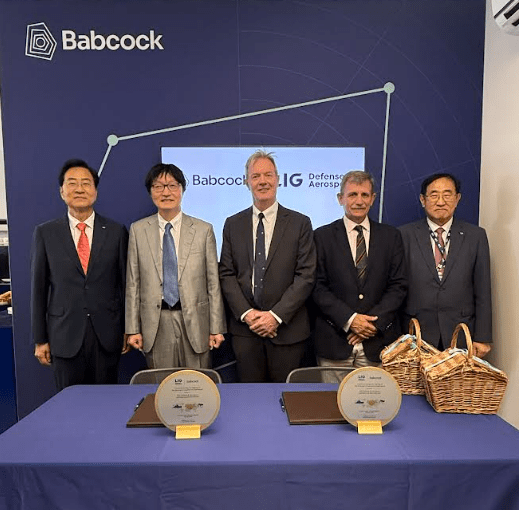
Officials from LIG D&A and Babcock pose for a commemorative photo after signing a strategic cooperation agreement. (Photo = LIG D&A)

LIG Defense & Aerospace (LIG D&A) is expanding cooperation with UK defense contractor Babcock International in next-generation defense sectors, including launch vehicles, precision-guided munitions (PGM), frigates, and unmanned systems.

LIG D&A announced on July 23, 2026, that it signed a Strategic Cooperation Agreement (SCA) with Babcock at the Farnborough International Airshow 2026 held in the United Kingdom.

Under the agreement, the two companies will integrate their global supply chains and pursue the joint development of an AH-140 (Arrowhead 140) frigate platform equipped with LIG D&A systems. The AH-140 is an export-oriented naval platform developed by Babcock based on the Royal Navy’s Type 31 frigate.

The companies will also jointly develop launch vehicles and PGMs while establishing a full life-cycle support system covering maintenance, repair, and overhaul (MRO) and capability upgrades. In addition, collaboration will expand into robotics and autonomous unmanned systems.

“This agreement will serve as an opportunity to secure new competitiveness in the global market,” said Lee Hyun-soo, head of LIG D&A’s Global Business Division. “We will continue to expand our partnership to provide integrated maritime defense solutions.”

  •  

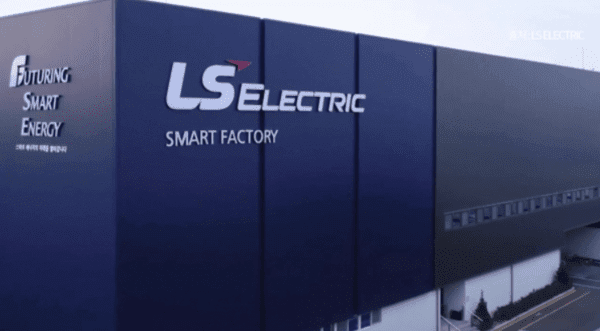
​LS Electric Posts Record Q2 Earnings as Order Backlog Reaches KRW 7 Trillion

LS Electric Co. posted record quarterly revenue and operating profit for the second quarter of 2026.

​The company said in a regulatory filing on July 23 that it reported consolidated revenue of KRW 1.577 trillion and operating profit of KRW 178.5 billion for the second quarter. The figures increased 32.2% and 64.4%, respectively, from a year earlier.

​New orders totaled approximately KRW 2.1 trillion, while the company's order backlog rose by about KRW 1.4 trillion from the previous quarter to KRW 7 trillion.

​Growth was driven by its data center power distribution business and extra-high-voltage (EHV) transformer business. Demand for power distribution solutions increased as investments in artificial intelligence (AI) data centers and electric power grids accelerated. Shipments of EHV transformers also expanded, particularly in North America.

​Second-quarter revenue from EHV transformers climbed 91.2% from a year earlier. Revenue at subsidiary LS Power Solution increased 39%, while North American revenue reached approximately KRW 400 billion, marking a record high on a quarterly basis.

​LS Electric said it plans to expand investment in its manufacturing bases in Utah and Texas to increase local production capacity and further strengthen its presence in the North American market.

  •  

​Hanwha Vision's 4 AI CCTV Models Obtain South Korea's NIS Security Certification

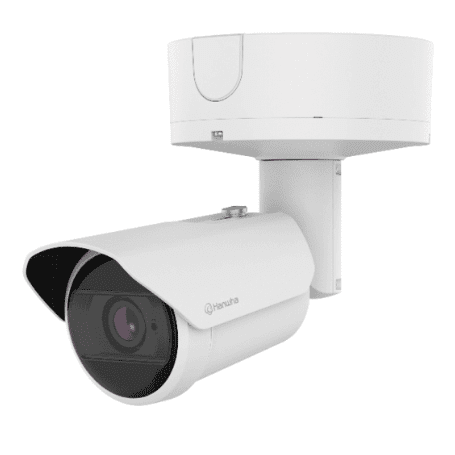
Hanwha Vision's flagship PNO-A9082RK AI CCTV camera model.

Hanwha Vision Co. has obtained South Korea's National Intelligence Service (NIS) security certification for four artificial intelligence (AI) CCTV models, securing a key qualification required to supply products to public-sector organizations and expanding its presence in the government video surveillance market.

​Hanwha Vision said on July 23 that four models in its flagship P Series AI 4K camera lineup received the NIS Security Function Verification Certificate last month. The certified products include Box, Dome, Bullet, and Vandal camera models.

​The Security Function Verification Certificate is a mandatory security qualification for products supplied to public institutions in South Korea. Products must meet NIS security standards covering data protection, software security, and access control.

​Hanwha Vision said it applied government-designated encryption technology throughout the image generation, transmission, and storage processes. The cameras also incorporate security features designed to prevent image tampering and respond to storage device theft.

​The company plans to launch 14 additional products in the second half of this year to expand its supply to the public-sector market.

​"Hanwha Vision will continue investing in AI CCTV product development and strengthening its security technology capabilities," a company representative said.

  •  

Government Approves Lotte, Hanwha and DL's Yeosu Petrochemical Restructuring

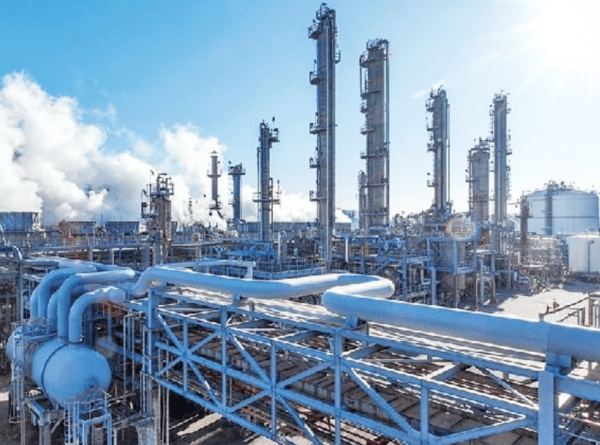
Yeochun NCC's Yeosu No. 2 complex. (Photo: Yeochun NCC)

South Korea has approved a major restructuring plan involving Lotte Chemical, Hanwha Solutions and DL Chemical, clearing the way for the integration of their petrochemical operations in Yeosu. The move marks the country's second government-approved restructuring of the domestic petrochemical industry, aimed at reducing oversupply and shifting production toward higher-value products.

On July 22, the Ministry of Trade, Industry and Resources approved the business restructuring plan jointly submitted by Lotte Chemical, Hanwha Solutions, DL Chemical and Yeochun NCC. The companies filed the application in March under the Corporate Vitality Improvement Act, which provides government support for corporate restructuring.

The plan calls for Lotte Chemical to spin off its Yeosu petrochemical complex before merging the new entity with Yeochun NCC, the naphtha cracking joint venture between Hanwha Solutions and DL Chemical. The resulting integrated company will be jointly operated by Lotte Chemical, Hanwha Solutions and DL Chemical.

As part of the restructuring, Yeochun NCC's No. 2 plant will be shut down, while No. 1 plant will be integrated with Lotte Chemical's Yeosu facility. The companies expect the move to reduce annual ethylene production capacity by approximately 1.4 million metric tons, helping alleviate oversupply in South Korea's petrochemical industry.

The integrated company also plans to consolidate the partners' competitive downstream businesses and shift its portfolio toward higher-value products, including low-density polyethylene (LDPE) for medical applications and polyolefin elastomers (POE) used in automobiles and power cables.

The approval follows the government's endorsement of the Daesan Industrial Complex restructuring in February, making it the second petrochemical restructuring project approved this year. The government said it will support the restructuring through financial assistance, tax incentives and regulatory approvals.

  •  

LS Marine Solution Completes Upgrade of GL2030 Cable-Laying Vessel

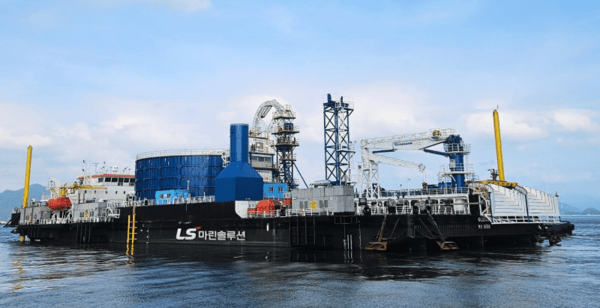
LS Marine Solution's submarine cable-laying vessel GL2030.

LS Marine Solution, a subsidiary of LS Cable & System, has completed a major upgrade of its cable-laying vessel GL2030, significantly increasing its cable carrying capacity to strengthen its competitiveness in large-scale offshore wind and high-voltage direct current (HVDC) transmission projects.

The company announced on July 22 that it has increased the vessel's submarine cable carrying capacity from 4,000 metric tons to 7,000 metric tons.

The upgrade enables the GL2030 to install submarine cables over distances exceeding 100 kilometers in a single continuous operation, reducing the number of voyages required for a project and lowering both construction time and costs.

LS Marine Solution expects demand for submarine power and telecommunications cable installation to increase as South Korea expands offshore wind generation, advances the West Coast HVDC transmission project and invests in new international submarine communications networks.

The company plans to deploy the GL2030 primarily for coastal projects while assigning its 13,000-ton next-generation cable-laying vessel, currently under construction, to long-distance and large-capacity projects, further expanding its offshore construction capabilities.

"We will expand our participation in domestic power grid projects, including the West Coast HVDC Energy Highway, while strengthening our presence in the US and European markets," an LS Marine Solution official said.

  •  

Hanwha Aerospace Raises $500 Million in First Overseas Public Bond Offering

Hanwha Aerospace has completed a $500 million US dollar-denominated public bond offering, becoming the first South Korean defense and aerospace company to issue an overseas public bond.

The company announced on July 21 that it had finalized the issuance of $500 million in fixed-rate notes with a three-year maturity.

The bond offering attracted approximately $3.3 billion in orders from investors across Europe and Asia, representing demand of roughly seven times the issuance size.

In June 2026, S&P Global Ratings assigned Hanwha Aerospace a long-term issuer credit rating of A-, making it the first South Korean defense and aerospace company to receive an A-range long-term rating from the global credit rating agency.

Hanwha Aerospace said it plans to use the proceeds from the bond issuance for working capital and the repayment of existing debt.

The transaction was jointly arranged by Citigroup Global Markets, Crédit Agricole CIB, and UBS.

"We successfully completed our inaugural overseas public bond offering with strong interest from international investors," a Hanwha Aerospace official said. "Supported by a stable funding base, we will continue strengthening our competitiveness in global markets."

  •  

Hanwha Launches Financing Program for Defense and Shipbuilding Suppliers

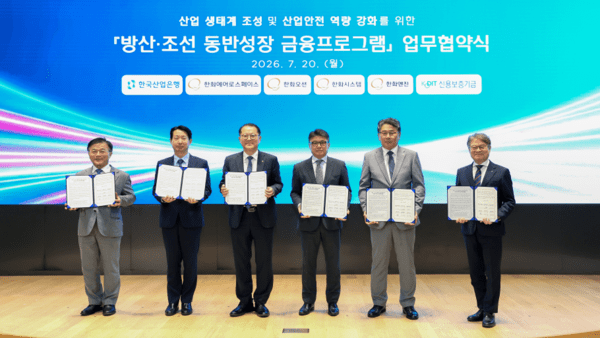
From left: Park Sang-jin, chairman of the Korea Development Bank; Moon Ji-hoon, executive vice president of Hanwha Aerospace; Kim Hee-cheul, chief executive officer of Hanwha Ocean; Kim Jong-seo, chief executive officer of Hanwha Engine; Kwak Jong-woo, executive vice president of Hanwha Systems; and Kang Seung-jun, chairman of the Korea Credit Guarantee Fund.

Hanwha has partnered with the Korea Development Bank (KDB) and the Korea Credit Guarantee Fund (KODIT) to provide financing support for facility investments by suppliers in the defense and shipbuilding industries.

The company announced on July 20 that it signed a memorandum of understanding on a shared-growth financing program with KDB and KODIT at KDB's headquarters in Yeouido, Seoul.

The program will support small and mid-sized suppliers of four Hanwha affiliates: Hanwha Aerospace, Hanwha Ocean, Hanwha Systems and Hanwha Engine.

Under the agreement, the Hanwha affiliates will contribute funds to KODIT and recommend eligible suppliers. KODIT will provide preferential credit guarantees to those companies, while KDB will extend facility investment loans backed by the guarantees.

The financing will enable participating suppliers to fund investments such as expanding production equipment and building new manufacturing facilities. Hanwha said it will identify suppliers requiring financial support and assist them throughout the financing process.

"We will identify suppliers that need facility investment and help them make full use of this financing program," said Kim Hee-cheul, chief executive officer of Hanwha Ocean.

  •  

KAI, Airbus Helicopters Expand Next-Generation Rotorcraft Partnership

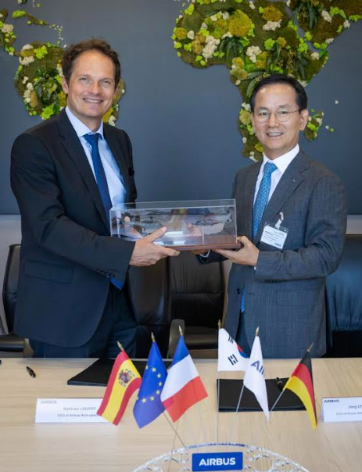
From left: Matthieu Louvot, chief executive officer of Airbus Helicopters, and Kim Jong-chul, chief executive officer of Korea Aerospace Industries (KAI).

Korea Aerospace Industries (KAI) has agreed with Airbus Helicopters to expand cooperation on next-generation rotorcraft technologies.

KAI announced on July 20 that it signed a joint statement with Airbus Helicopters at the company's headquarters in Marignane, France, to strengthen collaboration in the rotorcraft business.

The two companies have worked together in the rotorcraft sector for nearly two decades, beginning with the development of the KUH-1 Surion in 2006. Their cooperation later expanded to the development of the Light Armed Helicopter (LAH) Miron, and they are currently collaborating on the Marine Attack Helicopter (MAH) program.

Under the new agreement, the companies will strengthen technical support and parts supply systems to ensure the stable operation of the Surion and Miron helicopter fleets. The initiative is intended to improve supply chain resilience, increase aircraft availability and enhance maintenance efficiency.

The partnership will also expand into next-generation rotorcraft technologies. KAI and Airbus Helicopters will jointly explore technology development and business opportunities related to manned-unmanned teaming (MUM-T) and unmanned aircraft systems (UAS) to address future battlefield requirements.

"Airbus Helicopters has been our key partner over the past 20 years in the development of the Surion and Miron helicopters," said Kim Jong-chul, chief executive officer of KAI. "We will further expand our cooperation in future technologies, including AI-based manned-unmanned teaming systems."

  •  
❌