
❌

Reading view

Earth’s Earliest Animals May Have Thrived Too Easily to Evolve
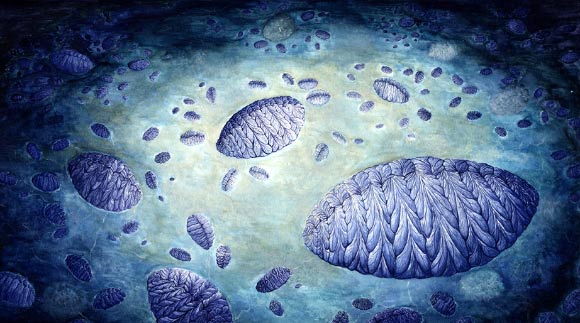
Artist’s reconstruction of the Fractofusus community: the bottom right features a large Fractofusus around which there are 5 to 8 medium specimens clustered; each of the medium specimens also has small specimens clustered around them; the small specimens therefore form an independent double cluster pattern, namely clusters of clusters. Image credit: C.G. Kenchington.

Fossils from some of the oldest-known animals on Earth, dating from 574 million years ago (Ediacaran period), suggest that cloning, not competition, dominated the Ediacaran seas, slowing evolution until environmental stress helped drive the rise of sexual reproduction and a burst of biodiversity.

The post Earth’s Earliest Animals May Have Thrived Too Easily to Evolve appeared first on Sci.News: Breaking Science News.
  •  

490-Million-Year-Old Arthropod Fossil Fills Puzzling Gap in Fossil Record

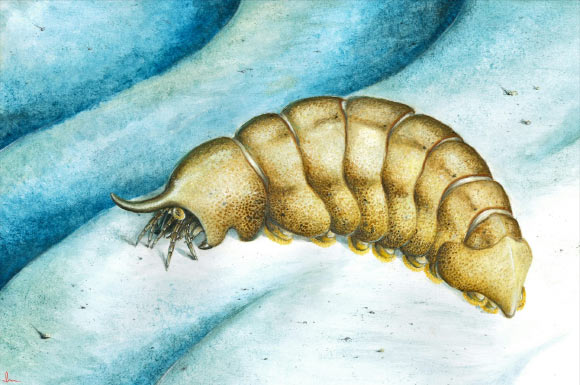
Life reconstruction of Magnicornaspis garwoodi. Image credit: Thomas Turner.

A new species of corcoraniid arthropod that lived during the Furongian epoch, between 497 and 487 million years ago, has been identified from an exceptionally preserved specimen found near QuΓ©bec, Canada.

The post 490-Million-Year-Old Arthropod Fossil Fills Puzzling Gap in Fossil Record appeared first on Sci.News: Breaking Science News.

  •  
❌