❌

Reading view

Two 40,000-Year-Old Ivory Bird Figurines Discovered in Hohle Fels Cave, the Smallest Sculptures Found to Date at the Famous Site

Excavations carried out during 2025 in the Hohle Fels cave, located in the UNESCO World Heritage area of the Swabian Jura in southwest Germany, have yielded two new discoveries of extraordinary importance for understanding Paleolithic art. These are two representations of birds carved in mammoth ivory that are 40,000 years old and, due to their […]

  •  

Should Travelers Give Up on Summer in Western Europe Because of the Heat?

A favorite vacation option may be at risk because of rising temperatures. Even those sticking with their summer plans agree: More air conditioning would help.
  •  

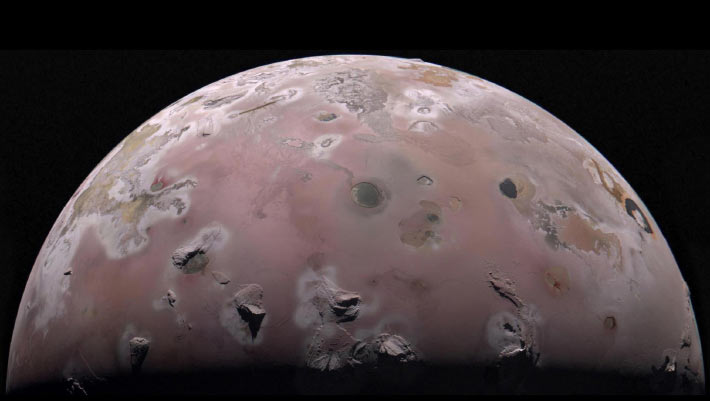
Juno’s Microwave Vision Peers beneath Surface of Jupiter’s Volcanic Moon Io

The north polar region of Io was captured by NASA’s Juno spacecraft on December 30, 2023. Image credit: NASA / JPL-Caltech / SwRI / MSSS / Gerald Eichstädt.

New data from NASA’s Juno spacecraft show temperatures spike more than 20 degrees Celsius just a few meters under Io’s surface, providing the first look at what’s happening below the crust of the Solar System’s most volcanic world.

The post Juno’s Microwave Vision Peers beneath Surface of Jupiter’s Volcanic Moon Io appeared first on Sci.News: Breaking Science News.

  •  

New Research Reveals How Traveling Brain Waves Allow Us to Predict, Reconstruct, and Perceive the World

Scientists from the Salk Institute have determined that brain waves in the visual cortex serve as a computational engine, allowing the brain to construct internal representations of the external world that enhance prediction, reconstruction, and perception capabilities.

While the scientists behind the new study focused their work on the visual cortex, they suspect that similar brain waves washing over other areas of the brain’s surface likely serve a similar role for other sensory systems.

Unraveling the Role of Traveling Brain Waves in the Visual Cortex

The human brain uses electricity to communicate between synapses. Research has shown that this electrical activity can travel in waves across the brain’s surface. Called neural traveling waves, the phenomenon’s role in brain function and consciousness is not completely understood.

Previous studies have established that traveling brain waves play a significant role in behavior and attention. In 2020, Salk neuroscientist John Reynolds, PhD, successfully identified traveling brain waves in the visual systems of animals during a wakeful state.

According to a statement from Reynolds, the senior and co-corresponding author on the new paper, and colleagues, the 2020 research effort also found a direct correlation between traveling brain waves in the visual cortex and an animal’s ability to perceive objects directly in front of them. The authors suggest this discovery explained the “classic conundrum” of searching for something like a pair of keys or a phone that was right in front of you the whole time.

Although the connection between traveling brain waves and an awake animal’s ability to perceive objects seemed solid, Reynolds said he was left wondering why. 

Process is Analogous to LLM’s Like ChatGPT

In their newly proposed theory, Reynolds and colleagues suggest that traveling brain waves are not simply “electrical noise” resulting from the brain’s normal relaying of signals. Instead, the Salk Institute team proposes that the neural connections responsible for the generation of traveling brain waves change their physiological structure, or “synaptic weights,” to more accurately reflect the outside world.

“Each sight, smell, sound, and action of an animal alters the connections that generate these waves, building the neural circuitry that the brain uses to construct an internal representation of the external world,” the team’s statement explains.

In the visual cortex, the part of the brain responsible for receiving and processing visual information, the team proposed that traveling brain waves perform four distinct functions. These include modulating visual perception from moment to moment and turning recent visual sensory inputs into “internal representations” of objects, people, and surroundings.

The team proposes that traveling brain waves also help humans generate short-term predictions about their surroundings, and “store and replay patterns that represent memories of events unfolding in time.” Reynolds said the process laid out by his team is analogous to how ChatGPT and other LLMs translate and interpret data.

“They learn statistical structure from language and use that knowledge to generate meaningful and appropriately structured text that reflects the patterns of language,” the researcher explained. “The brain may be doing something functionally similar—a biological generative model built from the ground up by experience.”

“One Step Closer” to Understanding How Our Brains Compute the World

When detailing the potential impact of their proposed role for traveling brain waves in the visual cortex, the team highlights the contrast between a rich and complex world and its general predictability.

“Objects around you exist in 3D space, you see the world in retinal images that change with your eye and body movements, and the laws of physics and physiology overlay this all,” they explain.

Reynold’s team says that traveling brain waves are merely the brain’s way of internalizing these predictable “regularities” and encoding them in its synapse network. If correct, they said that this encoding would allow the brain to “infer the likely causes of sensory input and construct an internal model of the world.”

“This framing brings us one step closer to understanding how our brains compute the busy, messy world around us, turning a complicated sensory onslaught into behaviors and experiences,” they conclude.

The study “Neural traveling waves in cortex: network mechanisms and potential roles in neural computation” was published in Neuron.

Christopher Plain is a Science Fiction and Fantasy novelist and has spent the last six years as Associate News Editor and Head Science Writer at The Debrief. Follow and connect with him on X, learn about his books at plainfiction.com, or email him at christopher@thedebrief.org

  •  

Roger Worthington Is Suing Over a Heat Wave

Roger Worthington is helping to lead a $50 billion lawsuit against oil producers. This week he’ll face powerful critics in Congress.

© Michael Hanson for The New York Times

Roger Worthington in a garden adjacent to his brewery in Bend, Ore.
  •  

Tiny Underwater Waves in the Ocean Can Affect the Climate Thousands of Kilometres Away

Calm ocean waves with gentle ripples during sunset, reflecting the sky's colors.Thousands of metres below the ocean’s surface, there are tiny waves moving through the water. Much like breaking waves at the beach, these small waves within the ocean must eventually break. When they do, they create turbulence and mixing, similar to what you feel from a big wave breaking on the beach. This might seem […]
  •  

Cytoskeletal Oscillator Drives Neuronal Polarity Formation Intrinsically

A groundbreaking study unveils how the ARP2/3 complex orchestrates the dynamic behavior of neurites, providing fresh insights into neuronal growth and polarity. Researchers utilized advanced optogenetic tools to manipulate RAC1, an upstream regulator of ARP2/3, revealing spatially distinct roles of actin assembly in neuronal morphology.

By employing photoactivatable RAC1 (PA-RAC1), the team demonstrated that ARP2/3-mediated actin assembly at neurite tips promotes growth cone activation and neurite extension. Local activation of PA-RAC1 triggered robust growth cone dynamics, driving neurite elongation. Conversely, activation of a dominant-negative RAC1 mutant led to collapse of the growth cone and neurite retraction, underscoring ARP2/3’s role in sustaining neurite advancement.

Intriguingly, PA-RAC1 activation at the soma induced lamellipodia formation reminiscent of nascent actin waves, which were associated with neurite retraction events. This phenomenon mirrored intrinsic cellular behaviors where somatic actin waves correspond with retracting neurites. The study elegantly showed that the emergence of these waves reduced somatic actin patch intensity, indicating a tightly regulated cytoskeletal oscillator mechanism.

The authors further explored the effects of ARP2/3 inhibition using CK-666 perfusion at distinct cellular locales. When applied over the soma and proximal neurites, CK-666 induced neurite retraction, whereas neurites outside this region continued growing unabated. Notably, actin waves were initiated in neurites outside the inhibited zone, propagating retrogradely toward the soma but dissipating upon entering CK-666-exposed areas. This highlights a spatial dependence of ARP2/3 activity for wave initiation and propagation.

Remarkably, simultaneous activation of PA-RAC1 at multiple growth cones revealed competitive dynamics in actin assembly, with enhanced growth cone activity limited to one or two sites. This suggests an intrinsic cellular mechanism balancing cytoskeletal resources and neurite growth across the complex neuronal arborization.

Together, these findings articulate a dual role for ARP2/3: driving actin wave initiation at the soma that triggers neurite retraction, and supporting growth cone expansion at neurite tips to promote extension. This oscillatory interplay mediated by ARP2/3 and RAC1 underscores the cytoskeleton’s fundamental role in establishing neuronal polarity.

This study not only provides a mechanistic framework for how neurons spatially regulate growth and retraction but also suggests that intrinsic cytoskeletal oscillators underpin the dynamic remodeling necessary for proper neuronal circuit formation. These insights pave the way for future investigations into cytoskeletal dysregulation in neurodevelopmental disorders and neuronal regeneration strategies.

The precise spatial control of actin dynamics mediated by ARP2/3 complex activity advances our understanding of neuronal development, highlighting how local cytoskeletal modulators can dictate overall neuronal architecture through oscillatory growth behaviors.


Subject of Research: Neuronal cytoskeletal dynamics and polarity establishment

Article Title: An intrinsic cytoskeletal oscillator establishes neuronal polarity

Article References:
Lin, Tc., Coles, C.H., Alfadil, E. et al. An intrinsic cytoskeletal oscillator establishes neuronal polarity. Nature (2026). https://doi.org/10.1038/s41586-026-10755-6

Image Credits: AI Generated

DOI: https://doi.org/10.1038/s41586-026-10755-6

  •  

Western Europe Had Its Hottest June on Record

An unusually early heat wave smashed records across France, Britain and Spain. Temperatures in some areas are starting to soar again.

© Kin Cheung/Associated Press

Riding a hot train in London on June 24. Average temperatures across Western Europe last month were 3.05 degrees Celsius, or 5.5 degrees Fahrenheit, above the mean from recent decades.
  •  

To Reduce Electrical Grid Strain Amid Heat Wave, Data Centers Are Ordered to Use Backup Power

As triple-digit temperatures engulf much of the United States, the Trump administration wants grid managers to require the use of backup power that often goes unused.

© Leah Millis/Reuters

The energy secretary has asked grid managers to require data centers to use backup power when electrical systems are under strain during the heat wave.
  •  

Oil Industry Lawyers Fight a $50 Billion Climate Case in Oregon

The lawsuit aims to hold fossil fuel companies responsible for a heat wave in Portland five years ago. The industry says the case should be thrown out.

© Michael Hanson for The New York Times

Richard Schechter, a lawyer for Multnomah County in Oregon, addressing the judge in court on Wednesday.
  •  

Climate Change Fueling Europe’s Ferocious Heat Wave, Scientists Find

A scientific analysis concluded that such high temperatures, across so much of the continent, would “not have been possible” without global warming.

© Christophe Archambault/Agence France-Presse — Getty Images

A shady passageway on Tuesday in Bordeaux, France, where temperatures reached 108 degrees Fahrenheit, or roughly 42 Celsius.
  •  

Why Is Europe the Fastest-Warming Continent

The burning of fossil fuels is raising temperatures worldwide, but local factors, on land and at sea, determine which regions warm most rapidly.

© Toby Shepheard/Agence France-Presse — Getty Images

Morning commuters on the London Bridge on Wednesday, where temperatures reached 96 degrees Fahrenheit, the hottest recorded June day in the United Kingdom.
  •  

Starlink Flights: Descubra se o seu próximo voo tem WiFi da Starlink a bordo antes de embarcar

Com mais de 155.000 observações reais de voos, o Starlink Flights identifica quais as companhias aéreas e aeronaves que já têm o serviço de internet via satélite da SpaceX instalado a bordo.

The post Starlink Flights: Descubra se o seu próximo voo tem WiFi da Starlink a bordo antes de embarcar appeared first on Tek Notícias.

  •  
❌