❌

Reading view

Voters Are Being Inundated by a Barrage of AI-Generated Election Ads

AI is upending the way voters take part in the democratic process. The worst part? You might not even know you’ve been affected.

In the county of St. Charles, Missouri, a race for county executive has devolved into slop-slinging of the AI variety. According to local channel First Alert 4, conservative candidate Jason Law is flooding the airwaves with an AI-generated video depicting his two rivals Steve Ehlmann and Bill Eigel as co-conspirators in a nefarious plot against voters.

“Steve, wake up, I’ve been telling people for 12 years that I’ll cut their personal property taxes, and they still believe me” the AI-Eigel declares in a generic AI-generated voice, rubbing his palms in glee.

“Property taxes have risen by 300 percent over the past 20 years and I just tell people there’s nothing I can do about it!” a grinning Steve Ehlmann replies.

Near the end of the ad, Law himself appears — also as an AI-approximation, with a stock text-to-speech voice — to declare that “we need a fresh start.”

Per First Alert, Law says the noxious campaign ad was inspired by a similar AI-generated smearjob by conservative reality TV star-turned Los Angeles mayoral candidate Spencer Pratt. Those ads take a similar tone, painting a sloppified Pratt as a superhero, and his opponent as a cartoon villain.

These are far from the only examples. Back in May, similar deepfake attack ads emerged in the race between incumbent Republican congressman Thomas Massie and the Trump-backed candidate Ed Gallrein. Unlike the local races in Missouri and California, both candidates were the targets of AI commercials, which were funded by independent PACs, rather than the candidates directly.

In Massie’s case, AI deepfake ads depicted the long-time representative in fake CCTV footage checking into a hotel with progressive Democrats Alexandria Ocasio-Cortez and Ilhan Omar, declaring “Thomas Massie caught in a throuple!”

During the race, Massie raged that “it’s always the losing campaign that does the crazy crap,” adding that it’s “frankly an insult to older voters who don’t know that AI exists,” Louisville Public Media reported.

Unfortunately for Massie, the ads — not to mention the Trump endorsement — appear to have worked out in Gallrein’s favor, as the challenger triumphed with 54 percent of the vote.

More on AI: AI Companies Are Trying to Seize Control of Elections

The post Voters Are Being Inundated by a Barrage of AI-Generated Election Ads appeared first on Futurism.

  •  

New Parody Site Threatens to Replace CEOs With AI for Tiny Fraction of Their Bloated Salaries

By now, it should be pretty clear that the corporate executives of the world aren’t exactly into AI because they think it’ll cure cancer.

They’re making a different calculation, motivated by simple economics: pretty soon, they believe, AI will be efficient enough to do many or even all workers’ job, removing employee payroll from the corporate equation. That means more money for those at the top, and less time dealing with pesky annoyances like labor rights and health coverage.

For that to happen would take a series of technological miracles — as a recent study out of the University of California Berkeley shows, today’s cutting-edge AI tools are still incapable of completing the bulk of real-world tasks at a level comparable to humans.

Still, it’s clear executives are hungry for the kind of cost-savings AI could provide. Luckily, a new AI site offers a solution: OverpAId, a distinctly tongue-in-cheek project that facetiously claims to offer an AI-powered replacement for your company’s CEO — or as the site’s landing page puts it, the “world’s first Chief Executive Replacement Engine”.

“OverpAId is an Artificial Intelligence built from the ground up to do your CEO’s entire job — strategy, ‘vision,’ motivational all-hands emails — better, faster, and without ever once asking the board for a bigger jet,” the site exclaims.

The parodic offering claims to offer helpful features to help your team transition from an expensive human executive to a cheap AI equivalent. These include a “jargon bingo,” an AI-hype press release translator, a “talk to a real executive” chat widget (currently busted), and an ROI calculator that helps users distribute CEO pay packages equally across every remaining employee.

It hammers that point repeatedly, pointing out the fact that the average CEO-to-worker pay ratio is an astonishing 290 to 1 at large public companies (which is actually true, incredibly.)

While OverpAId is clearly a piece of satire, it gets at something very real: the fact that CEO pay has grown at an astonishing rate, while rank-and-file wages and salaries have crawled at a snails pace, in many cases not even keeping pace with inflation.

“Somewhere along the way, the story became: pay the person at the top enough, and the value will trickle down to everyone else,” the site explains. There’s just one problem with that telling: “It hasn’t. It doesn’t. It never really did.”

More on AI automation: AI Is Pushing Older Employees Straight Out of the Workforce, New Report Finds

The post New Parody Site Threatens to Replace CEOs With AI for Tiny Fraction of Their Bloated Salaries appeared first on Futurism.

  •  

SpaceX Investors in Meltdown Over All the Money They’ve Lost

Elon Musk’s SpaceX is many different things to many different people — but one thing that it definitely isn’t is a get-rich-quick scheme.

Since its debut on the public tickers back in early June, SpaceX shares have sunk from a high of over $225 to a dismal $110 today, as compounding failures and overvaluation fears take their toll. Overall, SpaceX is down nearly 30 percent compared to its opening stock price of $150 — and all those day-one rubes are now seeing red.

“Elon has ruined me,” one Redditor posted on r/WallStreetBets, along with a screenshot showing a loss of nearly $455,000 CAD on thousands of SpaceX shares. “He was supposed to take us to Mars and burn short sellers. Still holding 7300 shares. Please Elon fly again.”

On Musk’s X-formerly-Twitter, investor’s spirits, like his rockets, weren’t any higher.

Under a post showing off SpaceX’s Starship at sunset, dejected Musk acolytes moped about their fortunes, begging the company to get its act together.

“It sure would be cool if this stops crashing… 30 percent short interest and down 40 percent on the month,” one fanboy groused. “I believed in you and lost over 20k in a month. I really hope that it comes back.”

On Thursday, when SpaceX announced it was delaying the launch of Starship’s thirteenth test flight by a day, commenters were quick to point out that the update came just minutes after US stock markets closed. (The stock continued sinking the next day, falling more than another 3 percent by press time.)

“Notice they wait until market close now,” one poster quipped.

“Sure,” said another user, “wait till market close to announce…lol…as if we didn’t know what the weather was going to do hrs in advance.”

With that major test now scheduled for Friday evening, it remains to be seen whether a successful test will be enough to win back investors. On the flipside, a high-profile failure now could severely compound the company’s woes, putting SpaceX even further from the $2 trillion valuation Musk has promised. Time will tell.

More on SpaceX: China Is Catching Up With SpaceX Fast, Landing First Reusable Rocket Booster on Offshore Platform

The post SpaceX Investors in Meltdown Over All the Money They’ve Lost appeared first on Futurism.

  •  

Investors Laying Groundwork to Profit Massively When Economy Collapses

Another glowing red indicator just lit up on the control panel steering the US economy: short sellers have placed a nearly unprecedented magnitude of bets against the domestic stock market.

A new analysis by the firm S3 Partners has found that short interest in the S&P 500 is now the highest it’s been since the company began compiling that data in 2010, Business Insider reports. In all, S3 found that roughly 3.7 percent of the S&P’s free float — meaning the total market value of shares available to the public for trading — is now tied up in short interest.

That’s a significant number, almost double the short interest in the S&P at the same time last year. For context, BI notes that roughly 3.8 percent of the S&P was hedged against itself right before the 2008 financial crisis, adding to a growing number of data points suggesting the economy is due for a major reckoning.

Stripping it down to plain English, this is a glaring indication that institutional investors are trying to get ahead of the AI financial bubble, which accounts for roughly 60 percent of the index’s growth since April. And the fact that a growing number of investors aren’t just exiting positions, but are actively betting against the US stock market is a massive tell.

For years, a few brave economists and financial analysts have pointed to the fact that the amount of money being spent on AI continues to rise as evidence that the AI bubble is unsustainable.

The thing is, investors are fine with rising costs if there’s enough revenue coming in to justify the spending, which for AI development has already eclipsed $1.6 trillion as of 2026. But whether we’re looking at data centers, digital ad revenue, or the cost of inference, the kind of revenue growth needed simply isn’t there, as the leading tech companies play an increasingly expensive game of kick-the-can-down-the-road.

This is the situation that has investors — and plenty of regular people — nervous about the AI financial bubble. A perfect example can be found in Google’s parent company Alphabet, which reported its first quarter of negative free cash flow this week. The company likewise raised its capital expenditure expectations by a cool $5 to $25 billion, CNBC reported, sending investors running for the hills as the long-promised AI revolution remains a world away.

More on the AI bubble: SoftBank CEO Says You’re Too Stupid to Understand What’s Going on If You Believe the AI Bubble Is Real

The post Investors Laying Groundwork to Profit Massively When Economy Collapses appeared first on Futurism.

  •  

So Many People Are Smashing Flock’s Cameras That It’s Disguising Them Inside Other Objects

On Wednesday, an a pro-privacy account called “Orwell Day” shared a video on X-formerly-Twitter of a man discovering a Flock license plate reader embedded inside an otherwise innocent roadside speedometer. Operated by the local Sheriff’s department, the device was cleverly hidden to be undetectable to approaching road and pedestrian traffic.

“What lurks on the back of it?” the man behind the camera asks as he approaches the device. “Look at that. Someone did some custom metal fabricating and decided to put a Flock camera, a mobile one, anywhere they want to put it, in the speedometer.”

They are hiding Flock cameras now, secret compartment found in speed radar box pic.twitter.com/4kkeRsKufi

— Orwell Day (@OrwellDay) July 22, 2026

That particular unit is operated by police in Volusia County, Florida, encompassing the suburbs north of Orlando. However, it’s not unthinkable that the practice might spread to other locales as the public backlash against ALPRs grows — and it’s growing fast.

So far, the privacy advocates behind the website DeFlock.org note that 53 US cities have ended their previous ALPR contracts with Flock. (Some municipalities are turning to alternative ALPR providers like Axon.)

In cities where local leaders aren’t ready to cut the cord, however, citizens are taking matters into their own hands, sawing down Flock towers, sabotaging their solar charging panels, or paint bombing the camera’s sensors.

While that kind of direct action has forced some municipalities to reconsider their Flock contracts, others are doubling down. Now, it seems some towns are getting crafty, secreting the now-infamous surveillance devices in roadside objects to throw saboteurs off their trail.

It’s not without precedent. In 2025, the Associated Press reported that US Border Patrol officers were hiding ALPRs and other surveillance devices inside traffic barrels, allowing them to monitor thousands of drivers throughout the US for “suspicious travel patterns.”

As the AP reported at the time, the program encompassed states like Arizona, Texas, and Michigan. In many cases, hidden cameras were discovered in locations that were hundreds of miles away from the nearest border.

At the moment, the full scope of covert ALPRs in the US remains to be uncovered. But with over 95,000 of the spy gadgets and counting deployed across the country, the number of hidden cameras is surely much higher than the public is currently aware.

More on Flock: LAPD Abandons Flock Contract After Making a Horrifying Discovery

The post So Many People Are Smashing Flock’s Cameras That It’s Disguising Them Inside Other Objects appeared first on Futurism.

  •  

Google’s Profits Look a Little Terrifying Under the Hood

As fears of a bursting AI bubble reach new heights, Google has emerged as arguably one of the best yard sticks available to measure investor sentiment around AI.

Google’s parent company, Alphabet, released its quarterly earnings report on Wednesday. On the surface, there were plenty of reasons to pop the champagne: as the New York Times reported, the company’s profits rose to a staggering $112 billion, four times higher than the nearly $25 billion in profit over the same period last year.

Yet underlying that banner profit is a familiar beast: the same circular financial motions that gave rise to the AI bubble narrative in the first place.

As the NYT observes, the vast majority of Google’s windfall — $99 billion, to be exact — wasn’t due to actual revenue from AI or any other services the company offers; instead, it was due to Alphabet’s mammoth investments in other tech companies. In particular, Alphabet attributed the massive profits to investments in corporations also chasing the AI payday, like Elon Musk’s SpaceX, as well as Anthropic, the company behind the popular chatbot Claude.

In other words, it’s great financial news — until the instant the AI market crashes, in which case it would all come crashing down. (In an earnings statement, Alphabet CEO Sundar Pichai enthused that Google’s “AI investments are redefining what’s possible across every part of our business.”)

Under that green surface froth is a churning sea of red. In addition to those starry revenue numbers, Google upped its anticipated 2026 capital expenditures from $180 to $190 billion — already staggering numbers — to an eye-watering $195 to $205 billion. The argument, in a nutshell, is that it needs to spend much more to break out of the computing bottleneck, which will unlock even higher profits next year.

As Gizmodo observed, Alphabet’s chief financial officer Anat Ashkenazi told investors to expect that figure to “increase significantly in 2027.”

At the same time, Alphabet posted a negative free cash flow for the first time as a publicly traded company, meaning the actual cash it generated after covering operating expenses and capital expenditures is worse than nil.

That revised forecast, coupled with the bone-dry cash flow, left investors shellshocked. On Thursday, the day after the company’s earnings report hit newsrooms, Alphabet’s stock fell by 6.89 percent — evidence, perhaps, that massive profits on paper are no longer enough to keep investors hooked at this stage of the AI bubble.

More on Google: Google’s Immense Greed Is Destroying the Open Web

The post Google’s Profits Look a Little Terrifying Under the Hood appeared first on Futurism.

  •  

Trump Administration Declares Toxic Sewer Sludge Not a Threat to Public Health

Consumers and agricultural workers rejoice: the Trump administration has killed a key regulation meant to keep toxic human and industrial waste sludge from our food supply, because toxic sludge is apparently not a threat to public health.

On Monday, the Guardian reported that the Environmental Protection Agency is tossing out a major body of research that formed the basis for regulations which would have effectively limited the amount of sewage byproduct we’re allowed to spray into the environment.

The research, published not even two years ago, was conducted in order to study the consequences of toxic PFAS “forever chemical” compounds in treated sewer sludge — called “biosolids” in the wastewater treatment industry. The findings showed that any amount of PFAS above 1 part per billion in sewer sludge used as fertilizer represents an increased cancer risk for farmers, as well as consumers.

That’s a problem, because previous EPA tests have found PFAS levels as high as 9.4 parts per billion in sludge used for agricultural purposes.

The Trump administration, however, says that’s not a problem, because it’s not like we’re spraying biosolids on everything — and so what if a few farm workers get cancer? In a nine-page draft memorandum released by the agency’s Office of Water, the EPA justified the decision by blasting previous EPA research, saying that earlier study created a “misconception” that “all biosolids and sewage sludge use and disposal practices will negatively affect the public.”

“Currently data does not indicate that there are widespread impacts to the food supply from biosolids containing PFOA and PFOS at the national level, and the general public is not likely to be exposed to sewage sludge-impacted foods,” the new draft insists. “The EPA estimates that sewage sludge is applied to less than 1 percent of America’s farmland annually.”

As with any data coming out of the Trump administration, these factual claims should be taken with a hefty grain of salt. Even assuming that basic assertion is correct, it still leaves the farmers and agricultural workers laboring on that farmland exposed.

“It’s shocking for the EPA to take a scientific assessment and simply throw it out,” Laura Dumais, an attorney with the non-profit Public Employees for Environmental Responsibility told the Guardian. “Basically, they’re saying: farmers’ lives don’t matter.”

It’s also a particularly grim decision in light of the cyclospora outbreak currently roiling the US. Though cyclospora is a parasite and not a type of PFAS, studies have identified agricultural biosolids as a potential source of the gut-busting organism in the food supply. (Also noteworthy is the fact that the company broadly suspected to be responsible for the outbreak, Taylor Farms, made a substantial donation to Donald Trump’s MAGA Inc just days after the FDA pushed back a major regulation on food traceability.)

And as the Trump administration strips regulations that would clamp down on sewer sludge contamination in industrial agriculture, it acknowledges that “approximately 20 percent of sewage sludge managed each year is sold directly to the public or applied to sites where the public might be exposed.”

Rather than continuing with regulations that would make the public safer, the new EPA memorandum advises Americans to “research the supplier of the sewage sludge” and avoid “application of sewage sludge in locations where children may have access to the soil.”

For public health advocates like Dumais, the move amounts to a complete dereliction of the EPA’s duty to the public.

She told the Guardian that “it’s shocking that the EPA is willing to throw all of these people under the bus and the EPA’s solution here is ‘do your own research — we’re not going to regulate anything, so if you think it’s dangerous then figure it out for yourself.'”

More on Trump: Trump Administration Scrapping Nuclear Energy Rules Requiring Plants to Keep Radiation Levels “As Low as Reasonably Achievable”

The post Trump Administration Declares Toxic Sewer Sludge Not a Threat to Public Health appeared first on Futurism.

  •  

Trump Says Images of the Iranian Elementary School His Lackeys Obliterated Could Be “AI Generated”

Over four months after the deadly US bombing of the Shajareh Tayyebeh girls’ school in Southern Iran, which killed 120 children and dozens of teachers and parents, questions still remain over how the horror unfolded.

All available evidence suggests that the US military was behind the bloodbath. Images that show fragments of US Tomahawk missiles on the site, leaked commentary from military analysts, and operational profiles of the military forces involved in the region make a pretty air-tight case that the Pentagon bears responsibility for the horrific attacks.

Adding to the mountain of evidence is a new in-depth analysis conducted by Sky News and the publication Forensic Architecture. Reconstructing the school as a 3D model, the team verified that the site had been a school for years prior to the attack, refuting the claim that old intel was they key factor behind the attack.

US president Donald Trump isn’t satisfied with that answer. Speaking to Fox News anchor Trey Yingst, Trump avoided saying whether he would release the findings of the investigation, saying he still has to “speak to the generals.”

“Y’know, I don’t think anybody’s ever going to be able to say what happened there,” Trump opined.

“There are images from this site that show fragments that appear to be from US Tomahawk missiles,” Yingst gently prompts. “Is it possible that old intelligence, or a mistake from a very active time in the war lead to this event?”

“It is,” Trump replied, “but it’s also possible that those images you have are AI generated. I know you’re waiting for a conclusive report but I don’t think there can be a conclusive report.”

The dodge is a perfect illustration of the deleterious effects of AI on civic society: not only can peddlers of disinformation use the technology to fabricate evidence, but dishonest power players can point to the existence of AI to discount actual documentation of misbehavior or crimes.

That Trump refuses to take responsibility for the consequences of his war on Iran is hardly shocking at this point, but the pressure is mounting.

In a recent statement, national director of government relations and advocacy at Amnesty International Amanda Klasing wrote that the “public and the victims’ families must have transparency and accountability, and families must get truth, justice and reparations.”

“President Trump has given contradictory statements, the Pentagon is stonewalling Congress, and lawmakers and the public are growing increasingly frustrated by the rote response of secretary Hegseth and others that the incident is still under investigation,” Klasing continued. “What we do know is this: the US military was responsible for killing over 150 people in an attack with precision-guided Tomahawk missiles on a school packed with children.”

More on AI: SpaceX Eager to Support the Pentagon’s Lethal AI Models

The post Trump Says Images of the Iranian Elementary School His Lackeys Obliterated Could Be “AI Generated” appeared first on Futurism.

  •  

Flock Is in Serious Trouble After Massive Backlash

Sometimes in business, the first to market isn’t ultimately the most successful.

That’s the reality for surveillance company Flock Safety, a now-infamous firm working to blanket the United States in automatic license plate readers known as ALPRs, which are basically AI-integrated cameras that interface to form wide-reaching webs of surveillance.

If you’ve heard of Flock, there’s a good chance it’s from one of the hundreds of decentralized local protests against the company’s devices currently raging across the country, or from a wave of negative press coverage.

According to data compiled by the anti-Flock site DeFlock.org, at least 53 municipalities have shredded their contracts with Flock over concerns that federal officials were accessing data collected by the company. Unfortunately for privacy activists and citizens concerned about police surveillance, that doesn’t necessarily mean ALPRs are going away — just that they’re increasingly being supplied by Flock’s competitor.

With Flock suffering some major brand damage as the face of ALPRs, the company Axon has emerged as a strong runner up. The publication Gadget Review observes that in cities like Denver, officials are ending controversial contracts with Flock in order to make room for Axon, which provides a remarkably similar surveillance architecture — just without the specter of federal overreach.

While Axon might lack the toxic name recognition that currently hampers Flock, the police tech company has plenty of controversy of its own.

Back in 2024, Axon was panned for the release of “Draft One,” a ChatGPT-integrated piece of software that transcribed law enforcement body cam audio into police reports. As critics noted at the time, the technology was widely prone to hallucinations, and large language models remain particularly susceptible to racial bias.

Prior to that, Axon faced significant backlash for its announcement that it would deploy drones armed with tasers into schools, as part of a hare-brained scheme to combat the school shooting epidemic which continues to plague the US. (They were also implicated in lighting a guy on fire.)

Overall, privacy advocates now face an added challenge: not just of slowing Flock’s advance, but in making the case that there are no good ALPRs, regardless of what company’s logo is slapped on the surveillance pole.

More on Flock: In Light of Overwhelming Backlash, Flock Cancels Creepy Audio Surveillance Feature

The post Flock Is in Serious Trouble After Massive Backlash appeared first on Futurism.

  •  

Frontier AI Is Faceplanting at Real-World Workplace Tasks

To date, AI industry spending has topped $1.6 trillion, and shows no sign of slowing anytime soon.

So what do we actually have to show for it? Historically, it’s been a whole lot of nothing: as numerous studies have shown us, tools like AI chatbots and autonomous agents have been ineffective at completing real world tasks in a competent way.

The tech industry insists that’s all about to change within the next few years, as AI’s capabilities grow by leaps and bounds, enabling economic growth the likes of which the world has never seen. But is it really?

Not necessarily. A new study out of the University of California Berkeley’s Center for Responsible, Decentralized Intelligence — flagged by the College Fix — shows that frontier AI tools of all makes and models are still incapable of completing the vast majority of workplace tasks at an acceptable level, throwing a major wrench in the tech industry’s assertions that the AI revolution is imminent.

To come to that conclusion, the UC researchers designed a rigorous assessment they call the “Agents’ Last Exam,” developed to test “job-readiness” across numerous state-of-the-art AI models. Basically, the ALE — an impish riff on “Humanity’s Last Exam” — is designed to put an AI system through its paces, covering “more than 1,500 expert-sourced tasks spanning 55 occupations,” the researchers wrote in apress release.

Those test spans the typical line-up of AI-exposed jobs like software engineering and graphic design, but also a substantial number of jobs whose fates remain less certain, such as maritime engineering, agriculture, audio production, and public health operations.

Using the ALE benchmark, researchers took a hard look at advanced “closed” models — proprietary AI systems developed by private companies — like Anthropic’s Fable 5, OpenAI’s GPT-5.5, Cursor’s Composer 2.5, and Google’s Gemini 3.1 Pro. (For good measure, they also looked at two open-source models by Chinese developers.)

As cutting-edge as these AI models are, the research found that they’re far from ready for the complex needs of the modern workplace. Out of all of the models put through the gauntlet, each of them failed spectacularly. OpenAI’s GPT-5.5 came in with the highest score: a passing rate of just 24 percent overall.

“Today’s agents can solve a meaningful fraction of professional tasks,” the researchers wrote. “However, when we look at the hardest tasks that require sustained reasoning, deep domain expertise, and reliable execution over long horizons, they are still far from human-level performance.”

And as tasks became more complicated, even those meager aggregate scores fell off fast.

“On ALE’s hardest tier, every frontier agent we tested, including Fable 5, achieved a 0 percent success rate,” the presser explains.

The researchers also break down some cost considerations. The cutting edge Fable 5, they note, delivers “similar performance” to models like GPT-5.5 and Composer 2.5, “while costing roughly 4-12× more per completed task.”

Despite the horrible test results, researchers caution that the technology could still upend the market for more AI-exposed roles — as plenty of corporate executives have shown us, the tech doesn’t need to work particularly well to keep workers on their back heels.

“Even if current pass rates remain relatively low, occupations dominated by routine and well-defined procedures are likely to experience disruption first, while decision-intensive roles will remain more resilient for longer,” Berkeley computer science researcher and study co-author Dawn Song told College Fix.

“The key factor,” Song added, “is not the industry itself, but the nature of the work.”

More on AI: OpenAI Appears to Be Missing Its Sales Goals by a Vast Margin

The post Frontier AI Is Faceplanting at Real-World Workplace Tasks appeared first on Futurism.

  •  

AI CEOs Facing Full-on Revolt From Employees

What could once be characterized as a fairly non-antagonistic relationship between tech luminaries and the high-paid professionals laboring under their vision is no longer a given.A major rift is forming between tech employees and the executives running their companies, and it has a lot to do with AI regulation.

According to Wired, workers at OpenAI are now beefing with the AI lab’s co-founder and current president, Greg Brockman. At issue is Brockman’s highly controversial electioneering strategy: OpenAI-linked super PACs have spent tens of millions of dollars on the 2026 US midterm elections, in an effort to boost candidates seen as friendly to the AI industry.

OpenAI’s rank and file, however, have a different agenda. In response to their company’s unprecedented electoral spending strategy, a group of tech workers have helped launch a competing super PAC, a group vying for strict regulations on companies like OpenAI.

The employee-linked PAC, called Guardrails Alliance, kicked off with $5 million in backing, with over $215,000 coming from OpenAI workers, Wired reported.

Juan Felipe Cerón Uribe, an OpenAI researcher who’s spent the last four years researching AI-linked social harm, told the publication “my decision to donate to them was easy.”

“In this time, I’ve become concerned that all that research will have gone to waste if it doesn’t translate to guardrails that hold private companies accountable for the responsible development of AI,” Uribe explained.

That news comes as other major tech corporations try to quash dissension in the ranks.

In Seattle, a group of Amazon workers filed a complaint alleging the company fired them in retaliation for their off-hours activism, which involved speaking out against an Amazon-linked data center at a city council meeting.

More recently, a group of 26 Meta employees filed a suit accusing the corporation of using an internal AI tool to select thousands of names for termination. In particular, the Meta staffers allege the company used internal attendance and job performance data to evaluate who to keep and who to cut — though the workers say the AI system used for this task failed to account for days missed due to things like maternity leave or medical emergencies.

More on AI: AI Is Pushing Older Employees Straight Out of the Workforce, New Report Finds

The post AI CEOs Facing Full-on Revolt From Employees appeared first on Futurism.

  •  

MLB Bans Hitters From Consulting AI Chatbots Before Going Up to Bat

While military brass and corporate bigwigs race to hand every decision to an AI chatbot, one major American institution is drawing a bright white chalkline in the dirt.

According to reporting by the New York Times’ Athletic, the use of AI in major league dugouts will no longer be tolerated, after concerns were raised that the tools were giving some teams an unfair advantage.

Speaking to the publication, anonymous baseball insiders estimated that roughly a third of all major league teams had already been using AI chatbots installed on dugout iPads to give advice on in-game strategy.

Per a memo sent out from the MLB commissioner’s office and viewed by the Athletic, baseball teams were using iPads to access AI chatbots, in a way that went “beyond their originally intended purpose to include recommendations regarding substitutions, pitch calling, and other in-game decisions traditionally made by players and coaches.”

It’s a major policy adjustment, as the MLB rarely issues sweeping rule changes mid-season, preferring instead to wait until the offseason. Arguably the most recent analogy came in early summer of 2021, when the league mandated in-game glove checks as part of its crackdown on foreign substances on the pitcher’s mound.

All told, the league is probably tilting at windmills. In lab settings, which lack the chaos and pressure of a real-world batting lineup, AI chatbots have flunked pretty much every test of sports analytics and prediction.

As one major study found in June, though AI can do basic tasks with some degree of accuracy — identifying which basketball players are on the court at a given time, for example — the tech is horrible at prediction and analytics tasks, like anticipating what the final score will be or accurately explaining why certain plays happened the way they did.

That being the case, it’s unclear exactly how much of an advantage AI gave ball clubs that used it. While ChatGPT could maybe predict the first pitch or two thrown during your next at-bat, or recommend which reliever to sub in when the fatigued left-handed starter loads the bases, it surely isn’t predicting full pitch sequences or making personnel suggestions with any meaningful accuracy.

Still, it’s probably just as well to see the tech leave the dug-out for good — a welcome sign that, in the MLB at least, human ingenuity is still the name of the game.

More on AI in sports: Startup Exec Boasts About Using AI to Churn Out Sports Content “Without Human Input”

The post MLB Bans Hitters From Consulting AI Chatbots Before Going Up to Bat appeared first on Futurism.

  •  

OpenAI Appears to Be Missing Its Sales Goals by a Vast Margin

Even as the AI bubble becomes a mainstream talking point on Wall Street, tech companies continue to peddle the fantasy that AI is poised to become an almost magical money-maker. Case in point, OpenAI wants you to believe that by 2030, it’ll be raking in $100 billion a year just from ads alone — even though it’s currently struggling to reach just $1 billion.

That massive gulf was observed in a new analysis from marketing consulting firm Emarketer, first flagged by AdWeek, which found OpenAI is on pace to undershoot its own five-year ad revenue projections by a whopping 90 percent. In fact, Emarketer’s take is even more devastating than that: it estimates the entire addressable market for chatbot advertising — the maximum amount of money up for grabs overall — at $5.4 billion.

That figure isn’t just bad news for OpenAI, but for every giant tech company, all of which are jockeying for a piece of the AI ad pie. In 2026, Emarketer projects that the combination of OpenAI, Microsoft, Google, and Amazon will bring in under $1 billion in ad revenue. For context, OpenAI had projected that its AI ad revenue alone would hit $2.5 billion by the end of this year.

It all adds up to a difficult question for investors. If the top AI companies — which have burned over $1.6 trillion building AI so far — can’t even hit OpenAI’s meager projection for 2026, what hope do they have of hitting their projections four years from now?

To hit that number, AdWeek observes, OpenAI needs three miracles to happen all at once. First, advertisers have to abandon decades worth of infrastructure built around search engines and social media and put all their advertising budgets into chatbots. Once that happens, OpenAI has to out-muscle previous ad-sales giants like Google and Meta, while the entire AI-ad market balloons from just a six-figure stream in 2026 to a raging, 12-figure river by 2030.

Basically, OpenAI will have to make a lot of history to justify these numbers. And whether it can do so is no small matter: according to OpenAI’s own forecasts, advertising is supposed to make up 36 percent of the company’s total revenue by 2030. If the AI lab can’t make the math work, the company’s five-year financial story falls apart, and with it, a major bullet point justifying one of the largest financial bubbles the world has ever seen.

More on OpenAI: Lawsuit Alleges That ChatGPT Encouraged Suicide of Woman Who Walked Into Traffic

The post OpenAI Appears to Be Missing Its Sales Goals by a Vast Margin appeared first on Futurism.

  •  

In Light of Overwhelming Backlash, Flock Cancels Creepy Audio Surveillance Feature

These days, it’s hard to say which technological “innovation” US citizens hate more: AI data centers or Flock surveillance poles.

The American revulsion with the former is well known. The latter, however, has seen an even more shocking rise in resistance, as the number of people hacking down, blinding, or otherwise sabotaging Flock cameras has reached a level best described as “countless.”

Those who cut down Flock surveillance devices are regarded as folk heroes, garnering huge defense campaigns aided by the rapid growth of the online anti-Flock community.

Amidst immense pressure from the public, the company is starting to back down on its quest to create a law enforcement-led surveillance state. On Friday, the Electronic Frontier Foundation announced that Flock was officially ending its “human distress detection” pilot program, an always-on audio surveillance tool that monitored public places for sounds of “screaming.”

“This feature was designed to help identify potential violent incidents in areas where other public safety tools were less effective,” Flock explained in a recent blog post. “The feature was only available to a small number of customers as part of a limited trial, and was never broadly released. After careful consideration and community consultation, we decided to remove the feature.”

On top of the obvious privacy concerns that come with a high-powered audio surveillance device, the feature raised major questions around civil liberties, given that law enforcement could use the program as a pretense to swarm any community on a whim.

Yet, as the EFF observes, the threat posed by Flock’s audio surveillance devices is far from over. The company still has thousands of audio devices installed in communities throughout the US, where they often appear without warning at the behest of local law enforcement.

Still, that such a scattered yet ferocious public pressure campaign can help force a company to abandon a pilot like this is noteworthy. The cancellation speaks to the power a collective can have when they focus their efforts on a single target.

According to the EFF, Flock’s decision demonstrates that “public pressure can sometimes work to influence both companies and lawmakers that control a city’s purse strings to discontinue or divest from harmful products.”

“Flock’s decision to end ‘distress detection’ for human voices is a win,” the group added.

More on Flock: AI Surveillance Startup Caught Using Sweatshop Workers to Monitor US Residents

The post In Light of Overwhelming Backlash, Flock Cancels Creepy Audio Surveillance Feature appeared first on Futurism.

  •  

Climate Activists Pelt Microsoft Data Center With Balloons Full of Acid

As the public backlash to AI data centers continues to escalate, activists are resorting to extreme measures to send home an important message.

The growing concern over environmentally damaging, yet rapidly growing, data centers has become an international phenomenon. In Amsterdam, climate activists affiliated with the group Extinction Rebellion claimed responsibility for some unique vandalism against a Microsoft data center construction project. According to the Register, the protestors filled water balloons with a mixture of hydrogen peroxide, acetic acid, salt, and acrylic paint before hucking them at the facility.

“This acidic mixture attacks concrete, and the hydrogen peroxide causes steel to rust faster,” Extinction Rebellion said in a statement.

What physical impact the balloons had on the data center itself is unknown, but it may be beside the point. Extinction Rebellion often uses nonviolent civil disobedience and direct action to draw attention to climate issues that would otherwise be ignored. Previous actions involved spattering the offices of fossil fuel insurers with foul smelling butyric acid, and using superglue and bicycle locks to barricade the entrance of Lloyd’s, a major insurance market in London.

As targets for climate activism go, data centers are a no-brainer. The facilities underlining the AI boom are a major driver of carbon emissions due to their intense energy demand, and likewise cause major problems with local water supplies.

In the post-action statement, Extinction Rebellion argues that the data center in question is weaponizing a loophole “to circumvent the rules banning so-called ‘hyperscalers,'” and will “consume a gigantic amount of power in an area that already suffers from power shortages.”

In addition to local concerns around electricity usage and climate impacts, Extinction Rebellion connects their action to the data center’s future tenant, Microsoft, which international rights groups argue played an instrumental role in Israel’s destruction of Gaza.

As Extinction Rebellion spokesperson Martijn Dekker said in the post-action statement, “the fight against data centers clearly shows how ordinary people unite against the power of big capital.”

“The climate and ecological crisis cannot be viewed in isolation from Israel’s genocide of the Palestinians or the fight against the destructive effects of AI,” Dekker continued. “These abuses originate from the same few mega-rich, the same large corporations.”

“We must join forces and resist the anti-democratic power of this small group of the very wealthiest,” he added. “Stopping the construction of this data center is a necessary step in that regard.”

More on data centers: New York Becomes First State to Ban AI Data Centers

The post Climate Activists Pelt Microsoft Data Center With Balloons Full of Acid appeared first on Futurism.

  •  

RFK Jr Wants to Waste $5 Billion in the Worst Way Imaginable

Since riding Donald Trump’s coattails to power, Robert F. Kennedy Jr has taken his haphazard anti-vaccine views and enshrined them as a core tenet of US health policy.

According to 16 current and former health officials who spoke to Reuters, RFK Jr has taken much more drastic measures to push his anti-vaccine agenda than was previously known.

Speaking on condition of anonymity, two officials told the news agency that RFK approached National Institute of Health director Jay Bhattacharya earlier this year with a proposal to spend up to $5 billion in tax dollars to establish links between vaccines and autism.

As Reuters notes, that kind of spending would encompass ten percent of the NIH’s annual budget, a massive waste that would fly in the face of decades of established science showing vaccines definitively don’t cause autism.

“He’s an anti-vaccine activist. That’s who he is. That’s who he’s been for 20 years,” Paul Offit, director of the Vaccine Education Center at the Children’s Hospital of Philadelphia told Reuters. “To expect that as secretary of Health and Human Services he’d be anything other than that is wishful thinking.”

It certainly wouldn’t have been the first time RFK Jr attempted to twist the science to link vaccines with autism. Earlier this year, the US Department of Health and Human Services was caught spending $1.6 million funding a study on hepatitis B vaccines conducted by controversial Danish researchers Peter Aaby and Christine Stabell Benn.

Had the Africa Centres for Disease Control and Prevention — the public health arm of the Africa Union — not stepped in to stop the RFK-backed study, researchers would have withheld inoculations from thousands of newborn infants in Guinea-Bissau.

The situation drew notable comparisons to the Tuskegee Experiment, a highly unethical medical experiment that used hundreds of Black men as guinea pigs to study the long-term effects of syphilis. Despite the fact that effective treatment was available, nearly 400 men spent decades without treatment, suffering life-long consequences at the hands of manipulative researchers.

Though the Tuskegee Experiment may not have produced any medical breakthroughs or scientific discoveries, its cruel legacy seemingly lives on as inspiration for RFK and his HHS cronies.

More on RFK Jr: CDC Report on Vaccines and Autism Caught Citing Hallucinated Study That Does Not Exist

The post RFK Jr Wants to Waste $5 Billion in the Worst Way Imaginable appeared first on Futurism.

  •  

As Much of the East Coast Is Choking on Wildfire Smoke, Texas Is Drowning in Life-Threatening Floods

Fresh off a month that saw all but five states mired in severe drought, the US is reeling from multiple crises of national proportions.

First, there’s the record-breaking heat dome which is currently baking most of the continental US. According to the Guardian, over 100 million Americans are currently living under extreme heat warnings, forecasted to persist well into the weekend.

At the same time, the country is being smoked out by dozens of wildfires across North America, a situation the heat wave isn’t exactly helping. On top of that, smoke from over 800 blazes in Canada is helping choke out the US Midwest and North-East, making the air hazardous to breathe.

Things aren’t necessarily any prettier outside of the smoke-zone — just wetter. Communities situated around the Guadalupe River in Texas are reeling after near endless rainfall triggered massive floods across the state for the second year in a row.

So far, at least one person is dead, while thousands have been forced to evacuate. At least 57 counties representing over six million people were placed under flood watches over the past few days. With even more rain on the horizon, it remains to be seen when Texas will get relief from the torrential downfalls.

Stepping back, it’s clear this cascade of extremes isn’t happening in a vacuum. The overlapping wildfires, floods, and heat waves are all being amplified by the same climate forces: a rapidly warming planet, fueled in no small part by skyrocketing carbon emissions from the US itself.

All in all, it’s been an action-packed summer as the El Niño cycle rolls on — and unfortunately, the devastation is far from over.

More on climate disaster: Scientists Propose Dimming Sun to Combat El Niño

The post As Much of the East Coast Is Choking on Wildfire Smoke, Texas Is Drowning in Life-Threatening Floods appeared first on Futurism.

  •  

Striking Workers Bring Car Factory to a Screeching Halt Over Humanoid Robots

From the factories of Detroit to the postal warehouses in Shenzhen, a new kind of worker is clocking in — and the humans it’s replacing aren’t going down without a fight.

In late June, thousands of rank-and-file workers in the Korean Metal Workers’ Union voted to authorize a strike in response to Hyundai’s announcement it would deploy over 25,000 humanoid robots across its factories.

Weeks later, that strike is slowing production at a Hyundai factory down to a trickle. According to the Wall Street Journal, the workers began a partial strike after negotiations broke down last week. Starting on Monday, workers refused to work for four hours of each shift, leaving production lines stalled for half the work day.

Per the WSJ, the economic impacts of the strike are stark: the pullback could disrupt production of about 5,000 cars, and cut into Hyundai’s sales revenue by around $135 million. Should Hyundai choose to dig in their heels after the labor action, the union said it could escalate the strike, either by prolonging the length of the strike, upgrading it to a full strike, or both.

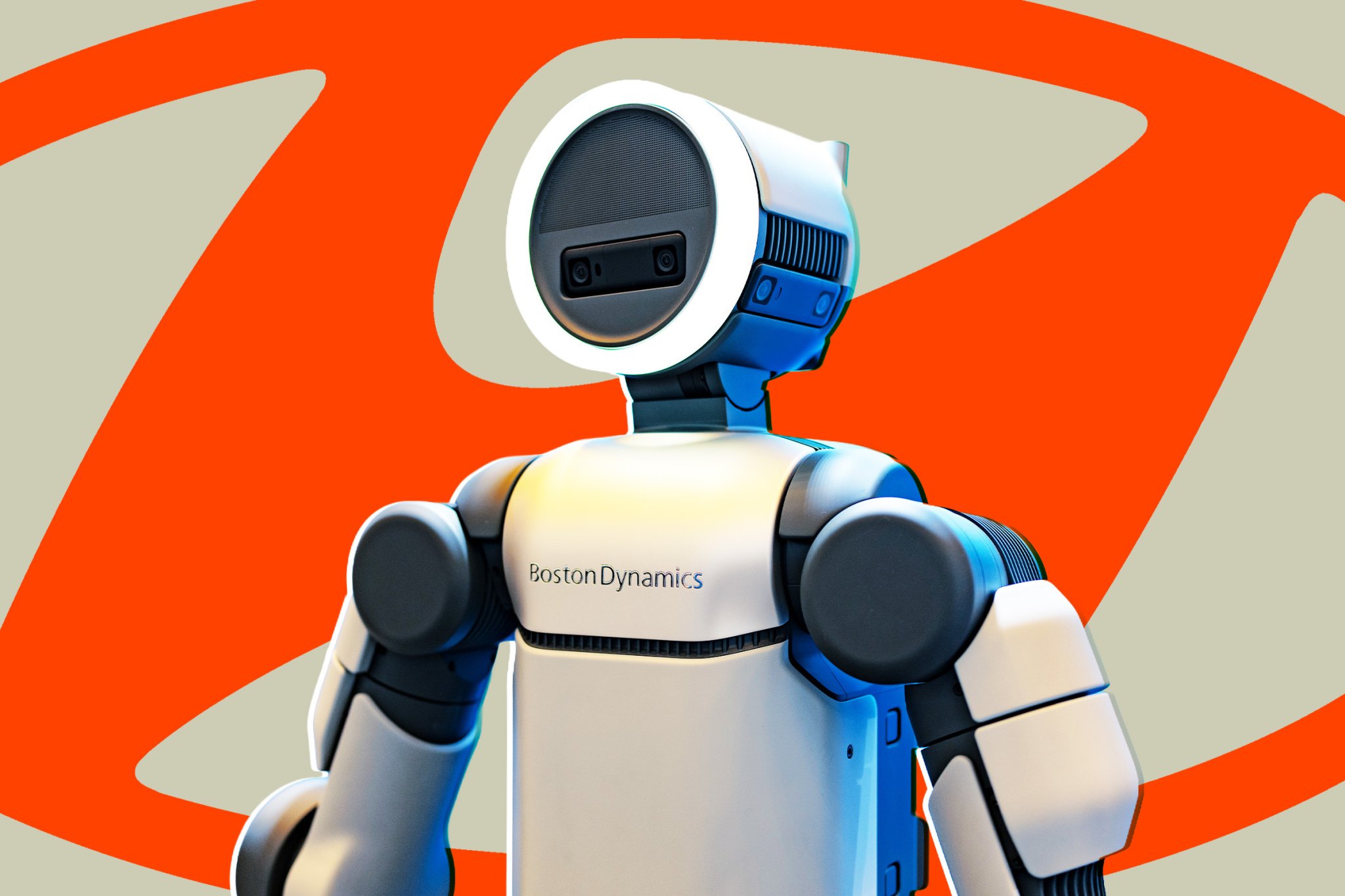
The mobilization appears to be the first of its kind over humanoid robotics, specifically, marking a pivotal moment in labor history. At issue is Hyundai’s threat to deploy thousands of “Atlas” model robots built by Boston Dynamics, bipedal humanoids that measure about 6’2″ in height and can lift a maximum of 110 pounds.

While the robots have yet to be deployed, union organizers explained that the strike is meant to give workers the power to renegotiate their contracts on their own terms, before the automation drive begins in earnest.

“We have to prepare to ensure there are safeguards in place,” secretary general of the KMWU and lead negotiator Byun Jun-hwan told the WSJ.

Specifically, the union’s demands include job security guarantees designed around AI and automation, larger bonuses that reflect Hyundai’s profit margin, a transition away from hourly wages to a fixed salary agreement, and a formal agreement allowing workers final say on any humanoid robotics deployment.

More on automation: AI Is Pushing Older Employees Straight Out of the Workforce, New Report Finds

The post Striking Workers Bring Car Factory to a Screeching Halt Over Humanoid Robots appeared first on Futurism.

  •  

Family Horrified When They’re Forced to Sell Their Beloved Home to Make Way for AI Data Centers

Like a tornado descending from the heavens, data centers are tearing through homes across the US, roaring like a jet engine, leaving schools without power, and decimating entire communities unlucky enough to stand in their path.

Case in point, one Georgia family has been forced to sell their home, after the state utility concern decided it needed to build a new transmission line to connect new AI data centers.

As reported by CBS, the Brown family of Coweta County, Georgia decided to sell their home to Georgia Power, rather than risk seizure by eminent domain.

Ansley Brown, whose parents raised her in the home, told CBS, “it’s ours. It’s our family. We belong here.”

The Browns are just one of likely 300 landowners who will have their property seized so that Georgia Power — a for-profit, investor-owned corporation — can make a cozy home for the tech industry.

“To us it’s theft,” Browns’ mother told CBS. “It’s literally a billion-dollar company stealing land from smaller people, people who can’t fight back. We don’t have the money to fight Georgia Power.”

For its part, the utility company told CBS they “have worked hard to be transparent, negotiate in good faith,” and “make the process as easy as possible.”

The Browns, understandably, don’t see it that way.

“You can’t tear down 35 miles of rural Georgia and it not hurt something or somebody,” the mother said. “And to say that you’re doing it in the name of data centers is a slap in the face to us, our community, our animals.”

More on data centers: Massive Data Center Cooks Nearby Residents Alive Amidst Deadly Heatwave

The post Family Horrified When They’re Forced to Sell Their Beloved Home to Make Way for AI Data Centers appeared first on Futurism.

  •  

AI-Pilled Tech CEO Convinced He Has the Perfect Solution for Online Dating, Announces Harebrained App Idea

Look, dating in the 2020s sucks. The apps are bad, people are rude, and the etiquette of it all seems to be evolving at the speed of sound. Yet for all the downsides, there’s nothing that can’t be made 100 times worse with the addition of AI slop.

For better or worse, that’s exactly what Hinge founder Justin McLeod has in mind for his latest dating app, “Overtone.”

First spotted by TechCrunch, McLeod announced an $18 million round of funding on the company’s blog. While that’s a hefty chunk of change for any startup, confidence from venture capitalists isn’t exactly shocking considering the founder’s previous success. What really stands out about the blog, though, is that McLeod used the bulletin to vague-post about his grand vision for a new, AI-integrated dating app.

“Think about the most un-human parts of the dating app experience,” McLeod challenged: “writing personal ads for ourselves, judging each other in a split second based on photos, sorting through thousands of potential partners, and wrangling them through the precarious funnel of like to match to chat to date.”

“None of those steps exist because anyone wanted them,” McLeod’s pitch continues. “They exist because they were the best the technology could do.”

Like many, many startup founders before him, McLeod asserts that Overtone is “not a dating app,” but something different — in this case, a “service.” That may be a distinction without a difference, but it signals a sloppified shift in the founder’s approach.

While details remain scarce, we do know that Overtone is meant to be a “a voice- and audio-forward service, enabled by AI, that provides highly curated introductions.” What that means in practice is difficult to say. Will the app be manipulating voice messages meant for potential lovers? Does it connect people based on the information they give, or on the information generated by AI?

In his blog, McLeod provides few concrete clues as to what Overtone might encompass, though the app he envisions isn’t exactly inspiring.

“We get to know each person deeply, learning about them in their own voice, hearing their own unique story,” McLeod writes. “And we make only the introductions that are worth making, grounded in relationship science and thoughtful reflection. We transparently explain why we believe someone is a great match. And we leave it up to our daters to meet in person and discover chemistry, with guidance along the way.”

So, if you ever saw some AI-generated fruit slop and thought, “how can I integrate this into my dating life?” Overtone might be just the app for you.

More on AI startups: Startup Upset After Journalist Points Out How Creepy Its Humanoid Robots’s Hands Are

The post AI-Pilled Tech CEO Convinced He Has the Perfect Solution for Online Dating, Announces Harebrained App Idea appeared first on Futurism.

  •  
❌