❌

Reading view

RFK Jr Wants to Waste $5 Billion in the Worst Way Imaginable

Since riding Donald Trump’s coattails to power, Robert F. Kennedy Jr has taken his haphazard anti-vaccine views and enshrined them as a core tenet of US health policy.

According to 16 current and former health officials who spoke to Reuters, RFK Jr has taken much more drastic measures to push his anti-vaccine agenda than was previously known.

Speaking on condition of anonymity, two officials told the news agency that RFK approached National Institute of Health director Jay Bhattacharya earlier this year with a proposal to spend up to $5 billion in tax dollars to establish links between vaccines and autism.

As Reuters notes, that kind of spending would encompass ten percent of the NIH’s annual budget, a massive waste that would fly in the face of decades of established science showing vaccines definitively don’t cause autism.

“He’s an anti-vaccine activist. That’s who he is. That’s who he’s been for 20 years,” Paul Offit, director of the Vaccine Education Center at the Children’s Hospital of Philadelphia told Reuters. “To expect that as secretary of Health and Human Services he’d be anything other than that is wishful thinking.”

It certainly wouldn’t have been the first time RFK Jr attempted to twist the science to link vaccines with autism. Earlier this year, the US Department of Health and Human Services was caught spending $1.6 million funding a study on hepatitis B vaccines conducted by controversial Danish researchers Peter Aaby and Christine Stabell Benn.

Had the Africa Centres for Disease Control and Prevention — the public health arm of the Africa Union — not stepped in to stop the RFK-backed study, researchers would have withheld inoculations from thousands of newborn infants in Guinea-Bissau.

The situation drew notable comparisons to the Tuskegee Experiment, a highly unethical medical experiment that used hundreds of Black men as guinea pigs to study the long-term effects of syphilis. Despite the fact that effective treatment was available, nearly 400 men spent decades without treatment, suffering life-long consequences at the hands of manipulative researchers.

Though the Tuskegee Experiment may not have produced any medical breakthroughs or scientific discoveries, its cruel legacy seemingly lives on as inspiration for RFK and his HHS cronies.

More on RFK Jr: CDC Report on Vaccines and Autism Caught Citing Hallucinated Study That Does Not Exist

The post RFK Jr Wants to Waste $5 Billion in the Worst Way Imaginable appeared first on Futurism.


  •  

As Much of the East Coast Is Choking on Wildfire Smoke, Texas Is Drowning in Life-Threatening Floods

Fresh off a month that saw all but five states mired in severe drought, the US is reeling from multiple crises of national proportions.

First, there’s the record-breaking heat dome which is currently baking most of the continental US. According to the Guardian, over 100 million Americans are currently living under extreme heat warnings, forecasted to persist well into the weekend.

At the same time, the country is being smoked out by dozens of wildfires across North America, a situation the heat wave isn’t exactly helping. On top of that, smoke from over 800 blazes in Canada is helping choke out the US Midwest and North-East, making the air hazardous to breathe.

Things aren’t necessarily any prettier outside of the smoke-zone — just wetter. Communities situated around the Guadalupe River in Texas are reeling after near endless rainfall triggered massive floods across the state for the second year in a row.

So far, at least one person is dead, while thousands have been forced to evacuate. At least 57 counties representing over six million people were placed under flood watches over the past few days. With even more rain on the horizon, it remains to be seen when Texas will get relief from the torrential downfalls.

Stepping back, it’s clear this cascade of extremes isn’t happening in a vacuum. The overlapping wildfires, floods, and heat waves are all being amplified by the same climate forces: a rapidly warming planet, fueled in no small part by skyrocketing carbon emissions from the US itself.

All in all, it’s been an action-packed summer as the El Niño cycle rolls on — and unfortunately, the devastation is far from over.

More on climate disaster: Scientists Propose Dimming Sun to Combat El Niño

The post As Much of the East Coast Is Choking on Wildfire Smoke, Texas Is Drowning in Life-Threatening Floods appeared first on Futurism.

  •  

Striking Workers Bring Car Factory to a Screeching Halt Over Humanoid Robots

From the factories of Detroit to the postal warehouses in Shenzhen, a new kind of worker is clocking in — and the humans it’s replacing aren’t going down without a fight.

In late June, thousands of rank-and-file workers in the Korean Metal Workers’ Union voted to authorize a strike in response to Hyundai’s announcement it would deploy over 25,000 humanoid robots across its factories.

Weeks later, that strike is slowing production at a Hyundai factory down to a trickle. According to the Wall Street Journal, the workers began a partial strike after negotiations broke down last week. Starting on Monday, workers refused to work for four hours of each shift, leaving production lines stalled for half the work day.

Per the WSJ, the economic impacts of the strike are stark: the pullback could disrupt production of about 5,000 cars, and cut into Hyundai’s sales revenue by around $135 million. Should Hyundai choose to dig in their heels after the labor action, the union said it could escalate the strike, either by prolonging the length of the strike, upgrading it to a full strike, or both.

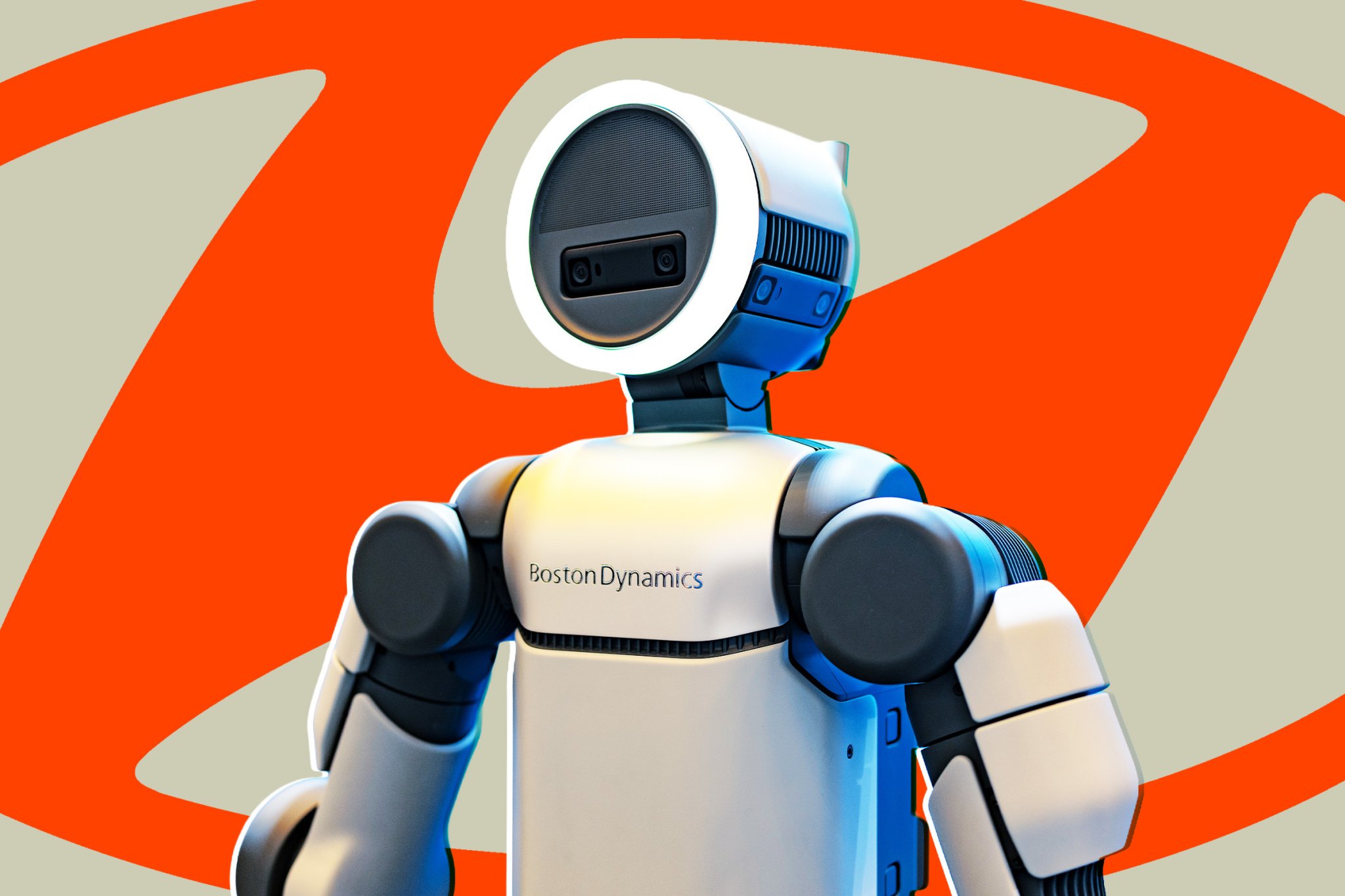
The mobilization appears to be the first of its kind over humanoid robotics, specifically, marking a pivotal moment in labor history. At issue is Hyundai’s threat to deploy thousands of “Atlas” model robots built by Boston Dynamics, bipedal humanoids that measure about 6’2″ in height and can lift a maximum of 110 pounds.

While the robots have yet to be deployed, union organizers explained that the strike is meant to give workers the power to renegotiate their contracts on their own terms, before the automation drive begins in earnest.

“We have to prepare to ensure there are safeguards in place,” secretary general of the KMWU and lead negotiator Byun Jun-hwan told the WSJ.

Specifically, the union’s demands include job security guarantees designed around AI and automation, larger bonuses that reflect Hyundai’s profit margin, a transition away from hourly wages to a fixed salary agreement, and a formal agreement allowing workers final say on any humanoid robotics deployment.

More on automation: AI Is Pushing Older Employees Straight Out of the Workforce, New Report Finds

The post Striking Workers Bring Car Factory to a Screeching Halt Over Humanoid Robots appeared first on Futurism.

  •  

Family Horrified When They’re Forced to Sell Their Beloved Home to Make Way for AI Data Centers

Like a tornado descending from the heavens, data centers are tearing through homes across the US, roaring like a jet engine, leaving schools without power, and decimating entire communities unlucky enough to stand in their path.

Case in point, one Georgia family has been forced to sell their home, after the state utility concern decided it needed to build a new transmission line to connect new AI data centers.

As reported by CBS, the Brown family of Coweta County, Georgia decided to sell their home to Georgia Power, rather than risk seizure by eminent domain.

Ansley Brown, whose parents raised her in the home, told CBS, “it’s ours. It’s our family. We belong here.”

The Browns are just one of likely 300 landowners who will have their property seized so that Georgia Power — a for-profit, investor-owned corporation — can make a cozy home for the tech industry.

“To us it’s theft,” Browns’ mother told CBS. “It’s literally a billion-dollar company stealing land from smaller people, people who can’t fight back. We don’t have the money to fight Georgia Power.”

For its part, the utility company told CBS they “have worked hard to be transparent, negotiate in good faith,” and “make the process as easy as possible.”

The Browns, understandably, don’t see it that way.

“You can’t tear down 35 miles of rural Georgia and it not hurt something or somebody,” the mother said. “And to say that you’re doing it in the name of data centers is a slap in the face to us, our community, our animals.”

More on data centers: Massive Data Center Cooks Nearby Residents Alive Amidst Deadly Heatwave

The post Family Horrified When They’re Forced to Sell Their Beloved Home to Make Way for AI Data Centers appeared first on Futurism.

  •  

AI-Pilled Tech CEO Convinced He Has the Perfect Solution for Online Dating, Announces Harebrained App Idea

Look, dating in the 2020s sucks. The apps are bad, people are rude, and the etiquette of it all seems to be evolving at the speed of sound. Yet for all the downsides, there’s nothing that can’t be made 100 times worse with the addition of AI slop.

For better or worse, that’s exactly what Hinge founder Justin McLeod has in mind for his latest dating app, “Overtone.”

First spotted by TechCrunch, McLeod announced an $18 million round of funding on the company’s blog. While that’s a hefty chunk of change for any startup, confidence from venture capitalists isn’t exactly shocking considering the founder’s previous success. What really stands out about the blog, though, is that McLeod used the bulletin to vague-post about his grand vision for a new, AI-integrated dating app.

“Think about the most un-human parts of the dating app experience,” McLeod challenged: “writing personal ads for ourselves, judging each other in a split second based on photos, sorting through thousands of potential partners, and wrangling them through the precarious funnel of like to match to chat to date.”

“None of those steps exist because anyone wanted them,” McLeod’s pitch continues. “They exist because they were the best the technology could do.”

Like many, many startup founders before him, McLeod asserts that Overtone is “not a dating app,” but something different — in this case, a “service.” That may be a distinction without a difference, but it signals a sloppified shift in the founder’s approach.

While details remain scarce, we do know that Overtone is meant to be a “a voice- and audio-forward service, enabled by AI, that provides highly curated introductions.” What that means in practice is difficult to say. Will the app be manipulating voice messages meant for potential lovers? Does it connect people based on the information they give, or on the information generated by AI?

In his blog, McLeod provides few concrete clues as to what Overtone might encompass, though the app he envisions isn’t exactly inspiring.

“We get to know each person deeply, learning about them in their own voice, hearing their own unique story,” McLeod writes. “And we make only the introductions that are worth making, grounded in relationship science and thoughtful reflection. We transparently explain why we believe someone is a great match. And we leave it up to our daters to meet in person and discover chemistry, with guidance along the way.”

So, if you ever saw some AI-generated fruit slop and thought, “how can I integrate this into my dating life?” Overtone might be just the app for you.

More on AI startups: Startup Upset After Journalist Points Out How Creepy Its Humanoid Robots’s Hands Are

The post AI-Pilled Tech CEO Convinced He Has the Perfect Solution for Online Dating, Announces Harebrained App Idea appeared first on Futurism.

  •  

Data Centers Are Making Electricity Brutally Expensive for the Public

Despite a financial situation more reminiscent of a Ponzi scheme than a technological revolution, the data center boom is continuing at a rapid pace, bringing novel kinds of biological contamination, ear-splitting noise, and unprecedented levels of pollution to communities across the US.

Those environmental burdens also come with a financial one: skyrocketing demand for electricity, which is increasing the cost of utilities for renters and homeowners alike.

According to a report by Monitoring Analytics, an independent monitor for the largest transmission company in the US, PJM, data center demand is expected to drive over $23 billion in customer price increases by 2028. That eye-watering figure, first spotted by Fortune, is a direct result of the country’s old and confusing electrical infrastructure, which ultimately leaves regular people, not the tech industry, holding the bag.

Whether they’re data centers, factories, or other large facilities, Fortune points out that local regulators and transmission companies like PJM have a hard time figuring out who’s responsible for rising energy demand. While a small power line from a data center campus to a nearby substation is easily billed to the data center, figuring out who to invoice gets harder further on down the line, particularly with shared infrastructure like the substation itself, or the long-distance transmission lines connecting to it.

Though utility companies can and do charge data centers for the electricity they use, Fortune observes that the facilities undergirding the AI boom can “fine tune” their electricity use minute-by-minute, gaining an edge that the average consumer could only dream of.

Because many utility companies charge based on a system of “peak demand” — a measure of a customer’s energy usage at the exact moment the collective grid hits peak demand — data centers have gotten into the habit of scaling down right when the grid measures highest demand. That’s not because they’re actually trying to use less power, but because that narrow window is what determines how high their bill will be. In reality, their overall usage remains the same.

This is more or less the scenario that played out in a Bitcoin mining operation in Texas, where the company Riot Platforms agreed to cut its power use on hot summer days, only to ramp back up massively at night. In exchange, the company negotiated for a lower flat electricity rate overall, and even snagged some state subsidies meant to encourage responsible energy use.

Load-shifting like this can genuinely help the grid, but it also means companies with the ability to game the system get rewarded with subsides that an average household will never get. And because companies are merely changing when they suck their juice — not how — subsidized load-shifting ends up being a poor strategy for reducing electrical use overall.

And while data centers are just the most contemporary example of this practice, the shrewd manipulation of US energy markets by for-profit corporations dates back decades. That may not be comforting news for citizens scrambling to hold data center firms accountable in the here-and-now, but it should at least give them an idea of where to start looking for inspiration.

More on data centers: New York Becomes First State to Ban AI Data Centers

The post Data Centers Are Making Electricity Brutally Expensive for the Public appeared first on Futurism.

  •  

US Hospitals Are Outsourcing In-Person Nursing to Remote Health Workers in the Philippines

The next time you’re checking into a hospital, it’s possible that your nurse may actually be 8,000 miles away.

That’s the reality at a growing number of hospitals throughout the US and the world, which are turning to low-paid telehealth workers in the Philippines to help fill in the duty roster. As it is for remote driving and AI data labeling, the Philippines has become a wellspring of cheap labor for transnational healthcare companies, which are more than happy to exploit a country where millions of people live in poverty.

Stunning reporting by Rest of World detailed the lives of some of the 210,000 full-time Filipino workers employed in remote healthcare. This new class of workers makes up for a massive shortage of almost 80,000 registered nurses in the US.

One of the workers, Alice, is a licensed nurse working in Quezon City, a city of three million people in the Philippines. In 2019, she signed on with a telehealth company providing mental health and substance abuse treatment to US-based patients in California and New Mexico. Alice told RoW she earns $5 an hour, five times as much as the hospital job she left behind.

“We have this virtual clinic that functions like a lobby where patients check in,” Alice explained, “and then we traffic or triage them and send them to each of the providers’ personal Zoom room.”

To get a job communing with US patients through a screen, a Filipino worker simply needs to have a medical degree — it doesn’t matter what kind. While it’s likely that many telehealth recruits come from healthcare administration backgrounds, RoW notes that about 30 percent of the people employed in these jobs are trained nurses or other medical professionals.

The result is a scenario where tens of thousands of healthcare workers are physically present in their communities, but spend their days caring for patients half a world away in a desperate bid to pay the bills. Already facing a mounting shortage of trained healthcare professionals, the Filipino people have watched as telehealth corporations court the remaining hospital workers to oversee care for patients in the US.

“If they can’t go abroad, remote nursing is the next best thing because local wages are so low,” Nico Uba, secretary general of the group Filipino Nurses United told RoW. “Then local hospitals are left understaffed and overworked.”

The companies running this insidious scheme prey on two sets of healthcare workers on opposite ends of the world: the underpaid Filipino, for whom a wage of $5 an hour is much higher than the national average, and the overworked American, for whom a 50-hour work week is practically a vacation.

The remote healthcare industry is well aware of this tension, and is happy to take advantage. As JL Botor, president of the Healthcare Information Management Association of the Philippines told RoW, US hospitals can save up to 70 percent of their overhead costs by hiring Filipino workers instead.

In all, Botor notes that the country is a “clinical process outsourcing powerhouse,” as well as “a premier global hub for supporting overstressed international healthcare systems.”

More on healthcare: Lawsuit Claims the Mayo Clinic’s Use of AI Is Butchering Patient Care

The post US Hospitals Are Outsourcing In-Person Nursing to Remote Health Workers in the Philippines appeared first on Futurism.

  •  

Trump Decimated a Satellite Program That Would’ve Vastly Improved Wildfire Smoke Monitoring

When Donald Trump, Elon Musk and the DOGE boys started snipping wires across DC, they took out critical programs like the government’s premier climate research website and the hurricane-hunter aircraft gathering data on dangerous storms.

While they were at it, the Trump administration also ripped up a project that would have vastly improved the country’s ability to monitor wildfires. The GeoXO program was a project originally encompassing six satellites that would greatly improve the resolution available to the National Oceanic and Atmospheric Administration to monitor atmospheric conditions like wildfire smoke, as well as weather events like lightning strikes, and climate observations such as color changes in the ocean’s surface.

The six satellites were meant to encompass three regions split between the US West, Central, and East. Starting in April 2025, however, the Trump administration directed the NOAA to make drastic cuts to GeoXO. These included cutting two satellites from the mission altogether — scrapping the central observation region entirely — and canceling major contracts for existing GeoXO instruments. The purported goal was to refocus the program on a “core weather mission,” as opposed to long-term climate monitoring, following the administration’s broader attacks on any effort to mitigate or even mention climate change.

One of those cancelled instruments, the GeoXO Atmospheric Composition device, was a high-resolution spectrometer designed to give the NOAA advanced capabilities to monitor air pollutants, like ozone, nitrogen dioxide, formaldehyde, and excess particulate matter. In the long term, the tool would have helped scientists paint a clearer picture of how particular weather events relate to broader climate shifts, an NOAA report explains.

Of course, the timing of the cancellation couldn’t have been worse. Huge swaths of the United States and Canada are currently being smoked out by noxious fumes emanating from hundreds of wildfires across North America.

Though the GeoXO program wouldn’t have gone live until the 2030s, Trump’s decision represents a devastating loss for our future ability to monitor this exact phenomenon, which is becoming something of an annual tradition for millions of people.

As Susan Anenberg, chair of environmental and occupational health at George Washington University observed, the NOAA “had spent years planning an air pollution instrument on the GeoXO satellite which would provide near-real-time, location-specific data on smoke levels, giving people the information they need to avoid exposure.”

Anenberg explained that the public health benefits this kind of monitoring would provide “could amount to about $13 billion per year.”

“As smoke events happen more often,” Anenberg continued, “we need more data, not less.”

More on Trump: Prices Already Spiking at Trump’s Mysterious Gas Stations That Promised Cheap Fuel

The post Trump Decimated a Satellite Program That Would’ve Vastly Improved Wildfire Smoke Monitoring appeared first on Futurism.

  •  

AI Bubble Fears Are Starting to Spill Over

Yet another domino appears to be falling as part of the Rube Goldberg machine that will eventually pop the AI investment bubble.

Earlier this month, economic forecasters were sounding the alarm that overspending on AI was at a level far more severe than Black Tuesday, the day that jump-started the worst economic catastrophe in the history of the industrial economy. Now, investors seem to be coming to that same conclusion all on their own.

This week, Taiwanese semiconductor giant Taiwan Semiconductor Manufacturing (TSMC) posted its second-quarter earnings results, revealing a staggering revenue of over $40 billion — a record-breaking sum for the company.

While that should come as welcome news to investors, the results had the exact opposite effect, sending shares of TSMC stocks tumbling by four percent. That in turn led the tech-heavy Nasdaq 100 index to fall by 1.4 percent Thursday, compounding losses from Wednesday, Bloomberg reported.

The issue seems to be TSMC’s revision to its capital expenditure. As the key manufacturer for chip design company Nvidia — arguably one of the most pivotal players in the AI boom — TSMC is a major bellwether for investor confidence around the buzzy tech.

The trouble is that, in addition to posting record revenue, the Taiwanese chip firm raised its 2026 spending forecast to a range of $60-64 billion, up from $52-56 billion. That shift will test how much more spending investors are willing to stomach on AI, a technology that has yet to justify the nearly $1.6 trillion spent developing it over the past decade.

Zooming out, the market’s response seems to indicate a few things. For starters, good news is clearly not enough to maintain confidence in the tech industry’s ability to make AI a financial success. It likewise signals that belief in the AI bubble is no longer confined to a few brave contrarians, but is becoming a mainstream narrative, as investors grow wary of an industry which promises the Moon, yet only seems to deliver hot air.

More on the AI bubble: Tech Billionaires Are Quietly Rooting for AI Bubble to Collapse

The post AI Bubble Fears Are Starting to Spill Over appeared first on Futurism.

  •  

A Chinese AI Model Just Shot to Number One on the Charts, Sending Shockwaves Through the American Tech Industry

While Wall Street was fast asleep, a Chinese-made large language model quietly leapfrogged 16 other models to become number one on the AI charts.

The model is called Kimi-K3, developed by Beijing-based firm Moonshot AI. On Thursday, the AI benchmark platform Arena.ai announced that Kimi had gone from number 17 in the “Frontend Code Arena” — a measure of an LLM’s ability to perform multi-step web development tasks — to number one, surpassing the buzzy Claude Fable 5 and GPT-5.6 Sol by a mile.

In the “Text Arena,” a measure of an LLM’s ability in text-to-text tasks like creative writing, Kimi-K3 earned the number nine spot, a significant improvement from Moonshot AI’s previous model, Kimi-K2.6, which held number 38.

The news comes as investors are facing a major reckoning, with US semiconductor stocks plummeting on Friday morning and the tech-heavy Nasdaq composite sliding by 1.4 percent. Those losses are extending a horrible week for tech stocks, which had been driven by concerns over an all-American AI bubble.

The moniker, “Moonshot,” might be an understatement. The major catch here is that not only did a Chinese AI model surpass every US-designed model in front-end coding in a benchmark, it did so using a dramatically different approach.

Just like DeepSeek, a similar Chinese AI model that rankled the US stock market last year, Kimi is an open-weight model, meaning its inner workings are viewable to the public. Compared to proprietary models like GPT-5.6 that are kept under lock and key, open models cost users on average six times less, though their performance has historically been ever-so-slightly worse than their closed counterparts.

Responding to the news, Xiaoyin Qu, former Meta senior product manager turned AI entrepreneur, posed an important question: “When the best open weight model exceeds the best closed-source model, how does [Anthropic] justify its Fable pricing? Why would anyone pay for that?”

Even before Kimi-K3 dropped, the proposition of paying up to six times more for the slight performance boost offered by closed models was already pushing US companies toward Chinese AI. Now that the performance gap is closing fast, there’s even less reason for companies or individuals to pay exorbitant prices associated with Silicon Valley’s frontier models.

That simple math is bad news for the US tech industry, which has spent years insisting that it will take trillions of dollars to make AI work.

As Qu observed, “Kimi’s most recent funding round values the company at $20 Billion as of two months ago. Anthropic is worth almost 1 trillion, 50x. Why?”

More on AI: Chinese Court Rules That a Worker Cannot Be Replaced by AI

The post A Chinese AI Model Just Shot to Number One on the Charts, Sending Shockwaves Through the American Tech Industry appeared first on Futurism.

  •  

SoftBank CEO Says You’re Too Stupid to Understand What’s Going on If You Believe the AI Bubble Is Real

With hundreds of billions of dollars still flowing into the tech industry, it’s becoming harder and harder to deny the reality that the US economy is enmeshed in a financial bubble of incredible proportions. As recent polls have shown, the majority of Americans don’t only agree that there is an AI bubble, they’re increasingly concerned about it as well.

One man who isn’t swayed is Japan’s richest investment mogul, SoftBank CEO Masayoshi Son. Speaking at his company’s annual corporate conference in Tokyo, Son groused that any talk of an AI bubble is “absurd,” adding that he’s willing to waste trillions of dollars a year for decades if that’s what it takes to make AI a financial success.

“Asking if AI is a bubble is absurd. I don’t think people who ask that ‌question know ⁠what AI is about,” Son said to conference attendees, as Reuters reported. “Every year $5 trillion, or 800 trillion yen, you might ​think that’s a lie, but I am confident that’s what it will cost.”

Son has previously said he thinks it’s “blasphemy against AI if you say it’s a bubble,” claiming that the tech’s “potential will be unlocked.”

But whether the tech industry can ever make AI financially viable is a particularly sensitive issue for SoftBank. The investment bank has lavished ChatGPT maker OpenAI with nearly $65 billion so-far, a spend so enormous that it forced major credit ratings agencies to downgrade SoftBank’s standing over the last few months.

As S&P Global’s analysts wrote when they downgraded SoftBank’s outlook from “neutral” to “negative” in March, the “liquidity of SoftBank Group’s investment portfolio will worsen because OpenAI now accounts for a bigger share of it.”

In particular, S&P warned against the exact path CEO Son seems to be doubling down on.

“The additional investment will further reduce SoftBank Group’s financial capacity, in our view,” S&P’s credit report explained. “We estimate that the additional investment in OpenAI will knock nearly four percentage points onto the company’s [loan-to-value] ratio, worsening this key financial metric.”

These invectives evidently haven’t spooked Son, who once predicted that AI superintelligence would exist by 2035.

Now, he’s adding five years to that prediction: “The business model will be viable because by 2040,” Son said, “if AI revenue ​makes up 20 percent of global GDP, spending 800 trillion yen a year is a rounding error.”

More on AI: Americans Increasingly Alarmed About Tech Industry’s Looming AI Bubble

The post SoftBank CEO Says You’re Too Stupid to Understand What’s Going on If You Believe the AI Bubble Is Real appeared first on Futurism.

  •  

Robotaxis Are Turning Passengers Into Horrible and Entitled Menaces to Society

Robotaxis are multiplying across the US, and as they do, a not-so-flattering pattern is riding shotgun. Not only do robotaxi companies themselves put a significant strain on public resources, they’re training the public to act just as entitled as they are.

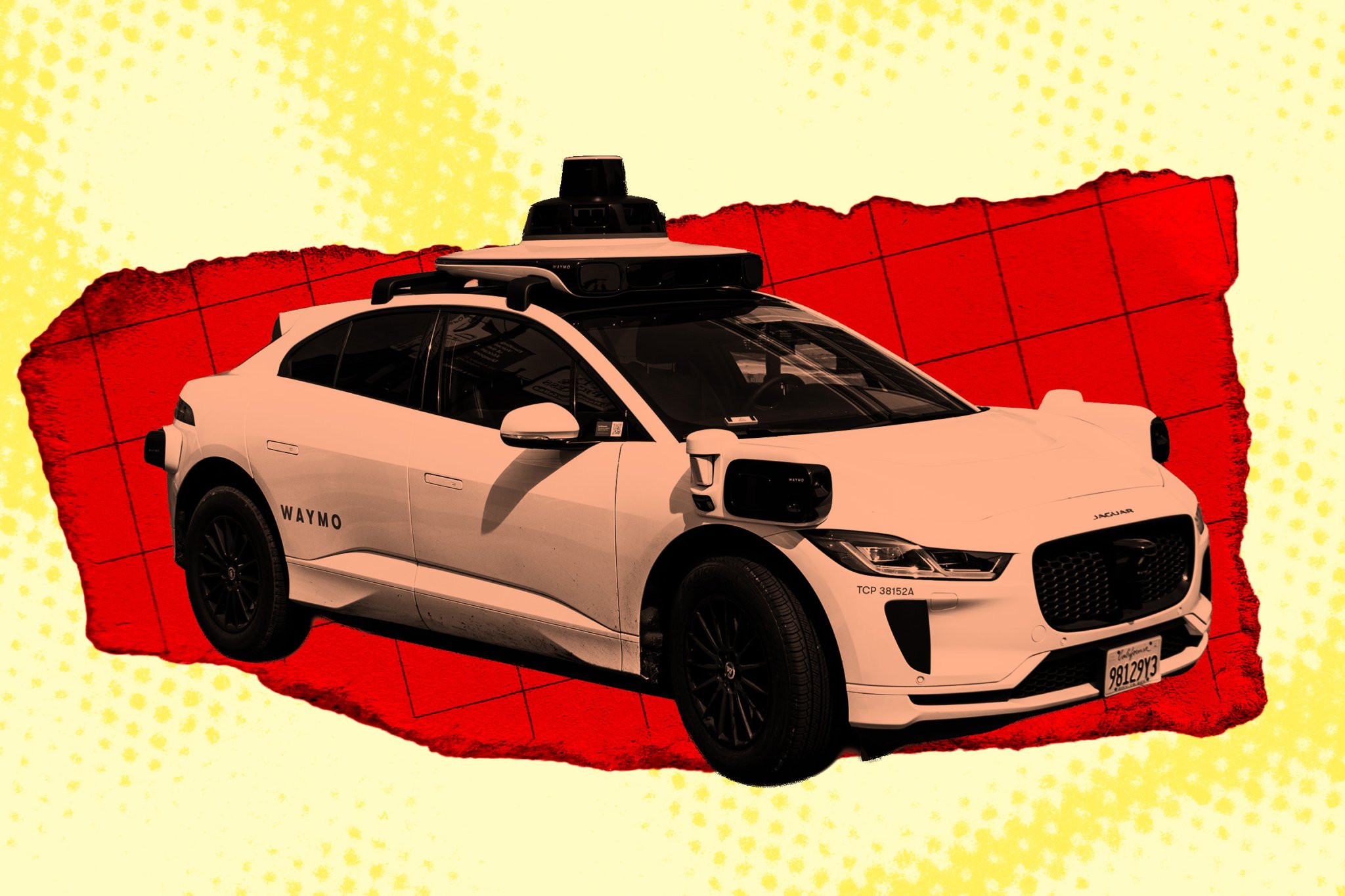
As a recent article by Bloomberg points out, riders hopping into driverless cabs from Waymo, Tesla, and Zoox are treating driverless trips as a license to unwind.

With no human behind the wheel, riders feel like they have no social contract to follow. As a result, they’re turning robotaxis into trash cans, leaving behind spilled drinks, food scraps, and in some cases, bodily fluids like vomit for the next unlucky sap.

Granted, it’s probably easier said than done to clean a mess from a robocab once it’s been made: as one unfortunate Waymo rider discovered in May, the vehicles will sometimes speed off within seconds of dropping you off, even if you have bags in the trunk.

Others are using their robotaxi rides as roving sleep pods. It’s tough to say how common this particular behavior is, but Bloomberg notes that first responders in Austin, Texas got so many calls about dozing riders during Waymo’s first nine months in the city that they had to invent a new category just for “sleepers.”

Elsewhere, people are treating their self-driving cars more like party buses. In April, a Tesla driver was arrested after police found him passed out behind the self-driving wheel, having polished off a buffet of wine coolers and pizza before dozing off.

Sure, none of this will really affect you unless robotaxis are part of your daily commute. But as discussion around the robotaxi’s broader impact on society grows more urgent, it’s worth noting that hailing one seems to put you in a league with some of the worst riders currently in the game.

More on robotaxis: Drivers Trapped for Hours in Hopeless Gridlock as Waymos Brick on Major Holiday

The post Robotaxis Are Turning Passengers Into Horrible and Entitled Menaces to Society appeared first on Futurism.

  •  

Redditors Are Celebrating the Cutting Down of Flock Surveillance Towers With Based Memes

The United States is having something of a national referendum on mass surveillance as of late. Embodied most infamously by video surveillance company Flock Safety, Americans from all walks of life are waging war against the proliferation of the company’s automatic license plate readers (ALPR), which the ACLU warns now number in the tens of thousands.

Plenty of communities are organizing campaigns to out-muscle municipal leaders or their cheerleaders on the local police force, and by-and-large, they’re working. Whether in rural towns or sprawling cities, activists who can mobilize citizens to flood council meetings and hold picket signs are finding success. Perhaps most prominently, the Los Angeles Police Department recently allowed its three-year contract with Flock to expire, citing democratic pushback as a significant pressure point.

There’s also another, less-legal side to the anti-Flock sentiment: a rising tide of vandalism. Not content to wait for local officials to strike down ALPR contracts, concerned citizens are taking matters into their own hands by disabling or cutting down Flock camera towers wherever they’re found. But what started as a collection of separate individuals is now rising to the level of a viral phenomenon, as privacy-minded Redditors take to the web to celebrate those who are fighting back with an outpouring of ironic memes and hype reels.

Ground zero for this community appears to be the subreddit r/FlockSurveillance. The forum hosts some 422,000 “activists,” who flood the channel with over 11,000 contributions per week.

Some of the top posts on the subreddit are memes celebrating Flock vandalism: there are crude Photoshop jobs re-imagining covers of the Berenstain Bears as anti-Flock activists, hand-drawn signs encouraging copper thieves to cash in on Flock innards, and an ALPR-themed redesign of the Gadsden flag, to name a few.

Those who’ve been caught and charged with vandalizing ALPRs become digital folk heroes on the subreddit. When news broke that US Air Force engineer Jeffrey Sovern had been charged in connection to the destruction of 13 Flock devices, redditors flooded the post with praise, sharing links to his legal defense fund and encouraging others to donate. (Sovern’s GoFundMe now stands at over $40,000, compared to around $15,440 in early July.)

“I donated to him because those charges are bulls***,” one redditor replied.

In addition to memes, the subreddit has become a destination for serious discussion around ALPRs and surveillance in general. One developer used the forum as a launch pad for their app FlockHopper, a navigation app that helps travelers avoid ALRPs. Others use it to share important developments relevant to the anti-Flock crowd, to get advice on Freedom of Information Act requests, and to dispel misinformation.

“As entertaining a trend as it is, will a few Redditors knocking a few poles over really make a difference?” one redditor asked the group.

“Even a single grain of rice can tip the scales,” a user replied.

More on Flock: Man Trapped in Dystopian Nightmare Thanks to AI Surveillance Cameras Flagging His Every Move

The post Redditors Are Celebrating the Cutting Down of Flock Surveillance Towers With Based Memes appeared first on Futurism.

  •  

Meta Used Its Own Flawed AI to Pick Which Employees to Lay Off, Lawsuit Claims

These days, corporations aren’t just using AI as an excuse to justify layoffs, but are increasingly turning to their chatbots for advice deciding who to fire.

As Reuters reports, 26 Meta employees filed a lawsuit accusing the company of using an internal AI platform to select targets for the thousands of jobs cut earlier this year. Per the suit, Meta used its AI to cull workers based on opaque productivity metrics and large language model (LLM) token usage, a move which disproportionately targeted people with disabilities, and those who had taken maternity or medical leave — literally adding insult to injury.

The 26 plaintiffs, whose names have been redacted from the suit, include engineers, managers, researchers, and designers, as well as a director who had direct access to the AI platform.

Nearly half of the plaintiffs say that their termination was the result of taking either maternity or parental leave, protected activities which Meta’s AI-integrated human resources platform “Checkpoint” allegedly failed to take into consideration. Others claim to have been targeted after taking medical leave for their own disabilities, bereavement leave, or to care for family members.

In some cases, plaintiffs allege to have been specifically warned by Meta leadership not to take time off. The anonymous director, for example, says he was “discouraged and deterred from taking FMLA [Family and Medical Leave Act] leave that his treating provider had recommended, out of a well-founded and objective concern from a manager that such a leave would be held against him in the [reduction in force].”

In the suit, the director corroborates the claim that Meta’s Checkpoint used protected leaves of absence against workers, arguing that the platform “failed to distinguish employees’ leave from lack of engagement.”

The current complaint seeks to block Meta from laying off the 26 plaintiffs, who will each have to file an independent suit owing to legal agreements with the company, Reuters reports.

In a statement, a Meta spokesperson disputed the basic facts of the case.

“Workforce management and organizational decisions were and are made by ​people, not AI,” the spokesperson told Reuters.

More on Meta: Meta Caught Running Ads for Child Abuse

The post Meta Used Its Own Flawed AI to Pick Which Employees to Lay Off, Lawsuit Claims appeared first on Futurism.

  •  

New York Becomes First State to Ban AI Data Centers

Across the United States, lawmakers are increasingly caught between two competing pressures: the massive investment flowing into the tech industry to build AI data centers, and a growing, bipartisan backlash against those same facilities, not to mention the massive tech corporations funding them.

In New York, governor Kathy Hochul is giving in to the former — at least on paper — by announcing a one-year, state-wide ban on new AI data center construction for facilities with an electrical capacity of 50 megawatts and up.

It’s the first time a US state has imposed such a moratorium, highlighting persistent concerns over the rampant pollution, alarming water usage rates, and rising electricity prices.

Per the City Reporter, the governor has ordered state utility regulators to draft “the strongest standards in the nation for data center development,” in order to guarantee that “when companies succeed because of New York, New Yorkers succeed too.”

While the moratorium prevents new mega-facilities from popping up, the New York Department of Public Service will start plugging away on an environmental impact statement to use for assessing future data centers’ affects on water and air quality, in addition to their consumption of electricity and water.

The timing of the temporary ban could not be more opportune for Democrats. With the 2026 midterm elections fast approaching, Democratic party leaders have been scrambling to regain the confidence of the party’s voting base, which has overwhelmingly embraced progressive, non-establishment Democratic candidates in recent elections.

As Futurism noted back in April, opposition to AI would be a slam dunk with progressive voters and even moderate Republicans — though the party has been slow to capitalize on this opportunity, likely a result of the deep pocketed AI lobby, which has lavished the Democratic party with millions of dollars so-far in 2026.

Notably, Hochul’s ban comes in place of a bill passed by the New York State Senate on June 4 which would ban data centers of 20 megawatts or more for up to a year. In addition to raising the maximum allowable size by 30 megawatts, Hochul’s executive order lacks other provisions included in the Senate bill, like a mandate that data center owners fund local infrastructure programs and submit to third-party audits.

While the governor’s total ban is progressive relative to states like Ohio, the gap between the New York Senate bill and Hochul’s executive order clearly reflects the ongoing schism within the Democratic party. In effect, it signals that Hochul is less gung-ho about regulating the tech industry than her counterparts in the state legislature, putting her in a league more in-line with pro-tech industry Democrats like Michigan’s Gretchen Whitmer and California’s Gavin Newsom, and less with party progressives like Vermont’s Bernie Sanders.

More on AI data centers: The Economics of Data Centers Creating Jobs Are So Bad That They Sound Like a Joke

The post New York Becomes First State to Ban AI Data Centers appeared first on Futurism.

  •  

Startup Upset After Journalist Points Out How Creepy Its Humanoid Robots’s Hands Are

The VP of a humanoid robotics company was in for a surprise after finding that a Wired article pointed out something extremely unsettling about the company’s robot fingers.

Last week, Wired published a piece on Norwegian-American startup 1X and its Neo humanoid robot with an otherwise uncontroversial thesis: Though the marketing around Neo is decidedly carnal, its hands are impressive, matching and in some ways exceeding the dexterity of a human’s.

During the latter half of the article, Wired‘s Boone Ashworth noted a distinctly sensual pattern emerging in the company’s marketing materials: “smooth jazz plays in the background of a soft, warmly lit video. The robo digits curl around a wine glass, turn off a light, unzip a jacket, and gently fondle some grapes.”

“Not to kink shame, but this is a strange strategy for selling a robot that can also become a portal for human operators to peer into and interact with the things in your home,” Ashworth wrote, referring to the fact that the Neo will have remote human operators to start.

As reviews go, it’s far from the harshest critique of a robot ever written — and we should know — but 1X vice president of product and design Dar Sleeper still took Ashworth’s comments personally. Responding to the piece on X-formerly-Twitter, Sleeper lashed out at the author, using him as an example to lecture other tech journalists on what not to do.

“I gave Wired the exclusive on our hands launch, and they wrote a really weird article about how we are sexualizing robotics,” Sleeper wrote, displaying a remarkable amount of entitlement right out of the gate. “I felt pretty betrayed because that’s not what they told me they were writing about not is that what I’ve ever been about… but I’ve come to find a lot of dishonesty and malice in the journalism community so I wasn’t surprised.”

Continuing, Sleeper says he sent the following email to the Wired writer: “It was nice talking to you, but I wanted to let you know that I didn’t enjoy your article at all.”

I would like to note that I believe both Financial Times, Forbes & Bloomberg to be incredible institutions. You guys are killing it and I respect your ability to always innovate when things are changing.

— dar (@radbackwards) July 11, 2026

“I understand the need to be inflammatory because that seems to be the only thing that gets clicks these days but that doesn’t mean you shouldn’t recognize when something special is in front of you,” Sleeper carried on. “I trusted our PR team in saying we should offer you the exclusive on what is one of the most important technological developments in the history of Mankind and I deeply regret it.”

“Good luck with the rest of your writing career,” he added.

Clearly, 1X had something very different in mind with being featured in Wired, a highly reputable tech publication with decades of history. Sleeper’s comments highlight how the company was hoping to control the narrative.

If anything, the executive’s protest suggests that the “sexualization” of humanoid robots is an ongoing source of frustration for the company.

“This post makes it sound like the entire article is about the robot trying to make love to you,” tech journalist Joshua Topolsky tweeted, referring to Sleeper’s comments. “In fact, it’s roughly two paragraphs commenting on the marketing of the robot and the privacy issues of the Neo’s human control mode, where a person is remotely operating the bot, potentially inside your house and potentially in very private moments.”

“I appreciate that the founder embraces journalism and expected a certain framing, but this post kind of exaggerates a rather positive and mild take on his product into something it’s not,” Topolsky added. “If you want journalists to engage with your work, you must expect them to see things you might have missed. This seems to be one of those cases.”

More on robotics: Korean Workers Vote to Go On Strike, Fearing Robots Could Replace Them

The post Startup Upset After Journalist Points Out How Creepy Its Humanoid Robots’s Hands Are appeared first on Futurism.

  •  

LAPD Abandons Flock Contract After Making a Horrifying Discovery

Rarely has the Los Angeles Police Department found a police toy it doesn’t love. The third-largest police force in the US has major Palantir contracts in place, uses sketchy apps to track minority communities, and routinely sends drones to spy on peaceful protestors.

So when the LAPD ends a contract with a surveillance company because it thinks the technology is too dangerous, you know there’s a problem.

Over the weekend, the police department announced it was abandoning its contract with Flock Safety, the controversial company blanketing the United States in AI-integrated license plate cameras (ALPRs). Though its three-year contract with Flock is just about up, the LAPD says it won’t renew the partnership, citing residents’ concerns over privacy and civil rights, ABC reported.

“This contract is not being renewed because of serious concerns around civil liberties and civil rights issues, particularly around privacy and the data that is being collected from these cameras,” LAPD’s chief information officer Dean Gialamas told ABC in a statement. “The LAPD had to make a difficult decision, in this case discontinuing using Flock services until we can get those data, privacy, security and sharing concerns ironed out through a contractual relationship.”

The news comes just days after our sister publication The Drive‘s Joel Feder reported how he was suddenly swarmed by armed cops while test driving a Range Rover with his wife in Minnesota. Officers said they had been tracking him for days using Flock’s AI-integrated cameras, which had erroneously tagged his car as stolen.

After the latest Flock contract news broke, 404 Media revealed that a July 10 audit by the LAPD Office of the Inspector General caught the department’s ALPR cameras generating 161 false stolen-vehicle alerts in just two months — each one ending with officers pulling over an innocent driver. Factoring in 337 alerts which “resulted in the recovery of stolen vehicles,” the LAPD’s cameras carry an error rate of 32.3 percent, effectively giving officers a one-in-three chance at pulling an innocent person over.

“During the review period, officers acknowledged 161 alerts as accurate license plate matches; however, subsequent investigations determined the vehicles were not stolen,” the report reads. “In addition to creating an inconvenience for vehicle owners, these inaccuracies can affect individual liberty interests, erode public trust, and potentially create substantial legal and financial liability concerns.”

The OIG report notes that officers are required to “attempt to verify all records prior to conducting an investigative stop,” though it didn’t disclose how many of the 161 wrongful stops were the result of an officer’s failure to do so. Instead, investigators blamed license plate records it says were “not updated in a timely manner,” which “may” lead cops to “act on inaccurate or outdated information, increasing the risk of unnecessary enforcement actions, including vehicle stops and wrongful detentions, or a confrontation with serious consequences.”

As 404 flagged, the LAPD approaches potentially stolen vehicles as “high-risk” stops. For the LAPD, these stops require drastic shows of force, including “calling for back up, air support, and a supervisor and ordering the suspect out of their vehicle,” the report reads.

It doesn’t take a large language model to figure out that this is an incredibly dangerous scenario for Black people in Los Angeles, who account for 19.5 percent of those killed by the LAPD, despite making up only nine percent of the city’s population.

Whatever way you slice it, it seems one of the most notorious police departments in the US has finally met its match.

More on surveillance: Flock Cameras Screw Up, Swarm Innocent Man With Armed Police

The post LAPD Abandons Flock Contract After Making a Horrifying Discovery appeared first on Futurism.
  •  

The Economics of Data Centers Creating Jobs Are So Bad That They Sound Like a Joke

Whenever big data center developers roll into town, their pitch ends up sounding something like this: hand over your land and your resources, throw in a decade of government subsidies, and we’ll give your ailing little burg some jobs, tax revenue, and a shiny new facility to boost the local economy.

Sounds like a no-brainer, right? Not so fast, cowboy.

In theory, more tax revenue means money for schools, roads, and first responders. In practice, states and counties are waving those taxes in order to entice tech companies to set up shop — while existing campuses put major strain on local communities. One analysis found that Georgia, Virginia, and Texas each lose over $1 billion a year to state data center incentives, while at least fourteen states don’t even disclose data center tax breaks in the first place.

The down-stream impacts don’t really materialize either. Researchers at Georgia Tech found that in rural areas, data centers typically employ fewer than 100 permanent workers and are likely to import specialized services from outside the community.

While this can temporarily boost unemployment numbers, any broader, long-term impacts are not guaranteed and are highly dependent on local conditions. As the Georgia Tech researchers explain, “the sweeping job and wage growth often promised during local recruitment efforts is unlikely to arrive on its own.”

But the jobs creation claim is where the pitch really falls apart. In Iowa, the Cedar Rapids Economic Development Center recently disclosed that two ongoing data center projects — one for Google carrying a price tag of at least $576 million and another for Blackstone firm QTS starting at $750 million — are contractually required to create a combined minimum of just 61 permanent jobs.

In other words, for $1.3 billion in combined capital coming into the city, Cedar Rapids is only guaranteed 61 permanent positions, a spend of $21.3 million per job. That’s even worse than the $136 million Ark Data Center going up in Northeastern Ohio, which is projected to create a whopping ten full-time jobs when all is said and done.

And while Cedar Rapids brags that these developments will bring “thousands of construction and trade jobs,” that may not be to the city’s benefit. Not only are data center construction jobs temporary — and therefore highly dependent on the whims of notoriously unreliable data center developers — they’re also putting quite the squeeze on the construction market.

As a recent analysis by the firm Turner & Townsend found, the rush to build so many data centers has created a “two-speed construction market,” where top-dollar AI projects drive up costs for other developments like housing, while sucking up the skilled labor needed in other sectors.

That report found that 87 percent of global construction markets are experiencing shortages of mechanical, electrical, and plumbing (MEP) specialists, while the cost and lead-time of acquiring MEP components rises. That’s great news for MEP contractors, but the trade-off is higher costs for everything else we might want to build.

That’s before we even mention how disastrous data centers are for the environment — making it all the more insulting that taxpayers are forced to foot the bill for the tech industry’s vastly exaggerated promises.

More on data centers: The Pollution Being Churned Out by AI Data Centers Is So Severe That It’s Almost Incomprehensible

The post The Economics of Data Centers Creating Jobs Are So Bad That They Sound Like a Joke appeared first on Futurism.

  •  

Lawsuit Claims the Mayo Clinic’s Use of AI Is Butchering Patient Care

One of the largest health networks integrating AI into the medical space is facing allegations that its high-tech tools are ruining patients’ lives.

In a new civil suit, former Mayo Clinic research director and AI compliance lead Traci Tamiko Eto alleges that the globally recognized hospital retaliated against her for blowing the whistle on its disastrous implementations of AI health tools.

According to reporting by Minnesota Public Radio, Eto first joined the Mayo Clinic in 2023. After flagging potential privacy problems linked with the hospital’s Mayo Clinic Platform, an AI-integrated data system, Eto says her supervisor ignored her concerns. Instead, she says her boss “insisted” that fixing the issue would “jeopardize the pace on ongoing research projects, which in turn would compromise Mayo’s competitive advantage.”

Eto continued, MPR reports, flagging multiple failures of Mayo Clinic higher-ups to follow federal regulations on review processes of new tech, like MAYA, the clinic’s AI-integrated digital assistant. According to the lawsuit, the team working on MAYA deleted unflattering test results, mischaracterized the tool’s abilities, and made decisions that put data security in jeopardy.

Tucked inside her ten separate whistleblower complaints, MPR notes, is the allegation that the team working on MAYA knew the tool had an error rate as high as 67 percent. Eto alleges that instead of flagging that horrifying number, MAYA staffers tried to hide it.

As a result, Eto says she began to be excluded from executive meetings in early 2025, before being told she was a “poor cultural fit.” She was offered a choice, the lawsuit alleges: either resign, or face alterations to her personnel file “that would render her unemployable at Mayo and would impede her career outside the institution.”

As the major lawsuit moves forward, the threat of career-ending backlash remains.

“When an individual decides that they are willing to file a lawsuit against a public goliath on matters that are hot button issues in our country, she is literally risking her career,” Eto’s attorney, Artur Davis told MPR. “She is risking being attacked professionally. She is risking her reputation, and for her to do that tells you something about her level of confidence that she’s right.”

Mayo was pretty tight-lipped in response to the suit.

“Our research and clinical innovation are conducted in accordance with applicable laws and regulations and we remain steadfast in upholding the trust patients place in us and respecting their privacy,” the organization’s communications director told MPR in a statement. “Mayo Clinic does not comment on pending or active litigation.”

While the suit revolves around Eto’s wrongful termination, it represents a significant referendum on the state of AI tools in the medical space. If a healthcare titan like Mayo Clinic is lying about the efficacy of its AI-integrated tools, what does that mean for the rest of the industry?

“If [people] care about the notion that AI has to be handled in a responsible manner,” Davis said, “with integrity, and there have to be rules and guidelines, this is a case that should matter to you.”

More on AI: Millions of Americans Are Talking to AI Instead of Going to the Doctor, and It’s Giving Them Horrendously Flawed Medical Advice

The post Lawsuit Claims the Mayo Clinic’s Use of AI Is Butchering Patient Care appeared first on Futurism.

  •  

Chinese Spacecraft Approaches Mysterious Object Near Earth

The Chinese space age is upon us.

Beyond banner projects like the nation’s very own orbital space station and successful developments like reusable rocket boosters, the People’s Republic is pioneering a host of far-flung space initiatives that are cementing it as a power player in Earth’s orbit and beyond.

Case in point: a Chinese spacecraft is now within mere miles of one of the Earth’s seven mysterious “quasi-moons,” the asteroid known as Kamo’oalewa — making it the first world power to approach the mysterious object.

Launched in May of 2025, the Chinese spacecraft Tianwen-2 is now within 12.5 miles of the asteroid’s surface, Space.com reports, allowing it to return the first clear photo ever taken of Kamo’oalewa.

According to China’s state-run outlet Xinhua, the Tianwen-2 probe spent 400 days traveling to reach the asteroid, which measures just a few dozen feet in diameter. After traveling some 620 million miles, the craft will spend the better part of a year riding side-by-side with the space rock, acquiring data on its composition and structure before attempting to scoop up surface samples via methods like “anchor-and-attach” and “touch-and-go.”

Should it succeed, China will become the third country to successfully pull a sample from an asteroid, and could be the first to do so using the anchor-and-attach method — which is exactly what it sounds like, with the spacecraft securing itself to the quasi-moon before using an ultrasonic drill to bore into it.

Either way, the People’s Republic will certainly win the prize for dexterity. As Cristina Thomas, planetary scientist at Northern Arizona University told the New York Times, “Kamo’oalewa is the smallest object that humans have visited with a spacecraft.”

First identified by a Hawaiian survey telescope back in April of 2016, Kamo’oalewa is one of seven known quasi-moons, objects which circle the Earth but are too far to be considered a capital-M Moon. Though the rock’s exact weight is unknown — no doubt something for Tianwen-2 to figure out — its relatively small size presents a massive challenge for the project’s developers.

For one thing, the rock is rapidly spinning as it sails through the cosmos, rotating once roughly every half hour of Earth time. That makes an already small target window even tighter, and adds an element of precise timing to any sample collection efforts. It also means that the nearly two-ton space probe will have to be extremely gentle in its approach, so as not to knock Kamo’oalewa even slightly off course.

The challenges are numerous, and it’ll take months of careful, calculated moves to secure samples of the strange celestial object. But as recent history has shown us, if any country’s space program is up to the enormous task, it’s China’s.

More on China’s space program: China Launches Synthetic Human Embryos to Space Station

The post Chinese Spacecraft Approaches Mysterious Object Near Earth appeared first on Futurism.

  •  
❌