Login

Earth May Have Been Sending Microscopic Hitchhikers Toward Venus for a Billion Years
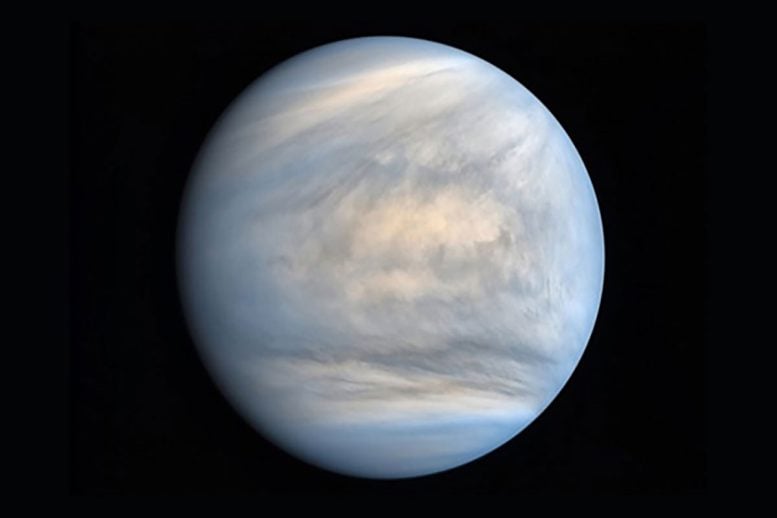
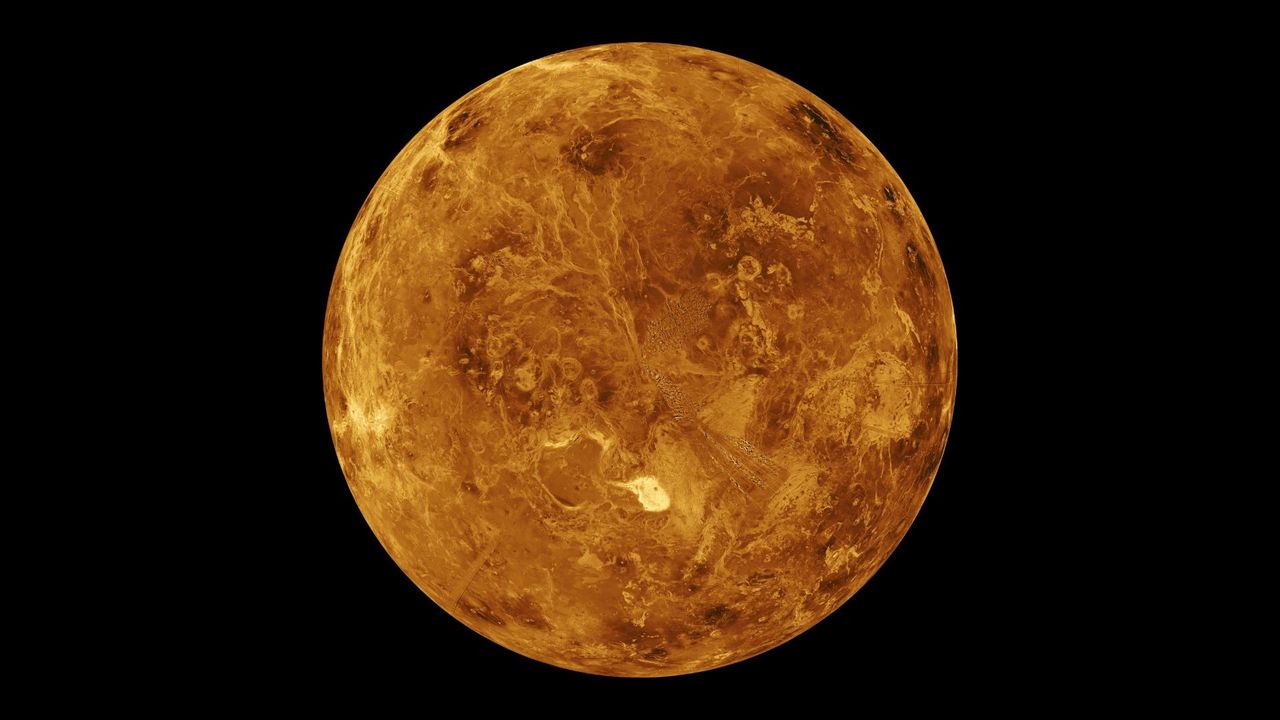
A new model suggests that asteroid impacts on Earth may have occasionally launched microscopic material into space that could have reached Venus’s atmosphere over billions of years. Some of this material may even have temporarily remained suspended in the planet’s cloud layers under certain conditions.
The idea is based on the theory of panspermia, which suggests that life, or the building blocks of life, can move between planets on debris created by asteroid impacts. Scientists have often discussed the possibility of microbes traveling between Earth and Mars, and even the possibility of Earthly organisms reaching locations as far away as Jupiter’s moons.
Now, interest in the possibility of microscopic life in Venus’s dense, sulfur-rich clouds has made Venus a focus for similar studies of interplanetary transfer.
A team from Arizona State University, the Johns Hopkins University Applied Physics Laboratory, and Sandia National Laboratories recently explored this idea in a study presented at the 2026 Lunar and Planetary Science Conference. They used the Venus Life Equation, a framework made in 2021 by planetary scientist Noam Izenberg and his team. This equation considers three main factors: origination, robustness, and continuity. These factors help estimate the likelihood that life exists on Venus today. If panspermia occurred, it would mean that any life on Venus, if it exists at all, would not necessarily have originated there.
A Rock Becomes a Delivery Vehicle
Before considering the possibility of life originating on Venus, the researchers first addressed a fundamental question: could any material from Earth realistically survive the journey to Venus?
When an asteroid hits Earth hard enough to send material into space, that material faces intense shock, high heat, radiation, and the vacuum of space. Studies of meteorites found on Earth show that organic compounds can survive both ejection and travel between planets. However, an important question remains: what happens when this debris enters Venus’s atmosphere at high speed?
To study this process, the researchers used the pancake model. This model helps researchers analyze how meteors break apart when they enter an atmosphere. In this model, a meteor entering Venus’s atmosphere experiences intense heating and breaks into fragments. These fragments spread out into a flattened cloud of debris called ‘cells.’ Some of these cells are small enough to stay suspended in Venus’s clouds, instead of falling to the surface, where survival would be much less likely.
The Math of Interplanetary Hitchhikers
Their calculations indicate that, depending on the assumptions used, between 2 and 4 billion cell-sized fragments may have reached the clouds of Venus. Even accounting for a 99% loss during transit, billions of cell-sized fragments could be delivered. The model further estimates that approximately 100 cells could arrive in Venus’s clouds each year, amounting to roughly 20 billion over the past billion years, which corresponds to the estimated age of Venus’s current surface.
Life on Venus?
Venus is considered a relatively low-risk target for spacecraft contamination under planetary protection guidelines. The results of this study imply that natural processes may have been transferring material from Earth to Venus for a billion years, independent of human activity.
So far, no mission has found life in Venus’s clouds. However, future astrobiology missions are expected to directly search for it. If life is discovered, these models show that scientists will then need to determine whether it originated on Venus or arrived from Earth.
Austin Burgess is a writer and researcher with a background in sales, marketing, and data analytics. He holds an MBA, a Bachelor of Science in Business Administration, and a data analytics certification. His work focuses on breaking scientific developments, with an emphasis on emerging biology, cognitive neuroscience, and archaeological discoveries.