The US military said it has launched its 10th consecutive round of strikes on Iran to force the reopening of the strait of Hormuz.
Earlier on Monday, Iran’s president said the country is in a “full-scale war” after the US expanded its aerial campaign and Tehran struck Washington’s Gulf allies, even as diplomats said talks to de-escalate were continuing.
For the first time in its history, the US military sent explosive-laden drone boats into combat by attacking an Iranian midget submarine and naval port. The unprecedented use of such kamikaze sea drones by the United States comes nearly a decade after Iranian and Houthi forces first demonstrated such weapons.
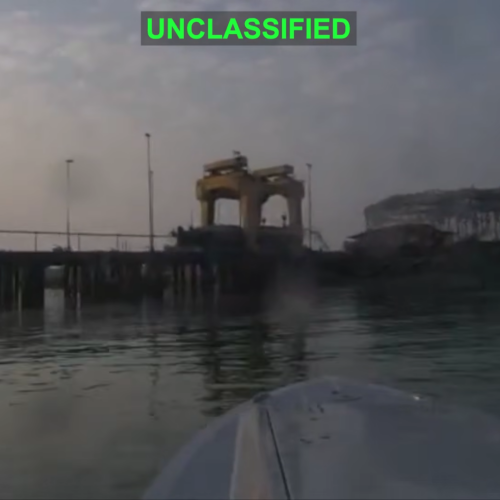
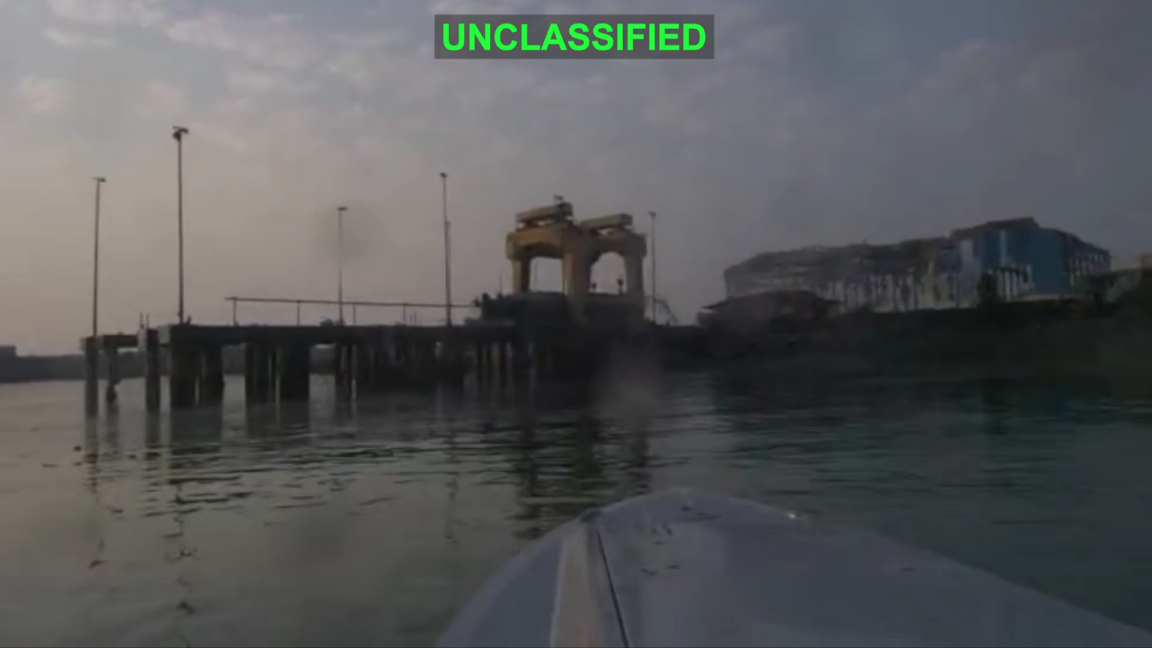
The US military shared a video showing three “one-way attack surface drones” exploding after approaching an Iranian midget submarine and ship maintenance facility at Iran’s Bandar Abbas Naval Base on the night of July 12. US Central Command, the US military combat command responsible for Middle East operations, described the strikes in a social media post as the “first time American forces have employed sea drones in combat operations.”
The US drone boats were able to “make a low-speed, uncontested approach” to their targets before exploding, according to USNI News, a news service from the nonprofit US Naval Institute. USNI News also identified one of the targets as an Iranian Ghadir-class midget submarine that was out of the water while being suspended from a gantry.
For decades, OPEC influenced the market by how much oil it produced. But China, the largest importer, is demonstrating its remarkable power over prices.
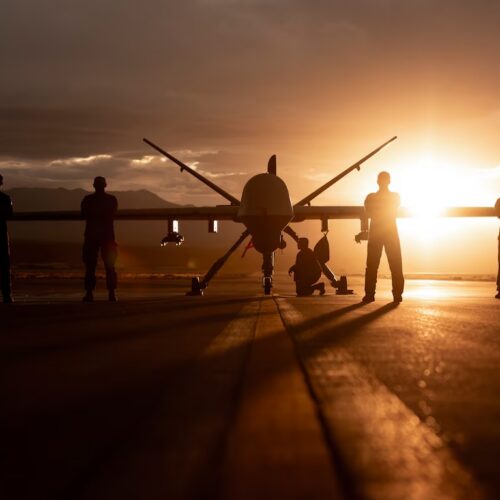
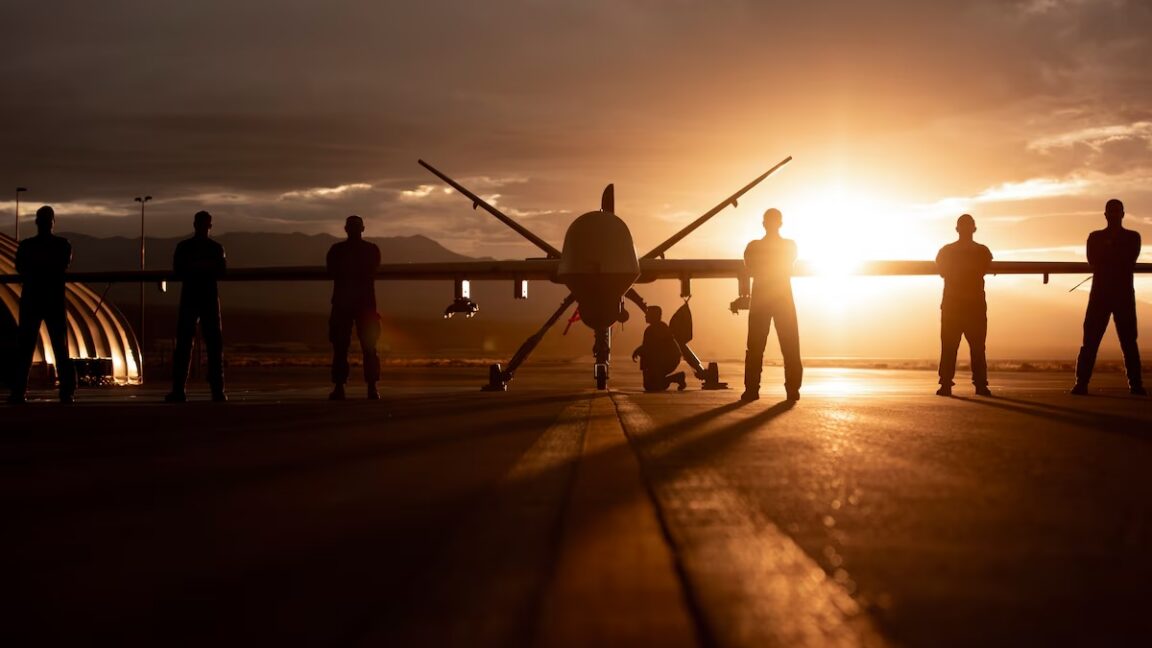
The US military has lost dozens of Reaper drones collectively worth more than $1 billion while carrying out surveillance and attack missions over Iran. Now the Pentagon is seeking large numbers of cheaper drones that can perform such missions despite the expectation that many will be lost in combat.
In a call for industry pitches, the Defense Innovation Unit’s notice described the US military’s current reliance on drones and crewed aircraft, each costing more than $30 million, as being “unsustainable against adversaries utilizing layered defenses enabled by increasingly low-cost antiaircraft capabilities.” It envisions deploying more “cost-effective” drones to “overwhelm enemy air defenses even while experiencing numerous [drone] losses.”
That is, in practice, what Ukraine’s military has been demonstrating with its long- and mid-range strike campaign against Russian supply lines, oil refineries, and various energy or industrial targets within Russia or occupied Ukraine. The Ukrainian campaign has been overwhelming Russia’s overstretched air defense capabilities by launching hundreds of relatively inexpensive drones and missiles on a daily basis to attack targets far behind the frontlines, while continuing to damage or destroy Russia’s most sophisticated air defense systems.
For a mega-refinery in Ulsan, South Korea, a top exporter of jet fuel to the West Coast of the United States and other places, weaning off Middle Eastern oil is no small feat.
"This is not Winston Churchill, that I can tell you," Trump said of Starmer as he hammered the exiting PM over immigration, "windmills" and not being there when he needed him in Iran.
Smaller U.S. oil producers are starting to drill more wells, but big companies like Exxon Mobil and Chevron have said they are not changing their plans as a result of the war with Iran.
Welcome to this week’s installment of The Intelligence Brief… in a recent sworn statement, it was revealed that the Pentagon has reportedly leveraged Elon Musk’s xAI to assist in the launch of as many as 2,000 munitions in the recent U.S. war with Iran. In our coverage, we’ll be looking at 1) how the recent revelations were brought to light in a lawsuit focused on possible violations of the Clean Air Act, 2) how a “frontier” AI chatbot became key part of the Pentagon’s military efforts, and 3) why lawmakers are sounding alarms over the potential misuse of AI systems, and the need for ensuring their safe use while restricting major decisions to human operators.
Quote of the Week
“We must act now—not to stifle technological progress, but to establish clear rules of the road that keep humans in charge and keep AI’s use in warfare smart and safe.”
– U.S. Senator Kirsten Gillibrand
If you enjoy the news and perspectives offered by The Debrief, make sure that you aren’t missing our stories by making us one of your “preferred sources” on Google News. You can simply follow this link to add The Debrief to your list of favorites, and you can read more about Google’s preferred sources in our article here.
Get all the latest stories from The Debrief, with more breaking stories at the end of this week’s newsletter.
Musk’s AI Chatbot Helped U.S. Forces Fire Missiles
This week, as an initial deal aiming to end the U.S. war with Iran comes to fruition, it was revealed that thousands of missiles launched by the U.S. were fired by Elon Musk’s Grok chatbot.
The revelation emerged as part of a sworn statement pushing to protect the military’s use of Musk’s AI systems that could be impacted by a lawsuit, which alleges his xAI data centers are contributing to illegal pollution in black communities.
The statement, made by Cameron Stanley, the Pentagon’s chief digital and artificial intelligence officer, states that Musk’s AI chatbot helped to facilitate the deployment of “over 2,000 munitions to 2,000 distinct targets within 96 hours during Operation Epic Fury,” which Stanley called “a testament to the greatly increased operational efficiency made possible by the Grok Gov Model.”
A “Frontier” AI Chatbot
In Stanley’s sworn statement this week, the Pentagon official tasked with overseeing the Department of War’s use of AI wrote that xAI’s Grok is one of just four proprietary AI models “capable of supporting national security applications.”
Stanley wrote that xAI also “remains one of just three enterprise providers equipped to sustain mission-critical operations across Secret and Top-Secret classified networks for the foreseeable future due to the enormous resources required for initial certification.”
“DoW currently relies on derivatives of xAl’s commercial offerings known as the Grok Gov Model,” according to Stanley, who goes on to note in his statement that the AI chatbot has been deployed in systems that include Maven Smart Systems, where it assists in supporting “vital national security missions, including targeting, intelligence, readiness, and recruitment,” and also aids in a range of other military tasks.
“The Grok Gov Model offers features unique to xAI that are found in no other frontier Al model,” Stanley wrote. As an illustration of its capability, Stanley then made the chilling revelation of just how involved in military activities the xAI chatbot has recently become.
Grok Goes to War
“To further illustrate the uses of the Grok Gov Model within DoW, MSS frontier workflows enabled U.S. forces to deploy over 2,000 munitions to 2,000 distinct targets within 96 hours during Operation Epic Fury, a testament to the greatly increased operational efficiency made possible by the Grok Gov Model,” Stanley wrote in his testimony.
As reported by The Independent, the sworn statement provided by Stanley appears to represent the first confirmation by an official within the Trump Administration that Elon Musk’s AI is being used to control U.S. weapons used against Iran.
Since the conflict began in February, the Trump administration has faced scrutiny over U.S.-led attacks that have resulted in civilian deaths, with mounting questions over the military’s use of AI during the conflict.
In an analysis by the Lieber Institute at West Point, Jessica Dorsey and Luke Moffett noted that AI systems “are frequently framed as ushering in an era of unprecedented precision and efficiency in warfare,” but in reality, issues that include recent figures involving as many as 1,700 civilian deaths as of May 2026 “calls that narrative into serious question.”
“CENTCOM claimed it was generating 1,000 targets per hour,” Moffett and Dorsey wrote, adding that while “such capabilities are often framed as enhancing precision… they also introduce new layers of abstraction between decision-makers and the consequences of their actions.”
Pending Court Rulings Could Impact the Pentagon’s AI Use
The U.S. Department of Justice has argued that a pending court ruling could significantly impact the Pentagon’s use of AI if it is prevented from deploying xAI across its systems.
In an effort to prevent such setbacks, the Trump administration has requested that a lawsuit launched by the NAACP be dismissed by a Mississippi-based federal judge. The lawsuit claims that Musk’s xAI Colossus 2 data center, which relies on several dozen gas-powered turbines, is operating in violation of the Clean Air Act. Presently, the turbines are being operated without permits, the lawsuit asserts.
In his sworn statement this week, Stanley called Musk’s xAI systems a “long-term strategic tool vital to maintaining our technological advantage against adversaries.”
However, opponents of such measures in Washington argue that new regulations must help to ensure that crucial military decisions—especially those which impact human lives—must also be made by humans.
“The most critical decisions affecting our national security and the lives of our service members must always be made by human beings, not unaccountable machines,” wrote U.S. Senator Kirsten Gillibrand (D, NY) in a statement earlier in June.
Gillibrand also recently introduced a bill that aims to restrict military decisions that could potentially impact human lives to human operators, and to implement a ban on AI in governing the use of nuclear weapons, as well as autonomous weapons capabilities and domestic surveillance.
In her statement this month, Gillibrand argued that the Pentagon “is moving toward deploying incredibly powerful AI technology without commonsense guardrails in place, which could have catastrophic consequences that make all of us less safe.”
“We must act now—not to stifle technological progress, but to establish clear rules of the road that keep humans in charge and keep AI’s use in warfare smart and safe,” Gillibrand added.
The preliminary U.S.-Iran deal temporarily waives restrictions that have limited the country’s oil sales and how much money it has been able to make from those exports.
Thinktank says decoupling electricity from gas prices has also helped shield Spain from hikes caused by Iran war
Spanish households save €10 a month on electricity bills because of wind turbines and solar panels installed in the last five years, a report has found.
Typical energy bills would be 19% more expensive if electricity costs were still as tightly coupled to gas prices as in 2021, according to Ember, a climate thinktank. It found Spain’s “strategic” expansion of renewables since Russia invaded Ukraine in 2022 has shielded Spanish households from the latest rises in fossil fuel prices caused by the Iran war.
La Coupe du monde 2026 ne se jouera pas seulement sur les stades. Entre affirmation de la puissance américaine, tensions migratoires et rivalités diplomatiques, le tournoi s'annonce comme un révélateur des fractures et des rapports de force qui traversent le monde contemporain. La Coupe du monde...
The economic shock of the closure of the Strait of Hormuz has sparked calls to abandon fossil fuels faster. But that's the wrong lesson, says Richard Lyon – and Net Zero obsessed Britain will learn this the hard way.
Welcome to this edition of The Intelligence Brief… This week, the ongoing conflict between the United States and Iran appears to be edging closer to a broader regional crisis, as both nations exchange new rounds of military strikes amid fading hopes for diplomacy. In our analysis, we’ll be looking at 1) the latest U.S. and Iranian attacks near the Strait of Hormuz and across the Gulf region, 2) President Trump’s escalating rhetoric and warnings of additional military action targeting Iran’s oil infrastructure, 3) the growing humanitarian and economic consequences of the conflict, including disruptions to shipping and concerns over civilian infrastructure, and 4) why analysts increasingly fear that continued escalation could draw the region closer to a wider war with global repercussions.
Quote of the Week
“The strikes are in response to Iran’s unwarranted and continued aggression. U.S. forces remain vigilant, lethal, and ready.”
– U.S. Central Command, June 10, 2026
If you enjoy the news and perspectives offered by The Debrief, make sure that you aren’t missing our stories by making us one of your “preferred sources” on Google News. You can simply follow this link to add The Debrief to your list of favorites, and you can read more about Google’s preferred sources in our article here.
Get all the latest stories from The Debrief, with more breaking stories at the end of this week’s newsletter.
Ongoing U.S. Conflict with Iran Could Signal a Broader War
This week, a clear end to the ongoing U.S. conflict with Iran still seems remote, as the United States and Iran engaged in another round of military strikes.
Early this morning, strikes exchanged between the nations’ military forces signaled the potential that a dangerous new phase of the conflict may be approaching, after an initial several months of efforts aiming to avoid escalation to a broader regional war.
Among the most recent attacks, several locations near the Strait of Hormuz were targeted, as ongoing warnings by President Trump urged Iranian officials to heed U.S. warnings and bring the conflict to an end.
Latest Attacks in the U.S.-Iran War
In response to the attacks, Iran also launched several strikes on targets linked to U.S. assets that include military facilities in Kuwait and Bahrain. The Iranian strikes prompted air-defense activity throughout the region, along with airspace restrictions that have been temporarily elevated in the Gulf.
Amid the strikes, Iranian officials claimed that all maritime traffic had been closed off from passage through the Strait of Hormuz. However, U.S. officials disputed the claims on Thursday.
The renewed violence follows several strikes confirmed by U.S. Central Command late on Wednesday.
“CENTCOM forces launched strikes on Iranian military surveillance capabilities, communication systems, and air defense sites across Iran. U.S. Marine Corps, Air Force, and Navy assets fired precision munitions on Iranian targets that posed a threat to U.S. forces and international commercial ships transiting regional waters,” read a posting on the official U.S. Central Command X account.
Trump: U.S. Will “Assume Total Control”
Early on Thursday, President Trump also warned about further military action by the United States against Iran.
“The United States will be hitting Iran (Whose Navy, Air Force, Radar, Anti Aircraft, and all other forms of Defense, together with most of its offensive capability, are GONE!), VERY HARD TONIGHT,” President Trump wrote in one of his characteristically bombastic social media postings on Thursday.
Trump also claimed that in “the not too distant future” the U.S. would be capturing Kharg Island, along with other locations that play a key role in the oil infrastructure of the region, with the broader plan to “assume total control of their Oil and Gas Markets, much like we have with Venezuela, which is working out brilliantly for both Venezuela and the United States of America.”
Beyond the typical hyperbolic phrasing, the President’s post on Thursday appeared to indicate locations that could become future targets, although similar ongoing threats have repeatedly been made by Mr. Trump in recent weeks, in an effort to encourage Iranian officials to agree to U.S. demands that aim to curb the country’s nuclear ambitions—a significant goalpost the U.S. has maintained in efforts to end the war.
As Escalations Continue, Broader Problems Emerge
Efforts to bring about a cease-fire agreement have been in the works since April, although Iran’s foreign ministry now says such efforts have been rendered “meaningless” by the continued American strikes.
Firing back, U.S. officials, including Secretary of War Pete Hegseth, have characterized the attacks as being “part of an effort to pressure Tehran into accepting negotiations over its nuclear program” amid broader security concerns the U.S. is attempting to reconcile.
However, more broadly, the conflict is also having a far wider economic and humanitarian impact. Recent U.S. military operations that have targeted vessels suspected of transporting Iranian oil have reportedly struck multiple commercial ships in recent days, with India confirming that three of its citizens were killed aboard one tanker.
“CENTCOM forces have disabled nine non-compliant vessels, redirected 135 ships that complied, and allowed 42 vessels supporting humanitarian aid to pass since initiating the blockade on April 13,” U.S. Central Command wrote in an update on Thursday.
“The blockade is being enforced impartially against vessels of all nations entering or departing Iranian ports and coastal areas, including all Iranian ports on the Arabian Gulf and Gulf of Oman,” the posting added.
Humanitarian and Economic Concerns
Based on satellite imagery reviewed by analysts, the potential that some of the recent strikes may have damaged drinking-water infrastructure in southern Iran has also been raised, increasing humanitarian concerns.
Financial markets are also reacting to the growing instability. The European Central Bank cited war-related inflation pressures as it raised interest rates, while the World Bank warned that rising energy costs linked to the conflict are slowing global economic growth to its weakest pace since the COVID-19 pandemic.
Overall, as the ongoing military operations by both nations continue, and with few signs of diplomacy on the immediate horizon, concerns continue to mount over whether a broader regional crisis—one the U.S. has hoped to avoid—could now loom nearer than at any time before.

 Login