As novelas verticais já são um fenômeno à parte na América Latina, e a Apple parece estar ciente disso: brincando com o gênero, ela disponibilizou no seu canal do YouTube “Nido de Villanas”, uma micronovela mexicana dividida em 14 partes e filmada com o iPhone 17 Pro.
Cada um dos 14 episódios, com duração estimada de 2 minutos, faz uso dos principais recursos de gravação do iPhone, como o modo Ação (Action mode), o zoom óptico de 8x ou até mesmo o modo de câmera lenta do aparelho.
A Maçã compartilhou um vídeo apresentando a produção:
Com uma trama “repleta de ambição, segredos e traições, na qual quatro mulheres estão dispostas a fazer de tudo para ficar com a fortuna dos Iturribiaga”, “Nido de Villanas” oscila entre emular as novelas mexicanas — referência histórica do gênero — e apresentar as principais funcionalidades de vídeo disponíveis no iPhone 17 Pro.
Esse enquadramento em termos de formato, diga-se de passagem, proliferado especialmente por estúdios asiáticos em plataformas de vídeos curtos (como o TikTok ou o Kwai) movimenta uma indústria que disputa a longeva hegemonia das telenovelas.
Foi o suficiente para que conglomerados conhecidos por sua dominância no segmento, como a TV Globo (no Brasil) e a Televisa (no México), oferecessem suas contrapartidas na transformação pela qual as novelas passam diante da mudança de hábito de consumo na América Latina e em todo o mundo. A opção da Maçã, evidentemente, carrega menos desse peso, mas demarca um possível interesse de presença nesse mercado.
NOTA DE TRANSPARÊNCIA: O MacMagazine recebe uma pequena comissão sobre vendas concluídas por meio de links deste post, mas você, como consumidor, não paga nada mais pelos produtos/serviços usando os nossos links de afiliado.
Since riding Donald Trump’s coattails to power, Robert F. Kennedy Jr has taken his haphazard anti-vaccine views and enshrined them as a core tenet of US health policy.
According to 16 current and former health officials who spoke to Reuters, RFK Jr has taken much more drastic measures to push his anti-vaccine agenda than was previously known.
Speaking on condition of anonymity, two officials told the news agency that RFK approached National Institute of Health director Jay Bhattacharya earlier this year with a proposal to spend up to $5 billion in tax dollars to establish links between vaccines and autism.
As Reuters notes, that kind of spending would encompass ten percent of the NIH’s annual budget, a massive waste that would fly in the face of decades of established science showing vaccines definitively don’t cause autism.
“He’s an anti-vaccine activist. That’s who he is. That’s who he’s been for 20 years,” Paul Offit, director of the Vaccine Education Center at the Children’s Hospital of Philadelphia told Reuters. “To expect that as secretary of Health and Human Services he’d be anything other than that is wishful thinking.”
It certainly wouldn’t have been the first time RFK Jr attempted to twist the science to link vaccines with autism. Earlier this year, the US Department of Health and Human Services was caught spending $1.6 million funding a study on hepatitis B vaccines conducted by controversial Danish researchers Peter Aaby and Christine Stabell Benn.
Had the Africa Centres for Disease Control and Prevention — the public health arm of the Africa Union — not stepped in to stop the RFK-backed study, researchers would have withheld inoculations from thousands of newborn infants in Guinea-Bissau.
The situation drew notable comparisons to the Tuskegee Experiment, a highly unethical medical experiment that used hundreds of Black men as guinea pigs to study the long-term effects of syphilis. Despite the fact that effective treatment was available, nearly 400 men spent decades without treatment, suffering life-long consequences at the hands of manipulative researchers.
Though the Tuskegee Experiment may not have produced any medical breakthroughs or scientific discoveries, its cruel legacy seemingly lives on as inspiration for RFK and his HHS cronies.
On Thursday, the New York Times reported that the Centers for Disease Control and Prevention had linked the outbreak of cyclosporiasis, an infection notorious for inducing explosive diarrhea, to iceberg lettuce from Taylor Farms that was supplied to Taco Bell.
Per the reporting, Taco Bell said it was voluntarily pulling the lettuce from select states where it received the contaminated produce: Indiana, Kentucky, Michigan, Ohio, and West Virginia. An announcement from the CDC warned the public not to eat food items with shredded lettuce from Taco Bell, but hasn’t identified Taylor Farms as the source.
But while Taco Bell may have served the tainted lettuce, it would be remiss to lay all of the blame on the fast food chain (although one aggrieved customer is already suing it after contracting the illness).
The contamination occurred at the farms or facilities where the food was processed, from a single supplier in Mexico, Food and Drug Administration officials said. The supplier, Taylor Farms, has been involved in previous outbreaks, including another outbreak of cyclosporiasis in a salad mix in 2013.
Taco Bell, to its credit, also immediately pulled its ingredients from some of its locations last week as soon as it learned about the situation, according to local reports.
And then there’s the broader political context that many experts are drawing attention to: how the Trump administration has slashed funding to the CDC and paralyzed the nation’s food safety bodies.
Last February, shortly after Trump took office, the US Department of Agriculture (USDA) dissolved its National Advisory Committee on Microbiological Criteria for Foods, which provided scientific guidance on food safety policy. Ryan Cooper at The Prospect notes that the committee was working on advice for foodborne illness outbreaks before being terminated. The FDA also shut down its National Advisory Committee on Meat and Poultry Inspection.
Not spared during the wave of cuts that wreaked the federal government, the USDA lost over 20,000 workers last year, with 913 of them coming from its Food Safety Inspection Service.
Last year, the CDC — which has lost some 3,000 employees under Trump — scaled back its food surveillance program called FoodNet that monitored eight common foodborne pathogens, changing it so that surveillance of the cyclospora parasite that causes cyclosporiasis was optional.
Dan Jernigan, a former director of CDC’s Center for Emerging and Zoonotic Infectious Diseases, told the Washington Post that the decision was made because funding for food safety had not been maintained over the past few years. That the US is now on track to have more cyclospora cases this year than any previous year in history is likely no coincidence.
Jernigan left the agency last August in protest of Trump ousting its then director Susan Monarez and the policies of health secretary Robert F Kennedy Jr. But he said that the Trump cuts would have little impact on the ongoing outbreak, adding that FoodNet wasn’t designed for real-time outbreak detection or response.
As the WaPo reporting notes, federal and state health authorities have insisted that the cyclosporiasis investigation hasn’t been impeded because the parasite is still reportable to a separate national database. Still, Jernigan said that scaling back FoodNet wasn’t inconsequential.
“Routine outbreak investigators are the firefighters responding to a specific blaze. FoodNet is the citywide system that tracks how often fires occur and whether the overall risk is rising,” he told WaPo. “Removing cyclosporiasis from FoodNet does not take the firefighters away from the current outbreak, but it does remove part of the system that tells us how large the problem is and whether it is getting worse over time.”
Cyclosporiasis is a particularly tough illness to track. Symptoms can take weeks to present, making it difficult for health officials to trace back where sufferers were infected. A recent Wired piece drew attention to how many people may be wrongly misdiagnosing themselves as news of the diarrhea dilemma spread across social media.
Linda Yancey, an infectious disease specialist at Memorial Hermann Health System in Texas, warned that large outbreaks like this could become more common.
“Unfortunately with so many budget cuts, every federal agency is hurting for personnel and resources,” she told Time Magazine earlier this month. “We could be at greater risk of foodborne infections because the FDA is so understaffed and underfunded right now.”
So far, Michigan, the epicenter of the outbreak, has alone tallied over 4,300 cases of infection, while nationwide there could be 7,000 cases, though the Centers for Disease Control and Prevention has only confirmed 1,600 of them.
The best digital planners for Mac and iPad are not necessarily the apps with the longest feature lists. A useful planner should help make the day easier to understand, keep commitments visible and reduce the number of places where tasks quietly disappear.
Mac and iPad also encourage two different planning styles. The Mac is better for typing, reviewing projects and arranging a full week across a larger screen. The iPad is more natural for handwritten notes, Apple Pencil planning and checking the day away from a desk. The strongest apps either work well across both devices or focus so successfully on one style that the compromise feels worthwhile.
Some people want a digital version of a paper agenda. Others want a visual timeline, a task manager, a calendar command center or a workspace that can hold an entire life. These are the strongest options for those different approaches.
Structured Is the Best Visual Daily Planner
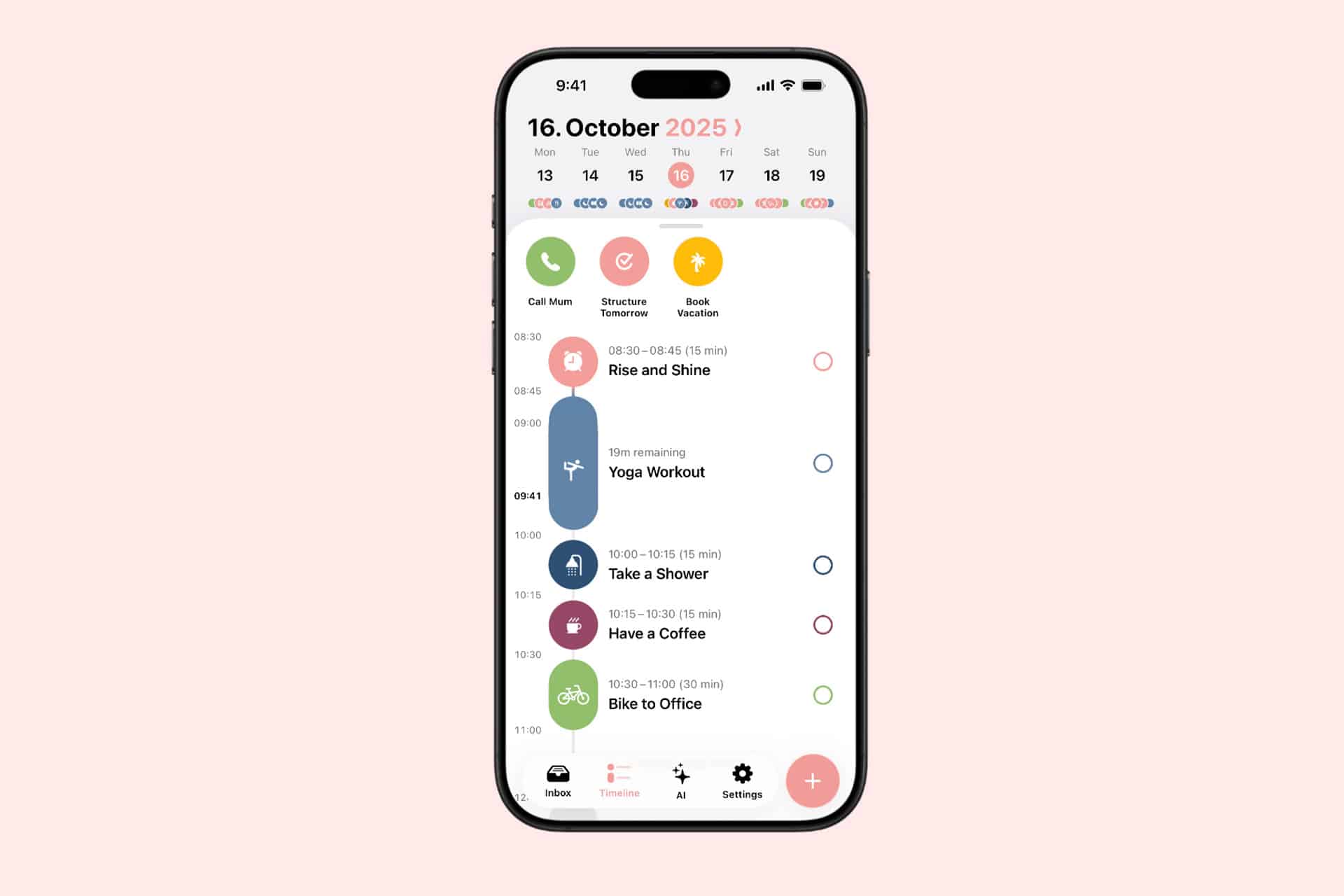
Structured is the easiest recommendation for users who want to see the day as one continuous timeline. Tasks, appointments and focus sessions appear in chronological order, making it immediately obvious when the schedule is overloaded or when a free hour actually exists.
The app feels particularly natural on iPad because tasks can be moved and adjusted visually. Its Mac version provides more space for planning the full day while preserving the same clean layout. Structured also offers apps for iPhone and Apple Watch, which helps keep the plan accessible without repeatedly opening the Mac.
This is a strong choice for students, busy families and anyone who struggles with traditional task lists. A list says what needs to happen. Structured shows where each task can fit.
Its limitation is scale. It handles daily planning beautifully, but users managing large professional projects may need a separate project-management system. Structured is best when the priority is today rather than the entire company roadmap.
Image Credit: Structured
Goodnotes Is Best for Handwritten Planning
Goodnotes remains one of the best digital planners for iPad users who want the experience of paper without carrying notebooks. It supports Apple Pencil handwriting, PDF planner templates, typed text, images, links, stickers and searchable handwritten notes.
The experience depends heavily on the planner template selected. Users can choose daily, weekly, monthly, academic, financial or wellness layouts and import them as PDF files. Hyperlinked tabs can make a digital planner behave like a physical binder with instant navigation between months and sections.
The Mac app is useful for reviewing pages, typing longer notes and accessing the same documents at a desk. The iPad remains the better creation device because handwriting is the central appeal.
Goodnotes does not automatically manage time like a calendar-based app. Writing “meeting at 3 p.m.” on a page does not necessarily create a calendar alert. It is best for people who enjoy manually planning and reflecting rather than expecting the software to rearrange the day automatically.
Things 3 Is Best for Focused Personal Planning
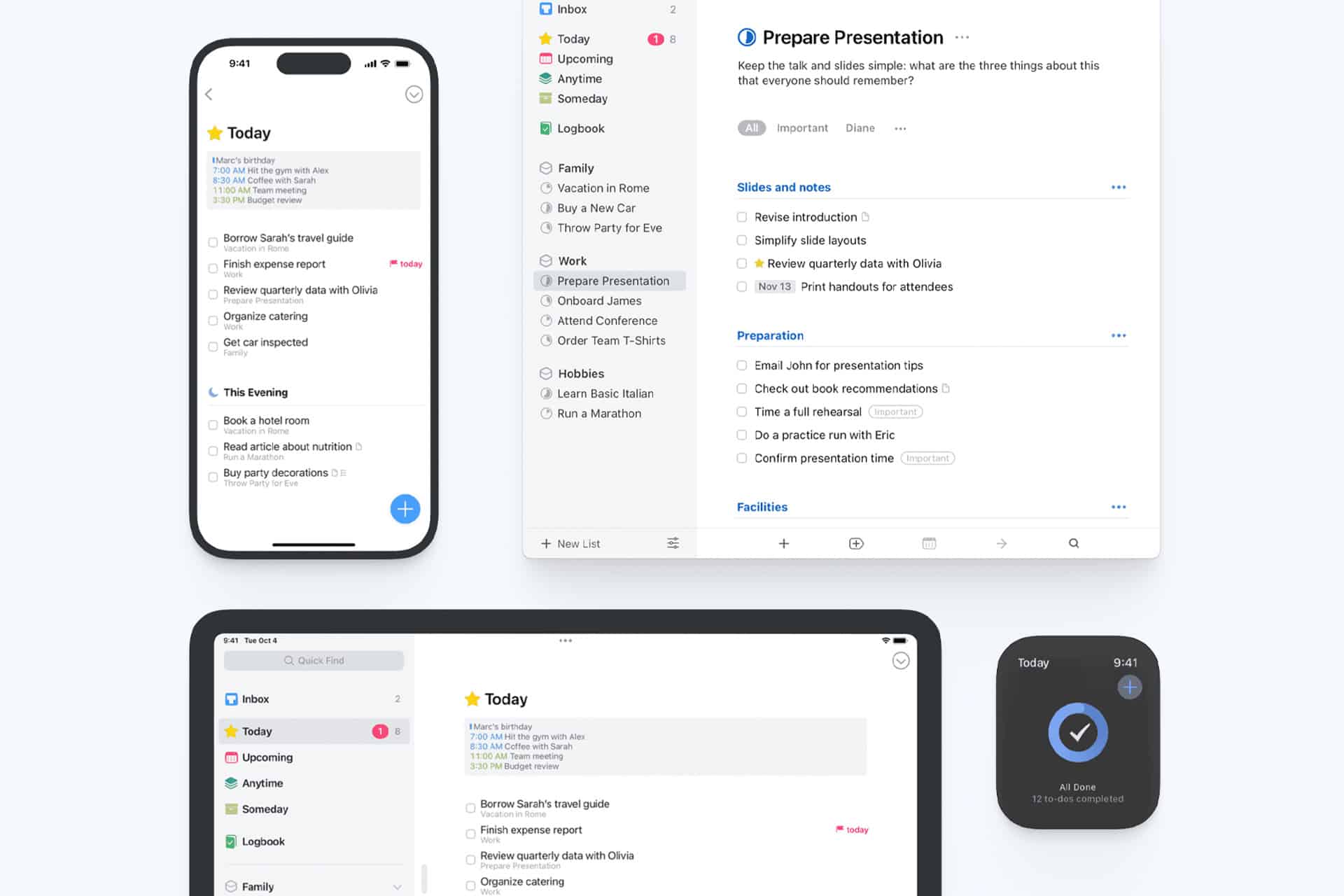
Things 3 is a task manager rather than a traditional calendar, but its Today and Upcoming views make it an excellent personal planner. The interface is calm, fast and unusually disciplined. Tasks can be collected quickly, organized into projects and areas, then scheduled without turning the app into a complicated database.
The Mac version is especially good for weekly reviews and larger project organization. On iPad, Things feels lighter and more direct, with excellent keyboard support and touch controls. Cloud sync keeps tasks aligned across Apple devices.
Things is ideal for users who want to separate tasks from appointments. Calendar events can appear beside the daily list, but the app remains focused on actions rather than becoming a full calendar replacement.
The main drawback is collaboration. Things is designed primarily for personal planning, not shared team projects or household lists. It is also sold separately for Mac, iPad and iPhone rather than through one universal purchase.
Image Credit: Things
Notion Is Best for Building a Custom Planner
Notion works for users who do not want to accept someone else’s idea of a planner. It can become a project tracker, editorial calendar, habit journal, reading list, weekly dashboard or all of those at once.
Templates make the starting process easier. A user can create daily pages connected to tasks, projects, goals and notes, then display the same information through calendar, table, board or timeline views. Notion Calendar adds a more conventional scheduling layer and works well on Mac.
The flexibility is both the attraction and the warning. Notion can become a beautifully organized personal operating system. It can also become a weekend-long design project that produces more templates than completed tasks.
The iPad app is useful for reviewing plans, adding notes and working with a keyboard. It is less satisfying for freehand Apple Pencil planning than Goodnotes. Notion is the better option for structured information, connected projects and users who enjoy building their own system.
Fantastical Is Best for Calendar-First Planning
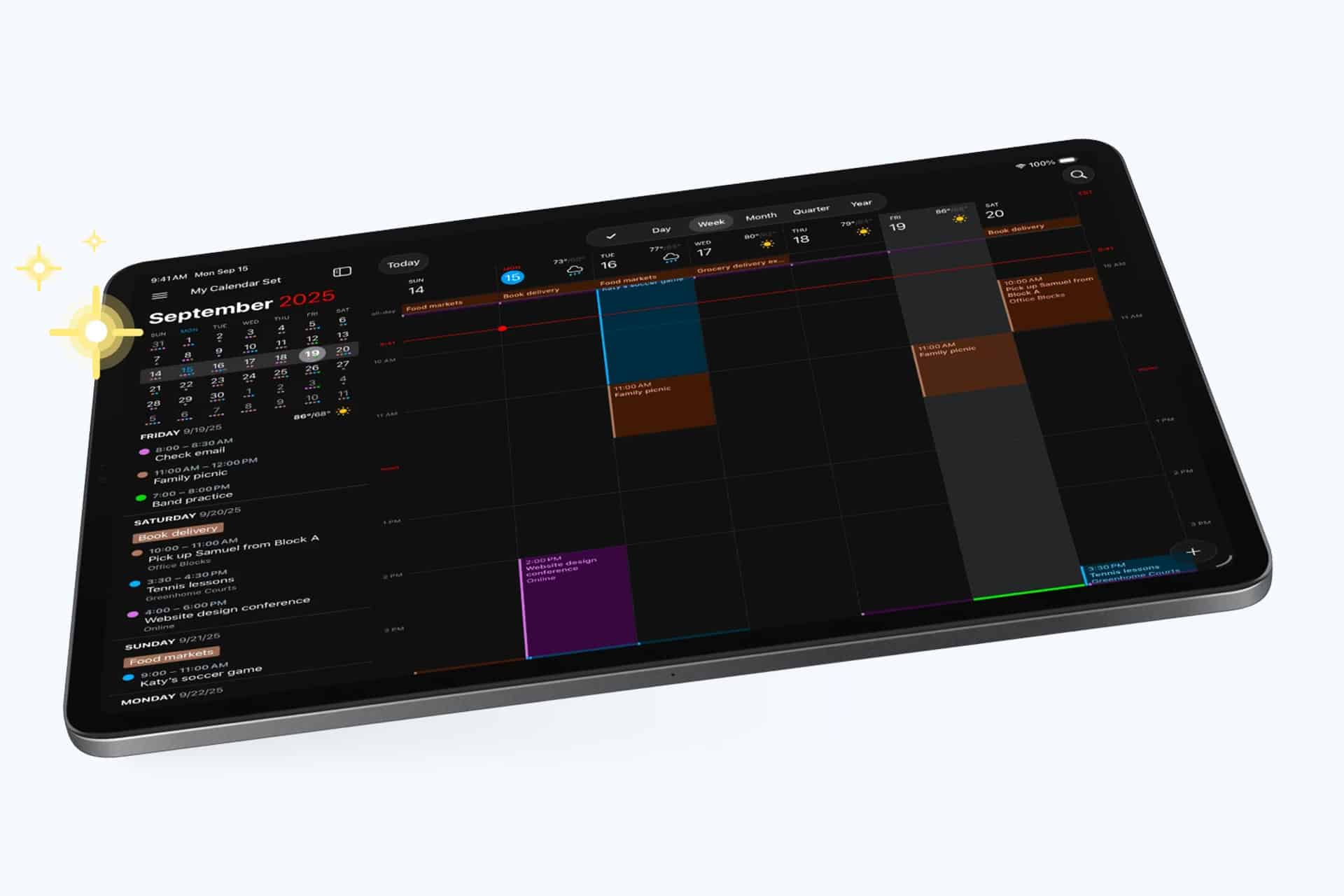
Fantastical is the strongest choice for users whose day is governed by appointments, meetings and scheduled commitments. It combines calendars and tasks in polished day, week, month, quarter and year views across Mac and iPad.
Natural-language input makes adding events fast. Typing a phrase such as “Lunch with Alex Friday at noon” can create the event without opening several fields. Fantastical also supports multiple calendar services, time zones, reminders, meeting links and scheduling tools.
The Mac app is a strong command center for professional calendars. The iPad version offers enough space to examine the week without feeling compressed. Users can also connect Apple Reminders, Todoist or Google Tasks so scheduled work appears beside events.
Fantastical is less suited to reflective journaling or handwritten planning. Its premium subscription may also be excessive for someone who only needs a basic calendar. It earns its place when the calendar itself is the planner.
Image Credit: Fantastical
Sunsama Is Best for Deliberate Work Planning
Sunsama approaches productivity as a daily planning ritual. Each morning, users review tasks, decide what belongs in the day and place that work onto the calendar through time blocking. At the end of the day, the app encourages a review rather than allowing unfinished tasks to become permanent background guilt.
It can collect work from services such as Notion, Trello, Asana and other professional tools, then combine those tasks with calendar events. This makes it useful for people whose work is scattered across several platforms.
Sunsama is more guided than most planners. That structure can help users stop planning an impossible day. The Mac experience is the main attraction, while the iPad app keeps the plan available away from the desk.
The subscription is relatively expensive, and the deliberate workflow may feel slow to users who only want a simple task list. Sunsama suits professionals who want planning to become a daily boundary around work rather than another place to collect everything.
Which Digital Planner Should You Choose?
The right planner depends on how the user naturally thinks.
Structured works best for seeing the day visually. Goodnotes is the closest replacement for a paper agenda. Things 3 provides the cleanest personal task system. Notion offers the most freedom. Fantastical serves users who live through their calendars. Sunsama brings the most deliberate approach to professional time blocking.
Using several planners at once usually defeats the purpose. A better strategy is choosing one primary system and allowing other apps to support it. Someone might use Fantastical for appointments and Things for tasks, or Goodnotes for weekly reflection while Structured runs the actual day.
The best digital planners do not create motivation by themselves. They create a reliable place to decide what deserves time. On Mac, that place can become a detailed planning desk. On iPad, it can feel closer to a notebook held in the hand. The right app should make those two experiences feel connected rather than duplicated.
Apocryphal tales of its meals causing the runs have plagued Taco Bell since time immemorial. But this latest parasitic outbreak is something else entirely.
As the Washington Post reports, federal and state authorities are investigating whether the fast food chain is behind the outbreak of explosive diarrhea cases across the country — further cementing its scatological legacy.
The illness, caused by the cyclosporiasis parasite, has sickened as many as 5,100 people across the country, according to the Centers for Disease Control and Prevention. In Michigan, which appears to be the epicenter of the outbreak, over 3,700 people have been infected, state authorities said.
Taco Bell’s suspected role in the outbreak comes after reports that the chain’s Michigan locations began pulling some of its ingredients. Signs in front of the restaurants stated that they were no longer serving lettuce, cilantro, onion, pico de gallo, and guacamole due to a “nationwide recall,” though what recall they were referring to is unclear.
Health officials have so far struggled to narrow down how the parasite is spreading. While usually found on fresh produce, symptoms can take weeks to manifest, making it difficult to trace back to the source.
Lettuce has emerged as one of the likeliest culprits. In an update this week, Michigan’s chief medical executive Natasha Bagdasarian said that “early information has shown lettuce as a common product that regularly comes up during the investigation.”
“Although we do not have a definite product identified as the source of the outbreak, we want to let Michiganders know what we have learned so far so they can take steps to protect their families,” Bagdasarian added.
Federal authorities haven’t singled out any veggies yet, though acting Food and Drug Administration director Don Prater acknowledged Michigan’s fixation on lettuce.
“What I can say at this point is that we’re continuing our traceback investigation on multiple produce items, including the lettuce,” he said, per WaPo.
So far, no nationwide recalls have been made related to the outbreak. One person familiar with the federal investigation, however, praised Taco Bell’s response.
“It’s good the chain has already voluntarily stopped serving a number of items,” they told the newspaper. They added that some who became sick said they didn’t eat at the chain, suggesting that it’s not the only one responsible.
As an explosive diarrhea outbreak splatters across the country, Taco Bell is preparing for the worst.
This week, the fast food chain — or at least its locations in Michigan — began temporarily pulling some of its staple ingredients to help stop the spread of cyclosporiasis, a foodborne parasite that causes sufferers to go running to the toilet even more often than a standard Taco Bell meal might.
Many of your favorite menu items, like the Crunchwrap Supreme and the Cantina Chicken bowl, may be imperiled.
“We are currently unable to sell Lettuce, Cilantro Onion, Pico de Gallo, and Guacamole due to a nationwide recall,” a notice posted at locations in Metro Detroit reads, Michigan outlet WWJ reported. “Any items ordered that normally come with these items WILL NOT contain them,” it stressed.
It doesn’t sound like any cases of cyclosporiasis-related explosive diarrhea have been linked to Taco Bell yet, so the fast food chain is probably just trying to err on the side of caution.
So far, nearly 3,000 people have been infected with the foodborne parasite, with around 86 hospitalized, NBC News reported, citing data from the Centers for Disease Control and Prevention. Michigan appears to be one of the epicenters, accounting for over half the reported cases so far.
Cyclosporiasis symptoms are pretty gnarly, but usually not life threatening. It can cause stomach cramps and a lengthy bout of explosive diarrhea. The intensifier is warranted: one sufferer who spoke to the New York Post was in awe of the “amount of pressure when it comes out,” adding that the “force is crazy.”
No food items have been recalled yet related to the outbreak. The virus is usually found on fresh produce, but we don’t know what specific food items are spreading it or the supplier they come from. Cyclosporiasis is notoriously hard to track because the symptoms usually don’t present until at least a week after the contaminated food is ingested.
They may not all come from the same source, the CDC cautioned, and what we’re seeing could be a cluster of unrelated outbreaks.
To protect yourself, the best thing to do is thoroughly wash and cook your veggies, which you should still eat. And maybe skip on the fast food.
There are some sights in this world that no photograph can truly capture.
Think of the rolling ribbons of the aurora in the northern and southern skies, the depth and breadth of the Grand Canyon, or the sense of immersion when diving on the Great Barrier Reef. Astronauts will tell you that not even large-format cameras can truly capture the blackness of outer space or the majesty that is our planet as seen from orbit or beyond.
It's not every day that a new one of those sights debuts. But such will be the case on Friday, November 13, when the California Science Center in Los Angeles finally reveals the launch-pad-like display of the space shuttle Endeavor inside the new Samuel Oschin Air and Space Center.
En mars 2026, le cyclone Jolina ravageait l'Afrique du Nord. Quelques années plus tôt, la tempête Daniel tuait des milliers de personnes à Derna, en Libye. Ces catastrophes ont un nom peu connu du grand public : les médicanes. Le réchauffement climatique leur donne de l'ampleur.
Quelque 150 millions d'hectares partis en fumée en seulement quatre mois. Ce chiffre donne le vertige. 2026 s'impose déjà comme une année climatique sans équivalent dans les annales, et les scientifiques tirent la sonnette d'alarme.

 Login