❌

Reading view

Boom Mobile Restructuring

Our phones stopped working this morning, or perhaps last night, but everything looked fine on Boom’s Web site. I contacted their support, and as always they got back right away, but this time with bad news:

I’m deeply sorry to share that after careful consideration, we’ve made the very difficult decision to restructure through Chapter 11 bankruptcy. If this isn’t successful, then we will discontinue Boom! Mobile service. I know this is upsetting, and I want to personally thank you for trusting us. We’re committed to making your transition to another provider if you choose to do so.

So now I’m looking for another Verizon MVNO. The options and pricing seem to have changed a lot since the last time I was picking a plan. Some possibilities: US Mobile, Visible, RedPocket, Tello, Boost Mobile, and Total Wireless.

See also: Reddit.

Update (2026-06-29): I ended up going with US Mobile. I like that they offer smaller plans without unlimited data and that you can add extra lines sharing the same bucket of data for only $8. So far, so good. It was an easy switch—even for Visual Voicemail, which has given me trouble in the past. Their Web site works much better than Boom’s, which used to be good but had gotten unreliable in recent years.

Update (2026-07-17): Mike Rockwell switched to US Mobile, too.

  •  

Apple closes unlocked iPhone loophole for T-Mobile and Verizon financing buyers

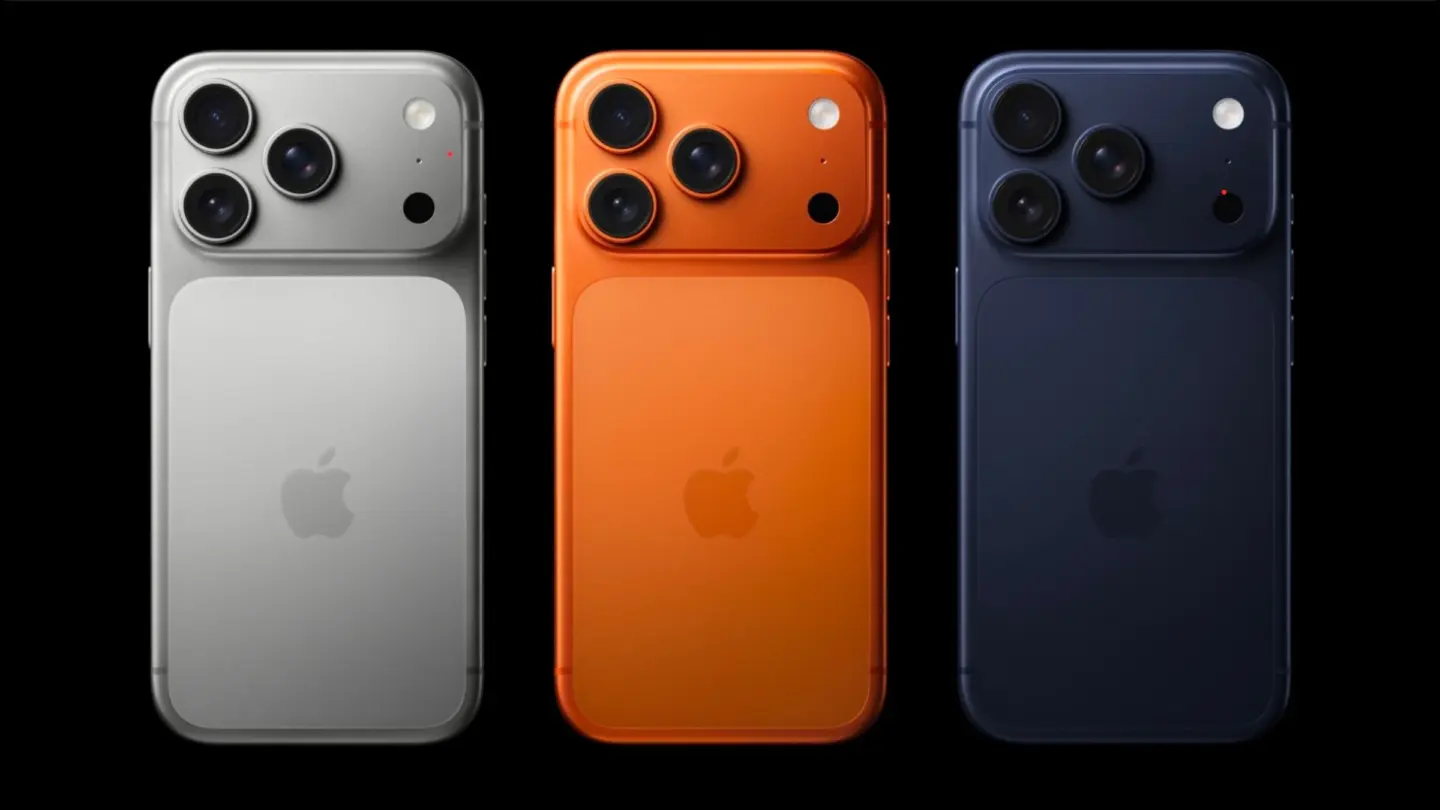
Available in five gorgeous colors — black, lavender, mist blue, sage, and white — iPhone 17 has a beautiful, more durable design.
Apple’s iPhone 17

Apple has quietly shut down a popular workaround that let customers finance new iPhones through T-Mobile or Verizon while still receiving fully unlocked devices.

For years, savvy buyers exploited a quirk in Apple’s sales process. They could stack generous carrier promotions — like massive trade-in credits or bill credits — on installment financing through Apple’s website or stores, and walk away with an iPhone that was carrier-unlocked from day one. This allowed them to use the phone on any network, switch carriers mid-contract, insert international eSIMs while traveling, or even resell the device at a premium before paying it off.

That loophole is now closed for T-Mobile and Verizon customers. Starting recently, any iPhone financed through these carriers’ installment plans will remain locked to the carrier until the balance is paid in full. This brings T-Mobile and Verizon in line with AT&T’s long-standing policy.

How the Loophole Worked

Carriers frequently offer deep discounts to attract customers, such as $1,100 off select iPhone models. Previously:

• AT&T-financed phones bought via Apple were locked.

• T-Mobile and Verizon versions were delivered unlocked, even when financed through their respective Equipment Installment Plans or Device Payment Programs.

Buyers took full advantage by financing through Apple’s site, claiming the carrier promo, and ending up with a flexible, unlocked flagship phone. Some used it to jump ship to cheaper MVNOs, while others flipped the devices for profit.

Apple made the change without fanfare or press release. It was first spotted by users on Reddit’s r/tmobile subreddit and confirmed via an updated FAQ on Apple’s iPhone purchase pages. The new language states clearly:

“If you choose to finance an iPhone through the AT&T Installment Plan, T-Mobile Equipment Installment Plan, or Verizon Device Payment Program, your iPhone will be locked to the carrier until paid in full.”

Why Apple Made the Change

Apple has offered no official explanation. However, the timing suggests it was responding to abuse of the system—particularly resale of subsidized but unlocked phones. The change also likely pleases carriers, who want to ensure customers remain committed during promotional periods and installment terms.

Note for current buyers: There may be a temporary mismatch. Some checkout flows still indicate T-Mobile and Verizon phones as unlocked. Always double-check the fine print before completing a purchase.

Workarounds That Still Work

The policy shift only affects carrier-financed devices. You can still get an unlocked iPhone immediately by:

• Buying it outright (no financing).

• Financing through Apple Card Monthly Installments — these remain unlocked from activation.

• Purchasing directly from third-party retailers or carriers with full upfront payment.

Once a carrier-financed phone is paid off, it will unlock automatically per standard carrier policy.

MacDailyNews Take: This update reflects Apple’s ongoing efforts to balance customer flexibility with carrier partnerships in a competitive wireless market. If you’re planning an upgrade soon, review your financing options carefully to avoid surprises.


‎
Please help support MacDailyNews — and enjoy subscriber-only articles, comments, chat, and more — by subscribing to our Substack: macdailynews.substack.com. Thank you!

Support MacDailyNews at no extra cost to you by using this link to shop at Amazon.

[Thanks to MacDailyNews Reader “Fred Mertz” for the heads up.]

The post Apple closes unlocked iPhone loophole for T-Mobile and Verizon financing buyers appeared first on MacDailyNews.

  •  

Verizon cuts corporate jobs, trims retail footprint

Verizon revealed a plan to sell 274 company-owned retail locations and lay off an additional 500 corporate employees as part of an ongoing restructuring effort under CEO Dan Schulman.

A representative for Verizon confirmed to Mobile World Live (MWL) the layoffs will impact roughly 3,000 retail and corporate employees.

Following the retail divestment, which is scheduled to take effect on 16 August, Reuters reported Verizon’s corporate-owned store footprint will shrink to 1,000 locations.

Verizon stated in a note to employees it is actively collaborating with the franchise owners running its 5,000 independent outlets to ensure high customer service standards are maintained across all locations, according to the news outlet.

Reuters reported during previous retail transitions, approximately 70% of affected retail staff secured employment with the incoming franchise partners

Wave7 Research analyst Jeff Moore told MWL after the retail stores are sold, 20% of them will be corporate owned while the remaining 80% will be dealer outlets.

“This takes hundreds of employees off of Verizon’s books and puts them onto the books of various Verizon dealers,” he said.

The mobile operator cut about 15,000 jobs in November 2025 as part of Schulman’s restructuring efforts, and sold 179 corporate-owned stores to franchise operators.

Following the 2025 layoff, the operator proceeded to trim several hundred additional positions in May 2026 as part of its multi-year operational overhaul.

In January, Schulman announced a plan to cut $5 billion in operating expenses in 2026, with a large portion coming from layoffs.

In June, Verizon introduced simplified service plans, dropped activation and upgrade fees and launched a new loyalty programme aimed at reducing churn.

The post Verizon cuts corporate jobs, trims retail footprint appeared first on Mobile World Live.

  •  

Zayo names former Verizon exec Sampath as next CEO

Infrastructure provider Zayo revealed a planned CEO transition with former Verizon executive Sowmyanarayan Sampath (pictured) appointed as chief following the eventual retirement of Steve Smith.

Smith remains CEO until 31 August when he will retire. Sampath will take the reins on 1 September while Smith will remain on Zayo’s board following the handover.

During the transition period, Smith and Sampath will work closely with Zayo’s board and leadership team to ensure continuity for customers and stakeholders.

The company positions the leadership transition as a key element for its next phase of AI-driven growth.

Sampath brings more than two decades of large-scale digital infrastructure experience to his new role, most recently as CEO of Verizon Consumer Group.

After joining the company in 2014, he was viewed as former Verizon CEO Hans Vestberg’s likely successor after holding several key executive positions. Last year the mobile operator’s board of directors picked former PayPal chief Schulman to replace Vestberg to boost the company’s finances and subscribers.

Prior to his last position, he served as the CEO of Verizon Business starting in 2022.

He was also Chief Product Officer for the Consumer and Enterprise businesses and CFO at Verizon Media Group.

Sampath was president of Global Enterprise, where he spearheaded the commercial launch of Verizon’s 5G networks and multi-access edge computing (MEC) solutions.

He stated Zayo’s physical network footprint arrives at a moment when the global economy demands significant bandwidth capacity.

“As AI workloads, distributed applications, dense GPU clusters, and hyperscale environments change where capacity is needed, and as large enterprises manage increasingly complex connectivity needs, the network is the ultimate constraint, and Zayo is built to solve this,” he said, noting the company already connects more data centres in the US than any other provider.

During Smith’s tenure, Zayo more than tripled its planned fibre expansion, with projects now spanning more than 15,000 route miles, while advancing automation, internal AI adoption and network service improvements.

He also oversaw the acquisition of Crown Castle’s fibre and small cell assets, adding approximately 90,000 route miles and 40,000 on-net enterprise locations to Zayo’s network.

“Leading Zayo has been a privilege, and I’m deeply proud of what our team has built as we prepare the Company for the next generation of digital infrastructure,” Smith stated, adding he is confident Sampath is the right leader for Zayo’s next chapter and looks forward to supporting him from the board.

The post Zayo names former Verizon exec Sampath as next CEO appeared first on Mobile World Live.

  •  

Feature: How Verizon is crafting its network for the agentic AI era

Verizon’s road to Level 4 network autonomy was boosted by turning 33,000 employees into software developers earlier this year using Anthropic’s Claude model.

Verizon CTO Yago Tenorio (pictured) told Mobile World Live (MWL) the company gave about 500 application developers on his team access to Claude Code in December 2025.

“We started using it like there is no tomorrow,” he said. “In a few weeks we made everyone in technology proficient as software developers and then people started coding.

“There is a mantra now that says: ‘If you can imagine it, Claude can code it for you.’ It is amazing the massive amount of enablement, simplification and efficiency we achieved in a few months.”

He explained Verizon’s legacy as a long-established operator means its path to network autonomy is far more complex compared to a greenfield player. Years of M&A, overlapping legacy systems, merged networks and coexisting OSS platforms have created operational complexity which must be abstracted away before AI-driven automation can work at scale.

The AI autonomy revolution is well underway. In 2025, Verizon’s closed-loop automation platforms executed over 70 million network configuration changes autonomously.

“I feel like it’s making the network better. It is reacting in real time and it is freeing up hours of labour that can be then thrown on something that requires a human.”

But Tenorio draws a line between that kind of automation and what’s coming next. Those 70 million loops were largely programmatic, following decision trees and fixed logic which engineers wrote in advance, the network equivalent of a Python script running the same routine repeatedly.

The shift now underway replaces fixed logic with AI agents which can reason through a situation they were never explicitly programmed for because they are trained on the skills and judgment which make Verizon’s network teams effective, rather than coded with rules for every scenario.

Verizon is moving away from traditional hardware constraints to turn its infrastructure into a software-defined, self-organising reasoning engine which optimises itself in real time. The company describes this not as simply adopting tools, but as engineering an AI-native enterprise.

Level 4 network autonomy
In the TM Forum’s six-stage taxonomy for autonomous networks, Level 4 is a major shift from traditional automation to true intelligence. For this level, the network moves away from rigid, rule-based scripting and task-execution, transitioning instead to automating decisions.

CCS Insight research director Ian Fogg told MWL a part of an operator’s network may be at one level of autonomy, but other parts will likely be at a different level depending on how far along each operator’s suppliers and network teams are in modernisation.

“The barriers are that this is simply a very complicated area,” he said. “AI and especially generative AI and agentic AI are increasingly at the heart of autonomous network innovation as operators move to level 3 and beyond. 

“AI is an essential technology to enable the creation of autonomous networks,” he added.

Tenorio is careful not to overclaim on autonomy levels. He said Tesla represents something closer to Level 3, a Waymo represents Level 4, and Level 5 would be a car with no steering wheel at all.

He is not convinced the network needs to go Level 5. In his view, building a network with literally no human element anywhere in it is not necessarily the goal, even if individual domains or use cases can get there.

Across the board, in every domain and every use case, he considers Level 4 a reasonable target, while cautioning operators in the industry tend to generalise their autonomy successes across specific areas.

Rather than chase a number, Tenorio stated Verizon’s focus is on making autonomy matter operationally, whatever level it ends up being called.

He also pushes back on the idea that full autonomy means removing humans from the picture entirely. Even with what he calls a “totally dark” network operations center, people must still be dispatched to base stations and customer premises for hardware replacement or tuning which cannot be done remotely.

He argues agents are trained, not programmed, meaning the human expertise which has shaped a network for years does not disappear, it just gets transferred into the skills the agents learn from.

The loop which runs the network day-to-day can become fully closed, but the loop of deciding how those agents should behave still runs through human judgment.

AI models
To get there, Verizon has doubled down on generative and agentic AI. Tenorio describes Verizon’s approach as model-agnostic. For agents now running parts of its network, it is primarily using Anthropic’s Claude and Google’s Gemini.

Verizon is also optimising across model size and cost: simpler problems get routed to small language or cheaper models, while more complex tasks get the most capable ones available, including Claude Opus 4.7

Verizon had access to Anthropic’s Claude Fable 5 model prior to the US government shutting it down.

Tenorio used Fable 5 on a side project built with Claude Cowork and came away impressed, particularly by what felt like a broader contextual awareness and more lateral reasoning than he was used to. However, he is cautious about claiming a measurable gap versus Opus 4.8, since the same project has continued just as well on Opus 4.8 since Fable 5 access ended.

“I thought it was fantastic,” he said of Fable 5. “I was blown away by it.”

Starting in mid-January, the company expanded Claude access to its entire 33,000-person technology organisation over about six weeks, turning employees across modelling, capacity planning, capital deployment, and operations into capable software developers regardless of their formal coding background.

It now counts between 7,000 and 10,000 weekly active users of the tool. Tenorio frames this as a deliberate first step on the road to autonomy, not a side project.

Before trying to make the network autonomous, Verizon wanted to find out what happens when everyone in the organisation can write software.

Architectural blueprint
Verizon is currently conducting an autonomous network programme with intelligent agents running full-time, although Tenorio resists calling the effort a pilot.

He instead describes it as a deliberate, already-in-production evolution. The same 70 million automated loops from last year are progressively having reasoning and token-based decision-making layered on top of them, with the foundational pieces of true network autonomy now live rather than experimental.

He identifies two areas for genuine autonomous network operations.

The first is a common data layer. Since an autonomous network is only as good as the data feeding it, the telemetry needs to be shared across the organisation in near real time, and it needs to reflect actual customer experience rather than what the network itself reports.

Tenorio stated Verizon began rolling this out at the start of June and it is now in production.

The second is a common repository of skills, tools and agents, the framework by which years of collective engineering expertise and pattern recognition gets encoded into a form AI agents can draw on.

Once both pieces are in place, Tenorio stated deploying domain-specific agents becomes comparatively straightforward.

He said this approach has no off-the-shelf component and is not organised around a specific network domain or generation. It is not built around radio, transport, core, or optical separately, and it is not tied to 5G or 6G.

Instead, Verizon designed it to run across the network as a whole, starting with making every employee a developer rather than buying a vendor’s packaged autonomy product.

A master agent can immediately detect a localised anomaly, take control and instantly spin up a network of specialised sub-agents focused on the exact root cause, pinpointing it down to the precise network domain and specific element.

Work which used to take engineering teams hours to manually diagnose and correct is now identified and resolved in less than two minutes, long before the end user ever experiences a dropped call or a lag in their data connection.

An autonomous system, however, is only as good as the live data feeding it. Traditional network KPIs tend to skew toward favourable conditions and do not always fully capture the true, localised end-user experience.

Verizon’s new AI-driven models aim to close the telemetry gap. By using aggregated, anonymised network performance signals, including floor-by-floor indoor environments, the company builds an accurate, hyper-granular picture of service quality, feeding the common data layer described above.

The rich physical telemetry, fused with existing network data, feeds a continuous optimisation loop which detects and resolves coverage and capacity issues proactively, often before a customer is affected.

Tenorio said the end-result is near real-time visibility into in-building performance environments, enabling automated alerting and network tuning at a level of granularity the company did not previously possess.

“We started by making everyone a software developer,” he said. “I don’t know if other companies are doing it.”

The post Feature: How Verizon is crafting its network for the agentic AI era appeared first on Mobile World Live.

  •  

Verizon overhauls consumer plans

Verizon unveiled a sweeping overhaul of its consumer offerings, scrapping activation and upgrade fees alongside launching two new plans designed to cut through what the US operator described as years of industry complexity and friction.

Verizon CEO Dan Schulman stated the industry has for too long burdened customers with complex plans and forced upgrades when announcing the new offerings and loyalty programme.

“We’re fundamentally reshaping Verizon inside and out to put the customer at the centre of everything we do,” he stated. “We’re listening, designing for them, and moving faster than we ever have before.”

The $40 activation fee, which Verizon raised from $35 as recently as last August, and the $40 upgrade fee charged when switching to a new device are both being eliminated.

However, customers will need to sign up for Verizon’s new free loyalty programme to benefit from the fee removal. The programme draws obvious comparisons to T-Mobile Tuesdays, which has been in operation for a decade.

The loyalty programme, which is rolling out this week, has two components. Verizon Dollars kicks back 3% of a customer’s bill in a currency redeemable for devices, accessories or partner rewards including Sephora, Hilton, Marriott and Starbucks.

The second element, Verizon Shine, offers weekly prize draws for experiences including tickets to the FIFA World Cup 2026 Final with David Beckham and a trip to Australia for the NFL’s first game there, alongside daily drops of lower-value benefits such as free Starbucks coffee and Amazon gift cards.

Verizon simplicity
The centrepiece of the announcement is Verizon Simplicity, priced at $45 per line with a promotional rate of $30 for switchers. Every Simplicity customer receives full access to Verizon’s 5G network with no upcharge, along with 10GB of mobile hotspot, roaming in Canada and Mexico and satellite texting.

Customers can add optional bundles and two upgrade tiers, Simplicity Plus at $35 extra per month and Simplicity Pro at $50, though the plan excludes multiple-line discounts and customers with remaining device trade-in credits would forfeit them by switching.

Also launching is Verizon One, a combined home and mobile plan priced at $70 a month with taxes and fees included, aimed at new customers only. The bundle pairs either a 500 Mb/s Fios fibre connection or 5G Home fixed wireless service with an unlimited 5G wireless plan, though hotspot use is not included.

The US operator is promoting the changes through an ad campaign featuring Dr. Evil from the Austin Powers films. In a video, Mike Myers’ Dr. Evil proposes to further confuse consumers through his “menace mobile” plans, which are shot down by members of his team in favour of Verizon’s new offerings.

The moves come after Verizon reported its first increase in post-paid subscriptions since 2013 in Q1 with 55,000 net additions.

The post Verizon overhauls consumer plans appeared first on Mobile World Live.

  •  

Verizon’s ‘Simplicity’ flat-rate plan starts at $30 per month for new customers

An illustration of the Verizon logo

Verizon is launching a new Simplicity plan that starts at $30 / month for new customers, or $45 / month for existing ones. In its announcement, Verizon says the plan drops activation and upgrade fees, while offering one flat price for each line.

The $30 price for new customers is an "initial promotional offer" that applies after enabling autopay and taking advantage of a discount for switching carriers, according to Verizon. But before customers can ditch Verizon's $40 fee to activate or upgrade a device, they'll need to opt in to the carrier's new loyalty program through the My Verizon app. The loyalty program comes with a new Verizon Doll …

Read the full story at The Verge.

  •  

Verizon CEO tips AI to disrupt customer care roles

Verizon CEO Dan Schulman (pictured) doubled down on messaging around the widespread impact of AI on the workforce, tipping the technology to replace “a large percentage” of work handled by customer service representatives.

In an interview with Bloomberg, Schulman said AI would cause “disruption in certain job functions” but pointed to customer care as an area where the technology could be applied quickly and effectively.

In his view, the technology could be used to handle simple customer queries, including recovering a lost password or checking a billing amount. For more complex requests, Schulman said human employees and AI agents would work together.

Schulman also cited AI’s role in network security, telling Bloomberg Verizon does “a lot for the critical infrastructure of the US” and that AI tools would help the company “protect it”.

The chief highlighted Verizon’s efforts to deploy AI as part of a wider push to improve customer experience and sharpen the company’s performance. He added the operator would not raise prices without delivering value to customers, stating: “Anybody can compete on price… It’s about competing on other parts of the value proposition, where you can actually differentiate yourself.”

Verizon introduced promotions and service guarantees last year to combat customer fatigue and better compete with rivals including AT&T and T-Mobile US.

Big, bureaucratic company
In April, Schulman urged fellow leaders to be open with employees about the impact AI would have on workforces, telling the Wall Street Journal (WSJ) the technology will reshape the company and that “being realistic, telling the truth, as best you can, is essential”. Last year, the operator scrapped more than 13,000 jobs, subsequently setting aside $20 million to help reskill employees for the AI era.

According to Schulman around 7,000 employees have already applied for the trainings, which include teaching staff effective prompt writing and AI agent creation. He added he is “spending a lot of time down in DC” speaking with government officials about responsible AI use.

Beyond technology, the CEO also suggested internal culture remains part of the challenge. “Verizon is a big, bureaucratic company,” he said. “It loves its processes. It loves to show its work. But I’m about outcome and how fast can we move the company forward.”

He explained it had taken time to steer Verizon towards a more innovative approach, adding he wants the company to be less risk averse in order to better serve customers.

The post Verizon CEO tips AI to disrupt customer care roles appeared first on Mobile World Live.

  •  

Verizon completes $1B spectrum buy

Verizon finalised the purchase of spectrum licences from the infrastructure company comprised of the remnants of UScellular not included in the sale of the bulk of its wireless assets to T-Mobile US.

The buy from Array Digital Infrastructure signs-off a deal struck back in October 2024. It was cleared by the US Federal Communications Commission on 14 May 2026.

Approving the deal the regulator endorsed Verizon’s view the buy would help the operator provide “a better overall experience to its customers” including by enhancing rural and indoor coverage in the parts of the country the assets cover.

In addition to the sale to Verizon, Array divested $168 million of assets to T-Mobile last month and completed a $1 billion deal with AT&T for other spectrum licences in January 2026.

Array noted the latest moves “further the objective” announced in May 2024 “to opportunistically monetise remaining spectrum following the sale of the T-Mobile wireless operation”.

Its president and CEO Anthony Carlson said the company had made “significant progress in our spectrum monetisation efforts and are pleased with the value realised in this sale”.

Array owns and operates shared wireless communications infrastructure in the US, including more 4,400 cell towers across the country.

In December, the company inked a partnership with Verizon which saw the latter sign-up to use its towers to strengthen its 5G network.

The post Verizon completes $1B spectrum buy appeared first on Mobile World Live.

  •  
❌