❌

Reading view

Topological Jackiw-Rebbi States in Photonic Van der Waals Heterostructures

A new study is turning an elegant quantum idea into a practical platform for light. In research published in Light: Science & Applications, physicists report “topological Jackiw–Rebbi” states engineered inside photonic van der Waals heterostructures—systems built by stacking atomically thin materials with precisely tailored interfaces. The result is a photonic phenomenon that echoes how particles can be trapped at boundaries where the rules of their governing equations change.

The work builds on the classic Jackiw–Rebbi mechanism, originally proposed for relativistic particles. In those models, a localized mode appears when a mass term flips sign, effectively creating a domain wall. The authors translate this concept into optics by designing photonic structures where an effective “mass” characterizing light propagation changes across an interface.

What makes the platform especially compelling is the van der Waals architecture. Unlike conventional fabrication routes that can introduce disorder, the layered nature of these materials enables sharp, controllable boundaries and tunable photonic band structures. By adjusting the stacking and interlayer optical responses, the researchers create conditions in which topological modes become robust against typical imperfections.

The study emphasizes that these states are not merely conventional guided resonances. Instead, they are tied to topology: the light modes are associated with an invariant property of the band structure. As a consequence, the Jackiw–Rebbi-like photonic states are expected to persist even when the system’s details vary, so long as the relevant symmetry and band configuration remain intact.

Topological protection is more than a slogan. In photonics, it can translate into reduced sensitivity to fabrication tolerances and a pathway toward devices that rely on stable boundary transport. The paper therefore positions these localized states as building blocks for future optical components that route signals along designed interfaces.

The authors demonstrate the concept theoretically and connect it to experimental observables by focusing on how the interface should host modes localized near the domain wall region. Such localization is a hallmark of the Jackiw–Rebbi scenario, now realized in a controllable, designer photonic environment.

Beyond fundamental interest, the approach could influence the design of reconfigurable photonic circuits. Because van der Waals stacks can be combined and adjusted, the same topology-driven logic may be extended to new material systems, wavelengths, and device geometries.

Overall, the report signals a broader trend: using topological field-theory ideas to engineer light–matter behavior in atomically precise platforms, potentially enabling the next generation of robust, interface-based photonic technologies.

Subject of Research: Topological photonic states (Jackiw–Rebbi) in van der Waals heterostructures.

Article Title: Topological Jackiw-Rebbi states in photonic Van der Waals heterostructures.

Article References: Randerson, S.A., Bouteyre, P., Hu, X. et al. Light Sci Appl 15, 323 (2026). https://doi.org/10.1038/s41377-026-02392-5

Image Credits: AI Generated

DOI: 10.1038/s41377-026-02392-5

Keywords:

  •  

As Natural Disasters Expand, a Disaster-Tracking App Is Booming

Known for tracking California wildfires, Watch Duty is moving beyond that mission. Millions of people are turning to it for help.

© Joel Angel Juarez/Associated Press

An emergency vehicle at the flooding Guadalupe River in Comfort, Texas, on Thursday.
  •  

Google-backed satellites for wildfire detection launch as smoke chokes US, Canada

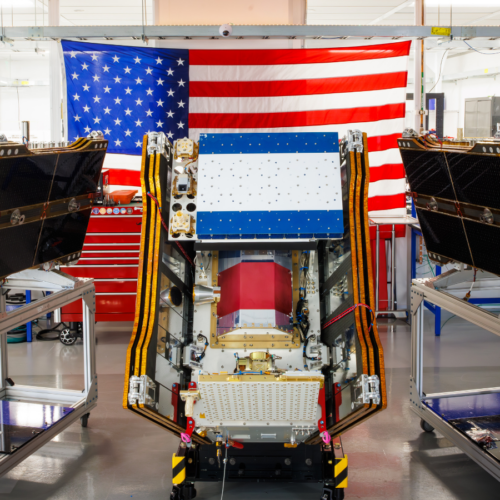
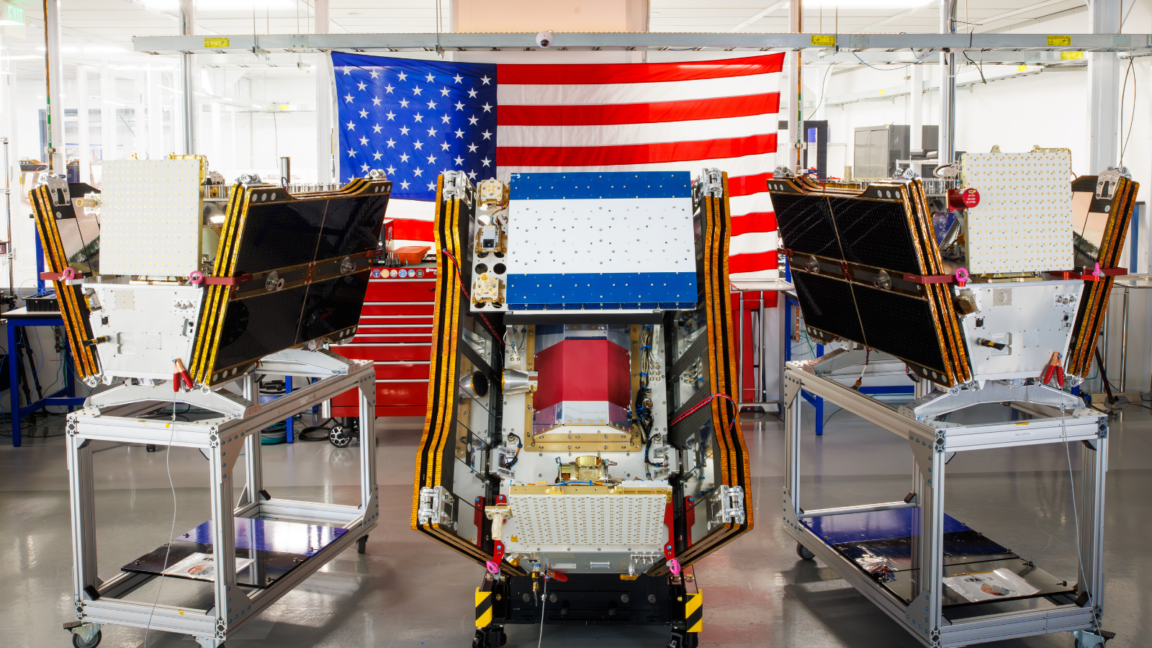
As smoke from hundreds of burning wildfires spread across Canada and the United States, the first three operational satellites in the Google-backed FireSat program successfully launched into orbit. The satellites will begin providing wildfire detection capable of spotting even small fires in the United States, Australia, and Europe before the end of the year.

The launch of the microsatellites aboard a SpaceX Falcon 9 rocket from Vandenberg Space Force Base in California on July 7, 2026 marks a transition to “initial operational capability” for the FireSat constellation managed by the nonprofit Earth Fire Alliance. After a three-month testing period, the three satellites will begin actively providing data to fire agencies while covering every fire-prone region on Earth at least twice per day.

FireSat represents the first satellite constellation purpose-built for detecting wildfires, including spotting smaller fires that other satellites may miss. The satellites were designed by California-based satellite manufacturer Muon Space and have received over $15 million from Google to support initial deployment. Other notable financial supporters include the Bezos Earth Fund that committed $26 million.

Read full article

Comments

© Muon Space

  •  

Trump Cuts Habitat Protections for Endangered Species

The rule change ends a safeguard that had been in place for 50 years and could hasten the demise of imperiled animals.

© Dave Sanders for The New York Times

Piping plovers need undisturbed beaches to nest and raise their young.
  •  

What is the oldest American object ever launched into space?

Did you know that the space shuttle once launched the Statue of Liberty into space?

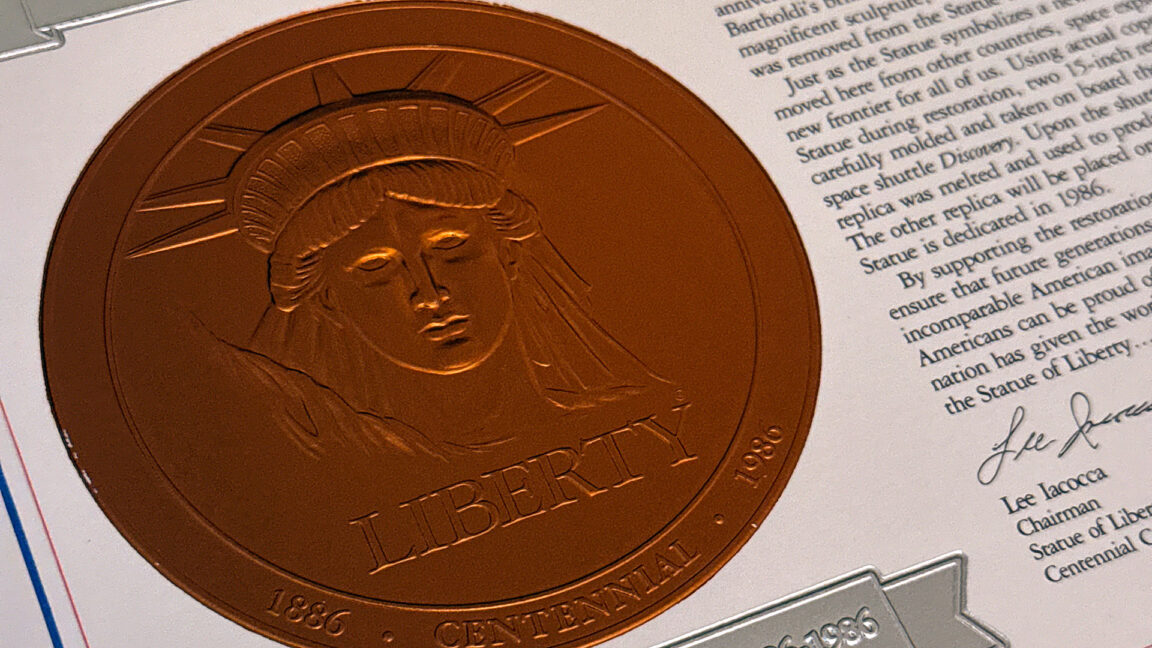
In fact, there were two "Lady Liberties" on board Discovery when it lifted off on its fourth flight in April 1985. To be fair, each statue was only 15 inches tall (38.1 centimeters), but they were also each made of copper that was removed from the full-size statue during its then-still-ongoing restoration.

After the weeklong STS-51D mission was over, one of the space-flown statues was placed on display, and the other was melted down to create copper seals, which were then sold to the public by the Statue of Liberty Ellis Island Centennial Commission.

Read full article

Comments

© collectSPACE.com

  •  

“It Has a Hidden Order That Becomes Visible”: Physicists Just Discovered a Bizarre New Quantum State

An unusual new type of quantum state has been revealed by theoretical physicists, which they say demonstrates a critical new phase of matter that arises from pushing particles to their limits.

Known as “fractional Fermi seas,” this class of quantum states can be created on demand by exciting quantum particles beyond their typical equilibrium states, as detailed in new research published in Physical Review Letters, based on findings by theoretical physicist Alvise Bastianello of CNRS and Université Paris-Dauphine, working in collaboration with the Nägerl group.

To achieve this, the team relied on ultracold cesium atoms, which they were able to successfully confine to a single dimension. Then, by manipulating the strength of the interactions between these particles, the unusual quantum state they induced produced characteristics the team says are far beyond predicted models.

Going Beyond What Models Predict

Specifically, the findings reveal characteristics that extend well beyond what physicists call the Tomonaga-Luttinger liquid theory, a well-characterized model that describes the way electrons or other fermions operate within a one-dimensional conductor, such as carbon nanotubes that restrict their movement to a single dimension.

“Fermions, for instance, stack neatly into the available energy states to form the so-called ‘Fermi sea’,” according to researcher Alvise Bastianello, who notes that quantum particles generally behave predictably at low temperatures and follow very specific rules in terms of their self-arrangement.

“But what happens if one forces interacting atoms to continuously cycle through extreme conditions, smoothly shifting them from strongly repelling each other to strongly attracting each other?” he asks.

To address this, the team implemented experiments where they created conditions that repeated this interaction cycle, intentionally forcing atoms from their typical ground state into more highly excited ones. Despite their excited state, the atoms still maintained a surprising degree of organization as the so-called “fractional Fermi sea” was induced.

“Instead of simply heating the system, the interaction cycle reorganizes the atoms into a new many-body state,” according to lead author Yi Zeng, who added that the team’s observations provided “a controlled way to explore quantum matter beyond the usual equilibrium paradigms.”

Rise of the “Super-Fermions”

One of the team’s key findings had been the odd conditions they observed within the newly created state, which include what are characterized as Friedel oscillations, a term for the ripples the team observed as anticipated based on mathematical correlations between particles. Additionally, the team says they observed decay behavior that was present across all levels of the repulsive interactions between particles.

“This state is highly excited, but it is not random,” according to team leader Hanns-Christoph Nägerl. This is significant, he says, since the state the research team achieved is markedly different from what Tomonaga-Luttinger liquid theory predicts.

“It has a hidden order that becomes visible in its correlations,” Nägerl said of the team’s unique discovery, adding that they have not yet determined the name they plan to give these newly characterized quasiparticles, although ‘super-Fermions’ is a possible contender.

Evidence of Exotic States

Also of key importance, the team believes these specific signatures could point to the presence of a new and exotic type of critical phase which has never been previously recognized, and which could point to promising new approaches to studying quantum mysteries with the help of cold atom simulation technologies.

Presently, the team says a companion paper is in the works, which elaborates on the team’s experiments and the creation of fractional Fermi seas through quantum simulations.

“The discovery of fractional Fermi seas shows how far we can push quantum simulation: not only reproducing known models, but creating and probing states that go beyond established paradigms,” Nägerl concluded.

Presently, the team’s work, detailed in the papers “Exotic critical states as fractional Fermi seas in the one-dimensional Bose gas,” and “Realization of fractional Fermi seas” is available on the preprint arXiv.org server.

Micah Hanks is the Editor-in-Chief and Co-Founder of The Debrief. A longtime reporter on science, defense, and technology with a focus on space and astronomy, he can be reached at micah@thedebrief.org. Follow him on X @MicahHanks, and at micahhanks.com.

  •  

Your Home Could Help Solve AI’s Growing Power Demand

Tesla, Sunrun and Renew Home plan to tap solar panels, batteries, thermostats and other devices installed in millions of homes to meet the energy demands of artificial intelligence.

© Collin Chappelle for The New York Times

Installation of a Sunrun solar panel on a roof in California. Sunrun is working with Tesla and Renew Home to use home energy devices to help data centers get online faster.
  •  
  •  

Former NOAA Employees Revive Climate.gov Web Site

The database of federal global warming research recreates a website that was closed amid the administration’s broad retreat from climate science.

© Jason Andrew for The New York Times

The National Oceanic and Atmospheric Administration headquarters in Silver Spring, Md. The new site is an effort to preserve NOAA work previously available at climate.gov.
  •  

Energy Dept. Promises $17.5 Billion in Loans for Nuclear Power

The federal government wants to help utilities buy large components for up to 10 large nuclear reactors. It’s unclear which, if any, companies might participate.

© Kendrick Brinson for The New York Times

The Vogtle nuclear power plant in Georgia is the only one with AP1000 reactors in the U.S. They generate enough electricity to power 1 million homes, but they took 15 years to build and cost $35 billion, double the initial estimates.
  •  
  •  

U.S. Oil Is Skipping the Chance to Grab Market Share From the Gulf

U.S. oil production is expected to grow only modestly next year as companies hesitate to spend more in an uncertain market.

© Arathy Somasekhar/Reuters

Smaller U.S. oil producers are starting to drill more wells, but big companies like Exxon Mobil and Chevron have said they are not changing their plans as a result of the war with Iran.
  •  

Earth’s First Land Animals May Never Have Been Amphibian-Like After All

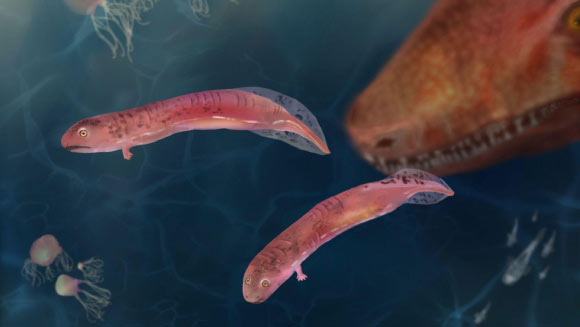
New fossil evidence suggests that embolomeres did not undergo a metamorphosis the way that modern amphibians do when growing up, which challenges a long-standing scientific belief that amphibians, reptiles, and mammals evolved from animals that had a tadpole stage. Image credit: Berit Godring.

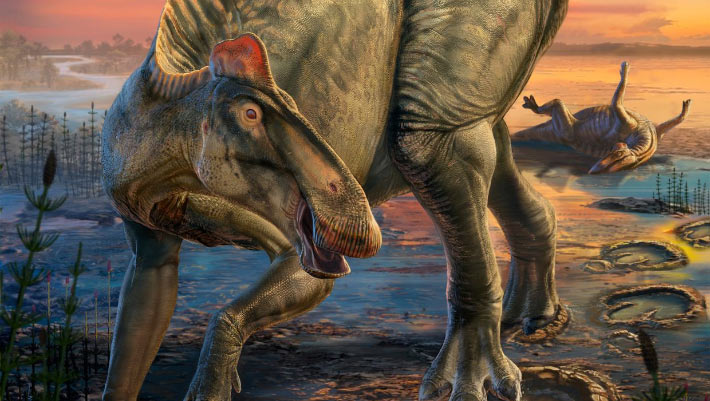
Paleontologists from the Field Museum of Natural History have described the fossilized remains of baby embolomeres, crocodile-like predators that prowled ancient rivers and swamps between 350 and 280 million years ago.

The post Earth’s First Land Animals May Never Have Been Amphibian-Like After All appeared first on Sci.News: Breaking Science News.

  •  

Average U.S. Gas Price Falls Below $4 After U.S.-Iran Agreement

Drivers are enjoying some relief at the pump after the United States and Iran signed an agreement to reopen the Strait of Hormuz.

© Vincent Alban/The New York Times

Gasoline prices rose sharply after the start of U.S.-led war with Iran.
  •  
❌