❌

Reading view

ANU accused of ‘hysterical’ response to students using AI to cheat as unis scramble to ‘secure’ assessments

Australia risks ‘shipping’ intellectual capability overseas if educational rigour not restored, experts warn

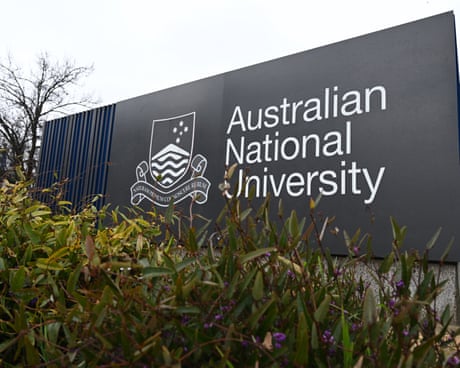
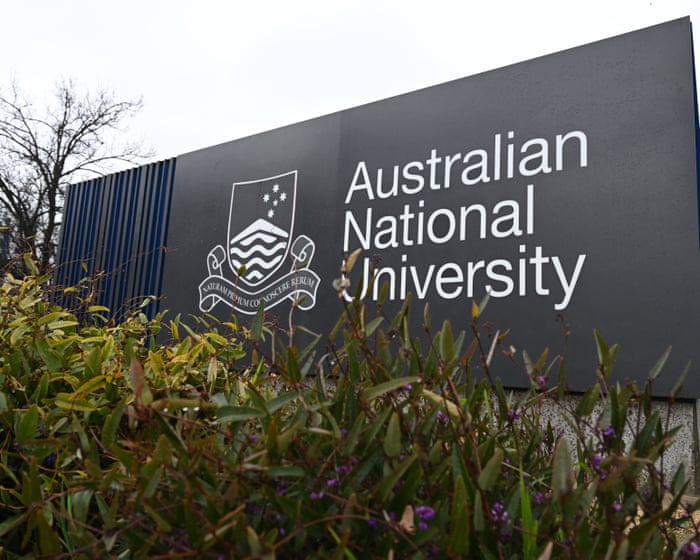
An academic at the Australian National University has accused it of a “hysterical” response to students using AI to cheat, as tertiary institutions rush to shore up the credibility of assessments.

But a colleague warned Australia is in danger of “shipping our national intellectual capability” to companies in California and China if educational rigour is not restored.

Continue reading...

© Photograph: Lukas Coch/AAP

© Photograph: Lukas Coch/AAP

© Photograph: Lukas Coch/AAP

  •  

New study reveals editorial trends at top science journals

Studies published in prestigious academic journals receive more attention from scholars and media outlets, shaping public discourse and potentially accelerating academic careers. While the path to publication is often murky, a new analysis of more than 110,000 papers submitted to Science and Science Advances—two leading journals published by the world's largest general science association—reveals that Western scientists, larger teams, top-ranked universities and select regions have slight advantages in acceptance rates.

  •  

More than 50% of Australian university assignments used AI. How should universities respond?

Last week, the U.S. software company Turnitin revealed 53.6% of Australian tertiary education submissions run through its system used some form of AI in the period from October 2025–April 2026. The company, whose plagiarism-detection technology is widely used in universities, also reported 10% of these submissions contained more than 80% AI-written content.

  •  

Law School Bans Laptops and Phones as AI Cheating Scandal Grows

Classes are going to look a little different for the University of Chicago’s first year law students.

On Thursday, the law school said it was banning the use of phones, tablets, and even laptops in class for freshman-level courses, as it rejigs its curriculum to be more “AI-resilient” and encourage more deliberate use of the tech.

An announcement from the school didn’t explicitly mention AI cheating. But the changes come amid a backdrop of significant public concern over generative AI’s impact on education, and plunging literacy and numeracy skills among students. 

“With AI disrupting higher education, our commitment to rigorous legal education also must mean openness to even rapid adaptation,” the statement said.

Device bans are not unusual in classrooms. Rarely, however, do they extend to laptops, and they’re typically enforced at an instructor’s discretion, rather than as a university-wide policy. The university claims the decision was made after both faculty and students reported positive effects after some professors experimented with device bans.

It’s just one of the few ways Chicago Law aims to tightly control how its students access AI tech. According to its new AI strategy statement, exams will be taken in-class without access to the internet and apps. Students will also have to take part in oral discussions with their professors about their research papers.

It’s far from a sweeping AI ban, however. The school still wants to prepare students for an AI-driven world, with the goal of steering them “toward using AI in ways that promote learning rather than inhibit it,” clinical professor Mark Templeton, who serves on Chicago Law’s AI Committee, said in a statement.

University figures, in fact, go to great pains to make clear they’re not shutting the door on AI completely.

“If you want to use AI as a study partner, if you want to use AI to ingest your notes from class and then create questions to quiz you on the material, that’s great,” said William Hubbard, a professor of law and economics and chair of the AI Committee, in the statement. “That’s not a shortcut. There are ways that using AI can strengthen the learning process and that’s what we’re trying to lean into.”

Major AI cheating scandals have already hit some of the country’s top institutions. A professor at Brown University recently uncovered a massive AI cheating ring in what might be the largest scandal of its kind in Ivy League history, suspecting that over half his students cheated on an exam using a chatbot. Princeton University recently dropped its over century-old Honor Code tradition by forcing students to be supervised to take their exams, as suspicion of AI cheating rattled the schools.

Chicago Law’s AI crackdown could also be seen as a response to the poor example set by the professionals in the practice. Countless lawyers have been admonished by judges after submitting court filings riddled with clear AI hallucinations, from references to made-up case law to mis-attributed quotes.

More on education: College Students Are Testing at the Level of 10-Year-Olds

The post Law School Bans Laptops and Phones as AI Cheating Scandal Grows appeared first on Futurism.

  •  

How reading shapes and enhances our cognitive activity

Smartphones, online learning, generative AI: The way we read has changed more in the last decade than in the previous century. So what do we actually know about what reading does for the mind? In his new book, Falk Huettig, senior investigator at the Max Planck Institute for Psycholinguistics, brings together research spanning psychology, linguistics, neuroscience and education to answer that question. The result is a systematic account of how literacy reshapes memory, attention, language processing and reasoning—and even abilities readers might not expect, like face recognition.

  •  

Helping their friends to read can boost children's attainment

In a primary school classroom, a 9-year-old reads aloud to the person next to them. When they stumble over a word, their partner encourages them to try again. Together, they discuss what might happen next. But the child isn't reading to an adult—a teaching assistant or volunteer. Instead, they are reading to a peer in their class. Later, they'll switch jobs and help their partner out as they read.

  •  

AI tools may reshape higher education by automating marking and personalizing feedback

The evolution of higher education in the digital era has attracted global attention, and Prof. S. Joe Qin, president and Wai Kee Kau Chair Professor of Data Science at Lingnan University, published a paper titled "AI for education: The digital transformation of a liberal arts institution – implementation at Lingnan University" in the journal Computers and Education: Artificial Intelligence.

  •  

Anyone can fake a scientific image with AI, tricking even academic journals, and undermining trust in science

A photograph of Earth glowing in deep space, the moon's cratered horizon stretching across its foreground, caught many people's eyes in April 2026. Astronauts captured the image while aboard NASA's Artemis II mission, and like the famous Apollo 8 "Earthrise" image, the picture felt instantly real and inspiring for many.

  •  

The best math lesson for children might be happening at your kitchen table, shows study

In the minds of many people, math lives in the classroom—on blackboards, in textbooks, and in tests. New research from Amber Simpson, associate professor in the Department of Teaching, Learning, and Educational Leadership at Binghamton University's College of Community and Public Affairs, shows how math is happening all around us, especially at home, and that families don't even realize the role they play in how children experience mathematics.

  •  

We Should Push Back Against the Trend for Blank Walls in Schools

Joanna Gray has a new low to report from the coal face of what remains of British education: the trend for blank walls in classrooms. This miserable "display diet" is designed, inevitably, to help the 'neurodiverse'.

The post We Should Push Back Against the Trend for Blank Walls in Schools appeared first on The Daily Sceptic.

  •  

Semmelweis University Launches NATO Battlefield Surgery Training and Surgical Simulation Courses at New Innovation Center

Semmelweis University’s recently inaugurated Anatomy & Innovation Center for Education and Research (AICER) has swiftly emerged as a revolutionary hub for surgical and trauma education. Officially launched in April, this state-of-the-art facility integrates cutting-edge simulation technologies and advanced anatomical resources, setting a new benchmark for clinical training. Among the first programs hosted were NATO battlefield surgery and trauma courses, underscoring the center’s commitment to equipping healthcare professionals with the critical skills needed for life-threatening injuries in conflict zones.

The NATO-affiliated courses, developed collaboratively by Semmelweis University, the Hungarian Defence Forces, and NATO partners, provided an immersive experience where participants managed complex hemorrhagic trauma scenarios under intensely realistic conditions. Expert instructors, including military medical personnel from the United States, guided these sessions, which emphasized hands-on application in a fully equipped environment replicating battlefield medical exigencies. This pioneering approach bridges the gap between theoretical knowledge and clinical application, ensuring a seamless transition of skills into real-world medical emergencies.

Behind the scenes, the Anatomy & Innovation Center’s infrastructure was rigorously tested through these initial courses. The center’s sophisticated operating suites, integrated support systems, and robust technological platforms were evaluated under operational loads that simulate real clinical pressures. Feedback from participants highlighted the facility’s efficacy in delivering high-fidelity training, noting the critical value of performing procedures in an environment mirroring actual patient care settings. This pilot phase demonstrates the center’s readiness to serve as a cornerstone for future medical education endeavors.

Beyond military applications, AICER extends its capabilities to a broader array of medical disciplines. Early programs included intensive training in oral surgery, orthopedic interventions, and ultrasound-guided joint injections. The incorporation of ultrasound techniques, particularly for rheumatologists and rehabilitation specialists, allows practitioners to refine minimally invasive procedures on cadaveric models. This is crucial for advancing the safe treatment of joint disorders, providing tactile and visual feedback that conventional classroom or textbook learning cannot replicate.

Looking ahead, the center’s calendar boasts specialized courses in upper-limb surgery, advanced airway management, and cadaver-based knee surgery protocols designed for experts in traumatology, orthopedics, anesthesiology, and critical care medicine. Such training opportunities reinforce AICER’s multidisciplinary approach, fostering cross-specialty collaboration and knowledge exchange. This integrated educational strategy is poised to elevate clinical proficiency and ultimately improve patient outcomes across various surgical fields.

Integral to AICER’s mission is the utilization of donated human cadavers, ethically sourced for teaching and research. These specimens underpin a realistic platform that enables physicians to experiment with novel surgical techniques, honing their competencies before clinical implementation. This approach substantially mitigates risks associated with adopting new interventions, directly enhancing patient safety by allowing repeated practice in lifelike anatomical contexts.

What distinguishes the center is its fusion of traditional anatomy with pioneering digital innovations. Through advanced imaging modalities, detailed digital reconstructions of cadavers are generated, creating three-dimensional virtual models—or “digital cadaver twins.” These models serve as invaluable adjuncts for preoperative planning, educational simulations, and translational medical research. The convergence of physical and digital tools embodies the future of surgical education, offering customizable, interactive experiences that cater to diverse learning needs.

AICER also serves as an incubator for translating medical technology innovations from concept to clinical practice. By providing an environment where new devices, diagnostic tools, and procedural techniques can be safely tested and refined, the center accelerates the pace of medical advancement. This translational pipeline ensures that emerging healthcare solutions meet stringent safety and efficacy standards before widespread adoption, reinforcing the university’s role as a leader in evidence-based medical education.

Currently in its pilot phase, the center is actively refining operational workflows, educational methodologies, and facility capabilities based on ongoing user feedback. This iterative process ensures that both technical and pedagogical elements align with evolving clinical demands. Semmelweis University’s vision extends beyond national boundaries, aiming to position AICER as a premier educational resource within Central and Eastern Europe, fostering regional collaboration and elevating medical training standards.

Expanding its specialty portfolio in the near future, AICER plans to introduce courses in thoracic surgery, vascular surgery, gynecologic surgery, spinal surgery, abdominal surgery, and endoscopy. These additions reflect a comprehensive approach to surgical education, addressing an array of clinical challenges. Furthermore, the center aims to support a continuum of medical education, from undergraduates and residents to seasoned specialists, enhancing lifelong learning and professional development.

The integration of sophisticated simulation tools, including a beating-heart model, further enhances the tactile and visual realism of training scenarios. These dynamic models replicate physiological behaviors, enabling practitioners to appreciate the complexities of living tissue interactions during surgical procedures. Such innovations foster deeper understanding and improve manual dexterity, essential qualities for mastering intricate operations.

Ultimately, AICER exemplifies a transformative platform for surgical innovation and education, marrying anatomical fidelity with technological prowess. Its comprehensive, multidisciplinary training programs offer a blueprint for future medical education centers worldwide, emphasizing patient safety, procedural mastery, and rapid clinical translation. As the center advances, it is expected to contribute significantly to the augmentation of healthcare quality, ensuring that tomorrow’s surgeons and clinicians are profoundly prepared to meet the challenges of modern medicine.


Subject of Research: Advanced surgical education and trauma training through simulation and cadaver-based methodologies at Semmelweis University’s Anatomy & Innovation Center for Education and Research (AICER).

Article Title: Semmelweis University’s Anatomy & Innovation Center Pioneers Next-Generation Battlefield and Surgical Training

News Publication Date: June 2026

Web References:

Image Credits: Photos by Bálint Barta, Boglárka Zellei – Semmelweis University, Budapest, Hungary

Keywords: Anatomy & Innovation Center, Surgical education, Battlefield surgery, Trauma training, NATO medical courses, Simulation-based learning, Cadaver training, Digital cadaver twin, Medical innovation, Patient safety, Multidisciplinary medical education, Semmelweis University

  •  
❌