❌

Reading view

'It's absolutely exciting!': Astronomers discover an atmosphere around an Earth-like planet in the habitable zone for first time ever

Astronomers have found the strongest evidence yet that a rocky planet beyond our solar system has managed to hold onto an atmosphere — a crucial ingredient for life as we know it.

The discovery marks the first time scientists have detected an atmosphere surrounding a rocky planet orbiting in the habitable zone of another star, the region around a star where temperatures could enable liquid water to exist on a planet's surface. The findings, published July 16 in the journal Science, could help astronomers narrow the search for potentially habitable worlds beyond our cosmic backyard.

"It's absolutely exciting," Edward Schwieterman, associate professor of astrobiology at the University of California, Riverside, who was not involved in the study, told Live Science in an email. "We are getting closer to studying the atmospheres of worlds that could plausibly harbor life, with evidence of that life embedded in their observable spectra."

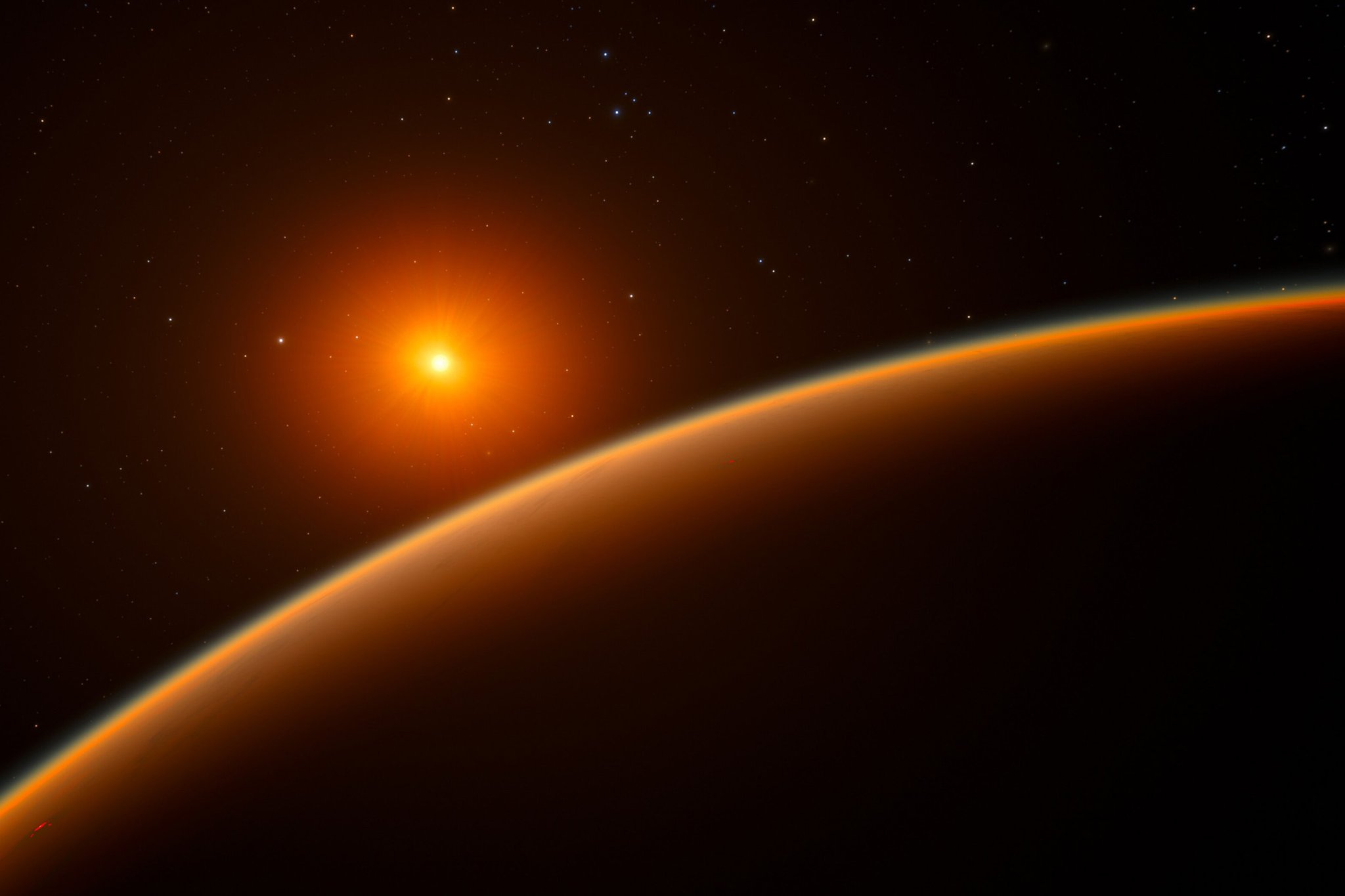
The planet, known as LHS 1140 b, lies about 48 light-years away from Earth and orbits a small, cool red dwarf star. At roughly 5.6 times Earth's mass, the exoplanet is classified as a super-Earth: a rocky planet larger than our own but much smaller than gas giants like Neptune.

It receives less than half the sunlight Earth gets, giving it an estimated surface temperature of around minus 53 degrees Fahrenheit (minus 47 degrees Celsius), according to previous estimates not accounting for an atmosphere. That makes the planet cold, but in the range astronomers consider potentially habitable.

Cosmic gas leak

Scientists have discovered thousands of exoplanets over the past few decades, including many rocky worlds. But determining whether those planets have atmospheres has proven far more difficult, because atmospheres around rocky planets are incredibly thin compared with those of giant planets, making them much harder to detect across vast cosmic distances.

Instead of looking for the atmosphere directly, the researchers behind the new study searched for a subtle clue that one existed: helium gas leaking into space. Using the WINERED spectrograph on the Magellan Clay Telescope in Chile, the team watched LHS 1140 b cross in front of its star and let a sliver of starlight filter through the planet's atmosphere on its way to Earth. As it did, the team looked for a tiny dip in the star’s light at the exact wavelength of infrared light that helium blocks — a telltale sign that gas was streaming off the planet and into space.

The prediction rested entirely on a mathematical model that had never been confirmed for a rocky planet. However, in September 2024, the team caught LHS 1140 b and a smaller, hotter neighboring planet, LHS 1140 c, transiting their star on the same night, less than 40 minutes apart. The researchers detected a clear helium signal from LHS 1140 b, while LHS 1140 c showed nothing.
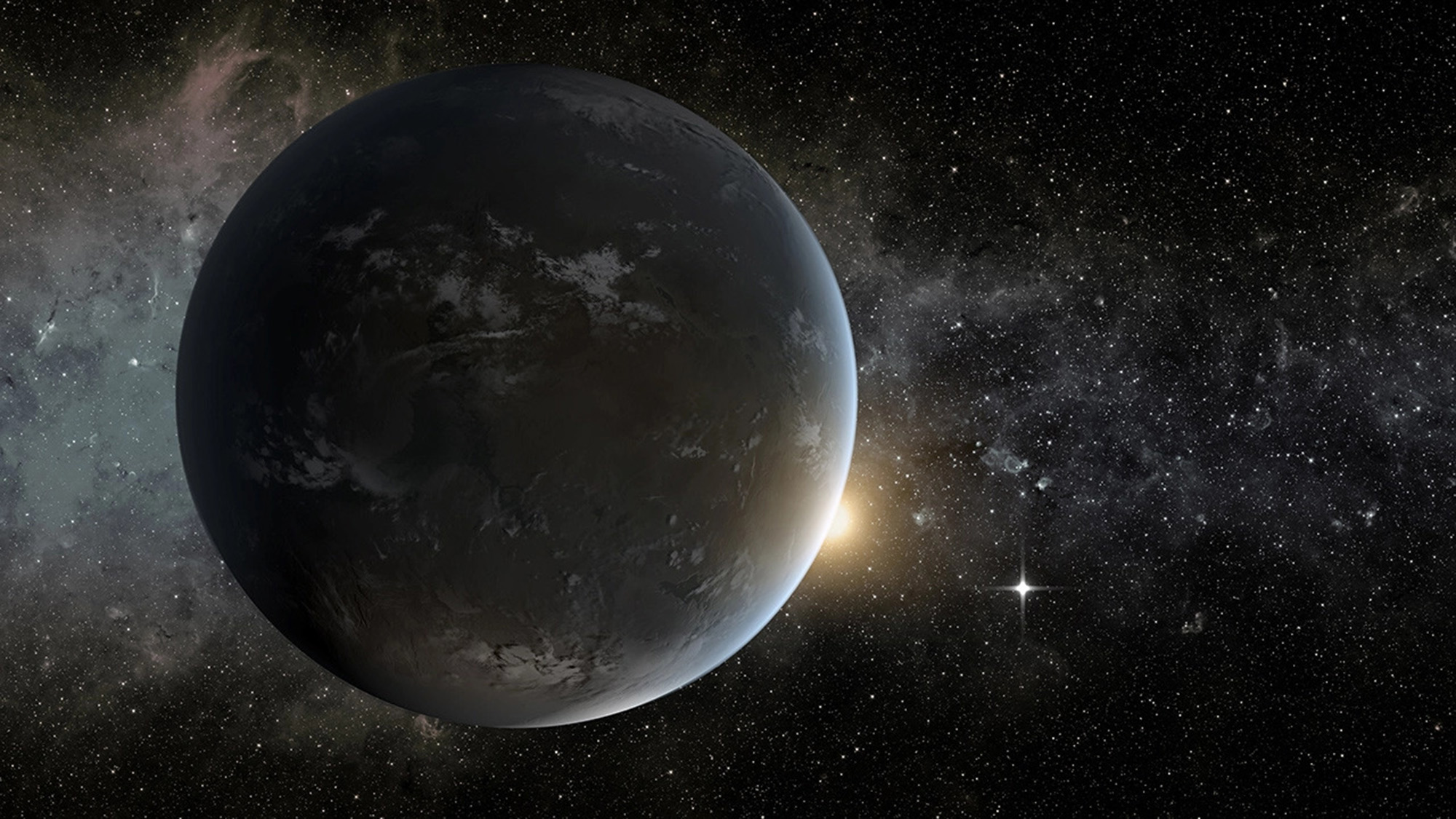
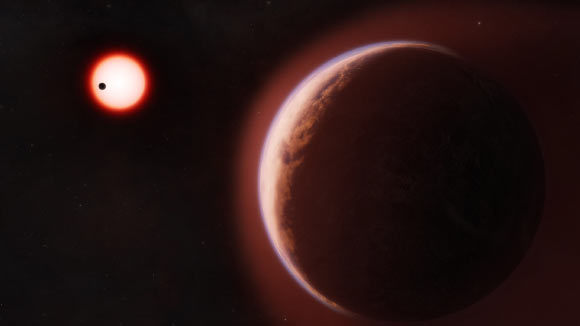
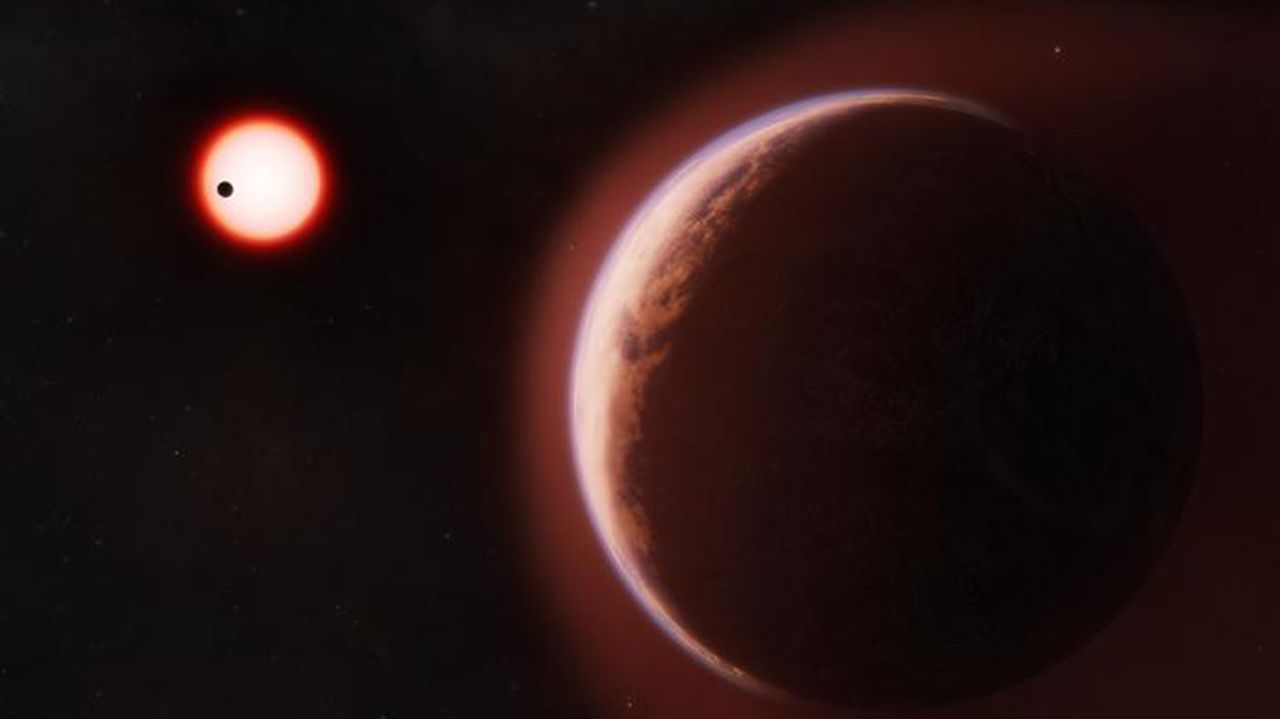
An illustration of a planet in deep space with a glowing sun behind it.

NASA concept art depicting LHS 1140 b as a rocky super-Earth — a type of potentially habitable planet most similar to our own. (Image credit: NASA)

The contrast matters: LHS 1140 c orbits much closer to its star than LHS 1140 b does and receives roughly five times the radiation, yet it's also smaller and less gravitationally bound — conditions that should make any escaping gas easier, not harder, to spot. Finding nothing there suggests LHS 1140 c's atmosphere was stripped away long ago, while LHS 1140 b, sitting farther out in cooler, calmer conditions, has managed to hold onto its own.

The discovery addresses a question astronomers have been working to answer for decades.

"Twenty years ago we wondered whether other terrestrial-type planets even existed," study co-author Robin Wordsworth, a professor of Earth and planetary sciences at Harvard, said in a statement. "Then we learned they're common, and found some in the habitable zone. The next question was whether any of them had managed to keep an atmosphere. Now we know at least one has."

A step forward in the hunt for life

The find is especially notable because red dwarf stars like LHS 1140 can bombard nearby planets with high-energy radiation capable of stripping atmospheres away over time. Based on the star's estimated age of at least 3.1 billion years, the researchers say LHS 1140 b's atmosphere has likely persisted despite that bombardment, suggesting some rocky planets around these common stars can hang onto their atmospheres for far longer than once assumed.

But the researchers caution that detecting helium does not mean the planet is inhabited — or even that it is habitable. The observations reveal only the planet's thin upper atmosphere, not its full composition. Scientists still don't know whether LHS 1140 b has oxygen, carbon dioxide, water vapor or other gases that could make its surface more Earth-like and hospitable to life.

Instead, the discovery opens a new way to study distant rocky worlds.

"The study demonstrates that, at least in some cases, we will be able to begin characterizing the atmospheres of potentially habitable planets," Schwieterman said. "If only rocky planets orbiting Sun-like stars retained atmospheres, we might have to wait one to two decades for the launch of the Habitable Worlds Observatory to search for biosignatures on rocky planets. I'm certainly excited about what comes next!"

Future observations will aim to determine what the rest of LHS 1140 b's atmosphere is made of and investigate whether it may harbor oceans or other features associated with habitability.
  •  

James Webb telescope uses trippy Einstein prediction to probe the farthest reaches of the universe — Space photo of the week

Quick facts

What it is: The collision-prone galaxy cluster MACS J0553.4-3342

Where it is: In the constellation Columba

When it was shared: July 2026

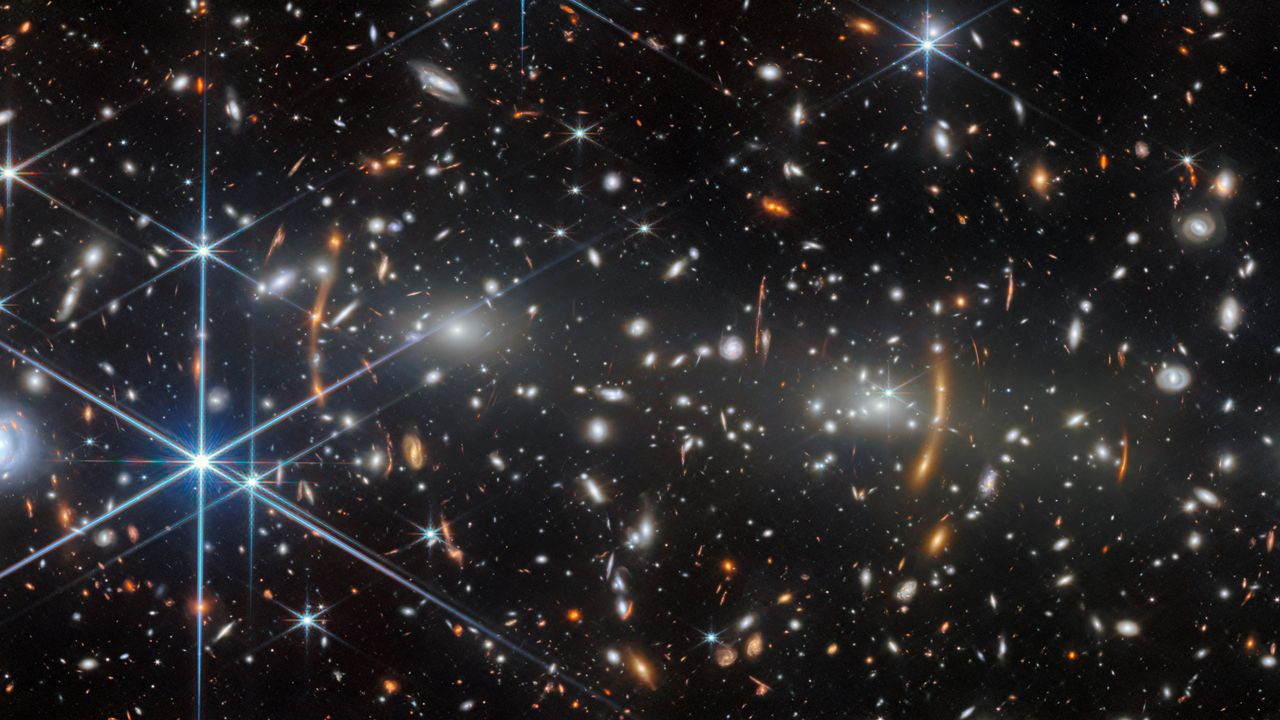
Around 100 years ago, Albert Einstein made an audacious prediction about space. The frequently right (but occasionally wrong) physicist theorized that, just as the curved lens of a magnifying glass bends light to increase an object's apparent size, massive celestial objects can curve the very fabric of the universe with their gravity — causing distant sources of light to bend, warp, and appear magnified as their rays pass through the region on their way to Earth.

Today, this phenomenon — called gravitational lensing — has been confirmed through dozens of telescope observations, and is a crucial tool that observatories like the James Webb Space Telescope (JWST) use to probe the light of the oldest, faintest galaxies in the universe. And in this newly released JWST image of a tumultuous young galaxy cluster, Einstein’s gravitational funhouse effect is on full display.

In the foreground, two bright white points of light ringed with white halos signify the gravitational center of MACS J0553.4-3342, a gargantuan collection of bound galaxies located in the constellation Columba (the dove). These two white beacons are massive elliptical galaxies, each wreathed in their own sub-cluster of smaller galaxies, according to a statement from the European Space Agency (ESA). And the two clusters are not getting along.

Studying the galaxies’ light as it appeared roughly 4.4 billion years ago, astronomers can tell the clusters are in the messy process of merging together. The two principal elliptical galaxies have already slammed through each other once, and now sit at a distance of around 1 million light-years apart (that’s about 10 Milky Ways lined up in a row). Eventually, that gap will close as the massive galaxies swoop back toward each other, finally combining into one.

A full-size image of JWST's observations

A full-size view of JWST's observations (Image credit: ESA/Webb, NASA & CSA, S. Fujimoto)

But the real jewels in this galactic trove are hidden in the contorted, orange arcs of light that bookend the cluster on either side. Here, the magnifying effect of gravitational lensing is acting in full force — allowing JWST to detect the light of several faint galaxies from less than a billion years after the Big Bang.

Three bright dots in the arc on the left are actually three repeated images of a single galaxy, according to ESA. The trippy effect appears several times throughout the image, with each elongated orange streak cracking open a warped window onto an ancient corner of the universe that would otherwise be impossible to see.

Through observations like these, scientists using JWST have discovered that the oldest stars and galaxies in the universe have grown larger and faster than our leading theories of cosmology predict should be possible. Using one cosmic oddity to uncover another, this gravitational lens could keep astronomers busy for decades to come.

See more space photos of the week:

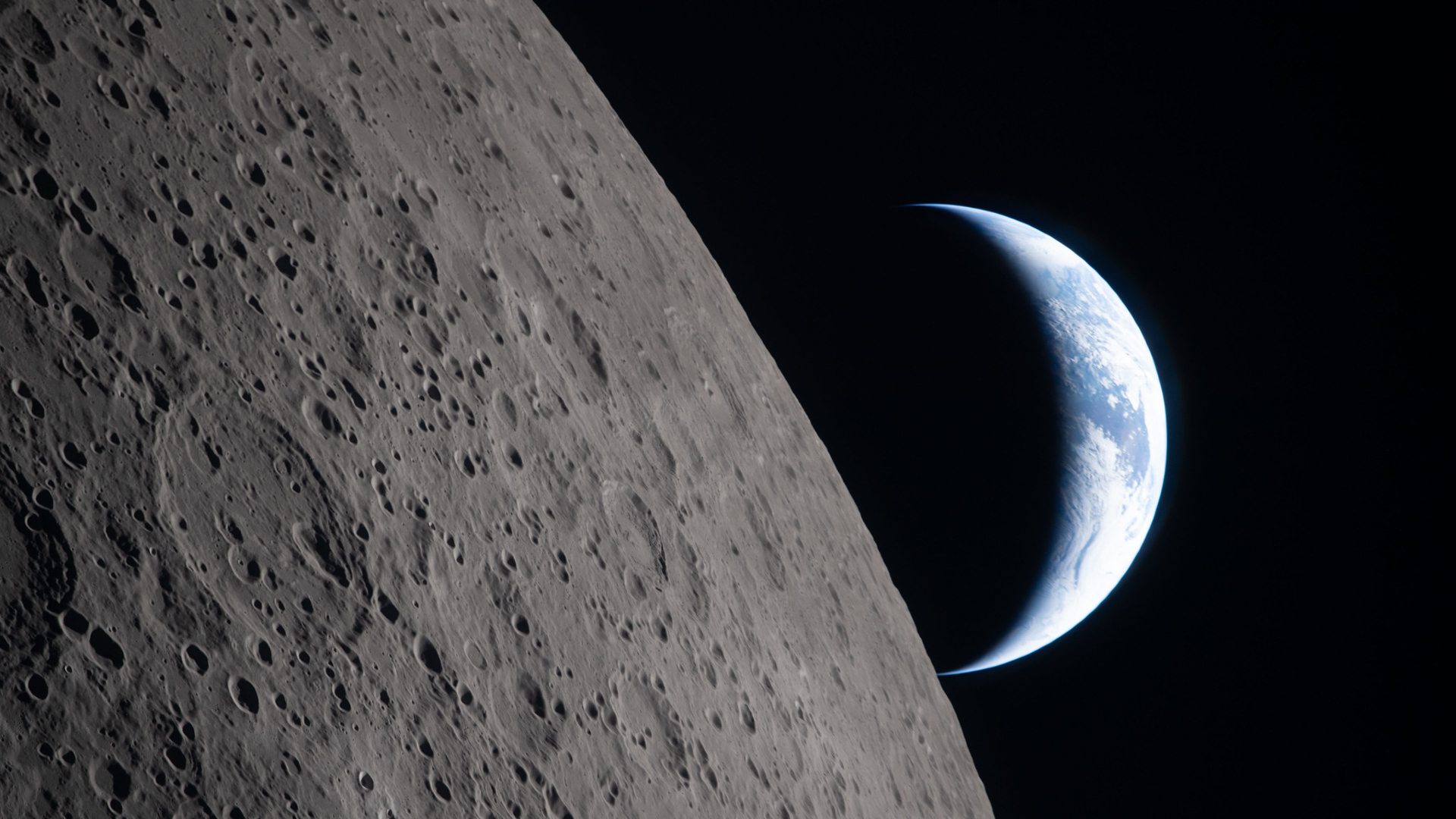
A view of Earth from the moon, with half the Earth illuminated and the gray surface of the moon in the foreground.'Human minds should not go through this'

The Artemis II crew recalls the unreal moment when Earth disappeared

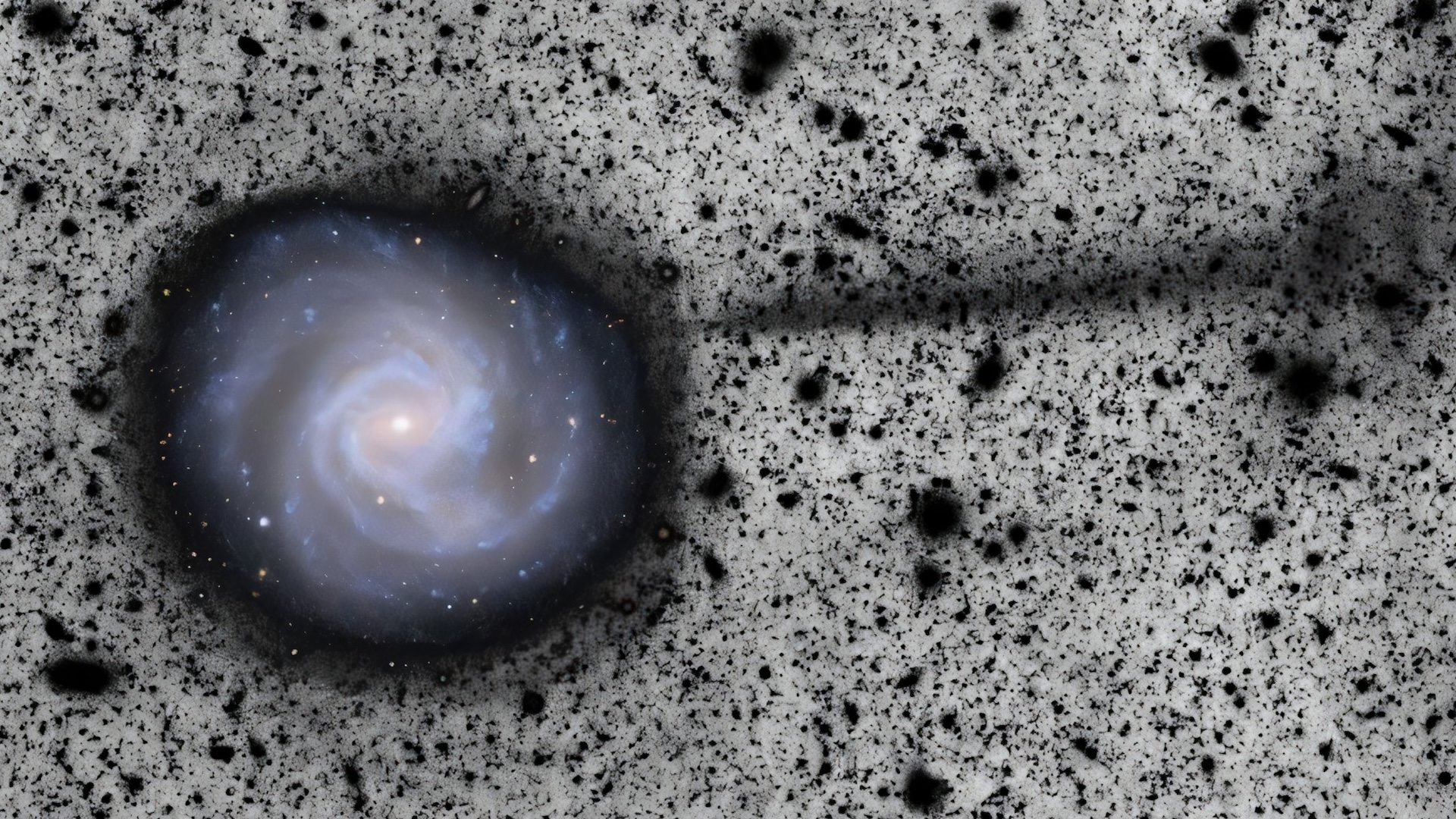
An image of a spiral galaxy on a splotchy black and white background with a stream of black material emerging from the galaxyHidden structure in 1st Vera Rubin image

First-light images from the Vera C. Rubin Observatory reveal a 163,000-light-year stream of stars emanating from a nearby galaxy.

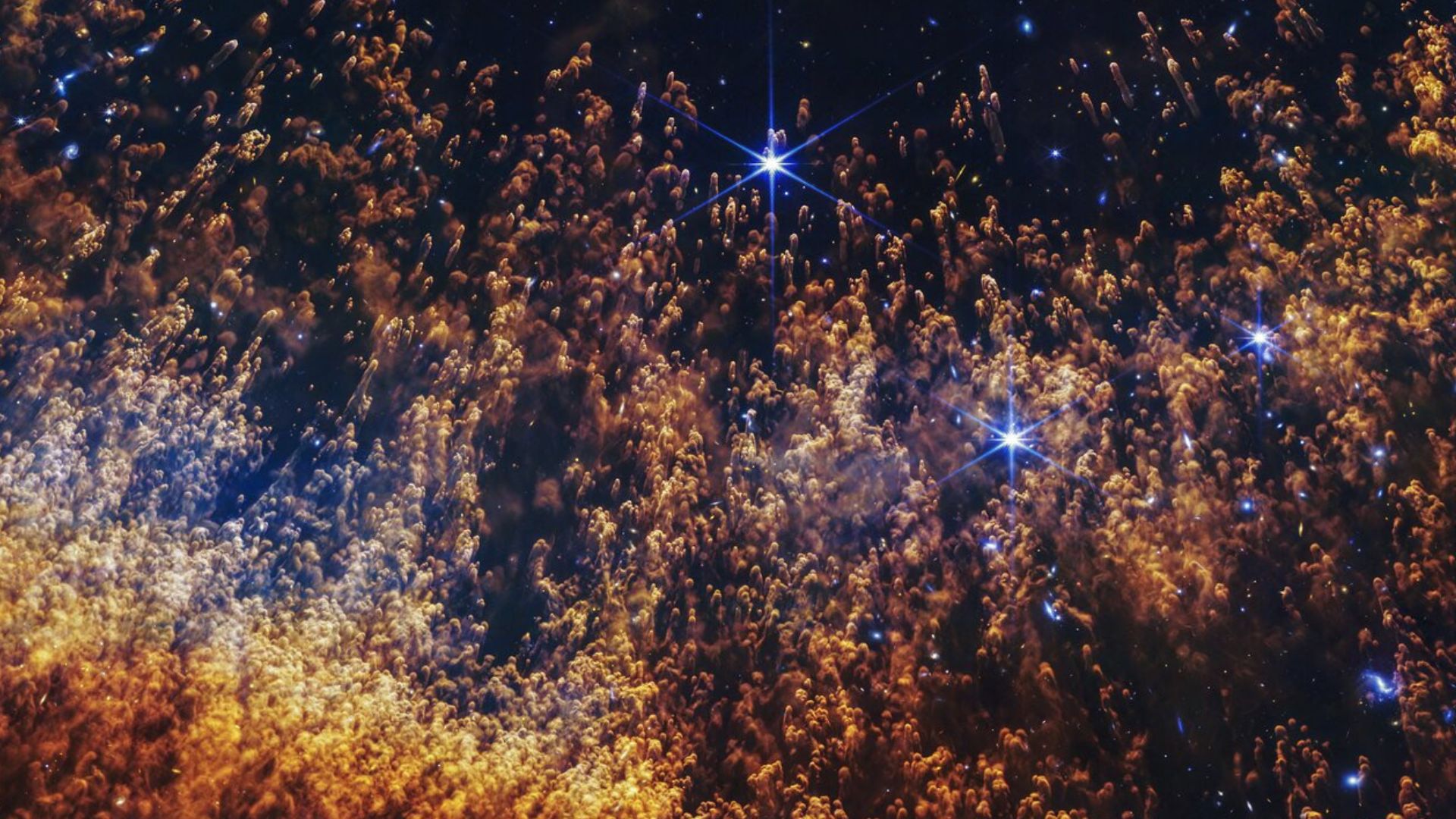
Hundreds of gold and orange clouds with feathered trails going down behind them. The small clouds are covering a few scattered, bright stars.JWST peeps the 'Eye of God'

A spectacular James Webb telescope image reveals intricate structures inside the Helix Nebula.

  •  

'Fireball' meteorite that smashed into New Jersey home contains ingredients of life from an ancient proto-planet, study finds

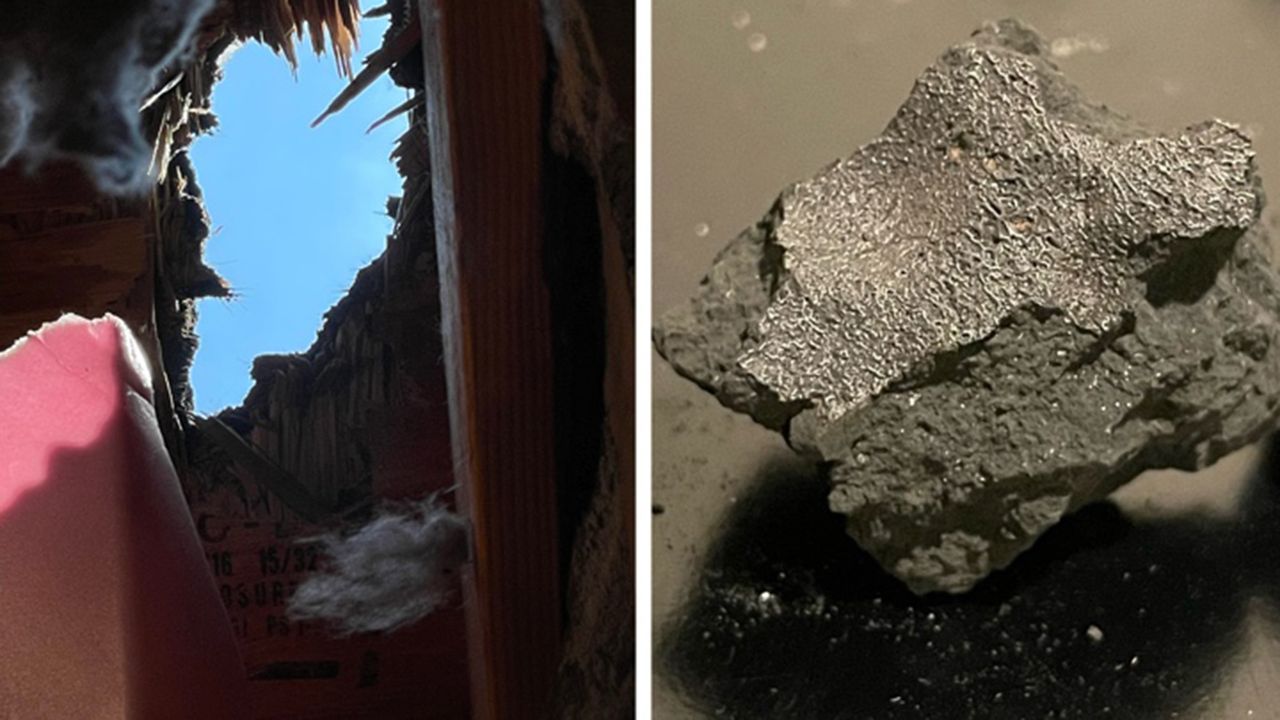
Scientists have discovered the building blocks of life inside a meteorite that smashed through a New Jersey home two years ago. The space rock contains amino acids, carbon compounds and other "prebiotic" molecules similar to what may have helped kick-start life on our planet, a new study shows.

Scientists on the study team — led by Peter Jenniskens, a meteor astronomer with affiliations at the SETI Institute and NASA's Ames Research Center — praised the homeowner in Hillsborough, N.J., for quickly preserving the meteorite after it fell through the roof on July 16, 2024, despite the adverse circumstances. His actions included using disposable gloves and aluminum foil to place pieces of the meteorite fragments into glass jars.

"I was at home at the time, heard a loud crash and found a hole in the ceiling of the master bedroom," the homeowner, who was not named, said in a statement from the SETI Institute. "I smelled a strong, sulfur-like odor and saw many black fragments, along with debris and black dust that covered my bed, carpet and surrounding areas."

A close up of a gray rock with jagged edges.

A close-up of the Hillsborough meteorite’s surface. (Image credit: SETI Institute)

Those meteorite pieces were precious, the scientists said, and likely came from an ancient solar system planet that wasn't fully formed. "A forensic study of the fragments revealed that they contained preserved bits from near the surface of a small primitive asteroid where it experienced concentrated salty fluids — a process not previously known from this type of protoplanet world," Jenniskens said in the statement.

The study, published July 15 in the journal Science Advances, also traced how the meteorite got to the house. Earlier on July 16, 2024, at least 60 observers in New York, New Jersey and other Northeastern states spotted a meteor later confirmed to be traveling at 32,000 mph (51,500 km/h). At least 16 people in New York and New Jersey reported feeling the meteor's shock wave.

The rock broke apart in midair, with observer reports stopping when the meteor reached 22 miles (35 kilometers) in altitude, although Newark Liberty International Airport briefly tracked pebbles falling from the sky with Doppler weather radar after that. Fragments from only one meteorite ‪—‬ called Hillsborough, after the town where it crashed through the New Jersey home ‪—‬ were recovered.

The American Meteor Society used its cameras in Northford, Connecticut, and Douglassville, Pennsylvania — along with a doorbell camera in Wayne, New Jersey — to figure out the meteor's origin, Mike Hankey, an operations manager at the American Meteor Society and co-author of the study, said in the statement. "The path traced back to low in the asteroid belt."

Hillsborough is the second stony meteorite of its type ever spotted in a fall. Later analysis showed that the meteorite is full of ancient brines or salt. Scientists classified the meteorite as a type of stony space rock called a carbonaceous chondrite.

Scientists will compare the salt minerals to samples of asteroids Ryugu and Bennu, both of which contain ingredients of life and are samples of another carbonaceous chondrite type that formed earlier than Hillsborough. This analysis could help scientists further trace the origins of life-friendly chemistry in the early solar system.

  •  

'Shared cosmic experience': 'Potentially hazardous' asteroid Apophis could be visible to 90% of Earth's population during ultraclose 2029 flyby, new maps reveal

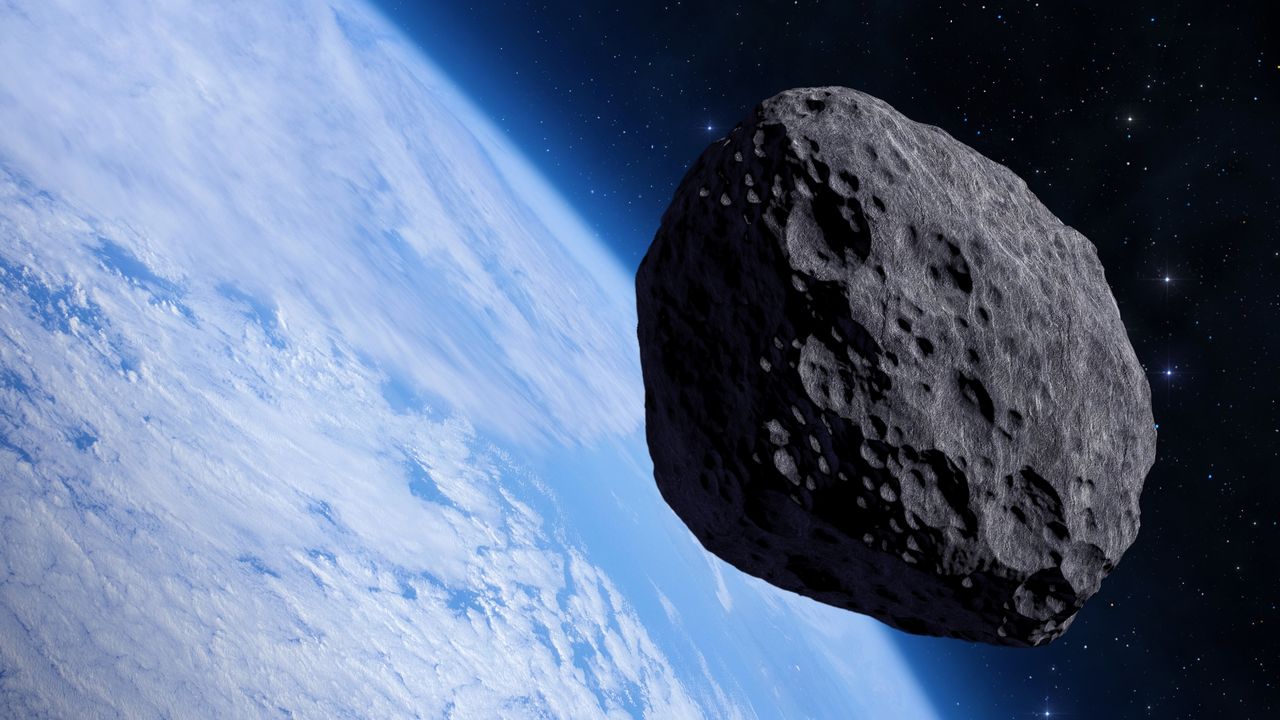
Up to 90% of Earth's population may be able to see the enormous "God of Chaos" asteroid Apophis zoom past our planet in less than three years, scientists say. The skyscraper-size space rock will come closer to us than some satellites, making it clearly visible to the naked eye during the "once-in-a-millennium" skywatching event.

This will be the first time humans have ever been able to predict a flyby of an asteroid visible to the naked eye, and it could be a once-in-a-lifetime experience for the up to 7.6 billion people who manage to see it, scientists said at the Apophis T-3 Years workshop, held June 18-19 at the University of Padua in Italy.

"Sighting Apophis as it passes by is a way of feeling a shared cosmic experience, realizing the smallness of Earth in the vastness of space," Richard Binzel, a planetary scientist and asteroid expert at MIT who helped organize the recent workshop and create new maps of the flyby, told Live Science in an email.

The asteroid, dubbed 99942 Apophis (or simply Apophis), is a peanut-shaped object that spans about 1,500 feet (450 meters) across at its widest point, or around as wide as the Empire State Building is tall, making it large enough to wipe out a city if it ever impacted our planet. Apophis likely originated from the solar system's main asteroid belt between Mars and Jupiter, but it now resides between the orbits of Venus and Earth, circling our home star roughly every 10.5 months. The name Apophis comes from Apep, the Egyptian serpent god of darkness and disorder, which has earned the space rock the nickname "God of Chaos."

On April 13, 2029, Apophis will make a superclose flyby of Earth, reaching a minimum distance of around 19,000 miles (30,600 kilometers) from our planet, according to The Planetary Society. That's much farther away than the International Space Station and the thousands of other spacecraft in low Earth orbit, but it's closer than several hundred satellites stationed in an elevated geosynchronous orbit. (Apophis poses no threat to these high-altitude satellites because they can easily be maneuvered away from its projected path.)

A map of Earth showing which regions are in darkness and within viewing range of Apophis at its most visible point

At the recent Apophis T-3 Years workshop, scientists shared new maps showing how many people will be within viewing range of the asteroid at each point of its seven-hour flyby of Earth. (Image credit: eclipseatlas.com)

There is currently zero chance that Apophis will impact our planet during the flyby or within the next 100 years. However, some experts have suggested that there is still a slim chance that the asteroid's trajectory could change before it reaches us. Other experts worry that the upcoming flyby could permanently alter the space rock or nudge it off course, potentially increasing the chances it could hit us in the future.

Therefore, scientists are keen to monitor the flyby in great detail and will coordinate observations from telescopes around the world to understand the potentially hazardous asteroid better. Several spacecraft, including NASA's OSIRIS-APEX, will also attempt to fly past Apophis to study its structure and trajectory. The event is so significant that the United Nations has declared 2029 the International Year of Asteroid Awareness and Planetary Defence.

Researchers also hope the flyby will provide a unique opportunity to inspire the next generation of space scientists. "I hope people will find the Apophis flyby intriguing, as it is not anything fearful or frightening at all," Binzel said. "Who knows how many young people might find a spark of curiosity that leads them on a path to a career in space studies."

Who will see Apophis?

The new maps help break down who might be able to see Apophis throughout the roughly seven-hour period it passes by our planet. The asteroid will be visible only to people who are positioned within its path at twilight or night amid clear skies and limited light pollution.

A graphic of the night sky showing the path of Apophis relative to constellations

Apophis will slowly move across the night sky through a set of well-known constellations, although its exact position will depend on where in the world you are. (Image credit: eclipseatlas.com)

At the start of the flyby, when Apophis is farthest from Earth, the asteroid could be visible to around 4.5 billion people across Australia and most of Asia. By the end of the flyby, when the space rock reaches its closest point to us, it might be visible to around 1.9 billion people in eastern South America, northern Africa and parts of Europe, according to the new maps.

Peak visibility will occur around halfway through the flyby, when Apophis might be seen by as many as 5.7 billion people across eastern Africa, Southern Europe, Australia, and all of Asia and the Middle East. At this point, astronomical observatories situated on Spain's Canary Islands will likely snap the best photos of the asteroid's flyby, according to Live Science's sister site Space.com.

North America is the only continent that will not get a clear view of Apophis.

For those who are lucky enough to see the passing space rock, the asteroid will appear as a "modest star passing slowly across the sky, much like a slow-moving satellite," Binzel said, and it will shine as brightly as the stars in the Big Dipper.

  •  

Astronomers Thrilled After Discovering Best Spot Yet to Look for Alien Life

If there’s extraterrestrial life anywhere in the galaxy, chances are, it could be on LHS 1140b.

Astronomers have found that the exoplanet 48 light years away is spewing helium into space, a strong sign that it harbors a robust atmosphere, they reported in a new study published in the journal Science.

And that’s not all: it’s also a rocky world like our own, and orbits within its star’s habitable zone, the region around a star where a planet can maintain liquid — and possibly life-harboring — water on its surface.

If their findings are borne out, then it’s the first ever Earth-like exoplanet we’ve seen with an atmosphere stable enough to support life — and could vindicate the belief that there’s a whole host of similar planets out there, rather than our own being a rare anomaly in the cosmos.

“When there’s one, there’s more in exoplanets,” Sara Seager, an astrophysicist at MIT who was not involved in the study, told the New York Times. “Hopefully this is the start of something new.”

“At this point, we have absolutely no evidence for life on the planet,” lead author Collin Cherubim, a planetary scientist at Harvard University, added to the newspaper. “But we think all of the really important, essential ingredients are there.”

Spotting exoplanets is rare. While we have catalogued millions of stars, we have only confirmed around 6,000 worlds outside our solar system. Finding ones with an atmosphere is even rarer, since their signals are faint compared to the light of the planet’s star. In many cases, the planets with atmospheres are gas giants, which are unlikely to support life.

A key detail is that LHS 1140b orbits a red dwarf. Planets around red dwarfs are easier to spot because the diminutive stars are fainter, meaning it’s more noticeable when a planet passes in front of them. But since they emit less heat, a potentially habitable planet needs to orbit much closer to to them than we do our Sun. That could be a problem because red dwarfs are believed to be highly volatile. A closely orbiting planet would be in danger of being battered by solar flares and other powerful outbursts, which could strip it of its atmosphere and sterilize developing lifeforms.

The astronomers, however, found that LHS 1140b has a helium-rich atmosphere despite being — or because it’s in — the star’s habitable zone, demonstrating that the volatility of red dwarfs may not be as much as a problem as once thought (though this one appears to be less active than its cousins). They used a theoretical computer model of exoplanet atmosphere evolution that tracked how lighter elements like hydrogen and helium would be ejected by the outbursts of its host star, Science explained. When they applied it to LHS 1140b, which was first discovered in 2017, it predicted that its upper atmosphere would be dominated by helium, a promising sign that it’s capable of supporting life.

“Twenty years ago we wondered whether other terrestrial-type planets even existed,” Robin Wordsworth, a professor of earth and planetary sciences at Harvard, said in a statement about the work. “Then we learned they’re common, and found some in the habitable zone.”

“The next question was whether any of them had managed to keep an atmosphere,” he added. “Now we know at least one has.”

More on space: Scientists Say They’ve Identified an Earth-Like Planet Right Next Door

The post Astronomers Thrilled After Discovering Best Spot Yet to Look for Alien Life appeared first on Futurism.

  •  

“A Major Milestone in the Search for Life on Other Planets”: First Ever Detection of an Atmosphere Around an Earth-Like, Habitable Zone Rocky Exoplanet

An international research team led by Harvard scientists has announced the first-ever detection of an atmosphere on an Earth-like rocky exoplanet, LHS 1140 b, orbiting within its star’s habitable zone, only 48 light-years away.

The researchers behind the historic discovery, which they are calling “a major milestone in the search for life on other planets,” said the detection of an atmosphere on an Earth-like rocky exoplanet offers the strongest evidence to date that worlds with similar compositions and temperatures to Earth that are also capable of supporting life could exist beyond our solar system.

Models Predicted First Earth-like Rocky Habitable Zone Exoplanet Atmosphere

In a statement announcing the detection of an atmosphere around a habitable-zone rocky exoplanet, the discovery was motivated by theoretical predictions suggesting that LHS 1140 b may contain an atmosphere. The planet was even more tantalizing because its orbit around its host red dwarf star allows for liquid water on its surface, a key ingredient for life as we know it.

Although thousands of exoplanets have been confirmed since 1995, including habitable-zone rocky worlds similar in size and composition to Earth, the team notes that determining whether any of these potential Earth analogs maintain an atmosphere. Like water, an atmosphere is considered a likely necessity for life to emerge.

“An atmosphere is essential for a planet to support life as we know it,” explained Collin Cherubim, the lead author of a study detailing the findings, who recently earned his Ph.D. in Earth and Planetary Sciences from Harvard University.

Robin Wordsworth, the Gordon McKay Professor of Environmental Science and Engineering and Professor of Earth and Planetary Sciences at Harvard, said that as recently as twenty years ago, astronomers still didn’t know if other, terrestrial-type planets “even existed.” However, he explained, they quickly found that this type of planet was common, including some orbiting within their star’s habitable zone.

“The next question was whether any of them had managed to keep an atmosphere,” the professor added.

Infrared Observations Confirm Historic First  

Before performing any direct observations, the team used computer models to predict what they might find on LHS 1140 b. As noted, those models predicted an upper atmosphere rich in helium. The models also suggested that the atmospheric helium was slowly escaping into space.

To test the model’s predictions, Cherubim and colleagues gained access to the Warm Infrared Echelle (WINERED) Spectrograph on the Magellan Observatory in Chile. The team noted that this powerful telescope allowed them to observe an alignment of LHS 1140 b and another planet transiting its star “on the same night.”

When analyzing the data, the team found that one of the planets appeared to lack any measurable atmosphere. However, as their models had predicted, helium was actively escaping from LHS 1140 b. The finding confirmed that this rocky exoplanet orbiting within its star’s habitable zone was actively maintaining an atmosphere.

David Charbonneau, the head of the Harvard Department of Astronomy and an astronomer at the Center for Astrophysics | Harvard & Smithsonian, and Cherubim’s co-advisor with Wordsworth, was initially skeptical because the entire concept was based on a mathematical prediction of a phenomenon astronomers had never witnessed directly. However, Professor Charbonneau ended up praising the student’s determination and follow-through, which led to the historic detection.

“Collin analyzed the planets we knew about and predicted that this one would have a helium atmosphere,” Charbonneau said. “Then he organized telescope time, got the data, and the detection was statistically rock solid.”

“Hopefully it’s just the First of Many More Observations to Come”

When discussing the implications of the findings, Cherubim noted that “this is the first time anyone has found an atmosphere on a rocky planet in the habitable zone of another star.” Professor Wordsworth agreed, once again noting that until now, planets in these categories with atmospheres had been purely theoretical.

“Now we know at least one has,” the professor said.

The data also suggest that LHS 1140 b’s atmosphere has likely survived for more than three billion years, roughly three-quarters of Earth’s existence. This durability makes LHS 1140 b an excellent candidate for future exoplanet atmosphere studies.

More broadly, the team said that using ground-based observatories to search for escaping gases, such as the helium detected leaving LHS 1140 b, “may become an important tool for studying atmospheres on rocky exoplanets.” They also note the potential value of atmospheric detection for astrobiologists searching for signs of life in the cosmos.

As for Cherubim, he plans on following up his historic discovery with a more detailed analysis of the planet’s atmospheric composition. He also said he would like to investigate the possible presence of surface oceans or other planetary characteristics typically associated with habitability and life. The entire team also said they would like to use Cherubim’s model to search for similar Earth-like, habitable-zone rocky exoplanets.

“This has been a model validation, and hopefully it’s just the first of many more observations to come,” Cherubim said.

The study, “Helium escaping from the atmosphere of a nearby rocky exoplanet orbiting in a habitable zone,” was published in Science.

Christopher Plain is a Science Fiction and Fantasy novelist and Head Science Writer at The Debrief. Follow and connect with him on X, learn about his books at plainfiction.com, or email him directly at christopher@thedebrief.org.

  •  

Astronomers Uncovered a Hidden Bubble Inside the Orion Nebula

A key component of the Orion Nebula had escaped detection by astronomers until now, according to a new study in Astronomy & Astrophysics.

An international team led by Juan Diego Soler at the University of Vienna used two of the world’s most advanced radio telescopes to map neutral atomic hydrogen gas across the nebula’s outer shell at unprecedented resolution. The new maps provide a clearer view of the celestial feature, and reveal a previously uncatalogued second bubble—a shell with much less mass than earlier estimates—and a four-light-year filament of gas extending from the structure.

The Orion Nebula’s Miscalculated Bubble

Neutral hydrogen emits a faint radio signal at a wavelength of 21 centimeters, making it possible to trace otherwise invisible gas between the stars. Soler’s team solved this by combining data from the Karl G. Jansky Very Large Array in New Mexico and the FAST telescope in China. The VLA provided high resolution, while FAST picked up faint, widespread signals. Together, they produced the first detailed hydrogen map of the extended Orion Nebula, at the same scale as earlier ionized carbon maps.

Earlier calculations based on ionized carbon estimated that the front half of the shell was about 1,100 times the mass of our Sun. The hydrogen observations paint a different picture, suggesting the shell actually weighs in at closer to 100 solar masses. “Measuring mass is fundamental,” Soler said, “because it tells us about the efficiency of these newly formed stars shaping their environment with wind and radiation.”

A shell with only a tenth of the previously assumed mass significantly alters calculations of how efficiently newly formed stars shape their environment. The researchers note that molecular hydrogen, which is not detected in either the hydrogen or carbon data, may account for some of the missing mass.

A Second Bubble

The hydrogen maps also revealed an uneven distribution of gas, indicating a second, smaller cavity within the main shell. The team searched catalogs of known stars and young stellar objects in the region but found no candidate at the bubble’s center. The source responsible for creating the cavity may not be the type of object included in current catalogs.

Daniel Seifried at the University of Cologne, a co-author on the study, pointed to what that means for the models astronomers build to explain regions like this one. “These stunning observations serve as a reference for many modern astrophysical simulations investigating the evolution of gas and stars in the Milky Way. These are the kind of images that challenge the theoretical models and numerical simulations that we use to understand how massive stars affect their immediate surroundings.”

Previous models generally treated Orion’s shell as the product of a single expanding bubble. The discovery of a second cavity, with no obvious source at its center, instead suggests the nebula was shaped by multiple episodes of stellar feedback.

An Unexpected Filament

The new maps also uncovered a filament of hydrogen extending about four light-years from the shell’s western edge. Previous carbon-based observations saw only the base of this structure. The filament contains about 80 solar masses of hydrogen and does not appear to be associated with any known group of young stars. Its origin is unclear; it could be gas leaking through a weak spot in the shell or a leftover from the original cloud that existed before the bubble formed.

Claire Murray of the Space Telescope Science Institute, another co-author, framed the discovery within the broader push behind the observations. “This study is an exciting demonstration of the power of the latest-generation radio telescopes to uncover new pieces to the star formation puzzle.” Despite being one of the galaxy’s most extensively studied star-forming regions, the Orion Nebula continues to reveal discoveries.

This survey is the first scientific result from the NeAtHood project, which aims to map atomic hydrogen across nearby star-forming regions accessible to the VLA and FAST telescopes. Soler and his colleagues now plan to apply the same approach to additional targets. “Orion is only the beginning. Our newly developed methods show how future interferometers will reveal the hidden structure and dynamics of the interstellar medium—even in regions that astronomers already believed they understood well,” Soler explained.

If one of the sky’s best-studied star-forming regions still contains hidden structures, other nearby nebulae may prove equally surprising as the NeAtHood survey expands.

Austin Burgess is a writer and researcher with a background in sales, marketing, and data analytics. He holds an MBA, a Bachelor of Science in Business Administration, and a data analytics certification. His work focuses on breaking scientific developments, with an emphasis on emerging biology, cognitive neuroscience, and archaeological discoveries.

  •  

You’ll Never Guess What Tasty Molecule Astronomers Just Detected In Space

Outer space: it’s cold, it’s dark, it’s mostly empty. And it’s occasionally very sweet.

Astronomers peering into the heart of our galaxy have spotted traces of erythrulose, the same kind of sugar that’s found in raspberries, kiwis, and other fruits, speckled in a giant gas cloud.

The delectable discovery, detailed in a new study published in the journal Nature Astronomy, is the first time sugar, a key ingredient for life, has been detected in interstellar space.

The detection “tells us that these sugars are more common than we previously thought,” study lead author Izaskun Jiménez-Serra, an astrochemist at Spain’s Centre for Astrobiology, told The Guardian. “It opens the possibility for life to develop on other worlds in a similar fashion to what it did on Earth.”

Sugar’s origins on Earth remain a mystery. Ribose and glucose have been found on asteroids, and some scientists believe that, like water, the compound was first brought here by wayward space rocks that crashed into our planet.

But where are these sugars forming in space? One likely culprit is molecular clouds, the dense regions of the gas and dust that make up the universe’s interstellar medium. These clouds can act as a “chemical factory,” the researchers wrote, fusing disparate atoms together to form more complex substances, with more than 340 molecules having been detected in the interstellar medium so far.

To carry out their saccharine search, the researchers used two radio telescopes in Spain to peer into a molecular cloud near the center of the Milky Way. Where earlier searches would have struggled to make sense of all the noise coming out of the highly dense region, theirs was — quite literally — laser-focused. Another team recently developed a way to recreate sugar’s light signature in space when vaporized with a laser, Scientific American noted, and this allowed them to narrow their focus.

What they found was unexpected. The cloud was swimming in erythrulose, which is made of four carbon atoms. But there were almost no signs of sugars made from three carbon atoms, SciAm explained, cutting against the prevailing belief that sugars gradually formed by adding one carbon atom at a time. This led the team to suspect that the four-carbon sugar was formed by two other organic molecules that each contain a carbon pair.

It’s a major boon for astrobiology. Sugars like ribose and deoxyribose form the backbone of RNA and DNA. And erythrulose in particular can form ribonucleotides, the building blocks of RNA. In all, they estimated that up to 50 million tons of erythrulose could have rained down on Earth while life was still in its primordial age.

 “To have suffered this kind of rain of organics, I think that seems to have been a key step,” Jiménez-Serra told The Guardian. “That material could have contributed to prebiotic soups where the first biomolecules were synthesized.”

More on space: Scientists Say They’ve Identified an Earth-Like Planet Right Next Door

The post You’ll Never Guess What Tasty Molecule Astronomers Just Detected In Space appeared first on Futurism.

  •  

A source of extremely high-energy particles in the Milky Way identified

Cosmic rays are made primarily of protons with a few electrons sprinkled in, and they can reach energies even higher than what human-made accelerators can produce. Considering human-made accelerators, such as the Large Hadron Collider on the border of Switzerland and France, can move protons to near the speed of light, it's no wonder that these super-energetic particles can influence cosmic events across the galaxy.

  •  

Giant planets could act as dark matter detectors

Researchers in the U.S. have carried out the most stringent tests to date of the idea that an ultraviolet glow in the atmospheres of giant planets could partly arise through the indirect interaction between dark matter and ordinary matter. Led by Carlos Blanco at Princeton University, the team's results place some of the tightest constraints yet on the strength of this interaction.

  •  

Potential Atmosphere Detected on Habitable-Zone Exoplanet LHS 1140b

An artist’s concept of rocky planets LHS 1140b and LHS 1140c. Image credit: Melissa Weiss / Harvard & Smithsonian’s Center for Astrophysics.

Using spectral data from the Magellan Clay telescope at Las Campanas Observatory, astronomers detected helium escaping from LHS 1140b, a rocky exoplanet that orbits in the habitable zone of the nearby low-mass star LHS 1140.

The post Potential Atmosphere Detected on Habitable-Zone Exoplanet LHS 1140b appeared first on Sci.News: Breaking Science News.

  •  

Barnard’s Star Planetary System May Be Filled with Water-Poor Rocky Worlds

An artist’s illustration of exoplanets orbiting Barnard’s star. Image credit: International Gemini Observatory / NOIRLab / NSF / AURA / P. Marenfeld.

A new analysis suggests the four sub-Earth exoplanets orbiting Barnard’s star -- the Sun’s nearest single-star neighbor -- are likely packed with the deep-Earth mineral periclase, stripped of their atmospheres and far too hostile to support life.

The post Barnard’s Star Planetary System May Be Filled with Water-Poor Rocky Worlds appeared first on Sci.News: Breaking Science News.

  •  

Nature study identifies a new way to spot nuclear weapons in orbit

Russia's Kosmos-2553 spacecraft, alleged to be part of a nuclear weapons program, prior to launch. Credit: Ministry of Defense of the Russian Federation

NEW YORK — A study published last week in Nature Astronomy has proposed a new satellite design and technique to detect thermonuclear warheads in space. Funded in part by the […]

The post Nature study identifies a new way to spot nuclear weapons in orbit appeared first on SpaceNews.

  •  

An ‘Asteroid’ Tracked Since 1998 Made an Unexplained Orbital Shift—Now Astronomers Say It’s Something Far More Mysterious  

Last summer, astronomers were observing the near approach of a space object believed to be an asteroid that had been tracked since its discovery in 1998. However, in a surprising development, the object failed to appear where it was predicted to be after decades of observations.

Now, a team of researchers reports in a new study that this mysterious orbital body is no asteroid at all, but instead may be an elusive class of space objects that scientists are still working to fully understand.

The research, published in the journal Nature Astronomy, identifies the newly suspected reasons for this unexpected “dark” twist in the developing story of 1998 SH2, a celestial body once thought to be a common space rock that is now upending past thinking on how to protect Earth from potential impact risks.

1998 SH2’s August Surprise

Since its discovery in 1998, the object designated 1998 SH2 has been monitored by astronomers continuously, providing close to three decades of observations that inform us about its orbit, leaving what researchers thought would be little room for surprises.

That all changed last August as the anticipated return of 1998 SH2 approached. Based on radar observations, the object appeared to be absent from its expected orbital path—a mystery that initially baffled astronomers.

Eventually, once the near-Earth object was spotted again by Brazil’s Southern Observatory for Near Earth Asteroids Research, it had moved significantly beyond its expected path. But what could account for such an unusual display?

When AN Asteroid Goes “Dark”

Now, according to Jet Propulsion Lab and CalTech researcher Davide Farnocchia and colleagues, 1998 SH2 was likely steered off course as a result of jets of gas escaping from beneath the object’s surface—a phenomenon known as weak cometary outgassing—meaning that the suspected asteroid is actually probably a type of comet.

However, unlike most comets, this one showed none of the typical characteristics astronomers associate with them, including a glowing tail or coma. This helped to explain the confusion over its initial classification, and additional observations of layered composite imagery did finally reveal these features, albeit faintly.

This confirmation that the object was indeed releasing material meant that 1998 SH2 was a rare variety of space objects known as dark comets, enigmatic bodies whose subtle behavior falls somewhere between comets and asteroids.

Planetary Defense Implications

One of the more concerning aspects of the discovery involves 1998 SH2’s unexpected orbital shift, which presents the question of whether other suspected asteroids might turn out to be dark comets. If so, could any of these shifty space objects pose a risk to Earth?

Fortunately, Farnocchia and his colleagues say there is currently no indication that 1998 SH2 poses an impact threat to Earth in the foreseeable future. Still, the team’s findings do have important implications for planetary defense, since their findings underscore the possibility that additional near-Earth objects currently classified as asteroids may turn out to be hidden comets.

Given the unpredictable orbital shifts and changes in acceleration these objects display, challenges associated with identifying and tracking them could complicate long-term impact forecasts, and influence how future deflection missions are designed.

Fortunately, the team’s study also highlights beneficial findings, which include the possibility that a hidden population of dark comets could potentially resolve questions about how water was delivered throughout the early solar system, eventually making its way to a young planet Earth billions of years ago.

Additionally, such possibilities could help to explain past observations of enigmatic objects like ‘Oumuamua, the first confirmed interstellar object, whose detection in 2017 and unexplained acceleration during subsequent observations have fueled scientific debate over its origins for many years.

Farnocchia and his colleagues’ new paper, “Non-gravitational acceleration indicative of cometary activity of near-Earth object,” appeared in Nature Astronomy.

Micah Hanks is the Editor-in-Chief and Co-Founder of The Debrief. A longtime reporter on science, defense, and technology with a focus on space and astronomy, he can be reached at micah@thedebrief.org. Follow him on X @MicahHanks, and at micahhanks.com.

  •  

We've seen helium baked off a rocky exoplanet's atmosphere

Most of the gas in the Universe is a mixture of hydrogen and helium. It's thought that the initial atmospheres of most planets also start out that way. However, over billions of years, as planets evolve, the composition of their atmospheres may shift. Hydrogen can react with other chemicals, and both it and helium can be lost to space. Venus, Earth, and Mars are thought to have second atmospheres, with their original hydrogen/helium envelopes having been lost and/or transformed.

The dynamics of loss are complicated. Lighter elements are lost more easily, but hydrogen can be protected by being incorporated into molecules like methane and ammonia. The gravity of the body can help retain some molecules, and a magnetic field can limit radiation's ability to blast material out of the atmosphere. Proximity to a star will matter too, both because of the radiation it produces and because it can heat the atmosphere and expand it to where gravity's influence is less substantial.

Given all these complications, it can be difficult to know what to expect to find on exoplanets. But a study in Wednesday's issue of Nature describes observations of helium being lost from the atmosphere of an exoplanet orbiting the star LHS 1140, about 50 light-years away. Based on the rate at which the helium is being lost, we can infer something about the remaining atmosphere.

Read full article

Comments

© NASA/JPL-Caltech/T. Pyle (SSC)

  •  
❌