❌

Reading view

Rocket Report: Indian startup nears first launch; SpaceX's millenary milestone

Welcome to Edition 9.01 of the Rocket Report! Back in January, I wrote about the 20 launches and landings we were most excited about in 2026. The list included things that were, at the time, officially scheduled to occur this year. I also gave my own view of the probability of each of these events actually happening before December 31. Halfway through the year, we can only count one of the events as completed, and that was NASA's Artemis II mission in April. Many are now scheduled for next year, proving again that delays are a constant in theΒ space industry. A couple of themβ€”such as the launch of NASA's Roman Space Telescopeβ€”do appear to be on track to happen soon.

As always, we welcome reader submissions. If you don't want to miss an issue, please subscribe using the box below (the form will not appear on AMP-enabled versions of the site). Each report will include information on small-, medium-, and heavy-lift rockets, as well as a quick look ahead at the next three launches on the calendar.

Swift Boost Mission reaches orbit. A pioneering commercial mission to reboost the orbit of NASA's Swift astronomy satellite launched early Friday after attempts earlier in the week were thwarted by bad weather and a technical issue. The Link servicing satellite developed by Katalyst Space Technologies soared to orbit on the tip of a Northrop Grumman Pegasus XL rocket that dropped from the belly of a modified L-1011 jetliner over the remote Pacific Ocean. Mission managers called off two launch attempts Tuesday and Wednesday due to poor weather around the L-1011's staging base on Kwajalein Atoll in the Marshall Islands. On Thursday, "a launch vehicle issue temporarily prevented teams from deploying the rocket" after takeoff of the L-1011.
Read full article

Comments

Β© SpaceX

  •  

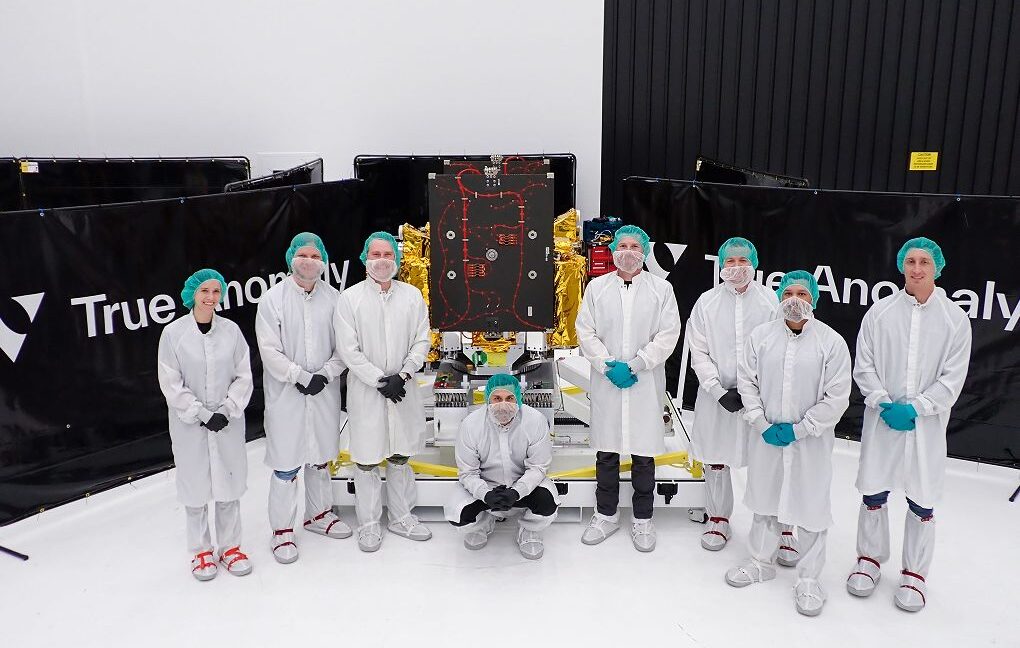
Rocket Lab launches satellite for U.S. Space Force Victus Haze responsive space exercise

The mission pairs Rocket Lab spacecraft with a True Anomaly vehicle in orbit to demonstrate rapid threat characterization and rendezvous operations

The post Rocket Lab launches satellite for U.S. Space Force Victus Haze responsive space exercise appeared first on SpaceNews.

  •  

A US military exercise in space got underway with barely anyone noticing

Rocket Lab quietly launched a small satellite from New Zealand on Friday in a high-flying military exercise to test the US Space Force's ability to rapidly respond to a crisis in low-Earth orbit.

The launch was scarcely announced in advance. The only public indication of an impending launch was the release of a warning for pilots and sailors to steer clear of the rocket's flight path. Rocket Lab did not provide a livestream of the launch, as it does for most of its missions. As of Monday morning, officials from Rocket Lab and the Space Force had not acknowledged the launch in any official public statements.

But the US military's catalog of space objects was updated over the weekend to reflect the launch. A new satellite, designated Victus Haze Puma, showed up in the catalog with a launch date of Friday from Rocket Lab's privately run spaceport at Māhia Peninsula in New Zealand. The Space Force cataloged the spacecraft in a polar orbit ranging between 215 miles and 286 miles (347-by-461 km), with an inclination of about 97.5 degrees from the equator.

Read full article

Comments

Β© True Anomaly

  •  

K2 Space, Rocket Lab win key supplier roles in Space Force satcom program

K2 Space and Rocket Lab will supply spacecraft buses to SES and Viasat for the military's next-generation protected satcom program

The post K2 Space, Rocket Lab win key supplier roles in Space Force satcom program appeared first on SpaceNews.

  •  
❌