Login

NXP Launches SAF9800 Automotive Radio and Audio Processor With AI-Enhanced Audio Processing
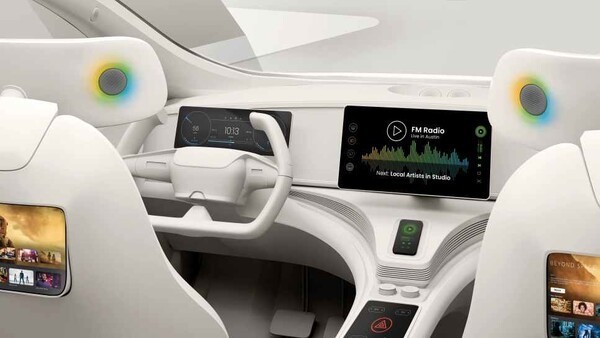
NXP Semiconductors has introduced a new automotive radio and audio processor that significantly enhances artificial intelligence (AI)-based audio processing, targeting next-generation software-defined vehicles.
The company announced on July 21 that it has launched the SAF9800, an automotive radio and audio processor that integrates analog radio reception and AI/ML-enabled audio processing into a single chip.
The SAF9800 combines AM/FM radio reception with an integrated audio digital signal processor (DSP).
Its DSP supports AI-based sound separation, enabling the system to distinguish voice commands, emergency vehicle sirens and abnormal vehicle noises from surrounding background noise. The processor also provides real-time noise reduction and adaptive audio processing capabilities.
NXP said the chip integrates a neural network-enabled DSP and dedicated hardware accelerators, delivering more than 10 times the audio processing performance of the previous generation.
The processor also incorporates EVAM-lite, NXP's latest AM radio denoising technology. Electric vehicles often experience degraded AM radio reception because electromagnetic interference generated by electric motors and inverters affects AM frequencies. According to NXP, EVAM-lite helps mitigate this interference. The technology comes as US lawmakers continue to consider legislation requiring AM radio in new vehicles because of its role in delivering emergency alerts.
NXP said automakers using the SAF9800 will be able to configure and update radio and audio functions through software, responding to the shift toward software-defined vehicles (SDV).
The SAF9800 began supplying customers starting in May 2026.
"The automotive industry is transitioning from hardware-centric infotainment systems to integrated software-defined architectures," said John van den Braak, senior vice president of Infotainment Audio Systems at NXP. "With a flexible single-chip solution, we aim to simplify vehicle development while enabling automakers to scale their platforms."