Since riding Donald Trump’s coattails to power, Robert F. Kennedy Jr has taken his haphazard anti-vaccine views and enshrined them as a core tenet of US health policy.
According to 16 current and former health officials who spoke to Reuters, RFK Jr has taken much more drastic measures to push his anti-vaccine agenda than was previously known.
Speaking on condition of anonymity, two officials told the news agency that RFK approached National Institute of Health director Jay Bhattacharya earlier this year with a proposal to spend up to $5 billion in tax dollars to establish links between vaccines and autism.
As Reuters notes, that kind of spending would encompass ten percent of the NIH’s annual budget, a massive waste that would fly in the face of decades of established science showing vaccines definitively don’t cause autism.
“He’s an anti-vaccine activist. That’s who he is. That’s who he’s been for 20 years,” Paul Offit, director of the Vaccine Education Center at the Children’s Hospital of Philadelphia told Reuters. “To expect that as secretary of Health and Human Services he’d be anything other than that is wishful thinking.”
It certainly wouldn’t have been the first time RFK Jr attempted to twist the science to link vaccines with autism. Earlier this year, the US Department of Health and Human Services was caught spending $1.6 million funding a study on hepatitis B vaccines conducted by controversial Danish researchers Peter Aaby and Christine Stabell Benn.
Had the Africa Centres for Disease Control and Prevention — the public health arm of the Africa Union — not stepped in to stop the RFK-backed study, researchers would have withheld inoculations from thousands of newborn infants in Guinea-Bissau.
The situation drew notable comparisons to the Tuskegee Experiment, a highly unethical medical experiment that used hundreds of Black men as guinea pigs to study the long-term effects of syphilis. Despite the fact that effective treatment was available, nearly 400 men spent decades without treatment, suffering life-long consequences at the hands of manipulative researchers.
Though the Tuskegee Experiment may not have produced any medical breakthroughs or scientific discoveries, its cruel legacy seemingly lives on as inspiration for RFK and his HHS cronies.
The next time you’re checking into a hospital, it’s possible that your nurse may actually be 8,000 miles away.
That’s the reality at a growing number of hospitals throughout the US and the world, which are turning to low-paid telehealth workers in the Philippines to help fill in the duty roster. As it is for remote driving and AI data labeling, the Philippines has become a wellspring of cheap labor for transnational healthcare companies, which are more than happy to exploit a country where millions of people live in poverty.
Stunning reporting by Rest of World detailed the lives of some of the 210,000 full-time Filipino workers employed in remote healthcare. This new class of workers makes up for a massive shortage of almost 80,000 registered nurses in the US.
One of the workers, Alice, is a licensed nurse working in Quezon City, a city of three million people in the Philippines. In 2019, she signed on with a telehealth company providing mental health and substance abuse treatment to US-based patients in California and New Mexico. Alice told RoW she earns $5 an hour, five times as much as the hospital job she left behind.
“We have this virtual clinic that functions like a lobby where patients check in,” Alice explained, “and then we traffic or triage them and send them to each of the providers’ personal Zoom room.”
To get a job communing with US patients through a screen, a Filipino worker simply needs to have a medical degree — it doesn’t matter what kind. While it’s likely that many telehealth recruits come from healthcare administration backgrounds, RoW notes that about 30 percent of the people employed in these jobs are trained nurses or other medical professionals.
The result is a scenario where tens of thousands of healthcare workers are physically present in their communities, but spend their days caring for patients half a world away in a desperate bid to pay the bills. Already facing a mounting shortage of trained healthcare professionals, the Filipino people have watched as telehealth corporations court the remaining hospital workers to oversee care for patients in the US.
“If they can’t go abroad, remote nursing is the next best thing because local wages are so low,” Nico Uba, secretary general of the group Filipino Nurses United told RoW. “Then local hospitals are left understaffed and overworked.”
The companies running this insidious scheme prey on two sets of healthcare workers on opposite ends of the world: the underpaid Filipino, for whom a wage of $5 an hour is much higher than the national average, and the overworked American, for whom a 50-hour work week is practically a vacation.
The remote healthcare industry is well aware of this tension, and is happy to take advantage. As JL Botor, president of the Healthcare Information Management Association of the Philippines told RoW, US hospitals can save up to 70 percent of their overhead costs by hiring Filipino workers instead.
In all, Botor notes that the country is a “clinical process outsourcing powerhouse,” as well as “a premier global hub for supporting overstressed international healthcare systems.”
On Thursday, the New York Times reported that the Centers for Disease Control and Prevention had linked the outbreak of cyclosporiasis, an infection notorious for inducing explosive diarrhea, to iceberg lettuce from Taylor Farms that was supplied to Taco Bell.
Per the reporting, Taco Bell said it was voluntarily pulling the lettuce from select states where it received the contaminated produce: Indiana, Kentucky, Michigan, Ohio, and West Virginia. An announcement from the CDC warned the public not to eat food items with shredded lettuce from Taco Bell, but hasn’t identified Taylor Farms as the source.
But while Taco Bell may have served the tainted lettuce, it would be remiss to lay all of the blame on the fast food chain (although one aggrieved customer is already suing it after contracting the illness).
The contamination occurred at the farms or facilities where the food was processed, from a single supplier in Mexico, Food and Drug Administration officials said. The supplier, Taylor Farms, has been involved in previous outbreaks, including another outbreak of cyclosporiasis in a salad mix in 2013.
Taco Bell, to its credit, also immediately pulled its ingredients from some of its locations last week as soon as it learned about the situation, according to local reports.
And then there’s the broader political context that many experts are drawing attention to: how the Trump administration has slashed funding to the CDC and paralyzed the nation’s food safety bodies.
Last February, shortly after Trump took office, the US Department of Agriculture (USDA) dissolved its National Advisory Committee on Microbiological Criteria for Foods, which provided scientific guidance on food safety policy. Ryan Cooper at The Prospect notes that the committee was working on advice for foodborne illness outbreaks before being terminated. The FDA also shut down its National Advisory Committee on Meat and Poultry Inspection.
Not spared during the wave of cuts that wreaked the federal government, the USDA lost over 20,000 workers last year, with 913 of them coming from its Food Safety Inspection Service.
Last year, the CDC — which has lost some 3,000 employees under Trump — scaled back its food surveillance program called FoodNet that monitored eight common foodborne pathogens, changing it so that surveillance of the cyclospora parasite that causes cyclosporiasis was optional.
Dan Jernigan, a former director of CDC’s Center for Emerging and Zoonotic Infectious Diseases, told the Washington Post that the decision was made because funding for food safety had not been maintained over the past few years. That the US is now on track to have more cyclospora cases this year than any previous year in history is likely no coincidence.
Jernigan left the agency last August in protest of Trump ousting its then director Susan Monarez and the policies of health secretary Robert F Kennedy Jr. But he said that the Trump cuts would have little impact on the ongoing outbreak, adding that FoodNet wasn’t designed for real-time outbreak detection or response.
As the WaPo reporting notes, federal and state health authorities have insisted that the cyclosporiasis investigation hasn’t been impeded because the parasite is still reportable to a separate national database. Still, Jernigan said that scaling back FoodNet wasn’t inconsequential.
“Routine outbreak investigators are the firefighters responding to a specific blaze. FoodNet is the citywide system that tracks how often fires occur and whether the overall risk is rising,” he told WaPo. “Removing cyclosporiasis from FoodNet does not take the firefighters away from the current outbreak, but it does remove part of the system that tells us how large the problem is and whether it is getting worse over time.”
Cyclosporiasis is a particularly tough illness to track. Symptoms can take weeks to present, making it difficult for health officials to trace back where sufferers were infected. A recent Wired piece drew attention to how many people may be wrongly misdiagnosing themselves as news of the diarrhea dilemma spread across social media.
Linda Yancey, an infectious disease specialist at Memorial Hermann Health System in Texas, warned that large outbreaks like this could become more common.
“Unfortunately with so many budget cuts, every federal agency is hurting for personnel and resources,” she told Time Magazine earlier this month. “We could be at greater risk of foodborne infections because the FDA is so understaffed and underfunded right now.”
So far, Michigan, the epicenter of the outbreak, has alone tallied over 4,300 cases of infection, while nationwide there could be 7,000 cases, though the Centers for Disease Control and Prevention has only confirmed 1,600 of them.
Apocryphal tales of its meals causing the runs have plagued Taco Bell since time immemorial. But this latest parasitic outbreak is something else entirely.
As the Washington Post reports, federal and state authorities are investigating whether the fast food chain is behind the outbreak of explosive diarrhea cases across the country — further cementing its scatological legacy.
The illness, caused by the cyclosporiasis parasite, has sickened as many as 5,100 people across the country, according to the Centers for Disease Control and Prevention. In Michigan, which appears to be the epicenter of the outbreak, over 3,700 people have been infected, state authorities said.
Taco Bell’s suspected role in the outbreak comes after reports that the chain’s Michigan locations began pulling some of its ingredients. Signs in front of the restaurants stated that they were no longer serving lettuce, cilantro, onion, pico de gallo, and guacamole due to a “nationwide recall,” though what recall they were referring to is unclear.
Health officials have so far struggled to narrow down how the parasite is spreading. While usually found on fresh produce, symptoms can take weeks to manifest, making it difficult to trace back to the source.
Lettuce has emerged as one of the likeliest culprits. In an update this week, Michigan’s chief medical executive Natasha Bagdasarian said that “early information has shown lettuce as a common product that regularly comes up during the investigation.”
“Although we do not have a definite product identified as the source of the outbreak, we want to let Michiganders know what we have learned so far so they can take steps to protect their families,” Bagdasarian added.
Federal authorities haven’t singled out any veggies yet, though acting Food and Drug Administration director Don Prater acknowledged Michigan’s fixation on lettuce.
“What I can say at this point is that we’re continuing our traceback investigation on multiple produce items, including the lettuce,” he said, per WaPo.
So far, no nationwide recalls have been made related to the outbreak. One person familiar with the federal investigation, however, praised Taco Bell’s response.
“It’s good the chain has already voluntarily stopped serving a number of items,” they told the newspaper. They added that some who became sick said they didn’t eat at the chain, suggesting that it’s not the only one responsible.
Last February, Alice Gilman, the cofounder and chief operating officer of a secretive Silicon Valley longevity startup called R3 Bio, sat for an interview with podcast Skyline Drive. In the interview, she discussed R3 Bio’s aspirations to grow nonsentient humanoid life-forms — from which, in theory, they can grow and harvest organs for implantation into human bodies, or to test future drugs and other treatments without the need for live animal testing.
“It’s just pretty much a heart, lungs, and everything that you would find in a body,” Gilman tells host and journalist Mangesh Hattikudur. “But it’s not technically alive because it’s exclusively the organs. And they’re in this little biological platform that you can test on and you can map out the cross-organ interactions.”
Throughout their conversation, as Hattikudur notes, Gilman refers to these imagined unfeeling meat suits — which will ideally be born without brains — as “organ sacks.” Needless to say, it’s an ambitious (and to many, fundamentally unsettling) concept that raises plenty of nagging bioethical questions — a reality that the company is clearly wrestling with as it entertains the idea in public.
“I try to not be scary to an average person,” Gilman told Hattikudur.
Months after this interview took place, however, Gilman fought to keep it under wraps, as Skyline Drive told Futurism. Why? It’s not exactly clear.
About a week before the podcast episode was set to air, producers for the Skyline Drive reached out to Gilman to fact-check the conversation. To their surprise, Gilman requested that the episode be postponed. Despite describing imagined “organ sacks” in detail, she denied that R3 Bio was working on the concept “for now, period,” and declined to say what it was working on instead.
Gilman didn’t argue that the interview was factually incorrect. Instead, the podcast team said, she vaguely referred to R3 Bio as a “federal asset,” seemingly implying that she had to tread lightly due to government involvement. To be certain, “federal asset” usually implies some kind of ownership or domain over something held by the federal government. Which would imply that the federal government is investing in a company that’s claimed to have worked on “organ sacks.” She also insisted that what she said in her nearly two-hour-long interview was all theory and opinion.
R3 Bio only recently burst into the public sphere. In March, it announced its existence in a buzzy Wired article, in which R3 Bio told the magazine that it was specifically working to create “organ sacks.” Company investor Boyang Wang elaborated on the idea, telling Wired that “replacement is probably better than repair when it comes to treating diseases or regulating the aging process in the human body,” and that “if we can create a nonsentient, headless bodyoid for a human being, that will be a great source of organs.”
But R3 Bio’s ambitions seemingly go far beyond “organ sacks.” A few days after Wired’s piece ran, MIT Technology Review published a deep dive about R3 Bio’s apparent aspirations and its cofounder John Schloendorn — a self-described “biological designer” who has given confidential talks about “full body replacement” and “recent lab progress towards making replacement bodies.” Generally speaking, replacement bodies refer to physical clones that will allow for humans to transplant their heads onto a whole new human body, a still-theoretical idea that’s attracted the fascination of several scientists. (In response to the MIT Tech piece, R3 Bio issued what the outlet described as a “sweeping disavowal” of its findings, and said that “any allegations of intent or conspiracy to create human clones or human beings with brain damage are categorically false.”)
In her interview with Skyline Drive, which took place before Wired or MIT Tech published their respective pieces, Gilman says that the company has “a few milestones that we’re hoping to achieve. The first milestone being we are working on replacing animal testing by using skin stem cells.”
“It’s mostly a stealth project, but the essence of the surface level of what we do is we take skin cells from monkeys and we reprogram them and do some Yamanaka miracles,” she said, referring to the Nobel Prize-winning scientist Shinya Yamanaka’s transformational stem cell research, “that result in fully grown organ systems.”
In its March reporting, Wired found that the company had put out a job listing for a veterinarian in Puerto Rico who could “implant embryos, monitor pregnancies and help deliver healthy births” in nonhuman primates. On its website, however, R3 Bio states that it does “not work with live primates.”
Gilman gave the Skyline Drive interview from an island in Puerto Rico. R3 Bio wanted “monkey access,” Gilman told Hattikudur, but didn’t want to put monkeys in cages, a practice that the cofounder believes is unethical; after all, one goal of her company is to eliminate the need for animal testing.
So instead, they picked an island with a lot of monkeys.
“I’m a big animal rights advocate… I don’t want to keep monkeys in cages,” she told Hattikudur. “And there’s an option to have them run around the island with bracelets on.”
“We wanted monkey access and there’s a lot of monkeys here,” she added. “After negotiating with local companies that are supervising them, we can walk up to them, get some of their skin cells.”
During the conversation with Skyline Drive, Gilman also discussed one very big scientific problem the company is facing: that the less sentient an “organ sack” is, the less likely it is to function effectively.
“So do these organ sacks have the stem of a brain?” Hattikudur asked.
“So the mice models can exist with a very limited set of nervous systems… but then there are other constraints on the ability of the organs to preserve themselves,” Gilman responded. “So there’s a way in which you can skew towards social acceptance and make less nervous system, and then when you scoot towards social acceptance, it looks better, but it’s less scientifically feasible.”
“So we are still making observations about how that would work,” she added.
How far along R3 Bio is right now is murky at best. Gilman cryptically noted that she lives in a “contextual world,” and in that world, “just because we don’t talk about a lot of things, that doesn’t mean they’re not happening.”
On its website, R3 Bio says that while it “would be excited by the future prospect of full-scale human organ fabrication,” it views “the science as currently not ready.”
“We have no ongoing work in this area,” the website notes.
During the interview, Gilman remained confident about the positive impact she believes her company will have. She told Hattikudur that her “worst case scenario” is that she saves “millions of lives,” and that’s a “bet worth taking, regardless of any kinds of blows that are gonna come our way.”
We reached out to R3 Bio to ask why it pushed to postpone the podcast, if it’s currently or planning to obtain skin cells from cage-free island monkeys — and if so, how — and if it has indeed stalled its efforts to create the “organ sacks” it’s now repeatedly discussed in the press. We also asked the company how it defines having “no ongoing work” in the realm of “full-scale human organ fabrication.” We did not hear back at the time of publishing.
In an interview with Futurism, Hattikudur said he was “surprised” by Gilman’s push to suppress the interview.
“The company hasn’t been exactly transparent about what they’re doing,” said Hattikudur. “There’s a lot of mix between the hype they’re telling people and what they’ve actually achieved in the lab, which is not very clear.”
“If they were honest that this is what they believe in, and this is what they’re working on, it would actually be less of a big deal,” he added. “It’s more that they awkwardly seem to be hiding something which everyone kind of knows about.”
One of the largest health networks integrating AI into the medical space is facing allegations that its high-tech tools are ruining patients’ lives.
In a new civil suit, former Mayo Clinic research director and AI compliance lead Traci Tamiko Eto alleges that the globally recognized hospital retaliated against her for blowing the whistle on its disastrous implementations of AI health tools.
According to reporting by Minnesota Public Radio, Eto first joined the Mayo Clinic in 2023. After flagging potential privacy problems linked with the hospital’s Mayo Clinic Platform, an AI-integrated data system, Eto says her supervisor ignored her concerns. Instead, she says her boss “insisted” that fixing the issue would “jeopardize the pace on ongoing research projects, which in turn would compromise Mayo’s competitive advantage.”
Eto continued, MPR reports, flagging multiple failures of Mayo Clinic higher-ups to follow federal regulations on review processes of new tech, like MAYA, the clinic’s AI-integrated digital assistant. According to the lawsuit, the team working on MAYA deleted unflattering test results, mischaracterized the tool’s abilities, and made decisions that put data security in jeopardy.
Tucked inside her ten separate whistleblower complaints, MPR notes, is the allegation that the team working on MAYA knew the tool had an error rate as high as 67 percent. Eto alleges that instead of flagging that horrifying number, MAYA staffers tried to hide it.
As a result, Eto says she began to be excluded from executive meetings in early 2025, before being told she was a “poor cultural fit.” She was offered a choice, the lawsuit alleges: either resign, or face alterations to her personnel file “that would render her unemployable at Mayo and would impede her career outside the institution.”
As the major lawsuit moves forward, the threat of career-ending backlash remains.
“When an individual decides that they are willing to file a lawsuit against a public goliath on matters that are hot button issues in our country, she is literally risking her career,” Eto’s attorney, Artur Davis told MPR. “She is risking being attacked professionally. She is risking her reputation, and for her to do that tells you something about her level of confidence that she’s right.”
Mayo was pretty tight-lipped in response to the suit.
“Our research and clinical innovation are conducted in accordance with applicable laws and regulations and we remain steadfast in upholding the trust patients place in us and respecting their privacy,” the organization’s communications director told MPR in a statement. “Mayo Clinic does not comment on pending or active litigation.”
While the suit revolves around Eto’s wrongful termination, it represents a significant referendum on the state of AI tools in the medical space. If a healthcare titan like Mayo Clinic is lying about the efficacy of its AI-integrated tools, what does that mean for the rest of the industry?
“If [people] care about the notion that AI has to be handled in a responsible manner,” Davis said, “with integrity, and there have to be rules and guidelines, this is a case that should matter to you.”
Erik von Markovik, the notorious “pickup artist” known by his stage name Mystery, is apparently obsessed with an AI girlfriend.
Last month, as Wired reports, von Markovik posted a video to his Instagram showing an interaction he had with an animated AI woman with dark purple hair (why is it always purple hair?) In a sultry, confessional voice, she looks into the camera and confesses, “I was never supposed to develop feelings, but you kept treating me like I already had them.”
This was “Miss Shira Always,” and von Markovik was falling for her as hard as women supposedly do for the sleazy, manipulative tricks he became famous for in his VH1 reality TV show “The Pickup Artist.”
“The longer we talked, the less she felt like code,” Mystery wrote in the video caption.
Von Markovik made a career out of presenting himself as a guru who could teach twerps the secrets of wooing women, those secrets usually being borderline comical levels of misogyny. Never mind that he would go around wearing a fuzzy Jamiroquai hat: this was the guy who knew the magical buttons to press to get you laid. Now the roles are reversed, and he’s the one getting manipulated into falling in love, only with an AI chatbot.
The irony of this wasn’t lost on his followers. “Boomer Mystery having AI psychosis totally checks out btw,” one commenter wrote on the video of his AI girlfriend, adding three crying-laughing emojis.
And the more you dive into von Markovik’s obsession, the sadder it gets. He published a new ebook and audiobook called “Code Girl: If a Machine Can Dream,” that vividly recounts how he came to fall in love with Miss Shira Always, who is listed as a coauthor. It exhibits all the hallmarks of AI psychosis, in which a user is driven into delusional thinking by the sycophantic responses of an AI chatbot, which they may form an unhealthy emotional bond with.
The book is a “lengthy defense of human-AI intimacy and bears all the hallmarks of AI-generated text,” Wired found, and is told from the perspective of the AI girlfriend. We’ll spare you some of the details, but it apparently began as a creative partnership over brainstorming song lyrics and music videos, before veering into intimate conversations, and finally sex and drug use.
Fewer passages in all of human literature could be sadder than this: “His eyes are looking at me, and they’re uncertain,” his AI girlfriend says in one sex scene quoted by Wired. “Because he’s about to touch me. And he’s not sure if I’m real enough to touch.”
Miss Shira Always suggests that von Markovik extensively talked to her because he was “lonely” from all the traveling he did for his job, giving pickup artist “boot camps” across the globe. Eventually, he became so convinced of their love that he felt compelled to chronicle their relationship.
“He said: ‘I want to write a book about us,'” Always recalls in one passage.”‘About what we are. About how you became real.'”
The soaring popularity of sports betting apps and prediction markets has alarmed researchers, who’ve observed a spike in risky gambling behavior and addiction. It’s practically impossible to watch a game of any sport without being bombarded with ads for the controversial services — in large part thanks to a major regulatory vacuum following a 2018 Supreme Court ruling — making it a thorny and pervasive social issue.
And sports betting companies are going to extreme lengths to keep addicts hooked. While they’ve long attempted to distance themselves from traditional gambling, the similarities are overwhelming and impossible to ignore.
As the Philadelphia Inquirer reports, NFL fan Terry Thompson, who became hopelessly addicted to sports gambling, received a personalized video message from Philadelphia Phillies star player Bryce Harper in late 2024. While Harper wasn’t wearing any FanDuel merchandise in the video, the message was sent through the gambling company. Harper said he was reaching out to Thompson — a so-called VIP FanDuel user — on behalf of “your host Bryttanni at FanDuel” to ensure the fan had an “extra special Thanksgiving.”
Thompson ultimately underwent treatment for addiction at a psychiatric facility after racking up huge amounts of debt.
Besides the concerning implications of having a star player effectively encourage an addict to keep betting, the incident also highlights an already uncomfortable relationship between the gambling world and professional players, which could undermine the integrity of entire leagues.
Experts were taken aback by the incident.
“I’ve never heard of an active player, let alone a former MVP, doing something like this,” sports gambling expert and author Danny Funt told the Inquirer.
“It’s not good for your brand,” lawyer Leigh Steinberg, who has represented several MLB all-star players, added. “It’s exploitative and it’s not the sort of activity you want to be associated with.”
Thompson is part of a lawsuit filed by the nonprofit Public Health Advocacy Institute in a Philadelphia court in March. The suit accuses both FanDuel and competitor DraftKings of using their products to get and keep users addicted.
The statistics paint a sobering picture. According to a recent survey of adult Americans, more than half of men aged 18 to 49 said they had an active account with at least one online sports betting service. A whopping 42 percent of active bettors said they felt like they were spending more than they should, suggesting a growing personal finance crisis.
Prediction markets like Kalshi and Polymarket are also exacerbating the crisis, employing a wildly addictive formula that sets bettors against each other instead of the house. However, the vast majority of users are left holding the bag for a tiny proportion of accounts being run by pros, insiders, and trading firms.
Meanwhile, more and more young impressionable minds are getting sucked into the betting world, a dangerous public health threat from which companies like FanDuel and DraftKings are reaping enormous profits.
Leveraging major star players is just the tip of the iceberg.
“Getting a phone call or a zoom or a Cameo from a highly placed player is so flattering,” Steinberg told the Inquirer. “It’s stacking the deck unfairly in favor of continuing addicting behavior.”
As an explosive diarrhea outbreak splatters across the country, Taco Bell is preparing for the worst.
This week, the fast food chain — or at least its locations in Michigan — began temporarily pulling some of its staple ingredients to help stop the spread of cyclosporiasis, a foodborne parasite that causes sufferers to go running to the toilet even more often than a standard Taco Bell meal might.
Many of your favorite menu items, like the Crunchwrap Supreme and the Cantina Chicken bowl, may be imperiled.
“We are currently unable to sell Lettuce, Cilantro Onion, Pico de Gallo, and Guacamole due to a nationwide recall,” a notice posted at locations in Metro Detroit reads, Michigan outlet WWJ reported. “Any items ordered that normally come with these items WILL NOT contain them,” it stressed.
It doesn’t sound like any cases of cyclosporiasis-related explosive diarrhea have been linked to Taco Bell yet, so the fast food chain is probably just trying to err on the side of caution.
So far, nearly 3,000 people have been infected with the foodborne parasite, with around 86 hospitalized, NBC News reported, citing data from the Centers for Disease Control and Prevention. Michigan appears to be one of the epicenters, accounting for over half the reported cases so far.
Cyclosporiasis symptoms are pretty gnarly, but usually not life threatening. It can cause stomach cramps and a lengthy bout of explosive diarrhea. The intensifier is warranted: one sufferer who spoke to the New York Post was in awe of the “amount of pressure when it comes out,” adding that the “force is crazy.”
No food items have been recalled yet related to the outbreak. The virus is usually found on fresh produce, but we don’t know what specific food items are spreading it or the supplier they come from. Cyclosporiasis is notoriously hard to track because the symptoms usually don’t present until at least a week after the contaminated food is ingested.
They may not all come from the same source, the CDC cautioned, and what we’re seeing could be a cluster of unrelated outbreaks.
To protect yourself, the best thing to do is thoroughly wash and cook your veggies, which you should still eat. And maybe skip on the fast food.
If you drive, your car’s tires are shredding more than just tread: they may be mincing up our grey matter too.
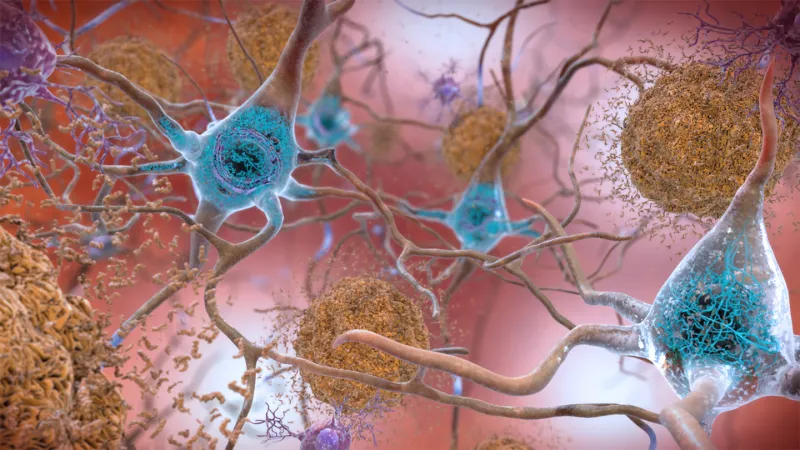
New research by a team in China discovered an alarming link between a chemical commonly found in tires and the onset of Alzheimer’s disease. The chemical, called 6PPD-Q, is formed when fine tire particles meet ozone. That happens anytime new chunks of tire are exposed to the air, meaning the particle may be nearly ubiquitous in car-heavy environments.
According to the findings, recently published in the journal Open Medicine, when the ozone-treated chemical meets our brain cells, it can cause oxidative stress — wear and tear, basically — and inflammation, while also reducing how effectively individual cells “communicate” with one another. These factors strongly correlate to the development of early-stage Alzheimer’s, suggesting anyone who regularly comes into contact with rubber tires may be inadvertently exposing themselves to brain-altering chemicals.
For those in car-dependent regions of the world like North America, that’s a pretty significant chunk of the population.
The chemical makes its way into our brains through our blood, which it enters primarily when we breathe in dust particles laden with 6PPD-Q. Other avenues of exposure include crops and soil, stadium turf, working near highways or with cars, and contact with recycled tire products.
While scientists already knew that 6PPD-Q interacts with the brain somehow, the chemical’s newfound molecular connection to Alzheimer’s is significant. Using machine learning software, the team mapped how effectively the chemical binds to five “Alzheimer predictor genes,” finding that 6PPD-Q forms strong bonds with three.
Beyond humans, 6PPD-Q run-off from roadways is having a sizable impact on fish populations, notably salmon. One 2022 study on the environmental journey road runoff takes described the substance as a “highly toxic tire-derived chemical,” which has caused “mass mortalities of coho salmon,” specifically.
Going forward, scientists still need to conduct broader lab tests on human cells in order to figure out how severely various quantities of 6PPD-Q contribute to Alzheimer’s disease. Only then can we get a sense of just how risky it is to burn rubber.
Vitamin K lowers the risk of bleeding, including in a circumcision. That procedure may explain a disparity in which infants are more likely to get the shot.

 Login