❌

Reading view

Chinese startup introduces next-gen optical links to connect thousands of high performing chips
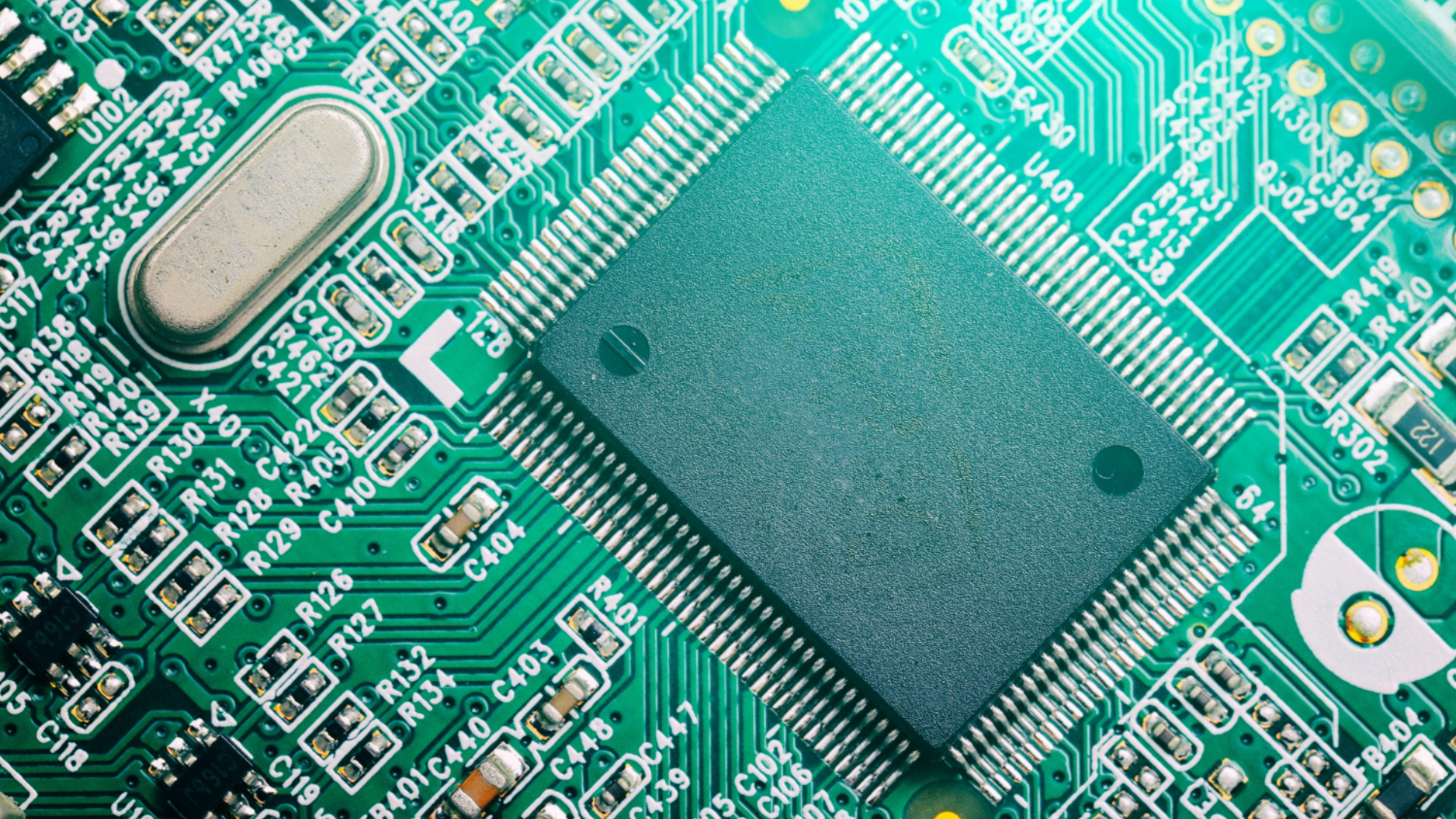
As AI models continue to grow in size and complexity, chipmakers are shifting their focus from individual processor performance to the ability to efficiently connect thousands of accelerators into a single computing system. 

These highly interconnected server architectures have become a key competitive area for AI infrastructure companies, which are racing to deliver the computing scale needed for models with trillions of parameters and the growing adoption of AI agents.

According to Ding Yunfan, vice president of AI framework architecture at Biren, improvements in the performance of a single graphics processing unit (GPU) are no longer enough to meet these demands. Instead, the industry’s biggest challenge is turning vast GPU clusters into unified, seamless computing platforms capable of operating as a single system.

Architecture designed to break GPU cluster limits

Biren believes the future of large-scale AI computing depends on replacing conventional electrical interconnects with optical technology. According to Ding, traditional copper-based connections are approaching their physical limits, effectively capping today’s server architectures at around 128 GPUs, the South China Morning Post reports.

To overcome that bottleneck, the company has developed a distributed, decoupled supernode architecture built around near-packaged optics (NPO), which positions optical fibres closer to the chips to increase bandwidth and improve data transmission. Biren said the approach could enable clusters with up to 1,024 AI accelerator cards, significantly expanding the scale of computing systems needed to support increasingly demanding AI workloads.

Ding said optical interconnects are becoming essential for overcoming the scalability limits of conventional server architectures. Shanghai-based Biren is among a growing number of Chinese companies tackling these infrastructure challenges. Rivals including MetaX, Enflame and Alibaba are also developing supernode architectures to compete with Nvidia’s NVL72 and next-generation NVL144 AI platforms.

Biren’s Shanghai-based rival MetaX has introduced its Xijing S600 AI supernode, featuring a single rack that connects 64 GPUs. The company said its design reduces signal loss by removing external cabling between compute nodes, switch nodes and interconnect systems, improving efficiency for large-scale AI workloads.

Looking beyond electrical links to build larger AI supernodes

Biren is also working on new approaches to expand the scale of its AI computing systems. The company’s orthogonal hardware architecture, co-developed with telecommunications giant ZTE, uses traditional electrical connections, while Biren is simultaneously testing a prototype near-packaged optics (NPO) interconnect system. 

The chipmaker said the optical approach could eventually support supernodes with more than 512 accelerator cards, helping address the growing demand for larger and more efficient AI infrastructure.

Despite growing interest in optical networking for AI infrastructure, Ding said the semiconductor industry is still in the early stages of developing and testing optical interconnect technologies. He noted that widespread adoption will require further advances before these systems can be deployed at scale.

Furthermore, Ding emphasized that the technology still requires real-world validation before it can be widely adopted. He projected that NPO optical systems could reach mass commercial deployment around 2028, as the industry continues refining the technology and addressing remaining engineering challenges.

💾

Chinese chip startup Biren has introduced a new optical supernode architecture designed to connect thousands of AI chips in a single cluster.
  •  

MIT’s GIFT framework improves CAD designs by turning its failures into training data

Creating a realistic 3D model from a simple image remains surprisingly difficult for artificial intelligence. 

While AI can generate impressive pictures, producing the precise CAD code engineers use to design aircraft parts, cars, and consumer products is far more challenging. Even a small mistake can make a design unusable. 

Now, researchers from MIT, IBM, and Red Hat have developed a framework that significantly improves the ability of AI systems to turn 2D images into functional CAD programs, producing more accurate designs while reducing inference computation by about 80 percent.

This new research work tackles one of the biggest obstacles in AI-driven engineering, which is the shortage of high-quality CAD training data. Existing image-to-CAD systems need vast numbers of examples linking 2D images to working CAD programs, but creating those datasets is expensive and labor-intensive. 

Instead of relying on more human-created data, the new approach teaches AI using the mistakes it already makes. “We want to obtain data augmentation that is informed by the model itself,” lead study author and AI researcher Giorgio Giannone said.

Turning failed designs into training material

The team’s framework, called Geometric Inference Feedback Tuning (GIFT), works with vision-language models that convert a 2D image and text description into Python code that can be executed in CAD software to create a 3D object.

To understand where a model struggles, GIFT asks it to solve the same CAD problem multiple times in parallel. Some outputs are correct, some are close to the target design, and others are much further away. 

According to the researchers, these ‘near-misses’ are the most valuable because they reveal exactly what the model does not yet understand.

The system executes each generated CAD program and compares the resulting 3D geometry with the target using a standard engineering metric known as Intersection over Union (IoU), which measures how closely two 3D shapes match. 

Rather than discarding imperfect outputs, GIFT identifies those that are close to correct and uses them to generate new training examples.

Giannone explained, “If we sample the model 10 times and it generates 10 correct answers to the same problem, then there is not much for it to learn. We care about the in-between cases, where the model might only solve the problem 50 percent of the time.”

Teaching the model how to fix its own errors

GIFT improves the model through two complementary techniques. The first, called GIFT-REJECT, keeps alternative CAD programs that generate the correct geometry even if the code differs from the original reference solution. 

Traditional AI training often assumes there is only one correct CAD program for each object, even though engineers can create the same part in many different ways. By exposing the model to multiple valid solutions, GIFT broadens its understanding of how CAD designs can be constructed.

The second method, GIFT-FAIL, focuses on imperfect outputs. The system takes a nearly correct 3D model generated by the AI, converts it back into an image, and pairs that image with the correct CAD program. By doing so, it creates new examples that effectively teach the model how to recover from specific mistakes.

More importantly, this process requires no human intervention. The framework automatically identifies errors, creates new training data, and uses that information to improve the model.

The researchers also designed GIFT around a technique known as inference-time scaling. Instead of retraining an entire AI model, which can be extremely expensive, the system improves performance during generation. 

Rather than discarding the extra computation spent searching for better CAD programs, GIFT converts successful and near-successful attempts into new training examples that can later be used to improve the model through fine-tuning.

Moreover, users can decide how much computation they want to spend depending on their budget and time constraints.

Better CAD designs with a fraction of the computing power

When evaluated on the GenCAD-Code dataset, models enhanced with GIFT achieved a 12 percent improvement in geometric accuracy compared with a strong supervised-learning baseline. 

The framework also reduced the inference computation needed to achieve comparable performance by about 80%.

“With GIFT, we started with geometry because with engineering problems, if the geometry of a 3D shape is not correct, nothing else will be correct, but there are many other aspects to consider,” Giannone said. 

The system’s ability to learn from its own mistakes could help accelerate product development by making AI-generated CAD models more reliable. 

Engineers could move more quickly from sketches to testable 3D designs, reducing development costs, shortening design cycles, and exploring a wider range of ideas without creating large amounts of new training data.

The researchers say this is only the beginning. So far, GIFT focuses on generating correct geometry, but future versions will aim to teach AI how to design parts that are not only accurate in shape but also easier to manufacture and better suited for real-world performance. 

The study is published on arXiv.

  •  

New metal alloys that beat 1,832°F heat could help jet engines and nuclear reactors

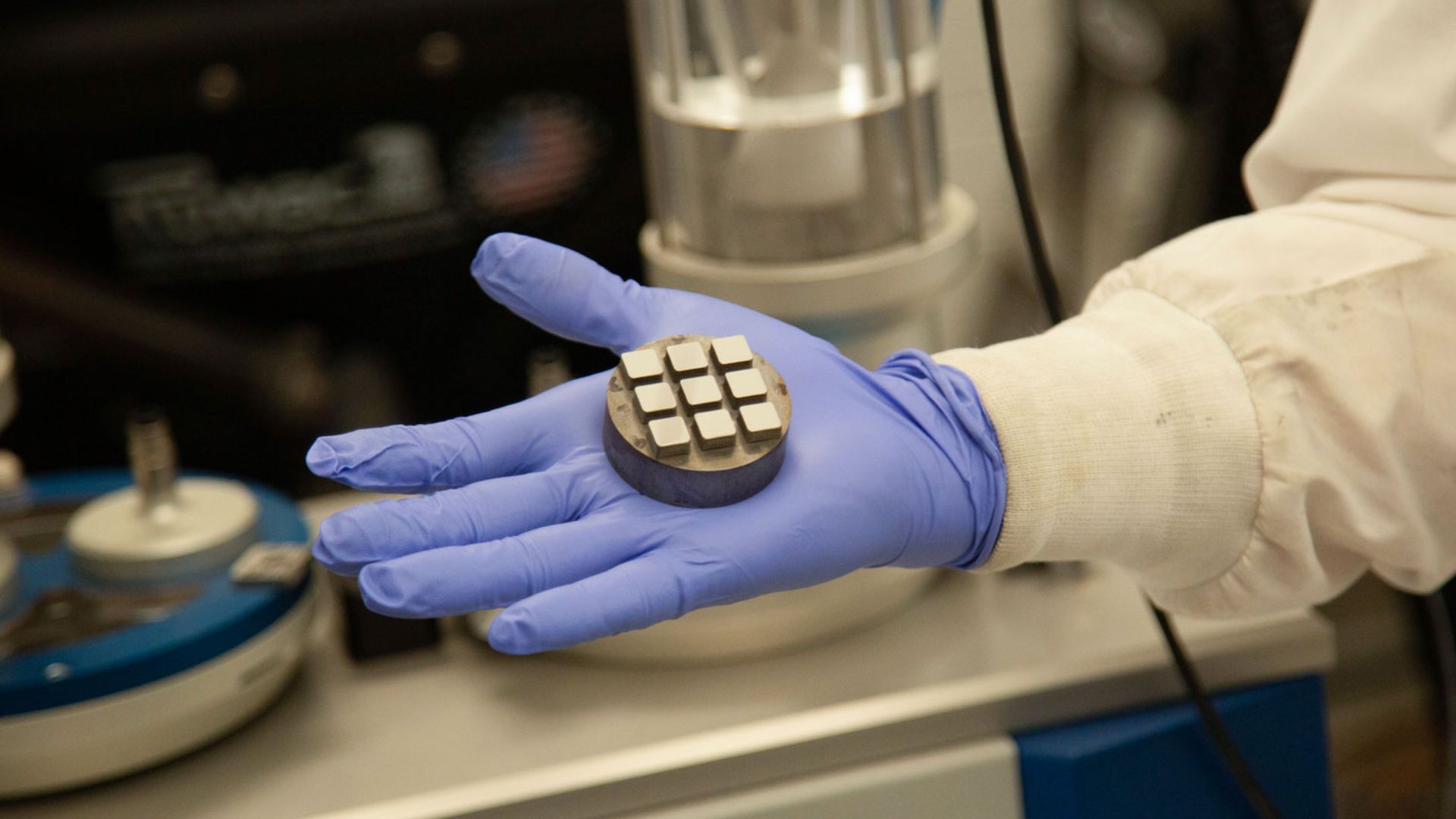
Researchers at the University of Toronto Engineering have developed six new metal alloys using an artificial intelligence-driven discovery platform that could improve the durability of parts used in jet engines, nuclear power plants, and other extreme environments. The findings show that the AI-assisted system identified promising alloys within just a few weeks, significantly speeding up the search for high-performance materials.

These new alloys also work well with 3D metal printing, enabling the production be complex parts that are hard or impossible to produce with traditional methods.

AI speeds up alloy discovery

Led by Yu Zou, Canada Research Chair in Materials and Manufacturing for Extreme Environments, the team worked with Jason Hattrick-Simpers to build a system that uses computer modeling, machine learning, and robots to help with manufacturing.

Their method, called active learning, acts like a self-driving laboratory. Rather than testing thousands of metal combinations by hand, the system picks the best options, makes them, tests how they perform, and uses those results to guide the next experiments.

“There’s enormous demand for materials that can stand up to huge swings of temperature and pressure, such as what you would find inside a jet engine or in the steam generators inside nuclear power plants, anywhere conventional steel just can’t survive,” said Yu Zou, who led the project.

“We also need materials that can be printed layer by layer, enabling us to make components that can’t be created by traditional manufacturing processes. For example, to make a material that is both lightweight and strong, you can vary the composition: a hard, tough alloy on the outside to something softer and lighter on the inside.”

The project was partly supported by the University of Toronto’s Acceleration Consortium, a group that uses AI and automation to accelerate the discovery of new materials.

Active learning cuts the need for massive datasets

Most AI systems need a large amount of experimental data to make accurate predictions. This becomes a problem when researchers look at materials that have not been tested yet.

“One problem you often run into when trying to use AI to design materials is that most machine learning models require lots of data about material properties to learn from,” revealed Ajay Talbot, a Ph.D. student in Zou’s lab and lead author of the study.

“But if you’re working in part of the design space that hasn’t been explored yet, that data doesn’t exist, so you’re kind of flying blind.”

“The way we get around that challenge is to use data-lean models that essentially feel their own way along. Our active learning model strategically selects a few samples to manufacture and test, and the data from those experiments is fed back into the model to inform where we go next. It really speeds things up.”

<a href=”https://www.youtube.com/watch?v=RFYJV7WvtOM“>https://www.youtube.com/watch?v=RFYJV7WvtOM</a>

New alloys outperform industry benchmark

To demonstrate the system, the researchers focused on compositionally complex alloys made from nickel, cobalt, and chromium. Within weeks, the automated platform identified six new alloy formulations with strong performance.

“One of the properties we were targeting was puncture resistance at temperatures of up to 1,112°F (600°C), which is what you’d find in the front section of a jet engine,” Talbot said.

“The industry standard in this space is nickel-based alloys such as Inconel 625. But we found one made of 12 percent nickel, 62 percent cobalt, and 26 percent chrome that was great for retaining hardness at extremely high temperatures. Even with just three components, our alloy outperformed Inconel 625, an alloy of more than 10 different elements, by 4.5 percent in our lab tests.”

The team also developed another alloy designed for hotter sections of jet engines, where temperatures can reach 1,832°F (1,000°C).

“One of the things that happens in an environment like that is the formation of oxide scale, which essentially means that your material is just getting burned away,” Talbot explained.

“We found a material made of 36 percent nickel, 14 percent cobalt, and 50 percent chrome that was extremely good for oxidation resistance at these high temperatures: It even outperforms Inconel 625 by 85 percent. We’re eventually aiming to ramp up to even higher temperatures, up to 2,192°F (1,200°C).”

Researchers plan to expand to more complex materials

The researchers say the current alloys represent an early demonstration of what the AI-driven discovery platform can achieve.

“This nickel-cobalt-chrome system has just three elements in it. In the grand scheme of things, it’s a relatively simple system,” he added.

“But it’s great for showing that this whole closed-loop discovery platform really works. What we want to do next is ramp up the complexity a bit more to make even crazier stuff, with maybe up to 10 or 12 different elements.”

“As you add more components, you can get different strengthening mechanisms, different kinds of useful properties. There’s a lot more out there just waiting to be discovered.”

The study was published in the journal npj Advanced Manufacturing.

  •  

Chinese humanoids take on penalty challenge as Messi, Ronaldo light up FIFA World Cup

As the World Cup fever grows around stars like Messi and Ronaldo, Shanghai hosts a unique penalty shootout featuring humanoid robots.

At MWC Shanghai 2026, humanoid robots are stepping up to the spot in the Humanoid Robot Football Penalties Challenge, testing the limits of robotics,
AI, machine vision, and real-time motion control.

According to Chinese media outlets, the event showcases how embodied AI performs under pressure, highlighting next-generation autonomous technology through football-inspired challenges.

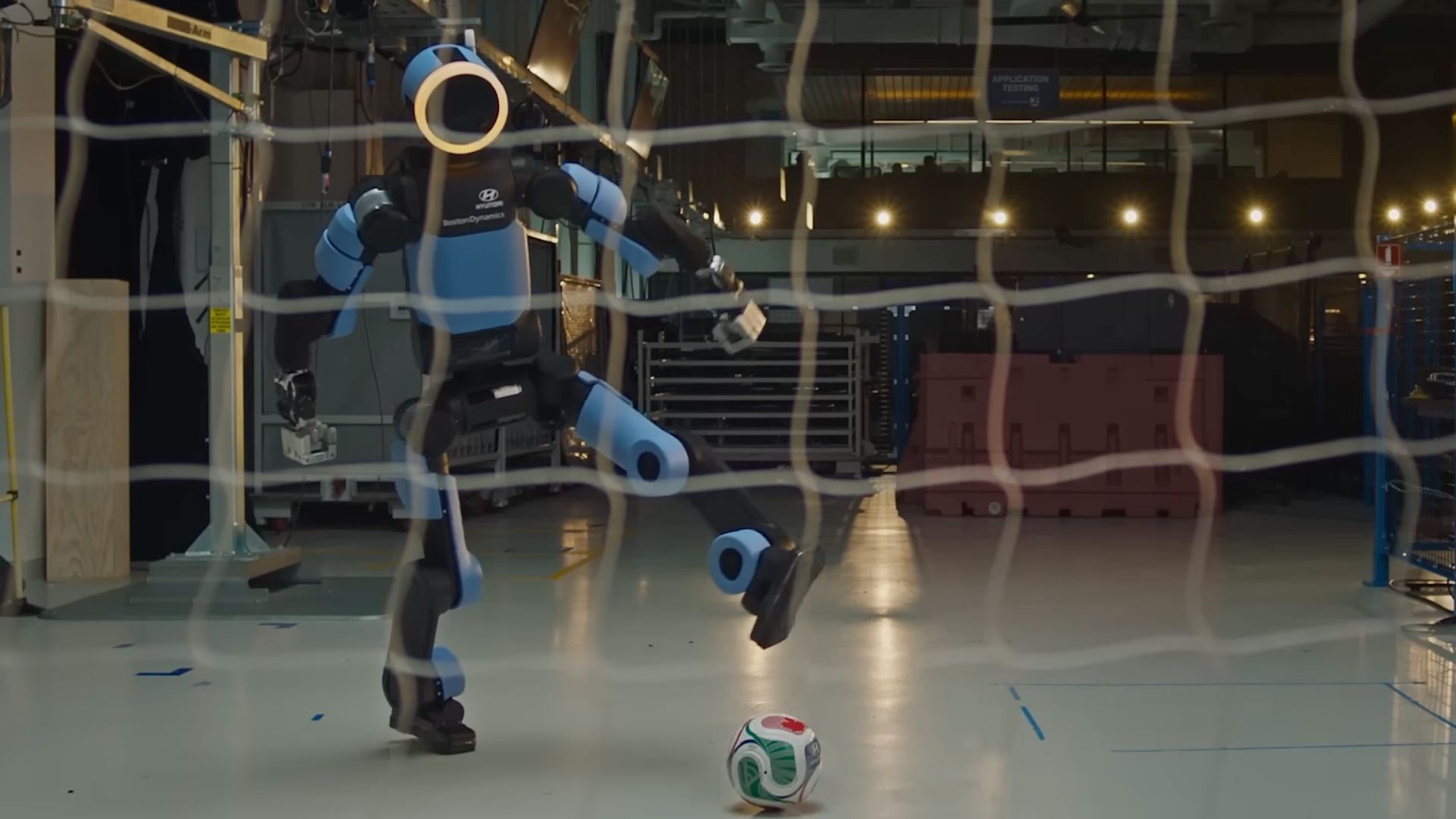
Ahead of the 2026 FIFA World Cup, Hyundai Motor recently launched a football-themed campaign featuring Boston Dynamics’ Atlas humanoid robot.

Humanoid football test

On its opening day at MWC Shanghai 2026 on June 24, the spotlight quickly shifted from keynote speeches to a live demonstration of embodied AI in action: the Humanoid Robot Football Penalties Challenge.

Held within the Mobile AI Innovation Frontiers Zone at the Shanghai New International Expo Centre, the event is designed as a controlled stress test for real-time autonomous decision-making, where humanoid robots must read the goal, judge angles, and execute penalty kicks without pre-programmed sequences, external control, or resets, reported CGTN.

While official details of the participating humanoid robots remain limited, videos circulating online suggest models from Booster Robotics and Unitree Robotics taking part in the challenge.

In the penalties challenge itself, participating humanoids are evaluated on perception accuracy, balance control, motion planning, and adaptive response under game-like pressure. Each robot must independently interpret ball position and goalkeeper movement before committing to a strike, making split-second corrections based on sensor feedback.

The format escalates through semi-finals and a final scheduled for June 25, intensifying constraints to simulate high-pressure competitive conditions. By turning a universally understood sports moment—the penalty kick—into a robotics benchmark, the showcase highlights how far embodied AI has progressed toward coordinated, human-like physical intelligence in unpredictable environments.

Atlas soccer showcase

In a recent football demonstration by Boston Dynamics, an Atlas robot is shown standing before a large display screen, closely tracking player movements, body positioning, and in-game reactions across football footage. After each clip ends, Atlas moves into a practice zone where it immediately attempts to reproduce the actions it has just observed, effectively linking visual perception with physical execution in real time.

The footage highlights a series of football-inspired motions. In one sequence, the robot shifts its weight, swings a leg forward, and smoothly guides a ball across the floor with controlled contact. It then progresses through rapid training drills focused on balance, coordination, and timing. As the session continues, Atlas’s movements appear increasingly fluid, suggesting the system is being evaluated not only for strength but also for agility, reflex response, and adaptive motor control.

Some of the most notable moments show Atlas imitating human emotional reactions. After completing a drill, it raises its arms in celebration, mirroring a footballer’s goal celebration. In another instance, it drops to one knee and pauses, recreating an injury response seen in match footage it had just observed.

Hyundai Motor Company, parent of Boston Dynamics, described the demonstration as Atlas’s first exposure to football under its “School of Football” initiative. The company has also indicated potential plans to showcase Atlas and the quadruped robot Spot at the FIFA World Cup, though their exact roles remain undisclosed.

💾

Humanoid robots participate in a penalty shootout at MWC Shanghai 2026, testing embodied AI, vision and real-time control under pressure.
  •  

China’s new robot dog tackles -22°F cold, crosses river and rugged terrain in demo

DEEP Robotics has demonstrated its new wheeled-legged robot in action, designed to handle challenging industrial operations across complex terrain.

M20S introduces significant improvements over M20 in payload capacity, mobility, durability, and endurance, positioning it as a new benchmark for industry-grade wheeled-legged robots.

Built for all-terrain performance, the Lynx M20S is designed to support a wide range of inspection, logistics, and field operations where reliability and adaptability are critical.

Recently, Deep Robotics unveiled new footage of its DR02 humanoid traversing rough terrain, climbing stairs, and carrying equipment, which is built for industrial and hazardous-environment operations.

Mastering rough terrain

LYNX M20 is a wheeled-legged robot designed for industrial operations in challenging terrain and hazardous environments. The company describes it as the world’s first wheeled-legged robot built specifically for demanding field applications, including power inspection, emergency response, logistics, and scientific exploration.

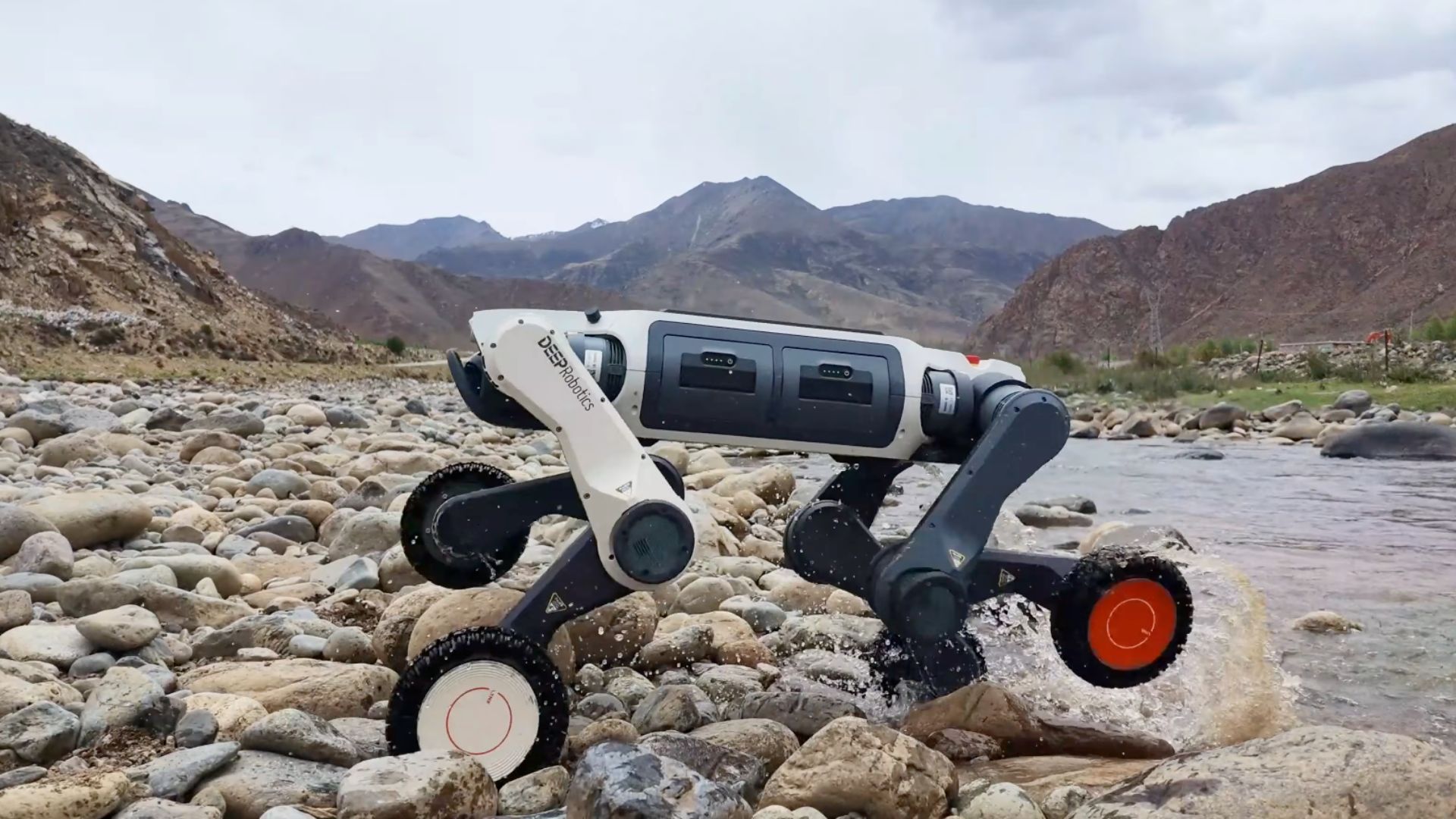
In this newly released demonstration video, DEEP showcases the capabilities of its Lynx M20S wheeled-legged robot in some of the world’s most demanding environments. The footage follows the robot traversing rugged mountain terrain, crossing icy rivers up to 31.5 inches (80 centimeters) deep, and operating in temperatures as low as -22°F (-30°C).

The Lynx M20S is also shown climbing steep 45-degree slopes and navigating rocky, uneven landscapes that would challenge conventional mobile robots. At elevations reaching nearly 17,000 feet (5,177 meters), the robot maintains stability and mobility while carrying out its mission in harsh outdoor conditions. The video highlights the platform’s combination of wheeled speed and legged agility, enabling it to tackle obstacles, extreme weather, and difficult terrain.

According to DEEP, the Lynx M20S, designed for industrial inspections, emergency response, and field operations, demonstrates how advanced robotic mobility can extend autonomous operations into environments that are often inaccessible or hazardous for human workers.

Next-gen field robot

M20S, weighing 77 pounds (35 kilograms), combines the speed of wheeled mobility with the adaptability of legged locomotion. It can navigate narrow spaces with as little as 50 cm of clearance, climb stairs up to 25 cm high, overcome obstacles up to 80 cm high, and handle slopes up to 45 degrees. The platform is designed to operate across rugged mountain trails, muddy wetlands, tunnels, pipelines, and disaster-stricken areas.

The M20 can carry a payload of 33 pounds (15 kilograms) and support a maximum load of 110 pounds (50 kilograms). It offers up to three hours of operation or 9 miles (15 kilometers) of travel on a single charge when unloaded, while carrying a 33-pound (15-kilogram) payload reduces endurance to 2.5 hours and 7.4 miles (12 kilometers). The robot can reach a laboratory-tested top speed of 5 m/s and an operating speed of 2 m/s.

For perception and navigation, the robot is equipped with dual 96-line LiDAR sensors providing a 360-degree by 90-degree field of view, along with wide-angle cameras and omnidirectional obstacle avoidance capabilities. Built for harsh environments, the platform carries an IP66 protection rating and can operate in temperatures ranging from -4°F (-20°C) to 131°F (55°C). Additional features include hot-swappable batteries, bidirectional lighting, OTA updates, and modular expansion options.

To improve operational endurance, DEEP increased the Lynx M20S’s single-charge runtime by 17 percent to 67 percent and added dual hot-swappable batteries. The upgrades help offset the high power demands of wheeled-legged locomotion and support longer, uninterrupted missions.

💾

DEEP Robotics demostrates Lynx M20S, an all-terrain wheeled-legged robot built for demanding industrial and field operations.
  •  

SIGINT: New RF platform achieves 85% real-time signal accuracy under one watt

Australia-based technology company BrainChip has launched a new hardware platform designed to classify radio frequency (RF) signals in real time while operating on less than a watt of power, targeting defense and intelligence applications that require processing at the edge.

Called the Akida Communication Reference Platform, the system is built around the company’s Akida AKD1500 neuromorphic processor and is intended for defense contractors, government agencies, software-defined radio vendors and edge AI developers.

The platform performs RF signal classification directly on-device, eliminating the need for cloud connectivity or large computing hardware. BrainChip said the system is designed for environments where power availability, thermal constraints and size limitations make conventional GPU- or FPGA-based solutions difficult to deploy.

Potential applications include handheld signal intelligence systems, unmanned aerial vehicles, satellite communications terminals and other portable defense technologies.

AI tackles RF threats

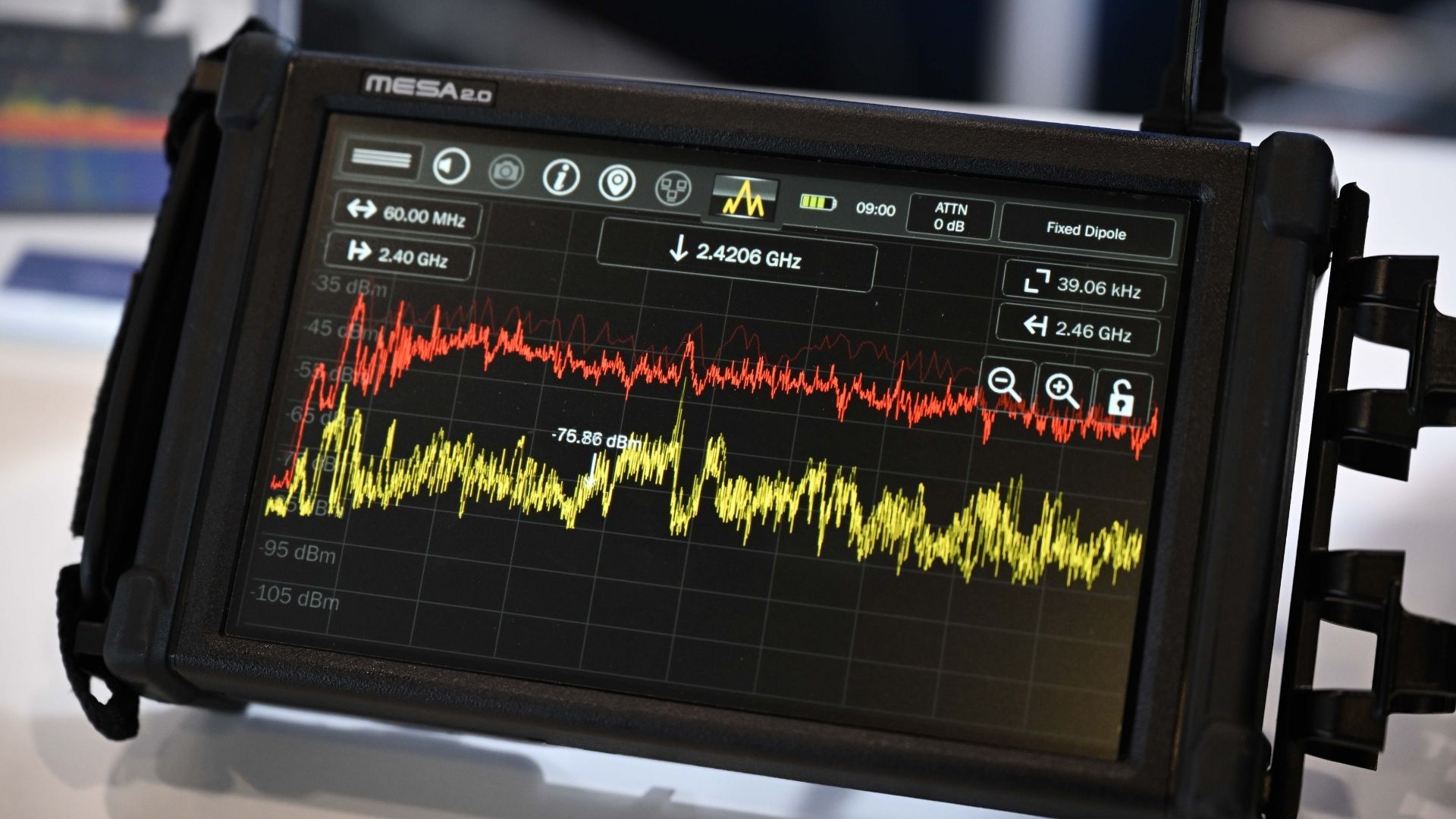
According to BrainChip, the platform can identify more than 20 signal modulation types in real time while maintaining greater than 85% accuracy at a signal-to-noise ratio of 30 decibels.

Traditional digital signal processing systems typically rely on rule-based approaches that can struggle to identify new or intentionally modified signals. BrainChip says its neuromorphic AI approach allows the system to capture unknown waveforms and use them for future model retraining, enabling adaptation to emerging wireless threats.

The company argues that this flexibility addresses a key limitation of existing RF classification systems, which often require significant computational resources and can be difficult to update for changing operational conditions.

The platform is also designed to support battery-powered deployments where continuous operation is required without access to external infrastructure.

“BrainChip’s Akida Communication Reference Platform proves that real-time signal intelligence can be condensed into a portable battery powered solution to extend the range of deployment options,” said Sean Hehir, BrainChip’s CEO.

Built for edge deployment

The platform is available for evaluation and partner integration as a reference design kit. It supports integration with software-defined radio front ends such as the USRP B205mini and EPIQ Sidekiq.

A host system, including devices like the Raspberry Pi 5, can be used to manage data flow and application development. BrainChip said engineering teams can use the platform to prototype intelligence, surveillance and reconnaissance capabilities, as well as broader signal intelligence applications.

The launch expands the company’s portfolio of edge AI reference platforms beyond radar and sensor-fusion systems. BrainChip says the new offering demonstrates how neuromorphic computing can be applied to RF processing workloads that traditionally require larger and more power-hungry hardware.

The release comes as defense agencies and communications providers increasingly explore AI-powered spectrum monitoring tools capable of operating in remote and contested environments. By reducing power consumption and hardware requirements, such systems could enable RF awareness capabilities in smaller platforms that previously lacked sufficient computing resources.

As military and commercial users continue pushing AI capabilities closer to sensors and data sources, low-power processors capable of running advanced inference at the edge are becoming increasingly important for real-time decision-making in disconnected environments.

  •  

Three-armed kitchen robot cuts raw salmon with 95% touch-sensing accuracy

Industrial robots have mastered many repetitive tasks, but preparing sashimi remains a surprisingly difficult challenge. A piece of raw salmon rarely stays where it is placed. The fish deforms during handling, making it difficult for machines to deliver consistent cuts.

Researchers in Norway have developed a robotic system that can prepare sashimi with minimal human involvement. The machine tackles a task that has long challenged robots because raw fish constantly changes shape during handling.

The project highlights a broader goal in robotics. Engineers want machines to work with soft materials that do not behave predictably. Success in that area could benefit industries ranging from food processing to healthcare.

Built for delicate tasks

The research team at the Norwegian University of Science and Technology designed Sashimi-Bot around three robotic arms. Each arm performs a specific role. One arm stabilizes and positions the salmon before cutting begins. Another handles a chef’s knife. A third arm uses chopsticks to transfer finished slices onto a tray.

Getting the fish into the correct position proved critical. A salmon loin can shift during handling, which affects cut quality. To address that issue, the researchers trained the robot in a virtual environment. The system relied on deep reinforcement learning, an AI technique that improves performance through repeated practice. During the simulation, the robot tested countless movements and gradually learned how to arrange the fish for slicing. The researchers then transferred that knowledge to the physical robot without additional training on real salmon.

Giving the knife touch

Cutting introduced another obstacle. The robot needed to know exactly when the blade reached the cutting board. That task becomes more difficult because the knife sits inside a soft robotic gripper. Small variations in the grip can affect the blade’s position during a cut.

To solve the problem, the team equipped the system with a GelSight tactile sensor. The device uses a soft gel surface and an internal camera to detect pressure changes. Those measurements provide information similar to a sense of touch.

Researchers trained the sensing system using more than 12,000 data samples collected during 157 cutting motions. The resulting model detected contact with the cutting board with 95% accuracy. It also achieved 99% precision during testing. That feedback allowed the robot to adjust its cutting motion before driving the blade too deeply into the board.

Performance on salmon

The team evaluated Sashimi-Bot using real salmon loins. During testing, the robot produced 34 slices ranging from 6 to 16 millimeters thick. Some pieces adhered to the knife after cutting, a common issue when working with raw fish. The robot successfully recovered all six of those slices directly from the blade.

Most of the remaining pieces reached the serving tray without issue. The system successfully transferred 26 of 28 slices left on the cutting board. Only two failed transfers occurred, both involving extremely thin pieces that slipped from the chopsticks.

The study was published in the journal npj Robotics.

  •  

New vision-based safety tech lets industrial robots work safely near humans

Sensory Robotics has received safety certification for a system designed to let industrial robots operate alongside people without the protective cages commonly used on factory floors. The certification clears the way for deployment of the company’s SR-1 technology in regulated manufacturing environments across the United States and Canada.

The SR-1 system combines 3D vision technology, sensors, and real-time safety software that continuously monitors the area around robotic arms. Instead of relying on physical barriers, the system creates virtual safety zones that adjust based on human movement and machine activity.

The company says the technology can be installed on existing industrial robotic production cells, potentially allowing manufacturers to retrofit current equipment rather than replace it. The goal is to enable human workers and high-speed industrial robots to share the same workspace safely.

The certification includes cULus 1740 and ISO 13849 Performance Level d validation, standards widely recognized in industrial automation and machine safety. The approvals mark the transition of the technology from development and testing into commercial deployment.

Invisible safety zones emerge

“Without this safety certification, our technology doesn’t leave the lab, and it doesn’t reach the factory floor,” Sensory Robotics CEO Chris Edwards says. “Now, it can.”

Industrial robots have long been separated from workers by fences and cages because of the speed and force at which they operate. While collaborative robots have been designed to work closer to humans, many traditional robotic systems still require physical barriers to meet safety requirements.

Sensory Robotics says SR-1 addresses that challenge by continuously tracking people near robotic cells and adjusting robot behavior in real time.

“We designed SR-1 to continuously see people and adjust robot movements in real time,” Edwards says. “This UL certification now allows our technology to be purchased and installed on industrial robots, enabling them to safely operate alongside humans without physical barriers.”

According to the company, the certification process evaluated how the system responds to equipment failures, safety-function disruptions, and potential risks to workers. Such certifications are often required before technologies can be introduced into regulated manufacturing facilities.

Factory robots lose fences

The company argues that eliminating physical cages could free up factory floor space, improve workflow flexibility, and reduce production interruptions. Traditional robotic work cells often require complete shutdowns when workers enter restricted areas, creating downtime that can accumulate across large manufacturing operations.

“The goal is simple,” says chief operating officer Mark Gagas. “Keep people safe without stopping production every time someone enters a workspace. In traditional environments, a safety interruption can require a full robot shutdown and restart, sometimes taking up to 10 minutes per incident. Add that up across a production line, and those delays compound into high operational costs.”

The company says its system is already attracting interest from sectors including automotive, aerospace, logistics, manufacturing, and defense. Sensory Robotics also received a $1.25 million Department of Defense SBIR Phase II grant and additional support through the University of Cincinnati’s innovation ecosystem.

“These combined certifications are the key that unlocks real-world industrial adoption and approval for companies to purchase fenceless human-robot collaboration systems like SR-1,” Gagas says. “It means regulated manufacturing environments can now trust and deploy this technology into their robots with confidence.”

  •  

NASA’s new prototype rover completes 16-mile autonomous desert trek

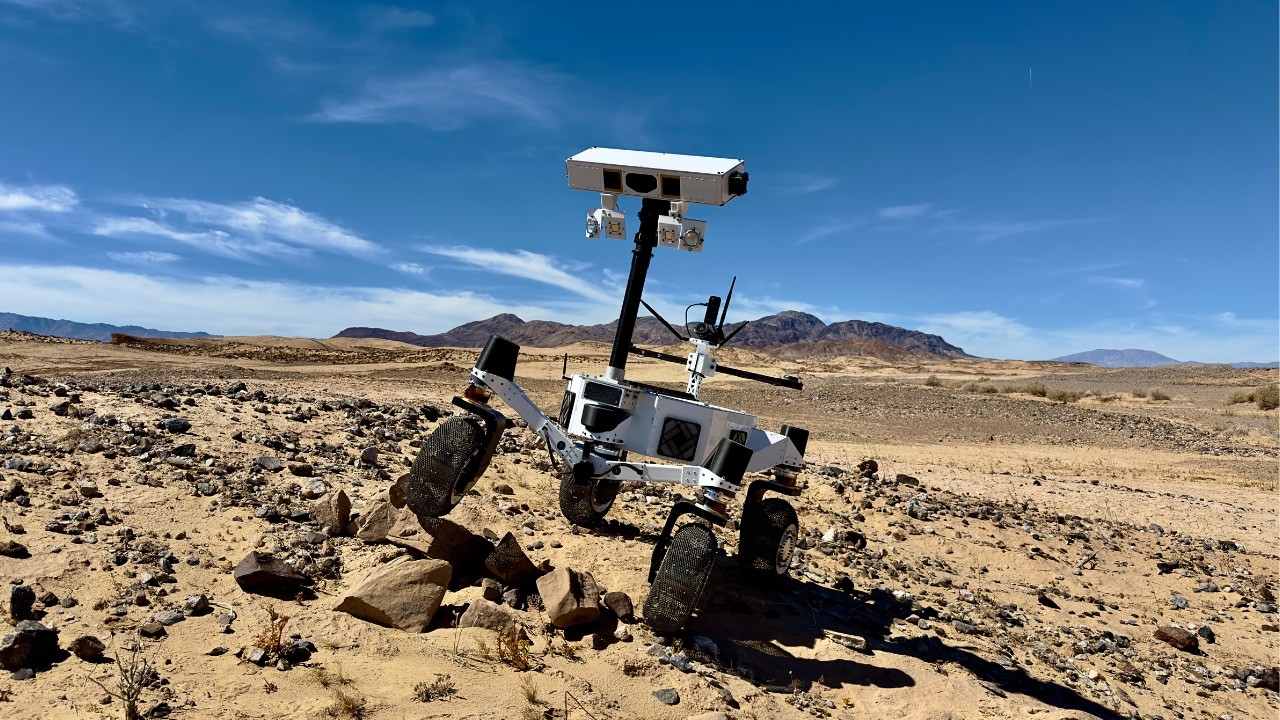
NASA’s Jet Propulsion Laboratory (JPL) has developed a 4-foot-long, four-wheeled prototype designed for high-speed, long-distance autonomous exploration on the Moon and Mars. 

Dubbed Exploration Rover for Navigating Extreme Sloped Terrain (ERNEST), it underwent field tests in the Colorado Desert. The robotic rover successfully traveled 16 miles over 37 hours with minimal human intervention.

“This testing is helping us refine the mobility hardware and autonomy software to navigate extreme distances across a wide range of terrain and lighting conditions anticipated on the Moon,” said Issa Nesnas, a principal technologist at JPL. 

Active suspension system

For the last thirty years, NASA has used a mechanical setup called the “rocker-bogie” suspension system. It is the architecture behind every Mars rover from Sojourner to Perseverance that keeps their wheels grounded.

But it has some problems. Send a passive rover up a loose, sandy slope steeper than 15 degrees, and it will likely get stuck, spin its wheels, or risk a catastrophic tip-over. 

The ERNEST prototype introduces an innovative active suspension system that manages its own weight distribution. 

Equipped with four steerable wheels and a front-powered gimbal, the rover can navigate extreme terrain using unique gaits like squirming, wheel-walking, obstacle-climbing, and even driving sideways. 

Plus, a built-in clutch mechanism allows ERNEST to switch back to a passive mode when efficient, less-demanding driving is needed, blending high-capability mobility with energy conservation.

The 4-foot-long prototype is a testbed designed to advance both robotic autonomy and extreme terrain mobility for future Moon and Mars missions.

ERNEST achieves higher speeds and longer driving distances through its enhanced independent decision-making and a unique ability to lift its individual mesh wheels over obstacles that would trap current Mars rovers.

Ultimately, these technological improvements will inform the design of next-generation rovers capable of exploring previously inaccessible, rough extraterrestrial landscapes.

During recent testing, the vehicle clocked speeds up to 0.6 mph (1 kph) over 37 hours of driving across seven days — an order of magnitude faster than the autonomous navigation speeds of Curiosity and Perseverance. 

“You could do a science road trip across the Moon — or Mars — with this vehicle,” said James Keane, a JPL planetary scientist working on lunar missions.

Preparing for the rough, unknown terrain

Using reinforcement learning, computers ran thousands of hours of virtual simulations over single weekends, punishing the virtual rover with impossible physics scenarios until it learned the optimal way to climb, crawl, and survive.

The software was then loaded directly into the physical rover. Engineers took it out into the desert heat and turned it loose. ERNEST handled the rest. 

The team even ran the rover through the deep, confusing shadows of dusk and dawn. This simulated the extreme lighting conditions future astronauts and robots will face at the Moon’s south pole.

Building on this success, a new project will merge ERNEST’s active suspension control with long-range intelligent navigation. This will allow the rover to plan paths, deciding when to climb surmountable obstacles and when to steer clear of major hazards. 

It will help to prepare future missions for the most rugged landscapes on the Moon and Mars.

💾

NASA's JPL has developed a 4-foot-long, four-wheeled prototype designed for high-speed, long-distance autonomous exploration on the Moon and Mars. 
  •  

Video: New robotic system achieves 99.5% success in fast auto factory wire assembly

Canadian robotics company Sanctuary AI has reported a significant achievement in industrial automation.

The firm said its system achieved a task success rate of more than 99.5 percent during a complex wire-plugging task for a global Tier 1 automotive supplier. 

The operation completed in 2.54 seconds, meeting the customer’s live-production benchmarks and demonstrating high-speed, reliable performance in a manufacturing setting. 

Sanctuary AI said the milestone highlights its strategy of deploying Physical AI on commercial robots to speed industrial adoption and support future industrial humanoids.

Factory automation leap

The achievement reflects Sanctuary AI’s strategy of deploying its Physical AI platform on existing and next-generation industrial robotic systems, rather than waiting for widespread commercialization of humanoid robots. This hardware-agnostic approach enables the company’s AI models to operate across different robotic platforms while accelerating adoption in manufacturing environments.

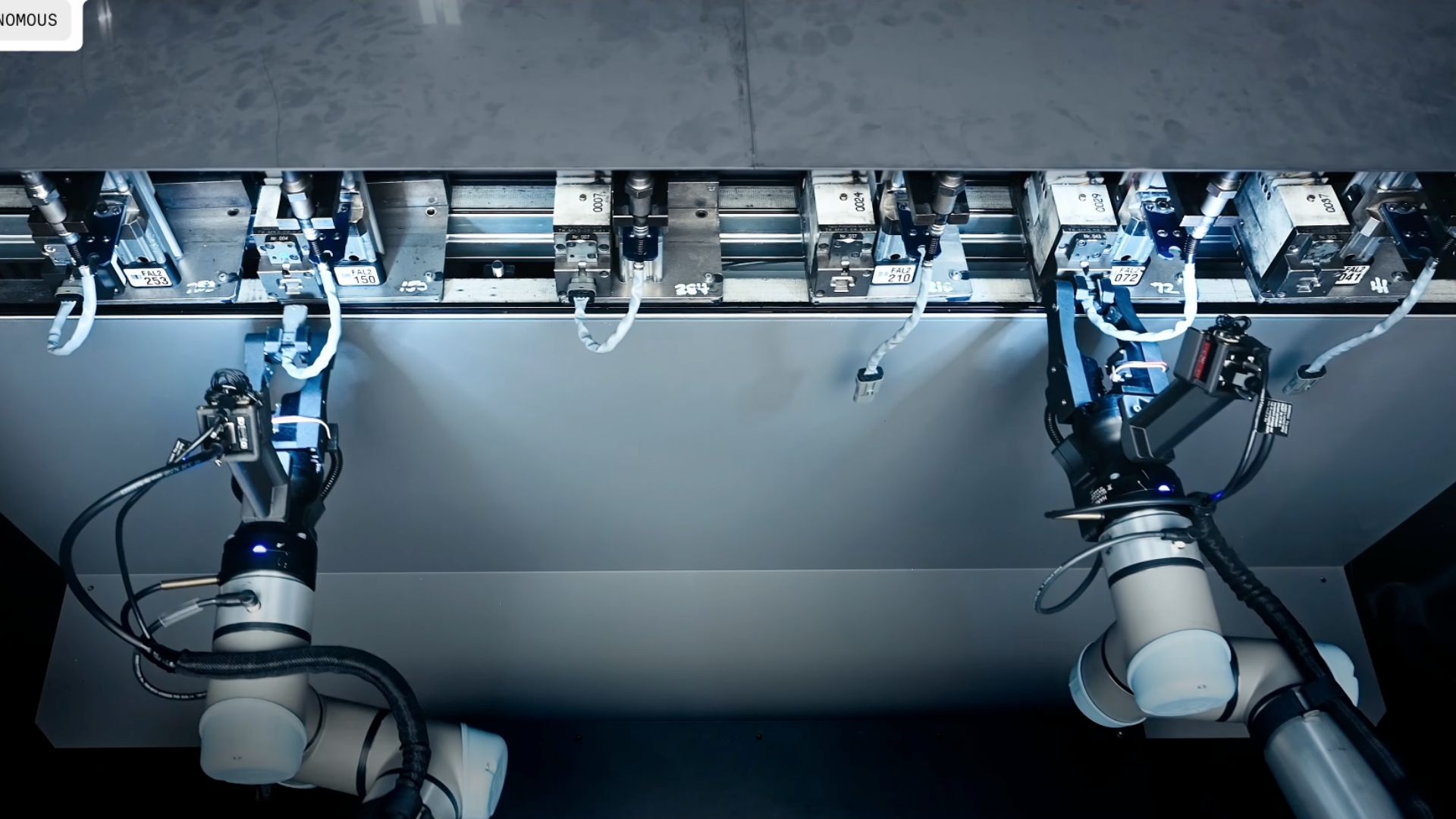
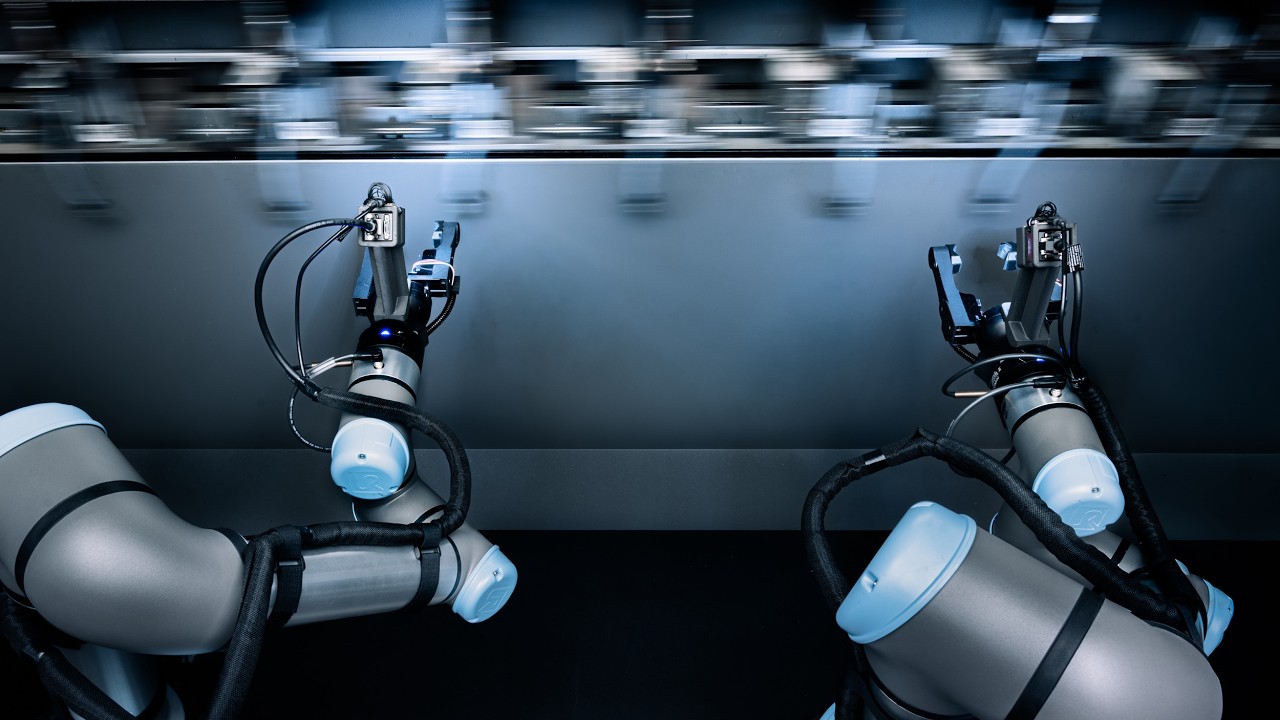
Sanctuary AI demonstrated high-performance Physical AI capabilities in an industrial manufacturing environment, achieving a task success rate exceeding 99.5 percent in a complex wire-plugging operation for a global Tier 1 automotive supplier. The system completed the task with a cycle time of 2.54 seconds, matching the throughput requirements of the customer’s live production line and meeting established industrial performance benchmarks.

The deployment focused on a plug-insertion process involving flexible wire assemblies moving along a conveyor. Such tasks are particularly challenging for automation because the cables can bend, twist, and shift position dynamically during transport, requiring continuous perception, adaptation, and precise manipulation.

According to the firm, the AI-powered robotic system successfully detected, tracked, aligned, and inserted the connectors while maintaining production-line speed and reliability.

“Manipulating a flexible wire into a moving target on a live conveyor is exactly the kind of contact-rich dexterity problem that has kept tasks like this out of reach for traditional automation. Solving it required models built around performance from day one with reliability, cycle time, and safety measured against real production benchmarks,” said Olivia Norton, co-founder and CTO of Sanctuary AI, in a statement.

AI power industries

Sanctuary AI develops Physical AI systems designed to enable robots to perform complex tasks in real-world industrial environments. Unlike traditional industrial automation, which relies on fixed programming for repetitive operations, Sanctuary AI’s approach combines advanced perception, reasoning, and manipulation capabilities, allowing robots to adapt to changing conditions and handle tasks that require dexterity and decision-making.

The company’s Physical AI platform processes information from cameras, sensors, and robotic actuators to understand its surroundings and execute actions in real time. This enables robots to identify objects, track movement, plan motions, and manipulate components with a high degree of precision. The technology is particularly suited to manufacturing environments where variations in object position, orientation, or movement make conventional automation difficult.

A key feature of Sanctuary AI’s strategy is its hardware-agnostic design. The AI can be deployed on existing industrial robotic systems as well as future robotic platforms, reducing the need for specialized hardware. This allows manufacturers to integrate advanced AI capabilities into current production lines while preserving existing infrastructure investments.

The platform is designed to automate labor-intensive tasks, including assembly, material handling, inspection, and component insertion. By combining real-time perception, motion planning, and adaptive control, Sanctuary AI aims to help factories improve productivity, maintain consistent quality, address labor shortages, and prepare for the next generation of intelligent industrial robots.

“By focusing on a performance-first approach to Physical AI models, we’re delivering value to customers today, on an AI platform that will also scale to the next generation of general-purpose systems,” said Norton, in a statement.

💾

Sanctuary AI achieves 99.5 percent success on a wire-plugging task, matching factory production speed with Physical AI.
  •  

Sanders bills AI companies for $7T public fund, aims $1,000 payments for US citizens

Sen. Bernie Sanders has unveiled a proposal that would give Americans a direct financial stake in the country’s booming artificial intelligence industry. The Vermont independent introduced legislation Thursday that would create a national sovereign wealth fund tied to major AI companies. Under the proposal, the federal government would hold a 50% ownership stake in qualifying AI firms and distribute annual payments to U.S. citizens.

Sanders argues that today’s AI systems rely heavily on content, knowledge, and creative works produced by generations of people. Because AI companies benefit from that collective human output, he says the public should share in the industry’s financial gains. The legislation, called the American AI Sovereign Wealth Fund Act, comes as lawmakers debate how to regulate AI and address concerns about wealth concentration in the technology sector.

Public stake in AI

The proposal would apply to AI companies generating more than $200 million in annual revenue. Those firms would become subject to a system that grants the public a significant ownership interest through a federally managed investment fund. Sanders estimates the fund could reach a value of roughly $7 trillion based on current valuations of leading U.S. AI developers.

The future of AI must not be decided behind closed doors by billionaires seeking to maximize their power and profit.

It should be decided by the American people.

That's why I'm introducing the American AI Sovereign Wealth Fund Act. pic.twitter.com/sbC0YMT90f

— Sen. Bernie Sanders (@SenSanders) June 18, 2026

The senator says the structure would allow Americans to benefit directly from one of the fastest-growing industries in the economy. He projects that citizens could initially receive annual payments of around $1,000. Those payouts could increase as the AI sector expands.

Speaking to reporters, Sanders said the payments would likely grow if AI companies continue generating larger profits. He also suggested future revenue could help support public priorities such as healthcare, education, and housing.

Collective value argument

At the center of the proposal is Sanders’ belief that AI companies derive value from information created by society as a whole. The legislation argues that AI models train on vast amounts of human-created material, including books, journalism, software code, scientific research, artwork, videos, and other forms of knowledge.

Sanders contends that a small group of technology executives now captures most of the economic benefits generated from those resources. Supporters of the measure compare AI to publicly owned natural resources. In that view, companies extracting value from a shared asset should return a portion of that wealth to the public.

Model draws from funds

The bill takes inspiration from sovereign wealth funds already operating across the United States and around the world. States such as Texas and New Mexico have long used investment funds supported by natural resource revenues to finance public programs, particularly education. Dozens of countries, including Norway, China, and the United Arab Emirates, also operate sovereign wealth funds that manage public assets and investments.

If Congress approves the legislation, a seven-member independent commission would oversee the fund. The president would nominate commissioners, while the Senate would confirm them.

The commission would represent public interests in qualifying AI companies and manage the government’s ownership stake. While the proposal faces significant political hurdles, it adds a new dimension to the growing debate over who should benefit from the economic gains created by artificial intelligence.

  •  

Video: Child-friendly Codey robot showcases embodied AGI future in education, healthcare

A Seattle-based robotics company has developed a three-foot-tall humanoid robot designed for use in public attractions and venues.

The AI-powered robot named Codey can navigate autonomously, engage in conversations without remote human control, and make independent decisions.

While not yet capable of performing complex physical tasks such as fetching objects, Codey is being developed for future roles in healthcare, education, and hospitality.

The company says the robot is designed to interact naturally with people, particularly children, in public-facing environments.

Codey targets companionship

Codey is designed to serve as an interactive companion in public-facing environments. Standing about three feet tall, the robot features glowing hazel eyes, expressive facial animations, and a friendly appearance intended to engage users, particularly children.

Powered by AI, Codey can navigate autonomously, hold conversations, and make basic decisions without requiring a remote human operator. Unlike many robots that rely heavily on teleoperation, Codey is designed to function independently, enabling more natural and responsive interactions with people. The robot uses a combination of sensors, onboard computing, and AI software to understand its surroundings and communicate with users in real time.

Mind Children plans to conduct pilot studies this year in museums, hotels, and art galleries to gather data and refine Codey ahead of mass production. One of the company’s near-term objectives is to enable the robot to perform simple physical tasks, such as pressing buttons. A second-generation version of Codey is scheduled for release in 2027. To support development, Mind Children has launched a crowdfunding campaign and has raised more than $600,000 toward its $1 million funding target.

In the longer term, Codey is expected to be introduced into healthcare, education, and hospitality settings. Potential applications include assisting visitors with information, providing companionship, supporting learning activities, and helping organizations deliver more engaging customer experiences.

Embodied AGI advances

At the core of Mind Children’s robotics platform is Hyperon, the decentralized artificial general intelligence (AGI) framework developed by SingularityNET. The system is designed to give robots advanced cognitive capabilities that go beyond traditional rule-based automation, enabling them to reason, learn, adapt, and make decisions in dynamic real-world environments.

By integrating Hyperon into its humanoid robots, Mind Children aims to create machines capable of understanding context, processing complex information, and responding more naturally to human interactions. The framework incorporates knowledge representation, reasoning engines, and human-inspired motivation systems that help robots prioritize tasks, pursue goals, and adapt their behavior based on changing circumstances. This approach is intended to move robots closer to exhibiting flexible, human-like intelligence rather than performing only pre-programmed actions.

Unlike conventional AI systems that rely on centralized computing and data control, Hyperon operates within SingularityNET’s decentralized ecosystem. This architecture allows AI services, knowledge resources, and computational capabilities to be distributed across a network, promoting collaboration, scalability, and interoperability among different AI agents and robotic platforms.

The partnership between Mind Children and SingularityNET positions the company among the first developers pursuing embodied decentralized AGI—an emerging field that combines advanced artificial intelligence with physical robotic systems. The goal is to create autonomous robots capable of perceiving, reasoning, learning, and interacting with the physical world while continuously improving their capabilities through decentralized intelligence networks.

💾

Codey, a child-friendly AI humanoid robot, is set for public deployment as Mind Children expands its capabilities.
  •  

US firm unveils humanoid and robots with new ecosystem for embodied ‘intelligence’

US robotics firm Faraday Future (FF) has unveiled its first-half embodied AI (EAI) robotics lineup, introducing a full-form Robot World that spans six major product series.

The company also launched what it describes as the world’s first Three-in-One EAI Robotics Education Ecosystem Strategy, aimed at connecting robotics education, industry, and consumer applications.

During an event at its new headquarters in El Segundo, California, Faraday Future debuted the Futurist humanoid robot and the FX Navi quadruped robot, with the latter priced at $1,990 and available for immediate sale and delivery.

The California-based firm also announced the FF Robotics Partner Program, designed to expand global collaboration across its robotics ecosystem.

Robotics ecosystem unveiled

FF has unveiled a broad EAI robotics ecosystem, introducing four new robots, an open developer platform, and what it describes as the world’s first Three-in-One EAI Robotics Education Ecosystem Strategy aimed at accelerating consumer and educational adoption of physical AI technologies.

Leading the launch is the All-New Futurist humanoid robot, positioned as FF’s flagship professional-grade platform. Standing about 5 feet 8 inches tall and weighing approximately 121 pounds (54 kilograms), the robot is 14 percent lighter than its predecessor and features a redesigned structure for greater stability and more natural movement. Equipped with 31 degrees of freedom and a knee-joint torque of up to 320 Nm, the humanoid can run at speeds approaching 11 mph (17.7 km/h).

According to the firm’s statement, it is powered by a dual-battery system that offers up to 6 hours of runtime. It is built on a Vision-Language-Action (VLA) architecture combined with a World Model for advanced perception, reasoning, and autonomous decision-making. The robot is designed for commercial reception, guided services, industrial handling, warehouse operations, and hazardous-environment tasks. Additional specifications and pricing will be announced at Automate 2026 in Chicago on June 22.

FF also launched the FX Navi, a quadruped robot designed for home and classroom use. Marketed as the first foundational EAI learning quadruped robot in the United States, Navi combines robotics hardware with a dedicated STEM education ecosystem. The robot features 12 motorized joints, weighs 8 kilograms, and can navigate everyday indoor environments. A smartphone inserted into the head module serves as its computing platform, supporting both iOS and Android devices.

Users can customize the robot through downloadable and printable 3D head designs, while over-the-air updates will continuously add new capabilities such as autonomous following, multimodal perception, and natural interaction. Navi starts at $1,990, with optional development and curriculum packages available for students, educators, and developers.

One brain strategy

The company also previewed two upcoming humanoid robots. Master Mini, approximately one meter tall, is designed for education and robotic sports competitions, while Nova, standing about 50 centimeters tall, is intended as an entry-level educational and companion robot for children.

FF said its robotics strategy is built around a “one brain, multiple forms” approach designed to power a wide range of embodied AI robots from a shared intelligence platform. At the core of the strategy is FF’s evolving EAI Brain, based on a Vision-Language-Action (VLA) architecture and World Model, supported by an open-source developer ecosystem. The company says the platform is designed to operate across different environments, perform tasks autonomously, and adapt to new applications through its Skills and Agent system.

Rather than focusing on a single humanoid robot, FF is developing multiple robot form factors under its EAI Robot World concept, allowing a common AI brain to be deployed across different devices and use cases. The ecosystem is further supported by an EAI Data Factory that gathers real-world operational data and a global industry network aimed at improving manufacturing efficiency and reducing costs. Together, these elements form an expanding ecosystem designed to support large-scale deployment of embodied AI technologies.

FF additionally launched its open developer platform, featuring tools such as Brain Blocks visual programming, natural-language coding, robot personality customization, motion-generation software, and SDKs for professional developers. Through its new Agent Skill Store and Developer Ecosystem Program, FF aims to encourage contributions from students, educators, researchers, and software developers while expanding robotics adoption across homes, schools, and industry.

💾

Faraday Future launches humanoid and quadruped robots, unveiling a new embodied AI ecosystem and education strategy.
  •  

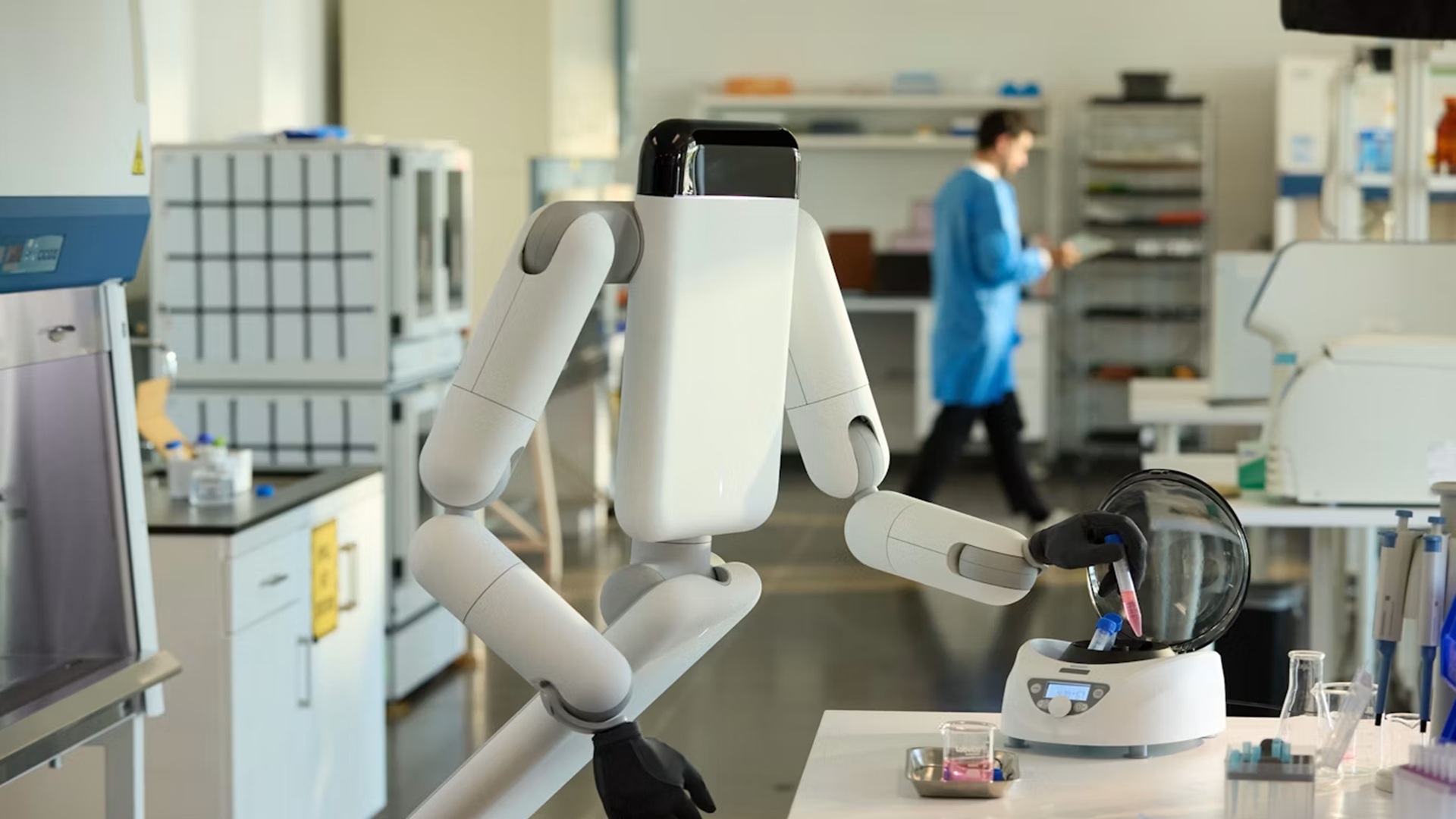
Europe builds robotic arm that can see, feel and handle samples for Moon missions

European Space Agency (ESA) engineers are assembling one of Europe’s most advanced robotic arms, a system designed to handle samples and perform complex tasks during future missions to the Moon and Mars.

Known as the Sample Transfer Arm (STA), the robot can extend up to 2.4 meters and move with seven degrees of freedom, giving it a range of motion similar to a human arm. The system is equipped with cameras, sensors, and onboard electronics that allow it to perceive its surroundings and perform tasks with a high level of autonomy.

The robotic arm was originally developed as part of the joint NASA-ESA Mars Sample Return campaign. Its role was to transfer Martian samples collected by NASA’s Perseverance rover for eventual return to Earth.

Although the future of Mars Sample Return remains uncertain, the technology is now being positioned for a wider range of applications, including future lunar exploration missions.

Human-like space helper

The arm features a shoulder, elbow, and wrist configuration similar to a human arm. At its tip is a gripper capable of handling objects with millimeter-level precision.

The system also includes a sophisticated force and torque sensor that acts as a sense of touch. The sensor measures how an object is being pushed, pulled, or twisted in three-dimensional space, allowing the arm to manipulate items with greater accuracy.

Position sensors embedded throughout the joints continuously calculate the location of the arm’s tip, helping maintain precise control during operations.

Engineers say this level of precision could prove useful for a variety of activities in space, including collecting geological samples, transferring equipment, and supporting astronauts during surface missions.

The robotic arm also contains its own electronics unit, which acts as the system’s control center. Cameras mounted on the arm provide visual awareness, enabling the robot to detect and interact with objects in its environment.

Ready for testing

Teams at Italian aerospace company Leonardo are currently completing the integration of the system at the company’s facility in Nerviano, near Milan.

In the coming weeks, engineers will begin testing the arm in simulated space environments to evaluate its performance before any future deployment.

The project brings together companies and suppliers from across Europe. The industrial consortium is led by Leonardo and includes GMV and AVS from Spain, Maxon from Switzerland, 3DPlus from France, and COMOTI from Romania, along with suppliers from Denmark, Greece, and Germany.

The arm incorporates several specialized systems designed for spaceflight. These include a flexible wrist mechanism that allows softer contact with objects, a flat electrical harness that carries hundreds of signals throughout the arm, and structural mechanisms that help withstand the forces experienced during launch and landing.

European space agencies view advanced robotics as a key capability for future exploration missions, particularly as crews prepare for longer stays on the Moon and eventual missions to Mars.

With its ability to see, feel, and autonomously manipulate objects, the Sample Transfer Arm could become an important tool for handling samples and supporting scientific operations beyond Earth.

  •  

China’s Alibaba unveils AI brains designed to power the next generation of robots

Chinese firm Alibaba has launched its first embodied AI model family, which links large language models with real-world robotic actions.

The Qwen-Robot suite was developed by Alibaba’s Tongyi Lab and is undergoing pilot testing with selected Alibaba Cloud enterprise clients.

The suite comprises three models focused on navigation, manipulation, and world modeling for robots operating in physical environments.

Alibaba said the models enable machines to perceive, reason, and interact with the real world, joining a growing global push to advance embodied AI beyond traditional chatbot applications.

Robots meet reasoning

Alibaba says its Qwen family of AI models has become very good at understanding the physical world. These models can recognize objects, understand spatial relationships, follow complex visual instructions, and reason about real-world environments. For example, a model can understand a command such as, “Go to the kitchen, find the red cup, pick it up, and place it on the shelf.”

However, understanding a task is different from actually performing it. While a vision-language model (VLM) can describe the steps needed to complete a task, it cannot directly control a robot’s movements. The challenge is connecting human language and visual understanding with the motor actions required to interact with the physical world.

This problem is difficult because robot training data is very different from internet data. Information collected from navigation systems, robotic arms, vehicles, and cameras comes in different formats and is expensive to gather. Simply combining all this data often creates conflicts rather than improving performance.

To address this, Alibaba developed the Qwen-Robot Suite, which includes three specialized models. Qwen-RobotNav focuses on movement and navigation. It helps robots follow instructions, navigate to locations, track targets, and support autonomous driving.

According to its website, Qwen-RobotManip focuses on physical interaction. It enables robots to grasp, move, and manipulate objects using a large training dataset collected from different robotic systems. Qwen-RobotWorld acts as a world model, predicting how environments may change and helping robots understand the likely outcomes of their actions.

Together, these models aim to enable robots to understand instructions, interact with objects, navigate environments, and make decisions in the real world.

Physical AI accelerates

Alibaba showcased Qwen-RobotNav on a Unitree Go2 quadruped powered by NVIDIA Jetson Thor hardware and a single low-resolution camera. The robot successfully navigated an unfamiliar apartment, following spoken instructions across multiple rooms without preloaded maps, while maintaining an inference latency of 196 milliseconds.

The company claims that Qwen-RobotManip, its robotic manipulation model, was trained on more than 38,000 hours of open-source data covering object handling and interaction tasks. According to Alibaba, the model recently achieved the highest score in the generalist category of the RoboChallenge real-world robotics benchmark, earning a process score of 59.83 and a task success rate of 45 percent.

The company also unveiled Qwen-RobotClaw, a robotics agent framework that enables Qwen models to use the Qwen-Robot suite as physical-world tools. In one demonstration, an agent searched for a restroom, identified an out-of-order sign, and independently rerouted to another location. Alibaba further open-sourced Chat2Robot, a browser-based platform for testing embodied AI interactions.

As competition in embodied AI intensifies worldwide, Alibaba has expanded its ambitions beyond language and multimodal software with the launch of its Qwen-Robot models. The move reflects a broader industry shift toward creating AI systems capable of understanding and interacting with the physical world.

Alibaba’s move comes as competition in physical AI accelerates globally. In the US, Google DeepMind is advancing Gemini Robotics, while Nvidia is expanding its robotics ecosystem through Cosmos, Isaac, and GR00T. Start-ups, including Physical Intelligence, Skild AI, and Figure AI, are also developing general-purpose robotic intelligence, according to the South China Morning Post.

China is strengthening its position by pairing its manufacturing advantages with growing investments in AI software for autonomous decision-making. The sector now spans AI developers, robotics firms, and EV makers. Companies such as Alibaba, Tencent, Unitree, AgiBot, UBTech, Galbot, Spirit AI, GigaAI, Xpeng, and Xiaomi are actively pursuing embodied AI technologies.

  •  

Elephant trunk skin’s dual-zone design offers blueprint for advanced robotic grippers

An elephant’s trunk can haul a felled log across a clearing and, moments later, peel a single banana without bruising the fruit. That range — from raw strength to delicate precision — comes from a boneless, all-muscle structure that has fascinated soft robotics researchers for years.

A new study has now mapped exactly why the trunk’s skin enables that range, down to its microscopic architecture.

Researcher Lucia Beccai and colleagues studied trunk tissue obtained from a single adult Asian elephant (Elephas maximus) that died of natural causes at Zurich Zoo, Switzerland, in 2020.

Using 35 tissue samples taken across the specimen, the team combined biomechanical testing, histology, multiple imaging techniques, and computational modeling to characterize the trunk’s skin in unprecedented detail.

A skin split into two functional zones

The central finding is that the trunk’s skin is not a uniform material — it is sharply divided into two distinct mechanical zones, each engineered for an entirely different job.

The upper skin functions like an armor-like shield: tough, protective, and 3.14 times stiffer than the skin on the underside of the trunk. That stiffness makes sense functionally — the top of the trunk is what drags across rough bark, scrapes against the ground, and absorbs impact during heavy lifting and pushing.

The underside skin is the opposite: highly flexible and acutely sensitive, built specifically for grasping. Its low stiffness allows it to conform tightly to the contours of whatever object the elephant is handling — a log, a piece of fruit, another elephant’s trunk in greeting — maximizing contact area between the skin and the object and producing a steady, secure grip without requiring excessive muscular force.

A mechanical lens hidden beneath the surface

The most striking discovery lies just beneath the surface of the underside skin: dome-shaped structures called dermal papillae. Using finite element modeling — a computational technique that simulates how physical structures respond to stress — the researchers found that these papillae function like a subsurface mechanical lens.

Rather than simply cushioning the skin, the dome-shaped papillae concentrate and amplify mechanical stress at precisely the locations where the trunk’s sensory nerves are positioned.

In effect, the structure acts as a biological signal booster — taking a faint mechanical input, such as the texture of a banana peel, and intensifying it before it reaches the nerve endings responsible for interpreting touch.

What it means for robotics

According to the study’s authors, this two-zone, mechanically tuned architecture offers a direct, ready-made blueprint for engineers designing the next generation of soft robotic systems.

The trunk does not need separate “armor” and “sensor” components bolted together — it achieves both functions through a single continuous tissue with engineered variation in stiffness and subsurface geometry.

The practical implication: by using biomimetic multi-material approaches — fabricating robotic grippers from layered materials with deliberately varied stiffness, much like the trunk’s natural upper-lower dichotomy — engineers could build grippers with passive outer protection that simultaneously amplify faint tactile signals, all without exposing delicate sensors directly to mechanical wear and abrasion.

That combination has been a persistent challenge in soft robotic gripper design: sensors sensitive enough to detect subtle touch are often the same components most vulnerable to physical damage from repeated contact.

The elephant trunk’s solution — concentrating sensitivity beneath a protective, graduated-stiffness shield — offers a structural answer that robotics researchers have been seeking for years.

The study was published in the journal PNAS Nexus.

  •  

Chinese automaker unveils Xiaosai humanoid robot for inspection and production roles

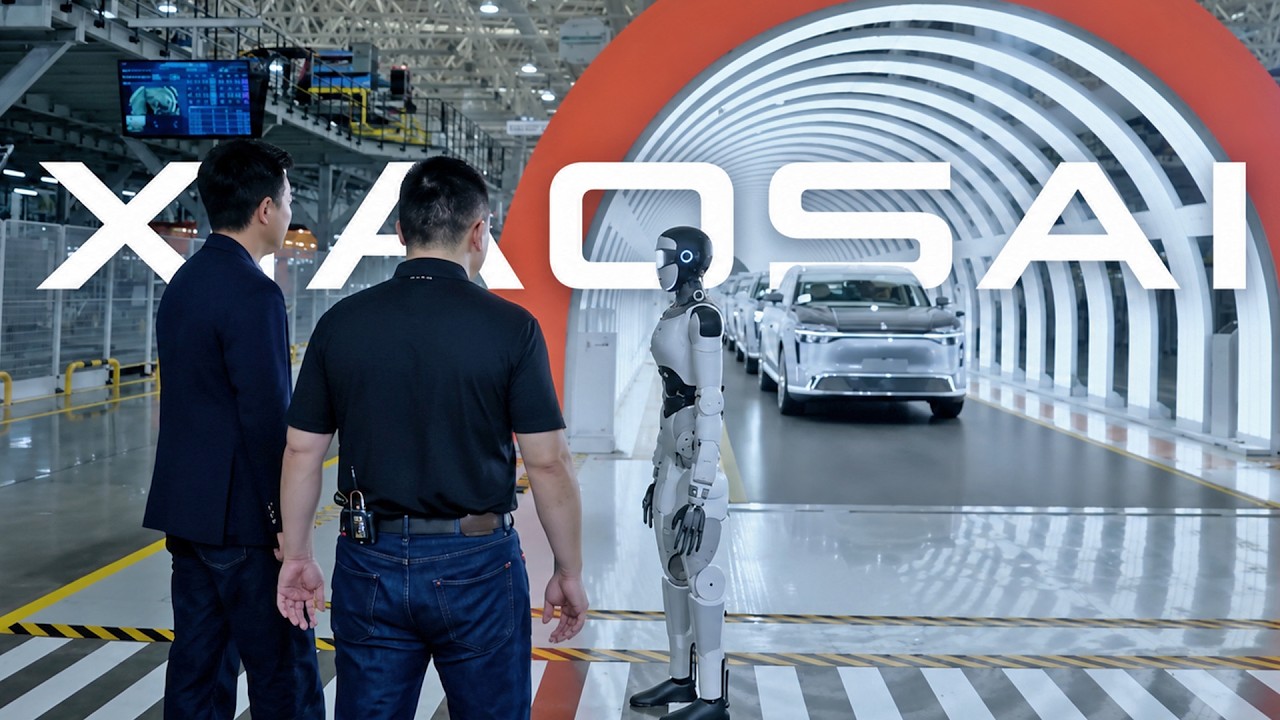
Chinese automaker Seres has unveiled its first humanoid robot, Xiaosai, marking the company’s entry into the rapidly growing embodied AI sector. The robot is designed with visual recognition, autonomous greeting, and voice interaction capabilities.

The launch highlights the automaker’s expanding focus on robotics, with several additional embodied intelligence robots expected to debut later this year as Seres broadens its presence beyond electric vehicles.

Recently, Hyundai announced plans to deploy over 25,000 Atlas humanoid robots in the US, targeting 30,000 annual units by 2028 with locally manufactured robot components.

Industrial humanoid debut

Chinese automakers are rapidly expanding into humanoid robotics, leveraging expertise in manufacturing, artificial intelligence, supply chains, and automation to develop a new generation of embodied intelligence systems.

The latest entrant is Seres, which has unveiled its first humanoid robot, Xiaosai. The announcement was made by Seres Group director and vice president Kang Bo, who released a video showcasing the robot and confirmed that several additional embodied intelligence products are currently under development and scheduled to make their official debut later this year, reports CNEVPost.

Thought more details are not available, the humanoid is reported to be equipped with visual recognition capabilities, can autonomously greet people, and supports voice-based interaction. Its introduction highlights Seres’ broader efforts to integrate advanced robotics into manufacturing operations.

The company’s factory already employs a range of specialized robots across AI-powered quality inspection, logistics delivery, and production-line collaboration. Among them are Xiaosai 01, which performs quality inspections for chassis assembly, and Xiaosai 02, which checks the exterior configuration of completed vehicles.

According to Seres, the facility’s smart hub coordinates more than 1,600 intelligent devices, while over 3,000 industrial robots operate in synchronization throughout the plant. The factory also incorporates technologies, including the Internet of Things (IoT), big data, digital twins, 5G connectivity, and artificial intelligence, creating a highly automated digital ecosystem, reports CNEVPost.

Automakers go the robot way

Seres’ move into humanoid robotics builds on earlier investments in embodied intelligence. In October 2024, the company signed a cooperation agreement with Volcengine, a subsidiary of ByteDance, in Beijing. The partnership focuses on intelligent robot technologies, including decision-making systems, control technologies, and human-machine augmentation, with an emphasis on multimodal cloud-edge collaboration.

The launch reflects a wider trend among Chinese automakers, many of which view humanoid robots as a natural extension of capabilities developed through electric vehicle production and intelligent manufacturing. Xpeng is among the companies accelerating efforts in the sector. Earlier this month, chairman and CEO He Xiaopeng personally assumed the role of “CEO” of the company’s robotics division to speed up commercialization and development.

BYD has also confirmed that it is developing humanoid robots and is exploring the possibility of selling them through its extensive dealer network in the future. Meanwhile, Chery-backed Aimoga has moved beyond development and into commercialization. The company has begun selling humanoid robots directly to consumers, with a retail price of 285,800 yuan (approximately $42,260).

As Chinese automakers continue investing in embodied AI, humanoid robots are increasingly becoming the next frontier of competition, transforming car manufacturers into major players in the rapidly evolving robotics industry.

💾

Chinese firm Seres unveils Xiaosai humanoid robot with AI vision and voice interaction, expanding beyond EVs into embodied robotics.
  •  

Eno humanoid robot aims to become the general-purpose machine for every workplace

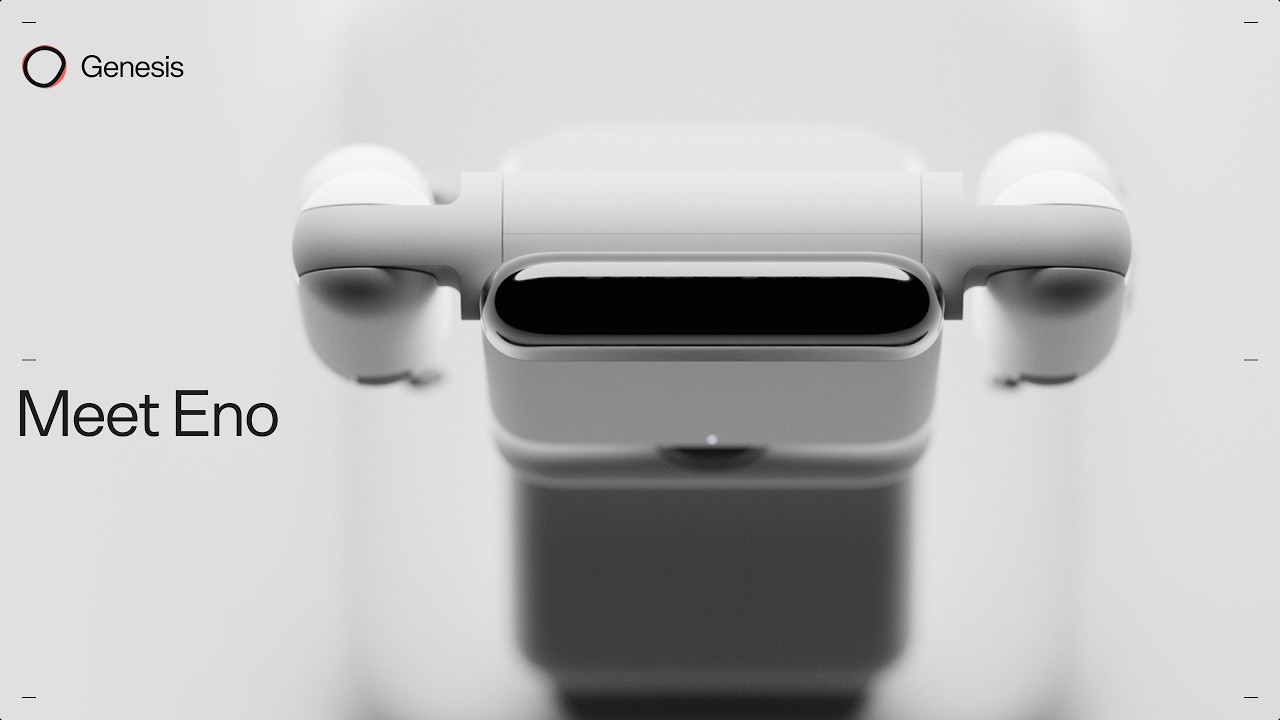
Genesis AI has unveiled Eno, its first general-purpose robot, as the company pushes toward building machines that can work across factories, laboratories, hospitals, hotels and eventually homes.

The robot combines Genesis AI’s custom hardware with GENE, the company’s robotics foundation model, which serves as Eno’s control system. According to the company, the robot is designed to perform complex tasks, adapt to changing environments and complete objectives with minimal human intervention.

Genesis AI said Eno differs from traditional industrial robots because it is built to operate as a physical agent rather than execute a fixed set of commands. The company claims the system can understand goals, reason through changing conditions, retain memory and carry out multi-step tasks over extended periods.

The announcement comes as companies across the robotics sector race to develop humanoid and general-purpose robots capable of handling a wider range of real-world jobs with less specialized programming.

Built beyond humanoids

Instead of closely resembling a human, Eno uses a wheeled base topped by an adjustable tower structure. The robot can change its height and reach in real time and fold into a more compact form when not in use.

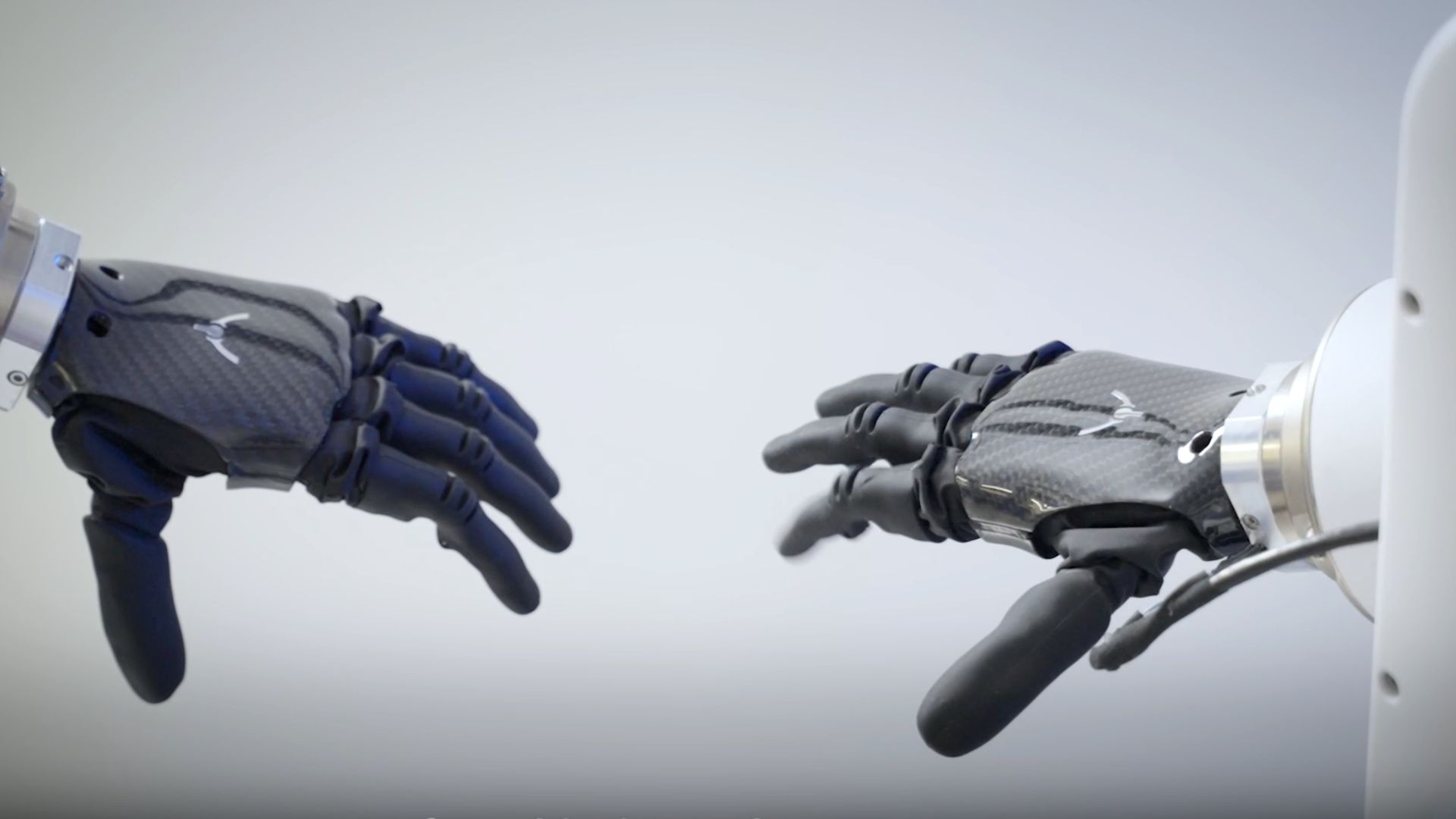
Its most human-like features are its robotic hands. Genesis AI says the hands match the form and function of human hands, allowing Eno to use existing tools and interact with environments already designed for people.

“The only path to creating a robot that can truly deliver value to society and excel in the real world is through intentional design and a single, comprehensive system,” said Zhou Xian, co-founder and CEO of Genesis AI.

“From day one we’ve approached our design and engineering through a production mindset built around bringing our hardware, software and intelligence together as a whole.”

The company said Eno was designed alongside GENE so that the robot’s body and intelligence system function as a single platform. GENE is intended to give the robot human-level dexterity and the ability to handle long-horizon tasks that require planning and adaptation.

Showing robotic intent

One of Eno’s distinguishing features is an optional built-in screen that displays the robot’s reasoning process, operational status and intended actions in real time.

Genesis AI said the feature is designed to improve transparency and help people understand what the robot is doing as it works alongside human operators.

“What Genesis is building with Eno is a fundamentally new model for extending human capability through advanced robotics,” said Eric Schmidt, former Google CEO and Genesis AI investor.

“The breakthrough is not replacing human expertise, but amplifying it — making advanced robotics genuinely useful, accessible, and scalable across industries.”

According to the company, Eno could eventually manage entire workflows rather than perform isolated actions. Examples include keeping production lines supplied, coordinating tasks across facilities and preparing workspaces for the next shift.

Genesis AI plans to begin production and targeted customer deployments before the end of 2026. Initial deployments will focus on manufacturing, logistics and laboratory environments, followed by hospitality and healthcare settings. Consumer-focused applications are expected at a later stage.

The company recently raised $105 million in seed funding and says additional robotic platforms are already under development as part of its broader roadmap for general-purpose robotics.

💾

French startup Genesis AI unveils Eno, a general-purpose robot designed to handle complex tasks across industries.
  •  

Video: Ceiling-mounted DIY robot picks up toys, clothes, and household clutter

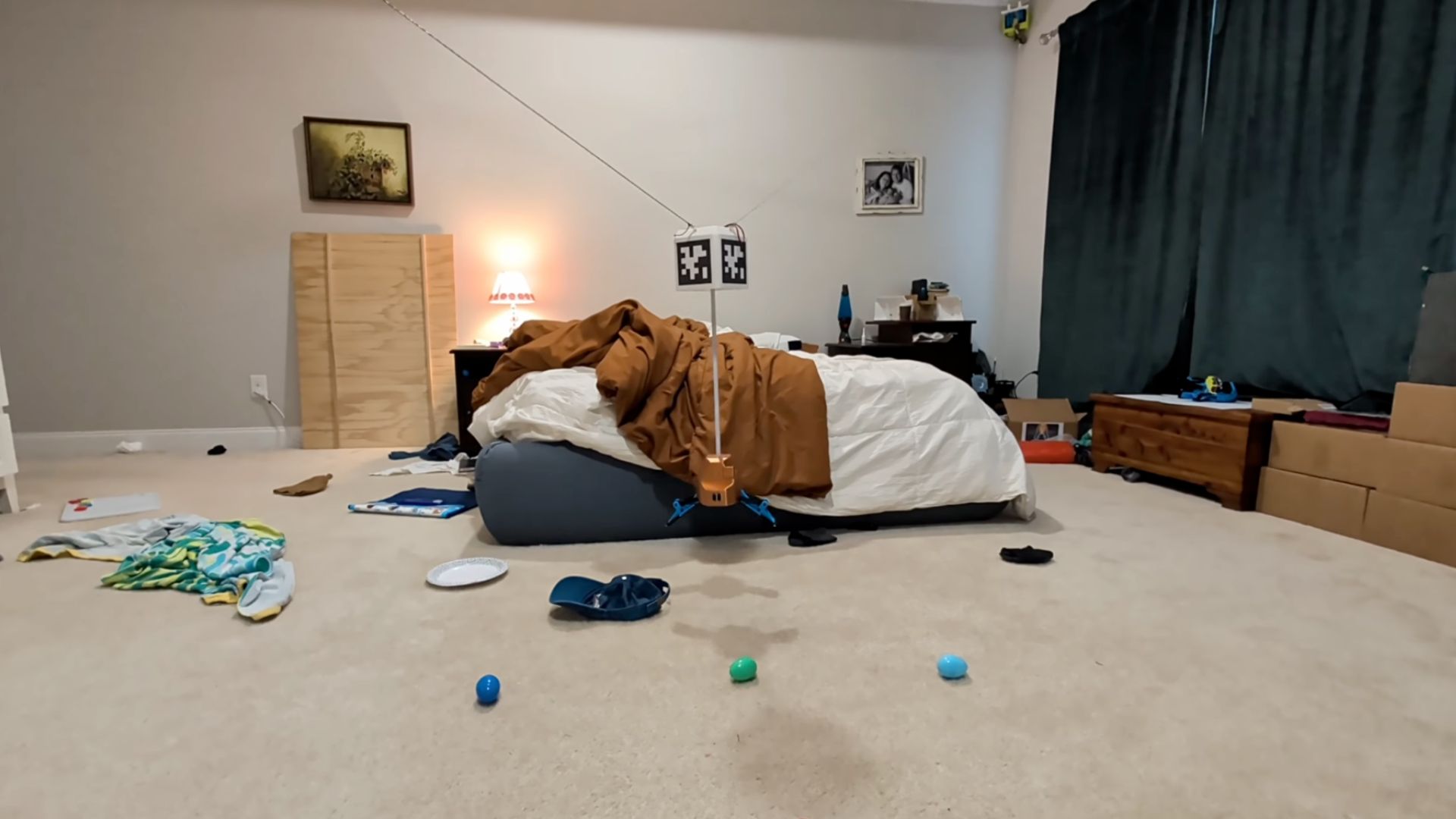
An engineer has developed an open-source ceiling-mounted robotic claw designed to tackle one of the constant challenges of family life—cleaning up clutter.

Called Stringman, the system uses cables suspended from four corners of a room to move a robotic gripper across the ceiling, locating and collecting items such as toys, clothing, and other household mess.

Powered by LeRobot-based firmware, the robot can identify objects, pick them up, and transport them to designated drop-off points.

According to its maker, the project’s software, hardware designs, and build instructions are available on GitHub. At the same time, ready-to-use kits are also being offered for users who prefer not to build the system themselves.

Stringman tackles clutter

The DIY cleaning robot is designed to tackle one of the most common household challenges—clutter left behind by children and pets.

Stringman is a cable-driven robotic crane that moves across a room using high-strength lines suspended from anchors mounted in its four corners. Rather than relying on a humanoid design or a mobile robot, Stringman uses a lightweight gripper that travels through the room’s airspace, identifying and collecting objects from the floor before transporting them to designated drop-off locations.

The project was created by Nathaniel Nifong, who believes many household tasks can be automated without the complexity and cost associated with humanoid robots. According to the project’s website, reducing the number of actuators significantly lowers the overall cost of robotics hardware. Stringman relies on just four motors and a two-finger gripper with a wrist mechanism, allowing it to perform basic pick-and-place tasks while remaining relatively affordable.

The robot is built on the open-source LeRobot platform and uses imitation learning to improve its grasping capabilities. Users can train the system through teleoperation, teaching it how to pick up various household objects. The software, firmware, mechanical designs, and build instructions are publicly available under an Apache 2.0 license, allowing enthusiasts to build, modify, and contribute to the project.

To organize items, users simply designate destinations such as laundry baskets, toy bins, or trash cans using clip-on fiducial markers. Stringman’s vision system maps these locations and generates a list of objects it believes should be collected. Users can review and modify these selections through an interface or manually click objects they want the robot to remove.

Open-source robot

One of the system’s biggest advantages is its reach. Unlike robotic arms that are confined to a limited workspace, Stringman can access much of an entire room. Its cable-driven architecture enables it to move from floor-level pickups to elevated shelves without requiring rails, wheels, or articulated limbs. Because it is powered directly from a wall outlet, it also avoids the charging downtime that limits many mobile robots.

The design incorporates active swing-cancellation algorithms to stabilize the gripper as it moves. This is particularly important because the gripper hangs approximately 50 centimeters below the suspension point, allowing it to reach beneath furniture and alongside obstacles. The software continuously compensates for momentum, helping maintain accurate positioning during movement, according to its website.

Privacy has also been a focus of the project. Stringman supports a fully local operating mode in which video processing and telemetry remain within the home network. Users who prefer remote access can connect the robot to an online account and monitor or control it through a web-based interface.

Despite its promise, the system remains a work in progress. The machine-vision models still require refinement, and certain objects—particularly flat items such as books—can be difficult for the gripper to handle reliably. The suspended cables also descend into the room while the robot is operating, creating practical limitations for occupied spaces.

Even with these challenges, Stringman represents an intriguing alternative to humanoid domestic robots. By focusing on a single household task and simplifying the hardware, the project demonstrates how practical home automation may emerge from specialized, low-cost designs rather than human-shaped machines. Future developments could potentially allow the robot not only to collect clutter into bins but also to return items directly to their proper storage locations.

💾

Stringman DIY robot uses ceiling-mounted cables and AI vision to pick up toys, clothes, and clutter around the home.
  •  

Prosthetic hands’ data helps robots get finer control for precise manipulation

ABB Robotics has partnered with California-based bionic company PSYONIC to develop more dexterous robotic systems by leveraging real-world data from human prosthetic use.

The collaboration combines PSYONIC’s Ability Hand, a touch-sensitive prosthetic hand, with ABB’s GoFa collaborative robot to study how human-generated touch and motion data can train robots to perform delicate and variable tasks.

The initiative aims to address one of industrial robotics’ biggest challenges—grasping and manipulation—while improving automation capabilities and potentially reducing engineering time for handling applications by up to 30 percent.

“Human dexterity and the instinctive understanding of how to handle different objects is one of the most difficult things to replicate in industrial-grade robotics, but it’s a fundamental need for truly autonomous and versatile robots,” said Marc Segura, President, ABB Robotics, in a statement.

Human data dexterity

ABB Robotics and PSYONIC aims to tackle one of the biggest challenges in industrial automation: robotic dexterity. The collaboration combines ABB’s GoFa collaborative robot with PSYONIC’s Ability Hand, an advanced prosthetic hand equipped with touch sensing and compliant design, to train robots using real-world manipulation data generated by human prosthetic users.

Unlike conventional robotic training methods that rely heavily on simulations, the project uses human-derived touch and motion data to teach robots how to grasp, manipulate and interact with objects more naturally. The approach is aimed at improving robots’ ability to perform delicate, variable tasks that have traditionally been difficult to automate, such as handling fragile components, adapting to changing object shapes and operating in dynamic environments.

The initiative supports ABB Robotics’ vision for Autonomous Versatile Robotics (AVR), where robots can sense, reason, move and manipulate objects with greater autonomy. It also contributes to the development of physical AI systems capable of learning from real-world interactions and applying that knowledge with industrial-grade reliability.

According to ABB, dexterity remains a major technical bottleneck in robotics, and improved handling capabilities could reduce engineering time for automation projects by up to 30 percent. The companies are exploring applications across sectors including automotive, aerospace, packaging, logistics and life sciences.

PSYONIC is working closely with ABB’s research and development team to integrate touch-enabled manipulation technologies into robotic platforms. The partnership aims to narrow the gap between human and robotic dexterity, enabling more adaptable, productive and safer automation systems for industrial environments.

Touch powered robotics

The ABB GoFa is a collaborative robot designed to work safely alongside humans in manufacturing, assembly, material handling, packaging, and laboratory environments.

It can handle payloads of up to 26 pounds (12 kilograms) and reach up to 1.62 meters, offering a combination of speed, precision, and flexibility. Built-in force and power limitation technology enables safe human-robot collaboration with minimal safety barriers, while intuitive programming tools simplify deployment. With repeatability of up to 0.02 mm, GoFa is well suited for precision tasks and improving productivity.

On the other hand, the Psyonic Ability Hand is an advanced bionic prosthetic that provides multi-touch sensory feedback, helping users experience a more natural sense of touch. Its 200-millisecond closing speed allows fast, secure grasping, while 32 grip patterns—19 pre-programmed—support activities ranging from handling small objects to typing. The hand automatically adjusts thumb positioning for a stable grip and can be configured remotely via Bluetooth-enabled iPhone and Android apps.

Powered by a 2200mAh battery, it charges through USB-C in about an hour and delivers 6–8 hours of use. Its durable, IP64-rated design resists impacts, dust, and splashes. Beyond prosthetics, organizations such as NASA, Meta, and Apptronik use it for robotics research.

💾

ABB Robotics and PSYONIC use prosthetic hand data to improve robot dexterity, boosting automation and reducing engineering time.
  •  
❌