❌

Reading view

ANU accused of ‘hysterical’ response to students using AI to cheat as unis scramble to ‘secure’ assessments

Australia risks ‘shipping’ intellectual capability overseas if educational rigour not restored, experts warn

An academic at the Australian National University has accused it of a “hysterical” response to students using AI to cheat, as tertiary institutions rush to shore up the credibility of assessments.

But a colleague warned Australia is in danger of “shipping our national intellectual capability” to companies in California and China if educational rigour is not restored.

Continue reading...

© Photograph: Lukas Coch/AAP

© Photograph: Lukas Coch/AAP

© Photograph: Lukas Coch/AAP

  •  

Apple dethrones Nvidia to regain title of world’s most valuable company

Shift in pecking order illustrates that investors are reassessing outlook for artificial intelligence

Apple overtook Nvidia on Friday to become the world’s most valuable company, reshuffling the top ranks of tech heavyweights as investors reassess the outlook for artificial intelligence.

Apple was last valued at $4.88tn as ⁠its shares held steady, while Nvidia ⁠was roughly at $4.86tn, ​after a 3.5% decline.

Continue reading...

© Photograph: Michael M Santiago/Getty Images

© Photograph: Michael M Santiago/Getty Images

© Photograph: Michael M Santiago/Getty Images

  •  

‘Adversarial clothing’: are garments designed to confuse facial recognition systems about to go mainstream?

Designers say that as well as offering a degree of protection from surveillance, their clothes make a powerful fashion statement about the importance of privacy

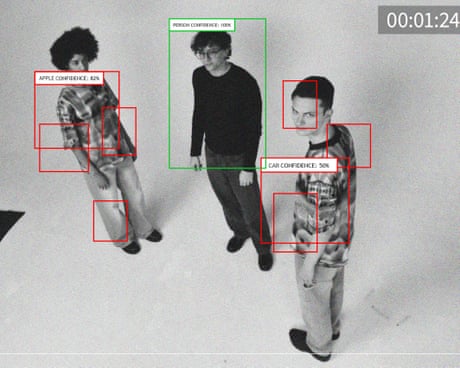
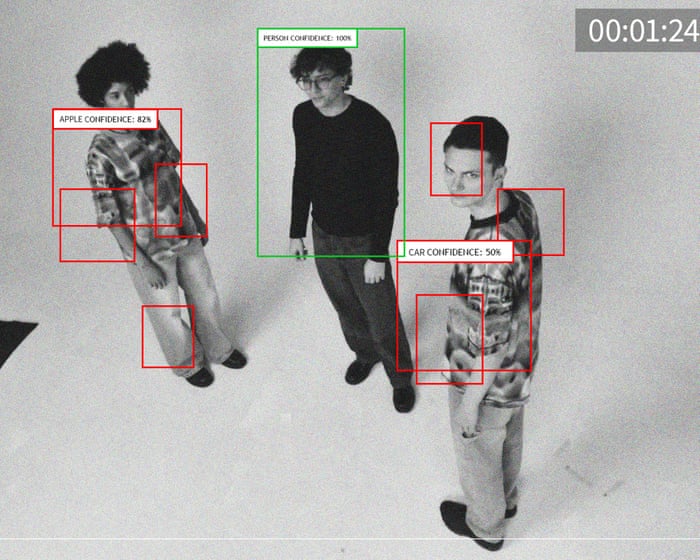
As facial recognition technology is rolled out across Britain’s public spaces, a new generation of designers say privacy could be the next big fashion trend.

Companies have started incorporating “adversarial patterns” in their garments – carefully designed arrangements of shapes, colours and repeated motifs said to exploit weaknesses in some computer vision systems.

Continue reading...

© Photograph: PR

© Photograph: PR

© Photograph: PR

  •  

Robert Laidlow: Reality Eaters album review

BBC Philharmonic/Havlat/Kaziboni/Piatti Quartet
(NMC)

Einstein’s field equations, Newton’s universal law and artificial intelligence are among the subjects of Laidlow’s ambitious orchestral works

Robert Laidlow is as at home in the realms of science and technology as he is in the world of classical music. As this NMC debut album demonstrates, his intricate, wildly imaginative work is eminently approachable, even if the core concepts are highly complex.

Warp, a terse, 12-minute piano concerto, proposes a musical solution to Einstein’s field equations as the intrepid Joseph Havlat boldly goes where no pianist has gone before amid the distorting fabric of orchestral space-time. Strident orchestral lines spiral ever upwards, stretching instruments to their limits, while the piano maintains its course towards a serene conclusion. Handsomely recorded, the BBC Philharmonic and Vimbayi Kaziboni offer vibrantly detailed support.

Continue reading...

© Photograph: Jonathan Slade

© Photograph: Jonathan Slade

© Photograph: Jonathan Slade

  •  

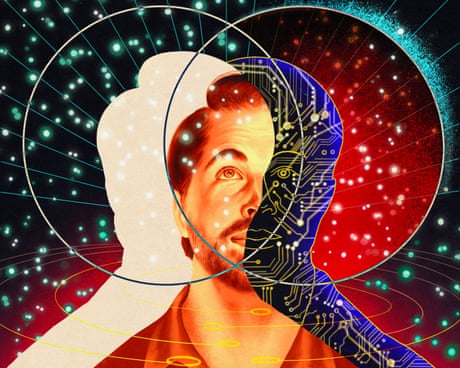
‘There’s this deep mystery of what, actually, is this thing?’: the philosopher inside Google DeepMind AI – podcast

Since 2017, Iason Gabriel has worked at the tech giant, trying to anticipate – and think through – the impact of AI. But as commercial and geopolitical pressures escalate, can ethicists make any difference?

By Robert P Baird. Read by Simon Darwen
Read the text version here

Support the Guardian today: theguardian.com/longreadpod

Continue reading...

© Illustration: The Guardian

© Illustration: The Guardian

© Illustration: The Guardian

  •  

Musk’s xAI sues user who allegedly used Grok to create child sexual abuse material

Case is one of first brought by an AI company against a user ⁠for allegedly using a tool to generate child abuse material

Elon Musk’s artificial-intelligence startup xAI has sued a South Carolina man arrested ⁠earlier this year on charges of sexually exploiting minors, alleging he misused the company’s AI system Grok to ⁠create child sexual abuse ⁠material.

xAI ​alleged in the lawsuit, filed in federal court in Texas on Tuesday, that Terry Harwood violated the company’s ⁠terms of service. The case is one of the first brought by an AI company against one of its users ⁠for allegedly using an AI system to generate child sexual abuse material.

Continue reading...

© Photograph: Samuel Boivin/NurPhoto/Shutterstock

© Photograph: Samuel Boivin/NurPhoto/Shutterstock

© Photograph: Samuel Boivin/NurPhoto/Shutterstock

  •  

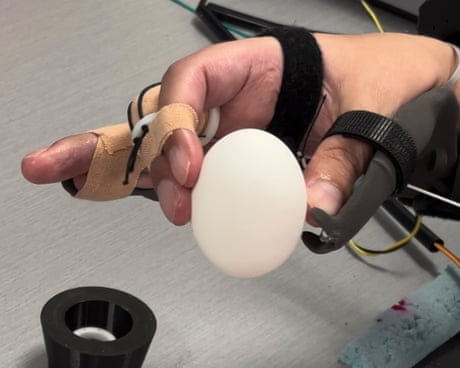
Brain implant helps paralysed man to feed himself and drink from cup

Keith Thomas can move arms and hands, and feel sensation of touch after ‘double neural bypass’ and months of training

A man who was paralysed from the chest down in a swimming accident six years ago has been able to feed himself and drink from a cup thanks to a brain implant that bypasses his spinal cord injury.

Keith Thomas of Massapequa, New York, could not lift his arms off his wheelchair when he agreed to trial the technology in 2021, but after surgery to implant electrodes in his brain and many months of training, he was able to move the limbs again.

Continue reading...

© Photograph: Feinstein Institutes for Medical Research

© Photograph: Feinstein Institutes for Medical Research

© Photograph: Feinstein Institutes for Medical Research

  •  

TikTok facing UK investigation amid fears over age checks and harm to children

Ofcom concerned TikTok’s age verification is ineffective, leaving some exposed to posts on suicide, self-harm and pornography

TikTok is under formal investigation over concerns it has failed to protect children from harmful content, the UK’s online regulator, Ofcom, has announced.

The social media platform’s approach to checking the ages of users has sparked “particular concerns” at the watchdog, almost a year after measures to protect children from the worst of online content came into effect under the Online Safety Act.

Continue reading...

© Photograph: True Images/Alamy

© Photograph: True Images/Alamy

© Photograph: True Images/Alamy

  •  

The social media ban sceptic: are we getting it wrong on kids, tech and mental health?

Psychologist Candice Odgers has studied adolescent mental health for 25 years. She fears the current debate around smartphones obscures some of the biggest issues facing teenagers – from the impact of Covid to the health of their adult caregivers

The quickest way to make being online safer for children and teens would be to kick all adult men off the internet, the Canadian psychologist Candice Odgers believes. Men are the biggest perpetrators of sextortion and most likely to spread misinformation, she says.

Odgers is not recommending this as a policy for governments to adopt: “That would be crazy, right? It would be unfair.” But she is on a drive to puncture the prevailing narrative that the best way to address online harms is a social media ban for teenagers.

Continue reading...

© Photograph: Jessica Pons/The Guardian

© Photograph: Jessica Pons/The Guardian

© Photograph: Jessica Pons/The Guardian

  •  

Robots, AI and drones: how the Dutch navy is using tech to transform its sea defences

Uncrewed systems are the future for armed forces and the Netherlands is leading the way ‘to keep people out of danger zones’

On each side of the target ship, a black vessel keeps a watchful distance. Defender 1 and Defender 2 are the eyes and ears of the navy – but they have nobody onboard, and their paths are controlled by a computer system.

This is the future of the Royal Netherlands Navy, according to Capt Sjoerd Feenstra, head of the expertise centre for unmanned systems. He is leading a five-week mission, off the coast of Den Helder in the north of the country, to test the limits of systems that operate without the human touch.

Continue reading...

© Photograph: John van Helvert/Media Centrum Defensie

© Photograph: John van Helvert/Media Centrum Defensie

© Photograph: John van Helvert/Media Centrum Defensie

  •  

Trump rails against New York’s statewide datacenter moratorium

AI-friendly president shared a post saying governor Kathy Hochul should scrap the one-year policy ‘IMMEDIATELY’

Donald Trump railed against the New York governor, Kathy Hochul, for pausing the construction of large new datacenters, the resource-intensive facilities that power artificial intelligence.

New York became the first US state to enact a moratorium on new datacenters on Tuesday, when Hochul signed an executive order mandating a one-year statewide pause on so-called “hyperscale” datacenters.

Continue reading...

© Photograph: Matt Roberts/Shutterstock

© Photograph: Matt Roberts/Shutterstock

© Photograph: Matt Roberts/Shutterstock

  •  

George Lucas likens AI sceptics to luddites clinging to horses and carts

Star Wars director calls AI technology ‘the future’ of film-making and says ‘there’s nothing you can do about it’

The Star Wars director, George Lucas, has added his voice to the growing chorus of film-makers receptive to the rising use of AI tools in moviemaking.

Speaking in an interview with A Rabbit’s Foot, Lucas, 82, said: “Artificial intelligence means it’s much easier for us to make movies.”

Continue reading...

© Photograph: Angela Weiss/AFP/Getty Images

© Photograph: Angela Weiss/AFP/Getty Images

© Photograph: Angela Weiss/AFP/Getty Images

  •  

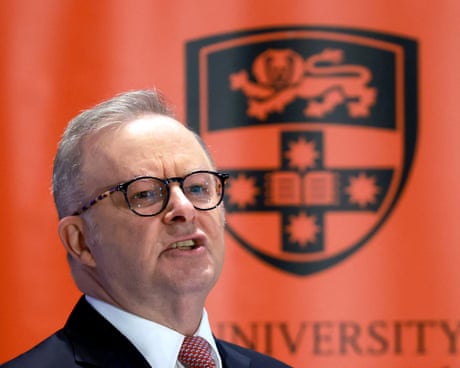
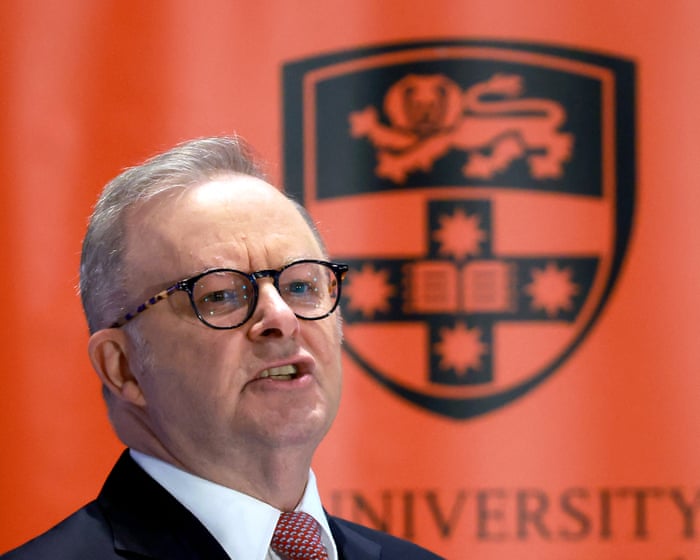
Anthony Albanese says he wants to do AI 'the Australian way' – video

For months, artists and activists have been calling on the prime minister, Anthony Albanese, to act on the AI boom as datacentres pop up around the country. Today he made a major speech at the University of Sydney addressing copyright, the regulation of datacentres and the future of AI in Australia

Continue reading...

© Photograph: The Guardian

© Photograph: The Guardian

© Photograph: The Guardian

  •  

‘Not up for grabs’: Albanese establishes AI office and vows to protect Australian creatives from copyright ‘theft’

PM lays out plan for datacentre development and rejects prospect tech companies will be given free use of Australian data

Anthony Albanese has promised “the strongest possible protection” for Australian creatives against misuse of their work by artificial intelligence models, warning it would be “theft” if writers, artists and musicians didn’t have control of their work or receive payment for its use.

Amid growing community concern about large energy-intensive datacentres, the federal government will also set strict new rules for the facilities, including where they can be built, that they shouldn’t compete for land with housing, their power and water use, and that they don’t increase electricity prices for consumers.

Continue reading...

© Photograph: David Gray/AFP/Getty Images

© Photograph: David Gray/AFP/Getty Images

© Photograph: David Gray/AFP/Getty Images

  •  

Meta used AI to tag workers who took leave to be laid off, lawsuit claims

Lawsuit filed by dozens of employees says people who took maternity or disability leave were disproportionately selected for layoffs

Dozens of Meta employees have sued the social media company over claims that it used artificial intelligence tools to tag workers for mass layoffs. The workers allege that those AI tools targeted them after they asked for protected or maternity leave or disability accommodation.

The lawsuit, filed Monday in federal court in the northern district of California, points to Meta’s workforce reduction of about 8,000 employees earlier this year. Meta is the parent company of Facebook, Instagram and WhatsApp. The suit alleges that Meta used a “constellation of internal artificial intelligence systems”, including AI performance ratings and keystroke- and activity-monitoring data, to pinpoint who to lay off.

Continue reading...

© Photograph: Brendan McDermid/Reuters

© Photograph: Brendan McDermid/Reuters

© Photograph: Brendan McDermid/Reuters

  •  

Book publishers sue Google for copyright infringement over Gemini AI training

Group of major publishers accuses the tech giant of ‘one of the most prolific infringements of copyrighted materials in history’

A group of major publishers have filed a lawsuit against Google, accusing the company of illegally using millions of copyrighted books to help build its Gemini artificial intelligence models, in “one of the most prolific infringements of copyrighted materials in history”.

The case, filed in federal court in New York, has been brought by three publishers – Hachette Book Group, Cengage Learning, and Elsevier – and bestselling American author Scott Turow.

Continue reading...

© Photograph: Bloomberg/Getty Images

© Photograph: Bloomberg/Getty Images

© Photograph: Bloomberg/Getty Images

  •  

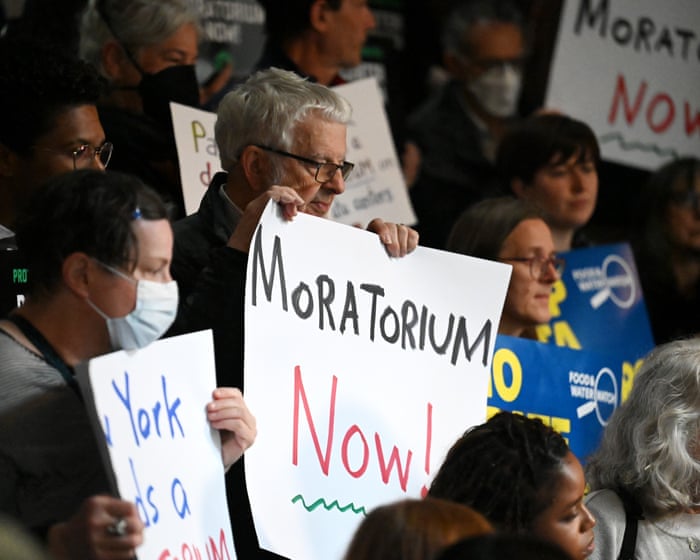
New York becomes first state to impose one-year pause on new AI datacenters

Governor Kathy Hochul issues executive order enacting a moratorium on the large, resource-intensive AI facilities

New York became the first US state to enact a moratorium on new datacenters on Tuesday.

Governor Kathy Hochul issued an executive order mandating a one-year statewide pause on the large facilities used to power artificial intelligence products, which she signed at a mid-morning press conference.

Continue reading...

© Photograph: Albany Times Union/Hearst Newspapers/Getty Images

© Photograph: Albany Times Union/Hearst Newspapers/Getty Images

© Photograph: Albany Times Union/Hearst Newspapers/Getty Images

  •  

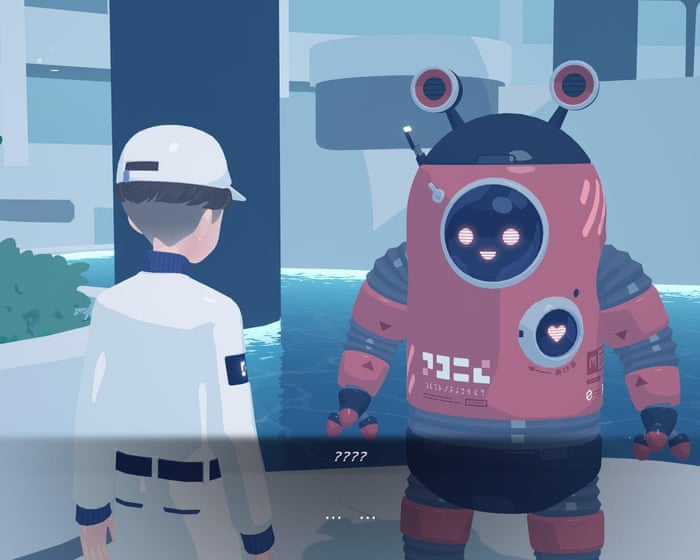
D-topia review – cosy sci-fi mystery takes aim at AI

PC, PS5, Xbox Series X/S, Nintendo Switch, Nintendo Switch 2; Marimittu Games
A soft puzzle game makes a sharp point about the over-optimised future ahead

In the far future, on a planet that is not Earth, AI is in charge. This entity is no Skynet-esque killer robot but a machine that cares for humanity. Manifesting most visibly as cute droids, the technology is pervasive – embedded in everything from the design of the sleek architecture to the gorgeous, mostly sunny artificial weather. The so-called Optimization System has but one responsibility: ensuring the greatest happiness for the greatest number of people.

In less skilled hands this game might have felt like an undergraduate seminar on the limits of utilitarianism. But Japanese studio Marumittu Games elegantly marries its philosophical concerns with smart design choices. You play as a young, unnamed Facilitator tasked with tending to both the city’s bots and its human residents. Each morning you wake up, sleepily loping off to the bathroom before sitting down for an exquisitely rendered breakfast, and then embark on your day’s work. Like everything else in this near-future scenario, labour is designed to cause as little frustration as possible, amounting to simple maths brain teasers on a grid – nothing too taxing, but enough to keep you engaged.

Continue reading...

© Photograph: Annapurna Interactive

© Photograph: Annapurna Interactive

© Photograph: Annapurna Interactive

  •  

Synthetic Sincerity review – Marc Isaacs’ AI interrogation grapples with identity and existence

A combination of fact and fiction leaves the celebrated documentarian’s puzzling project about software training wanting for depth

Marc Isaacs’ new film is a curious, intriguing, semi-sincere affair that I couldn’t make friends with. It is an odd, shallow piece of work about artificial intelligence that is itself exasperatingly artificial, a self-aware docudrama hybrid. Isaacs is, or rather pretends to be, licensing the vivid characters from his previous, acclaimed documentaries to a fictional AI research lab called Synthetic Sincerity at the fictional University of Southern England, so that the lab’s software can be “trained” in the creation of AI human figures on screen.

The lab’s research staff are played by actors, or at any rate people acting; these include Lebanese independent film-maker Lynn El Safah. Isaacs has amusing scripted conversations about this project with a disapproving AI avatar on screen, like Max Headroom of old, whose face is digitally modelled on Romanian actor Ilinca Manolache, from Radu Jude’s Do Not Expect Too Much from the End of the World. The film, however, does not show the process by which Manolache was approached and her face transformed into an AI figure.

Continue reading...

© Photograph: PR

© Photograph: PR

© Photograph: PR

  •  

Chasing new skills, going back to basics and pushing for collective action: how software engineers are adapting to AI

Software engineering was one of the best-paying professions in the US in 2022, but the advent of AI has disrupted it, leading to several layoffs and underemployment

Every weekday, Matt, a software engineer, looks forward to his four-hour train commute to Pawling, New York. It’s time he uses to work on his own project: a browser-based video game for which he writes every line of code himself.

“I am actively trying to keep my axe sharp,” said Matt, who did not want to use his actual name, to protect his employment. In the last six months, Matt’s job has increasingly shifted away from coding, problem solving and software architecture towards reviewing code generated by artificial intelligence. Convinced that the shift will weaken his skills, he’s doing what he can to keep them intact. “I am trying not to leverage AI where I can.”

Continue reading...

© Photograph: Leah Nash/The Guardian

© Photograph: Leah Nash/The Guardian

© Photograph: Leah Nash/The Guardian

  •  
❌