 Login

Orange-Lipped Monkey Photo Helps Scientists Identify New Species
The medium-sized monkey with an orange-colored patch around its nose and mouth, known locally as Likweli, joins a very short list of newly identified African monkey species.

Much of the discourse around artificial intelligence (AI) focuses on grand ideas such as the rise of a hypothetical artificial general intelligence (AGI) and superintelligence. Speculation swirls around the likelihood that the technology will thin out the job market, or even precipitate the death or evolution of human creativity. We haven't focused as much on the multitude of subtle yet hugely consequential ways in which AI is reshaping the social fabric of our society, and how we collectively imagine the future.
That's the argument sociologist and AI researcher Mona Sloane, an assistant professor of data science and media studies at the University of Virginia, puts at the center of her new book, "Predicted: How AI Is Restructuring Social Life" (University of California Press, 2026). Whether we consider email filtering, prediction markets or social media platforms, AI systems are embedded in the heart of how we interact with the digital world. Indeed, AI is so ubiquitously integrated into everyday interfaces that it's given rise to a new kind of "prediction logic" that makes assumptions about who we are and how we are likely to behave.
In this excerpt, Sloane compares the AI technology we use today with the oracles of ancient Greece, framing it as an omnipotent presence that has moved to organize society through the prism of prediction models. This in turn affects how we learn, live, love and even picture the future.
We live in a world of oracles. These oracles constantly feed us predictions that shape our social lives — how we socialize, love, work, gain access to resources. Like in ancient Greece, predictions occupy a prominent role in our society. We consider our oracles so mighty that their predictive power rules over the fate of whole economies and even geopolitical constellations. Where the oracle is, there is the center of the world.
But unlike in ancient Greece, our oracles aren't high priestesses delivering divine prophecies. They are artificial intelligence (AI) systems melted into the infrastructure of everyday life. Today, it is nearly impossible to evade the grasp of AI predictions. I voluntarily and involuntarily use AI on a constant basis: by using email providers that build on the predictive properties of AI for spam filters, by conducting online banking and getting enrolled into AI-automated fraud detection, or by using generative AI for supporting administrative chores. It has become part of how I experience the world.
It can be a relief when it helps me do things I dread or am bad at, such as produce a spreadsheet template I desperately need, help streamline language produced by different authors for a report, or generate a specific image for a presentation. Often, I must intently handhold the AI, checking and fixing its outputs. And sometimes, with deep frustration, I give up and start all over to complete my task manually.
The omnipresence of AI prediction can make it easy to think of these systems as inevitable, quasi-natural phenomena we are subject to, rather than a part of. But they are quantitative concepts that arise from social agreements about how we ought to capture and interpret the world around us.
"Quantitative concepts are not given by nature: they arise from our practice of applying numbers to natural phenomena," wrote Rudolf Carnap, a logician and professor of philosophy of science, in 1966. His point was that numbers can be useful, because they allow for information to travel more easily across contexts, as a sort of language. They also make mathematical predictions possible.
To him, this was first and foremost useful for engineering modern life: A quantitative language allows for the articulation of quantitative laws that, in turn, facilitate the routine generation of mathematicized predictions, particularly in the realm of physics. Being able to predict how energy, compounds, and materials will behave in certain configurations is the reason humans were able to build the conveniences of airplanes, cars, and telephones. For Carnap, predictions were simply instrumental in this way.
Today, almost 60 years later, this pragmatic approach to mathematical prediction has been turned on its head by AI. Prediction is no longer just a handy tool in physics or engineering. The promises of AI's oracular power have turned prediction into a logic for structuring social life. This is a dangerous proposition. It implies that AI is always necessary or even inevitable and diverts attention from the social forces shaping ideas around this technology in the first place.
AI systems are not natural phenomena that happen to us. They are collective expressions of society. As such, they are not just a hype or a deception concocted and executed by global tech elites. They indicate a wider shift in how we imagine and enact society. Many critical discussions of AI characterize this phenomenon chiefly as heightened surveillance and capitalist extraction. But this is a myopic diagnosis. AI's most powerful effect is the subtle yet comprehensive recalibration toward prediction as a guiding principle for organizing society. In this book, I call this phenomenon the prediction paradigm.
AI is something that we do as part of going about our lives and participating in society — it is social infrastructure, affecting how we relate to one another and how we act in public and in private. Like all infrastructures, AI allows resources and ideas to flow in certain directions, but not others. AI uses data from our collective past to predict our individual future. And because AI deals in futures, it solidifies a linear time regime that hardens our social commitment to causality: The past always predicts the future. The problem of AI is not the rise of intelligent machines, but the extraordinary social significance ascribed to this linearity, fetishizing the future and leaving little room for deliberations about what (other) futures may be possible or we may want.
Reprinted from Predicted: How AI Is Restructuring Social LIfe by Mona Sloane, courtesy of the University of California Press. Copyright 2026.
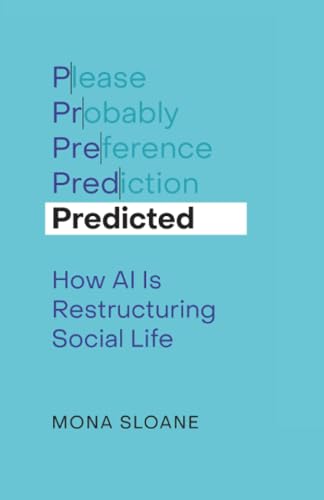
In Predicted, Mona Sloane offers a pragmatic framework for understanding these transformations around prediction, classification, and linearity, proposing that we think about AI as a social arrangement that we coproduce. Drawing on over a decade of empirical research and real-world examples, this book invites us to see AI for what it is: deeply social, deeply political, and open to change.


Apple is exploring new ways to keep AI processing on users’ devices, prioritizing speed, privacy, and reduced reliance on the cloud. The company is in early discussions with PrismML, a startup developing technology that dramatically compresses large AI models to fit and run efficiently on iPhones.
According to PrismML CEO Babak Hassibi, who spoke to CNBC, Apple and other companies have been evaluating the startup’s models, measuring their speed, energy efficiency, and performance on devices. “They’re really evaluating our technology right now,” Hassibi said of Apple. He described the discussions as very early but noted that “things are progressing nicely.”
Shrinking Massive Models for Everyday Devices
PrismML, a Khosla Ventures-backed spinout from the California Institute of Technology, recently released compressed versions of Alibaba’s open-source Qwen model. The company reduced the model from roughly 54 GB to less than 4 GB, enabling all 27 billion parameters to run on an iPhone 15 or newer.
The compression technique simplifies how internal information is stored—reducing values from 16 bits to just one or three possible values. PrismML claims the compressed models use 10 to 15 times less memory, generate responses six to eight times faster, and consume three to six times less energy than conventional versions.
Hassibi acknowledged a small performance trade-off: “PrismML’s models typically lose a few percentage points of overall performance, with factual recall weakening before skills such as reasoning, math and coding.” Despite this, the company is releasing two compressed versions for free, designed to run on iPhones, MacBooks, and Nvidia-powered PCs.
Boosting Siri and On-Device Capabilities
This development aligns closely with Apple’s ongoing efforts to enhance Siri. Just before PrismML’s release, Apple opened the public beta of iOS 27, introducing a major overhaul aimed at making Siri more competitive with offerings from xAI, OpenAI, and Anthropic — while emphasizing on-device processing for personal data.
Running more AI locally would bring several benefits:
• Reduced latency compared to cloud requests
• Lower cloud computing costs
• Support for features that work offline
• Stronger privacy protections, especially for sensitive health, medication, or personal information
Carolina Milanesi, president and principal analyst at Creative Strategies, told CNBC: “The more you can do on device, the better it is,” highlighting applications like computational photography, video generation, and health tools.
Analysts note Apple’s integrated hardware-software approach gives it an edge in optimizing these models. Horace Dediu of Asymco explained that Apple aims to keep most common Siri interactions on-device while routing only the most demanding tasks to the cloud. “They’re trying to figure out how big a model and how clever a model they can fit on the device,” he said.
Potential Industry Impact and Caveats
If PrismML’s technology proves effective at scale, it could influence memory requirements and datacenter demands. However, analysts caution that real-world performance — especially on lengthy prompts, multitasking, battery life, and millions of queries — remains to be fully validated.
Tarun Pathak of Counterpoint Research emphasized: “The ultimate test will be millions of queries, thousands of device combinations and robust testing at scale.” Phil Solis of IDC pointed to power consumption as a key open question for always-on or agent-like features.
Hassibi sees broader applications beyond phones, including robotics and autonomous systems where fast, local intelligence is critical: “It’s very important that the intelligence be local and that it can run fast.”
Pathak summed up the balanced future: “The combination of cloud and on-device AI can serve a more complete, efficient and privacy-centric AI experience. Complex tasks will be offloaded to the cloud, whereas sensitive, latency-critical and privacy-relevant tasks will be executed on-device.”
MacDailyNews Take: Apple’s interest in technologies like PrismML underscores its commitment to privacy as a core differentiator while pushing the boundaries of what smartphones can achieve with AI. As testing continues, this could mark a significant step toward more capable, personal, and private intelligent assistants.
Please help support MacDailyNews — and enjoy subscriber-only articles, comments, chat, and more — by subscribing to our Substack: macdailynews.substack.com. Thank you!
Support MacDailyNews at no extra cost to you by using this link to shop at Amazon.
The post Privacy-focused Apple in talks with startup to run more powerful AI models directly on devices appeared first on MacDailyNews.
EU tech regulation, Digital Markets Act, Apple Europe sales, Apple regulation, European Union, Siri AI, iPhone features, device interoperability, App Store changes, alternative marketplaces, iPhone Mirroring, AirPods translation, Apple privacy, iPhone security, app sideloading, platform competition, DMA compliance, Apple Intelligence, European technology, government control
EU tech regulation is no longer limited to App Store payment rules or competition disputes hidden from ordinary consumers. It is beginning to determine which features reach European devices, how quickly they arrive and how deeply third-party companies can interact with the iPhone, iPad and Mac.
The Digital Markets Act was designed to reduce the control of large technology platforms over software distribution, payments, browsers, digital assistants and connected hardware. For Apple, compliance has already produced alternative app marketplaces, web distribution, third-party payment options, additional default-app controls and expanded access to iPhone technologies.
The next phase reaches much deeper into the operating system. European regulators want competing accessories, cloud services and AI assistants to receive access to capabilities traditionally reserved for Apple’s own products.
Apple argues that some of those demands could weaken privacy and security. The European Commission says the company is responsible for creating compliant systems that preserve both competition and user protection.
Between those positions sits a large and commercially significant group of customers. Europe generated $28.06 billion in Apple sales during the quarter ending March 28, 2026, up from $24.45 billion one year earlier. Six-month European sales reached $66.20 billion, compared with $58.32 billion during the same period of fiscal 2025.
Europe therefore represented more than one-quarter of Apple’s latest quarterly revenue. It is too valuable to leave behind, but increasingly difficult to serve with the same software experience available elsewhere.
Regional differences once centered mainly on language support, licensing agreements or local services. EU tech regulation is creating a more structural divide.
Apple has blamed Digital Markets Act requirements for delaying Siri AI across the European Union. The company says regulators expect competing AI assistants to receive extensive access to personal information, apps and device actions before Apple can reserve those capabilities for its own assistant.
The disagreement concerns more than answering questions. Siri AI is designed to read personal context, understand onscreen information and complete actions across apps. That may include finding messages, accessing files, making purchases or sending information on the user’s behalf.
Opening those capabilities to outside AI systems requires new permission structures, technical interfaces and safeguards. Apple says it cannot release its assistant first and add competing access later without risking regulatory action. The Commission says Apple had sufficient time to design an interoperable solution.
Other delayed European features have included iPhone Mirroring on Mac, Live Translation through AirPods and certain location-based Maps capabilities. Each feature touches a different part of the ecosystem, but all depend on privileged communication between Apple devices, software and services.
The consequence is becoming visible at purchase. Two customers can buy the same iPhone model at similar prices and receive different capabilities because one lives inside the European Union.

Delayed availability can weaken the adoption of new hardware features even when the devices themselves continue selling well.
Siri AI is intended to become a central part of newer iPhones, iPads and Macs. Buyers who cannot access it lose part of the justification for newer chips, additional memory and on-device AI processing. Developers also face a smaller addressable audience for apps built around the new assistant.
AirPods Live Translation presents a similar problem. A feature designed to demonstrate the combination of iPhone processing, microphones and wearable audio becomes unavailable in a region built around dozens of languages and frequent cross-border travel.
iPhone Mirroring affects the relationship between iPhone and Mac. Users outside the EU can interact with the phone from macOS, while European users may receive notifications without gaining the complete experience.
These differences do not necessarily stop hardware sales. Apple’s newest results show strong European demand despite years of regulatory conflict. They can, however, reduce the speed at which customers use the ecosystem’s newest capabilities.
The effect may grow as software becomes a larger part of hardware differentiation. A faster processor has limited emotional value when the feature designed to demonstrate it is unavailable.
Apple does not report European Union revenue separately. Its Europe segment also includes countries outside the bloc, along with India, the Middle East and Africa. The official segment remains the best regularly published measure of the region’s commercial weight.
European sales rose approximately 15% year over year in Apple’s latest reported quarter. During the first six months of fiscal 2026, the segment expanded by roughly 14%.
Those figures weaken the argument that regulation is already driving customers away from Apple hardware. Demand remains strong, supported by the iPhone 17 family, Mac sales, services and the company’s installed base.
The financial risk is more gradual. Regional software fragmentation can raise engineering costs, delay launches and make European devices less competitive against products able to offer complete feature sets.
Apple must maintain separate distribution rules, payment systems, browser options and eligibility checks. Developers must decide whether alternative stores, external payments or EU-specific business terms justify additional work. Support teams must explain why features differ between countries using the same operating-system version.
A market responsible for more than $28 billion in one quarter can absorb considerable compliance expense. It can also influence Apple’s global product decisions when regulators demand interfaces that cannot be restricted to Europe easily.
The escalating regulatory environment also creates a more fundamental concern: control over complex technology ecosystems can gradually move away from the companies that designed them and toward government committees, regulatory bodies and administrative processes.
That transfer rarely happens through one dramatic order. It develops through repeated obligations covering app distribution, payment systems, browser engines, digital assistants, hardware access, data portability and interoperability. Each requirement may appear narrow when considered alone. Together, they can redefine who determines how the ecosystem operates.
Apple built its platform around tight integration between hardware, software, services and security. Regulators increasingly treat parts of that integration as market power that must be opened to competitors. The danger is that an ecosystem designed as one coordinated environment becomes subject to decisions made by committees that do not carry direct responsibility for product quality, reliability or long-term maintenance.
This can become a slow trap. Once a platform is required to expose one layer, regulators may use that access as the basis for demanding another. A payment exception can be followed by alternative app stores. Alternative stores can lead to broader installation rights. Device interoperability can expand into access for AI assistants, personal data and system actions.
The boundaries of the platform are then set less by engineering judgment and more by regulatory negotiation.
Government agencies have legitimate authority to address competition and consumer harm. The concern appears when regulation shifts from preventing abusive conduct to directing product architecture. At that point, public authorities begin influencing feature design, release timing, software permissions and the relationship between first-party and third-party services.
That creates consequences beyond Apple. Any company considering a tightly integrated product may decide that deep integration invites intervention. Businesses could avoid building ambitious ecosystems if successful coordination later becomes grounds for forced access.
Innovation then becomes shaped by what regulators are likely to permit rather than by what engineers believe will produce the safest or most coherent experience.
EU policy has produced benefits that Apple rarely emphasizes. Users can install apps through alternative marketplaces or directly from authorized developers. Developers can offer external payment methods, promote different prices and avoid relying entirely on Apple’s distribution system.
Alternative browser engines can compete with WebKit, while users have more control over default apps. Contactless payment access has expanded beyond Apple Pay, allowing competing wallet providers to use the iPhone’s NFC technology under approved conditions.
Interoperability requirements could also improve third-party accessories. Smartwatches, headphones and other devices may gain better notification access, background connectivity and proximity pairing with the iPhone.
These changes can increase competition and reduce the advantage Apple gives its own services and accessories. A third-party smartwatch should not become artificially less useful simply because it was not made in Cupertino.
The difficulty is separating legitimate platform access from unlimited access. A notification interface is one thing. An autonomous AI assistant capable of reading messages, accessing files and acting across apps introduces a different level of sensitivity.
Alternative app distribution increases user choice, but it also moves some responsibility away from the App Store. Apple continues to notarize apps distributed through approved alternative channels, checking for known malware and severe fraud. That process is narrower than a complete App Store review.
Purchases made outside Apple’s payment system also fall outside its normal refund and billing support. Users may need to resolve disputes directly with the developer or payment provider.
A malicious marketplace, deceptive payment page or compromised developer account can create opportunities for fraud. Enterprise users face additional concerns when employees install software from sources their organization has not approved.
The AI question reaches further. A third-party assistant may need permission to access messages, photos, calendars, documents and app controls. Even a reputable provider can collect more information than the user expects or introduce vulnerabilities through poorly designed integrations.
Apple can build permission prompts, app isolation and revocation controls, but technical access always creates some exposure. Security depends on how narrowly permissions are defined, how visibly they are used and whether the operating system can stop unauthorized actions.
The Commission maintains that interoperability and privacy can coexist. Apple maintains that regulators are demanding access before adequate protections are ready. Both positions contain a legitimate concern: dominant platforms should not block competition, and competition should not require users to surrender control of personal data.

When regulators require a company to alter its architecture, responsibility can become blurred.
Apple remains the company customers blame when an iPhone feature fails, a third-party marketplace distributes a harmful app or an outside assistant misuses personal data. Regulators may have required the access, but they do not operate the device, provide technical support or repair the damage to the platform’s reputation.
This creates an accountability gap. Government committees can mandate openness without assuming the commercial and security consequences of that openness. Apple must comply, maintain the system and explain the outcome to users.
The same problem applies to delayed features. Regulators may argue that Apple chose not to release a service, while Apple may argue that the required conditions made the launch unsafe or technically impractical. Customers are left with less functionality and no simple way to determine who caused the delay.
Over time, the ecosystem can become a negotiated compromise rather than a product with one coherent direction. That may satisfy formal compliance while producing a weaker experience for everyone involved.
The risk is not that governments will literally operate Apple’s software. It is that committees increasingly define the conditions under which Apple can design, connect and release its own features. Control shifts through constraints.
The consequences extend beyond one company. Google, Meta, Microsoft, Amazon and other platform operators face related European obligations. Hardware makers must consider whether ecosystem advantages can survive when core services are required to support rivals.
Smaller developers may gain new distribution and payment choices, but they may also inherit more compliance, customer-service and security responsibilities. Accessory companies could compete more effectively while becoming accountable for handling sensitive device data.
Other governments are watching. Rules introduced in Europe can influence legislation elsewhere, particularly when companies decide that maintaining one global technical framework is easier than operating several regional versions.
Apple is unlikely to abandon Europe or stop adapting its products. Its sales provide too much evidence of the region’s importance. The company will continue negotiating, appealing decisions and building compliance systems while withholding features it considers unsafe under current demands.
European customers may receive more app stores, payment choices and accessory compatibility. They may also wait longer for headline features included with the same hardware elsewhere.
The deeper consequence may be a technology industry that becomes more cautious about building tightly integrated products. Companies may design around anticipated regulatory demands from the beginning, limiting exclusive features, reducing private-system integration or avoiding innovations that depend on controlled access.
EU tech regulation began as an effort to constrain dominant platforms. Its long-term effect may be to transfer part of the power to shape those platforms from companies and users to regulatory institutions.
That shift deserves scrutiny equal to the market power it is intended to correct. Competition rules can restrain abuse. They can also become a slow mechanism for placing product design, security choices and ecosystem evolution under government supervision.
The danger grows when regulatory discretion becomes buried beneath permits, approvals, negotiations and technical committees that operate beyond meaningful public scrutiny.
The more power officials hold over which features, contracts or technologies may proceed—and when—the greater the opportunity for lobbying, favoritism and selective enforcement to influence outcomes. What begins as oversight can gradually become a system in which delay itself is leverage, while responsibility disappears inside layers of administration.
For the technology industry, that risks replacing transparent product decisions with political access, negotiated exceptions and regulatory influence exercised far from the consumers expected to live with the consequences.
The post EU Tech Regulation Creates a Costly Split for Apple appeared first on AppleMagazine.

 A reverse prediction test suggests that supposedly brainlike AI models may rely on visual strategies the primate brain does not use. Artificial intelligence can sometimes predict how the brain responds when people recognize objects. But that resemblance may hide an important weakness: the internal workings of today’s vision models do not necessarily match the processes [...]


The Spanish-language broadcaster has won over millions of US viewers with its energetic commentary during games
Soccer fans looking to watch the 2026 World Cup on US television have been presented with two very different options this tournament.
The first is Fox Sports, a cousin of Fox News owned by the same parent company and the sole network airing matches in English in the US. Audiences tuning in to Fox, which acquired the exclusive English broadcast rights in 2015, are met with coverage that reflects the network’s “America first” aesthetic, with promos for pro-Donald Trump talkshows, advertising breaks during games and the frequent, grating presence of host Alexi Lalas.
Continue reading...
© Photograph: Sarah Yenesel/EPA

© Photograph: Sarah Yenesel/EPA

© Photograph: Sarah Yenesel/EPA
Shift in pecking order illustrates that investors are reassessing outlook for artificial intelligence
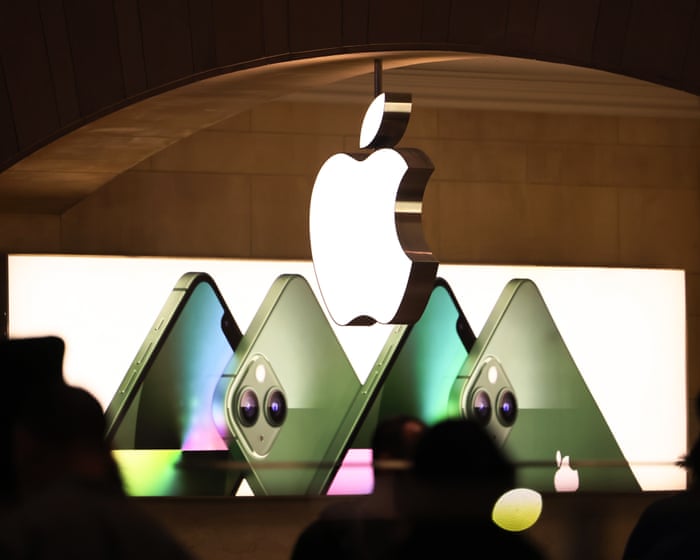
Apple overtook Nvidia on Friday to become the world’s most valuable company, reshuffling the top ranks of tech heavyweights as investors reassess the outlook for artificial intelligence.
Apple was last valued at $4.88tn as its shares held steady, while Nvidia was roughly at $4.86tn, after a 3.5% decline.
Continue reading...
© Photograph: Michael M Santiago/Getty Images
© Photograph: Michael M Santiago/Getty Images
© Photograph: Michael M Santiago/Getty Images
 A scanning mistake and a translation error created scientific nonsense that AI models learned to repeat.
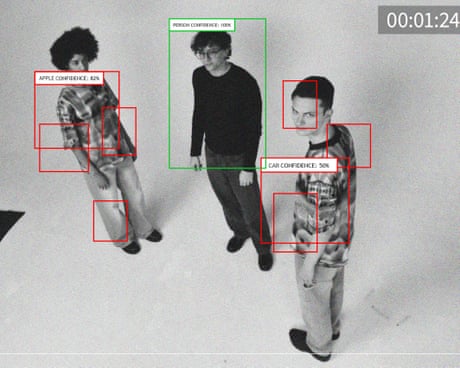
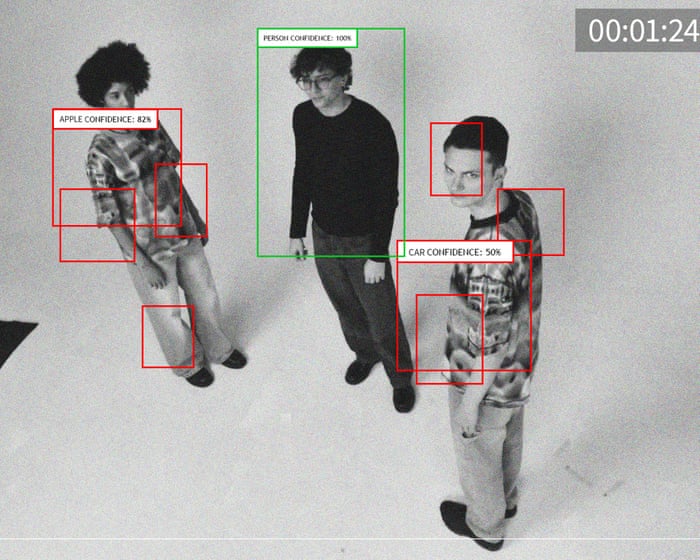
Designers say that as well as offering a degree of protection from surveillance, their clothes make a powerful fashion statement about the importance of privacy
As facial recognition technology is rolled out across Britain’s public spaces, a new generation of designers say privacy could be the next big fashion trend.
Companies have started incorporating “adversarial patterns” in their garments – carefully designed arrangements of shapes, colours and repeated motifs said to exploit weaknesses in some computer vision systems.
Continue reading...
© Photograph: PR
© Photograph: PR
© Photograph: PR
BBC Philharmonic/Havlat/Kaziboni/Piatti Quartet
(NMC)
Einstein’s field equations, Newton’s universal law and artificial intelligence are among the subjects of Laidlow’s ambitious orchestral works
Robert Laidlow is as at home in the realms of science and technology as he is in the world of classical music. As this NMC debut album demonstrates, his intricate, wildly imaginative work is eminently approachable, even if the core concepts are highly complex.
Warp, a terse, 12-minute piano concerto, proposes a musical solution to Einstein’s field equations as the intrepid Joseph Havlat boldly goes where no pianist has gone before amid the distorting fabric of orchestral space-time. Strident orchestral lines spiral ever upwards, stretching instruments to their limits, while the piano maintains its course towards a serene conclusion. Handsomely recorded, the BBC Philharmonic and Vimbayi Kaziboni offer vibrantly detailed support.
Continue reading...
© Photograph: Jonathan Slade

© Photograph: Jonathan Slade

© Photograph: Jonathan Slade
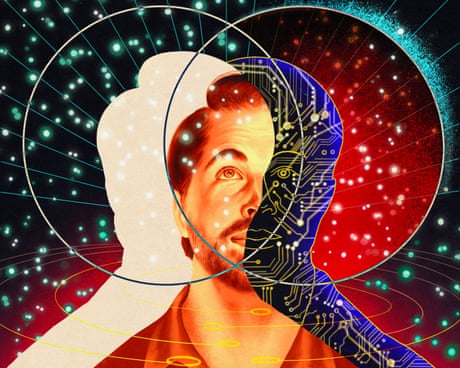
Since 2017, Iason Gabriel has worked at the tech giant, trying to anticipate – and think through – the impact of AI. But as commercial and geopolitical pressures escalate, can ethicists make any difference?
By Robert P Baird. Read by Simon Darwen
Support the Guardian today: theguardian.com/longreadpod
Continue reading...
© Illustration: The Guardian
© Illustration: The Guardian

© Illustration: The Guardian
The petition to Sundar Pichai, the CEO, included more than 4,500 signatures and included calls for buyout options
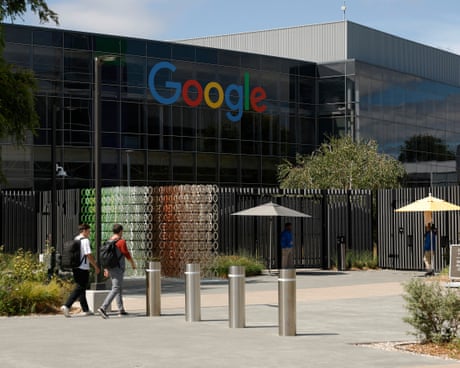
Google workers on Thursday delivered a petition calling for layoff protections as tech giants continue to slash their workforces while pouring billions into AI.
“Make no mistake: this is a company that is enjoying massive, unprecedented success,” Parul Koul, Google software engineer and Alphabet Workers Union president, said outside the company’s California headquarters after delivering the petition to the office of the CEO, Sundar Pichai’. Koul pointed to Google’s $4tn valuation, which has quadrupled over the last six years: “These layoffs and cuts are not difficult decisions, but simply profit being put over the people that make this company run.”
Continue reading...
© Photograph: Justin Sullivan/Getty Images
© Photograph: Justin Sullivan/Getty Images

© Photograph: Justin Sullivan/Getty Images
 This paint could track the heart, muscles and brain during everyday movement.
The entrepreneur is known in Washington as the financial power behind the president’s crypto fortune. How did Sun’s business love-in with the Trump family spiral into dueling lawsuits?
The most infamous financial scandal in US presidential history – the 1920s Teapot Dome affair – involved then president Warren G Harding’s interior secretary, Albert Fall, taking roughly $400,000 in bribes. Adjusted for inflation, that’s about $6m today. Last year, Donald Trump made at least $2.2bn; his single year of income is on the order of 200 to 300 times larger than the bribe that defined “presidential corruption” in the American imagination for a century.
It’s taken for granted that Trump flogs items like Bibles and gold sneakers as a way to wring more money from his loyal base. But of the president’s $2.2bn, at least $1.4bn came from his crypto businesses. That’s an extraordinary achievement, even for an unscrupulous sitting president. How exactly did he do it without any prior background in crypto?
Continue reading...
© Photograph: Bloomberg/Getty Images

© Photograph: Bloomberg/Getty Images

© Photograph: Bloomberg/Getty Images
Case is one of first brought by an AI company against a user for allegedly using a tool to generate child abuse material
Elon Musk’s artificial-intelligence startup xAI has sued a South Carolina man arrested earlier this year on charges of sexually exploiting minors, alleging he misused the company’s AI system Grok to create child sexual abuse material.
xAI alleged in the lawsuit, filed in federal court in Texas on Tuesday, that Terry Harwood violated the company’s terms of service. The case is one of the first brought by an AI company against one of its users for allegedly using an AI system to generate child sexual abuse material.
Continue reading...
© Photograph: Samuel Boivin/NurPhoto/Shutterstock
© Photograph: Samuel Boivin/NurPhoto/Shutterstock

© Photograph: Samuel Boivin/NurPhoto/Shutterstock
Keith Thomas can move arms and hands, and feel sensation of touch after ‘double neural bypass’ and months of training
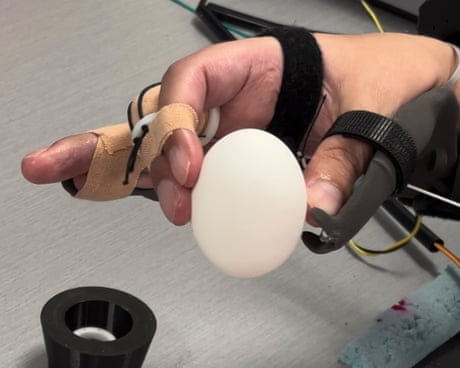
A man who was paralysed from the chest down in a swimming accident six years ago has been able to feed himself and drink from a cup thanks to a brain implant that bypasses his spinal cord injury.
Keith Thomas of Massapequa, New York, could not lift his arms off his wheelchair when he agreed to trial the technology in 2021, but after surgery to implant electrodes in his brain and many months of training, he was able to move the limbs again.
Continue reading...
© Photograph: Feinstein Institutes for Medical Research
© Photograph: Feinstein Institutes for Medical Research

© Photograph: Feinstein Institutes for Medical Research

