❌

Reading view

Apple divulga relato de homem salvo com a ajuda do Apple Watch

Já compartilhamos muitos casos de vidas que foram salvas com a ajuda do Apple Watch, mas a maioria deles parte de relatos feitos pelos protagonistas (ou terceiros) nas redes sociais ou para publicações jornalísticas.

Desta vez, a própria Apple publicou em seu canal no YouTube o relato de um homem chamado Phil, que contou em um vídeo de pouco mais de meio minuto como o recurso SOS de Emergência do relógio salvou a sua vida.

Ele relatou estar pedalando em uma trilha com seus filhos pequenos quando calculou mal um salto e sofreu um acidente que o deixou desacordado — o que fez o Apple Watch detectar a queda e ligar imediatamente para a emergência.

“Só agradeço muito por estar usando o meu Apple Watch”, disse Phil, que foi resgatado pelos bombeiros e ficou internado por uma semana após quebrar a clavícula e sete costelas por causa do acidente.

Baita história, não?

Apple Watch Ultra 3

Cores: natural ou preto
Pulseiras: loop Alpina, loop Trail, Oceano ou estilo milanês de titânio
R$ 7.850,50
R$ 10.499,00

Apple Watch Series 11

Material: alumínio ou titânio
Cores: cinza-espacial, prateado, ouro rosa, preto brilhante, natural, dourado ou ardósia
Tamanho: 42mm ou 46mm
Conectividade: GPS ou GPS + Cellular
Pulseiras: esportiva ou estilo milanês
R$ 4.678,80
R$ 5.499,00

Apple Watch SE 3

Cores: meia-noite ou estelar
Tamanhos: 40mm ou 44mm
Conectividade: GPS ou GPS + Cellular
Pulseira: esportiva
R$ 2.466,78
R$ 3.299,00

NOTA DE TRANSPARÊNCIA: O MacMagazine recebe uma pequena comissão sobre vendas concluídas por meio de links deste post, mas você, como consumidor, não paga nada mais pelos produtos/serviços usando os nossos links de afiliado.

  •  

“iPhone 20 Pro Max” poderá chegar com tela de quase 7 polegadas

Fontes da cadeia de suprimentos dão conta de que a Apple estaria avaliando a utilização de uma tela maior para o iPhone — de quase 7 polegadas, mais especificamente — em um futuro próximo.

A informação veio do leaker Digital Chat Station, o qual comentou na rede social chinesa Weibo que o tamanho físico do novo painel seria de exatas 6,96 polegadas. Ele especula que essa ampliação deverá acontecer no “iPhone 20 Pro Max”, a versão maior da edição comemorativa de 20 anos da linha, marcada para chegar em 2027, sucedendo o “iPhone 18 Pro Max”.

Caso o rumor se confirme, esse se tornará o maior painel já utilizado em um iPhone (embora a diferença em relação às 6,86″ do iPhone 17 Pro Max seja pequena), número suficiente para que o arredondamento das campanhas publicitárias da Apple dê conta de uma tela de 7″. 

A proposta dos modelos comemorativos de 20 anos, conforme especulam vários insiders, é de uma tela sem intervenções, com bordas curvas. Segundo Mark Gurman, da Bloomberg, esses novos iPhones deverão contar com um chip “A21” de 2 nanômetros, que poderá estar presente ainda na segunda geração do iPhone dobrável. Resta a dúvida se a Apple pulará a linha “iPhone 19” e seguirá direto com o “20” (ou “XX”), como fez com os iPhones 8/8 Plus e o iPhone X, em 2017.

iPhone 17 Pro Max

Cores: prateado, laranja-cósmico ou azul-intenso
Armazenamento: 256GB, 512GB, 1TB ou 2TB
R$ 10.499,00
R$ 12.499,00

iPhone 17 Pro

Cores: prateado, laranja-cósmico ou azul-intenso
Armazenamento: 256GB, 512GB ou 1TB
R$ 9.777,77
R$ 11.499,00

NOTA DE TRANSPARÊNCIA: O MacMagazine recebe uma pequena comissão sobre vendas concluídas por meio de links deste post, mas você, como consumidor, não paga nada mais pelos produtos/serviços usando os nossos links de afiliado.

via MacRumors

  •  

Trump Attacks National Academies Over Climate Chapter in Judges’ Manual

The president joined Republican officials who slammed the National Academies of Sciences for a chapter about climate science in an educational guide for judges.
  •  

US launches 10th round of strikes as Iran says it is in ‘full-scale war’

Diplomats say de-escalation talks continue as Trump vows retaliation over US soldier deaths

The US military said it has launched its 10th consecutive round of strikes on Iran to force the reopening of the strait of Hormuz.

Earlier on Monday, Iran’s president said the country is in a “full-scale war” after the US expanded its aerial campaign and Tehran struck Washington’s Gulf allies, even as diplomats said talks to de-escalate were continuing.

Continue reading...

© Photograph: US Central Command (CENTCOM)/AFP/Getty Images

© Photograph: US Central Command (CENTCOM)/AFP/Getty Images

© Photograph: US Central Command (CENTCOM)/AFP/Getty Images

  •  

The bacteria behind gum disease may also harm your heart valves, early research suggests

A common culprit behind severe gum disease may also stiffen and narrow the heart's aortic valve, preliminary research suggests. This may help explain links between gum problems and poor heart health.

Scientists have long linked severe gum disease to inflammation throughout the body and a higher risk of heart problems, including coronary artery disease, which can raise the risk of heart attack. Studies have also found that treating gum disease can improve blood-vessel health.

Now, researchers suggest that Porphyromonas gingivalis, one of the main bacteria involved in severe gum disease, may also contribute to calcific aortic valve disease (CAVD), a condition in which calcium builds up in the heart's aortic valve. The findings were presented in July at a meeting of the American Heart Association in Boston and have not been peer-reviewed yet.

Dr. Elena Aikawa, a professor of medicine at Harvard Medical School who was not involved in the study, said the findings "fit well with our current understanding of calcific aortic valve disease as an active, inflammation-driven disease rather than simply wear and tear of the valve."

Periodontal disease is likely just one contributor among many, rather than the sole cause of CAVD, she added. But the study does identify a biologically plausible pathway linking oral health to heart health that could open new opportunities for prevention and treatment.

How mouth bacteria harm the heart

CAVD affects millions of people worldwide, and there are no approved drugs that slow or stop its progression. As the disease worsens, people may develop fatigue, shortness of breath and chest pain, and in severe cases, they often require valve-replacement surgery.

Meanwhile, prior to the new research, it was known that bacteria and inflammatory signals from the mouth can sometimes enter the bloodstream and affect distant tissues, said Richard Lamont, chair of oral immunology and infectious diseases at the University of Louisville School of Dentistry, who was not involved in the study. Over time, these effects can accrue and gradually reshape how the immune system behaves, he said.

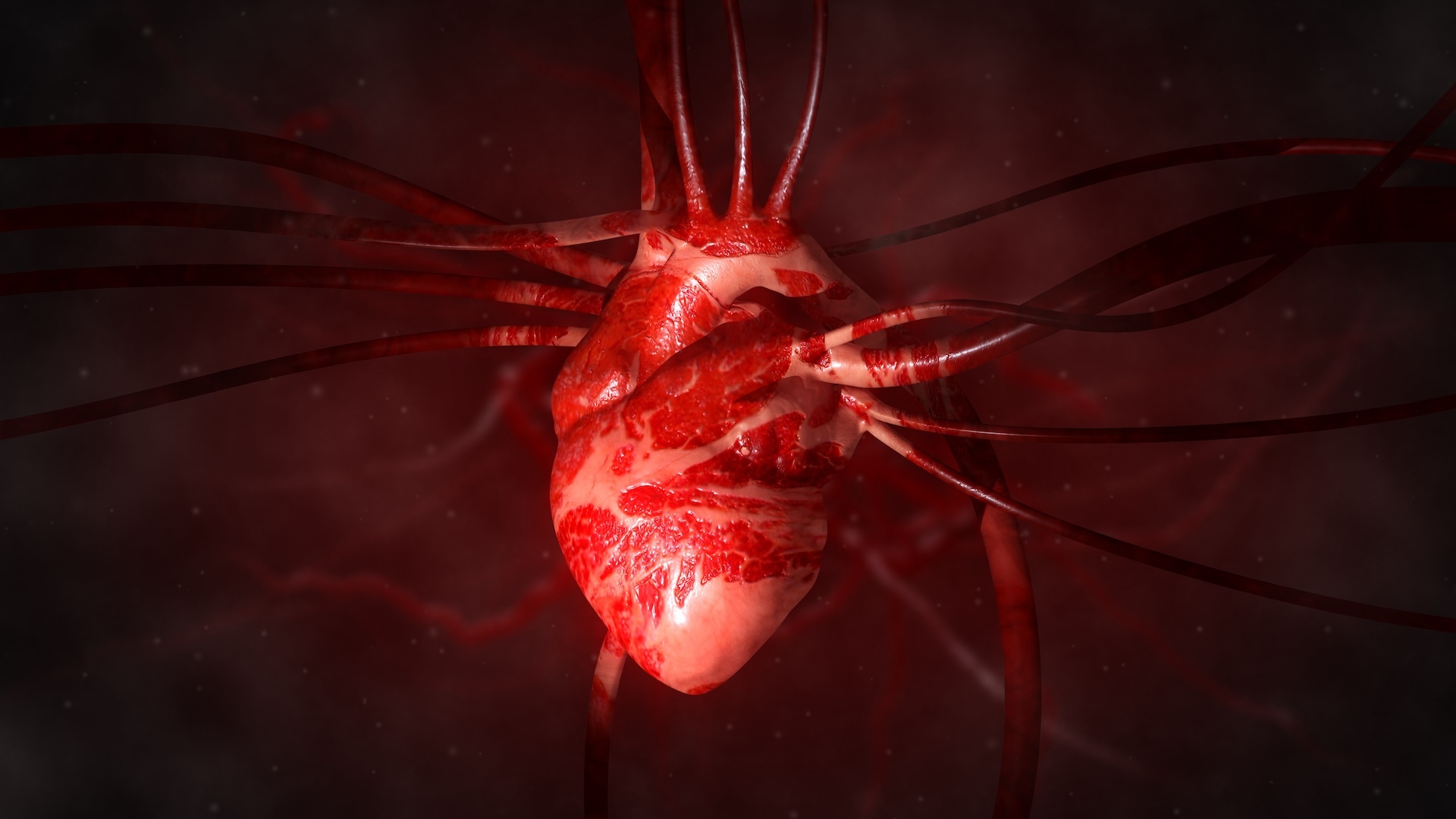
An illustration of a human heart

In CAVD, calcium builds up in the aortic valve, which connects the left side of the heart to the large artery that carries oxygen-rich blood to the body. (Image credit: Noctiluxx via Getty Images)

P. gingivalis is known to be particularly destructive to gum tissue, causing lots of inflammation, and it's been tied to cardiovascular disease in the past. To see if the bacterium might be directly impacting heart health, researchers at Fuwai Hospital in Beijing looked for P. gingivalis in aortic valve tissue removed during valve-replacement surgery. They compared this diseased tissue to valves that weren't calcified.

The calcified valves contained much higher levels of P. gingivalis DNA and proteins made by the bacterium. "P. gingivalis was about 30 times more abundant in calcified valves than in non-calcified valves," study first author Dr. Chenyang Li, a doctoral candidate at Fuwai Hospital, told Live Science in an email.

To test whether the bacteria might directly contribute to valve damage, Li and colleagues injected live P. gingivalis into the bloodstreams of healthy lab mice. The bacteria reached the animals' aortic valves, triggering inflammation, calcium buildup and narrowing of the valve.

"We were surprised to see valve calcification even in mice without high cholesterol," Li said. "This suggests P. gingivalis may directly contribute to valve disease, beyond traditional cardiovascular risk factors."

A comparison group of mice was given antibiotics before the injection and had less bacteria in their aortic valves and slower disease progression. Meanwhile, mice injected with dead P. gingivalis bacteria did not show any changes in their aortic valves.

The researchers traced the changes in the mice's hearts to interleukin-1 beta, a signalling molecule that normally helps the body fight infections. Exposure to P. gingivalis ramped up the production of this molecule, and in turn, the immune signal switched on genes that pushed healthy valve cells to behave more like bone-building cells, which is a hallmark of CAVD. This switch causes the cells to lay down calcium in the surrounding valve tissue.

When the scientists blocked interleukin-1 beta in some mice, the animals developed much less valve calcification even when the bacteria reached the valve. Lamont said that the mouse experiments strengthen the case that there's a biological mechanism directly linking gum and heart diseases. However, he cautioned that mice have very different oral microbiomes than humans, making it difficult to know whether the exact same process occurs in people.

That said, the team also saw the same pattern in human valve cells grown in the lab. Exposure to P. gingivalis increased inflammation and calcium buildup among the cells, while blocking interleukin-1 beta blunted those effects.

Both Aikawa and Lamont said more research is needed to confirm the relationship in humans. The findings give researchers a new pathway to explore for future treatments, raising questions of whether targeting inflammatory signals like interleukin-1 beta could help slow the progression of this widespread heart disease.

This article is for informational purposes only and is not meant to offer medical advice.

What do you know about the body's hardest-working muscle? Find out with our heart quiz!

  •  

Science word of the day: Autotroph

Science word of the day: Autotroph

Pronunciation: AW'-tuh-trohf

What it means: Autotrophs are organisms that can feed themselves with inorganic substances such as light (for plants) or methane (certain microbes). Autotrophs were the first single-celled life-forms to colonize the planet, thriving on chemicals bubbling up from the subsurface at deep-sea vents or figuring out how to harness the sun for energy. Heterotrophs (like you, me and all fungi), arrived on the scene later to feast on these DIY-ers.

How to use it in a sentence: Stromatolites, microbial mats built by cyanobacteria, are autotrophs that thrived in ancient shallow seas.

Can you crack our science word of the day puzzle, Chain Word?

  •  

Trump Attacks National Academies Over Climate Chapter in Judges’ Manual

The president joined Republican officials who slammed the National Academies of Sciences for a chapter about climate science in an educational guide for judges.

© David Coleman/Alamy

The National Academies of Sciences building in Washington, D.C.
  •  

NASA, GE Aerospace Work Enables Hybrid-Electric Flight Demonstration

4 min read

Preparations for Next Moonwalk Simulations Underway (and Underwater)

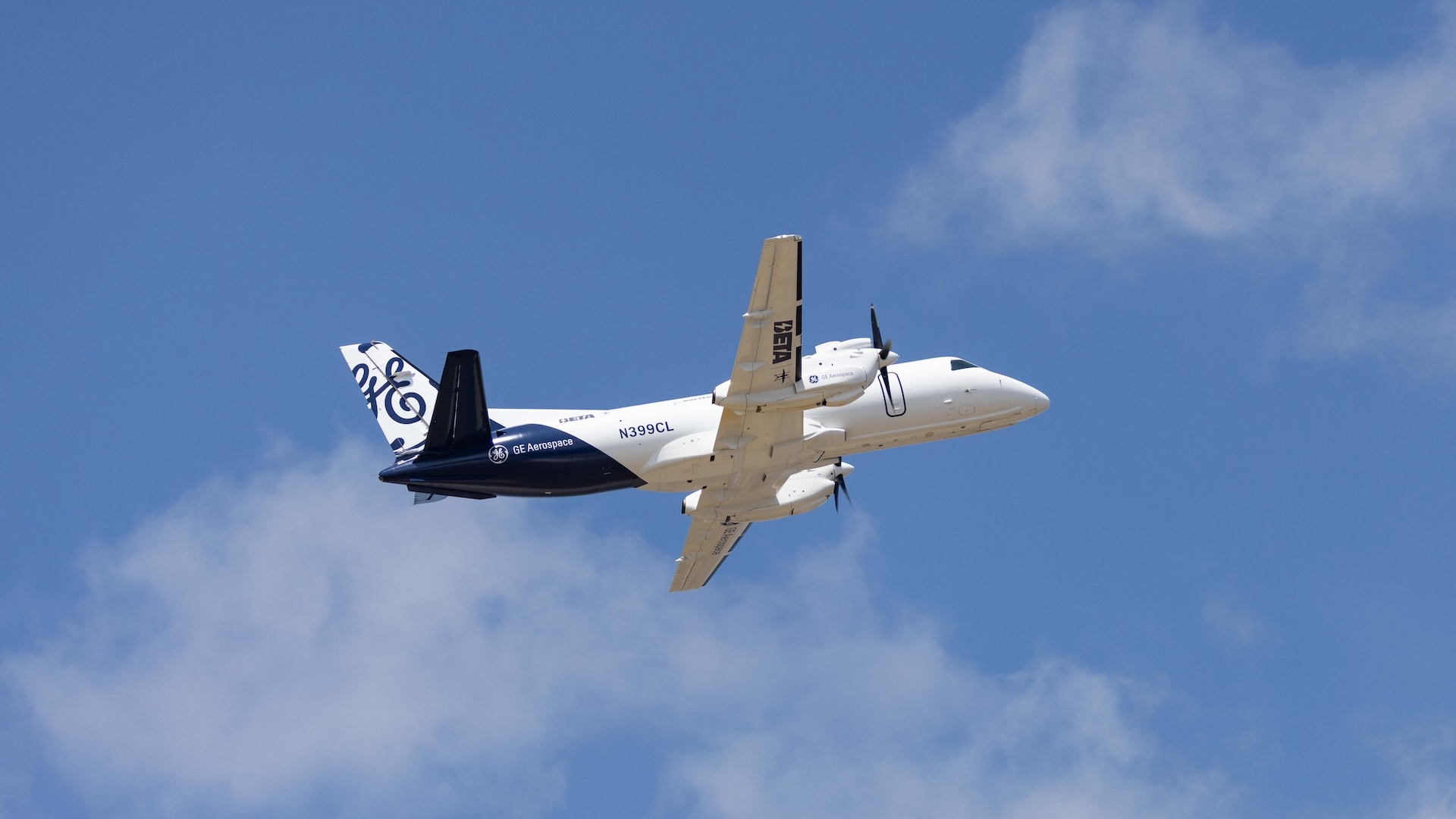
Modified Saab 340, a hybrid-electric aircraft in flight.
A modified Saab 340B aircraft in flight powered in part by a hybrid electric system built by GE Aerospace, along with NASA, BETA Technologies, and Boeing.
GE Aerospace

An aircraft powered by a megawatt-class hybrid-electric engine developed in collaboration with NASA and built by GE Aerospace, demonstrated flight of an innovation that can inform new generations of fuel-saving aircraft power systems.

Mounted to a Saab 340B aircraft, the engine flew at Farnborough International Air Show in the United Kingdom. It was the public debut of a system that has in recent months made historic test flights, becoming the first hybrid electric-powered aircraft to fly above 30,000 feet.

“This achievement reflects what NASA does best in aeronautics: we explore bold possibilities, validate them through rigorous research and testing, and work with industry to turn breakthrough ideas into technologies that bring real value for the American people,” said Laurie Grindle, director of the Aeronautics Division within the agency’s Research and Technology Mission Directorate at NASA Headquarters in Washington.

The testing leveraged work done through NASA’s former Electrified Powertrain Flight Demonstration project and the agency’s ongoing Subsonic Vehicle Technologies and Tools project – years of collaborative research that included key testing at NASA test facilities. 

The engine integrates electric motors, a gas turbine, and energy storage capabilities. It was designed to demonstrate the capacity to power an aircraft around the size of a regional-class jet, reducing fuel burn and costs without sacrificing performance. The unit’s technology and designs are expected to be used to help develop future hybrid systems that could lower airline operating costs. 

The demonstration flight came after years of rapid development for the technology. For NASA, it also validates work that stretches back to a time when hybrid aviation propulsion seemed almost beyond the horizon of possibility.

This achievement reflects what NASA does best in aeronautics: we explore bold possibilities, validate them through rigorous research and testing, and work with industry to turn breakthrough ideas into technologies that bring real value for the American people.

LAURIE A. GRINDLE

LAURIE A. GRINDLE

Director of the Aeronautics Division within the agency's Research and Technology Mission Directorate

“This is the culmination of more than 15 years of work, and we did that because it’s going to have an impact for aircraft that will help reduce energy use and help U.S. companies and the public,” said Ralph Jansen, aerospace engineer at NASA’s Glenn Research Center in Cleveland. “It’s about having a vision that no one believes can happen and then doing the work to define and execute the research and development needed to make it happen.”  

This accomplishment was possible because of the collaborative effort of hundreds of people working on Electrified Powertrain Flight Demonstration and Subsonic Vehicle Technologies and Tools projects across NASA centers, in conjunction with GE Aerospace and its partner companies.

Hybird-Electric Evolves

In recent years, aviation has seen a boom in small aircraft and drones powered by electrical systems drawing from batteries. But large passenger and cargo planes require complex engines capable of supplying massive amounts of power. So more than a decade ago when NASA began contemplating hybrid systems, just the possibility of using electric motors to supplement some energy was a daunting engineering challenge. 

NASA spent about seven years performing preliminary research, working with small businesses and other partners to consider technological obstacles and the potential commercial viability of hybrid systems. During that time, the agency addressed several barriers to implementation including the power, thermal, and battery technology, and the integration of the power system, engine, and aircraft.

Through the agency’s Electrified Powertrain Flight Demonstration award, GE Aerospace and NASA worked with researchers to develop lighter and more efficient power systems and shrink key components – sometimes dramatically. 

NASA and GE Aerospace also leveraged agency facilities and resources to further their research. In 2022, GE Aerospace tested an integrated version of its propulsion system at NASA’s Electric Aircraft Testbed at the agency’s Neil A. Armstrong Test Facility in Sandusky, Ohio. Testing allowed the system to operate in conditions simulating 45,000 feet in altitude, the range in which commercial single-aisle aircraft fly. 

The team added components, including electric motors, power converters, propellers, and a GE Aerospace commercial engine, followed by more ground tests and eventual flight tests. For the researchers who’d spent years on the concept, seeing the engine powering an aircraft in flight was a major step in a long journey.

“I’ve got to say, I was pretty touched seeing it fly. It was just awesome,” Jansen said.  “It’s just like a regular plane, which is probably the best thing of all.”

NASA’s current support for this research is through the Aeronautics Division of its Research and Technology Mission Directorate.

  •  

E.U. Proposes Changes to Emissions Trading System

The European Union is facing a green backlash as emissions cuts become harder and require bigger overhauls to industry and livelihoods

© Nadja Wohlleben/Reuters

Europe, which often holds itself up as a climate leader, has been facing political infighting over some of its policies.
  •  

Trump admin secures record $265 billion TSMC investment in U.S. semiconductor manufacturing, adding 4 new facilities for total of 12

TSMC

In a major boost to American domestic manufacturing, the Trump Administration today announced that Taiwan Semiconductor Manufacturing Company (TSMC) is committing an additional $100 billion in investments for advanced semiconductor facilities in the United States. This brings TSMC’s total planned investment to $265 billion — one of the largest foreign direct investments in American history.

The announcement, made jointly by the White House and the Department of Commerce, highlights the success of strategic trade and investment partnerships, particularly the historic U.S.-Taiwan deal signed in January 2026. As a direct result, TSMC will build four additional advanced semiconductor manufacturing and packaging facilities, bringing its U.S. footprint to 12 leading-edge facilities, primarily in Arizona.

Building on Momentum

This latest expansion builds on previous commitments. TSMC’s original plans started at around $65 billion, which were later increased. The new infusion underscores sustained momentum under the current administration’s focus on reshoring critical supply chains.

In a statement, U.S. Commerce Secretary Howard Lutnick emphasized the job-creating impact, “President Trump’s leadership is driving companies to invest in American manufacturing. TSMC’s announcement of an additional $100 billion investment following our historic deal on trade and investment with Taiwan will create tens of thousands of American jobs and bring advanced semiconductor manufacturing back to America.”

TSMC Chairman and CEO Dr. C.C. Wei echoed the sentiment, crediting collaboration with the administration and strong U.S. customer demand, “We appreciate the strong collaboration and support of the Trump Administration, Secretary Lutnick and our leading U.S. customers… This is to support the strong multi-year demand from our leading U.S. customers, and we believe this investment will further foster the development of the U.S. semiconductor ecosystem, strengthen the supply chain, and support significant job creation in the United States.”

Economic and Strategic Impact

The investments are expected to generate significant construction and high-tech jobs, along with billions in indirect economic output. Beyond direct facilities, the broader U.S.-Taiwan trade and investment framework is catalyzing an additional $500 billion in Taiwanese investments — $250 billion in direct semiconductor and related enterprises, plus another $250 billion to strengthen the full supply chain in the U.S.

This move addresses long-standing concerns about reliance on overseas production for advanced chips, especially those critical for AI, defense, automotive, and consumer electronics. By expanding domestic capacity with a world-leading foundry like TSMC, the U.S. strengthens its position in the global semiconductor race while creating high-paying opportunities for American workers.

The Trump Administration’s approach, which combines diplomatic deals, incentives for onshoring, and a focus on national security, continues to yield concrete results in rebuilding America’s industrial base.
‎
MacDailyNews Take: With 12 state-of-the-art facilities on track, America is poised to capture a much larger share of advanced chip production. This not only bolsters economic competitiveness, but also enhances supply chain resilience against geopolitical risks.


‎
Please help support MacDailyNews — and enjoy subscriber-only articles, comments, chat, and more — by subscribing to our Substack: macdailynews.substack.com. Thank you!

Support MacDailyNews at no extra cost to you by using this link to shop at Amazon.

The post Trump admin secures record $265 billion TSMC investment in U.S. semiconductor manufacturing, adding 4 new facilities for total of 12 appeared first on MacDailyNews.

  •  

Apple TV’s acclaimed dark comedy ‘Where’s Wanda?’ returns for season two on October 21st

Devid Striesow, Axel Stein, Heike Makatsch and Torben Liebrecht in “Where’s Wanda?” season two, premiering October 21, 2026 on Apple TV.

Apple TV on Wednesday revealed first look images and the season two premiere date for celebrated German-language dark comedy series “Where’s Wanda?” Produced by UFA Fiction, the eight-episode season stars International Emmy Award nominee Heike Makatsch (“Love Actually”), German Comedy Award winner Axel Stein (“The Vault”), multiple award-winning actress Lea Drinda (“The Gryphon”), Leo Simon, and Nikeata Thompson (“Späti”). Season two will make its global debut on Apple TV with one episode on Wednesday, October 21, followed by a new episode weekly through Wednesday, December 9, 2026.

In season two, the Klatts (Makatsch and Stein) are back! Just as they thought their lives were finally returning to normal, their daughter, Wanda (Drinda), is caught seemingly red-handed standing over a dead body. They will need to do everything in their power to prove her innocence and avoid losing her again, as their investigation to find the real murderer takes them into the criminal underbelly of their sleepy suburban town. But will their quest to protect their family get them all out of trouble, or ultimately lead them further astray? And can they find out the truth of what happened on that fateful day before it’s too late?

Hailing from UFA Fiction, a Fremantle company, “Where’s Wanda?” season two is created, written and executive produced by Royal Television Society nominee Oliver Lansley (“Flack”), alongside multiple award-winning executive producer Nataly Kudiabor (“Arthur’s Law”) and Oliver Ossege (“Helgoland 513”). The series was co-created and based on a story by Zoltan Spirandelli (“Vaya con Dios”) and is directed by critically acclaimed, award-winning filmmakers Tobi Baumann (“Faking Hitler”) and Christian Ditter (“How To Be Single”).

Following its global debut, “Where’s Wanda?” has been hailed as an “electrifying,” “standout” series keeping “viewers on the edge of their seats” with “a unique blend of dark comedy and suspense,” and featuring “immensely likable, and often affecting performances” by its “talented cast.” Season one achieved a rare perfect 100% critics’ score on Rotten Tomatoes. Fans applaud the “beautiful” show as the “kind of gem Apple only seems capable of creating” and “a compelling new addition” to Apple TV’s “expanding international offerings.”

Apple TV offers premium, compelling drama and comedy series, feature films, groundbreaking documentaries, and kids and family entertainment, and is available to watch across all of a user’s favorite screens. After its launch on November 1, 2019, Apple TV became the first all-original streaming service to launch around the world, and has premiered more original hits and received more award recognitions faster than any other streaming service in its debut. To date, Apple Original films, documentaries and series have been honored with 850 wins and 3,737 award nominations and counting including multi-Emmy Award-winning and history-making comedies “The Studio” and “Ted Lasso,” global cultural phenomenon “Severance,” Apple’s most-viewed drama “Pluribus,” Academy Award Best Picture winner “CODA” and Academy Award winner “F1,” the highest-grossing sports feature of all time.

MacDailyNews Note: Apple TV is available on the Apple TV app in over 100 countries and regions, on over 1 billion screens, including iPhone, iPad, Apple TV 4K, Apple Vision Pro, Mac, popular smart TVs from Samsung, LG, Sony, VIZIO, TCL and others, Roku and Amazon Fire TV devices, Chromecast with Google TV, PlayStation and Xbox gaming consoles, and at tv.apple.com, for $12.99 per month with a seven-day free trial for new subscribers. For a limited time, customers who purchase and activate a new iPhone, iPad, Apple TV 4K or Mac can enjoy three months of Apple TV for free.

Watch on Apple TV


‎
Please help support MacDailyNews — and enjoy subscriber-only articles, comments, chat, and more — by subscribing to our Substack: macdailynews.substack.com. Thank you!

Support MacDailyNews at no extra cost to you by using this link to shop at Amazon.

The post Apple TV’s acclaimed dark comedy ‘Where’s Wanda?’ returns for season two on October 21st appeared first on MacDailyNews.

  •  

U.S. Producer Price Index (PPI) drops in June, signaling easing inflation pressures

U.S. Producer Price Index (PPI) drops in June, signaling easing inflation pressures

The U.S. Bureau of Labor Statistics (BLS) released its Producer Price Index (PPI) data for June 2026 today, showing a 0.3% decline in the index for final demand on a seasonally adjusted basis. This marks a reversal from the 0.6% rise in May and the stronger 1.1% increase in April. U.S. inflation is coming down.

On a year-over-year basis, producer prices rose 5.5% through June, down from the recent peak of 6.5% in May. This moderation comes amid cooling energy prices and could provide some relief to businesses and consumers facing persistent inflationary pressures.

Key Breakdowns from the June Report

• Goods prices led the decline, falling 1.4% in June — the largest drop since July 2022. Energy prices plunged 6.4%, with gasoline down 12.0%, diesel fuel, jet fuel, and crude petroleum also posting notable decreases.

• Food prices for final demand edged down 0.6%.

• Goods less foods and energy (a core measure) actually rose modestly by 0.2%.

• Services prices increased 0.2%, supported by gains in trade services margins (up 0.4%), including a sharp 13.0% jump in fuels and lubricants retailing. Transportation and warehousing services dipped slightly by 0.1%.

The index for final demand less foods, energy, and trade services — often watched as a core gauge — rose just 0.1% in June after a stronger 0.8% gain in May. Year-over-year, this core measure increased 5.1%.

What’s Driving the Decline?

The drop aligns with falling global oil prices in recent weeks, which have rippled through the supply chain. Energy categories, which had fueled earlier PPI gains (notably from Middle East tensions boosting costs earlier in the year), reversed course. This pullback in wholesale prices could eventually feed into lower consumer prices in the coming months, though services inflation remains sticky.

Implications for the Federal Reserve and Markets

This softer-than-expected PPI reading arrives on the same day as other inflation data and comes as the Fed monitors progress toward its 2% target. While headline producer inflation has cooled from its recent highs, the year-over-year figure remains elevated compared to pre-pandemic norms. Policymakers will likely view the energy-driven decline positively, but persistent services and core pressures suggest caution on rate cuts.

For businesses, lower input costs (especially energy) could help margins. Consumers may see relief at the pump and eventually in goods prices, though everyday services like healthcare, housing-related costs, and certain retail margins continue to trend upward.

Looking Ahead

The June PPI data suggests inflation is not accelerating, but the path to sustainably lower levels remains uneven. Markets will now turn to upcoming CPI releases and other indicators for a fuller picture. Keep an eye on energy markets — any rebound in oil prices could quickly reverse these gains.

Combined with yesterday’s CPI data decline (see below), the PPI data supports a story of disinflation under the Trump administration. This is likely helpful to Republicans heading into the midterm elections, as voters generally reward perceived economic competence.

U.S. CPI data (July 14, 2026) showed a notable decline:

• Monthly change: -0.4% (biggest monthly drop since April 2020)
• Annual inflation rate: 3.5% (down from 4.2% in May)
• Core CPI (excluding food & energy): Unchanged (0.0%) in June, down from +0.2% in May
• Core annual rate: 2.6% (down from 2.9% in May)

This is net positive for Apple’s long-term outlook. Tech giants like Apple tend to be among the biggest winners when inflation cools enough for the Fed to cut rates without triggering a recession. Wall Street will likely view this data favorably for growth stocks like AAPL.

MacDailyNews Note: Data sourced from the U.S. Bureau of Labor Statistics Producer Price Indexes release for June 2026. All figures are seasonally adjusted unless noted.


‎
Please help support MacDailyNews — and enjoy subscriber-only articles, comments, chat, and more — by subscribing to our Substack: macdailynews.substack.com. Thank you!

Support MacDailyNews at no extra cost to you by using this link to shop at Amazon.

The post U.S. Producer Price Index (PPI) drops in June, signaling easing inflation pressures appeared first on MacDailyNews.

  •  
❌