❌

Reading view

Google-backed satellites for wildfire detection launch as smoke chokes US, Canada

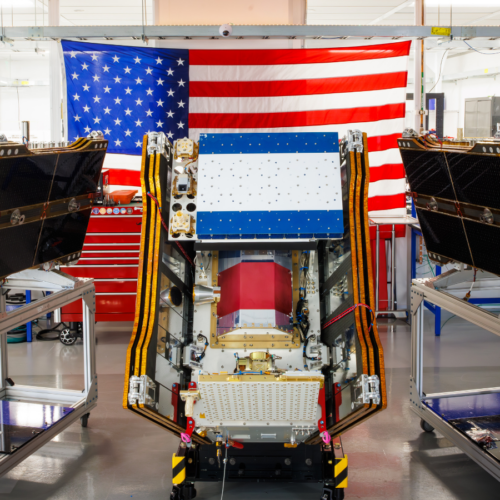
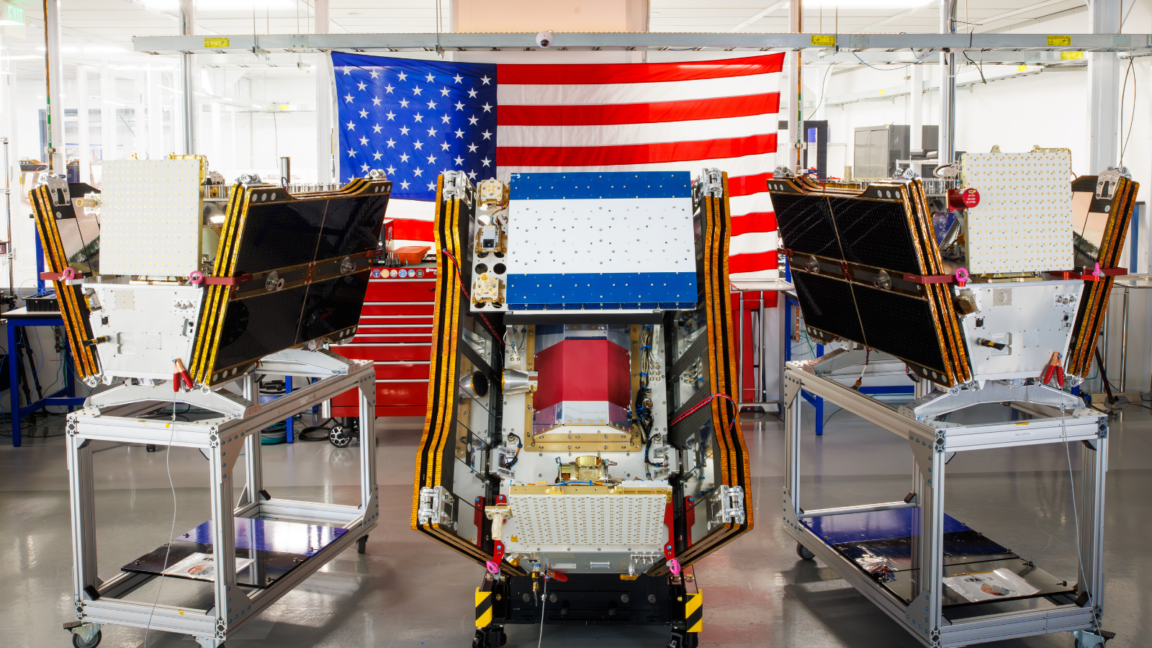
As smoke from hundreds of burning wildfires spread across Canada and the United States, the first three operational satellites in the Google-backed FireSat program successfully launched into orbit. The satellites will begin providing wildfire detection capable of spotting even small fires in the United States, Australia, and Europe before the end of the year.

The launch of the microsatellites aboard a SpaceX Falcon 9 rocket from Vandenberg Space Force Base in California on July 7, 2026 marks a transition to “initial operational capability” for the FireSat constellation managed by the nonprofit Earth Fire Alliance. After a three-month testing period, the three satellites will begin actively providing data to fire agencies while covering every fire-prone region on Earth at least twice per day.

FireSat represents the first satellite constellation purpose-built for detecting wildfires, including spotting smaller fires that other satellites may miss. The satellites were designed by California-based satellite manufacturer Muon Space and have received over $15 million from Google to support initial deployment. Other notable financial supporters include the Bezos Earth Fund that committed $26 million.

Read full article

Comments

© Muon Space

  •  

Trump Cuts Habitat Protections for Endangered Species

The rule change ends a safeguard that had been in place for 50 years and could hasten the demise of imperiled animals.

© Dave Sanders for The New York Times

Piping plovers need undisturbed beaches to nest and raise their young.
  •  

What is the oldest American object ever launched into space?

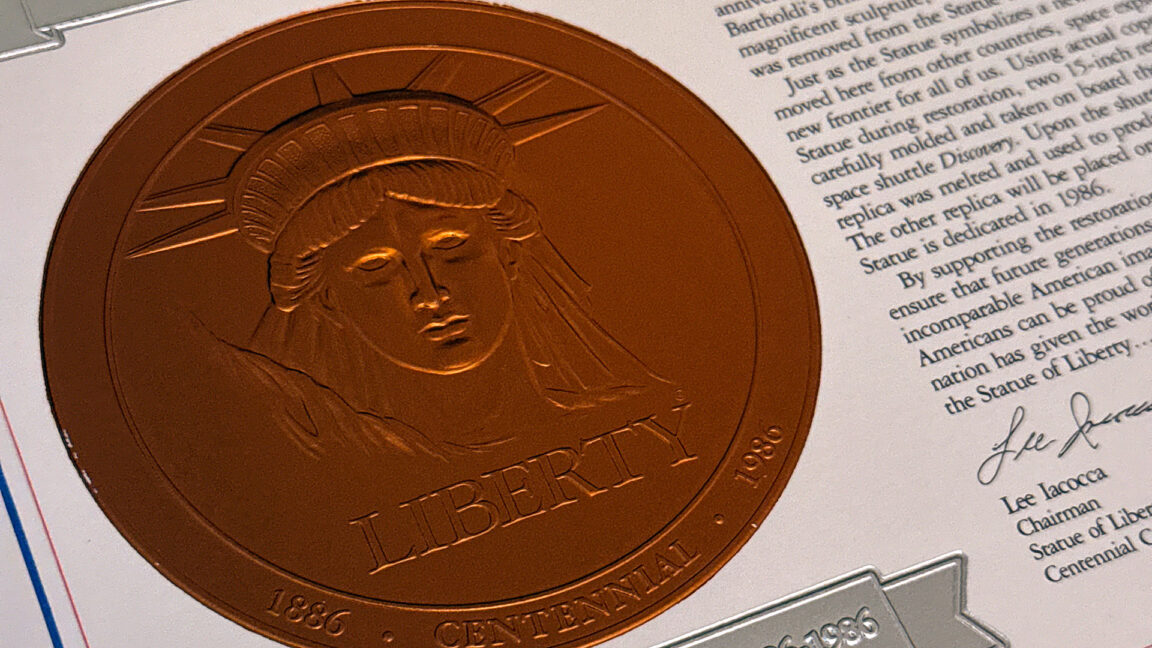
Did you know that the space shuttle once launched the Statue of Liberty into space?

In fact, there were two "Lady Liberties" on board Discovery when it lifted off on its fourth flight in April 1985. To be fair, each statue was only 15 inches tall (38.1 centimeters), but they were also each made of copper that was removed from the full-size statue during its then-still-ongoing restoration.

After the weeklong STS-51D mission was over, one of the space-flown statues was placed on display, and the other was melted down to create copper seals, which were then sold to the public by the Statue of Liberty Ellis Island Centennial Commission.

Read full article

Comments

© collectSPACE.com

  •  

“It Has a Hidden Order That Becomes Visible”: Physicists Just Discovered a Bizarre New Quantum State

An unusual new type of quantum state has been revealed by theoretical physicists, which they say demonstrates a critical new phase of matter that arises from pushing particles to their limits.

Known as “fractional Fermi seas,” this class of quantum states can be created on demand by exciting quantum particles beyond their typical equilibrium states, as detailed in new research published in Physical Review Letters, based on findings by theoretical physicist Alvise Bastianello of CNRS and Université Paris-Dauphine, working in collaboration with the Nägerl group.

To achieve this, the team relied on ultracold cesium atoms, which they were able to successfully confine to a single dimension. Then, by manipulating the strength of the interactions between these particles, the unusual quantum state they induced produced characteristics the team says are far beyond predicted models.

Going Beyond What Models Predict

Specifically, the findings reveal characteristics that extend well beyond what physicists call the Tomonaga-Luttinger liquid theory, a well-characterized model that describes the way electrons or other fermions operate within a one-dimensional conductor, such as carbon nanotubes that restrict their movement to a single dimension.

“Fermions, for instance, stack neatly into the available energy states to form the so-called ‘Fermi sea’,” according to researcher Alvise Bastianello, who notes that quantum particles generally behave predictably at low temperatures and follow very specific rules in terms of their self-arrangement.

“But what happens if one forces interacting atoms to continuously cycle through extreme conditions, smoothly shifting them from strongly repelling each other to strongly attracting each other?” he asks.

To address this, the team implemented experiments where they created conditions that repeated this interaction cycle, intentionally forcing atoms from their typical ground state into more highly excited ones. Despite their excited state, the atoms still maintained a surprising degree of organization as the so-called “fractional Fermi sea” was induced.

“Instead of simply heating the system, the interaction cycle reorganizes the atoms into a new many-body state,” according to lead author Yi Zeng, who added that the team’s observations provided “a controlled way to explore quantum matter beyond the usual equilibrium paradigms.”

Rise of the “Super-Fermions”

One of the team’s key findings had been the odd conditions they observed within the newly created state, which include what are characterized as Friedel oscillations, a term for the ripples the team observed as anticipated based on mathematical correlations between particles. Additionally, the team says they observed decay behavior that was present across all levels of the repulsive interactions between particles.

“This state is highly excited, but it is not random,” according to team leader Hanns-Christoph Nägerl. This is significant, he says, since the state the research team achieved is markedly different from what Tomonaga-Luttinger liquid theory predicts.

“It has a hidden order that becomes visible in its correlations,” Nägerl said of the team’s unique discovery, adding that they have not yet determined the name they plan to give these newly characterized quasiparticles, although ‘super-Fermions’ is a possible contender.

Evidence of Exotic States

Also of key importance, the team believes these specific signatures could point to the presence of a new and exotic type of critical phase which has never been previously recognized, and which could point to promising new approaches to studying quantum mysteries with the help of cold atom simulation technologies.

Presently, the team says a companion paper is in the works, which elaborates on the team’s experiments and the creation of fractional Fermi seas through quantum simulations.

“The discovery of fractional Fermi seas shows how far we can push quantum simulation: not only reproducing known models, but creating and probing states that go beyond established paradigms,” Nägerl concluded.

Presently, the team’s work, detailed in the papers “Exotic critical states as fractional Fermi seas in the one-dimensional Bose gas,” and “Realization of fractional Fermi seas” is available on the preprint arXiv.org server.

Micah Hanks is the Editor-in-Chief and Co-Founder of The Debrief. A longtime reporter on science, defense, and technology with a focus on space and astronomy, he can be reached at micah@thedebrief.org. Follow him on X @MicahHanks, and at micahhanks.com.

  •  

Your Home Could Help Solve AI’s Growing Power Demand

Tesla, Sunrun and Renew Home plan to tap solar panels, batteries, thermostats and other devices installed in millions of homes to meet the energy demands of artificial intelligence.

© Collin Chappelle for The New York Times

Installation of a Sunrun solar panel on a roof in California. Sunrun is working with Tesla and Renew Home to use home energy devices to help data centers get online faster.
  •  
  •  

Former NOAA Employees Revive Climate.gov Web Site

The database of federal global warming research recreates a website that was closed amid the administration’s broad retreat from climate science.

© Jason Andrew for The New York Times

The National Oceanic and Atmospheric Administration headquarters in Silver Spring, Md. The new site is an effort to preserve NOAA work previously available at climate.gov.
  •  

Energy Dept. Promises $17.5 Billion in Loans for Nuclear Power

The federal government wants to help utilities buy large components for up to 10 large nuclear reactors. It’s unclear which, if any, companies might participate.

© Kendrick Brinson for The New York Times

The Vogtle nuclear power plant in Georgia is the only one with AP1000 reactors in the U.S. They generate enough electricity to power 1 million homes, but they took 15 years to build and cost $35 billion, double the initial estimates.
  •  
  •  

U.S. Oil Is Skipping the Chance to Grab Market Share From the Gulf

U.S. oil production is expected to grow only modestly next year as companies hesitate to spend more in an uncertain market.

© Arathy Somasekhar/Reuters

Smaller U.S. oil producers are starting to drill more wells, but big companies like Exxon Mobil and Chevron have said they are not changing their plans as a result of the war with Iran.
  •  

Earth’s First Land Animals May Never Have Been Amphibian-Like After All

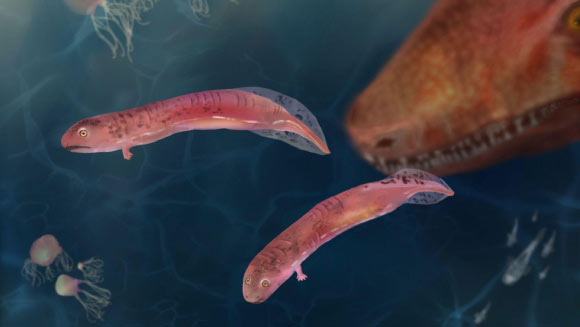
New fossil evidence suggests that embolomeres did not undergo a metamorphosis the way that modern amphibians do when growing up, which challenges a long-standing scientific belief that amphibians, reptiles, and mammals evolved from animals that had a tadpole stage. Image credit: Berit Godring.

Paleontologists from the Field Museum of Natural History have described the fossilized remains of baby embolomeres, crocodile-like predators that prowled ancient rivers and swamps between 350 and 280 million years ago.

The post Earth’s First Land Animals May Never Have Been Amphibian-Like After All appeared first on Sci.News: Breaking Science News.

  •  

Average U.S. Gas Price Falls Below $4 After U.S.-Iran Agreement

Drivers are enjoying some relief at the pump after the United States and Iran signed an agreement to reopen the Strait of Hormuz.

© Vincent Alban/The New York Times

Gasoline prices rose sharply after the start of U.S.-led war with Iran.
  •  

U.S. Will Waive Oil Sanctions That Have Long Crimped Iran

The preliminary U.S.-Iran deal temporarily waives restrictions that have limited the country’s oil sales and how much money it has been able to make from those exports.

© Atta Kenare/Agence France-Presse — Getty Images

An oil facility on Kharg Island, Iran, in 2017.
  •  

Trump Administration to Pay $765 Million to Cancel 4 More Wind Projects

It’s the third such deal the Interior Department has struck to pay firms to abandon plans for offshore turbines, spending roughly $2.5 billion to get companies to abandon their wind projects.

© Joshua A. Bickel/Associated Press

The Trump administration has now struck deals energy developers totaling more than $2.5 billion to cancel offshore wind leases.
  •  

Study Finds ‘Red Flag Laws’ Associated with Lasting Decrease in Arrest Rates

In a groundbreaking study published in PNAS Nexus on May 23, 2026, researchers have unveiled compelling evidence that extreme risk protection orders (ERPOs), frequently known as “red flag” laws, substantially diminish the likelihood of arrests among individuals subjected to these legal interventions. This decline in arrests encompasses a broad spectrum of offenses, notably violent crimes and firearm-related offenses, and persists not only during the enforcement period of the orders but intriguingly continues well beyond their expiration. These findings are poised to reshape public policy discussions concerning firearm violence prevention strategies in the United States.

The context driving this research is a nationwide crisis of firearm violence, which as of 2024, has tragically culminated in over 43,000 deaths, with shootings in 2025 alone injuring approximately 40,000 individuals, excluding cases of suicide. Such staggering figures underscore the urgent need for efficacious interventions. ERPOs have emerged as a targeted legal mechanism whereby courts temporarily restrict firearm access for individuals deemed to pose an imminent threat to themselves or others. Currently, 22 states, alongside the U.S. Virgin Islands and the District of Columbia, have enacted distinct ERPO statutes, reflecting growing legislative momentum. California pioneered this policy approach in 2016, branding them Gun Violence Restraining Orders.

The retrospective cohort study analyzed detailed arrest data from 679 California residents subject to ERPOs between 2016 and 2019. Demographic profiling revealed a predominance of males (91.9%) with an average age slightly above 40 years. Ethnically, the cohort comprised mainly White individuals (59.9%), followed by Hispanic (19%) and Black populations (10.3%). Researchers meticulously compared arrest rates across three critical intervals: six months preceding the ERPO issuance, during the active order period, and the subsequent six months following order expiry. The scope of offenses under scrutiny included any form of arrest, violent crime, firearm-related offenses, and firearm-specific violence.

Quantitative analysis revealed that the presence of an ERPO corresponded with an impressive 55% reduction in arrests for any offense compared to the baseline six-month period prior. Arrests specifically for violent crimes plummeted by 71%, while firearm-related arrests witnessed a striking 76% decline. Most notably, firearm violence arrests decreased by an extraordinary 80% during the enforcement phase. These statistics not only affirm ERPOs’ immediate efficacy in curtailing dangerous behaviors but also highlight their targeted protective potential.

Perhaps more unexpectedly, the data indicated that the downward trend in arrests did not revert to pre-order levels once ERPOs expired. Instead, reductions persisted and even deepened in certain categories. Post-expiration, arrest rates for any offense decreased by 63%, violent crime arrests by 75%, firearm-related offenses by 70%, and firearm violence arrests by 63%. Such sustained effects provoke critical questions about the mechanisms through which ERPOs might exert enduring behavioral influence, potentially functioning as a catalyst for long-term risk amelioration.

While the study’s outcomes exude optimism, authors elucidate several methodological limitations. Primary among these is the reliance on arrest records as a proxy for criminal activity, a metric subject to inherent biases and imperfect capture of all unlawful behavior. Additionally, the exclusive focus on California’s ERPO implementation during a specific timeframe limits the generalizability of findings to other jurisdictions or more current contexts. Nonetheless, the robust statistical associations discovered furnish key empirical support for ERPOs’ role in comprehensive violence reduction frameworks.

Veronica Pear, the study’s lead investigator and a respected epidemiologist affiliated with the UC Davis Centers for Violence Prevention, articulates the multipronged utility of ERPOs. “While often conceptualized primarily for suicide prevention, our analysis elucidates their significant function in preventing interpersonal violence,” Pear asserts. This research thus broadens the conceptual paradigm, reinforcing ERPOs as a practical, evidence-based intervention capable of mitigating acute crises and producing enduring safety benefits.

This study also complements a growing body of literature that underscores ERPOs as instrumental in suicide prevention, consolidating their standing as a versatile tool in public health and criminal justice spheres. The convergence of findings across domains of self-directed and other-directed violence lends vital credence to expanding ERPO adoption and refining enforcement protocols, especially given the current societal imperative to stem firearm-related morbidity and mortality.

From a policy perspective, these insights furnish lawmakers with empirically grounded justifications for instituting or strengthening ERPO frameworks. Importantly, the study encourages a nuanced appreciation of ERPOs’ temporal dynamics, highlighting the necessity for continued engagement and perhaps supplemental interventions after an order lapses to sustain positive outcomes.

On the frontier of violence prevention research, the study paves avenues for further investigation into optimizing ERPO implementation, exploring differential impacts across demographic subgroups, and elucidating the behavioral psychology underlying observed arrest reductions. Such endeavors will be pivotal in tailoring ERPO policies that maximize protective effects while respecting individual rights and legal safeguards.

As firearm violence continues to exact a heavy toll on American communities, this research provides a beacon of evidence-informed hope. By harnessing the nuanced potential of ERPOs, stakeholders can better navigate the complex interplay of legal, public health, and social factors driving violence prevention and move toward a safer society.

Subject of Research: People

Article Title: Reduced incidence of arrest following an extreme risk protection order among respondents in California

News Publication Date: 23-May-2026

Web References:

References:

  • Pear, V., et al. (2026). Reduced incidence of arrest following an extreme risk protection order among respondents in California. PNAS Nexus. DOI: 10.1093/pnasnexus/pgag184

Keywords: Gun violence, Public health, Crime, Criminology, Human social behavior

  •  
❌