❌

Reading view

Call Forwarding on iPhone: How It Works

Call forwarding on iPhone is a simple feature with a specific job: it sends incoming calls from your iPhone number to another phone number. That can be useful when you are traveling, using a temporary phone, separating work and personal calls, covering a business line or making sure important calls reach someone else when you cannot answer.

The feature is built into iOS, but it depends on carrier support. Apple notes that call forwarding can be set up on iPhone if cellular service is through a GSM network. If the service uses a CDMA network, users may need to contact the carrier for setup details. That means the option may not appear for every user, every carrier or every plan.

For most supported iPhones, the path is quick:

Settings > Apps > Phone > Call Forwarding

Turn on Call Forwarding, then enter the phone number where calls should be sent. When call forwarding is active, an icon appears in the status bar so the user can see that incoming calls are being routed elsewhere.
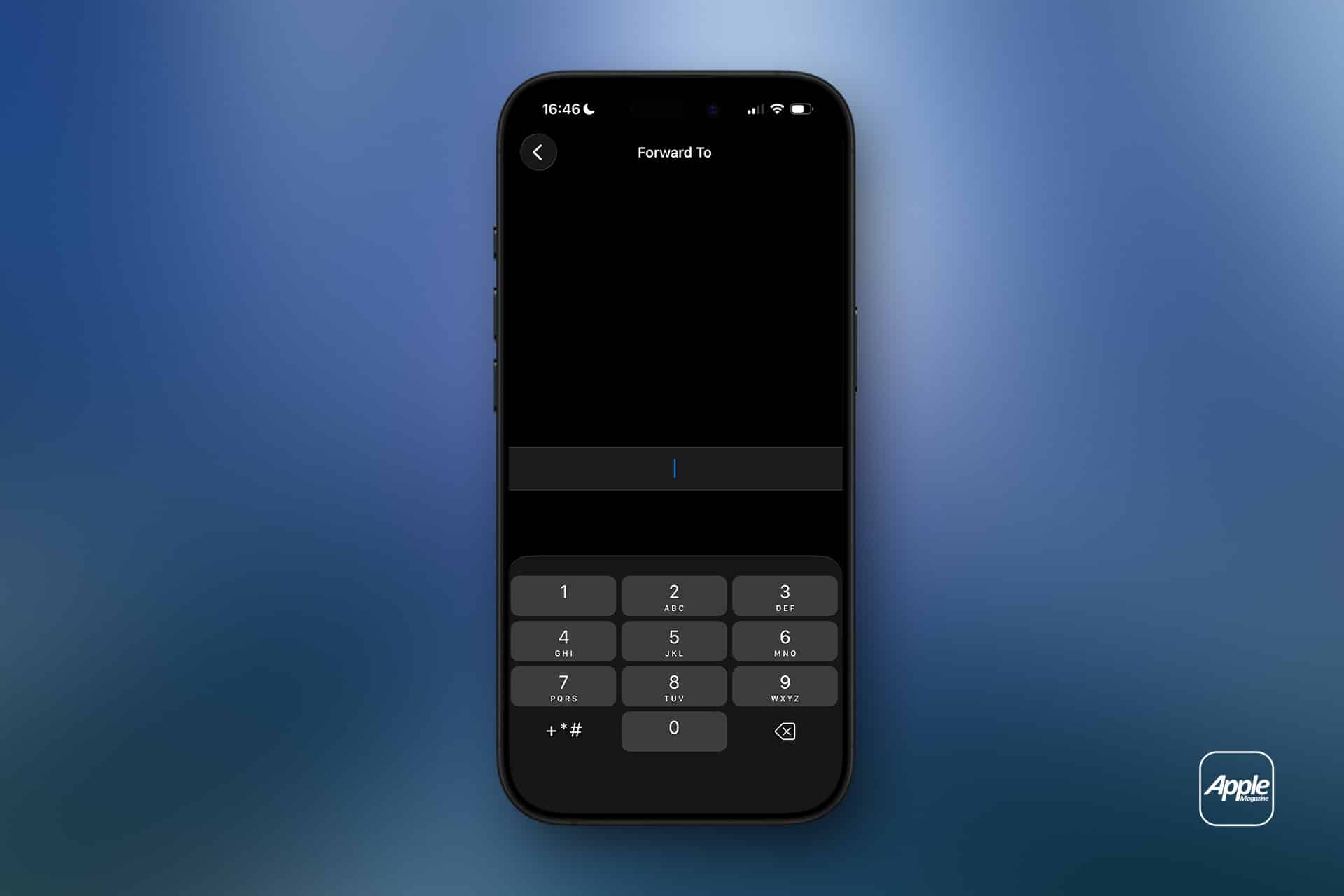
An iPhone displays a “Forward To” screen with a numeric keypad, prompting the user to enter a number—perfect for configuring call forwarding within iPhone settings. The background features a blue gradient, with an Apple logo in the lower right corner, emphasizing seamless cellular service management.
Image Credit: AppleMagazine

Call Forwarding on iPhone Sends Calls Elsewhere

Call forwarding on iPhone does not move messages, FaceTime calls, app notifications or voicemail settings by itself. It only redirects standard cellular phone calls. If someone calls your iPhone number, the carrier routes that call to the number you entered.

That distinction is important. If you forward calls to another phone, text messages still arrive on the original iPhone unless other settings or services are involved. FaceTime calls may still ring on Apple devices signed into the same Apple Account. Messaging apps such as WhatsApp, Signal, Telegram or Messenger are unaffected.

Call forwarding is also different from Silence Unknown Callers, Focus modes or Do Not Disturb. Those features control how calls appear or interrupt you. Call forwarding changes where the call goes.

This makes the feature useful in a few common situations. A business owner can send calls to an office line. A traveler can forward calls to a local number. Someone with a damaged iPhone can temporarily send calls to another device. A freelancer can route calls to a partner during time off. A parent can forward calls to a spouse for a short period.

How to Turn On Call Forwarding

To turn on call forwarding:

  • Settings > Apps > Phone > Call Forwarding
  • Turn on Call Forwarding
  • Tap Forward To
  • Enter the phone number
  • Go back to save the setting

Use the full phone number, including area code. If forwarding to an international number, include the correct country code. After setting it up, test the feature from another phone. Do not assume it works until a test call rings at the forwarded number.

To turn call forwarding off:

Settings > Apps > Phone > Call Forwarding > Turn off

After turning it off, test again. A quick call from another phone confirms whether incoming calls are back to normal.

If the Call Forwarding menu spins, fails to load or does not save the number, restart the iPhone and check cellular service. If the problem continues, contact the carrier because the setting depends on the carrier network.

Why the Setting May Be Missing

Some users look for call forwarding and cannot find it. That usually means one of three things: the carrier does not expose the feature in iPhone settings, the plan does not support it, or the network requires carrier codes or account-level setup.

Apple’s guide says CDMA users should contact their carrier for call forwarding information. Some carriers also use special dialing codes for forwarding all calls, forwarding when busy, forwarding when unanswered or forwarding when unreachable. Those codes vary by carrier and country, so guessing is not a good idea.

The best path is to check the carrier’s support page or app. Many carriers let users manage forwarding from the account dashboard, especially for business lines or multi-line plans.

If the option is missing, the iPhone is not necessarily broken. The carrier may simply handle forwarding differently.

What Happens to Voicemail

Call forwarding can affect voicemail behavior depending on the carrier and destination number. If the forwarded phone does not answer, the call may go to the voicemail of the forwarded number instead of the original iPhone voicemail. In some cases, carrier rules may still send it back to the original mailbox, but users should not assume that.

This is another reason to test. Call the iPhone from another number, let it ring, and see where the missed call lands. If the goal is to preserve the original iPhone voicemail, carrier support may be needed.

For work numbers, this can be especially important. A forwarded business call going to a personal voicemail greeting can look unprofessional. A personal call going to a shared office voicemail can create privacy problems. Check before relying on it.
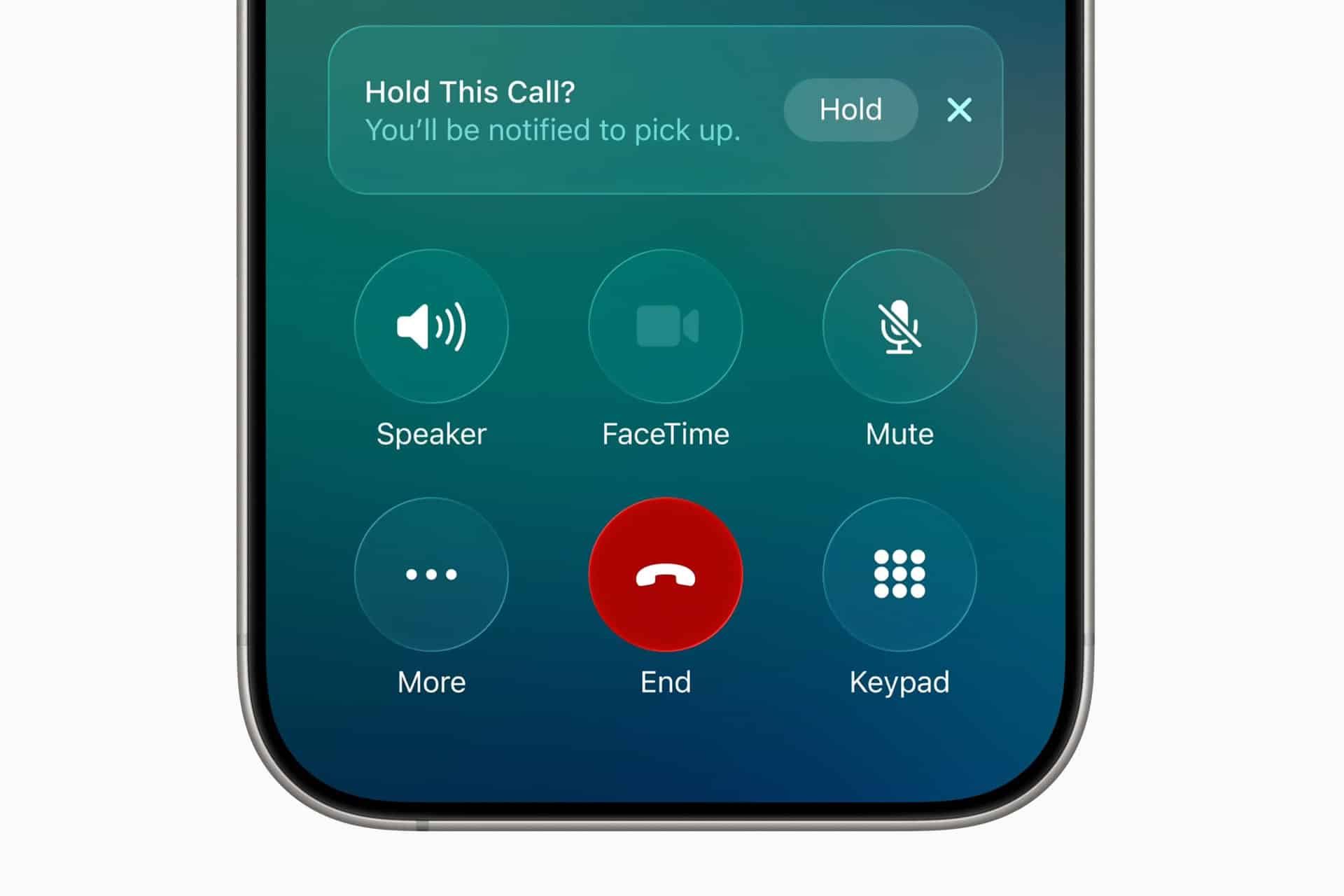
Close-up of an iPhone call screen showing options: Speaker, FaceTime, Mute, More, End (red button), and Keypad. A notification at the top says "Hold This Call? You'll be notified to pick up." The image highlights typical iPhone features used for managing calls and cellular service, including call forwarding capabilities.
Image Credit: Apple Inc.

Call Forwarding and Dual SIM

iPhone users with Dual SIM or eSIM setups should pay attention to which line is being forwarded. A personal line and business line can have separate carrier settings. Forwarding one does not automatically forward the other.

To check lines:

Settings > Cellular > Select the line you want to manage

Then return to:

Settings > Apps > Phone > Call Forwarding

The available settings may vary by carrier and line. If one line supports call forwarding and the other does not, that is usually a carrier difference, not an iPhone problem.

Dual SIM users should also test both numbers separately. Call the personal number, then call the business number, and confirm each behaves as expected.

When Call Forwarding Is Useful

Call forwarding works best when the goal is temporary coverage. It is useful during travel, device repairs, vacations, business handoffs, office moves, event coverage or times when another person needs to answer calls.

It can also help people who use a landline or desk phone during work hours. Calls can be forwarded from the iPhone to the office line, then turned off at the end of the day. The reverse can also work if the carrier supports it.

For small businesses, call forwarding can help avoid missed calls without adding a full phone system. A company can route calls to whoever is available. For individuals, it can be a quick fix when an iPhone battery is failing, a device is being repaired, or cellular reception is better on another phone.

The feature is less ideal as a permanent business phone solution. If multiple people need to answer calls, if calls need menus, if calls need recordings, or if voicemail needs to stay organized, a dedicated phone service may be better.

Privacy and Cost Considerations

Call forwarding may create charges depending on the carrier, plan and destination number. Forwarding calls to an international number can be expensive. Forwarding to another domestic mobile number is usually simpler, but users should still check the plan.

Privacy also deserves attention. Once calls are forwarded, the person or device receiving them may hear personal, business or sensitive conversations meant for the original number. Do not forward calls to a shared phone unless that is intentional.

Before forwarding a work line to a personal number, check company policy. Some organizations do not allow business calls to be routed to unmanaged personal devices.

Call forwarding - A young woman with brown hair in a green sweater sits on a chair, holding an iPhone voice recorder and speaking into it. A peacock feather decorates the background against a plain wall.
Image Credit: Freepik

How to Troubleshoot Call Forwarding

If call forwarding does not work, start with the basics. Confirm the iPhone has cellular service. Restart the device. Check that the forwarding number is entered correctly. Turn call forwarding off, wait a few seconds, then turn it on again.

Then test from another phone. A test call is the fastest way to know whether the carrier accepted the setting.

If calls still do not forward, check whether the carrier supports call forwarding through iPhone settings. Some carriers require account-level activation, carrier codes or a business calling feature. If the iPhone setting is missing or stuck, carrier support is usually the right next step.

Also check Focus modes and blocked numbers if the issue is not forwarding but missed calls. A call may fail to ring because of Focus, Silence Unknown Callers, a blocked contact, poor signal or voicemail settings rather than call forwarding.

A Simple Feature Worth Testing

Call forwarding on iPhone is easy to use when the carrier supports it. Open iPhone settings, turn on Call Forwarding, enter the destination number and test it. Turn it off when the temporary need is over.

The feature is most useful when it is deliberate and short-term. It can keep calls moving during travel, repairs, work coverage or busy periods, but it should be checked carefully because voicemail, costs and privacy can change once calls are routed to another number.

The iPhone makes the setting simple. The carrier decides how far that simplicity goes.

The post Call Forwarding on iPhone: How It Works appeared first on AppleMagazine.

  •  

Brown fat microRNAs mapping shows secreted signaling network between organs

A newly published study in Nature Metabolism reports that brown fat can act as a hub of molecular messaging, using secreted microRNAs to coordinate physiology across the body. Researchers focused on brown adipose tissue—well known for its role in thermogenesis—and asked whether it also participates in long-distance communication via RNA signals.

To visualize and track these messages, the team employed brown-fat–specific RNA labeling in living systems. This strategy allowed them to connect RNA production within adipocytes to downstream effects elsewhere, moving beyond correlations toward a clearer map of inter-organ RNA traffic.

The central finding is the presence of a communication network mediated by microRNAs released from brown fat. These small regulatory RNAs appear to travel beyond the tissue of origin and engage gene-regulatory pathways in other organs, effectively relaying information about metabolic state.

Functionally, the work supports a model in which microRNA “dispatch” from thermogenic fat tunes cellular programs in remote targets. Such programs likely involve post-transcriptional regulation, a process microRNAs are known to influence by pairing with complementary sequences in messenger RNAs.

Importantly, the approach does not treat microRNAs as generic circulating molecules. Instead, the labeling confirms their brown-fat origin and strengthens the link between secretory RNA dynamics and systemic physiological outcomes.

The study also highlights the specificity of the messaging: not all RNAs are equally represented, and the labeled microRNA repertoire points to organized, tissue-defined signaling rather than random leakage.

Beyond mapping pathways, the results carry implications for metabolic disease research. If brown fat microRNAs can reshape gene expression in other organs, manipulating these signals could offer a route to modulate energy balance, insulin sensitivity, or inflammatory tone.

For now, the findings provide a blueprint for how RNA labelling combined with tissue specificity can uncover hidden layers of endocrine-like communication. As techniques improve, the field may move toward a broader “RNA connectome” linking organ behavior through secreted regulatory molecules.

Researchers describe their results as evidence that brown fat is not only a metabolic engine but also an information broadcaster. In the evolving landscape of viral-style science news, this discovery underscores how tiny RNA molecules can orchestrate large-scale biological conversations.

Subject of Research: Inter-organ communication via secreted microRNAs from brown adipose tissue.

Article Title: Brown fat-specific RNA labelling reveals a network of inter-organ communication by secreted microRNAs.

Article References: Lino, M., Palermo-Ruiz, G., Efthymiou, V. et al. Brown fat-specific RNA labelling reveals a network of inter-organ communication by secreted microRNAs. Nat Metab (2026). https://doi.org/10.1038/s42255-026-01558-0

Image Credits: AI Generated

DOI: https://doi.org/10.1038/s42255-026-01558-0

  •  

A Solution to a Famous Feynman Problem, ‘Psychedelic’ Breathwork, and an Odd Stone Sphere is Unearthed

Feynman Sprinkler
Credit: NYU’s Applied Mathematics Laboratory

This week in science and technology news we’re covering at The Debrief: For decades, physicists have argued about Richard Feynman’s Sprinkler Problem, involving the question of how a reverse sprinkler would operate. Now we may finally know the answer… elsewhere, new studies reveal how breathwork may trigger psychedelic-like states, emotional breakthroughs, and psychological insights without drugs. Meanwhile, a stone sphere unearthed at an archaeological site in Azerbaijan is reportedly unlike anything previously documented in the South Caucasus.

Also, in an exclusive feature, University of Toronto bioethicist KM Bowman, Ph.D., writes for The Debrief about his firsthand experience with uncontacted indigenous tribes: “Through the haze stood a man. Barely clothed, carrying what appeared to be a weapon of some form, he remained motionless for only a few seconds before silently disappearing back into the forest.” In his essay, Bowman shares his experience and asks whether governments can protect “the uncontacted.”

Finally, here’s a look at more stories The Debrief is tracking right now…

  •  

The Brain’s Language System Is Far More Expansive Than Scientists Thought, New Study Finds

Neuroscientists have long believed that language processing was only found in regions of the brain’s left hemisphere, including the well-known Broca’s area. However, new evidence suggests the brain’s language network is far more widespread than previously thought. 

Researchers at the Massachusetts Institute of Technology (MIT) analyzed functional magnetic resonance imaging (fMRI) scans from 772 participants and identified 17 additional brain regions involved in language comprehension. These newly discovered areas are distributed across the brain, including the cerebellum, hippocampus, amygdala, and several regions of the cerebral cortex. In total, this accounts for five percent of the adult brain volume (roughly the size of a large strawberry). 

“Even though there are all these distant components, it’s pretty restricted in terms of volume. You don’t need that much of the brain to do language,” says senior author Evelina Fedorenko, an MIT associate professor of brain and cognitive sciences and a member of MIT’s McGovern Institute for Brain Research, in a statement. 

Locating the Brain’s Hidden Language Centers

To find these hidden language-related regions in the brain, the researchers revisited years of brain imaging data collected since 2013. Additionally, participants completed a standard “language localizer” task, during which they read or listened to meaningful sentences and sequences of meaningless nonwords. By comparing brain activity between these two conditions, the research team identified regions that responded more strongly to language.

“When we initially started looking at language, in the first couple of papers, I tried to be comprehensive and include anything that seemed consistent across participants, and there was a huge amount of resistance,” said Fedorenko. “People would say things like, ‘Well, we know those are not language areas, so please focus on the language areas.’”

The team decided to adopt a more flexible statistical approach to detect weaker signals and identify previously overlooked language-sensitive regions beyond the classical language areas. They then compared these regions’ responses during a spatial working memory task to distinguish language-specific areas from those involved in what would be considered general cognitive functions.

Cerebellum Discoveries

Interestingly, five of the newly identified language regions are located in the cerebellum, a structure traditionally associated with movement and coordination. Some of these cerebellar regions were also active during non-language tasks, suggesting they may help integrate information across different brain systems rather than process language alone.

“It’s a very simple paradigm that lets you identify this core language system in individual brains,” says MIT postdoc Agata Wolna, the lead author of the paper.

Additional language-sensitive regions were identified in the hippocampus and amygdala, areas better known for their roles in memory and emotion. Their involvement suggests that understanding language may rely more on integrating memory, emotional context, and higher-order cognitive functions than previously understood in science.

“We always see this frontal temporal network, but there’s quite a lot of evidence that there are other regions that are also critical for language processing,” said Wolna. “By using a laxer threshold and zooming in on areas with weak MRI signal, we tried to maximize the chances of finding small and weakly responsive regions outside of this left frontal temporal system.”

The findings challenge long-held assumptions about the brain’s organization and can open new avenues for research into how language processing is understood in neuroscience.

The recent study was published in the Journal of Neuroscience. 

Chrissy Newton is a PR professional and the founder of VOCAB Communications. She currently appears on The Discovery Channel and Max and hosts the Rebelliously Curious podcast, which can be found on YouTube and on all audio podcast streaming platforms. Follow her on X: @ChrissyNewton, Instagram: @BeingChrissyNewton, and chrissynewton.com. To contact Chrissy with a story, please email chrissy @ thedebrief.org.

  •  

NASA’s New Horizons Spacecraft Wakes from Hibernation in Good Health

3 min read

NASA’s New Horizons Spacecraft Wakes from Hibernation in Good Health

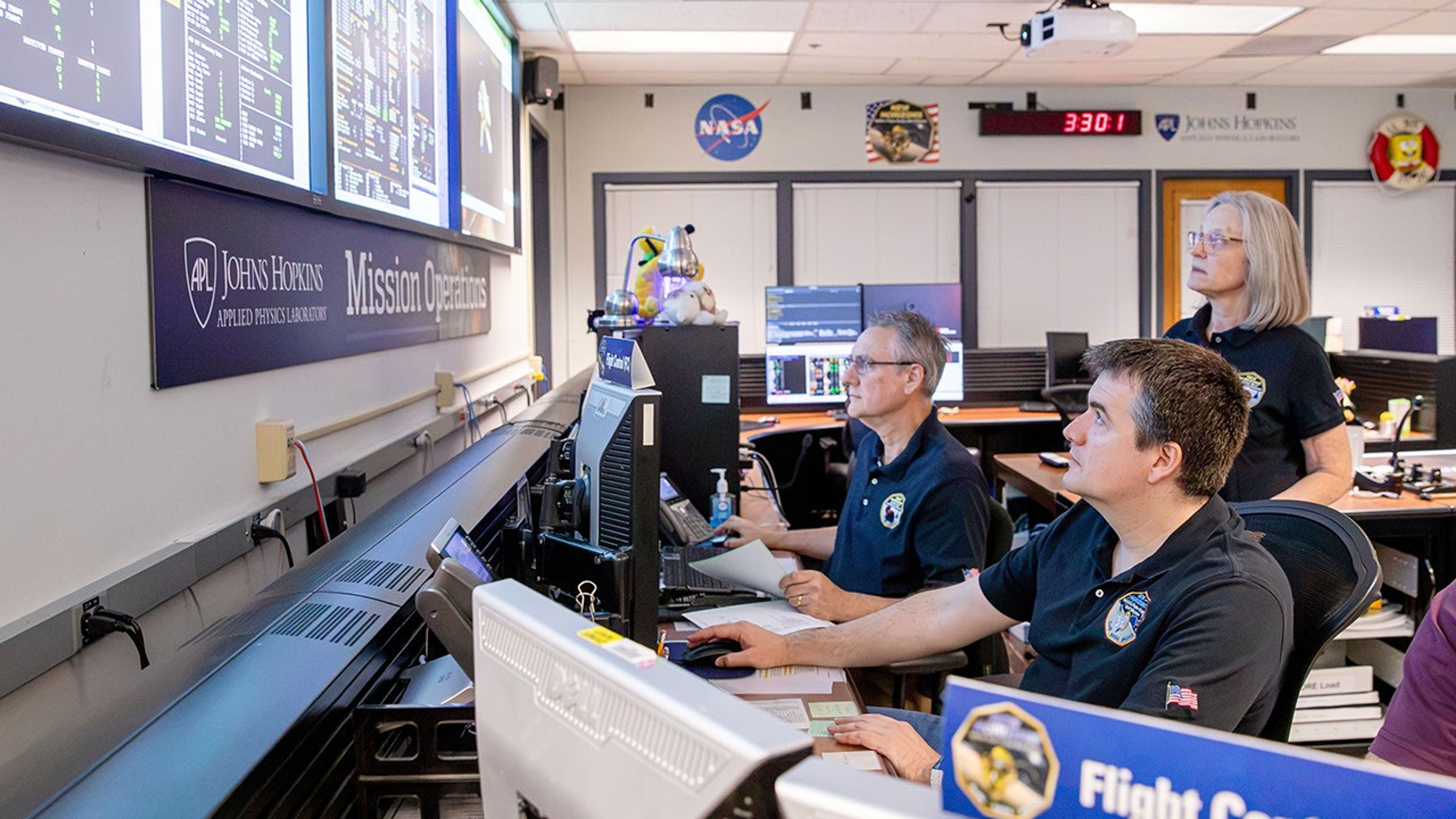
Following its longest hibernation period ever of nearly a year, NASA’s New Horizons spacecraft has emerged in good health and is ready to begin transmitting science data gathered in the distant Kuiper Belt far beyond Pluto.

Flight operators at computers in a mission control center monitor spacecraft data on large wall displays.
From left, flight controllers Mark Lahr and Josh Albers, and Mission Operations Manager Alice Bowman, monitor telemetry streaming from NASA’s New Horizons spacecraft to the mission operations center at the Johns Hopkins Applied Physics Laboratory in Laurel, Maryland, on June 24, 2026. Now approximately 5.9 billion miles (9.5 billion kilometers) from Earth, New Horizons is ready to begin transmitting science data after being awakened from its longest ever, nearly yearlong hibernation period.
NASA/Johns Hopkins APL/SwRI/Justin Gladden

On June 23, flight controllers at the Johns Hopkins Applied Physics Laboratory (APL) in Laurel, Maryland, confirmed New Horizons, acting on stored commands uplinked to its main computer last July, had safely awakened from a 321‑day hibernation period that began Aug. 7. With the spacecraft now approximately 5.9 billion miles (9.5 billion kilometers) from Earth, the radio signals carrying that confirmation took about 8 hours and 52 minutes to reach the APL Mission Operations Center via NASA’s Deep Space Network station near Madrid, Spain.

The mission team typically places New Horizons in resource‑saving hibernation mode during long cruise periods. While the spacecraft is hibernating, operators do not send commands or retrieve data, but the spacecraft continues gathering and storing data around the clock from its heliospheric plasma sensors, Solar Wind at Pluto and the Pluto Energetic Particle Spectrometer Science Investigation, as well as its space dust detector, the Venetia Burney Student Dust Counter.

Alice Bowman, the New Horizons mission operations manager at APL, said the spacecraft reported back to Earth, via the Deep Space Network, with a weekly status beacon. “Every status report through this hibernation period was ‘green,’ meaning all was well aboard New Horizons each and every week,” she said.

As New Horizons resumes active operations, Bowman noted, the team will begin downlinking spacecraft health and safety data, followed by data from the three scientific instruments. In about three weeks, the spacecraft’s onboard Alice ultraviolet spectrograph will look at the hydrogen gas distribution in the outer heliosphere, while the Solar Wind at Pluto, the Pluto Energetic Particle Spectrometer Science Investigation, and the Venetia Burney Student Dust Counter instruments continue their measurements, and the ground team conducts a series of spacecraft and instrument checkouts.

The team also is completing upgrades to the ground‑system software that will make it easier to maintain operations of the spacecraft. Tests are already underway and are expected to continue through the year.

New Horizons is operating on updated autonomy logic designed for operations farther from the Sun and to accommodate the expected reduction in power and the naturally occurring increase in radio‑signal travel time.

The NASA spacecraft’s exploration of this distant region of the solar system marks the latest step in a journey that began in January 2006 with the fastest launch on record; a flyby of Jupiter in February 2007 that included stunning views of the gas giant and its moons; the first exploration through the Pluto system in July 2015; the first exploration of a Kuiper Belt object, Arrokoth, in January 2019, and unique studies of the Sun’s outer heliosphere and dozens of additional Kuiper Belt objects since then.

For more information on NASA’s New Horizons mission, visit:

https://science.nasa.gov/mission/new-horizons/

  •  

VPN sans abonnement : existe-t-il des solutions fiables sans engagement ?

Payer un abonnement tous les mois pour utiliser un VPN n’attire pas forcément tout le monde. Beaucoup d’utilisateurs cherchent aujourd’hui une solution plus souple. Une offre gratuite, un plan sans engagement ou une version limitée peuvent suffire pour protéger ses données sur internet, regarder...

  •  

CyberGhost - Asteroid Day : chiffrer les recherches, forums et ressources en ligne des passionnés d’espace

À l’occasion de l’Asteroid Day, les passionnés d’espace multiplient les recherches en ligne, entre bases de données d’objets célestes, forums spécialisés et contenus scientifiques parfois très pointus. Cette exploration permanente de l’univers s’accompagne pourtant d’un enjeu discret mais réel :...

  •  

NordVPN - ICML 2026 : sécuriser les accès GitHub, notebooks et services cloud des chercheurs en IA

L’ICML 2026 réunit la communauté internationale de l’intelligence artificielle autour des avancées en machine learning, avec un travail de recherche qui repose de plus en plus sur des environnements distribués : dépôts GitHub, notebooks collaboratifs et services cloud. Ces outils, essentiels au...

  •  

Rethinking EEG Biomarkers: A Dimensional Brain Disorders View

In a groundbreaking departure from traditional approaches, researchers have unveiled a transformative perspective on EEG biomarkers for brain disorders, emphasizing a transdiagnostic dimensional framework that promises to revolutionize neuropsychiatric diagnostics and treatment. This pioneering study, conducted by Zebhauser, Heitmann, Henningsen, and colleagues, challenges decades-old conventions that pigeonhole brain disorders strictly according to categorical diagnostic criteria. Instead, it advocates for a more nuanced, continuum-based understanding of brain dysfunctions as reflected in electroencephalographic signals.

The conventional paradigm in neuropsychiatry has long relied upon discrete diagnostic labels—labels which often fall short in capturing the complex, overlapping symptomology exhibited across disorders such as schizophrenia, bipolar disorder, major depressive disorder, and anxiety disorders. Traditional EEG analyses have sought biomarkers confined within these diagnostic categories, leading to inconsistent results and limited clinical utility. The new study confronts these limitations by proposing that EEG biomarkers be analyzed through a dimensional lens that transcends categorical boundaries, enabling detection of underlying neural dysfunctions that span multiple disorders.

Central to this conceptual shift is the transdiagnostic approach, which posits that neurobiological aberrations are shared across different psychiatric conditions and manifest along spectrums of symptom severity and cognitive impairment. Through rigorous computational modeling and advanced signal processing applied to large EEG datasets, the research team delineated patterns of neural oscillatory activity and connectivity that correlate with continuous measures of cognitive and affective dysfunctions, irrespective of diagnostic categories. This approach underscores the shared neurophysiological substrates that traditional categorical classifications often obscure.

Methodologically, the study harnessed sophisticated machine learning algorithms to parse high-dimensional EEG data and extract signal features indicative of brain circuit dysregulation. By focusing on spectral power variations across frequency bands—delta, theta, alpha, beta, and gamma—as well as functional connectivity metrics between cortical networks, the researchers succeeded in identifying biomarkers reflective of symptom dimensions such as cognitive control deficits, emotional dysregulation, and sensory processing anomalies. These dimensions overlap across disorders, suggesting a common pathophysiological mechanism modulated along a continuum.

Importantly, the transdiagnostic dimensional framework enables more personalized and precise characterization of patients’ neural profiles. Instead of forcing diagnoses into rigid boxes, clinicians can now utilize EEG biomarkers to quantify an individual’s specific symptom constellation and severity in real-time. This precision facilitates tailored interventions that target dysfunctional brain networks directly, potentially enhancing treatment efficacy and reducing trial-and-error prescribing that often plagues psychiatric care.

The implications extend beyond diagnosis and treatment optimization. This novel EEG biomarker approach offers a powerful tool for preventative psychiatry by identifying at-risk individuals who may not yet meet full diagnostic criteria but exhibit measurable neural dysfunctions indicative of emerging disorders. By mapping these dimensional brain signatures early, clinicians can intervene preemptively, possibly altering disease trajectories before chronicity sets in.

Moreover, this paradigm fosters an integrative understanding of brain disorders as dynamic states rather than static labels. The EEG biomarkers track fluctuation in cognitive and affective states, capturing the temporal evolution of illness and response to therapy. Such temporally sensitive biomarkers pave the way for real-time monitoring of treatment response and disease progression via non-invasive methods, enhancing clinical decision-making and patient outcomes.

The study also confronts several technical challenges historically hindering EEG’s clinical translation. By developing robust preprocessing pipelines that mitigate artifacts and employing cross-validation techniques to ensure replicability of findings across diverse cohorts, the researchers set new standards for EEG research rigor. Their comprehensive methodology serves as a blueprint for future investigations aiming to unify neurophysiological data with psychiatric phenotypes in a clinically meaningful manner.

Furthermore, by adopting a transdiagnostic dimensional view, the research opens novel avenues for drug development. Pharmaceutical interventions can be engineered to target neural circuits and pathways implicated across multiple disorders, possibly leading to broader spectrum therapeutics with enhanced efficacy. This contrasts with the current trend of developing highly disorder-specific drugs, which may only benefit a subset of patients.

Underpinning this research is the recognition that brain disorders are multifactorial and multifaceted, involving intricate interactions between genetics, environment, and neural circuitry. The EEG biomarkers illuminated by this study reflect emergent properties of large-scale brain networks whose dysfunction cuts across traditional diagnostic divides. This holistic lens aligns with contemporary theories of brain function as distributed and dynamic, rather than localized and static.

Clinically, the transdiagnostic dimensional EEG biomarkers facilitate identification of subtypes within disorders, based on distinct neurophysiological profiles. Such stratification could improve prognostic accuracy and enable stratified clinical trials, ultimately accelerating discovery and application of targeted therapies. This personalized medicine approach marks a considerable leap in the field of psychiatry.

The study’s findings also resonate deeply with the Research Domain Criteria (RDoC) initiative advocated by the National Institute of Mental Health, which promotes research centered on fundamental dimensions of functioning rather than syndromic categories. The demonstrated EEG biomarkers provide tangible neurobiological correlates for RDoC constructs such as cognitive systems and arousal/regulatory systems, making a compelling case for their adoption in clinical and research frameworks.

Ethical and practical considerations emerge as these new EEG biomarkers are integrated into clinical practice. Ensuring equitable access to advanced neurodiagnostic technologies and protecting patient privacy with respect to neural data will be paramount. The authors acknowledge these issues and call for development of guidelines and safeguards alongside technological progress to maximize benefit and minimize harm.

This research heralds a new era in neuropsychiatry, where neural biomarkers derived from accessible EEG recordings become central to understanding, diagnosing, and treating brain disorders as dimensional phenomena. By transcending rigid diagnostic boundaries, this approach reflects the complex reality of brain function and dysfunction, offering hope for more effective, individualized care for millions worldwide impacted by mental illness.

In conclusion, the visionary framework proposed by Zebhauser and colleagues challenges entrenched conventions and illuminates a path forward marked by dimensional precision, cross-disorder integration, and clinically actionable EEG biomarkers. This work stands to reshape the landscape of psychiatric neuroscience and catalyze a shift toward truly personalized mental health care.


Subject of Research: EEG biomarkers and their application in a transdiagnostic dimensional framework for brain disorders

Article Title: Rethinking EEG biomarkers of brain disorders: a transdiagnostic dimensional view

Article References: Zebhauser, P.T., Heitmann, H., Henningsen, P. et al. Rethinking EEG biomarkers of brain disorders: a transdiagnostic dimensional view. Transl Psychiatry 16, 316 (2026). https://doi.org/10.1038/s41398-026-04187-z

Image Credits: AI Generated

DOI: 10 June 2026

  •  

VPN pour ordinateur portable : NordVPN, CyberGhost, Surfshark ou ExpressVPN, lequel choisir en déplacement ?

Pour protéger un ordinateur portable en déplacement, NordVPN reste l’option la plus complète, CyberGhost la plus simple à prendre en main, Surfshark la plus intéressante pour couvrir plusieurs appareils à bon prix, tandis qu’ExpressVPN garde un avantage sur la stabilité de connexion. Derrière...

  •  

AI for Good : avec ExpressVPN, sécuriser les connexions des professionnels de l’IA

À l’occasion de l’initiative AI for Good, la sécurité des échanges devient un sujet central pour les professionnels de l’intelligence artificielle. Entre les prompts envoyés aux modèles, les jeux de données partagés et les documents de travail souvent sensibles, la circulation de l’information...

  •  
❌