❌

Reading view

Powerful deployable systems to bolster military forces’ communication for critical operations

The NATO Communications and Information Agency (NCIA) has selected a consortium led by Thales and Leonardo to deliver a new generation of secure deployable communication and information systems for the Alliance’s Allied Special Operations Forces Command (SOFCOM). The award marks the first phase of a broader NATO initiative aimed at strengthening digital connectivity, operational resilience, and command capabilities for special operations forces.

Under the contract, the two European defence companies will provide six Deployable Points of Presence for Special Operations Component Commands (DPOP SOCC), along with operator training and long-term support. These mobile headquarters are designed to give NATO Special Forces secure command-and-control capabilities that can be rapidly deployed in demanding operational environments.

Secure communications, resilient networking

The deployable systems will combine secure communications, resilient networking, high-performance computing, and advanced IT infrastructure while maintaining a reduced electromagnetic and physical signature. This design enables forces to establish operational headquarters quickly without compromising security or mobility. The systems will also support classified, multi-domain information sharing and enhanced cybersecurity, ensuring interoperability across NATO forces and partner nations.

“Thales brings end‑to‑end expertise in secure information and communication systems, deep knowledge of NATO’s reference architecture, and a long track record of delivering projects to the Alliance,” said Alexandre Bottero, Vice President, Networks and Infrastructure Systems, Thales.

“By combining this expertise with Leonardo’s capabilities, we are harnessing the best of European industry in a modular, upgradable, and field‑proven system, providing NATO Special Forces with next‑generation deployable CIS.”

A notable feature of the programme is the introduction of real-time Full Motion Video (FMV) sharing between separate deployable systems, a capability being fielded for the first time in a NATO special operations communications network. The addition is expected to improve situational awareness, intelligence sharing, and mission coordination during complex operations.

Thales and Leonardo will oversee lifecycle support

Beyond delivering the systems, Thales and Leonardo will oversee lifecycle support, upgrades, maintenance, and user training to ensure the platforms remain operational and adaptable as mission requirements evolve. The project also brings together industrial expertise from across the Alliance, with key technologies contributed by companies in the United Kingdom and Germany.

The collaboration combines Thales’ experience in secure communications and NATO network architectures with Leonardo’s expertise in deployable command post solutions. Together, the companies aim to provide NATO with a modular, scalable, and future-ready communications capability capable of supporting special operations in increasingly contested environments.

“Leonardo’s experience, developed at Italian level through the delivery of complete Regimental and Divisional Command Post capabilities, enables the introduction of modular NATO-ready systems based on fixed and expandable shelters,” said Antonio Levato, SVP Air and Land Systems Land and Sea Business at Leonardo Electronics.

“The strength of the design stems from the close collaboration between industry and the end user, who has chosen Leonardo as both the System Integrator and the Design Authority for Italian command post. This partnership among two major players of the European defence industry allows to combine Leonardo’s field proven deployable solutions with Thales experience in NATO’s secure communications programs.”

The programme underscores NATO’s continued investment in modernizing command, control, communications, and information systems as the Alliance prepares for evolving security challenges. By enhancing secure connectivity and rapid deployment capabilities, the new systems are expected to strengthen operational readiness and improve coordination among multinational special operations forces during future missions.
  •  

US Air Force launches first missile from Anduril’s semi-autonomous loyal wingman drone

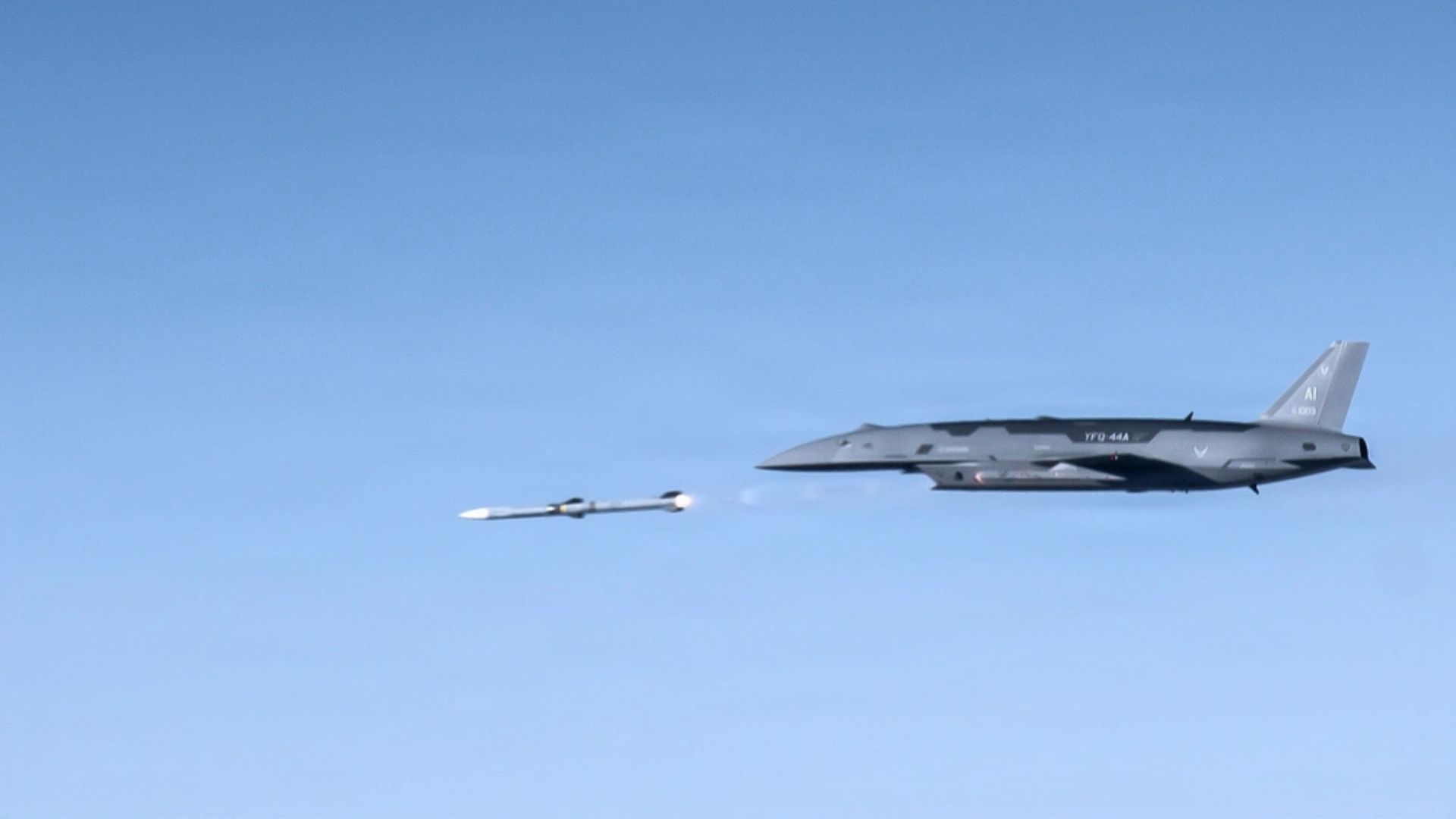
The U.S. Air Force has carried out its first missile launch from a Collaborative Combat Aircraft (CCA), an important step in developing semi-autonomous drones that can fly with piloted fighter jets. In the test, announced on June 15, 2026, the Anduril-built YFQ-44A fired an AIM-120 medium-range air-to-air missile at a digital target over California’s Mojave Desert.

This demonstration marks another milestone in the Air Force’s ongoing testing of Collaborative Combat Aircraft. The drone managed most of the mission by itself, but a human operator gave the final approval to launch the missile, following U.S. policy that requires people to control lethal weapons.

Drone completes air-to-air engagement sequence

The test happened in restricted airspace over California’s Mojave Desert as part of the Air Force’s work to prove the YFQ-44A’s combat abilities.

During the test, the aircraft used Anduril’s Lattice software to find, track, and lock onto the target, then figure out how to intercept it. The onboard system handled these steps, and a human supervisor on the ground gave the final order to fire.

This test was different from earlier drone launches, where people on the ground controlled the flight. Here, the aircraft managed the mission steps on its own, except for the operator’s approval to release the weapon.

A key rule of the Collaborative Combat Aircraft program is still in place: the aircraft cannot fire weapons by itself. Every launch must be approved by a human operator, who stays in control during the mission.

Test follows months of phased evaluations

This live-fire test followed earlier trials this year, in which the aircraft carried dummy weapons during flight. Those tests collected data on how the aircraft performed and how it managed the extra weight.

Engineers then verified communication links between the aircraft and its weapon system. They ensured that commands from the operator were sent and executed correctly during practice runs before moving on to live-fire tests.

“Moving from inert carriage earlier in the year to this weapon release demonstrates program maturity, allowing us to validate our digital integration models with actual data,” said General. Dale White, portfolio manager for Critical Major Weapon Systems. “These tests provide operational validation that Collaborative Combat Aircraft can execute the weapon employment sequence autonomously within pilot-defined parameters, accelerating capability delivery to the warfighter.”

Air Force says capability is moving closer to deployment

The missile launch was supported by the 412th Test Wing’s Air Dominance Combined Test Force. This team includes active-duty members, government workers, and contractors who make sure models and procedures are safe for live-fire tests.

“This live-fire test is an important next step in the development of Collaborative Combat Aircraft,” said Air Force Chief of Staff Gen. Ken Wilsbach. “We’re one step closer to delivering capabilities to the warfighter.”

According to the Air Force, the CCA program’s goal is to have combat-ready, semi-autonomous aircraft that help U.S. airpower reach farther, see more, and survive better in tough situations. The Air Force is also accelerating development and testing, bringing these aircraft closer to deployment in real missions.

  •  

Space acquisition and NRO picks face SASC

Erich Hernandez-Baquero, nominated to become the Air Force’s top civilian space acquisition official, and Roger Mason, the administration’s choice to lead the National Reconnaissance Office, appeared before the Senate Armed Services Committee

The post Space acquisition and NRO picks face SASC appeared first on SpaceNews.

  •  

US military sent explosive drone boats into combat for the first time

For the first time in its history, the US military sent explosive-laden drone boats into combat by attacking an Iranian midget submarine and naval port. The unprecedented use of such kamikaze sea drones by the United States comes nearly a decade after Iranian and Houthi forces first demonstrated such weapons.

The US military shared a video showing three “one-way attack surface drones” exploding after approaching an Iranian midget submarine and ship maintenance facility at Iran’s Bandar Abbas Naval Base on the night of July 12. US Central Command, the US military combat command responsible for Middle East operations, described the strikes in a social media post as the “first time American forces have employed sea drones in combat operations.”

The US drone boats were able to “make a low-speed, uncontested approach” to their targets before exploding, according to USNI News, a news service from the nonprofit US Naval Institute. USNI News also identified one of the targets as an Iranian Ghadir-class midget submarine that was out of the water while being suspended from a gantry.

Read full article

Comments

© US Central Command

  •  
  •  

US seeks cheaper hunter-killer drones after Iran destroys $1B worth of Reapers

The US military has lost dozens of Reaper drones collectively worth more than $1 billion while carrying out surveillance and attack missions over Iran. Now the Pentagon is seeking large numbers of cheaper drones that can perform such missions despite the expectation that many will be lost in combat.

In a call for industry pitches, the Defense Innovation Unit’s notice described the US military’s current reliance on drones and crewed aircraft, each costing more than $30 million, as being “unsustainable against adversaries utilizing layered defenses enabled by increasingly low-cost antiaircraft capabilities.” It envisions deploying more “cost-effective” drones to “overwhelm enemy air defenses even while experiencing numerous [drone] losses.”

That is, in practice, what Ukraine’s military has been demonstrating with its long- and mid-range strike campaign against Russian supply lines, oil refineries, and various energy or industrial targets within Russia or occupied Ukraine. The Ukrainian campaign has been overwhelming Russia’s overstretched air defense capabilities by launching hundreds of relatively inexpensive drones and missiles on a daily basis to attack targets far behind the frontlines, while continuing to damage or destroy Russia’s most sophisticated air defense systems.

Read full article

Comments

  •  

U.S. Tests Directed-Energy Weapon as Golden Dome Missile Shield Advances—Here’s What We Know

Golden Dome
Artist’s concept of Golden Dome Constellation (Credit: Wikideas1/Wikimedia/CC 0)

Welcome to this edition of The Intelligence Brief… This week, the Pentagon announced a major milestone in the development of President Trump’s proposed Golden Dome missile defense system after successfully testing a next-generation directed-energy weapon capable of intercepting drones and cruise missiles. In our analysis, we’ll be looking at 1) what the Pentagon revealed about the new directed-energy technology, 2) how the Golden Dome aims to defend against ballistic, cruise, and hypersonic missile threats, 3) why the program has drawn comparisons to Ronald Reagan’s “Star Wars” initiative, and 4) the growing debate over what could become one of the most expensive defense projects in U.S. history.

“With Golden Dome, the War Department will defend our homeland more powerfully than ever before. Golden Dome is real, powerful, and on track.”

– U.S. Secretary of War Pete Hegseth

If you enjoy the news and perspectives offered by The Debrief, make sure that you aren’t missing our stories by making us one of your “preferred sources” on Google News. You can simply follow this link to add The Debrief to your list of favorites, and you can read more about Google’s preferred sources in our article here.


RECENT NEWS from The Debrief


Golden Dome Advances with Deployment of New Counter-Missile Capability

This week, it was revealed that the Pentagon has made significant strides with the development of its proposed Golden Dome missile defense system, with tests involving a next-generation directed-energy weapon.

Capable of destroying incoming drones and cruise missiles, the weapon has been characterized as a major step toward strengthening America’s future air and missile defense capabilities.

Planned as a multi-layer missile defense system that aims to be operational by the end of President Trump’s term, the Golden Dome aspires to be capable of spotting and destroying a range of missile threats, including ballistic, hypersonic, and cruise missiles.

With the deployment of the new directed-energy weapon this week, the Pentagon has now implemented the first use of next-generation technology that U.S. officials say will lead the way in redefining America’s future air and missile defenses.

The Pentagon’s New Directed-Energy Weapon

In a statement, U.S. Secretary of War Pete Hegseth called the recent test a “first milestone test” for the Golden Dome system.

“Cutting edge directed energy was harnessed and the Dynamic Defense Autonomous Defeat (DDAD) system flawlessly and autonomously cued, targeted, and eliminated a multitude of incoming threats,” Hegseth’s statement read. “This test was executed on schedule — and dynamically defeated every threat.”

Hegesth, who said he was present for the demonstration, “watched our elite warfighters integrate with next-generation technology to stop incoming drones and cruise missiles dead in their tracks,” crediting the advancement to Trump’s One Big Beautiful Bill, a sweeping legislative package put forward in an effort to solidify the permanence of the 2017 Tax Cuts and Jobs Act, along with enacting various other Trump administration priorities.

Hegseth said the legislation provided “the funding to deliver on the ultimate shield to protect America,” and builds on the efforts of former U.S. President Ronald Reagan’s Strategic Defense Initiative (SDI).

Few Technical Details Available

While the Pentagon did not provide technical details about the new system, Hegseth refers to the new weapon as “cutting edge directed energy” technology.

For several years, the Pentagon has been developing directed-energy systems for use in the interception of unmanned aerial vehicles and cruise missiles, with Israel previously reporting operational use of prototype laser capabilities as well.

America’s Golden Dome is partly inspired by Israel’s Iron Dome, although the U.S. counterpart’s design will aim to defend America against longer-range missile attacks—a key element which has encouraged comparisons to Reagan’s SDI.

Unprecedented Expense

The project also carries a large price tag. Presently, the Congressional Budget Office estimates that the initiative could cost as much as $1.2 trillion—an amount nearing the total requested $1.5 trillion defense budget for fiscal year 2027, making it one of the most expensive defense initiatives in U.S. history.

The high cost of the initiative is also impacted by the recent costs associated with the U.S. conflict with Iran, which, by some estimates, could exceed $200 billion. Additionally, a recent controversial memorandum of understanding aiming to halt the conflict agrees to supply $300 billion to Iran, which, as noted by some analysts, is an amount that exceeds the current Iranian defense budget by well over a dozen times.

On Wednesday, the U.S. Senate voted 47-50-1 to block a war powers resolution led by Sen. Tim Kaine that sought to limit President Trump’s authority to conduct military operations against Iran.

Although the measure narrowly advanced in an earlier procedural vote, a surprise upset resulted in a loss of support after Republican Sens. Bill Cassidy and Rand Paul changed their positions. The latest vote came just hours after a heated exchange between Trump and Cassidy, during which Cassidy challenged the president over the duration and objectives of the conflict with Iran.

Many have expressed concerns over the unprecedented U.S. defense spending under the current administration, including U.S. Senator Merkley (D-Oregon), Ranking Member of the U.S. Committee on the Budget, who rebuked a recent addition that asks Congress to spend an additional $88 billion in the form of a supplemental request.

“Padding the pockets of their defense contractor friends does nothing to help Americans get ahead,” Merkley said on Wednesday.

That concludes this week’s installment of The Intelligence Brief. You can read past editions of our newsletter at our website, or if you found this installment online, don’t forget to subscribe and get future email editions from us here. Also, if you have a tip or other information you’d like to send along directly to me, you can email me at micah [@] thedebrief [dot] org, or reach me on X: @MicahHanks.

Here are the top stories we’re covering right now…

  •  

York satellite demonstrates two-way UHF communications from low Earth orbit

WASHINGTON — York Space Systems said June 24 that a satellite it built for the U.S. Space Force successfully demonstrated two-way tactical communications using ultra-high-frequency (UHF) links from low Earth […]

The post York satellite demonstrates two-way UHF communications from low Earth orbit appeared first on SpaceNews.

  •  

US Army launches Low-Cost Interceptor program, targets fall live-fire demonstrations

In a major structural shift designed to correct an unsustainable economic imbalance on the modern battlefield, the U.S. Army has formally launched its Low-Cost Interceptor (LCI) program. The defense initiative aims to end the practice of burning multimillion-dollar air defense assets to down inexpensive adversary drones that cost only a few thousand dollars.

Senior service officials announced a highly compressed procurement timeline for the program, establishing a firm target to execute the first live-fire capability demonstrations this autumn.

The launch follows months of strategic framework planning intended to quickly field scalable, affordable anti-drone solutions. Army Secretary Dan Driscoll clarified that these new budget-friendly interceptors are not meant to replace existing, high-end defensive networks.

Describing the service’s current premier air defense systems as “the Ferrari of a product,” Driscoll noted that while their capabilities are incredible, the Army urgently requires a mass-producible, low-cost alternative to supplement the fleet during prolonged, high-rate attrition conflicts.

Overhauling procurement

Rather than relying on traditional acquisition models—where a single prime contractor builds a highly proprietary weapon system from the ground up—the Army is breaking the LCI into independent structural subsegments.

Under this strategy, the service will source components from a wide pool of competing suppliers to reduce unit costs. Through its specialized xTech program, the Army plans to officially release a call for industrial white papers on July 6, 2026.

The upcoming solicitation will seek targeted technological solutions across four critical subsystem categories: rocket motors, advanced seekers, fire control and guidance tools, and an overarching weapons system integrator.

The chosen system integrator will be tasked with designing a flexible, open systems architecture that allows the Army to seamlessly hot-swap subcomponents as underlying commercial technologies mature.

Service officials indicated that if the submitted technologies show sufficient technical maturity, the xTech team may bypass lengthy prototyping phases and move selected vendors straight into full-rate production.

Resetting cost targets to combat inexpensive threat vectors

The fiscal parameters of the LCI program are explicitly shaped by the realities of modern asymmetric aerial threats, such as jet-engine-powered Shahed attack drones.

Military leaders have long warned that relying on premium, low-stock missiles to neutralize waves of mass-produced loitering munitions is financially unviable over extended campaigns. While the Army has declined to lock in a rigid price ceiling, leadership has established aggressive baseline cost targets.

Ideally, the service wants the final, all-up rounds to cost less than $1 million each. Furthermore, Driscoll previously indicated that the service’s ultimate target price point sits below $250,000 per individual interceptor.

Army leadership emphasizes that while the military will always expend whatever resources are necessary to defend American lives in an immediate combat theater, achieving a sub-million-dollar price point is absolutely vital to absorbing and repelling sustained drone swarms at a true theater-wide scale.

Securing intellectual property and empowering global allies

A foundational element of the LCI acquisition strategy is a strict emphasis on data and intellectual property (IP) sharing among participating contractors. Because the Army is assembling the final interceptor from separate components built by different firms, the service must secure the underlying IP rights.

Retaining these rights will allow the military to independently perform field repairs, reverse-engineer parts, and utilize 3D printing to accelerate maintenance in forward-deployed zones.

Furthermore, establishing clean IP boundaries will enable the Army to add the finished low-cost interceptors directly into its digital marketplace interface. The Pentagon already utilizes this marketplace framework to sell validated drones and counter-UAS platforms to allied nations.

By distributing these compatible, budget-friendly interceptors globally, the Army intends to build a unified defensive network in which international partners can seamlessly deploy identical, affordable munitions, even in austere theaters where standard American logistics are unavailable.

  •  

Boeing wins $2 billion Space Force contract for communications satellites

WASHINGTON — Boeing won a contract worth up to $2 billion to build two next-generation military communications satellites for the U.S. Space Force, prevailing over Lockheed Martin in a competition […]

The post Boeing wins $2 billion Space Force contract for communications satellites appeared first on SpaceNews.

  •  

World’s fastest tactical launch delivers military spacecraft to orbit under 17 hours

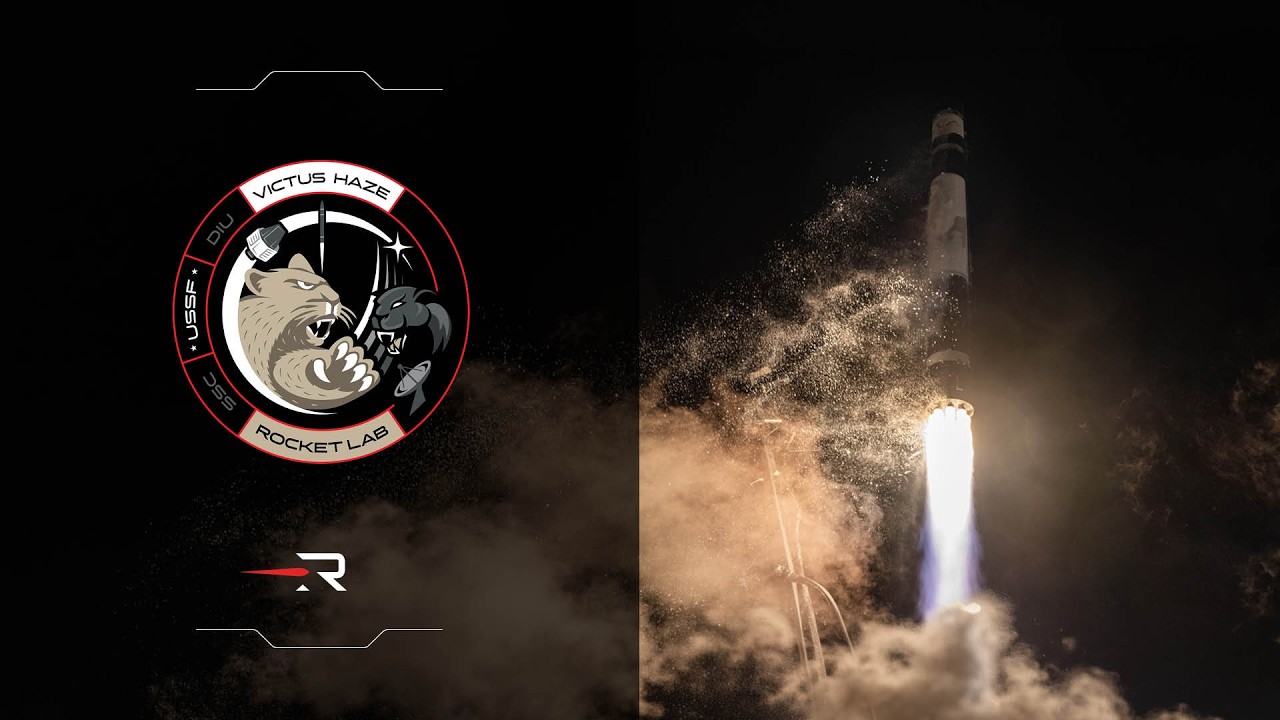
Rocket Lab has set a new benchmark for military responsive space operations after launching the U.S. Space Force’s VICTUS HAZE mission just 16 hours and 42 minutes after receiving a formal launch order. The turnaround beat the previous record by more than 10 hours and showed how quickly a defense spacecraft can move from standby to orbit.

The mission also introduced a different operating model for tactical space missions. Rocket Lab developed the spacecraft, carried out the launch, and now controls operations in orbit, giving the U.S. Space Force a single provider for the entire effort.

Faster launch timeline

Responsive space programs are designed to place satellites into orbit on short notice during a crisis. VICTUS HAZE tested that concept under demanding timelines and cleared several milestones well ahead of schedule.

Rocket Lab’s Guidance, Navigation and Control team needed only about four hours to finalize trajectories, update flight software and coordinate ground stations after receiving the launch notice.

The Space Force called, and we launched. From call up to lift-off in just 16 hours 42 minutes 🎯 Rocket Lab has made history – the fastest response time ever for a @USSF_SSC Tactically Responsive Space mission. pic.twitter.com/yJyhFxbpT3
— Rocket Lab (@RocketLab) June 22, 2026

Electron lifted off from Launch Complex 1 in New Zealand and successfully deployed the company’s Pioneer spacecraft. Engineers completed spacecraft commissioning in 37 hours and 36 minutes, beating the program’s 72-hour requirement by more than 34 hours.

Spacecraft begins pursuit

The Pioneer spacecraft has already started Rendezvous and Proximity Operations in low Earth orbit. The mission simulates a scenario in which a maneuverable satellite rapidly approaches and inspects another spacecraft that is not cooperating.

Such missions could strengthen U.S. military space awareness during emergencies. A satellite launched on short notice can quickly pursue an object in orbit and provide military planners with near real-time intelligence about its movements and activities.

Rocket Lab founder and CEO Sir Peter Beck described the integrated approach as a major step forward for responsive space missions. “Our launch-plus-spacecraft integrated mission capability is transformative for responsive space,” Beck said. He added that having spacecraft ready for immediate deployment allows the United States and its allies to reinforce national security space operations far more quickly.

Single provider strategy

VICTUS HAZE is the first Tactical Responsive Space mission to rely on a single prime contractor for the entire effort. Rocket Lab developed the Pioneer spacecraft before carrying it into orbit on Electron. The company now directs the mission from the ground as the satellite performs its assigned operations.

According to U.S. Space Force Lt. Col. Lincoln Miller, the mission completes the program’s “crawl, walk, run” demonstration phase and shows teams can field sophisticated space capabilities within days instead of months. He said Rendezvous and Proximity Operations remain challenging under compressed timelines. Commissioning the spacecraft ahead of schedule and immediately starting orbital maneuvers demonstrates the ability to respond rapidly during a crisis.

Rocket Lab credits that speed to its vertically integrated manufacturing approach. The Pioneer spacecraft relies on key hardware and software produced inside the company instead of a network of outside suppliers. That level of control shortens development schedules and eliminates many procurement delays that slow traditional defense programs. As a result, a mission that would normally require years of planning moved from launch notification to orbit in less than 17 hours, establishing a new benchmark for rapid military space access.

💾

Rocket Lab's VICTUS HAZE mission launched in 16 hours as the Pioneer spacecraft began rapid orbital operations.
  •  

The world’s most powerful bomber isn’t the B-2 or B-52, it’s Russia’s Tu-160

When people think of strategic bombers, aircraft such as the B-52 Stratofortress, B-2 Spirit, or the new B-21 Raider usually dominate the conversation. They are among the most recognizable military aircraft ever built and form the backbone of America’s long-range strike capability.

Yet if “power” is measured by more traditional metrics such as speed, payload, engine output, and sheer size, another aircraft arguably deserves the crown. That aircraft is the Tupolev Tu-160, known to NATO as the Blackjack and nicknamed the “White Swan” in Russia. 

First developed during the Cold War to counter American strategic bombers, the Tu-160 remains the largest and heaviest combat aircraft ever built, the fastest operational bomber in the world, and one of the most heavily armed aircraft ever placed into service.

Built for a different era of warfare

According to data published by the U.S. Army’s ODIN weapons database and official Russian specifications, the Tu-160 was designed around a philosophy very different from the stealth bombers that would later emerge in the United States.

Instead of avoiding enemy air defenses through low observability, Soviet engineers sought to create a bomber capable of outrunning threats, carrying massive payloads, and launching long-range weapons from stand-off distances.

The result was a giant variable-sweep-wing aircraft powered by four Kuznetsov NK-32 afterburning turbofan engines. Together, these engines generate roughly 220,000 pounds of thrust, making the Tu-160 one of the most powerful military aircraft ever constructed.

The aircraft can exceed Mach 2, or roughly 1,380 miles per hour, a speed no operational strategic bomber can match today. By comparison, the B-2 Spirit and B-52 Stratofortress are both subsonic aircraft, while the B-21 Raider is also believed to prioritize stealth over speed.

The Tu-160’s size is equally impressive. It has a maximum takeoff weight of approximately 275 tonnes and can carry up to 45 tonnes (99,000 pounds) of weapons internally. That exceeds the payload capacity of both the B-2 and B-21 and even surpasses the venerable B-52 in several mission configurations.

A flying missile arsenal

While images often show the White Swan carrying conventional bombs, its primary purpose is to serve as a long-range missile carrier. Modernized Tu-160M variants can deploy weapons such as the Kh-101 conventional cruise missile and the nuclear-capable Kh-102. These missiles have ranges measured in thousands of kilometers, allowing the aircraft to strike targets without entering heavily defended airspace.

This capability has become increasingly important in modern warfare. Rather than flying directly over enemy territory, strategic bombers can launch stand-off weapons from safer distances while remaining protected by friendly air defenses and fighter escorts.

In effect, the Tu-160 functions as a high-speed airborne missile truck capable of delivering large numbers of long-range precision weapons across intercontinental distances.

Why the B-2 and B-21 are still feared

If the Tu-160 dominates on paper, why are the US B-2 Spirit and B-21 Raider bombers more capable combat aircraft?

The answer lies in stealth. B-2 was designed to penetrate dense air-defense networks by minimizing its radar signature. Rather than outrunning enemy defenses, it attempts to avoid detection altogether. The B-21 takes that concept even further. 

Although many details remain classified, the aircraft is widely believed to incorporate next-generation stealth materials, advanced networking capabilities, digital mission systems, and the ability to integrate with unmanned platforms.

In a modern conflict against advanced integrated air-defense systems, stealth can be more valuable than raw speed. A bomber that remains undetected may be able to strike targets that a larger, non-stealth aircraft would struggle to approach.

This is why comparing the Tu-160 directly to the B-21 can be misleading. The two aircraft were designed to solve different military problems.

So which bomber is actually the most powerful?

The answer depends entirely on how power is defined. If the discussion is about speed, payload, engine thrust, and physical size, the Tu-160 stands alone. No bomber currently in service flies faster, carries more weapons internally, or produces more thrust.

If survivability and the ability to penetrate advanced air defenses are the primary criteria, the advantage shifts toward stealth bombers such as the B-2 and B-21. More than three decades after entering service, the White Swan remains one of the most extraordinary aircraft ever built. 

It may not be the most advanced bomber in the world, nor the most survivable, but it represents the peak of a design philosophy centered on speed and overwhelming firepower. For that reason, Russia’s Tu-160 still has a strong claim to being the most powerful bomber ever built.

  •  

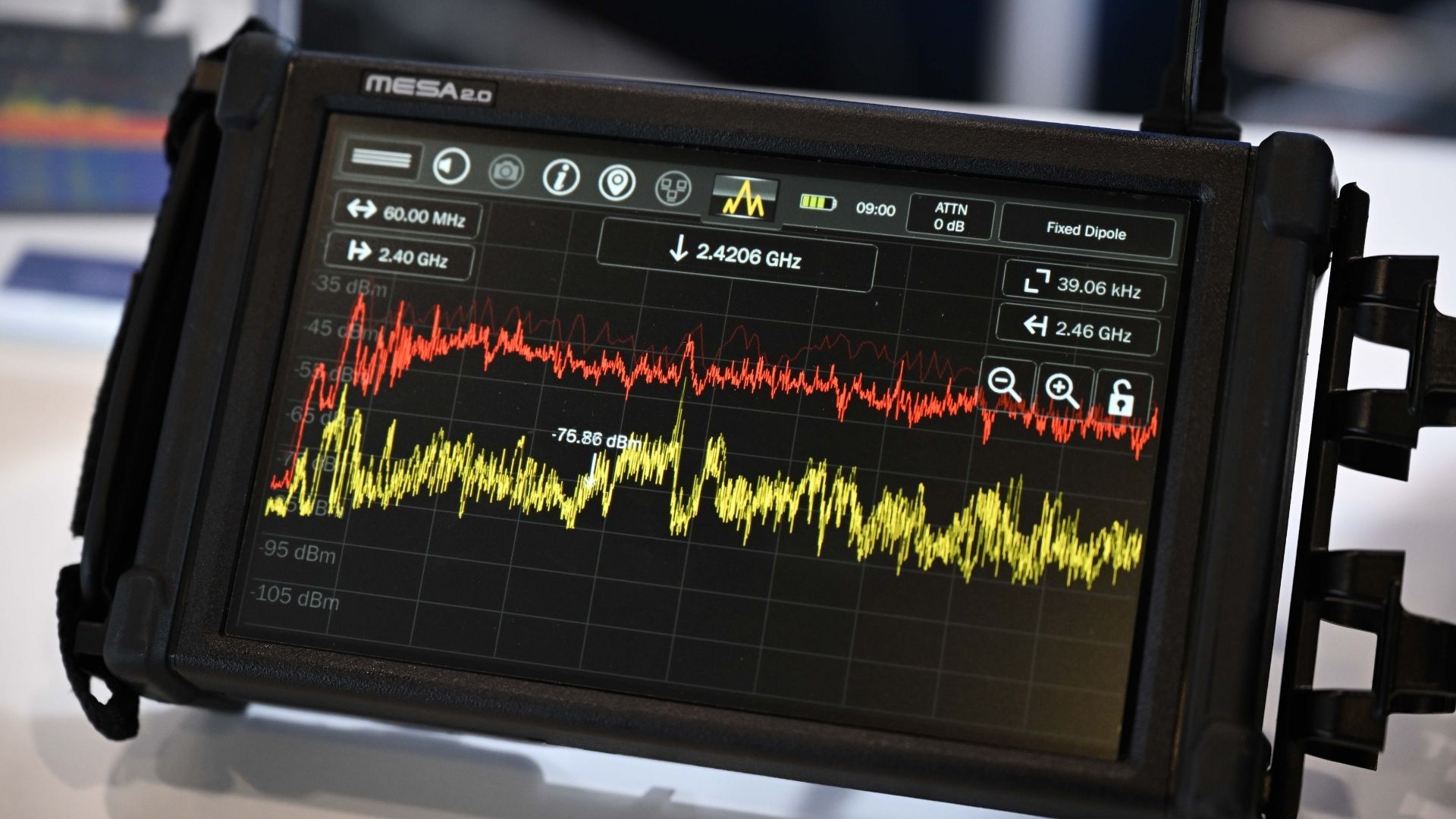
SIGINT: New RF platform achieves 85% real-time signal accuracy under one watt

Australia-based technology company BrainChip has launched a new hardware platform designed to classify radio frequency (RF) signals in real time while operating on less than a watt of power, targeting defense and intelligence applications that require processing at the edge.

Called the Akida Communication Reference Platform, the system is built around the company’s Akida AKD1500 neuromorphic processor and is intended for defense contractors, government agencies, software-defined radio vendors and edge AI developers.

The platform performs RF signal classification directly on-device, eliminating the need for cloud connectivity or large computing hardware. BrainChip said the system is designed for environments where power availability, thermal constraints and size limitations make conventional GPU- or FPGA-based solutions difficult to deploy.

Potential applications include handheld signal intelligence systems, unmanned aerial vehicles, satellite communications terminals and other portable defense technologies.

AI tackles RF threats

According to BrainChip, the platform can identify more than 20 signal modulation types in real time while maintaining greater than 85% accuracy at a signal-to-noise ratio of 30 decibels.

Traditional digital signal processing systems typically rely on rule-based approaches that can struggle to identify new or intentionally modified signals. BrainChip says its neuromorphic AI approach allows the system to capture unknown waveforms and use them for future model retraining, enabling adaptation to emerging wireless threats.

The company argues that this flexibility addresses a key limitation of existing RF classification systems, which often require significant computational resources and can be difficult to update for changing operational conditions.

The platform is also designed to support battery-powered deployments where continuous operation is required without access to external infrastructure.

“BrainChip’s Akida Communication Reference Platform proves that real-time signal intelligence can be condensed into a portable battery powered solution to extend the range of deployment options,” said Sean Hehir, BrainChip’s CEO.

Built for edge deployment

The platform is available for evaluation and partner integration as a reference design kit. It supports integration with software-defined radio front ends such as the USRP B205mini and EPIQ Sidekiq.

A host system, including devices like the Raspberry Pi 5, can be used to manage data flow and application development. BrainChip said engineering teams can use the platform to prototype intelligence, surveillance and reconnaissance capabilities, as well as broader signal intelligence applications.

The launch expands the company’s portfolio of edge AI reference platforms beyond radar and sensor-fusion systems. BrainChip says the new offering demonstrates how neuromorphic computing can be applied to RF processing workloads that traditionally require larger and more power-hungry hardware.

The release comes as defense agencies and communications providers increasingly explore AI-powered spectrum monitoring tools capable of operating in remote and contested environments. By reducing power consumption and hardware requirements, such systems could enable RF awareness capabilities in smaller platforms that previously lacked sufficient computing resources.

As military and commercial users continue pushing AI capabilities closer to sensors and data sources, low-power processors capable of running advanced inference at the edge are becoming increasingly important for real-time decision-making in disconnected environments.

  •  

Report: U.S. needs framework for responding to hostile acts in space

Mitchell Institute workshop participants found little consensus on where competition ends and conflict begins as China expands counterspace capabilities

The post Report: U.S. needs framework for responding to hostile acts in space appeared first on SpaceNews.

  •  

Rocket Lab launches satellite for U.S. Space Force Victus Haze responsive space exercise

The mission pairs Rocket Lab spacecraft with a True Anomaly vehicle in orbit to demonstrate rapid threat characterization and rendezvous operations

The post Rocket Lab launches satellite for U.S. Space Force Victus Haze responsive space exercise appeared first on SpaceNews.

  •  
❌