❌

Reading view

White Spot on iPad Screen: What to Do

A white spot on iPad screen can appear as a bright patch that remains visible while browsing, watching videos or using apps. It may be small and easy to ignore at first, then become distracting whenever the screen shows a white, gray or lightly colored background.

The spot may come from a temporary software problem, but a fixed bright area is more commonly connected to the display hardware. Pressure inside the iPad, a damaged backlight layer, display separation or an impact can create uneven illumination that no setting can remove.

Before arranging a repair, a few simple checks can reveal whether the spot belongs to the image being displayed or to the physical screen itself.

What Causes a White Spot on iPad Screen?

A white spot on iPad screen is often described as a bright spot, pressure mark or backlight patch. On iPads with LCD displays, light passes through several internal layers before reaching the glass. When one of those layers becomes damaged, separated or compressed, light can concentrate in one area.

The mark may be more visible against pale backgrounds and almost disappear when the screen displays black or dark content. This is different from a dead pixel, which usually appears as a tiny fixed dot rather than a larger cloudy patch.

Pressure is one possible cause. Carrying an iPad in an overloaded bag, placing heavy objects on it or using a tight case can place stress on the display. A drop may also disturb the internal screen layers without cracking the front glass.

Battery swelling can create similar pressure from inside the device. If the screen is lifting from the frame, the iPad feels unusually warm or the body appears bent, stop using it and seek service. A swollen battery should not be pressed back into place or handled as an ordinary screen defect.

The problem can also appear after a display replacement involving a poorly fitted or lower-quality part. Apple notes that nongenuine displays may produce inconsistent brightness, color or touch behavior.
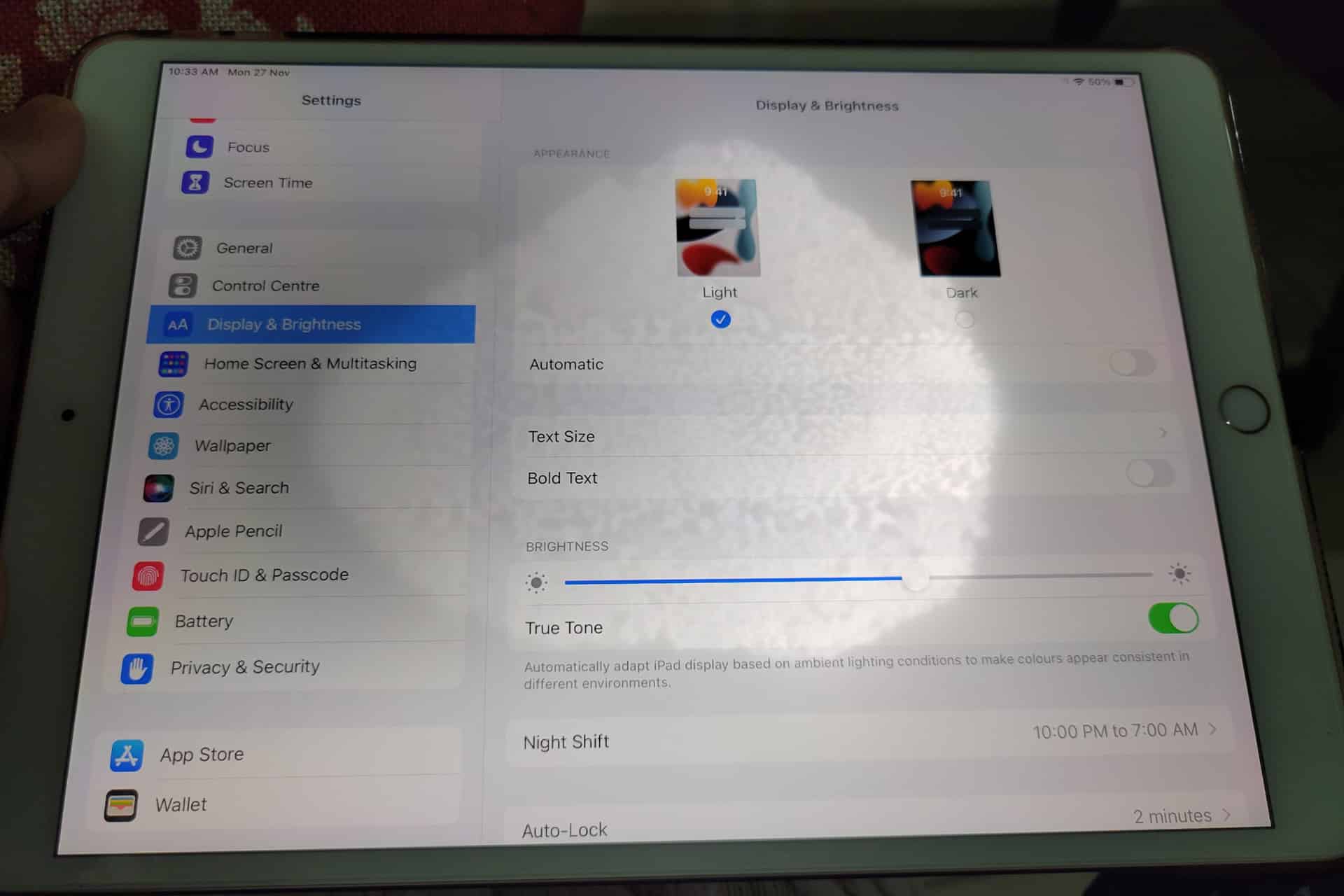
White spot on iPad screen - An iPad displays its "Display & Brightness" settings, showing options for Light and Dark modes, brightness adjustment, True Tone, Night Shift scheduling, and other appearance settings—features that can help users address common issues like an iPad screen problem or an uneven iPad backlight. A hand holds the device.
Image Credit:

Check Whether the Spot Is Really on the Display

Begin by opening several different apps. Look at the spot over a white webpage, a gray Settings screen, a dark photo and a full-screen video. A hardware-related mark normally stays in the same physical location regardless of what appears underneath it.

Rotate the iPad. If the content changes orientation but the bright patch remains in the same part of the glass, the display is the likely cause.

Taking a screenshot provides another useful test. A physical screen defect will not normally become part of the screenshot file.

To take a screenshot on an iPad without a Home button:

Top button + either volume button

To take a screenshot on an iPad with a Home button:

Top button + Home button

Open the screenshot on another device or send it to a trusted computer. If the white spot does not appear there, the image generated by iPadOS is normal and the problem is probably inside the display assembly.

If the mark appears in the screenshot, it may belong to an app, image, accessibility setting or software effect rather than the panel.

Restart Before Assuming Hardware Failure

A restart is worth trying because it clears temporary display and system behavior without affecting personal files. It is unlikely to repair physical backlight damage, but it can eliminate a short-lived graphical problem.

To restart an iPad without a Home button:

Press and hold the top button and either volume button > Drag the power slider > Wait approximately 30 seconds > Hold the top button until the Apple logo appears

To restart an iPad with a Home button:

Press and hold the top button > Drag the power slider > Wait approximately 30 seconds > Hold the top button until the Apple logo appears

After restarting, return to the same pale background and check the area again. A spot that remains fixed is unlikely to be caused by a temporary iPadOS issue.
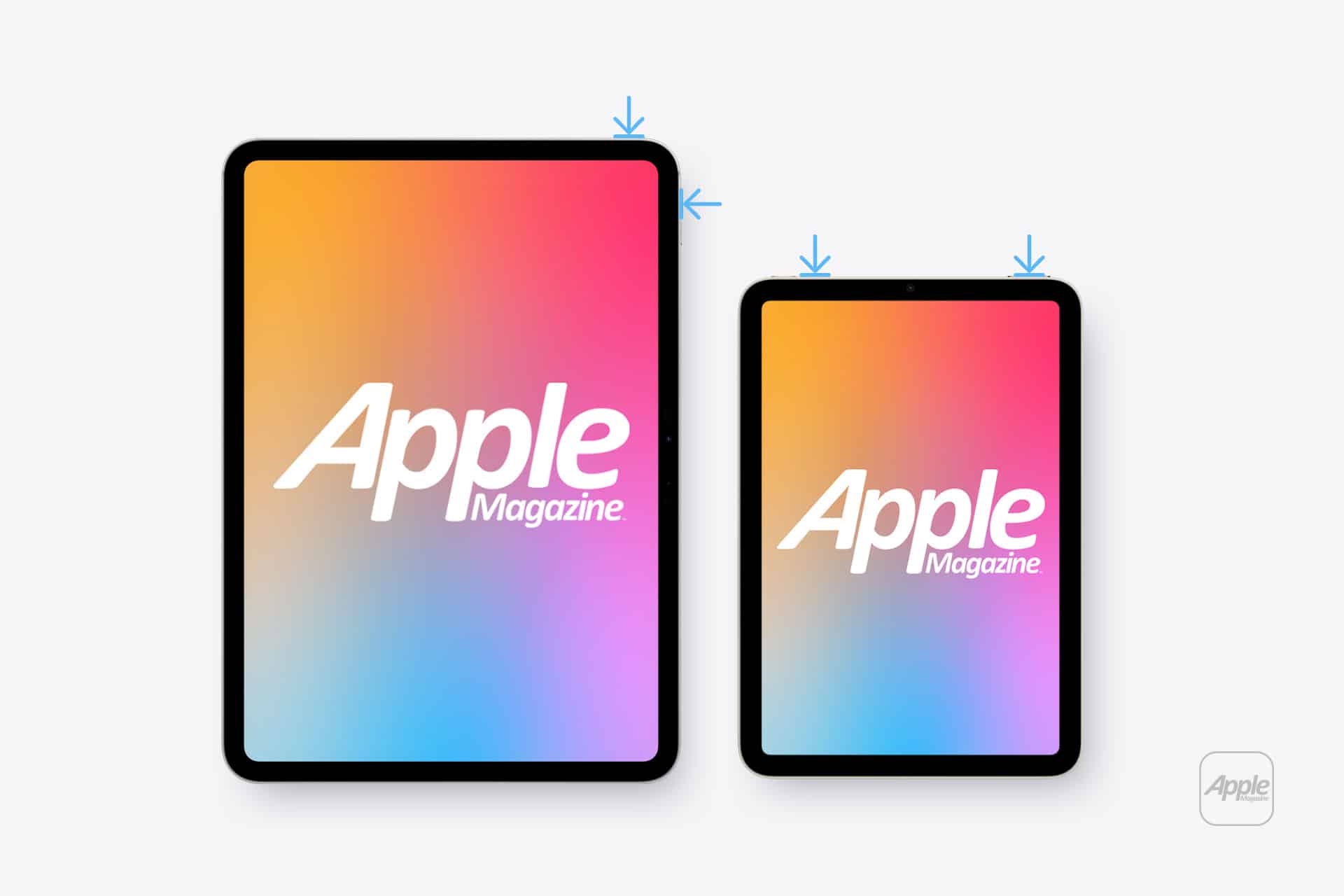
Two tablets displaying a colorful Apple Magazine cover are shown side by side. Blue arrows point to the corners of the tablet on the right, highlighting its narrower bezels compared to the left; it resembles an iPad Screenshot in vibrant detail.
Image Credit: AppleMagazine

Brightness Can Make the Problem More Visible

Lowering brightness may make a bright patch less distracting, but it does not repair the underlying display. The same applies to Dark Mode, Night Shift and Reduce White Point. These settings can change how noticeable the mark becomes without removing it.

To adjust screen brightness:

Settings > Display & Brightness > Brightness

Test the iPad at several brightness levels. A backlight-related spot may become easier to see as brightness increases. Photographing the screen against a plain background at medium and high brightness can also help document the defect before requesting service.

Avoid pressing or rubbing the affected area. Pressure may temporarily change the appearance, but it can damage the display further. Internet advice suggesting that users massage bright spots out of a panel should be ignored.

Check the Case and Screen Protector

Remove any rigid case that appears unusually tight or has been damaged. A poorly fitted case can place uneven pressure around the frame, particularly if the iPad has been dropped while inside it.

A screen protector normally cannot create a true illuminated patch beneath the display. It can, however, produce bubbles, trapped moisture or reflective marks that resemble a screen defect. Examine the iPad with the display turned off. If the mark is visible on the surface even when the screen is black, the protector or glass may be involved.

Do not remove a properly installed protector solely as an experiment unless the mark clearly appears close to its surface. A bright patch visible only while the display is illuminated usually comes from deeper inside the screen.

When the iPad Needs Repair

A persistent white spot generally requires display service when it remains after restarting and does not appear in screenshots. There is no iPadOS setting that can realign a damaged diffuser, remove internal pressure or repair separated display layers.

Back up the iPad before service so photos, documents and app data remain protected.

To create an iCloud backup:

Settings > your name > iCloud > iCloud Backup > Back Up Now

Apple can inspect the device and determine whether the defect qualifies for warranty coverage, AppleCare service or paid repair. Coverage depends on the device, purchase date, condition and whether the problem resulted from accidental damage.

To check coverage:

Settings > General > AppleCare & Warranty

Apple or an Apple Authorized Service Provider may replace the display assembly or the iPad, depending on the model and available service process. The final repair estimate normally requires inspection.

A white cloud icon centered on a blue gradient background symbolizes iCloud Drive offline, with a small Apple logo and the word "Apple" in the lower right corner.
Image Credit: AppleMagazine

Do Not Ignore Physical Changes

A stable white spot that has not changed for months may remain only a visual annoyance. A spot that is expanding, accompanied by screen lifting or followed by unusual heat needs faster attention.

Stop using the device if the display separates from the enclosure, the iPad becomes visibly swollen or pressure marks spread across the panel. Do not puncture the device, force the display closed or continue charging it unattended.

For an ordinary fixed bright patch, the practical path is simpler: confirm it does not appear in screenshots, restart the iPad, remove any case applying pressure and arrange display service if the mark remains.

A white spot on iPad screen rarely affects the information stored on the device, but it can indicate physical damage that software cannot correct. A brief check can rule out the easy causes. After that, repair is usually more effective than repeatedly changing display settings and hoping the light disappears.

The post White Spot on iPad Screen: What to Do appeared first on AppleMagazine.

  •  

Spotlight and iCloud Drive headbang in the CPU mosh pit

Glenn Fleishman, art by Shafer Brown

I have a Mac Studio M2 Max with 32 GB of RAM and a 1 TB SSD in front of me. While not the most powerful personal computer you can purchase today, it is among the most computationally capable ever made—a vastly capable machine. So why do I have to wait for typing to catch up with me and see a rainbow spinner on the regular?

I’ll tell you why: iCloud Drive and Spotlight. Apple lacks any transparency about how iCloud Drive works or fails. The same is true of Spotlight. These big black boxes churn away, performing a million billion operations a day, and we don’t know exactly what they do. That’s not me being conspiratorial: I honestly don’t care what’s happening under the hood—until it breaks. Without diagnostic tools, even someone like me, ostensibly an expert, can be completely at a loss and waste many hours.

I wrote “Cloudy with a Chance of Insanity: Unsticking iCloud Drive” for TidBITS back in October 2023 about a multi-month odyssey with Apple technical support in trying to dislodge unsyncable files.1 That problem has barely surfaced since—an 80K file will sometimes get stuck for a while—and I thought Apple might have really solved syncing, at least as exhibited on my Mac. I receive dramatically fewer emails about iCloud Drive than I used to, which is another data point.

But Mr. Edge Case here can always find a way to break something.2 I’ve been working on a large manuscript for my upcoming book, Flong Time, No See, a revised and expanded collection of researched articles I’ve written about printing and type history over the last several years.3 I pasted in text that was typically copied from Web pages, and wound up with over 250 footnotes.

While putting together the files for this book, Apple released its Creator Studio system, and shipped Pages 15. After having no problems, I dutifully switched over. This was months ago, and as I continued to work on this reasonably large file—weighing it at about 60,000 words now—everything seemed fine.

A few weeks ago, however, I started to experience system slowdowns. Pages was taking up 12 GB of system memory! System load went through the roof! CPU consumption was outlandish! All signs pointed to corespotlightd, a long-time enemy of performance. That daemon handles background indexing for Spotlight, and the slightest thing wrong in a file or directory, or perhaps due to mild corruption in its underlying files, turns it into a rampaging beast that eats processor cycles like I consume potato chips.4

There’s a well-known procedure for killing this beast, though another is spawned from its remains: stop the index, delete the index files, restart, and re-enable indexing. From the Terminal, use these commands. Make a backup before proceeding. Take extreme care with rm -rf, as a misstep in entering or copying can wipe out files!

 sudo mdutil -a -i off
 rm -rf ~/Library/Metadata/CoreSpotlight

You can use Restart from the Apple Menu while holding down the Option key (to avoid being asked), or you can take a shortcut from Terminal, assuming you have ensured all files are saved:

 sudo reboot

After your Mac restarts, go back to the Terminal and re-enable indexing:

 sudo mdutil -a -i on

For many (perhaps most) people, this solves the problem. For me, it just delayed it. With some isolation using System Settings: Spotlight: Search Privacy, I added specific folders, such as mail archives, since that seemed like it might be part of the problem.

Screenshot of Search Privacy dialog inside System Settings: Spotlight in macOS 27 Tahoe.
Search Privacy lets you exclude volumes and directories from Spotlight indexing, which can remove unwanted results and sometimes (only sometimes!) reduce thrashing.

One piece of advice I found suggested that if I thought Pages was the problem, I should exclude the iCloud Drive path containing Pages files. Fine! I clicked the plus icon in Search Privacy, pressed Command-Shift-G to bring up the path dialog, entered ~/Library/Mobile Documents/com~apple~Pages/, and clicked Choose. This seemed to work for a while, then nothing availed.

Finally, after analyzing logs and caches, the culprit was clear. It was not that large a Pages file: every time I saved, Spotlight’s worker bee was performing excessive re-indexing that consumed gigabytes and one or more processor cores. Moving the file to a local directory (in my Documents folder) while editing eliminated the problem. It also freed up space, as the temporary Spotlight indexes and Time Machine snapshots had become absurdly large.

Screenshot of several high-numbered footnotes from a manuscript with excessive detail.
289 footnotes seem to be fine for Pages, but Spotlight and iCloud Drive find them hard to swallow.

What could Apple have done to help here? This is where I would hope machine learning, coupled with some interactive code- and system-expertise bots, could help:

  • Note that a system component is acting well outside known parameters.
  • Identify CPU usage that is tied to Apple-owned processes.
  • Provide a troubleshooting tool, even suggesting it in notifications.
  • Create human-readable logs that don’t require system administrator knowledge to interpret.

In the case I describe above, an Apple-created daemon was rampaging out of control due to a single identifiable file!—cascading into other problems. It should be solvable by Apple. The fact that we have more power under the hood by orders of magnitude in the past, coupled with neural cores in the CPU packages, just makes this even more embarrassing. Solve Siri, Apple, yes, but real transparency and troubleshooting in macOS would also make a big difference.

[Got a question for the column? You can email glenn@sixcolors.com or use /glenn in our subscriber-only Discord community.]


  1. I should have made an unsinkable/unsyncable pun in the title, but there is an esprit d’escalier moment for everything. ↩
  2. An “edge case” is something that is often considered unlikely to occur with a product, whether software, hardware, or mechanical. Yet, no matter how much I’m just trying to get something done, I apparently trigger edge cases all the time. Software companies “love” me for this. ↩
  3. Flong is a kind of paper-like mold that was extremely useful during the days of metal-based relief printing. Of course, you can pre-order a copy to get the full scoop! ↩
  4. Just ask my family. ↩
  •  

Astronomers Detect Gamma-Ray Burst’s Magnetic Fingerprint

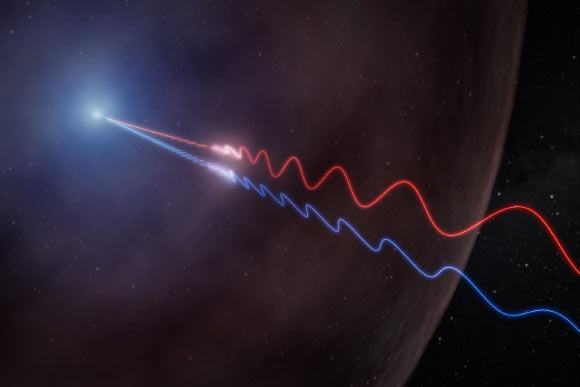
This illustration depicts Faraday rotation in the afterglow of a gamma-ray burst. A powerful jet (upper left) sends polarized radio waves outward through the thin wall of a surrounding bubble of magnetized gas called an HII region. As the light passes through this material, its polarization angle is twisted by the magnetic field. Because the effect is stronger at longer wavelengths, the red and blue waves, which represent different radio wavelengths, exit the bubble oscillating in different directions. By measuring this difference, astronomers were able to map the magnetic environment surrounding GRB 260310A for the first time. Image credit: NSF / AUI / NRAO / M. Weiss

Using NSF’s Very Large Array (VLA), astronomers made the first radio detection of polarized light and Faraday rotation from a gamma-ray burst afterglow, offering an unprecedented glimpse of the magnetic fields surrounding one of the Universe’s most powerful explosions.

The post Astronomers Detect Gamma-Ray Burst’s Magnetic Fingerprint appeared first on Sci.News: Breaking Science News.

  •  

Tianwen-2 arrives at target asteroid Kamoʻoalewa

Nearly 400 days and a billion kilometers after leaving Earth, China’s Tianwen-2 spacecraft has arrived at its target: the near-Earth asteroid 469219 Kamoʻoalewa, also known as 2016 HO3. And the mission’s first photo of the rock has already had scientific impact, reopening an ongoing investigation over whether Kamoʻoalewa began as a chunk of the Moon.Continue reading "Tianwen-2 arrives at target asteroid Kamoʻoalewa"

The post Tianwen-2 arrives at target asteroid Kamoʻoalewa appeared first on Astronomy Magazine.

  •  

The first commercial space telescope delivers

Let the science begin: The world’s first commercial space telescope is up and running. On July 6, Blue Skies Space delivered data from its Mauve satellite to the international roster of universities enrolled in the Mauve Science Program, shifting the mission into full scientific operations. It’s the next step for a mission that reached orbitContinue reading "The first commercial space telescope delivers"

The post The first commercial space telescope delivers appeared first on Astronomy Magazine.

  •  

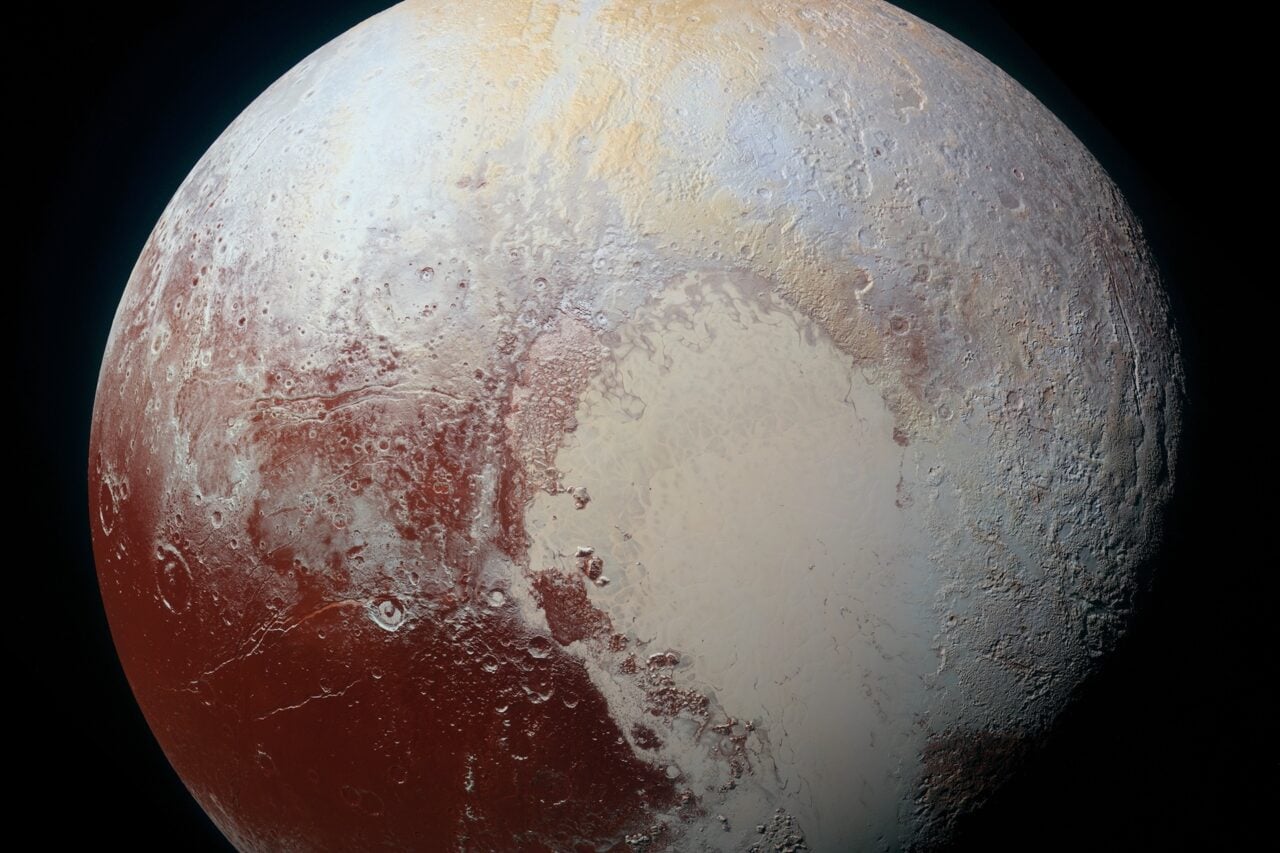
July 14, 2015: New Horizon arrives at Pluto

New Horizons launched in January 2006, and by July 14, 2015, it had reached its primary goal: Pluto. The first spacecraft to study Pluto up close, it conducted measurements of Pluto’s atmosphere, mapped the surface geology, observed Pluto’s moons. New Horizons also investigated the dwarf planet’s interior structure, adding support to the theory that PlutoContinue reading "July 14, 2015: New Horizon arrives at Pluto"

The post July 14, 2015: New Horizon arrives at Pluto appeared first on Astronomy Magazine.

  •  

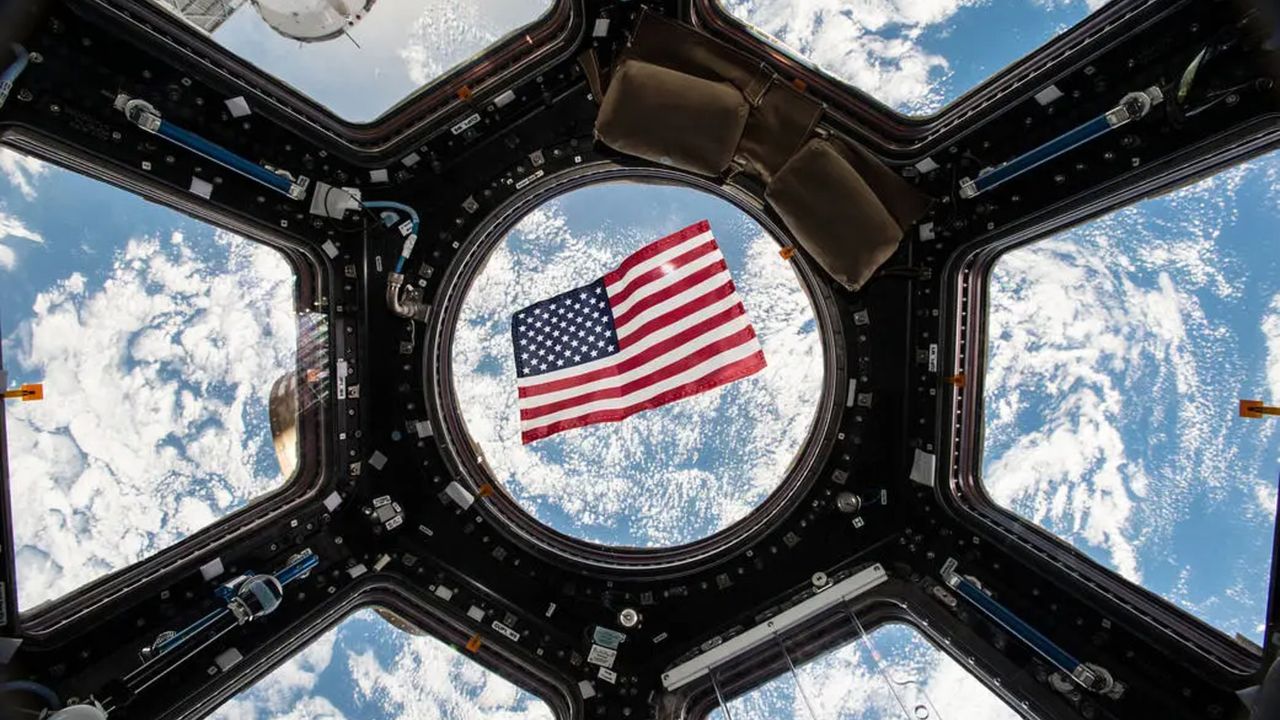
Supreme Court ruling on mail-in ballots ensures astronauts can vote from space  — or anywhere else

A new ruling by the U.S. Supreme Court protecting voter rights could extend to astronauts living and working in space and training internationally, their families, and the multitude of NASA workers who travel to support their missions.

On Monday (June 29), the Supreme Court ruled that mail-in ballots can be counted toward a total vote even if they arrive after election day, as long as they are postmarked by election day. The ruling followed efforts by the Trump Administration to place restrictions on mail-in voting. In a new statement, the nonpartisan activist organization Astronauts for America spoke out in support of the Supreme Court's decision, which supports absentee voting.

"We don't want to see barriers put in place [that] make it more challenging for somebody to exercise their constitutional right of voting," retired NASA astronaut Wendy Lawrence told Space.com. Lawrence is a member of Astronauts for America, as well as a veteran of the U.S. Navy, where she served as a captain, engineer and helicopter pilot.

What happened?

An executive order issued by President Trump in March 2026 attempted to place a number of restrictions on voting in the country, including limitations on mail-in or absentee voting. The order directed the United States Postal Service to only transmit ballots for states that compile and submit lists of eligible mail-in voters 60 days before elections, added requirements and complications to mail-in ballots and attempted to limit who receives a ballot in the mail.

This order not only added layers to limit voting access, but it conflicted with existing procedures set by states for absentee voting. Additionally, the U.S. Constitution places the authority to change election rules and processes with Congress, not the president, though this was not the first executive order put out by Trump to attempt to change election rules, CNN has reported.

In a 5-4 ruling, the Supreme Court blocked the U.S. Postal Service from carrying out this executive order, declaring that mail-in ballots may be counted if they arrive up to five days after election day, as long as they are postmarked by election day.

"This is key to making sure we have free and fair elections, that people have the ability to cast their vote, and it's not an overwhelming burden for them to do that again," said Lawrence.

Astronauts vote (and so do the people around them)

In a statement shared on social media, Astronauts for America commented on the recent ruling.

"We at Astronauts for America are pleased to see the justices take this critical step toward safeguarding free and fair elections, and ensuring that every eligible voter has their ballot counted," the statement reads. "As astronauts, some of us cast our votes from space. As military veterans, many of us relied on voting by mail. Upholding this grace period ensures that astronauts and other Americans are able to exercise their civil rights."

"Voting is the cornerstone of our American democracy, and this is an important step forward in our battle to ensure everyone has the right to vote," the statement continued. "While the Supreme Court ruling should be celebrated, we must continue standing up for our democracy and constitutional principles."

Astronauts have used absentee voting systems for decades, and they do so regularly: Astronauts have been living in orbit on board the International Space Station continuously since November 2000. When astronauts are going to be in space during an election, NASA has a digital system that allows them to submit absentee votes. But as the statement above suggests, astronauts don't just need absentee voting during their space missions.

Astronaut training can take place all around the world, especially if there is a mission with international collaboration. Lawrence shared that, during her tenure with NASA's space shuttle program, there was a 16-month period when she had to live and train full-time in Russia. And, astronauts don't prepare for space in a vacuum. Family members like spouses might travel with them for long-term training, and there are a wide variety of mission managers and support staff for crewed missions (and their families) who might have to be on long-term travel as well.

Additionally, many astronauts like Lawrence are also military veterans who, during their service, are only able to vote through absentee voting, sometimes for years on end. While this ruling extends far past astronauts, even within the space sector, absentee voting has protected the constitutional rights of many.

  •  

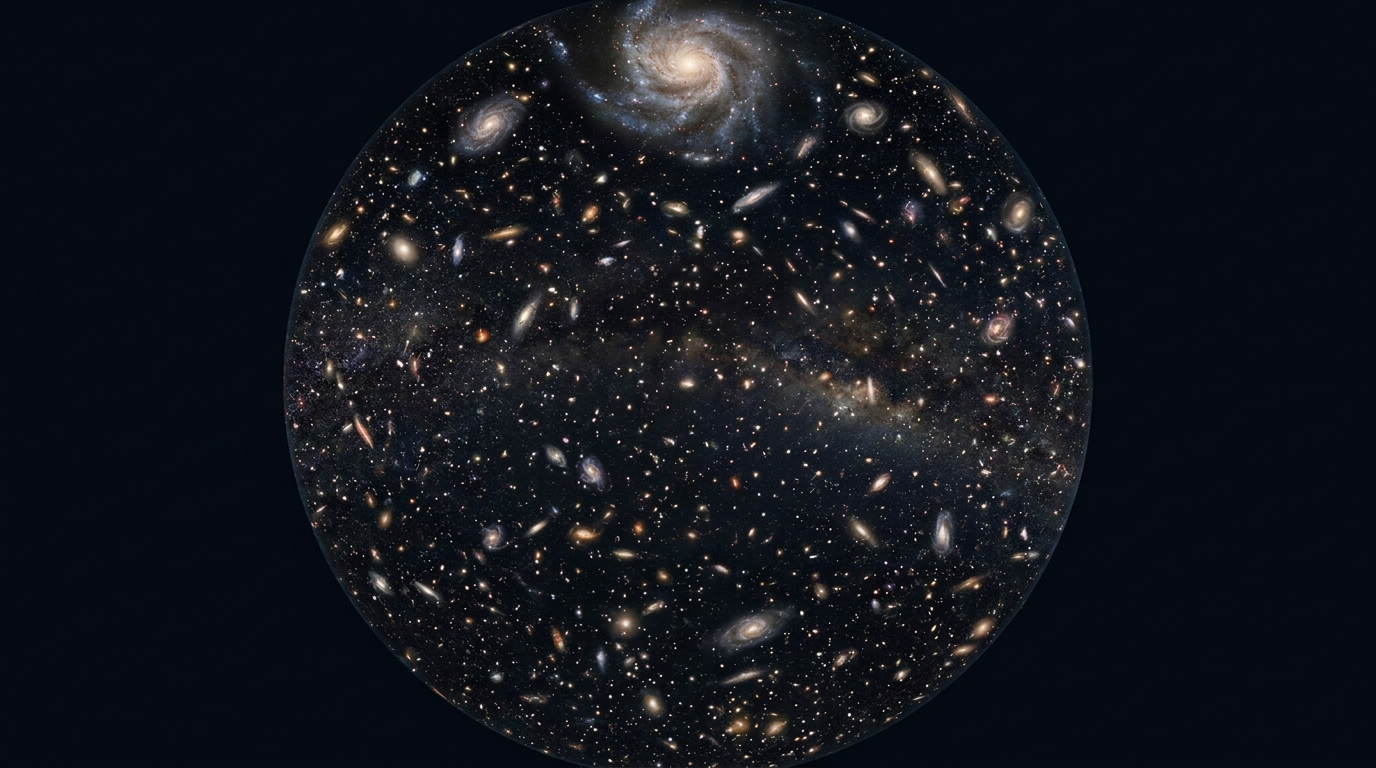
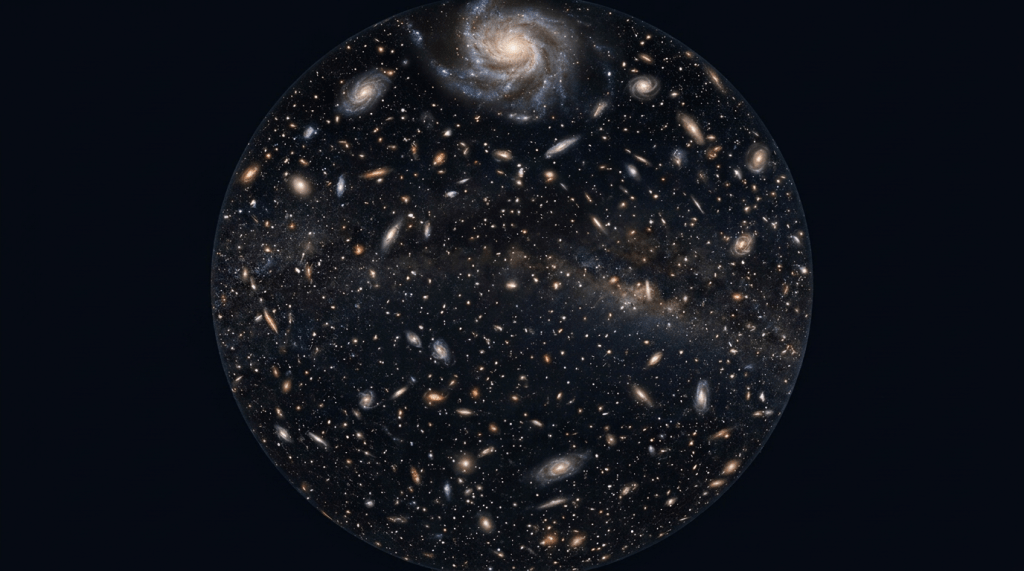
Young Earth Creation vs. Modern Cosmology

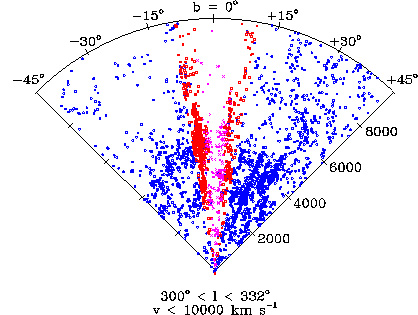
The only three measurables in galactic astronomy are the position, luminosity and spectrum of the source light received in our telescopes. There is no distance information without unprovable assumptions, hence no direct measurement of size or age of the universe. Thus we may conclude it is young in agreement with the Bible.

  •  

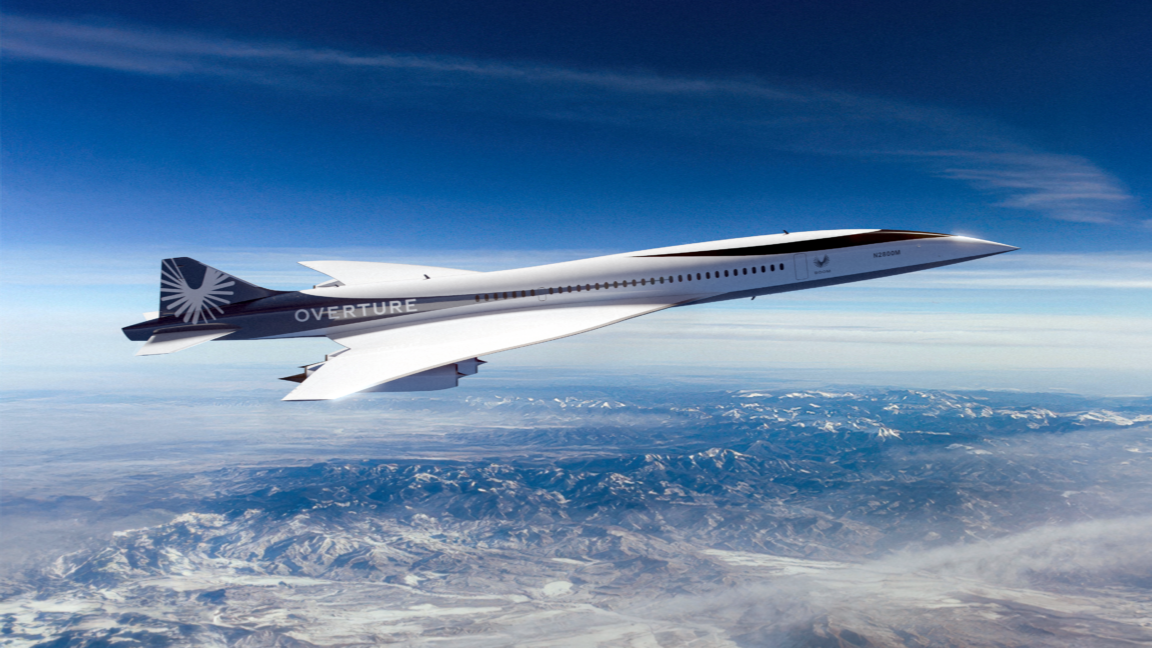
FAA proposal: Supersonic airliners can fly over US cities if they’re quiet

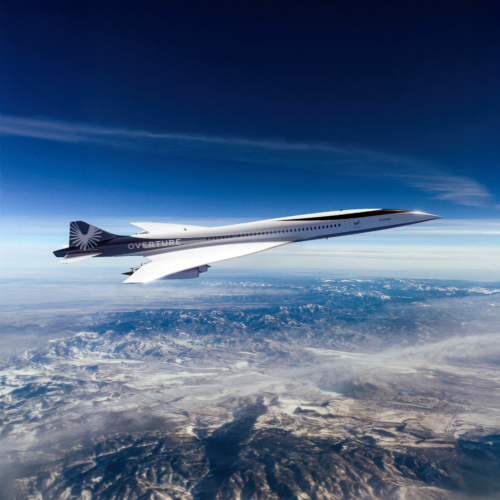
A long-standing ban on commercial supersonic flights over the United States would be overturned in a new rule proposed by the US Federal Aviation Administration. That could pave the way for the possible return of commercial supersonic airliners—as long as such aircraft can reduce the ground-level impacts of their sonic booms.

The FAA originally banned overland supersonic flights by civil aircraft in 1973, following US military tests involving supersonic flights over US cities such as Oklahoma City, Chicago, and St. Louis in the 1960s. But the Trump administration has championed the repeal of the ban to pave the way for supersonic airliners that could operate without disruptive sonic booms. So the FAA’s new rulemaking action on June 30, 2026, follows the direction of an executive order issued by President Trump on June 6, 2025.

The newly proposed rule would replace the 53-year prohibition with an interim “noise-based” certification standard requiring any sonic boom overpressure at the surface to be kept below 0.11 pounds per square foot. That proposed standard is based on the Colorado-based startup Boom Supersonic having demonstrated quiet Mach cutoff flights with its XB-1 aircraft—harnessing specific atmospheric conditions while flying just beyond supersonic speeds at higher altitudes so that the aircraft’s shockwaves are refracted upward into the atmosphere rather than traveling to the ground.

Read full article

Comments

© Boom Supersonic

  •  

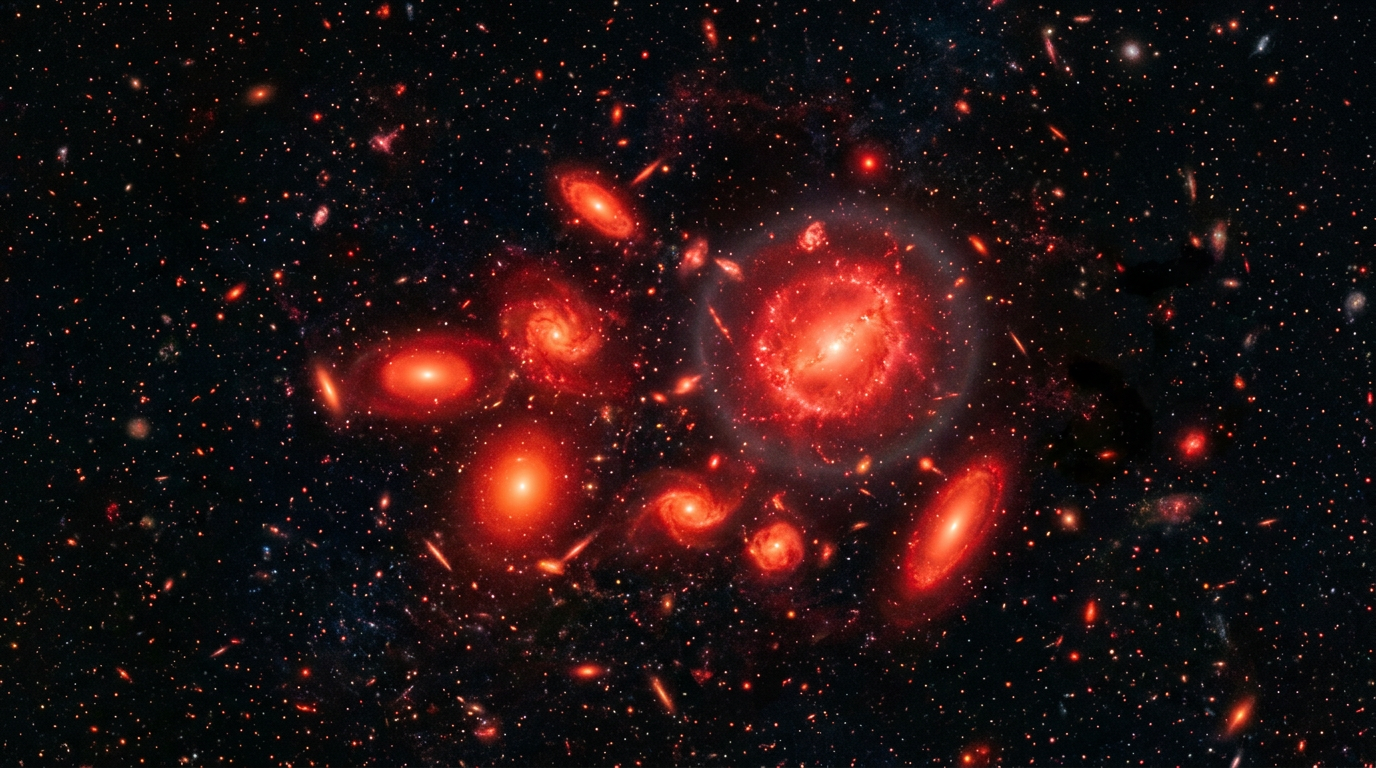
How Fast Does Information Travel to Earth from the Outer Most Reaches of the Cosmos?

Astronomers using the James Webb Space Telescope have observed extremely distant LRD galaxies, with redshifts greater than 14 at distances greater than 13.5 billion light-years. The question I raise here is how do we see these galaxies and their spectral features if the universe is less than 10,000 years old?

  •  

A New Material ‘Upgrades’ Sunlight Into UV Light—and a Solid-State Breakthrough Makes It Possible

In a major advancement for UV energy research, scientists at Kyushu University have developed a solid material that converts visible light into high-energy UV light with 1.9% efficiency, eliminating the need for hazardous solvents.

Revealed in a recent paper published in Nature Communications, the Kyushu team created precisely controlled gaps between molecules in a solid material by attaching alkyl chains to the sp³ carbon atoms of an organic molecule.

Unlike at the macro scale, where adding two separate cups of warm water together doesn’t combine their energy levels to produce a boil, at the quantum scale, combining low-energy photons can result in a single, higher-energy photon, which is essential to the new energy conversion process.

Upgrading Light Energy

UV light may be harsh on human skin, but its high energy density makes it valuable for a variety of applications, including air purification and resin curing in 3D printing. Although ultraviolet radiation accounts for only about 6% of the sunlight that reaches Earth’s surface, only a fraction of that can be effectively harnessed. The new material developed at Kyushu University converts ordinary visible light into ultraviolet light, potentially increasing the availability of this valuable energy source.

“What we do here is ‘add together’ the energy from two visible light photons to make one ultraviolet photon. It’s a fascinating process called photo upconversion,” explained co-author Yoichi Sasaki, Associate Professor at Kyushu University’s Faculty of Engineering.

Annihilating Light Photons

Triplet-triplet annihilation is a key mechanism behind photo upconversion, a process in which two excited molecules interact to produce a single higher-energy UV photon. It begins when a donor molecule absorbs light, exciting its electrons into a high-energy triplet state. That energy is then transferred to a neighboring molecule, after which the two excited states interact and combine to generate a new ultraviolet photon.

Although scientists have understood this process for years, practical limitations have hindered its widespread use. Traditionally, triplet-triplet annihilation occurs in liquids that can evaporate and often require toxic solvents, prompting the Kyushu team to search for a solid-state alternative.

“In solids, molecules are packed tightly, and the π electron clouds—regions of high electron density hovering above and below each molecular plane—can overlap,” says Sasaki. “When that happens, triplets easily fizzle out before they ever meet. Molecules must be close enough for energy to transfer but separated enough to prevent quenching of excitons.”

A Solid Solution

The researchers found their answer in dihydroindenoindenedene (DHI), an organic semiconductor. By attaching alkyl chains, they were able to precisely control the spacing between molecules, creating an arrangement that allowed efficient energy transfer while minimizing unwanted electronic interactions.

The resulting alkyl-optimized DHI demonstrated efficient energy transfer, long-lived excited states, and strong light emission, achieving an upconversion efficiency of 1.9%.

“This means roughly two UV photons are produced for every hundred visible-light photons absorbed,” Sasaki adds. “It may sound low, but it runs on natural sunlight alone. Most solid-state materials cannot realize this even at much higher light intensity.”

With its relatively easy synthesis and low material cost, the team says their work provides a crucial new solution for harnessing UV light. A patent for the material is currently pending.

The work was the culmination of the career of pioneering upconversion researcher Nobuo Kimizuka, now Professor Emeritus at Kyushu University’s Research Center for Negative Emissions Technologies, who retired 11 days after the paper was completed.

“This discovery is the culmination of over 14 years of our research,” Kimizuka said, adding that it “marks a major milestone in photon-upconversion and molecular self-assembly research.”

The paper, “Sterically Protected π-Electron Systems for Efficient Solid-State Photon Upconversion,” appeared in Nature Communications on June 23, 2026.

Ryan Whalen covers science and technology for The Debrief. He holds an MA in History and a Master of Library and Information Science with a certificate in Data Science. He can be contacted at ryan@thedebrief.org, and follow him on Twitter @mdntwvlf.

  •  

“It Was the Most Incredible Thing I Ever Witnessed”: New Film Details World’s First Private Astronauts—and a Life-Altering UAP Encounter

The fascinating behind-the-scenes story of the exploits of the first team of private astronauts to cross the Kármán line is finally being told.

A newly released documentary film, “Beyond Blue Sky: The Untold Story of the First Private Astronauts,” now available on Apple TV and Amazon Prime, reveals the award-winning accomplishment and includes firsthand testimony from the pilots and engineers who made the inaugural private astronaut space flights possible.

The film also includes one of the two record-setting astronauts, U.S. Navy combat veteran Brian Binnie, sharing an unusual, life-altering experience for the first time on screen, an event that he credits for inspiring him to continue after a crushing setback almost ended his dreams of flying to space.

A Private Astronaut’s Failure and a UAP Encounter

In an email to The Debrief, documentary filmmaker Kevin Curran noted that his Emmy-nominated crew, “with a proven space pedigree,” including chronicling milestones of Blue Origin, SpaceX, Astrobotic, and NASA, was able to capture “razor’s-edge supersonic test flight footage” to reveal the story of the first team of private astronauts to join the small group of humans to have ventured into space.

Along the way, the documentary depicts the team’s successes and failures in their pursuit of reaching space for the first time—and then doing so two more times with extra ballast—to win a $10 million prize.

Although Binnie, a Princeton-educated aeronautical engineer and 20-year Navy pilot, would typically seem like the obvious choice for the award-winning space attempt, a difficult crash landing on the first rocket-powered test flight of the program had Binnie doubting whether he would get another opportunity to pilot SpaceShipOne for the remaining five test flights.

Image Credit: Beyond Blue Sky, Kevin Curran

As incredible as the team’s historic accomplishments were, Curran told The Debrief that the story took an unexpected, but inspiring turn when Binnie revealed an out-of-this-world encounter that he credited with inspiring him to recover from that setback and ultimately make the historic flight.

“The rest of the documentary is pretty incredible/riveting, I think, but [Binnie’s] story makes it so topical right now with the Pentagon’s release of UAP files,” Curran told The Debrief.

“I Turned Around Expecting to See Them Behind Me”

According to Curran, his team had no idea about Binnie’s encounter when they started filming. As the ebullient filmmaker noted, the team was about six weeks into production on a film that he says “we thought would simply be an untold, feel-good story involving perseverance and redemption within the birth of private spaceflight.” Then, while the cameras rolled, Binnie made his revelation.

Although Curran notes that the pilot had previously confided in “dozens of people within the aerospace and test flight world over the years about his extreme close encounter,” this was the first time the veteran of 33 combat missions had “courageously” shared his experience on-screen.

first private astronaut UAP experience
Documentary film director Kevin Curran has taken protecting Brian Binnie’s legacy personally. Image Credit: Kevin Curran.

“Like any good story, it simply became more fascinating the more we pulled on the thread,” Curran told The Debrief.

The tale began on December 17, 2003, when Binnie successfully piloted SpaceShipOne to nearly 68,000 feet on its first rocket-powered test flight, a critical early accomplishment that made him the first pilot to go supersonic in a privately funded vehicle. However, the flight ended in an extremely rough landing that damaged the craft’s landing gear, wing, and fuselage, putting Binnie’s future as one of three test pilots of SpaceShipOne in doubt.

“After the crash, the 47-year-old Binnie faced the reality that he may never fly the spaceship again on the remaining five test flights of the program,” a summary emailed to The Debrief explains.

Six days after the hard landing, Binnie was awake one morning at around 4 a.m., unable to sleep comfortably in his bed. Then, according to the astronaut’s account, he noticed that “bright lights were coming through my window blinds. I rose, opened the window blinds to find that daylight had manifested in my backyard.” The decorated Navy veteran noted that while his backyard was illuminated, everything else he looked at was dark.

first private astronaut UAP experience
Binnie (above) is shown at his home. Image Credit: Focus on the Signal LLC, Kevin Curran.

The next part of Binnie’s story details the presence of around a dozen translucent, glowing “orbs” he said he could perceive within the lit area. However, the pilot recalled, the orbs did not seem bright enough to account for the inordinately bright light illuminating his backyard. During his on-screen recollection, the award-winning pilot also details the movement of the orbs, including two of them approaching him from approximately 50 feet away, passing through his bedroom window, and entering his chest.

“I turned around expecting to see them behind me, but they weren’t there,” he said.

Binnie described the pre-dawn experience as “the most incredible thing I ever witnessed.”

The Impact on Binnie and the Documentary Crew

When discussing the impact that the unusual experience had on him, Binnie told Curran’s team that he initially searched for a conventional explanation. With advanced engineering degrees and a 20-year Navy career that led him to become both a test pilot and manager of the SpaceShipOne program, he was well accustomed to evaluating unusual observations. However, after exhausting all prosaic possibilities, the trained scientist, pilot, and observer ultimately concluded that the mysterious glowing orbs represented an intelligent phenomenon that had somehow allowed him to perceive them.

“It gave me hope that I had a purpose, and that purpose was to not simply take defeat, but was to pick myself up and continue,” Binnie told the documentarian.

After what the team calls “a bizarre series of events” that offered Binnie a second chance to pilot SpaceShipOne, the newly reinvigorated aviator boarded the craft’s final flight on October 4, 2004. During the launch phase, when the pilot and craft are hauled to a high latitude by the mothership, White Knight, Binnie said he once again reflected on the apparent UAP experience, including how he felt the orbs had given him an intangible drive to complete his mission and make history.

first private astronaut
White Knight prepares to carry SpaceShipOne to space. Image Credit: Dave Moore.

By the time the flight was complete, winning both the Collier and Ansari XPRIZE, Curran said the accomplishment proved that a team of “renegade geniuses” could achieve a NASA-level feat for a fraction of the space agency’s typical cost. As far as the late pilot’s unusual UAP encounter, Curran credits Binnie’s courage for sharing his experience with UAPs, while also noting the effect the man’s retelling had on him and his crew.

Brian Confided in Colleagues for Years, But This is His First Filmed Account

“One thing I wish to clarify, in the event it matters, is that I believe Brian’s story,” Curran told The Debrief, while once again citing the combat veteran’s impressive credentials.

The documentarian also noted that there has been a stigma around the UAP subject for a long time, and that Binnie “was really brave to come out to me in 2020 before any of the House Oversight Committee testimonies or recent releases by the Pentagon.”

Brian confided in only a few aerospace colleagues about the experience for many years, and even learned of another astronaut with a similar experience, but the story’s inclusion in the film was the first time he shared it on record before passing away.

“I simply want to protect Brian Binnie’s memory and surviving family, as he was always kind to me, inspiring, and I’m proud to have called him a friend,” Curran concluded.

The project “is dedicated to the memory of test pilots Brian Binnie and Mike Melvill, the first two private astronauts who had the courage to fly stick-and-rudder to space,” the documentary team states.

“Thankfully, they shared their extraordinary stories on camera before they were lost forever in the Mojave sand,” the team concludes.

Christopher Plain is a Science Fiction and Fantasy novelist and Head Science Writer at The Debrief. Follow and connect with him on X, learn about his books at plainfiction.com, or email him directly at christopher@thedebrief.org.

  •  
❌