❌

Reading view

Climate Change Alters Resource Adequacy Risks and Optimal Wind, Solar Siting

Climate change is poised to reshuffle the reliability problem facing decarbonized power systems, according to a new study that links weather extremes, long-term climate projections, and real-world infrastructure constraints. As grids rely more heavily on wind and solar, they become sensitive not just to the amount of renewable capacity installed, but to where that capacity is sited relative to transmission lines, load centers, and the local meteorological patterns that govern output.

Using high-resolution climate projections at 12-km scale, the researchers examined how future conditions could alter both renewable generation and electricity demand across two distinct US regions: New England and Texas. They then coupled these climate inputs with an optimization model operating at the county level, allowing the team to test how system design choices—particularly spatial siting of wind and solar and the presence of transmission bottlenecks—affect long-run adequacy.

The results suggest a sharp increase in resource inadequacy risk by mid-century. In both regions, climate change can drive prolonged periods of low renewable generation, which occur when meteorological conditions reduce wind and solar output while demand simultaneously rises. For Texas, the study finds the frequency of inadequacy events could increase dramatically—up to fivefold—if planning proceeds using non-climate-informed assumptions.

Crucially, the work shows that these risks are not determined by aggregate capacity targets alone. Fine-scale siting decisions can lock the system into unfavorable “weather-resource–grid” pairings, amplifying periods when local supply falls short and transmission limits prevent imports from compensating.

Yet the study also offers a pathway to resilience. Climate-informed planning can mitigate the emerging adequacy threat at relatively modest cost. Texas, for example, can maintain near-zero marginal investment cost by shifting wind capacity westward, improving alignment with future wind patterns and reducing reliance on constrained transfers.

New England requires a different strategy. The region faces a higher investment need—about a 2.34% increase—achieved through targeted solar and transmission expansion closer to load centers. This approach helps buffer localized shortfalls during future, climate-driven demand and renewable output mismatches.

Overall, the study argues that achieving climate-resilient decarbonization means moving beyond simple build-out schedules. Instead, it calls for high-resolution, climate-aware spatial planning that reveals siting opportunities invisible to coarse models—turning reliability from a static design metric into a dynamic, region-specific forecast problem.

Subject of Research: Climate change and resource adequacy risks in wind/solar grids, including optimal renewable siting
Article Title: Climate change reshapes resource adequacy risks and optimal renewable energy siting in wind and solar energy systems
Article References: Qiu, L., Khorramfar, R., Wang, S. et al. Climate change reshapes resource adequacy risks and optimal renewable energy siting in wind and solar energy systems. Nat Energy (2026). https://doi.org/10.1038/s41560-026-02109-3
Image Credits: AI Generated
DOI: https://doi.org/10.1038/s41560-026-02109-3
Keywords:

  •  

Morning Glories May Be Losing the Race Against Climate Change

Wild Bee Collecting Nectar Pollen White Morning Glory FlowerA study suggests that severe pollinator losses may have sharply slowed plant adaptation. A morning glory facing a warmer climate may benefit from blooming earlier. But if pollinators are becoming harder to attract, producing larger flowers may matter more. New research suggests that these competing pressures have become linked in a way that sharply limits [...]
  •  

Atlantic Ocean Slowdown Could Supercharge California Storms

Atmospheric River Forming Over the Pacific NorthwestA new study shows how changes in ocean circulation could reshape global rainfall patterns. A storm reaching California can begin with changes thousands of miles away in the Atlantic Ocean. Climate modeling suggests that as one of the planet’s major ocean circulation systems weakens, more moisture could be directed toward the West Coast while snowfall [...]
  •  

Have Nurses Nothing Better to Do Than Discuss Climate Change?

At the Royal College of Nursing meeting last month, top of the agenda was not the recruitment crisis or NHS waiting lists but climate change. Have nurses nothing better to do, asks Professor Roger Watson.

The post Have Nurses Nothing Better to Do Than Discuss Climate Change? appeared first on The Daily Sceptic.

  •  

8 Science-Backed Ways To Sleep Better in Hot Weather

Young Woman Good SleepStruggling to sleep in the heat? The good news is that a handful of easy cooling tricks can help your body stay comfortable and make hot nights far more bearable. When temperatures rise, sleep often suffers. Hot nights can make it harder to fall asleep, increase waking during the night, and leave people feeling less [...]
  •  

A Staggering Number of People Are Dying Because of Record Heatwaves

Europeans are being crushed by deadly temperatures.

Record-breaking heatwaves across much of the continent have claimed thousands of lives and created a perfect storm for destructive wildfires, as The New York Times reports.

A staggering number of these deaths, experts urge, are linked to climate change. Britain’s national weather agency, Met Office, said that of the 2,700 deaths in England and Wales believed to be the result of extreme heat so far this season — and we’re barely halfway through summer — around 42 percent were likely the result of the “human-caused” climate change.

“However, it is clear that human-caused climate change is leading to more frequent and more intense summer heatwaves,” said Mark McCarthy, Met Office’s manager of climate attribution, in a statement. “This intensification is driving many impacts, including those affecting human health and mortality and other issues, such as agriculture, effects on transport infrastructure and biodiversity.”

In addition to the thousands of deaths in England and Wales, France has estimated that roughly a thousand excess deaths and hundreds of hospitalizations were caused by extreme heat, while Germany announced last week that its unprecedented temperatures have so far been linked to about 5,100 deaths.

French authorities continue to fight multiple major wildfires. The country’s national weather service, Météo-France, said last week that “the intense heat and dry soil have created an exceptional risk of forest fires.” Wales, Spain, and Portugal are also facing fires, which have collectively burned through tens of thousands of acres. Tens of thousands of people have been displaced by the blazes.

This year’s European fire season has already eclipsed the historical average and threatens to surpass the record set last summer.

Worst of all: this summer isn’t even an outlier. Extreme weather is worsening year-round around the globe. As it stands, this is the new normal — and scientists are warning that people and nations need to adapt.

“People need to be aware that we are now seeing dangerous climate change fueled heat that is claiming lives, disrupting schools and hospitals and shutting down transport and infrastructure,” said Imperial College London researcher Clair Barnes, who works on climate change and extreme weather, in a statement.

“It’s time we woke up to the fact that we now live in a country with dangerously hot summers,” Barnes continued. “To protect people during future extremes, we must urgently adapt to the reality of the climate we now have, and double down on global efforts to reach net zero emissions to stop this from getting worse.”

More on extreme heat: Climate Scientists Aghast at How Bad Things Are Getting, and So Fast

The post A Staggering Number of People Are Dying Because of Record Heatwaves appeared first on Futurism.

  •  

'It affects your daily life suddenly': Sea level researcher explains why once-in-a-century floods could become the new normal

Extreme coastal flooding events are occurring far more frequently in our warming world than ever before, threatening countless communities that will only become more vulnerable as climate change intensifies.

A recent study found that once-in-a-century flooding events now strike on our planet about once a decade. The study, published June 10 in the journal Nature Climate Change, also found that human-driven climate change has quadrupled the frequency of coastal sea level extremes since 1900.

The findings were released alongside another study by a separate team, published in the journal Science Advances, that found human-caused sea level rise was clearly measurable at 97% of sites sampled around the world, and was responsible for around 58% of the observed daily extreme water level exceedances between 2000 and 2018. In other words, human activities are the primary drivers behind sea level extremes — which include storm surges, high tides and rising sea level anomalies.

As the ocean's potential to devastate coastal communities surges, Live Science spoke with Sönke Dangendorf, lead author of the Nature Climate Change study, to learn more about what's to come. Here's what he had to say.

Patrick Pester: How do you separate human-driven sea level rise from natural forces?

Sönke Dangendorf: The absolute basis for doing these kinds of investigations is to work with observations, but observations are unfortunately sparse. We have a few more than 100 tide gauges [distributed worldwide] that offer long, century-scale records of sea level change since the early 20th century. We see that sea levels are changing at those locations, but we cannot tell a whole lot about what is happening elsewhere. So, what we can do is use the same climate models that we use to produce future projections of sea level change.

If you compare observations with the models, then the models need to be able to reproduce what the observations have shown. That was the first step we did, and indeed we proved in this study that the climate models are capable of reproducing observed climate. The nice thing with climate models then is that if you are able to reproduce what has been observed, you can start doing experiments. For instance, you can keep greenhouse gases constant in the modeling and then assess the influence of natural climate variability on the changes that we have observed. That's what we did in the study.

We found that we have seen already a 12-fold increase on average globally in what used to be a once-in-100-year event in 1900. And when we do these forcing experiments, we have also seen that anthropogenic forcing [human-driven change], in particular since the 1970s, has become the dominant force.

PP: What does this mean for coastal communities around the world?

SD: A couple of centimeters of sea level rise doesn't sound like a whole lot in theory, but if you live along the coast, it hits you much harder than you might think. Just an example: I used to live along the U.S. East Coast in Norfolk, Virginia. The community was built along the water, and they used to be fine in the 1950s and 1960s; they wouldn't see flooding at all, or maybe just once every five or six years. But due to sea level rise, what happens now is that high tide leads to flooding. You see flooded streets, and that affects your commute, so people increasingly cannot make it to work.

It affects your daily life suddenly. And then it makes it very hard for you and your coastal community because you have increasing insurance costs — the accumulated costs of these events can easily be as much as a major hurricane making landfall. So, this is a daily experience that many people already have, and it's a direct impact of sea level rise.

With respect to what we assessed in these more extreme events, people may absorb a once-in-a-100-year event once in their lifetime. They may experience something like a Storm Sandy, and they may be able to recover from that, but if you think about recovering from that basically every eight years — the frequency of these events nowadays compared to 1900 — that's of course way more difficult and not feasible for many people.

PP: What can we do?

SD: We can adapt. The silver lining here is that we have shown humans are the dominant forcing factor behind these changes. That's the silver lining because it means if we react, we can do something about it.

The reaction to changes in climate is often delayed, so we have sea level rise that we are already committed to. For instance, if you look into projections, they all agree with respect to what happens until around 2060, independently of how much greenhouse gases are emitted. There's no way around that. We could stop emitting greenhouse gases today, and we would still experience it. So, we need to adapt to that sea level rise, but if we mitigate climate change, if we stop emitting greenhouse gases, then we can avoid dangerous sea level rise, and that's very important.

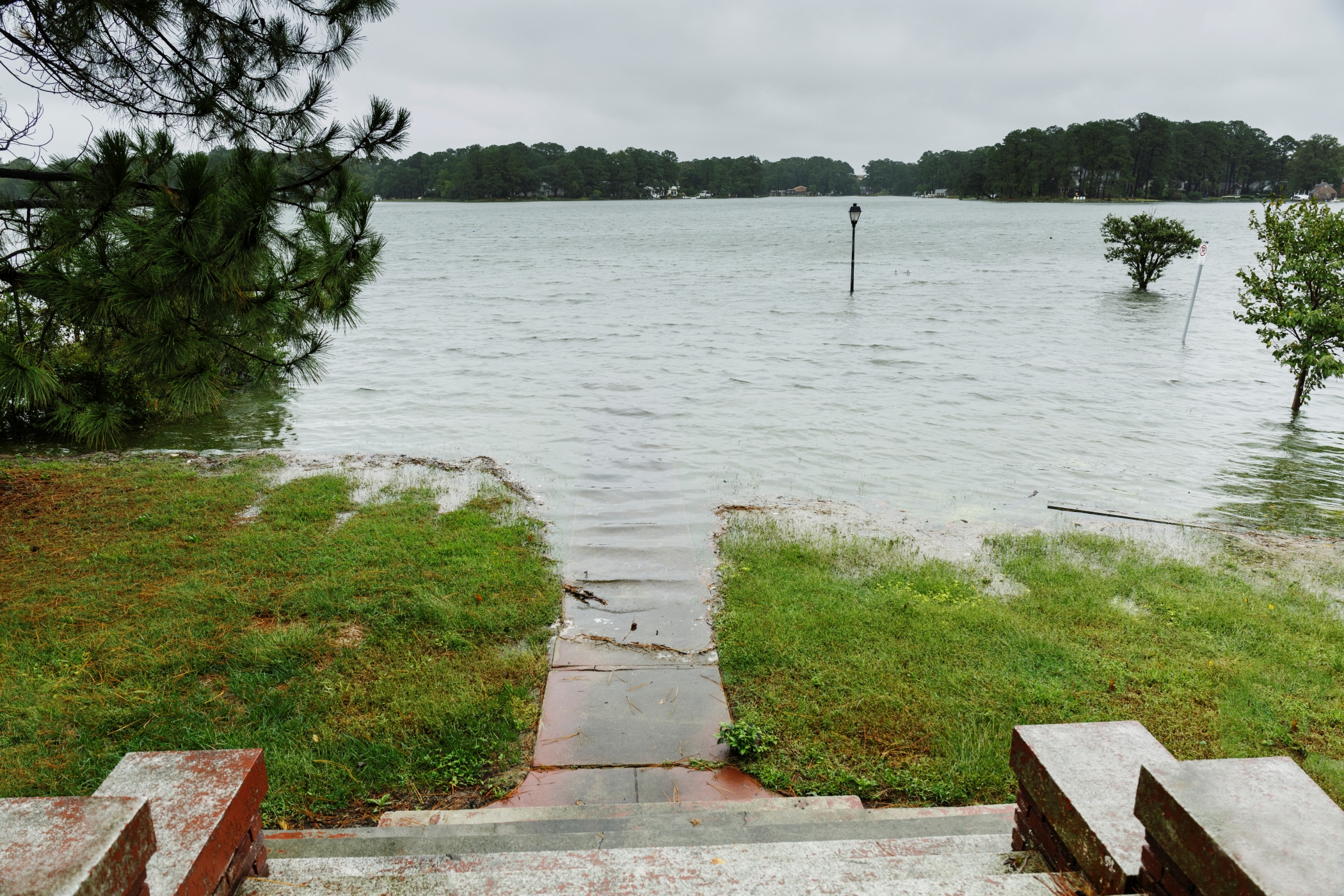
A photo of flooding outside someone's home.

Flooding is becoming more severe and disruptive as our planet warms. (Image credit: Roberto Westbrook via Getty Images)

PP: What will the world look like in 2060 with the committed sea level rise?

SD: According to the last IPCC [Intergovernmental Panel on Climate Change] report, what used to be a once-in-a-100-year event in the present day will occur annually at 19% to 31% of tide gauge locations by 2050. So, at about a quarter of the locations, you will experience these once-in-a-100-year events annually, and that is something that is just mind-blowing.

The changes are happening much quicker in low-latitude locations. The reason is that in the tropics you typically have a less variable climate. You don't have these massive swings all the time. For instance, in the North Sea, we have a storm season, and we have huge tide ranges. We are already adapted to pretty massive changes of multiple meters, so a couple of centimeters of sea level rise do not play out that hard, but in the tropics, where it's more calm, it makes a huge difference.

As an analogy, think about two hurdle runners. You have one hurdle runner that's compared to the tropics; he jumps very consistently but always below the hurdle, so he never makes it over. Then you have another hurdle runner that's the North Sea type of guy. His jumps are very variable. Sometimes he's very high and makes it over that hurdle, but very often he also jumps very low. Now think about lowering that hurdle, which is comparable to increasing sea levels. Suddenly, that hurdle runner who is very consistent makes it over all of the time, while the guy from the North Sea may jump over the hurdle a couple more times, but he also still has the very extreme lows. So, the constant jumper is way more sensitive to these changes.

Editor's note: This interview has been edited and condensed for clarity.

  •  

Tiny Underwater Waves in the Ocean Can Affect the Climate Thousands of Kilometres Away

Calm ocean waves with gentle ripples during sunset, reflecting the sky's colors.Thousands of metres below the ocean’s surface, there are tiny waves moving through the water. Much like breaking waves at the beach, these small waves within the ocean must eventually break. When they do, they create turbulence and mixing, similar to what you feel from a big wave breaking on the beach. This might seem […]
  •  

Scientists Propose Dimming Sun to Combat El Niño

Last month, the United Nations warned that this year’s El Niño, a naturally occurring climate pattern characterized by unusually warm ocean surface temperatures throughout the Pacific, would be particularly extreme.

“The world must treat it as the urgent climate warning it is,” the World Metereological Organization cautioned at the time. “El Niño conditions will pour fuel on the fire of a warming world.”

Indeed, the National Oceanic and Atmospheric Administration (NOAA) confirmed that there was a rising chance of a “very strong” El Niño, triggering drastic temperature swings and more frequent extreme weather events, from severe storms to major flooding. Meanwhile, human-driven climate change will only amplify these effects, making this summer particularly precarious.

But scientists say we’re not entirely helpless. According to a new study published in the journal Science Advances on Wednesday by researchers at UC San Diego, weather-altering interventions — including the radical proposition of dimming the Sun — could tamp down El Niño’s impacts.

The concept, broadly referred to as geoengineering, is deceptively simple. By injecting special particles into the Earth’s stratosphere, more of the Sun’s rays are reflected back into space, allowing the surface below to cool. It’s the same basic principle as a volcanic eruption injecting chemicals that cause global temperatures to drop, like with the Krakatau blast in 1883.

In their study, the researchers argued that “marine cloud brightening,” a solar geongeering concept that involves using aerosols to make clouds over the sea brighter and therefore reflect more sunlight, could “theoretically mitigate extremes” of seasonal phenomena, including El Niño.

“As long-term anthropogenic warming and short-term natural variability often compound to produce extreme weather events, our findings suggest it may be worth considering interventions which target natural variability, rather than the forced response to greenhouse gases,” the paper reads. “Such an approach could result in similar physical risk reduction with shorter duration interventions that carry less sociotechnical risk than a sustained deployment.”

Geoengineering has proven highly controversial in the past, creating a major rift among climate scientists and public outcry that’s halted experiments before they even started. Critics argue it’s a distraction from more important solutions, like reducing the burning of fossil fuels, and that we still don’t have a full picture of possible knock-on environmental effects. There are also major questions of governance — who gets to decide where these aerosols are released and when?

While coauthor and UC San Diego climate scientist Kate Ricke would normally fall into this camp of scientists urging for more research to understand the risks, she and her colleagues argued that extreme but temporary events like El Niños could serve as the perfect testing ground for strategic marine cloud brightening.

“One of the biggest social concerns around geoengineering is the fact that if we use it to reduce long-term climate risks, we have to deploy it continuously for an indefinite period of time,” said coauthor and University of Chicago postdoctoral researcher Jessica Wan, who was a graduate student at Ricke’s lab, in a statement. “If we could target natural variability, we could get some of the benefits of geoengineering without having to employ it indefinitely.”

For their latest paper, Ricke and her team built on a 2023 study which found that bushfire smoke over the Pacific Ocean had emitted major amounts of aerosols, which brightened clouds and caused more solar radiation to reflect back into space.

The team simulated what would happen if cloud brightening chemicals would’ve been deployed intentionally during previous El Niños and found that it would indeed weaken the weather pattern’s effects.

Other experts were left unconvinced.

“These models are imperfect, and there’s the possibility that you’ll create an unpredicted problem that is worse than the problem you’re trying to solve,” Texas A&M University professor of atmospheric science Andrew Dessler, who was not involved in the research, told Wired. “I think this is a really interesting paper, and I learned a few things reading it, but I certainly would not say that this is a great idea and we should implement it.”

As such, considering the many unknowns, there still aren’t any concrete plans to test the idea out in the real world. But the authors argue it’s worth a shot nonetheless.

“It’s a different way of thinking about geoengineering,” said Ricke in the statement. “We need to understand a lot more, but if there is a way to use this in addition to the risk-reduction tools to mitigate El Niños, why wouldn’t we consider it?”

More on geoengineering: Research Paper Warns That There’s a Massive Experiment at Work to Geoengineer the Earth’s Climate

The post Scientists Propose Dimming Sun to Combat El Niño appeared first on Futurism.

  •  

Tropical forests stop absorbing carbon dioxide during El Niño events. This year could be the worst.

Tropical forests draw down and store large quantities of CO₂ from the atmosphere. The Amazon rainforest in South America, for example, stores approximately 123 billion tonnes of carbon — more than is stored in any other terrestrial ecosystem in the world. But these forests are facing a critical challenge.

Research from 2023, which was carried out by me and more than 100 colleagues, found that tropical forests in South America are vulnerable to climate extremes. We determined that during an El Niño event, the warm phase of a natural fluctuation in the Earth's climate system, South American tropical forests may fail to act as a carbon sink.

This finding becomes even more alarming when we consider the increasing frequency and intensity of El Niño events. There have been twice as many "very strong" El Niños in the last 60 years as there were in the 60 years before that. And the US National Oceanic and Atmospheric Administration has recently confirmed that such an El Niño is currently underway.

Tropical forests absorb CO₂ through the process of photosynthesis and convert it into biomass. However, the balance between photosynthesis and respiration is delicate and depends on two factors: temperature and water availability.

In hotter and drier conditions, plants close the pores of their leaves to avoid water loss. But closing them effectively cuts off a plant's fuel supply because it is through these pores they absorb CO₂. This starves plants of the carbon needed for photosynthesis and to grow.

During El Niño years, which are characterized by high temperature anomalies, prolonged climate stress leads to reduced forest growth and increased tree mortality. The effects of this are felt for decades as carbon is released back into the atmosphere when the dead trees decompose.

Our findings revealed that during the 2015-2016 El Niño, when temperatures on land were at least a degree higher on average than usual conditions, some of South America's tropical forests effectively stopped absorbing carbon. This raises concerns about the possible impact of the current El Niño on the Amazon and global climate.

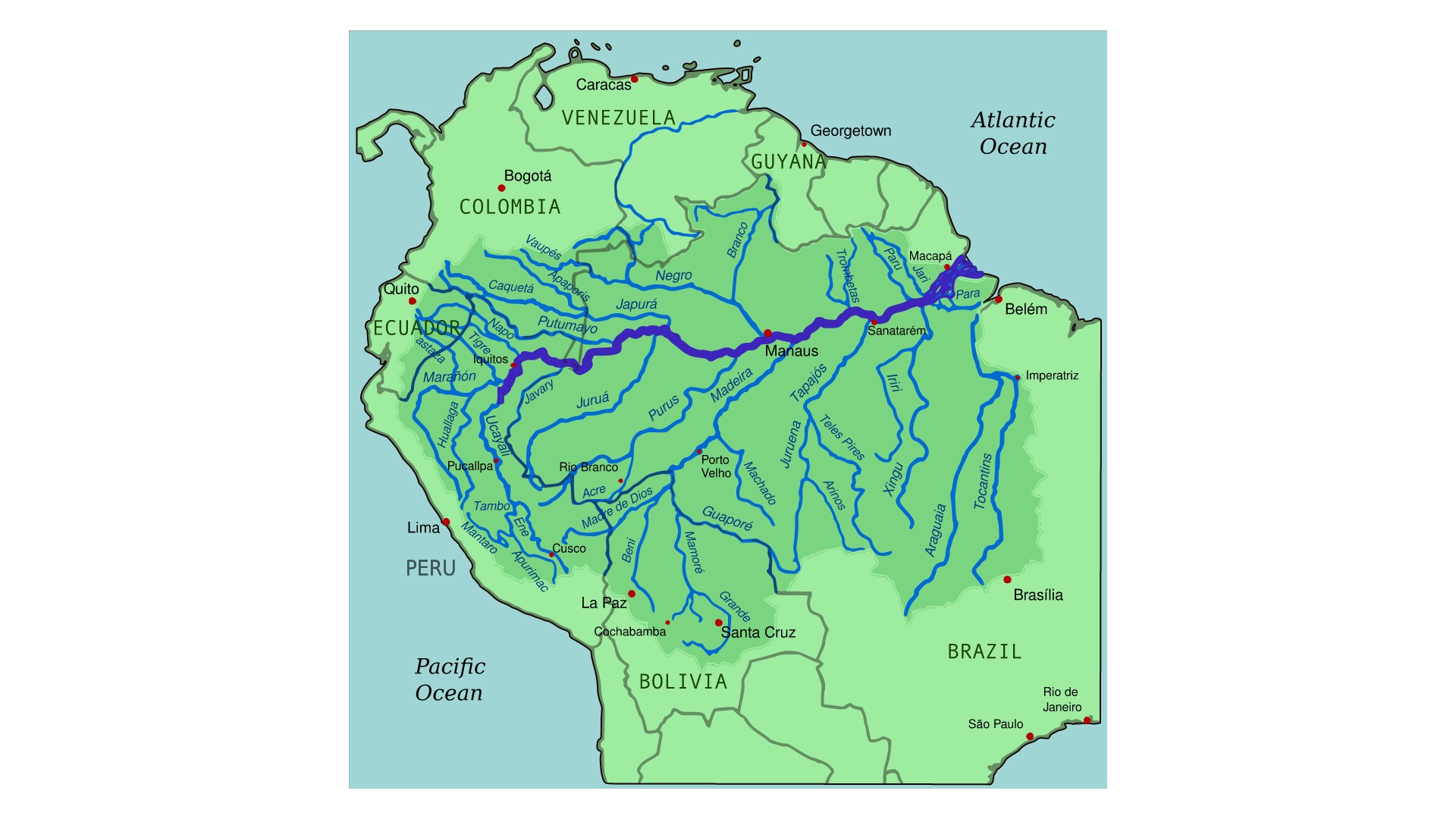
Map of the Amazon River drainage basin with the Amazon River highlighted.

A map of the Amazon River drainage basin in the middle of the Amazon rainforest. (Image credit: By Kmusser from Wikimedia Commons with elements from this file, CC-BY-SA-3.0)

In our research, we measured over half a million trees across six South American countries over a period of more than 30 years, using tape measures to track their growth. These trees belonged to over 4,000 different species. We used this data to calculate precise estimates of the amount of carbon stored as a forest's aboveground biomass.

We found that the vulnerability of these forests to El Niño conditions was closely linked to their baseline climate. While we tend to assume that rainforests are all hot, wet and biodiverse ecosystems, seasonal drought is a reality for many tropical forests. Conditions in regions at the edge of the Amazon rainforest, for example, tend to be particularly hot and dry.

Our findings revealed that drier forests at the edge of the Amazon, where trees regularly endure periods of limited water availability, were especially susceptible to extreme El Niño conditions. On average, a 0.5°C increase in temperature caused these forests to lose 0.5% of their aboveground carbon.

Larger trees suffered the most. While tree mortality rates increased from 1.8% to 3% per year during the El Niño in South American tropical forests as a whole, mortality rates effectively doubled for medium (classified as over 20cm in diameter) and large trees.

The fact that larger trees with less dense wood died at much higher rates compared to small trees and those with high wood density points strongly to hydraulic failure, when intense atmospheric moisture demand snaps the tension in the tree's internal water column rather than slow carbon starvation.

These results suggest that adaption to seasonal drought may not be sufficient to protect tropical forests from extreme events. Climate extremes are possibly already pushing forests at the edges of the Amazon beyond their capacity to adapt, causing catastrophic carbon losses.

A looming threat

Scientists have warned that 2026 may again be the warmest year on record. Heightening the alarm further is the severity of the current El Niño. Never before has an an El Niño begun when oceans are already so warm and air temperatures so high.

On top of this is the fact that, over the past three decades, the edges of the Amazon have experienced some of the highest temperatures and most rapid warming the tropics have ever seen. The structural integrity of a forest is compromised when a major climate anomaly occurs before it has recovered from recent, multi-year stress.

These compounding factors mean that we risk witnessing tree and carbon losses on scales not yet seen.

Tropical forests are invaluable assets in the fight against climate change. But South American tropical forests, a once-reliable carbon sink, are vulnerable to intensifying heat and drought. There is a risk these essential ecological allies stop acting as a carbon sink as extreme climate conditions become the norm.

Preserving tropical forests is thus essential. Their ability to continue acting as carbon sinks hinges on efforts to protect them and a collective commitment to limit global temperature rise. The Amazon's future depends on this, and so does ours.

This edited article is republished from The Conversation under a Creative Commons license. Read the original article.

Rainforest quiz: Can you sort Earth's largest rainforests from biggest to smallest?

  •  

Climate Scientists Aghast at How Bad Things Are Getting, and So Fast

The July 4 holiday weekend wasn’t just a scorcher — it was so hot it disrupted public events and strained power grids as temperatures soared into the triple digits.

Across the pond, Europe is bracing for yet another devastating, record-breaking heatwave. And it’s barely out of the last one, which was responsible for at least 1,300 excess deaths.

Even climate scientists, who have long watched as global warming rears its ugly head, are astonished at the accelerating trend. As Bloomberg reports, their models have long predicted rising temperatures due to human activity and the burning of fossil fuels. Yet the trend is speeding up to a degree that has caught even experts off guard.

The year 2023, in particular, was so far off the charts that researchers are still trying to make sense of what exactly happened. Even when adjusting for extra water vapor from volcanic eruptions, or natural climate variability, the month of September of that year was such a spike, it bored a hole through even the most pessimistic climate models.

“We could call them super-extremes or mega-extremes,” University of Exeter climate change and Earth system science chair Tim Lenton told Bloomberg. “We’re starting to see extremes on a spatial scale and a magnitude that’s really surprising.”

“Extreme events are so far outside anything we have expected,” Imperial College London climate scientist Friederike Otto added. “It’s not so important whether it’s what we expected as experts. It’s whether it’s what we expect as people on the ground.”

If there’s one certainty, it’s that it’s bound to get worse. A slowing of the Atlantic Meridional Overturning Circulation, a system that circulates warm ocean water northward, where it cools back down, could mean even more extreme heat for Europe. Scientists fear that a collapse of the AMOC is no longer a matter of if, but when.

Meanwhile, despite a global shift to renewable energy and major growth in solar electricity generation, much of the world is still moving in the wrong direction. Major corporations are abandoning their climate pledges thanks to the current obsession with AI.

Even the World Bank is giving up on its climate targets as it comes under pressure from the Trump administration, which has been hellbent on dismantling climate initiatives and atmospheric science funding while going all-in on the burning of fossil fuels.

More on climate science: Scientists Horrified by Record-Breaking Ocean Temperatures

The post Climate Scientists Aghast at How Bad Things Are Getting, and So Fast appeared first on Futurism.

  •  

The Pollution Being Churned Out by AI Data Centers Is So Severe That It’s Almost Incomprehensible

The massive surge of fossil fuel-powered data centers cropping up across the country are emitting an enormous amount of pollution, a pulsing indication that we’re headed in the wrong direction in the midst of a climate crisis.

The extent of the this polluting activity is confounding. As climate action group Floodlight found in a recent investigation spotted by Wired, Texas has become the epicenter of the United States’ current obsession with constructing AI data centers. Companies are exploiting regulatory loopholes as they construct new facilities powered by pollutant-spewing onsite gas plants.

The rate of growth of this “shadow grid” of custom power plants, some of which are big enough to fuel entire cities, is so enormous that the only global entity installing more gigawatts of gas plants than Texas is China, according to environmental group Global Energy Monitor.

On a national scale, scientists are still racing to wrap their heads around the environmental footprint of our new AI obsession. Cornell researchers found that at the current rate of AI growth, the burgeoning industry could represent 24 to 44 million metric tons of carbon dioxide emissions by 2030, the equivalent of adding five to ten million cars to US roadways.

Meanwhile, ongoing projects like the one in Abilene, Texas, the starting point of president Donald Trump’s flagship $500 billion Stargate project, are obtaining environmental permits that are usually reserved for small businesses like gas stations or dry cleaners, as Wired reports. The project’s facilities feature a whopping 62 diesel backup generators, making it orders of magnitude bigger than smaller ventures that use just one or two.

According to Floodlight, at least 38 data centers in Texas are using such regulatory loopholes to gain permits for onsite power sources, representing northward of 2,100 backup diesel generators, and yearly emissions of 2,500 tons of nitrogen oxides, which are highly toxic gases.

One common tactic for operators in Texas, according to Floodlight, is to announce a small data center development that would come in under pollution thresholds, only to suddenly expand once established.

Worse yet, for residents, it’s already likely too late to do anything against the data center expansion.

“The only chance to stop something like this is to do it at the very, very, very beginning of the process — before the permit is issued — through the public participation process,” former Texas Commission on Environmental Quality (TCEQ) staffer James Doty told Wired.

More on data center pollution: Amazon Is Spewing a Record Breaking Amount of Pollution to Power Its AI Data Centers

The post The Pollution Being Churned Out by AI Data Centers Is So Severe That It’s Almost Incomprehensible appeared first on Futurism.

  •  

You’ll Never Guess Which Country Is Causing the Most Global Warming

The United States is in the grips of one of the most drastic reversals of green energy infrastructure currently underway on our increasingly warm world. It probably comes as little surprise, then, that the Land of the Free was one of the key drivers of global emissions in 2025.

According to a new statistical review by the Energy Institute, a London-based non-profit, energy supplies are skyrocketing — and as they do, so are emissions.

North America made up 47 percent of the world’s total emissions increase across 2025, led by the US. Much of that was fueled by outsize demand for data centers: as OilPrice.com analyst Robert Rapier notes, the US accounted for 40 percent of global data center electricity consumption, indicative of the impact the country’s AI boom is having on global emissions overall.

Though the US also added some renewable energy — solar capacity alone grew by over 28 percent compared to the previous year — that doesn’t automatically mean dirty, non-renewable energy shrank. As Rapier observes, much of North America’s emissions growth was led specifically by the rising coal-based emissions in the US, which grew by 13 percent.

“Many people assume that if solar and wind are growing quickly, fossil fuels must be shrinking,” Rapier writes. “That is not what the data show. In a growing energy system, both can happen at once. Renewables can rise sharply, while fossil fuel use also rises.”

Part of this is the fact that renewable energy has not grown fast enough to offset other energy sources.

As Rapier obverses, “solar certainly has not failed. But clean energy growth has to be large enough to meet new demand while also displacing existing fossil fuel consumption. In 2025, that did not happen.”

More on climate change: Scientists Horrified by Record-Breaking Ocean Temperatures

The post You’ll Never Guess Which Country Is Causing the Most Global Warming appeared first on Futurism.

  •  

Cold shocks in a warming ocean affect large marine animals

In March 2021, the carcasses of at least 260 marine organisms from 81 species, including large animals called megafauna, washed ashore in South Africa. Scientists questioned whether this event was the result of an extreme temperature drop that can happen when deep, cold water rises to the surface along coastlines. Scientists refer to these rapid cooling events as coastal upwelling. 

Climate change is making oceans warmer, but it’s also making coastal upwelling stronger, with unknown consequences for marine megafauna. Scientists recently studied 2 boundary currents that are rapidly warming and creating strong upwelling near the edges of sharks’ geographic ranges: the Agulhas Current in southern Africa and the East Australian Current in eastern Australia. They wanted to determine whether climate-driven changes in upwelling zones are making cold-shock events more frequent and intense, and how these events are pushing sharks beyond their temperature limits. 

First, the researchers analyzed sea surface temperature data from satellites to see if rapid cooling from upwelling caused the mass marine die-off in 2021. They also obtained hourly temperature recordings from temperature loggers to measure subsurface temperature changes during the event. They found that during the March 2021 event, sea surface temperatures along the coast dropped by up to 7°C (12°F) in less than 48 hours, from 24°C (75°F) to below 17°C (63°F). Subsurface temperatures dropped faster, by more than 9°C (16°F) in 24 hours, from 21°C (70°F) to 12°C (54°F). 

Bullsharks experience physiological stress at temperatures below 19°C (66°F), which is near their lower thermal limit, when migrating through rapid cooling zones. Therefore, the researchers deduced that during the 2021 cold-shock event, the sharks were exposed to temperatures several degrees below their thermal limit, possibly more than 5°C (or 10°F) colder. 

The researchers also tagged 66 bull sharks with acoustic and satellite transmitters – including 41 at the Agulhas Current in South Africa and 25 at the East Australian Current in eastern Australia – to determine how they responded near their lower thermal limits in these zones. The acoustic tags record when sharks pass underwater receivers, providing information on their movements, locations, and water depths at those specific locations. In contrast, satellite tags continuously record the water temperatures and depths the sharks experience over time. 

The researchers used these data to compare sharks living in warm subtropical waters with those living in cooler waters at the edge of their temperature range. The researchers found that low temperatures that persisted for long periods prevented the sharks and other megafauna from physiologically recovering. They saw that some sharks try to swim to shallower depths and look for warmer water, but cooling sometimes happened faster than they could respond. 

The researchers also obtained wind records from the South African Weather Service to determine if upwelling-favorable winds happened before the 2021 event. They reported strong easterly winds pushing cold water on the surface along the coastline immediately before the event occurred. Because the cooling, strong winds, and animal deaths happened at the same time and place, the researchers inferred that upwelling was the main reason for the die-off.

Finally, the researchers examined 41 years of sea surface temperature data and used mathematical models to compute changes in the frequency and intensity of these events. Their analysis showed that rapid cooling events linked to upwelling can last a lot longer than the usual 1 to 3 days. For example, the March 2021 event lasted for 7 days. 

They found that these events have increased in both frequency and intensity in the past decades, and produce more extreme temperature drops than typically happen within 24 hours. Their results suggested that the 2021 die-off was part of an increasing trend, where warming oceans allow species to move into different areas, but intense upwelling can suddenly expose them to fatal cold events. This pattern is what scientists call a climate bait-and-switch. 

The researchers concluded that climate change is making coastal upwelling stronger, which can push marine megafauna beyond their thermal limits, even when initial warming appears to be beneficial. Their findings highlight an understudied aspect of climate change in the context of how temperature and upwelling cause shifts in species survival. They concluded their findings could help predict how marine ecosystems respond to future changing ocean conditions.

The post Cold shocks in a warming ocean affect large marine animals appeared first on Sciworthy.

  •  

CERN Provides Good News on Climate Change as Nature Proves Unexpectedly Resilient

New climate change research conducted at CERN offers rare, hopeful news about the planet’s resilience to global warming, finding that phytoplankton are producing far more heat-mitigating aerosols than previously understood.

In a paper recently published in Nature, the researchers reveal an unexpected picture of how clouds and aerosols have changed since the beginning of widespread fossil fuel use, offering a brighter outlook than may have been expected. The new study identifies our planet’s resilience to anthropogenic climate change, suggesting that Mother Nature may be tougher than we think.

Cloud Formation and Climate Change

Cloud condensation nuclei (CCN), tiny particles suspended in the atmosphere, are the cores around which clouds form. When the amount of aerosol particles in the atmosphere increases, they can produce a cooling effect, both by directly reflecting sunlight before it reaches the Earth’s surface and by acting as CCNs. When the number of particles available in the atmosphere for cloud formation increases, more small clouds form, which are also brighter and provide greater coverage.

Ironically, the particles formed by burning fossil fuels act in this way, mitigating the heating effect of the greenhouse gases released by the same processes, and producing a substantial offset in global warming.

Nucleation, the spontaneous condensation of trace vapors, produces more than half of the CCN in Earth’s atmosphere. The burning of fossil fuels releases sulfur dioxide, which in turn creates sulfuric acid, the most important of these nucleating vapors.

Unexpected Consequences

As emission controls have reduced atmospheric sulfur dioxide, this has created a catch-22, according to the CERN researchers. These particles are detrimental to human health, increasing the risk of lung problems and even heart disease. However, by reducing their atmospheric concentrations, these interventions are projected to increase global warming as aerosol concentrations trend back toward pre-industrial levels.

“Most climate models currently consider only sulphuric acid-driven nucleation,” explained co-author Jasper Kirkby, of the CLOUD Collaboration. “However, it is vital to understand and properly account for biogenic sources to reliably predict the Earth’s future climate and air quality. Observations over the Southern Ocean and in the upper troposphere over the Atlantic and Pacific Oceans indicate that a major source of marine aerosol particles is unaccounted for by current models.”

The CLOUD survey may finally have landed on the identity of this mysterious source. About 20% of atmospheric sulfur comes from marine phytoplankton emitting dimethyl sulfide. As that dimethyl sulfide oxidizes in the atmosphere, it then produces sulfuric acid (SA) and methanesulphonic acid (MSA). While scientists have long understood SA’s role in new particle formation, MSA was poorly understood.

Climate Change Resistance

Through a series of experiments and computer modeling, the CLOUD collaboration discovered that at temperatures below -10 °C, MSA drives particle nucleation in the presence of ammonia just as well as SA, and at temperatures below +10 °C, it drives particle growth, even with minimal ammonia.

“Since MSA and SA generally coexist at similar concentrations in cool marine regions, our findings indicate that particle nucleation rates might be accelerated up to tenfold and growth rates up to twofold compared with sulphuric acid and ammonia alone,” Kirkby said. “Our model simulations indicate that MSA-driven new particle formation may account for the major missing source of marine aerosol particles in current models.”

This work provided important new knowledge to supplement CLOUD’s earlier work identifying large amounts of isoprene-driven new particle formation above tropical rainforests. Between identifying that activity over land and MSA’s newly understood marine CCN formation, CLOUD’s work suggests that the biosphere may be more resilient than previously understood, capable of creating those CCN without anthropogenic emissions to compensate for continuing global warming.

“The CLOUD Collaboration has made an important advance in our understanding of climate”, commented Gautier Hamel de Monchenault, CERN Director for Research and Computing, who was not an author on the study. “It is crucial to deepen our understanding of aerosols: in this case, increased biogenic CCN will affect estimates of the Earth’s climate sensitivity as well as projections of climate warming.”

The paper, “Role of Methanesulfonic Acid in Atmospheric Particle Nucleation and Growth,” appeared in Nature on June 24, 2026.

Ryan Whalen covers science and technology for The Debrief. He holds an MA in History and a Master of Library and Information Science with a certificate in Data Science. He can be contacted at ryan@thedebrief.org, and follow him on Twitter @mdntwvlf.

  •  

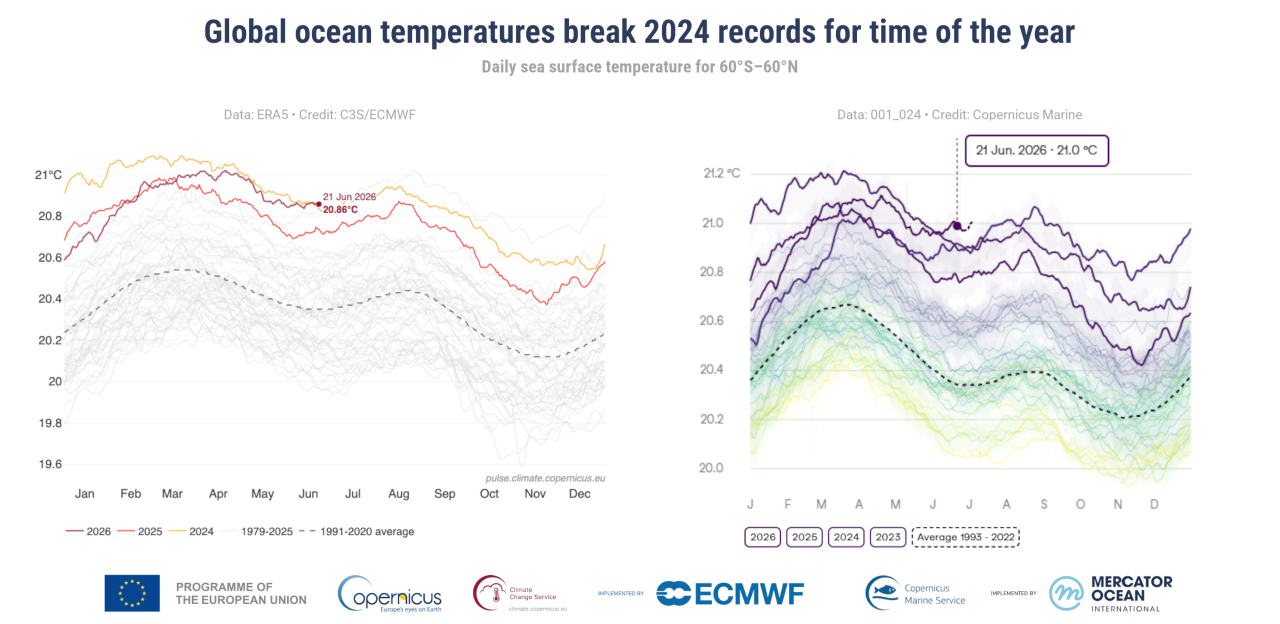
'Uncharted territory': Record high ocean temperatures confirmed for June as El Niño strengthens its grip

June global sea surface temperatures have climbed to record highs, prompting concerns over extreme weather, flooding, sea level rise and stress to global ocean ecosystems.

The record, announced by the European Union's Copernicus Earth observation program on July 1, surpassed the previous record set in June 2024, with experts warning that more temperature records will likely be set over the coming months.

"Current conditions could indicate the beginning of a new phase, leading, once more, to uncharted territory," Carlo Buontempo, director of the Copernicus Climate Change Service at the European Centre for Medium-Range Weather Forecasts (ECMWF), said in a statement. "With ocean temperatures at these levels and El Niño on the horizon, we are likely to see more temperature records fall in the coming months.”

The record temperature was set on June 21, when the Copernicus Climate Change Service recorded global ocean surface temperatures of 20.86 degrees Celsius (69.55 degrees Fahrenheit), beating the record temperature of 20.83 C (69.49 F) set in 2023 and 2024. This measurement was corroborated by the Copernicus Marine Service, an independent dataset that reported temperatures of 21.0 C (69.8 F).

Graphs to show increasing global sea surface temperatures

Graphs to show increasing global sea surface temperatures from two independent data sources (Image credit: Copernicus)

The recent sea surface heating did not occur evenly across the globe. In some areas, such as the Mediterranean, temperatures in June were up to 8 C (14.4 F) higher than average for the period from 1990 to 2020, as per data recorded on June 29, according to the European Space Agency.

The most significant rises in temperature were set in the Mediterranean, the Baltic Sea, bands across the Pacific and off the coasts of Northern Canada.

Warmer ocean temperatures have wide-ranging impacts. "Higher ocean temperatures keep the atmosphere warm for longer, provide extra energy to storms and increase evaporation, thus enhancing the potential for extreme precipitation and flooding," Copernicus Climate Change Service representatives said in the statement. "Ocean warming also contributes to sea level rise and ice melt, and stresses marine ecosystems."

According to data from the Copernicus Climate Change Service, the newly declared El Niño in the Pacific Ocean — the warm phase of a natural climate cycle. This El Niño is likely to reach levels that have not been seen in decades, with more temperature records expected to be set over the coming months as this Pacific heat is injected into an already warming world.

The service added that it remains to be seen whether these temperature spikes are temporary or indicative of longer term trends.

  •  
❌