❌

Reading view

Acapulco Leads Imagen Awards With 13 Nominations

Acapulco Imagen Awards recognition has given Apple TV’s bilingual comedy one more victory after its fourth and final season. The series leads the 41st Annual Imagen Awards with 13 nominations, placing its cast, directors, music team and production among the year’s most celebrated examples of Latino creative work.

The Imagen Foundation announced the nominations Thursday as part of its annual program recognizing Latino talent and representation across film, television, music, documentaries and digital media. Acapulco received more nominations than any other series, including recognition for Best Comedy Series and multiple acting and directing performances.

The awards organization also announced that actor, filmmaker, producer and musician Andy Garcia will receive its Lifetime Achievement Award. Garcia is separately nominated for his supporting performance in Landman, giving the ceremony another connection between a career-spanning honor and current screen work.

For Apple TV, the nominations extend the life of a series that completed its run in September 2025. Acapulco may have checked out of Las Colinas, but the Imagen Awards are giving the resort one more crowded week.

Acapulco Imagen Awards Reach Across the Production

The 13 nominations show how widely the Imagen Foundation recognized the series rather than concentrating only on its lead actors.

Acapulco is nominated for Best Comedy Series, while Oscar Almengor and Santiago Limón both received Best Director nominations. Javier Nuño and Joe Rodríguez were recognized for Best Music Supervision for Film or Television.

Enrique Arrizon and Camila Perez are both nominated in the Best Actor — Comedy category. Although the category name uses “Actor,” the Imagen Foundation placed performers of different genders together in the 2026 comedy field.

The supporting categories gave Acapulco an especially strong presence. Eugenio Derbez, Fernando Carsa, Carlos Corona and Cristo Fernández received Best Supporting Actor — Comedy nominations. Vanessa Bauche and Keyla Monterroso Mejia are nominated for Best Supporting Actress — Comedy.

That distribution reflects the ensemble structure that allowed Acapulco to run for four seasons. The series used Máximo Gallardo’s memories as its entry point, but Las Colinas worked because the hotel was filled with characters whose ambitions, friendships and disasters could carry stories of their own.

The show’s visual identity often received attention first. Its bright colors, resort setting and polished 1980s design made it easy to recognize within seconds. The Imagen nominations reach beyond that appearance and recognize the performances, direction and music that gave the setting its emotional rhythm.

Samantha Orozco and Enrique Arrizon in Acapulco
Image Credit: Apple Inc.

A Final Season That Kept the Ensemble Moving

The fourth season returned to Las Colinas with two connected timelines. In the present day, Máximo worked to restore the hotel before its reopening. In 1986, his younger self tried to protect Las Colinas after a competing resort claimed the top position in Acapulco’s annual hotel rankings.

That structure allowed the series to close the distance between the ambitious young employee played by Arrizon and the successful older man played by Derbez. The final episodes had to complete character relationships, resolve the hotel’s future and explain how youthful choices shaped the life Máximo later built.

The Imagen nominations suggest the final season avoided becoming a farewell built only around nostalgia. Its actors remained competitive across several categories, and both nominated directors received recognition for guiding individual parts of the closing chapter.

Acapulco also maintained its bilingual identity throughout the run. English and Spanish were not treated as occasional flavor or a translation exercise. They reflected the characters, workplace and cultural setting. That helped the series reach an international audience without removing the Mexican identity at its center.

For Apple TV, that combination provided a comedy that could travel globally while remaining tied to a specific place and community.

Apple TV Earns Recognition Beyond One Series

Acapulco delivered Apple TV’s largest Imagen Awards presence, but it was not the service’s only nominated production.

Pluribus received a nomination for Best Drama Series, while Carlos-Manuel Vesga was nominated for Best Supporting Actor — Drama. The Morning Show earned nominations for director Miguel Arteta and supporting actor Nestor Carbonell.

Peter Dager of Stick joined Carbonell in the supporting comedy category, while Mariana Treviño received a Best Supporting Actress — Comedy nomination for the same series. Isabella Gomez was recognized for Shrinking, and Aimee Carrero received a nomination for Your Friends & Neighbors.

Apple’s animated series also appeared in the youth category, with WondLa and Wonder Pets: In the City both nominated for Best Youth Programming. Harvey Guillén received a Best Voice-Over Actor nomination for Shape Island.

The broader list reinforces Apple TV’s ability to attract Latino performers and creators across genres rather than through one designated cultural title. Drama, workplace comedy, animation and mystery all contributed to the service’s presence.

Acapulco remains the centerpiece because its 13 nominations represent recognition of an entire production, not a single breakout performance.

Enrique Arrizon in Acapulco
Image Credit: Apple Inc.

Andy Garcia Receives a Career Honor

Andy Garcia’s Lifetime Achievement Award gives the ceremony a different scale. His career has moved through major studio films, independent productions, television, directing, producing and music over several decades.

Garcia became widely known through films including The Untouchables, Internal Affairs, The Godfather Part III and Ocean’s Eleven. His performance as Vincent Mancini in The Godfather Part III earned him an Academy Award nomination, while later roles allowed him to move between crime drama, comedy, family stories and television.

His Imagen recognition also reflects a career shaped by Cuban American identity without limiting him to one type of role. Garcia has frequently spoken about cultural representation, creative ownership and the difficulty of bringing Latino-centered stories through the traditional Hollywood system.

The Lifetime Achievement Award arrives while Garcia remains active rather than functioning as a retirement tribute. His nomination for Landman places him directly inside the current awards field he is being asked to help represent.

That combination suits the Imagen Foundation’s mission. The honor recognizes longevity, but it also connects Garcia’s career with the actors, directors and producers building the next generation of Latino entertainment.

A Strong Farewell for Las Colinas

Acapulco ended after four seasons, which makes the scale of its Imagen recognition especially satisfying. The series did not need a fifth season announcement to extend its cultural presence. Its final production year generated enough work to lead an entire awards field.

The show also leaves Apple TV with a useful model for international programming. Acapulco was local without being narrow, bilingual without turning language into a gimmick and colorful without allowing its visual style to replace character development.

Its 13 nominations cover the exact areas that sustained that model: acting, direction, music and the series as a whole. The result is less like one last souvenir from Las Colinas and more like a full luggage cart.

Winners of the 41st Annual Imagen Awards will be announced during the ceremony in August. Acapulco will arrive with the largest number of chances, while Andy Garcia receives an honor that extends far beyond one performance or season.

The hotel may have closed its final television chapter, but the Imagen Awards have found 13 reasons to reopen the doors.

The post Acapulco Leads Imagen Awards With 13 Nominations appeared first on AppleMagazine.

  •  

The 10 best British sci-fi shows of all time

America and Hollywood might feel like the natural home of sci-fi, but Britain has quite the science fiction pedigree of its own.

Doctor Who is obviously our great nation's most famous sci-fi export, standing tall amongst the other giants of the genre, but it's far from our only contribution. From television to literature, there is a history of some truly great and groundbreaking science fiction coming from this loose collection of islands.

So, make yourself a nice cup of tea and have a seat while we break down the UK’s 10 best science fiction shows of all time (in no particular order).

1. Doctor Who

David Tennant and Billie Piper as The Doctor and Rose Tyler in Doctor Who.

(Image credit: BBC)

Release date: November 23, 1963 | Seasons: 41 | Cast: William Hartnell, Patrick Troughton, Jon Pertwee, Tom Baker, Peter Davison, Colin Baker, Sylvester McCoy, Paul McGann, Christopher Eccleston, David Tennant, Matt Smith, Peter Capaldi, Jodie Whittaker, Ncuti Gatwa (& many more)

Doctor Who might not be the juggernaut that it once was, but it is one of the longest-running science fiction shows in the world. It's been going (on and off) since 1963, and it has always had something important to teach its audience.

From the off, it was a show championing scientific curiosity, kindness, and openness, though the stern tones and prickly demeanour of William Hartnell have since given way to a minimum of 14 different actors playing the same role.

While there’s certainly a difference between the original run of television serials and the typically self-contained format of the modern incarnation, the sheer wealth of different stories available means you can find something for everyone.

2. The Quatermass Experiment

Screenshot from The Quatermass Experiment (1953)

(Image credit: BBC)

Release date: July 18, 1953 | Seasons: 4 | Cast: Reginald Tate, Wilfrid Brambell, Katie Johnson

From Doctor Who to one of its contemporaries, or rather, the show that inspired it. The Quatermass Experiment was a set of four different sci-fi serials, each containing 6 episodes, that debuted in 1953, a full decade before Who hit our screens.

The Quatermass Experiment is a striking piece of television, partially because it was really the first of its kind, because it was squarely aimed at adults. Before this, most sci-fi TV was aimed at kids, while silver screen efforts focused on schlocky B-movie-style effects, such as those seen in “The Day the Earth Stood Still”.

Humanity's first rocket launch to space goes awry when it returns to Earth with two crew members missing, and the one remaining astronaut is gravely ill. Professor Quatermass and his team are left struggling to unravel the mystery of what happened to the crew.

While only the first two episodes managed to survive the original live broadcast, the serial still went on to have a huge impact on science fiction. It was one of the first sci-fi shows with mass appeal, and the trio of follow-up serials kept Bernard Quatermass as an icon of pop culture all the way into the 70s, with a variety of Hammer Horror adaptations to bring the character to new audiences.

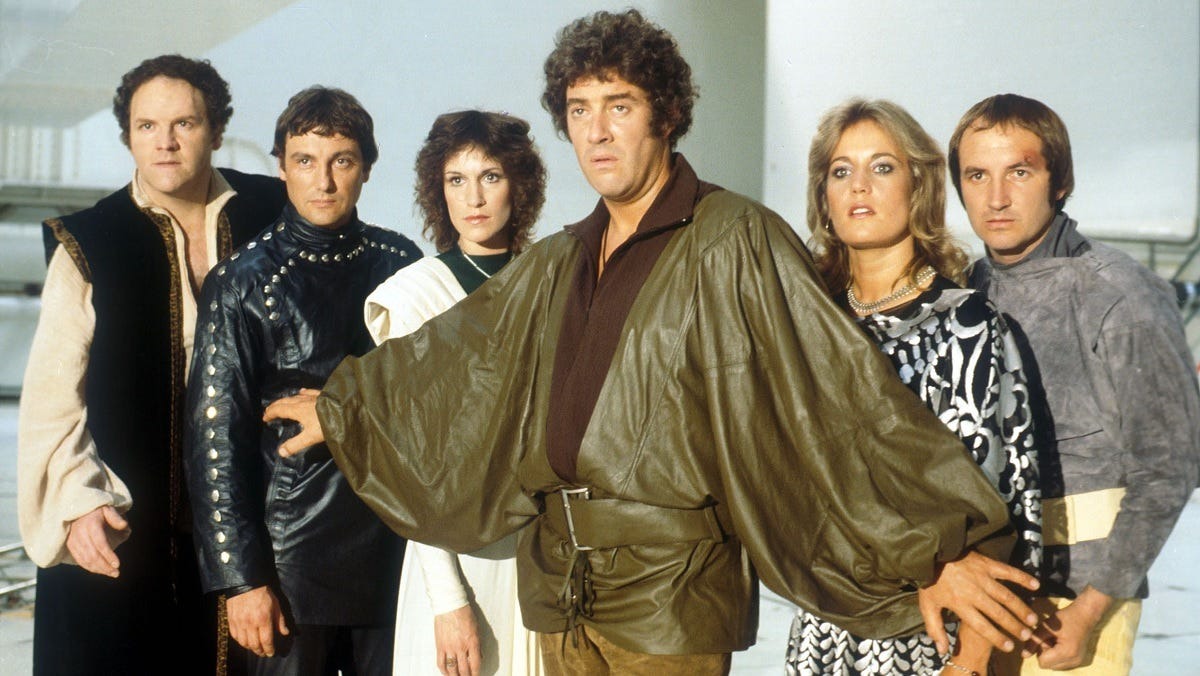
3. Blake’s 7

Screenshot from sci-fi show Blake's 7

(Image credit: BBC)

Release date: January 2, 1978 | Seasons: 4 | Cast: Gareth Thomas, Michael Keating, Sally Knyvette, Paul Darrow

And now for something completely different: Blake 7, aka one of the grittiest and most depressing space shows that Britain ever produced.

Blake’s 7 tells the story of Roj Blake, a political dissident working against the totalitarian Federation controlling Earth and its colonies. On his way to a lifetime of false imprisonment, Blake manages to escape and capture a powerful alien vessel, which he then crews with another 5 people and 1 computer, to work together to overthrow the federation.

While most sci-fi of the time was chipper and optimistic about our future, Blake’s 7 was a sci-fi show that explored themes of political dissidence, cynicism, and freedom fighting. It’s a show about a small group fighting a much more powerful enemy, and frankly, it goes to some very, very dark places. When the phrase “mass-murder” has to be bandied around more than once, you know you've left happy-go-lucky behind.

It has an incredibly dour feeling most of the way through, and the ending does nothing to change that vibe. Dark tone aside, Blake’s 7 is the sort of sci-fi show that we just don’t see anymore.

4. The Prisoner

Screenshot from The Prisoner (1967)

(Image credit: ITV Studios)

Release date: September 29, 1967 | Seasons: 1 | Cast: Patrick McGoohan, Angelo Muscat, Peter Swanwick, Denis Shaw, Fenella Fielding

If you’re a British sci-fi fan of a certain vintage, then you should already be familiar with The Prisoner.

Filmed (mostly) in Portmeirion, the show has some of the most iconic visuals in sci-fi history, despite only being a single self-contained series. From the giant evil balloon, known as Rover, to the beautiful houses of Portmeirion itself, The Prisoner is an incredibly visually striking show.

It follows the plot of a British secret agent who becomes frustrated with his position and resigns. While preparing for a trip, he is rendered unconscious using knockout gas and awakes to find himself inside a perfect recreation of his own home, but this one is located in a mysterious settlement known as The Village.

The plot goes to some wild places from there, but the story is deeply rooted in the societal fear that was surrounding the ongoing counter-cultural movements of the day. Individualism is pitted against collectivism throughout the show, and it’s a testament to the writing that neither ideal is shown to be the obvious right choice by the end.

5. Red Dwarf

Screenshot from the TV show Red Dwarf

(Image credit: BBC)

Release date: February 15, 1988 | Seasons: 12 | Cast: Chris Barrie, Craig Charles, Danny John-Jules, Robert Llewellyn, Norman Lovett

If you’re into Space and British Comedy but you’ve not watched Red Dwarf yet, then what the smeg have you been doing?

This space sitcom follows the adventures of mega-slob Dave Lister, his neurotic, hologramatic bunk-mate Rimmer, their evolved Cat (of the same name), and square-headed mechanoid Kryten. Each episode sees the crew dealing with various sci-fi calamities, from emotion-sucking monsters and time travel shenanigans to being stuck on a frozen asteroid, as they make their way through a harsh galaxy.

The show packs some of the funniest moments in British TV history, especially during the first 5 series or so. They parody every sci-fi concept known to humanity, balancing straight comedy, horror, and drama. You'll get introspective looks at what it means to be human alongside ridiculous situations where Lister gets turned into a 6-inch-tall RoboCop rip-off.

It's also deeply rooted in the British working-class culture of the time, which means plenty of time for curry, beer, banter, and slobbing around the place.

6. Hyperdrive

Screenshot from Hyperdrive (2006)

(Image credit: BBC)

Release date: January 11, 2006 | Seasons: 2 | Cast: Nick Frost, Kevin Eldon, Miranda Hart, Stephen Evans

In a similar vein to Red Dwarf, but nowhere near as popular, Hyperdrive is a Nick Frost-led sci-fi sitcom from 2006. It tells the tale of a British spaceship, the HMS Camden Lock, in its attempts to serve the national interest in an ever-evolving galaxy.

Starring British comedy favourites such as Kevin Eldon and Miranda Hart, Hyperdrive is a very silly show that ended up more like a workplace sitcom in space rather than the next Red Dwarf.

What saves Hyperdrive is the dry humour and the slightly insane set and character design. The series is replete with a baffling array of alien races, almost all of which are basically humans with varying levels of prosthetic facial makeup or zany outfits. Some of these guys are obvious parodies of alien races from classic shows, but they’re all thoroughly weird and worth the price of admission on their own.

7. The Hitchhiker’s Guide to the Galaxy

Screenshot from the The Hitchhiker’s Guide to the Galaxy Tv series

(Image credit: BBC)

Release date: January 5, 1981 | Seasons: 1 | Cast: Peter Jones, Simon Jones, David Dixon, Mark Wing-Davey, Sandra Dickinson

If you’re more familiar with the movie adaptation or the original radio show, then you might have missed out on the slightly more obscure The Hitchhiker’s Guide to the Galaxy TV series. A decent amount of the radio cast reprise their roles in this single season of British TV, and much like the radio show, the production was ground-breaking for its time.

The show is a ramshackle blend of production techniques, using everything from model shots, classical animation, and even a fair few instances of matte painting to show the truly impossible on a grand scale.

As a result, the TV show has its own surreal vibe that isn’t always found in other versions, and it can get surprisingly grimy and dark when it needs to. Plus, if you get the DVD version, there’s an added joke where every so often it’ll pretend to have an ‘infinite improbability drive’ issue and stop working.

8. Black Mirror

a man is hooked up to a VR memory machine

(Image credit: Netflix)

Release date: December 4, 2011 | Seasons: 7 | Cast: Basically everyone

Any talk about British sci-fi cannot fail to mention Charlie Brooker’s seminal science fiction Netflix series that was so popular it damn-near became a phenomenon.

If you’ve somehow missed out on the show so far, it’s a sci-fi anthology series where each episode tells a self-contained story, usually about an element of modern-day society. This ‘reflecting society’ element is why it’s called ‘Black Mirror’, as it could be said the show is holding up a ‘black mirror’ to society.

Black Mirror mostly works in the realm of speculative fiction, but several episodes have a more contemporary, real-world setting. The bulk of the show, though, deals with the pitfalls of technology, modern consumer culture, and the modern media landscape, certainly realms more than familiar to science fiction.

9. Life on Mars

Screenshot from Life on Mars TV show

(Image credit: BBC)

Release date: January 9, 2006 | Seasons: 2 | Cast: John Simm, Philip Glenister, Liz White, Dean Andrews, Marshall Lancaster

While it might not be what you immediately think of when it comes to sci-fi, Life on Mars is a fantastic show that straddles the space between speculative science fiction and crime drama, though it’s closer to ‘A Stir of Echoes’ rather than ‘Childhood’s End’.

The show tells the story of Sam Tyler, a modern-day police officer who hits his head and wakes up in the 1970s. While trying to figure out what’s going on, Sam has to deal with the realities of life and policing in the UK in the early 70s, something that’s shockingly entertaining to watch him attempt to juggle.

The real draw of the show is the mystery. Throughout the runtime, you’re never really sure if he has travelled back in time or if he’s either dead or in a coma. Even when you start to think that the show is giving you answers, you’ll soon find the rug pulled out from under you, and the want to finally learn what is happening will keep you coming back.

10. Utopia

Screenshot from Utopia TV show (2013)

(Image credit: Channel 4)

Release date: January 15, 2013 | Seasons: 2 | Cast: Alexandra Roach, Nathan Stewart-Jarrett, Paul Higgins, Fiona O'Shaughnessy, Adeel Akhtar

The final entry on the list is a bit more of an obscure one. Back in 2014, Channel 4 put out Utopia, a sci-fi conspiracy thriller with a comedic bent to it.

Utopia follows a group of nerds who discover a comic has been predicting historic events and accidentally unmask a shadowy conspiracy. While the show was unceremoniously ended after only two series, and on something of a cliffhanger, it offers something that is dark, gritty, humorous, and horrific in equal measure.

Utopia doesn’t shy away from the violence inherent in telling a dystopian story. In fact, the level of violence can be a bit much at times, which is part of the reason some audiences shied away from it. But, if you can stomach it, Utopia is some of the most thrilling British sci-fi ever produced.

More sci-fi TV

That’s it for our list of excellent British Sci-Fi Shows, but if you enjoyed the list, you might want to check out our list of upcoming sci-fi shows. If the big screen is more your speed, we also have a list of upcoming sci-fi movies.

  •  

'Once Upon a Time in Space': How to watch PBS's out-of-this-world astronaut documentary

As our planet revels in the recent achievements of this spring’s Artemis 2 mission and its four astronaut crew members, a new four-part PBS documentary series takes a scrutinizing look at space exploration and its inherent perils and promises. "Once Upon a Time in Space" will be available to watch on PBS (and the PBS app) starting on July 14, 2026 (9pm ET).

Directed by James Bluemel and his filmmaking team — the crew behind the award-winning "Once Upon a Time in Northern Ireland" and "Once Upon a Time in Iraq" — "Once Upon a Time in Space" explores the connections between those venturing beyond Earth's gravity and the support staff remaining behind while pioneering souls venture into hostile outer space territory.

"'Once Upon a Time in Space' tells the human stories behind one of our most extraordinary endeavors: the exploration of space," states the official synopsis. "Moving beyond scientific achievement, the series examines the personal experiences of astronauts, cosmonauts, ground-based participants, and the loved ones left on Earth. Across four episodes, it traces significant landmarks in spacefaring history, from the birth of the Shuttle and the pioneering Space Station Mir to the rise of commercial spaceflight."

a promo poster for a space documentary series

"Once Upon a Time in Space" launches on PBS on July 14 (Image credit: PBS/BBC)

"Through powerful firsthand testimony and intimate, unseen archival footage, a complex portrait of humanity emerges: one that lays bare both our fragility and boundless curiosity. Accounts of bravery, friendship, and tragedy are told against the backdrop of a rapidly changing world, connecting technical and geopolitical developments to those who experienced them."

Here’s a schedule of the docuseries’ chapters and their slated air dates:

  • Episode 1 "America First" – Tuesday, July 14 – 9:00 p.m. ET
  • Episode 2 "The Russian Thing" – Tuesday, July 21
  • Episode 3 "Politics Always Wins" – Tuesday, July 28
  • Episode 4 "Friends Forever" – Tuesday, August 4

This remarkable show features NASA astronauts Charlie Bolden, Anna Lee Fisher, Bill Fisher, Michael Foale, Jerry Linenger, Mike Mullane, Dan Tani, and Terry Virts. They’re joined by cosmonauts Sergei Zalyotin and Alexander ‘Sasha’ Lazutkin, NASA officials, aerospace engineers, and numerous family members.

Produced in collaboration with the BBC, "Once Upon a Time in Space" was first broadcast last fall in the UK, but now makes its U.S. premiere at 9:00 p.m. ET on PBS, PBS.org and the PBS app.

  •  

"The Ninth Jedi" is a bold new Star Wars anime project hitting Disney+ next month, and it looks sick!

Disney+’s imaginative anime anthology series, "Star Wars: Visions", is getting a standalone expansion next month with "Star Wars: Visions Presents –The Ninth Jedi".

This 8-episode limited series is a continuation of the saga of Lah Kara, Margrave Juro, and their ragtag crew in the search for her kidnapped father. "Star Wars: Visions Presents – The Ninth Jedi" debuts on Disney+ on Aug. 5, 2026.

Fans were first introduced to the intriguing story in "Star Wars: Visions" Volume 1’s chapter titled "The Ninth Jedi", and now writer/director Kenji Kamiyama and his animation studio Production IG will revisit Kara’s world to elaborate more on the mythology behind lightsabers of different hues.

In the original 2021 episode, viewers met a bright Force-sensitive girl named Kara and her sabersmith father, Zhima, as they harvest Kyber Crystals to forge new lightsabers for Margrave Juro, the leader of an outer rim planet called Hy Izlan.

Juro is collecting worthy Jedi to help repopulate the Jedi Order, but evil Sith mercenaries are hiding within his candidates’ ranks. Kamiyama’s short initially presented the cool notion of lightsabers changing colors to reflect their users’ true links to the Force.

A direct sequel to Kamiyama's episode, "The Ninth Jedi: Child of Hope," was delivered by anime master Naoyoshi Shiotani and premiered on Oct. 29, 2025, for "Star Wars: Visions" Volume 3. Lucasfilm's new show takes place shortly after the events seen in the two "Star Wars: Visions" shorts as Kara advances her training and searches for her father.

a poster for an anime series with a girl holding a green lightsaber

(Image credit: Disney+)

"Every time we finished one of the anthologies, the first conversation would be, 'God, I’d love to expand that story,'" James Waugh, Lucasfilm Senior V.P. and "Star Wars: Visions" executive producer, told TechRadar last year after the project was announced at Star Wars Celebration Japan.

"We love the shorts, but Kathy [Kennedy] heard that, and there was a moment to say, 'Let’s see what could happen if we expanded this.' That’s really where 'Visions Presents' comes from. If we could give a bigger canvas to paint on, what would we get? We’ve been so impressed with what Kamiyama and his Production IG team has delivered so far."

Directed by Shunsuke Tada and with Kenji Kamiyama acting as supervising director, "Star Wars: Visions Presents - The Ninth Jedi" arrives Aug. 5 on Disney+ and Hulu.

Watch The Ninth Jedi on Disney+:
Disney+ (With Ads): $11.99/month
Disney+ Premium (No Ads): $18.99/month or $189.99/year

Watch The Ninth Jedi on Hulu:
Hulu with Ads: $11.99/month or $119.99/year
Premium (No Ads): $18.99/month

  •  

Why space games still struggle with the scale of the universe

Space is incomprehensibly vast. So huge that the human mind struggles to even conceptualize it. The observable universe spans roughly 93 billion light-years. Even our own humble galaxy, the Milky Way — a few tiny stitches of the universal canvas — stretches across 100,000 light-years and contains hundreds of billions of stars.

It's no wonder, then, that space video games struggle so mightily with anything approaching a "realistic" interpretation of those incredible distances, especially in an age where we have yet to invent a technology that can traverse them in a reasonable time.

The Artemis 2 mission's Orion module got up to speeds of around 25,000 mph during its trans lunar injection burn. Ignoring fuel and safety concerns, at those speeds, it would still take us at least 80,000 years to reach our nearest neighbor, Alpha Centauri.

So how do game developers manage to distill some of the awe of the vastness of space while making it feel like a manageable space? How do they shrink space to a navigable size without making it feel small or claustrophobic?

I spoke to astrophysicist Dr. Jeffrey Bennett, founder of Big Kid Science and author of "The Scale of the Universe", to get a sense of the scope of the problem.

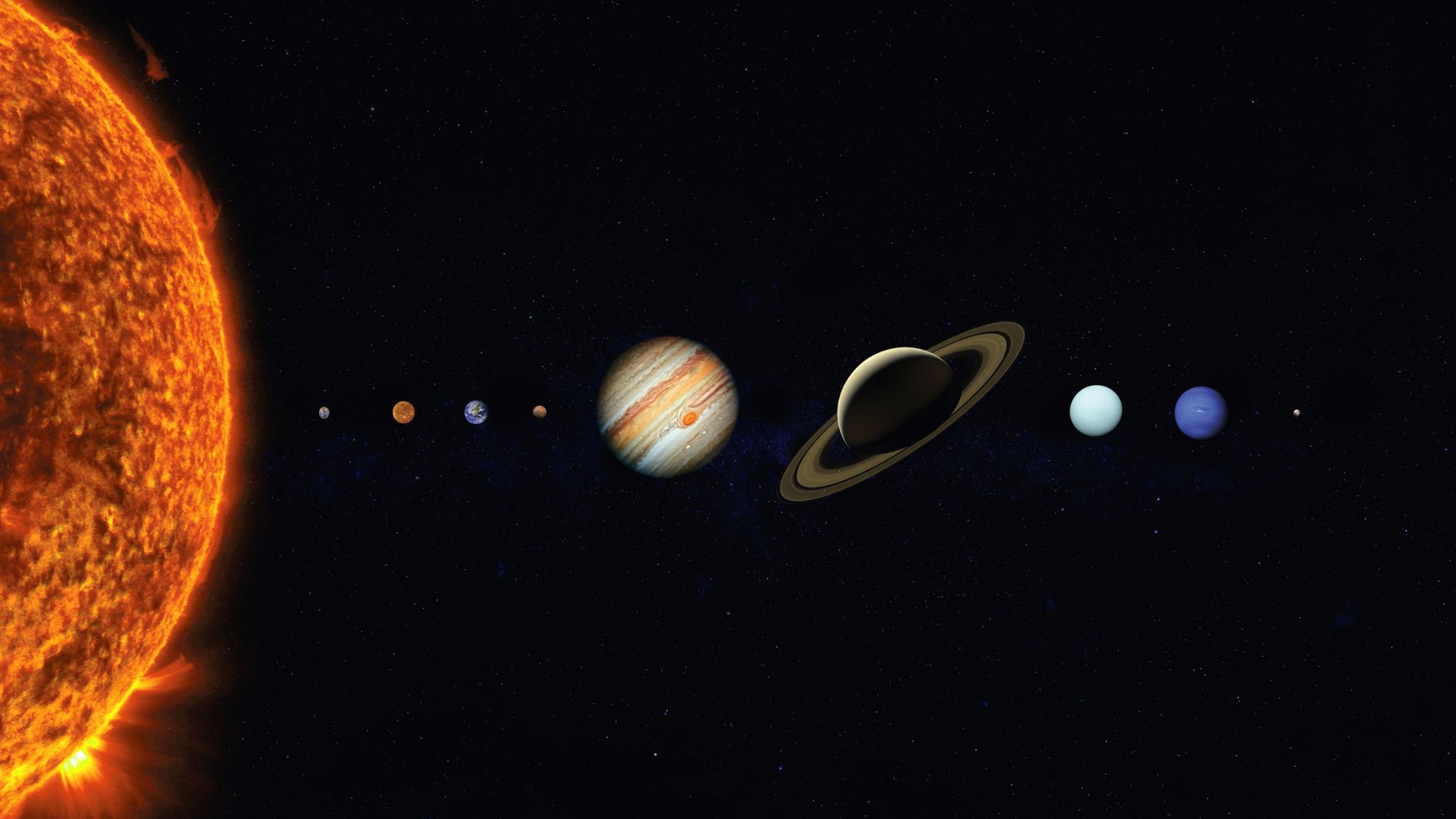
The true scale of space

The sun on the left and all the planets in order from left to right.

(Image credit: wasan prunglampoo/Getty Images)

"On a 1 to 10 billion scale — which makes the Sun about the size of a large grapefruit — Earth is smaller than the ball point in a pen and located about 15 meters (49 feet) away from the Sun," explains Bennett. "On that same scale, the Moon — the farthest a human being has ever traveled — lies only about 4 centimeters (1½ inches) away from us. The planets of our solar system are much farther, though you can still walk to the outermost planets in only 10 minutes or so."

Bennett said most science fiction films and games get the scale wrong by making long-distance travel look too easy. Considering the above 1-to-10 billion-scale representation, for instance, and given that reaching the outermost planets in our system — far further than any human being has ever travelled — would take ten minutes, "to reach the nearest stars, you’d have to walk the distance across the United States."

Just simulating a small part of the existing universe would push current hardware to its limits, even with crutches like procedural generation. Developers use various techniques, like level-of-detail scaling, instancing, and streaming, to create the illusion of vastness without melting hardware.

Bennett also talks about how scale works in the case of interstellar objects like asteroids and maneuvering around them.

Films and games, he says, "tend to make it look very difficult to avoid collisions with asteroids, with spacecraft having to dart this way and that to pass through an asteroid region safely. In fact, while there are many millions of asteroids in the asteroid belt of our solar system, the full region is so large that it would take incredibly bad luck to crash into an asteroid by accident. That is why spacecraft studies of asteroids require careful planning to get a spacecraft close enough to any asteroid to get photos and other data."

The reality is that even in its most populated regions, asteroids are typically hundreds of thousands to millions of kilometers apart in our system's asteroid belt. Standing on one of the asteroids, it would be incredibly unlikely that you'd be able to see even one of the largest other asteroids with the naked eye.

How games cope with the enormity of space

Screenshot from the space trading and combat game X4: Foundations, showing a view out of a spaceship's cockpit into an asteroid field.

(Image credit: Egosoft)

"This absolutely IS a design conflict that all space games have to solve," said Bernd Lehahn, Founder and Managing Director of Egosoft, the company that makes the successful X franchise of space simulators (most recently X4: Foundations).

"On the one hand, space must feel very large, or else players will feel cheated. Space and sci-fi have always been about the dream of infinite distances and exploration in a seemingly endless universe. At the same time, most games, the X games included, do not want to force players through unnecessarily long flight times or, god forbid, boredom."

Lehahn says his studio tries to strike a balance between areas that feel more content dense with regions that feel more like an unsettled frontier, to impart a sense of the true emptiness of space.

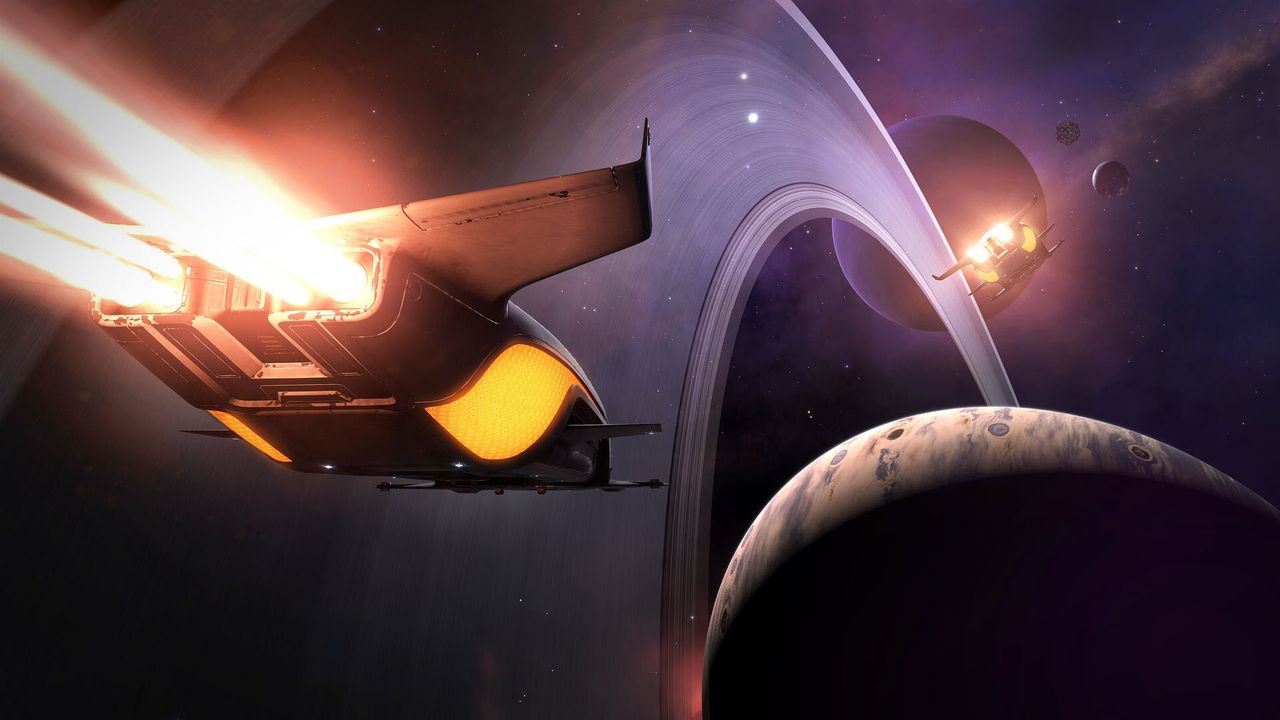
Screenshot from the space trading and combat game X4: Foundations, showing a yellow spaceship flying past a ringed gas giant.

(Image credit: Egosoft)

"There should be room for both extremes: dense, highly populated regions, often with artificial means of transportation that allow the player to find and visit many important places relatively quickly, but also the empty, remote, fringe areas of space, where the experience is much slower, but where exploration happens, and the uncharted map allows for mystery and secrets."

Finding a solution to modeling and traversing the vastness of space has been an issue for Egosoft from the release of the original X game back in 1999, and continues to be something the studio grapples with today. The reality is that most of space is empty, so empty that you don't even have visual cues to indicate you're moving through it. Traveling through it without some kind of cheat or compression would involve unimaginable stretches of black emptiness with nothing happening, but too much compression begins to feel artificial.

"X4: Foundations probably has the most sophisticated solution to this conflict," Lehahn said. For the latest game, the team combines a number of solutions. It starts with scaled tiers of engine technologies with increasingly limited steering. Faster, more powerful engines allow for increasingly speedy, but more straight-line or on-rails travel.

Screenshot from the space trading and combat game X4: Foundations, showing a spaceship flying in front of a black hole.

(Image credit: Egosoft)

The team also uses the conceit of "jump gates" to leap across huge swaths of the universe in a blink, as well as teleportation and time acceleration to similarly compress travel. There are also space highways with slipstream acceleration to hurry things along.

Importantly, the X games also often give players things to do during the downtime of space travel. Giving players minor, uneventful tasks or other distractions can help fill out long stretches of uninterrupted travel. Above all else, Lehahn wants to ensure players are enjoying themselves.

"X4: Foundations is still a game. We want it to feel as realistic as possible—allow players to experience the universe and truly believe the 'sectors' are endless, planets are real size, and you can move in relation to planets and even larger celestial objects. But sometimes, if there is a conflict between fun gameplay and realism, then we may have to compromise on realism a bit."

A different approach

Elite Dangerous_Frontier Developments

(Image credit: Frontier Developments)

Rather than compress space into a manageable slice, the Elite Dangerous team at Frontier Developments takes on a much more ambitious challenge.

"We have a 1:1 scale Milky Way," says Executive Producer Gauthier Verquerre. "Roughly 400 billion star systems."

To create that vast canvas, the team uses a technology called the Stellar Forge, which uses real astronomical catalog data and models phenomena like the collision of stellar systems and the way stars and planets form to procedurally generate systems. The systems are generated once when a system is discovered and regenerated in the same way whenever a player visits them.

Screenshot from the space exploration game Elite Dangerous showing the map of the Milky Way.

(Image credit: Frontier Developments)

One of the most daunting challenges Elite Dangerous faces is that the game doesn't just model the galaxy on a macro scale. It also has to generate planetary surfaces and space station interiors for players to explore.

"Throughout the universe, we have these spectacular stellar phenomena which players are out there discovering every day," said Verquerre. "The flip side of that is that we have players meeting in the same star systems, or on the planetary surface. We have to represent both the huge 1:1 scale of space that we have in the game for interstellar elements like Lagrange clouds or nebulae, and the personal scale of 'I'm on foot in a planetary settlement.'"

Despite releasing way back in 2014, only a tiny fraction of the space the game simulates has been explored by players.

According to Verquerre, "There's still over 99% of the universe out there, waiting to be explored, where any Commander can be the first to add their name to the system and say 'I was the first one to see this'. We also added System Colonisation last year, allowing our players to construct space stations and planetary settlements. That's been really rewarding for us, seeing the rate at which the bubble has expanded."

Screenshot from the space exploration game Elite Dangerous showing a spaceship landing on a barren planet from inside the cockpit.

(Image credit: Frontier Developments)

To empower players to explore that nearly infinite playground, Elite Dangerous (like X4) takes a tiered approach. Three methods of travel provide increasing compression of space/travel time.

"There's Deep Space, where ships move at ‘slow’ speeds (around 300m/s, under Mach 1) to access individual gameplay actions like combat or mining," Verquerre told me, "Supercruise, which is essentially a form of FTL travel within a system useful for scanning systems, and Hyperspace, where players travel between star systems through a tunnel."

The game also recently introduced a fourth tier of movement, dubbed Supercruise Overcharge, which allows players to navigate star systems at a much greater speed. Even with these many systems for speeding up transit, however, traversing such unimaginably vast distances can eat up a huge amount of time, and Frontier has tried to ensure that travel is peppered with events and resource management to keep players engaged.

"It's all about the player," Verquerre explains. "Explorers often want a little solitude, or an unexpected encounter, whilst our traders are considering the risk of what they're carrying. Fuel and heat management tend to be primary considerations; no one wants to be marooned out in deep space! There are also interdictions, where a Commander can be pulled out of a jump and find themselves hunted."

Screenshot from the space exploration game Elite Dangerous showing a spaceship pursuing another in deep space.

(Image credit: Frontier Developments)

"Additionally, those long trips that our players are taking out into deep space mean that small damage adds up, canopy cracks and moments of tension take the beauty of space and translate it almost instantly into abject fear."

The magic and awe of the staggering scope of space is a core part of the Elite Dangerous mystique, and it's not lost on Verquerre.

"I remember a journey I once made to Beagle Point, one of the most remote star systems found in Elite Dangerous, which I’d consider to be one of the most memorable gaming moments in my life. The sense of achievement in reaching a system that you’ve plotted out at the end of a journey is something very tangible, and it always makes me look forward to the next adventure."

A (nearly) infinite challenge

The dwarf spiral galaxy known as NGC 4605, located around 16 million light-years away in the constellation of Ursa Major.

(Image credit: ESA/Hubble & NASA (D. Calzetti (University of Massachusetts) and the LEGUS Team))

Space games don't fail to simulate the scale of the cosmos because developers lack ambition or imagination.

The reality is that the universe operates on scales that challenge not only the capacity of the human behind them, but also that of our machines to reproduce them. Bridging that gap requires not just bigger maps, but smarter design, and a recognition that sometimes, the awe of the infinite matters more than the numbers behind it.

"X4: Foundations" and "Elite Dangerous" are both available to play now on PC. You can also pick up Dr Bennett's book, "The Scale of the Universe", on Amazon.

  •  

This Week In Space podcast: Episode 218 — Which Way to the Moonbase?

On Episode 218 of This Week In Space, Rod Pyle and Tariq Malik discuss NASA's new moonbase plans with planetary scientist Dr. Pascal Lee.

Starting with Artemis V (so far), the US plans to begin preparations for a permanent base situated in the south polar regions of the moon. Details are somewhat fluid, but one thing stands out: the poles are likely to be the most challenging places to set up shop in an already hostile environment. Pascal joins us to discuss moonbase siting options and why the poles may not be the best choice at first.

Download or subscribe to this show at: https://twit.tv/shows/this-week-in-space.

Get episodes ad-free with Club TWiT at https://twit.tv/clubtwit

Space news of the week

Model Falcon 9!

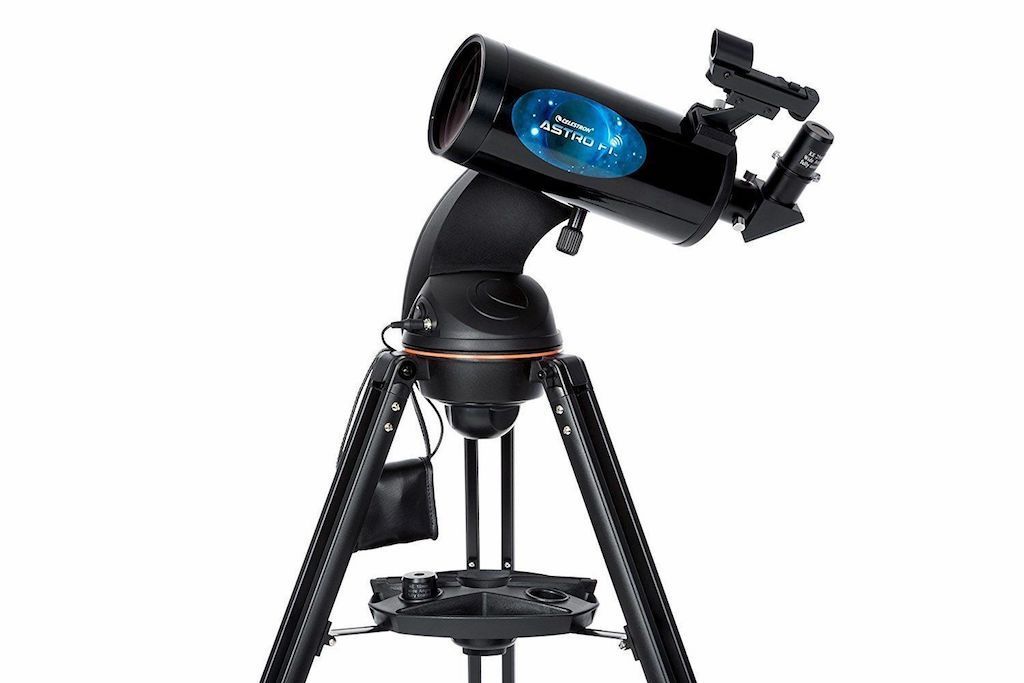
TOP TELESCOPE PICK:

A Celestron telescope on a white background

(Image credit: Celestron)

Looking for a telescope to see planets and comets? We recommend the Celestron Astro Fi 102 as the top pick in our best beginner's telescope guide.

Finally, did you know you can launch your own SpaceX rocket? Model rocket maker Estes' stunning scale model of a Falcon 9 rocket that you can pick up now. The launchable model is a detailed recreation of the Falcon 9 and retails for $149.99. You can save 10% by using the code IN-COLLECTSPACE at checkout, courtesy of our partners collectSPACE.com.

About This Week In Space

This Week in Space covers the new space age. Every Friday we take a deep dive into a fascinating topic. What's happening with the new race to the moon and other planets? When will SpaceX really send people to Mars?

Join Rod Pyle and Tariq Malik from Space.com as they tackle those questions and more each week on Friday afternoons. You can subscribe today on your favorite podcatcher.

  •  

Sci-fi action movies were better in the '90s. 'Independence Day' is full of reasons why

We didn't realize it at the time — nobody ever does — but the '90s were a vintage era in Hollywood.

It was a time when major studios were happy to take a punt on original scripts, knowing that people would, as often as not, buy theater tickets to watch quality releases. Good movies will always be made, of course — just as even the most golden of ages produce their fair share of stinkers — but this was a time when the Venn diagram circles labelled 'acclaimed' and 'popular' intersected on a satisfyingly regular basis.

But beyond the critic-friendly fare produced by the likes of Quentin Tarantino, the Coen Brothers, Paul Thomas Anderson, and Martin Scorsese, this was also a peak period for popcorn-friendly action movies… and especially sci-fi action movies. Highbrow reviewers didn't always appreciate their brilliance back then, but looking back all these decades later, many of the best examples still stand up now.

"Independence Day" — which turned 30 last week — isn't even the best entry in the genre, but it repeatedly shows why the end of the 20th century was the perfect time to experience blockbuster thrills and spills in a multiplex. And, spoiler, there was barely a superhero in sight.

The '80s had teed up the subsequent decade's action explosion perfectly. On one side was the family-friendly fare championed by George Lucas and Steven Spielberg, timeless movies like the "Star Wars" sequels, "ET", "Back to the Future," and "Indiana Jones" that produced a generation of budding cinephiles. They were complemented by the more rugged, violent, and grown-up adventures popularized by the likes of "Aliens", "Predator", and "Die Hard".

Alien spaceships attacking an airbase in Independence Day (1996)

(Image credit: 20th Century Studios)

Anything less than spectacular would no longer cut it in the blockbuster stakes, as the kids of the '80s got that little bit older and decided to take their new favorite genre with them.

It's easy to dismiss this kind of filmmaking as simplistic and dumbed down. Its poster boys were uber-producers Jerry Bruckheimer and his late filmmaking partner Don Simpson, whose "high concept" ethos distilled movies down to a pithy elevator pitch you could squeeze into a single sentence.

But the company's undisputed classics of the era make it obvious they were on to something — "Crimson Tide" (feuding submariners try to avert World War III), "The Rock" (rogue marines capture Alcatraz to hold San Francisco to ransom) and "Con Air" (a bunch of prisoners capture their transport plane). It's a formula that also worked for "Speed" (a bomb will explode if a bus goes under 50mph), "Twister" (scientists chase tornadoes across America), and "Under Siege" ("Die Hard" on a boat).

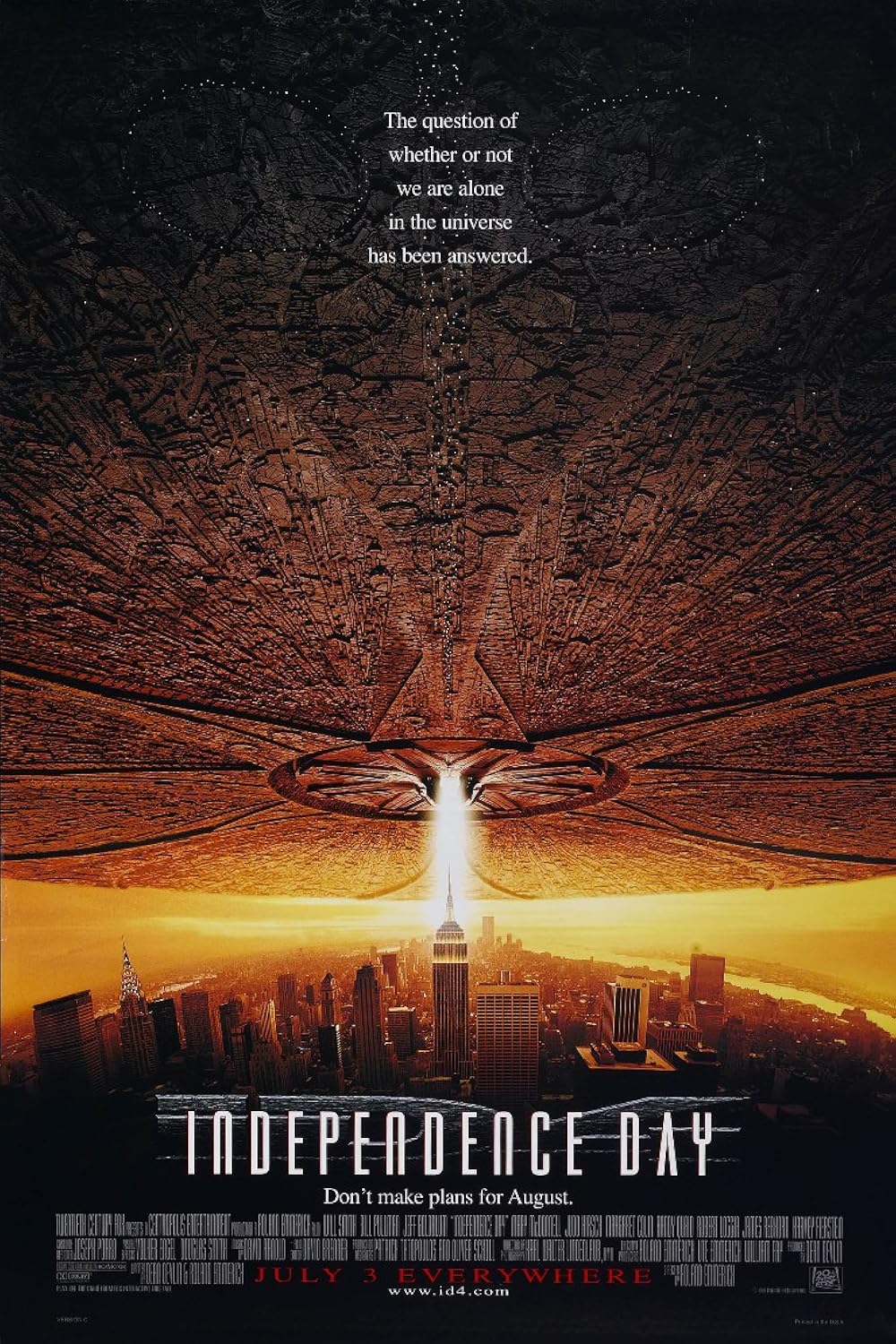
The movie poster for Independence Day (1996), showing a huge spaceship over New York.

(Image credit: 20th Century Studios)

The director/producer duo of Roland Emmerich and Dean Devlin were clearly paying attention when they made "Independence Day", their follow-up to 1994's "Stargate". Let's start with their own high concept, easily summed up as a modern-day spin on HG Wells' "The War of the Worlds", but with bigger spaceships and a more pronounced fetish for major landmarks.

Speaking to the Guardian, Devlin recalled Emmerich's original idea. "[He said], 'What if we woke up tomorrow morning and we walked outside to get the newspaper and above it was a 15-mile-wide spaceship blotting out the sun for an entire city?' Then he turned to look at me and goes, 'I think I have our next movie.'"

"Independence Day" didn't need to be part of a major franchise to get noticed. The teaser trailers, with their carefully choreographed moments of tourist hotspot destruction, were enough for that, as was the brilliant sci-fi movie poster, which saw Manhattan dwarfed by a flying saucer. "The question of whether or not we are alone in the universe has been answered," said the wonderfully doom-mongering tagline.

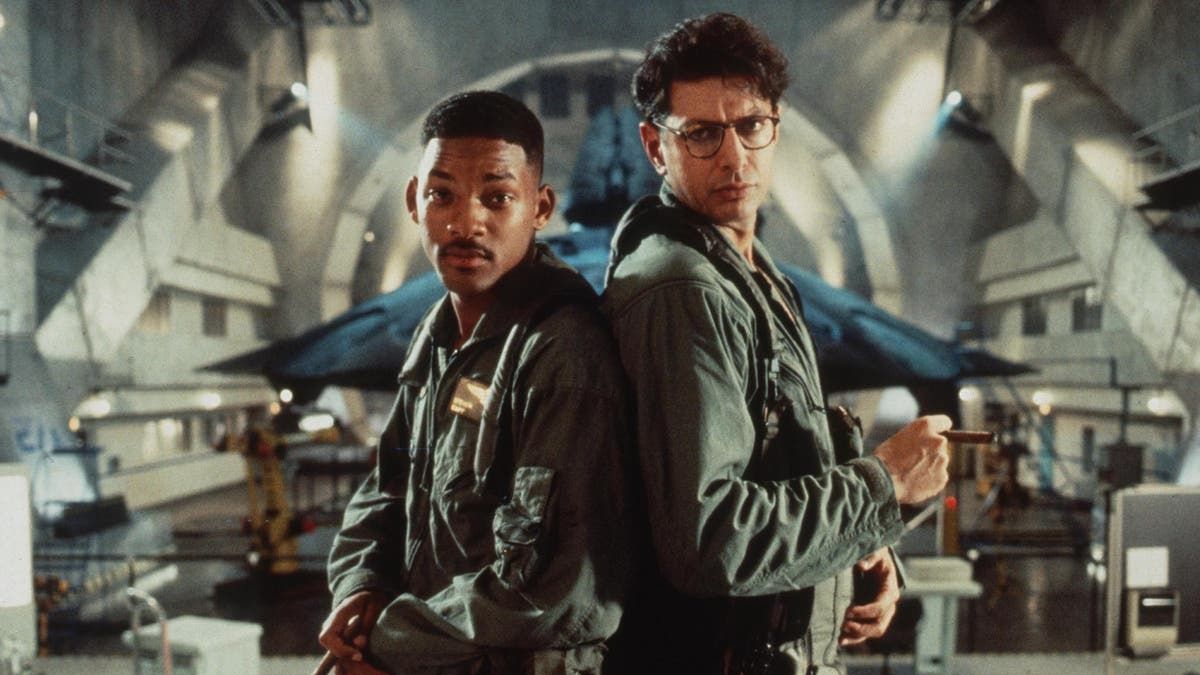
Will Smith and Jeff Goldblum from the movie Independence Day

(Image credit: The Independent )

As with many of the other action movie classics of the era — not to mention the classic Irwin Allen disaster epics of the 1970s, such as "The Poseidon Adventure" and "The Towering Inferno" — "Independence Day" prioritized its cast over spectacle.

The biggest name on the roster was arguably Jeff Goldblum, who, thanks to the double whammy of "Jurassic Park" and "ID4", briefly had the two highest-grossing films of all time on his resumé.

But Emmerich and Devlin also spotted the star power of Will Smith before he became a bona fide A-lister, and packed out the vast supporting cast with familiar — though not necessarily movie star — names: "Taxi"'s Judd Hirsch as Goldblum's dad, Bill Pullman as an idealistic POTUS, and Randy Quaid as a former pilot with a bone to pick with ET. They also boosted the film's geek credentials by casting Brent Spiner ("Star Trek: The Next Generation"'s Data) as Area 51's eccentric head of ET research.

Populating the film with quality actors paid big dividends, helping to ground a film whose script rarely shied away from the ridiculous. In a screenplay that shifts from gung-ho action to self-aware gags to over-earnest, tub-thumping presidential speeches (and back again), it certainly helps if your cast can play their roles as if they're on stage at the Royal Shakespeare Company. In the same way, nobody could watch Ed Harris in "The Rock" or Gene Hackman in "Enemy of the State" and claim they were phoning it in.

Independence Day (1996)

(Image credit: 20th Century Studios)

There's also a lot to be said for the "Independence Day"'s deployment of practical effects. The mid-'90s were a dangerous time to be a filmmaker, when many were tempted to use computer effects when they should have known better. Look at the best action movies of the era, however, and they tend to use the CG to enhance, rather than replace, more traditional techniques.

As groundbreaking as "Jurassic Park" was, Steven Spielberg was remarkably sparing with the digital moments, while "The Matrix" — a film whose bullet-time effects quickly became ubiquitous — hung its action credentials on its live-action fights and wire work.

"Independence Day" was cut from the same cloth, using CG in the right places (most notably in its spectacular aerial dogfights) while also building (and subsequently blowing up) intricate practical models to deliver moments of pure, joyous cinematic carnage. These moments would undoubtedly be animated in a computer now, losing the tactile qualities — and the intrinsic gravity of the situation — you only capture in real life.

Screenshot from Independence Day (1996) showing a massive spaceship floating over New York.

(Image credit: 20th Century Studios)

Thirty years on, "Independence Day" and its '90s action brethren have come to feel like relics. Sure, superhero movies, their most obvious descendants, still set their eyes on top acting talent, and the best directors (most notably Christopher Nolan) tend to make a point of shooting practically when they can.

But, aside from the numerous "Die Hard" spin-offs, the '90s generation were predominantly telling original stories, well away from the restrictions of franchise filmmaking, starting and finishing an entire story in roughly two hours. Indeed, it's remarkable how few of the classics of the era were followed up by a successful sequel. ("Independence Day: Resurgence" took 20 years to arrive, and when it did, didn't even make half as much at the box-office as its predecessor.)

And crucially, the action movies of the late 20th century were usually about people. Most of the time, they were ridiculous, over-the-top, broadly drawn, clichéd, cookie-cutter characters, but they also tended to — more or less — obey the laws of physics. Without superpowers or magic to fall back on, heroes had to rely on little more than implausible levels of ingenuity and resilience, a capacity to dodge bullets/laser fire, and a gift for making the right quip at the right time. "Independence Day" may just have been on to something.

"Independence Day" is available on Hulu in the US and Disney+ in the UK.

Watch Independence Day on Hulu:
Hulu with Ads: $11.99/month or $119.99/year
Premium (No Ads): $18.99/month

  •  

As 'Avatar: Fire & Ash' hits Disney+, we look at 3 of the weirdest alien creatures in the 'Avatar' movies

Avatar: Fire and Ash was a box office smash hit when it dropped in December 2025, and it's easy to see why. Compelling characters, breathtaking action, beautiful environments, and an array of wondrous alien creatures.

We've explored the strange creatures of the Avatar universe before, but now that the third movie has finally hit Disney+, we're taking another look at three more awe-inspiring alien creatures from these movies, including some new stunners introduced in Fire & Ash.

If you’re more of an RDA fan (or at least admire the humans’ technology), we also took a good look at Avatar’s most iconic spaceships and vehicles. James Cameron rarely misses when it comes to gorgeous sci-fi designs — man-made or natural — and eagle-eyed veterans might even spot an explicit reference (which we won’t spoil here) to Aliens in Fire and Ash.

Watch Avatar: Fire & Ash on Disney+:
Disney+ (With Ads): $11.99/month
Disney+ Premium (No Ads): $18.99/month or $189.99/year

It might be a while before we get more updates on Avatar 4 and 5’s status, so if you're itching to explore Pandora more after watching Fire and Ash on Disney+, then you should also check out the video game, Avatar: Frontiers of Pandora. Ubisoft’s open-world game is a memorable – and surprisingly brutal at times – experience, but it also lets fans explore the world, see the creatures, and dive deeper into the lore.

Now, let's mask up and prepare to drop into the wilderness of Pandora as we look at three of the Avatar series’ coolest (and weirdest) alien creatures.

Akula

The Akula, an alien sea creature from the movie Avatar: The Way of Water

(Image credit: 20th Century Studios)

First seen in Avatar: The Way of Water, the akula is a carnivorous fish that essentially acts as the great white shark of Pandora’s oceans, though it’ll remind paleofanatics of Earth’s armored Dunkleosteus. Its most shocking feature — and one perfectly showcased when it tries to eat Lo’ak in the second movie — is a three-part jaw that opens up in a big triangular shape.

Like most creatures in the Pandoran seas, the akula is important to the Metkayina’s culture. Those Na’vi choose to model their traditional knives after the teeth of the fearsome creature, and some members of the tribe even wear the akula’s actual teeth with necklaces. It’s terrifying to them, too, and thus deserves respect.

The lead creature designer on the Avatar sequels, Zachary Berger, revealed the process behind the akula’s creation, stating the basis for the final design was born from a sketch Wētā Workshop had done a long time ago. Unsurprisingly, it seems the mouth “reveal” was the final touch the otherwise familiar design needed to fully come together.

Nightwraith (ska’avum)

The Nightwraith, an alien flying creature from the movie Avatar: Fire & Ash

(Image credit: 20th Century Studios)

Another scary aerial predator introduced in the sequels is the nightwraith, which the Na’vi call ska’avum.

First seen in Fire and Ash as the ride of choice of villain Varang, it’s a four-winged monster with folding vanes that give it a distinct shape against the sky. It’s also slightly larger in size than the more common ikran, as seen during Varang and Neytiri’s ferocious clashes. Moreover, its “bony crests” give it an additional edge when it comes to attack and defense.

As far as we know, Varang is the only Na’vi to ride a nightwraith. This is a good fit considering the character’s fiery nature, but it wasn’t always the plan, as her aerial partner wasn’t defined in the script and was developed into an all-new creature after shooting had wrapped. Word is that Varang was originally meant to ride an armored ikran instead.

Southern squidray (tsyong)

The Southern squidray, an alien squid-like creature from the movie Avatar: Fire & Ash

(Image credit: 20th Century Studios)

Fire and Ash also added Pandora’s own giant squids to the already crowded bestiary, and those things are gnarly... even outside the water. When Eywa goes to war (again) during that third act, things get scary very fast if you’re on the human invaders’ side. Enter the four-eyed southern squidray, called tsyong by the Na’vi.

With razor-toothed tentacles and an oversized beak that opens up horizontally and can bite through most natural materials, these deep-sea hunters can feed on almost any other animal in the sea due to their impressive speed and strength in numbers.

Even the agile ilu have a hard time escaping them, so you can quickly understand why the Na’vi treat them as “dark spirits” sent by Eywa to judge. By the end of the third Avatar movie, the RDA is the one being judged (harshly) by the nightmare-inducing cephalopods.

Watch Avatar: Fire & Ash on Disney+:
Disney+ (With Ads): $11.99/month
Disney+ Premium (No Ads): $18.99/month or $189.99/year

  •  

The Blair Witch Project is getting a reboot from Lionsgate — and as a long-time horror fan I'm not convinced it's going to be any good

  • The Blair Witch Project reboot will be released on September 24, 2027
  • YouTube creator Dylan Clark will direct the project
  • Clark has already directed a number of horror shorts which are available for free on YouTube

The Blair Witch Project is getting a reboot, which will arrive in theaters worldwide on September 24, 2027. But of all the horror titles to reboot, I'm concerned this was a poor choice.

YouTube creator Dylan Clark has been announced as the director of the rebooted found footage horror movie, and there's no denying he's talented. His YouTube channel features a number of effective short films you can watch for free.

News of The Blair Witch Project's reboot was confirmed by Lionsgate on social media, where they shared the release date announcement.

Is a Blair Witch Project reboot really necessary?

A man screams whilst covered in blood. A woman looms over him, with her back to the camera.

YouTuber Curry Barker topped the horror charts with his original movie Obsession in 2026. (Image credit: Focus Features)

That's the big question among horror fans right now, and I'm sure people have plenty of strong opinions about it.

I'm certainly excited for Dylan Clark to be working with Lionsgate, but in a world where YouTubers Kane Parsons' Backrooms and Curry Barker's Obsession are dominating the box office with their original stories, I'm unsure we should rely on a YouTuber to reboot an iconic movie like The Blair Witch Project instead of creating something new.

Indeed, recent box office figures have shown that there's an appetite for original storytelling, with both Parsons and Barker receiving widespread acclaim for their horror movies.

Backrooms made $277.4 million from its $10 million budget, and Obsession made $334.4 million from a budget of just $750,000 - incredibly impressive results which have no doubt caught the attention of Hollywood.

It's clear that horror fans want something new, and I'm among them. The only way I can see The Blair Witch Project working is if it is completely stripped back and told from a new angle.

But even so, perhaps a completely new found footage horror would have turned out better? When the original movie came out in 1999, it was exciting because it was an entirely fresh concept.

Curry Barker is currently working on a Texas Chainsaw Massacre reboot, which I was initially apprehensive about too, but he confirmed that he would be focusing on lesser-explored characters. I truly hope that Dylan Clark takes a similar angle and offers something new when it comes to The Blair Witch Project.

Right now I'm not filled with much confidence, but as always I am open to being proved wrong.

  •  

“It Was the Most Incredible Thing I Ever Witnessed”: New Film Details World’s First Private Astronauts—and a Life-Altering UAP Encounter

The fascinating behind-the-scenes story of the exploits of the first team of private astronauts to cross the Kármán line is finally being told.

A newly released documentary film, “Beyond Blue Sky: The Untold Story of the First Private Astronauts,” now available on Apple TV and Amazon Prime, reveals the award-winning accomplishment and includes firsthand testimony from the pilots and engineers who made the inaugural private astronaut space flights possible.

The film also includes one of the two record-setting astronauts, U.S. Navy combat veteran Brian Binnie, sharing an unusual, life-altering experience for the first time on screen, an event that he credits for inspiring him to continue after a crushing setback almost ended his dreams of flying to space.

A Private Astronaut’s Failure and a UAP Encounter

In an email to The Debrief, documentary filmmaker Kevin Curran noted that his Emmy-nominated crew, “with a proven space pedigree,” including chronicling milestones of Blue Origin, SpaceX, Astrobotic, and NASA, was able to capture “razor’s-edge supersonic test flight footage” to reveal the story of the first team of private astronauts to join the small group of humans to have ventured into space.

Along the way, the documentary depicts the team’s successes and failures in their pursuit of reaching space for the first time—and then doing so two more times with extra ballast—to win a $10 million prize.

Although Binnie, a Princeton-educated aeronautical engineer and 20-year Navy pilot, would typically seem like the obvious choice for the award-winning space attempt, a difficult crash landing on the first rocket-powered test flight of the program had Binnie doubting whether he would get another opportunity to pilot SpaceShipOne for the remaining five test flights.

Image Credit: Beyond Blue Sky, Kevin Curran

As incredible as the team’s historic accomplishments were, Curran told The Debrief that the story took an unexpected, but inspiring turn when Binnie revealed an out-of-this-world encounter that he credited with inspiring him to recover from that setback and ultimately make the historic flight.

“The rest of the documentary is pretty incredible/riveting, I think, but [Binnie’s] story makes it so topical right now with the Pentagon’s release of UAP files,” Curran told The Debrief.

“I Turned Around Expecting to See Them Behind Me”

According to Curran, his team had no idea about Binnie’s encounter when they started filming. As the ebullient filmmaker noted, the team was about six weeks into production on a film that he says “we thought would simply be an untold, feel-good story involving perseverance and redemption within the birth of private spaceflight.” Then, while the cameras rolled, Binnie made his revelation.

Although Curran notes that the pilot had previously confided in “dozens of people within the aerospace and test flight world over the years about his extreme close encounter,” this was the first time the veteran of 33 combat missions had “courageously” shared his experience on-screen.

first private astronaut UAP experience
Documentary film director Kevin Curran has taken protecting Brian Binnie’s legacy personally. Image Credit: Kevin Curran.

“Like any good story, it simply became more fascinating the more we pulled on the thread,” Curran told The Debrief.

The tale began on December 17, 2003, when Binnie successfully piloted SpaceShipOne to nearly 68,000 feet on its first rocket-powered test flight, a critical early accomplishment that made him the first pilot to go supersonic in a privately funded vehicle. However, the flight ended in an extremely rough landing that damaged the craft’s landing gear, wing, and fuselage, putting Binnie’s future as one of three test pilots of SpaceShipOne in doubt.

“After the crash, the 47-year-old Binnie faced the reality that he may never fly the spaceship again on the remaining five test flights of the program,” a summary emailed to The Debrief explains.

Six days after the hard landing, Binnie was awake one morning at around 4 a.m., unable to sleep comfortably in his bed. Then, according to the astronaut’s account, he noticed that “bright lights were coming through my window blinds. I rose, opened the window blinds to find that daylight had manifested in my backyard.” The decorated Navy veteran noted that while his backyard was illuminated, everything else he looked at was dark.

first private astronaut UAP experience
Binnie (above) is shown at his home. Image Credit: Focus on the Signal LLC, Kevin Curran.

The next part of Binnie’s story details the presence of around a dozen translucent, glowing “orbs” he said he could perceive within the lit area. However, the pilot recalled, the orbs did not seem bright enough to account for the inordinately bright light illuminating his backyard. During his on-screen recollection, the award-winning pilot also details the movement of the orbs, including two of them approaching him from approximately 50 feet away, passing through his bedroom window, and entering his chest.

“I turned around expecting to see them behind me, but they weren’t there,” he said.

Binnie described the pre-dawn experience as “the most incredible thing I ever witnessed.”

The Impact on Binnie and the Documentary Crew

When discussing the impact that the unusual experience had on him, Binnie told Curran’s team that he initially searched for a conventional explanation. With advanced engineering degrees and a 20-year Navy career that led him to become both a test pilot and manager of the SpaceShipOne program, he was well accustomed to evaluating unusual observations. However, after exhausting all prosaic possibilities, the trained scientist, pilot, and observer ultimately concluded that the mysterious glowing orbs represented an intelligent phenomenon that had somehow allowed him to perceive them.

“It gave me hope that I had a purpose, and that purpose was to not simply take defeat, but was to pick myself up and continue,” Binnie told the documentarian.

After what the team calls “a bizarre series of events” that offered Binnie a second chance to pilot SpaceShipOne, the newly reinvigorated aviator boarded the craft’s final flight on October 4, 2004. During the launch phase, when the pilot and craft are hauled to a high latitude by the mothership, White Knight, Binnie said he once again reflected on the apparent UAP experience, including how he felt the orbs had given him an intangible drive to complete his mission and make history.

first private astronaut
White Knight prepares to carry SpaceShipOne to space. Image Credit: Dave Moore.

By the time the flight was complete, winning both the Collier and Ansari XPRIZE, Curran said the accomplishment proved that a team of “renegade geniuses” could achieve a NASA-level feat for a fraction of the space agency’s typical cost. As far as the late pilot’s unusual UAP encounter, Curran credits Binnie’s courage for sharing his experience with UAPs, while also noting the effect the man’s retelling had on him and his crew.

Brian Confided in Colleagues for Years, But This is His First Filmed Account

“One thing I wish to clarify, in the event it matters, is that I believe Brian’s story,” Curran told The Debrief, while once again citing the combat veteran’s impressive credentials.

The documentarian also noted that there has been a stigma around the UAP subject for a long time, and that Binnie “was really brave to come out to me in 2020 before any of the House Oversight Committee testimonies or recent releases by the Pentagon.”

Brian confided in only a few aerospace colleagues about the experience for many years, and even learned of another astronaut with a similar experience, but the story’s inclusion in the film was the first time he shared it on record before passing away.

“I simply want to protect Brian Binnie’s memory and surviving family, as he was always kind to me, inspiring, and I’m proud to have called him a friend,” Curran concluded.

The project “is dedicated to the memory of test pilots Brian Binnie and Mike Melvill, the first two private astronauts who had the courage to fly stick-and-rudder to space,” the documentary team states.

“Thankfully, they shared their extraordinary stories on camera before they were lost forever in the Mojave sand,” the team concludes.

Christopher Plain is a Science Fiction and Fantasy novelist and Head Science Writer at The Debrief. Follow and connect with him on X, learn about his books at plainfiction.com, or email him directly at christopher@thedebrief.org.

  •  

It's a crime these Lego Star Wars sets are being retired but you can save big before they go

Lego is amazing, and Lego Star Wars in particular. The fact that you can spend $1000 on a gigantic Death Star set is a clear sign it's not just for kids.

But there's a catch; Lego retires sets, meaning that, unless you're willing to pay silly prices on eBay, they're forever out of your reach. Oh, sure, Lego might need space for new sets, and stores likewise, but that's no excuse to rob builders of the best Lego Star Wars sets, especially with Star Wars' 50th anniversary next year.

I've rounded up the best deals on retired or retiring Lego sets. Some of these sets have been this price before Prime Day but don't count on them sticking around much longer.

Save $24 on this Lego model of the first ship you see in Star Wars, pursued by a Star Destroyer right after the opening crawl. View Deal

Save $42 on this Lego Star Wars Guard Gunship, a particularly cool variant of the Republic Gunship.View Deal

Get $10 off this Attack of the Clones troop carrier, which was bumped out by the Venator in Return of the Sith. View Deal

This isn't reduced but it's such an awesome set, a mini-sized model of the original trilogy's biggest vessel, you need this on your shelves. View Deal

Save 20% on the Galactic Empire's heavy-hitter, the Tie Bomber, complete with three minifigures. View Deal

Save $12.00 on this N-1 Starfighter, The Mandalorian's second favorite ship. It's been replaced by the far pricier UCS N-1 set but you can still grab this if you're fast. View Deal

Get $10 off the helmet worn by Captain Rex, a Clone Commander who managed to outlive many of his manufactured brethren. View Deal

This Clone Wars walker is another set that's not reduced but it's such a brilliant, play-friendly build that Lego should be ashamed for retiring it. View Deal

  •  

Hollywood is bending the knee to OpenAI

Photo collage of Sam Altman in front of the OpenAI logo.

Netflix, A24, Focus Features, and Warner Bros.' Clockwork have all reportedly decided to pass on picking up Artificial - director Luca Guadagnino's new biographical drama about OpenAI cofounder / CEO Sam Altman - for distribution deals. And while Neon and Mubi are still said to be interested in the film, this situation makes it seem like Hollywood no longer has the courage to tell critical stories about Big Tech.

Postproduction on Artificial was nearly finished when Amazon MGM unexpectedly announced last week that it no longer plans to distribute the film. The news came as a surprise given how far along the movie was and reports that Amazon …

Read the full story at The Verge.

  •  

This might be your last chance to pick up a retired Lego Star Wars set before it flies off forever, and it's under $100 on Amazon for Prime Day

Star Wars' Clone Wars-era Republic Gunship may not be a miracle of practicaliy but I think it's cool as heck and that alone is reason enough to pick up this Lego Star Wars Coruscant Guard Gunship, $42 off for Amazon Prime Day.

Save $42 on this Lego Star Wars Coruscant Gunship set

The other reason? This set has already been retired by Lego meaning that not only are you saving big, this could be your last chance to buy the Lego Star Wars Coruscant Guard Gunship, before scalpers start selling it for silly money on eBay.

On top of looking seriously imposing, this Lego set has major play potential. You can swoosh it round the living room, loaded it up with the five included mini figures and accidentally drop Chancellor Palpatine because there's something off about that guy.

If this set isn't to your taste (maybe you're one of those evil Separatists), we've rounded up the Best Lego Star Wars sets. And don't forget to check out our other Prime Day deals.

Save $42 on this Lego Star Wars Guard Gunship, a troop-carrier which, on Coruscant, has been commandeered for Chancellor Palpatine's non-sinister agenda. View Deal

LEGO Star Wars: The Clone Wars Coruscant Guard Gunship
The Lego Star Wars: The Clone Wars Coruscant Guard Gunship is now retired and this might be your last chance to buy it.Lego
LEGO Star Wars: The Clone Wars Coruscant Guard Gunship
Lego
LEGO Star Wars: The Clone Wars Coruscant Guard Gunship
Lego

This is a real Prime Day deal double-whammy. Not only is this Lego Star Wars Coruscant Guard Gunship $42 off, the cheapest it has ever been, but as a retired set this could be your last chance to own it. Without paying silly money to eBay scalpers, that is; it's already sold out on Lego's website.

Not only does this set look good on a shelf, but it has got real potential, with opening and closing doors, firing missiles and a special handle to swoosh it around your living room!

It also boasts five minifigures: Three Clone Troopers, Chancellor Palpatine and Senator Padme Amidala. Go on, Padme, give Palpatine a push. It'll save you a lot of trouble in the long run.

If you love the Clone Wars era of Star Wars, this is a superb offer but you'll have to move fast.

Key features: 1083 pieces, builder's age 9+, 27.5 × 5.5 × 14.5 × 16 in. / 15 × 37 × 41 cm size

Product launched: September 2023

Price history: We've seen the price drop a little, but this is the lowest it's ever been and likely your last chance to buy it.

Price comparison: Amazon: $98

Reviews consensus: We loved the UCS Lego Star Wars Republic gunship, and this smaller model is also extremely cool, albeit with just five figures. Its Amazon reviews are near unanimous; few complain about the price tag and this price cut addresses that.

✅ Buy it if: You want a brilliant, play-friendly set to go with your other Clone Wars Lego sets.

❌ Don't buy it if: You're not a fan of the Clone Wars era. Instead, consider something like this Lego Star Destroyer, also reduced for Prime Day.

Check out our other guides to the best telescopes, binoculars, cameras, star projectors, drones, lego and much more.

  •  

'Rick and Morty' cast talk vocal health, hot viscous liquids, and their favorite season 9 moments (interview)

Adult Swim's smash animated series "Rick and Morty" recently unleashed its ninth season, and it's already shaping up to be one of the best seasons so far, with plenty of interdimensional shenanigans, existential excursions, evolutionary entanglements, hostile living room furniture, a potential trip to Boob World, and Pool Time!

We chatted to the creators Dan Harmon and Scott Marder earlier this month, but now we're catching up with the main cast to hear from Ian Cardoni (Rick), Sarah Chalke (Beth), Harry Belden (Morty), and Spencer Grammer (Summer) on the rigors of voice acting, playing in the multiverse, and watching all your plosives.

"We've got what we would consider classic adventures, balanced by a lot of fresh and new directions for these characters and for these stories," Cardoni tells Space.

Rick Sanchez from Rick and Morty, pictured alongside his voice actor Ian Cardoni

Rick Sanchez from Rick and Morty, pictured alongside his voice actor Ian Cardoni (Image credit: Getty Images / Adult Swim)

"I can honestly say that some of my favorite moments of episodes of the whole series run are coming in season 9, and I'm excited for fans to see that. Sci-fi in its best form is human stories. It may be our future, and I think we get glimpses of that by tapping into the human elements. With all the wacky hijinks that take place, we're in for a really amazing season and some real good science fiction."

Those hijinks call for some suitably animated vocal performances from the vast though. "These are voices that take a toll, even when it’s not a session, when it requires the intense gravel or yelling of Rick," explains Cardoni.

"It requires your full instrument. I like to prep with a full cardio workout because oxygen support is what you need. Then I go on vocal rest before and after sessions. I have all kinds of warm, hot, viscous liquids to soothe. I use a vocal steamer. Harry [Belden] is really religious about his regimen, but I’ve got my own way to get myself into the voice, but not burn out. Voice acting is acting. And the show doesn’t pull any punches emotionally."

Beth and Space Beth from Rick and Morty, pictured alongside their voice actor Sarah Chalke

Beth and Space Beth from Rick and Morty, pictured alongside their voice actor Sarah Chalke (Image credit: Getty Images / Adult Swim)

Chalke relishes her time playing Beth and Space Beth and adamantly declares season 9 as her favorite season they’ve ever done.

"There's a couple of specific episodes, 'Salute Your Morts' and 'Jer Bud' where you really get to go deeper into the relationships," she notes. "The fun part of 'Rick and Morty' as an actor is all the unique challenges because there's no limits and because it's a multiverse and because the show can go anywhere, you’re always doing things with your voice you've never done before.

"None of us have to do the voice intensity Ian does with Rick. You're working those vocal chords so hard with the burping and all of that," Chalke remarks to Cardoni. "For me, Space Beth is more in that direction than Beth. So I always record all of that first and Space Beth second because she has more of a gravelly, raspy quality to it. It's whatever you need to do to make it grounded and as real as you can."

Morty from Rick and Morty, pictured alongside his voice actor Harry Belden

Morty from Rick and Morty, pictured alongside his voice actor Harry Belden (Image credit: Getty Images / Adult Swim)

For Belden, it was gratifying for Morty to experience a great deal of personal growth this season.

"There are a lot of intense situations that he finds himself in, and I’m excited for fans to see him go through that and come out the other side," he adds. "For me, my favorite episode is going to be the finale ["Field of Dreams"] for sure, and the journey that Morty goes on. There's so much good stuff in there."

Regarding his own regimen of keeping his vocal health tip-top, Belden explains:

"I like to run a couple of miles before I start, stretch out the entire body, do the actual vocal warmups. Morty being such a particular voice, I need a lot of breath support, so I have a wide stance and create a powerful base. I’m expanding my ribcage to support myself. And that’s not without even getting into tongue placement, spreading your lips wide to get the sound out, watching your plosives on the letter 'p.' It's all this stuff you would never ever think about."

Grammer is thrilled to see some fan favorite characters make return cameos in season 9, as we get to watch Summer and Morty just being terrible teenagers, and loves the fact that the Smith family gets a swimming pool.

Summer from Rick and Morty, pictured alongside her voice actor Spencer Grammer

Summer from Rick and Morty, pictured alongside her voice actor Spencer Grammer (Image credit: Getty Images / Adult Swim)

"I kind of learned on the job about 14 years ago," she reveals. "I was trained as an actor though, so I have a pretty good vocal ability. But it's very demanding, especially as you get older. There’s these tiny muscles and tiny folds. The last few years, I’ve really devoted to vocal health and got to a place where I can comfortably do the Summer role really well."

Grammer has really embraced the role of Summer, but it's also led to some major lifestyle changes for her. "You have to choose where you want to live. I don’t see a lot of people now. I just work a lot", explains Grammer.

"I can’t go to a party that’s going to be loud and talk to people. And that's fine. Alcohol is really bad for hydration, so I don’t really drink anymore. I’m constantly drinking water or something really slimy all the time. I have a whole kit of just things for your voice that I always take with me."

Executive produced by Dan Harmon and showrunner Scott Marder, "Rick and Morty season 9" airs Sundays at 11 p.m. on Cartoon Network's Adult Swim, and will also begin streaming weekly on Hulu and HBO Max starting June 15, 2026.

Watch Rick & Morty Seasons 1-8 on HBO Max:

Basic (Ads): $10.99/month or $109.99/year
Standard (No Ads): $18.49/month or $184.99/year
Premium (4K): $22.99/month or $229.99/year

  •  

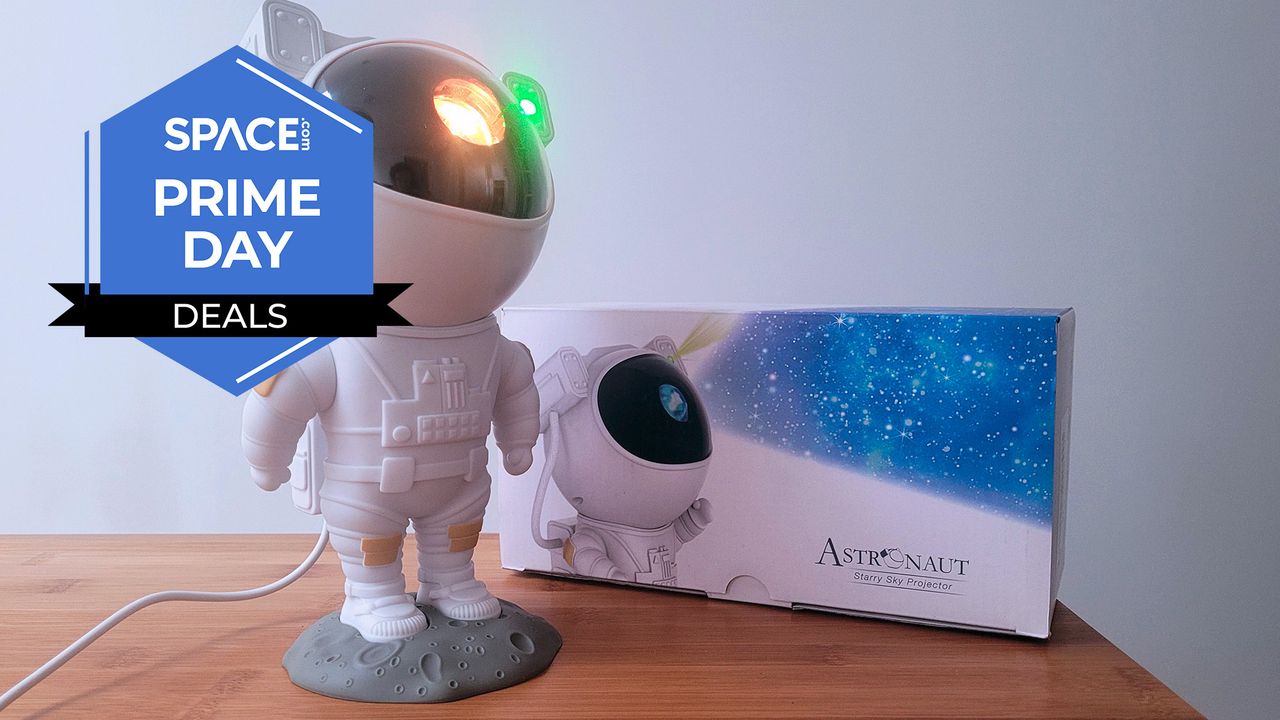
Ignite a child's imagination with the stars: Our expert-picked Astronaut Galaxy Star Projector is a Prime Day steal at just $25

Are you scratching your head, wondering what to buy for a child? Our expert Tantse recommends this Astronaut Galaxy Projector and right now, during Prime Day, it's just $25.

Enjoy stunning, starry displays with this Astronaut Galaxy Projector, now $25 at Amazon

Faced with buying a present for her nephews, and having been suitably impressed when she reviewed this Astronaut Galaxy Projector, Tantse (our long-time star projector reviewer), settled on this gift and she's had no complaints!

We rank it one of the best star projectors and best star projectors for kids because, despite its budget price tag, it creates some amazing, room-filling displays that'll leave children wide-eyed. Adults are just as likely to be delighted, too!

Looking for more savings? Check out our other Prime Day deals.

Save 17% on this compact but powerful star projector, which is capable of transforming children's bedrooms with its starry displays. View Deal

Astronaut Starry Sky Projector review photo
It may be cheap but there's nothing nasty about this projector, which can light up a whole room. Tantse Walter
Astronaut Starry Sky Projector review photo
The astronaut's power pack has its own power port, a cute design feature.Tantse Walter
Astronaut Starry Sky Projector review photo
The star projector, disassembled.Tantse Walter

As challenges go, one of the biggest trials in life is buying a gift for someone else's child. Assuming you like their respective adults, a drum set or a Nerf gun is right out. Fortunately, our expert Tantse Walter has the answer, with this impressive but pocket-friendly Astronaut Galaxy Projector.

Despite the name, this cool projector, which Tantse gifted to her nephews, projects both stars and galaxies. It's not scientifically accurate, but it punches well above its price tag.

In Tantse's review of the Astronaut Galaxy Projector called it "a well-made novelty star projector that every kid, or space fan, will love to have in their bedroom," and even if the kids in question aren't skywatchers, it could well kindle their interest in the cosmos.

With its remote control, customizable displays and 45-90 minutes sleep timer, adults will find it a handy meditation tool or relaxation tool too. At $25, this Astronaut Galaxy star projector is a superb gift that can transform any room.

Key features: Remote control, projects light shows, sleep timer, compact

Price history: This model tends to retail for between $29.99 and $34.99. We've sometimes seen it dip cheaper, though there are also several versions of this projector.

Price comparison: Amazon: $25

Reviews consensus: In our review of the Astronaut Star Projector, expert Tantse awarded it four stars out of five and Amazon purchasers rank it even higher.

Space: ★★★★

Featured in guides: Best star projectors, best star projectors for kids

✅ Buy it if: You want a star projector that, despite its novelty appearance, offers excellent performance and won't cost you a fortune.

❌ Don't buy it if: You want scientific accuracy because, as impressive as they are, this projector's displays don't match the night sky. Instead, consider the Sega Toys Homestar Flux.

Check out our other guides to the best telescopes, binoculars, cameras, star projectors, drones, lego and much more.

  •  

Sony releases trailer for Taika Waititi's Klara and the Sun

One of Taika Waititi's greatest strengths as a director is his unique voice; he's able to bring a light touch to tragedy (Jojo Rabbit) and a gentle sadness to offbeat comedy (Our Flag Means Death). That makes him an excellent choice to direct Klara and the Sun, based on the novel by Kazuo Ishiguro. Sony Pictures just released the first trailer, and it's giving strong Hunt for the Wilderpeople vibes—a good thing, from my perspective, since that's my favorite Waititi film.

Per the official premise:

Based on the bestselling novel from Nobel Prize winner Kazuo Ishiguro and written and directed by Academy Award winner Taika Waititi, Klara and the Sun introduces audiences to Klara (Jenna Ortega), an Artificial Friend who wants nothing more than to find the perfect home. When Klara meets Josie (Mia Tharia), each immediately senses a kindred spirit in the other. Josie has a fraught relationship with her mother (Amy Adams), and they’ve suffered great loss, but Klara’s innocent wonder and unwavering loyalty begin to heal the family and bring light to Josie’s complicated world.

The cast also includes Natasha Lyonne as an artificial friend (AF) store manager; Rachel House as the housekeeper, Melania; Aran Murphy (son of Cillian Murphy) as Josie's best friend, Rick; and Sophia Bryant-Taukiri as Josie's older sister, Sal. Steve Buscemi and Harry Greenwood also appear in as-yet-undisclosed roles.

Read full article

Comments

© Sony Pictures

  •  

'Project Hail Mary' is streaming now on MGM+, and you can watch for just $0.99 for a limited time

'Project Hail Mary' has finally landed on a streaming service, though maybe not the one you were expecting.

Amazon MGM Studios' "Project Hail Mary" recently launched (June 18) first on the MGM+ streaming platform, which is a sister site to Prime Video, after its 90-day theatrical window was up. As a bonus, there is a summer deal that lets you snag the Amazon Prime Video MGM+ channel for $0.99/month for 2 months. Be quick, though; this offer ends June 26.

Watch Project Hail Mary on MGM+ (via Amazon Prime Video): $0.99/mo for 2 months ($7.99/month thereafter)

This is a limited-time offer that ends on June 26, 2026.

"Project Hail Mary" sees reluctant astronaut Ryland Grace embarking on a cosmic rescue mission to save Earth, aided by a stone-skinned alien named Rocky. Fans looking for the Ryan Gosling space epic to show up on Prime Video out of the gate might be a little surprised, but as they say, That’s Hollywood, Baby.

Why MGM+ and not Amazon Prime Video?

Since Amazon MGM Studios is both a theatrical and streaming studio, deals are often shifted depending on the different monetization models involved.

In "Project Hail Mary's" case, MGM+ becomes the initial outlet for streaming and PVOD, with Prime Video as the secondary streaming destination. Movies making their first streaming stop on Prime Video, like "Red One," are handled differently within the corporation, especially if their costs were paid by Prime Video.

Directed by Phil Lord and Chris Miller, "Project Hail Mary" was a certified crowd-pleaser after a juggernaut marketing campaign that saw waves of teasers, trailers, clips, and interview videos anywhere and everywhere, which helped to catapult the popular sci-fi film adapted from Andy Weir's bestselling novel to a decent $678 million global haul.

Amazon, the behemoth parent company of both Prime Video and MGM+, possibly also made a decision to deliver the spring blockbuster initially to MGM+ as an enticement to lure prospective customers to the much smaller platform as a way to drive up subscription numbers. Prime Video's sweet MGM+ deal is further evidence of this plan's logic.

For now, "Project Hail Mary"'s interstellar odyssey is available exclusively on MGM+, but we’ll keep you updated when its official Prime Video date arrives.

  •  

'Control Resonant' takes inspiration from 'Devil May Cry', 'Neon Genesis Evangelion', and 'Inception' to craft a trippy sci-fi action game

You certainly can't accuse Remedy Entertainment of playing it safe and sticking to what they know.

2019's Control was a third-person shooter, last year's multiplayer spin-off, FBC: Firebreak, was a first-person shooter, and now this year's direct follow-up, Control Resonant, is a melee-focused action game. Despite the genre flip, though, it's undeniably Control — a freaky sci-fi horror mash-up that's dripping with atmosphere.

We played 40 minutes of Control Resonant at Summer Games Fest, and spoke with lead level designer Anne-Marie Grönroos about the new enemy designs, architecture, and sci-fi influences. Here's what we learned about one of this year's most anticipated upcoming sci-fi games.

"Control Resonant" has a new protagonist, but we're keeping things in the family as we take the reins of Dylan Faden, troubled brother of "Control" protagonist Jesse. Dylan Faden wakes up inside the Oldest House — a paranormal, space-defying skyscraper in the center of New York that acts as the headquarters for the Federal Bureau of Control (FBC).

Jesse promptly stabs Dylan, who wakes up surrounded by blood, death, and the massacred bodies of his FBC jailers. With no idea what's going on, Dylan flees the FBC to find that the Hiss — otherworldly crimson monsters from another dimension — have overrun Manhattan.

Screenshot from Control: Resonant

(Image credit: Remedy)

To fight these monsters, Dylan wields a unique weapon called the Aberrant (which just so happens to be the bar that Jesse stabbed him with). Much like Jesse's Service Weapon in the original, Aberrant can morph into multiple kinds of weapons, such as dual swords, an axe, and a scythe.

As a third-person action game (or spectacle fighter), Control Resonant feels like a toned-down version of Devil May Cry. It's just a bit slower and a bit more reserved, but it's still exhilarating to pull off combos and beat the snot out of the Hiss.

Combat is usually locked into arenas, locking you into an encounter until you've killed the Hiss. Larger enemies need to be prioritised, as the smaller Hiss will keep respawning until they're destroyed.

Control: Resonant

(Image credit: Remedy)

The Hiss are even more grotesque than I remembered from the first game; an observation that Grönroos was happy to confirm. "The enemies are a lot more mutated than they were in the first game," he notes. “They aren't just dudes shooting guns at you. A lot less human and more monstrous."

While Jesse was confined to the Oldest House, Dylan now has the freedom to roam Manhattan to find his sister. The first game's aesthetic was defined by the Brutalist architecture of FBC's surreal headquarters, and while you’ll certainly see that style here in place, Resonant pulls from a much wider pool.

"The further away you get from either the Oldest house or the Field Office, the less and less of that you'll see," explains Grönroos. "But when you see Brutalist architecture, that's also a sign that the FBC has a pretty strong presence here."

Screenshot from Control: Resonant

(Image credit: Remedy)

Manhattan has been well explored in video games — from Insomniac's Spider-Man and Tom Clancy's The Division through to "inspired by" titles like GTA IV — but Control Resonant's version of New York is a much more self-contained, streamlined version of the city that never sleeps.

Instead of an open world, we get a more linear platforming experience as Dylan navigates the rooftops like platforms, climbing, dashing, and double-jumping his way through the twisted landscape. This, combined with the psychedelic colors and trippy atmosphere, creates a uniquely surreal vibe that we really dig.

The Control universe is rife with sci-fi influences, with the fictional SCP Foundation sitting at the heart. The FBC investigates Altered World Events, where supernatural forces descend into reality and warp it. These lead directly to the creation of Altered Items, which are just objects infused with paranormal powers. It's all dressed up in a sort of 60s and 70s retrofuturism aesthetic, reflecting the space age and rise of media like Star Wars.

Control: Resonant

(Image credit: Remedy)

Beyond those obvious touchstones, though, there are surprising influences for this latest game. During our interview, Director Mikael Kasurinen mentioned Neon Genesis Evangelion as an influence for Control Resonant, with Grönroos adding that it heavily impacted the geometrical patterning in the game. "We also always have Inception as a reference. When you look at the city environments, this is the most Inception that we can get."

My demo ended with me facing off in a boss fight against a giant floating head with its jaw missing. Throughout the fight, it kept trying to sling rocks at me while keeping its distance, but I was able to keep up with its pace. Eventually, I managed to take it down, and then was taken to The Gap, a mysterious hub area where Dylan could upgrade his abilities.

He has plenty of upgrades to choose from, such as being able to telekinetically throw rocks, use them to form a shield, or conjure up this Aberrant into other weapons like a whip and hammer. I took a quick peek at each of the weapons and skill trees, and it seems like the combo system will definitely get more intricate later on.

Screenshot from Control: Resonant

(Image credit: Remedy)

There's a huge amount of variety in how to mix and match different weapons to dictate the pace and flow of battle. You can start your combo with a flurry of quick attacks from dual swords, and then come crashing down with a slow but mighty hammer at the end.

The action feels so different from the gunplay of the first game, and yet eerily familiar. Control Resonant also takes a page from Kingdom Hearts' playbook with flashy finishers. Dylan has access to a variety of them, our favorite being using the giant hammer to smash the Hiss into pieces.

Grönroos said that the biggest lesson that Remedy learned throughout developing its recent games, from Control, Alan Wake 2, FBC: Firebreak, and now Control, is giving players more freedom and agency. "Before Control, we used to just make these linear games," she explained. "Control was actually our first game where you could even backtrack, and Alan Wake 2 took that a little bit further, and now Control Resonant as well."

Screenshot from Control: Resonant

(Image credit: Remedy)

One of the highlights of the first Control game was the Ashtray Maze, a level where players had to fight against waves of enemies as they ran through a kaleidoscope of constantly shifting rooms and layouts. It was an adrenaline-fueled combat gauntlet that was equally exciting as it was fantastical. Grönroos was one of the minds behind designing it.

Can we expect something similar in Control Resonant? "There are definitely surprises," teases Grönroos. "Of course, I can't say what they are, but I think what made the Ashtray Maze really work was how unexpected it was. So I think there's stuff like in Control Resonant that's like that for sure."

Control Resonant launches on September 24 for PC, PS5, and Xbox Series X|S.

  •  
❌