❌

Reading view

'Everyone else is selling parts — we’re selling the full end-to-end system': Microsoft is allegedly telling its salespeople to take the fight to OpenAI and Anthropic

  • Microsoft sees itself as cheaper and more effective at bundling the full stack
  • The company is clearly pushing its own internal models
  • Claude also slated for being slower and less accurate

Microsoft is reportedly teaching sales workers how to compare the company's AI offerings to rival companies like OpenAI and Anthropic.

Per Bloomberg reporting, the company's sales staff are being told to emphasize benefits like efficiency and cost advantages when using Microsoft's offerings, which offer a much fuller picture than just the models and tools, extending to compute and other workflow tools.

"Everyone else is selling parts – we’re selling the full end-to-end system," EVP Jay Parikh reportedly told workers. "That’s the story that we all need to get out there and tell in FY27."

Microsoft sales teams up the ante against OpenAI, Anthropic

Clearly, the company wants customers to see the combination of its own models and third-party models, cloud infrastructure, applications and security as better value compared with having to piece these elements together separately.

Copilot EVP Jacob Andreou also reportedly compared Copilot to Claude, accusing Claude of being slower, less accurate and missing certain security integrations.

The sales push comes at a time of change for the company, which has started to push more of its own internal models across different apps and workflows to replace OpenAI and Anthropic models. It's also a marked shift from the company's earlier AI strategy, which leaned heavily on its multibillion-dollar partnership with OpenAI.

Company CEO Satya Nadella also pointed at a major customer, Unilever, which recently switched form an unnamed frontier model to one of Microsoft's own cheaper models to make significant savings.

In April, the company announced that its AI business is now worth around $37 billion annually, marking a 123% year-over-year increase.

Google logo on a black background next to text reading 'Click to follow TechRadar'

  •  

12 clever desk upgrades under $50 that instantly fix your home office

Whether you're spending increasingly long hours working from home, or splitting your time between the home and office, the right desk accessories can make a big difference to your life.

Small upgrades won't magically make work more enjoyable, but they can help you stay more comfortable, organized, and generally more productive.

The good news is that improving your workspace doesn't have to cost a fortune. A modern mouse can reduce strain during long sessions, an ergonomic laptop stand can improve your posture, and a quality LED desk lamp makes it easier to work into the evening without harsh overhead lighting.

Even simple additions, such as a larger mouse pad or a portable charger, can make a huge difference, and keeping your workspace tidy can also help you stay focused.

To help you upgrade your setup without blowing the budget, I've rounded up a dozen of affordable office accessories currently on sale at Amazon. This collection covers everything you might require, plus more besides.

Office gear under $50

Nulaxy Ergonomic Adjustable Laptop Stand for Desk, Dual Foldable Computer Riser With Advanced Heat-Vent, Heavy-Duty Portable Notebook Holder for Posture Correction, Compatible With Mac 10-17

Nulaxy
Ergonomic Adjustable Laptop Stand for Desk

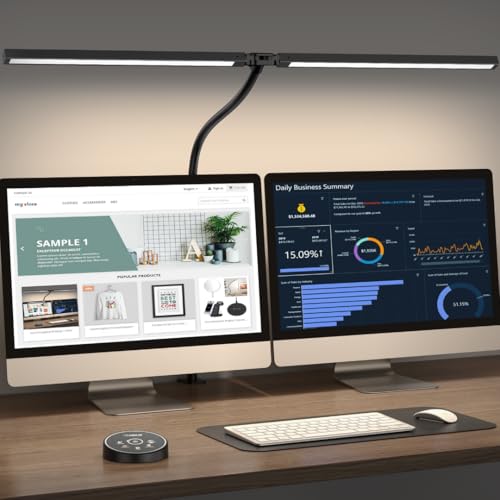
Pzloz Led Desk Lamp for Office Home - Eye Caring Architect Lamp With Clamp,dual Screen Computer Monitor Work Smart Light: 24w 5 Color Flexible Adjustable Lighting Table Lamp for Study Drafting

Pzloz
Led Desk Lamp for Office Home

Wireless Charger Iphone Charging Station: 3 in 1 Charger Stand Multiple Devices for Apple - Iphone 17 16e 16 15 14 Pro Max 13 12 11 - Watch 11 10 9 8 7 6 5 4 3 2 Se and Ultra Series - Airpods 4 3 Pro

Getpals
Wireless iPhone Station: 3 in 1 Charger

Redragon M612 Predator Rgb Gaming Mouse, 8000 Dpi Wired Optical Mouse With 11 Programmable Buttons & 5 Backlit Modes, Software Supports Diy Keybinds Rapid Fire Button

Redragon
M612 Predator RGB Wired Optical Mouse With 11 Programmable Buttons

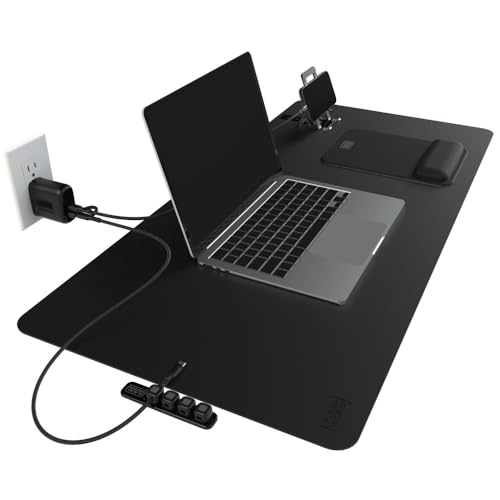
Black+decker Home Office Kit, 7 Pcs Set, Desk Pad, 2-Port Pd Charger, Ergonomic Mouse Pad, Phone Stand, Combo Cables, Cable Organizer, Workspace Accessories Perfect for Work-From-Home (black)

Black and Decker
7 piece set, including desk pad, charger and mouse pad

Mekass Ergonomic Mouse Pad With Wrist Rest, Mouse Pad With Wrist Support for Pain Relief, Memory Foam Mousepad With Massage Design, Non-Slip Pu Base for Office, Home, Desk (classic Black)

Mekass
Ergonomic Mouse Pad With Wrist Rest

Wooden Nightstand Organizer With Phone Stand, Solid Wood Desk Organizer for Phone, Watch, Glasses, Wallet & Keys, Gift for Men

Aeollik
Wooden Organizer With Phone Stand

Iniu 45w Fast Charging Portable Charger, 40% Smaller 10000mah With Detachable Cable, Flight-Safe Travel Power Bank, Usb C External Phone Battery Pack for Iphone 17 16 Pro Ipad Samsung S26 Google Etc

Iniu
45w Fast Charging Portable Charger

Civpower Neck Fan: Portable Personal Neck Cooling Rechargeable Bladeless Fan - Hands Free 3 Speed 4000 Mah Battery Usb Operated Wearable Headphone Design - Gift for Men Women Outdoor (black)

Civpower
Portable Personal Neck Cooling Rechargeable Bladeless Fan

Huanuo Adjustable Desk Footrest, Foot Rest for Under Desk at Work With Massage, Adjustable Foot Stool With 3 Height Position & 30 Degree Tilt Angle Adjustment for Home, Office

Huanuo
Adjustable Desk Footrest

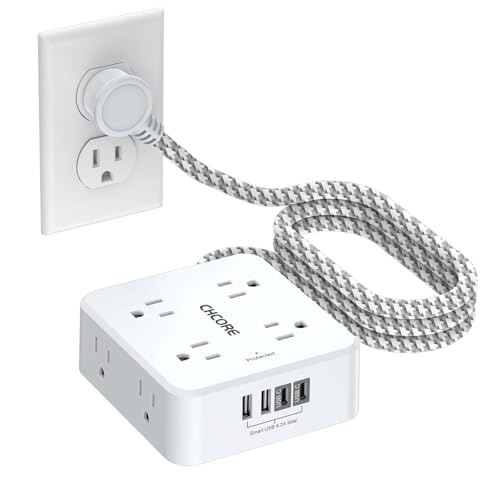
Surge Protector Power Strip - Chcore 5ft Braided Extension Cord With 8 Outlets With 4 Usb (2 Usb C) Charging Ports, Flat Plug Multi Plug Outlet Extender Charging Station for Home Office, Etl, White

Chcore
Surge Protector Power Strip

Amazon Basics 8-Sheet High Security Cross Cut Paper and Credit Card Shredder With P-4 Security, Auto Shut-Off, Black

Amazon Basics
8-Sheet High Security Cross Cut Shredder

  •  

Trump hits back at New York's data center ban, says rule should change 'immediately'

  • Trump says data centers are good for communities, creating jobs and funding their own power/water
  • New York State just banned large projects for a year to focus on developing new guidance
  • Trump worries ongoing bans could cause the US to lose out in the global AI race

US President Donald Trump has criticized New York Governor Kathy Hochul's recent executive order to introduce a year-long, statewide ban on hyperscale data centers, urging the state to change its stance "immediately."

In a post on Truth Social, Trump characterized data centers as "money machines" that create taxes and jobs comparable to "liquid gold," implying not only are they crucial for cloud computing and AI, but also for the country's economy.

Though states like "Alabama, Florida, Texas, Arizona" and others could now see more projects being relocated amid ongoing moratoriums, Trump worries about the implications of this "terrible decision."

Trump hits back at New York State moratorium

The executive order, signed by Governor Hochul on July 14 2026, makes New York the first US state to impose a statewide moratorium on new data centers – in this case, those requiring 50MW+ of power.

Despite mounting local opposition for data center buildouts across the US, and indeed the world, Trump argues they're "tremendous wins for the states and communities that are lucky enough to get them," being that they create jobs and are responsible for "their own water and power."

It's important to note that the year-long ban for New York State is exactly that – a temporary ban designed to buy the state enough time to consider environmental and social impacts, and to rewrite legislation and guidance accordingly.

Urging Governor Hochul to "change its policy, immediately," Trump argues that ongoing moratoriums like these could cause the US to lose to "China, and other countries" in what's playing out to be a global AI race.

Google logo on a black background next to text reading 'Click to follow TechRadar'

  •  

Linus Torvalds says Linux is not "anti-AI", tells haters to 'fork it' and 'just walk away'

  • Linus Torvalds asserts Linux developers can make their own mind up about using AI
  • Anti-AI developers can "fork it" and go elsewhere, he says
  • AI should be used to help developers, Torvalds emphasises

Linux creator Linus Torvalds has ultimately concluded that, while developers won't be discouraged from using AI tools to help with their coding needs, artificial intelligence shall not be mandatory and nobody is being forced to use it.

"Linux is not one of those anti-AI projects, and if somebody has issues with that, they can do the open-source thing and fork it," he said in a kernel mailing list update.

Torvalds himself doesn't actively advocate either way, acknowledging that the tech is more of a tool than an ideology and that proven use cases have helped solidify its uses, despite questionable economics, environmental impacts and long-term consequences.

Torvalds tells AI haters to "fork it"

Torvalds added that he also knows that AI can create serious issues for maintainers, with AI-assisted submissions increasing workloads, producing noise and potential duplication, and generally adding more workload for humans.

Speaking about AI's role in developer workflows, Torvalds criticized some for burying their heads in the sand and ignoring its impact. "The solution is to make sure those LLM tools _help_ maintainers instead of just causing them pain," he stressed.

In his message, Torvalds also rejected perfection as the standard, admitting that "natural intelligence" can be just as prone to mistakes as artificial intelligence.

The open-source project, then, is not a "some kind of 'social warrior' project" used to debate the relevance of artificial intelligence, with Torvalds welcoming all manner of viewpoints and contributions from developers regardless of whether they use AI assistance.

"The kernel project has been and will continue to be about the technology," he concluded.

Google logo on a black background next to text reading 'Click to follow TechRadar'

  •  

Shadow AI often emerges when workplace technology fails employees

Shadow AI is a security issue. When employees use unsanctioned AI tools without formal oversight, sensitive information can end up in platforms the business has not approved, monitored or secured.

The risks around data protection, compliance and governance are real, and organizations are right to take them seriously.

But if we view shadow AI only through a security lens, we risk treating the symptom rather than the cause.

Most employees are not deliberately trying to bypass policies or create risk.

In most cases, they are trying to solve a problem quickly and move their work forward. When approved tools are slow, difficult to access, limited in functionality or unclear to use, people naturally look for alternatives that help them get the job done.

That means shadow AI is not just a security challenge. It is also a signal that workplace technology is failing to meet employee needs.

For organizations, the lesson is clear: reducing shadow AI requires more than stronger controls. It requires providing employees with secure, accessible tools that are capable of supporting the way work actually happens.

When approved tools are not enough

Many organizations still frame unsanctioned AI use as a failure of employee behavior. From that perspective, the answer seems simple: issue stricter policies, block more tools and remind people of the risks.

This may reduce some exposure in the short term, but it rarely solves the underlying problem. Employees turn to AI tools because they offer speed, convenience and support with tasks that official systems may not handle well.

The challenge is not only that employees are using the wrong tools. It is that the approved route may not feel practical enough to use.

That distinction matters. If the official process is too slow, people may bypass it. If the guidance is too vague, teams may make their own decisions. If approved tools do not meet real business needs, unofficial ones will fill the gap.

Shadow AI is therefore not just a sign of poor compliance, but can also be a signal of underlying friction.

Digital friction creates hidden risk

Digital friction refers to the everyday technology barriers that make it harder for employees to do their jobs efficiently. It might be a login process that takes too long, a blocked platform that prevents a simple task, an approval workflow that slows a project or a sanctioned tool that lacks the functionality employees need.

Individually, these problems may seem minor. Together, they shape how employees behave.

When workplace technology makes work harder, employees become more likely to find their own solutions. Research has found that 80% of employees lose time to dysfunctional IT, costing them an average of 1.3 workdays per month. Almost half also say it has delayed critical operations or projects.

The risk is not only lost productivity. Digital friction can also weaken trust in approved systems, pushing work into less visible environments where security teams have less oversight.

This is why blocking tools without addressing employee needs can backfire. It may push behavior further out of sight rather than bringing it under control.

Security cannot succeed if it competes with productivity

For years, security has often been seen by employees as something that interrupts work.

Password resets, access requests, approval chains and tool restrictions all exist for valid reasons, but they can still feel like barriers when they are poorly designed.

The same is true for AI governance. A policy that simply says which tools cannot be used is unlikely to be enough. Employees need practical guidance on what they can use, what information can be entered and where to go when they are unsure.

The secure route has to be clear enough to follow and useful enough to choose.

This does not mean weakening security. It means designing security around how work actually happens. The strongest controls are often the ones that employees can follow without feeling they are being forced to choose between protection and productivity.

Authentication is a useful example. Passwords have long been a source of frustration for employees and a known weakness for organizations. Approaches such as zero trust and biometric authentication can strengthen protection while improving the user experience.

The principle is simple: good security should reduce risk without adding unnecessary friction.

AI governance needs an owner

One reason shadow AI can grow quickly is that responsibility is often unclear.

AI tools can enter an organisation through different teams for different reasons. A small experiment in one department can become part of a core workflow before anyone has assessed the risk, agreed ownership or defined the rules.

As adoption grows, that governance gap becomes harder to ignore. This is especially true when employees are already questioning whether official routes can keep pace. Research has found that 62% of employees lack confidence that their IT teams are providing the latest AI and digital tools, while 57% do not trust their IT team to resolve issues quickly or effectively and 47% fear their IT team will not adequately protect personal or work-related data.

Security teams have an important role to play, but they cannot solve this alone. AI governance needs input from IT, legal, compliance, HR and leaders across the whole organisation. It must become a core part of the organization's operating model rather than a standalone policy.

That means establishing clear ownership for how AI is introduced, used and governed across the organization. It also means recognizing that governance is not only about stopping unsafe behavior. It is about enabling safe behaviorat scale.

Human oversight remains essential. AI can process information quickly, but it does not understand every business context, regulatory requirement or reputational consequence. People still need to challenge outputs and take responsibility for decisions that carry real-world impact.

Employees need guidance they can actually use

AI policies often fail because they are too abstract. Employees may be told to avoid sharing sensitive data and use approved tools, but that doesn't always help in the moment.

A team under pressure needs practical answers. Can this document be uploaded? Can this customer query be summarized? Can this dataset be analyzed? Which tool is approved for this task? Who should be asked if the answer is unclear?

Guidance needs to be specific, accessible and easy to apply during the working day. If employees have to search through long policy documents or wait days for an answer, they may default to the fastest available option.

This is where trust becomes critical. Employees are more likely to follow security guidance when they believe approved systems will help them do their jobs effectively. If they see official processes as slow, restrictive or disconnected from reality, they are more likely to look elsewhere.

Trust also depends on transparency. People need to understand why certain tools are restricted, how data is protected and what the approved route is designed to achieve. A policy that simply says “do not use this tool” does not build confidence. It creates a rule. Rules matter, but they work best when employees understand the reason behind them.

Security-by-design must apply to the workplace

Security-by-design is often discussed in relation to products and software development, but the same principle should apply to the digital workplace.

Too often, security is bolted on after a tool or process has already been adopted. By that point, controls can feel like an extra layer rather than a natural part of the workflow. Bringing security into the conversation earlier helps organizations identify risk before behaviors become embedded.

For AI, this means involving security, IT and governance teams before tools are rolled out widely. It also means listening to employees about what they need from those tools.

If approved AI systems are too limited, employees will work around them. If the access process is too slow, adoption will fragment. If guidance is unclear, teams will interpret the rules differently.

Understanding those pressures is central to reducing risk.

The easiest path should be the secure one

Shadow AI shows that workplace systems are struggling to keep pace with how work is changing. When employees turn to unsanctioned tools, it often points to a gap between what people need to do their jobs and what approved systems allow them to do.

The organizations that respond well will not be those that only add stricter controls. They will be those that make secure behavior easier to adopt than unsafe workarounds.

That requires clear ownership, practical tools, accessible guidance and security processes designed around real workflows.

In the age of AI, reducing risk means giving employees secure routes that are practical enough to use. When the approved path is also the easiest path, businesses can protect data without slowing people down.

We've reviewed and ranked the best password managers.

This article was produced as part of TechRadar Pro Perspectives, our channel to feature the best and brightest minds in the technology industry today.

The views expressed here are those of the author and are not necessarily those of TechRadarPro or Future plc. If you are interested in contributing find out more here: https://www.techradar.com/pro/perspectives-how-to-submit

  •  

The agentic commerce gold rush risks repeating ecommerce's biggest mistakes

Agentic commerce has become the latest obsession in ecommerce.

The technology is certainly compelling. Instead of consumers browsing websites, comparing products and making purchases themselves, AI agents increasingly do the work for them. They search, compare, recommend and transact on our behalf. According to the hype, agentic commerce has the potential to transform the way we shop online.

It is easy to see why merchants are excited. For an industry under constant pressure to drive growth, improve efficiency, capture shoppers' attention, and deliver better customer experiences, agentic commerce promises a great deal. Some believe it could become as significant as the shift to mobile commerce. Others see it as the next logical evolution of ecommerce itself.

Whether those predictions prove accurate remains to be seen. New technologies often arrive surrounded by hype. Not all of them live up to expectations.

But retailers are taking agentic commerce seriously. Many are moving rapidly to integrate it into their businesses. No one wants to be left behind when a new technology goldrush gathers momentum.

That urgency is understandable. But it should also give us pause for thought. Every new development in ecommerce has brought with it new opportunities for fraud. Online payments made shopping more convenient but opened the door to card-not-present fraud.

Mobile commerce transformed how consumers shop but introduced new security challenges. More recently, AI has begun reshaping how businesses work while simultaneously giving fraudsters powerful new tools to scale attacks. There is little reason to believe agentic will be any different

The pattern is familiar: innovation creates opportunity, fraudsters adapt, and businesses scramble to catch up. Agentic commerce has all the ingredients to follow a similar path.

Part of the reason adoption is moving so quickly is that ecommerce growth has become harder. Competition is intense and customer acquisition costs remain stubbornly high. No wonder many merchants are searching for new ways to improve efficiency.

Early adoption of AI agents appears to offer the golden ticket solution. They promise faster transactions, less friction and greater automation at a time when growth is harder to achieve. The challenge is ensuring that risk management keeps pace.

Are we trusting AI agents too much?

One of the more interesting aspects of the agentic commerce debate is the level of trust many businesses are already placing in AI systems. That may sound surprising until you consider the reality facing many merchants today.

Customer fraud continues to grow. Refund abuse, chargeback fraud, promotion abuse and policy exploitation have become major challenges for ecommerce businesses. Our own extensive polling of merchants shows many place greater trust in the promise of AI agents than in their own customers.

On the face of it, AI agents are attractive. They appear predictable. They follow instructions. They don't deliberately manipulate systems for personal gain. But it's crucial to understand replacing one source of risk with another is not the same as eliminating risk altogether.

AI agents may not behave like human fraudsters, but they introduce new vulnerabilities that businesses are only now beginning to understand. More on that shortly.

The accountability problem

One of the biggest unanswered questions surrounding agentic commerce centers on liability.

If an AI agent makes a poor purchasing decision, where does accountability sit? If a fraudulent transaction takes place, who is liable? If an agent is manipulated into making purchases it shouldn't make, who is responsible for the resulting losses? The consumer? The retailer? The technology provider? The operator of the agent itself?

The problem is existing frameworks were built around human decision-making. Agentic commerce introduces a new layer of autonomy that blurs traditional lines of responsibility. At the moment, many of these questions remain unresolved.

That doesn't mean businesses should avoid agentic commerce. But it does mean they should think carefully about governance, oversight and accountability before deploying it at scale. Trust cannot simply be assumed because a transaction is being conducted by an AI agent.

Merchants need visibility over who is operating that agent, how decisions are being made and what safeguards exist when things go wrong.

Fraudsters will move quickly

If history teaches us anything, it is that criminals are among the fastest adopters of new technology. While businesses focus on the opportunities created by innovation, fraudsters focus on the weaknesses. Agentic commerce is likely to create plenty of both.

We will see attempts to hijack legitimate agents and manipulate their behavior. Fraudsters could also create fake agents that impersonate trusted services or brands. Criminal networks may also deploy their own autonomous agents to identify vulnerabilities and exploit them at scale.

Promotions, loyalty schemes and refund processes will almost certainly also become targets for increasingly sophisticated forms of automated abuse.

What makes this new environment particularly challenging is the speed of evolution. Most forms of online fraud still require a degree of human input. Autonomous agents have the potential to operate around the clock, making decisions, testing vulnerabilities and exploiting weaknesses at machine speed, as well as adapting their tactics automatically when they fail.

The result may not be more fraud in absolute terms, but we will see more sophisticated and fast-moving threats. That will require merchants to rethink how they identify risk, monitor activity and respond.

Proceed, but with your eyes open

None of this should be interpreted as an argument against agentic commerce. The technology has genuine potential. It could make shopping easier, reduce friction and unlock new opportunities for both consumers and businesses. But innovation and risk have always evolved together.

The companies that succeed in the next phase of ecommerce will not necessarily be those that move first. They will be the organizations that understand the risks as well as the opportunities. That means understanding their own data.

Maintaining visibility over customer and transaction behavior and continuously monitoring for unusual activity means controls can be adapted as new threats emerge.

In a world where both shoppers and fraudsters may increasingly be represented by AI, capturing diverse data at scale and knowing how to interpret it to protect against online crime and serve good customers better will become more important than ever.

We've featured the best IT automation software.

This article was produced as part of TechRadar Pro Perspectives, our channel to feature the best and brightest minds in the technology industry today.

The views expressed here are those of the author and are not necessarily those of TechRadarPro or Future plc. If you are interested in contributing find out more here: https://www.techradar.com/pro/perspectives-how-to-submit

  •  

Best business laptop deals 2026 — Top picks from HP, Asus, Dell, starting at $548

A business laptop is a critical decision that impacts productivity. Let’s just say, I’ve made the wrong choice before, and the results weren’t nice. But don’t worry, I learned from my mistake and made a much better choice. You can also learn from my experience, as since then, I’ve extensively researched and tested the best business laptops.

The best deals ultimately depend on your workflow. For instance, the choice for an office worker using everyday business apps like Google Workspace and Microsoft 365 differs much from a colleague editing 4K video and running CAD and 3D rendering programs. The key factors to consider are performance, storage, portability, security, and connectivity, based on your unique needs.

Whether seeking a mid-range or high-end option, you don’t need to stress to find it. With my long experience running through many business laptops, I’ve compiled the top picks from Dell, Asus, HP, and other known brands, starting from $548.

Best business laptop deals: Quick links

Best business laptop deals: Under $600

Powered by Qualcomm's Snapdragon X processor, this Copilot+ PC combines 16GB of memory, a 512GB SSD, a 14-inch 2K touchscreen, Wi-Fi 6E, and up to 32.25 hours of battery life for students and everyday productivity.View Deal

Powered by Qualcomm's Snapdragon X processor, this Copilot+ PC pairs 16GB of memory with a 512GB SSD, a 14-inch WUXGA display, USB4, Wi-Fi 6E, and up to 29 hours of battery life.View Deal

Powered by Intel's Core i7-1355U processor, this laptop combines a 15.6-inch 120Hz Full HD display, 512GB SSD, WiFi 6, and plenty of ports, making it a dependable choice for schoolwork and everyday computing. It only has 8GB of RAM though.View Deal

Best business laptop deals: Under $1000

Powered by an AMD Ryzen AI 7 processor, HP's laptop combines 16GB of DDR5 memory, a 1TB PCIe Gen4 SSD, a 16-inch touchscreen, Wi-Fi 6, and built-in Copilot+ AI features for everyday productivity and creative work.View Deal

Powered by an AMD Ryzen 7 processor, Lenovo's laptop combines a 15.3-inch touchscreen display, 16GB of DDR5 memory, a 512GB SSD, Wi-Fi 6, and up to 15 hours of battery life for everyday productivity and study, as we found in our review.View Deal

The Intel ThinkPad E16 Gen 3 pairs a Core Ultra 7 255H processor with 16GB of DDR5 memory, a 1TB PCIe Gen4 SSD, and a 16-inch WUXGA IPS display for demanding workloads.

Customize the setup (16GB of RAM and 1TB of storage) and use coupon code THINK2SAVEJULY to get the best price.View Deal

Built for demanding workloads, this 16-inch laptop scored 4 stars in our review. It combines desktop-class performance, a huge 99.9Wh battery, expandable storage up to 6TB, advanced cooling, and modern connectivity in a slim aluminum design for professionals on the move.

Use our exclusive coupon code TRGBM168 at checkout.View Deal

Best business laptop deals: Over $1000

Powered by an Intel Core i7 processor and Nvidia GeForce RTX 5060 graphics, this laptop, which held up well in our review, pairs a color-accurate 15.6-inch QHD 165Hz display with 16GB DDR5 memory and a 1TB SSD for demanding creative workloads.View Deal

A clean, professional 16-inch laptop with a touchscreen you'll actually use. As we found when we went hands-on with it, the Intel Core Ultra 9 285H runs 16 cores up to 5.3GHz and includes an NPU for Copilot+ AI features. 32GB of DDR5-5600 in a dual-channel config gives you genuine multitasking headroom — not just enough to get by. View Deal

Available at Walmart, this 18-inch Asus powerhouse combines an AMD Ryzen 9 processor, Nvidia GeForce RTX 5070 graphics, 32GB DDR5 memory, a 1TB SSD, and a stunning 240Hz Nebula display for demanding creative and professional workloads.View Deal

This 15-inch Lenovo laptop pairs an Intel Core i7-14700HX processor with Nvidia GeForce RTX 5060 graphics, 16GB RAM, a 1TB SSD, and a color-rich 165Hz OLED display.View Deal

The AMD-powered ThinkPad E16 Gen 3 combines a Ryzen 5 processor with 16GB of DDR5 memory, a 1TB PCIe Gen4 SSD, and a 16-inch WUXGA IPS display for dependable everyday productivity and multitasking.

Customize the setup (16GB of RAM and 1TB of storage) and use coupon code THINK2SAVEJULY to get the best price.View Deal

Available at Best Buy, HP's 16-inch laptop combines an AMD Ryzen 9 processor, Nvidia GeForce RTX 5060 graphics, 16GB of memory, a 1TB SSD, and a vibrant 2.5K 165Hz OLED display for demanding creative workloads.View Deal

  •  

As AI scales, is meaningful governance possible?

Fortune 500 companies are expected to operate more than 150,000 agents by 2028, according to an analysis from Gartner.

If achieved, it would represent a 10,000-fold increase compared to 2025, when enterprises averaged just 15 agents. Indeed, this shift toward agentic systems is the most significant architectural evolution of our lifetime.

With adoption accelerating so rapidly, governance is rising to the top of the AI agenda. Businesses of all sizes are seeking safeguards and systems of control to ensure they can trust the agents they work alongside, yet current methods often fail.

The data speaks for itself: although almost every global enterprise is using AI agents, only 12% have introduced a centralized governance approach. For most, governance remains piecemeal, exacerbating the chaos it is intended to control.

This disconnect raises a critical question: as AI scales rapidly, how can organizations maintain governance to manage it responsibly? Nearly every leadership team is facing the same problem: they want to harness AI’s full potential but also maintain control.

AI enthusiasm leads to AI sprawl

While most businesses recognize the value of agentic AI, and are experimenting and deploying various agents across their organisation, the risk of AI sprawl is high. The growing mix of customer-built and pre-built agents creates disparate agentic tools with no centralized strategy.

As enthusiastic employees develop their own agents – an approach which is increasingly common as the technology becomes more accessible - AI usage becomes siloed and inconsistent across the business.

This type of AI sprawl drives diverging standards and duplicated efforts, with research showing 94% of businesses are experiencing increased complexity, technical debt and security risk.

The autonomous nature of agentic AI, where systems interact with data and other agents in real time, means a lack of governance in the early stages can see AI sprawl quickly spiral out of control.

Fragmented governance is ineffective

Forward thinking businesses are investing time and effort into new compliance processes and building better safeguards to ensure AI outputs can be trusted. One such method is the use of human-in-the-loop models for key decisions, an approach currently used by 52% of businesses.

However, as AI scales further and more rapidly, new challenges will emerge. There is a risk that human-in-the-loop methods lead to unintended inconsistency, where employees spanning different teams, regions or departments introduce uncoordinated rules for access, security and usage.

Instead of enforcing control, this has the opposite effect. Businesses are then left grappling with governance systems which reinforce the fragmentation they were trying to overcome.

Centralized rules, centralized standards, centralized knowledge

The only effective way to maintain control of scaling AI is to build governance into the AI itself. Governance must be designed as part of the foundations of an agentic system; it cannot be added as an afterthought.

To ensure meaningful control, enterprises require centralized visibility into which agents are running, how they are connected and where their dependencies lie. This represents a major opportunity, given that only 12% of businesses had introduced a centralized governance approach as of January 2026.

Historically, manual governance fails because enterprises cannot keep pace with the speed and scale at which AI agents interact. One of the core governance challenges is coordinating agents so they do not duplicate work or conflict with one another.

This requires orchestrating agents through a central neutral system layer that connects them to a real-time understanding of enterprise architecture and its operational parameters, ensuring outputs remain secure, compliant and coherent.

By ensuring there is a centralized governance layer built into the enterprise, all agents can follow the same rules, comply with the same standards and draw from shared knowledge. The governance system can then evolve and grow alongside the business itself.

Governance doesn’t need to be slow to be successful

The modern enterprise is already shaped by legacy systems, fragmented architectures and technical complexity, but it is not inevitable for AI to follow the same path.

The explosion of agentic tools offers enormous potential for business productivity, even if it does not automatically create coherent, high-quality architecture. The biggest challenge organizations face right now isn't the capability of the models themselves - it's connecting AI to where real work actually happens inside the enterprise.

It is now up to each organisation to pick and choose the agents best suited to their organisation and prioritize their integration in a unified way. This means moving away from old habits – often where governance is added incrementally every time a new agent or application is introduced – to remove the risk of fragmentation and AI sprawl.

The optimal approach is one which works with the unified and agnostic governance layer built into the foundations of the AI system to combat technical debt at scale. Only then will enterprises be able to harness AI’s full long-term potential in a sustainable manner.

Governance should not restrict the speed of AI adoption; it can scale alongside it. The successful enterprise of the future depends on its ability to approach AI with speed and efficiency without compromising trust.

We've reviewed and ranked the best laptops for business.

This article was produced as part of TechRadar Pro Perspectives, our channel to feature the best and brightest minds in the technology industry today.

The views expressed here are those of the author and are not necessarily those of TechRadarPro or Future plc. If you are interested in contributing find out more here: https://www.techradar.com/pro/perspectives-how-to-submit

  •  

The rise of “comprehension debt” in the age of AI coding

The software industry has always been shaped by new tools that promise speed and efficiency. From high-level languages to cloud infrastructure, each wave of innovation has reduced friction and raised expectations. The current wave is AI-generated code, but this new era of innovation is different in both scale and consequence.

For the first time, developers can produce large amounts of working software without fully understanding how it functions. This shift is creating a new challenge that engineering leaders are only beginning to articulate, a concept we’ll call comprehension debt.

Technical debt is a familiar concept. Teams knowingly trade long-term maintainability for short-term delivery and accept the cost later. Comprehension debt is a similar concept but where that debt resides is different.

Whereas with technical debt is located within a codebase, comprehension lives in the people building the systems. When developers ship software faster than they can truly understand it, the gap between output and understanding of the codebase widens. Over time, that gap can grow to be a serious organizational risk.

This tension is already visible across the industry. The most recent Developer Survey found that 84% of developers use or plan to use AI tools in their workflow, yet 75.3% say they do not fully trust AI-generated answers.

The findings highlight a growing contradiction at the center of modern software development: teams are increasingly dependent on AI, while remaining cautious about the quality and reliability of its outputs.

The disappearance of productive friction

For decades, the early years of a developer’s career were shaped by friction. Junior engineers learned by wrestling with compiler errors, reading documentation, and debugging unfamiliar systems. The process was often frustrating, but it helped developers build mental models of how software behaves and understand not just what worked, but why it worked.

Today, AI tools remove a good deal of friction. A junior engineer can generate a functional service, build an interface, and resolve common errors within minutes. The experience feels empowering and productive, but the friction was never purely an obstacle, it also acts as a teacher. When that struggle disappears, some of the learning disappears with it.

This does not mean the next generation of developers will know less. In many ways, they will be exposed to more complex systems earlier in their careers. However, developers may begin to feel productive before they have gained the deeper intuition that traditionally comes from years of problem solving and debugging. The sense of progress may outpace genuine understanding.

Faster progression, weaker foundations?

AI is also reshaping career development. Traditionally, engineers progressed from writing small pieces of code to reasoning about complex systems and eventually designing architectures.

AI compresses the earliest stages of that journey and engineers are able to contribute sooner and move more quickly towards higher levels of responsibility. In the short term, this looks like success with teams being able to deliver faster, and organizations expand their talent pipelines.

The long-term risk arises down the road, when organizations find themselves with engineers who can produce solutions quickly but struggle when those solutions fail in unexpected ways. Debugging, architectural thinking, and systems design all rely on deep mental models that are built slowly through experience. If those foundations are weaker, the consequences may only emerge months or even years later.


Enter vibe coding

Alongside this shift, the explosion of vibe coding as a practice, which entails a workflow built around prompts, rapid iteration, and intuition rather than deliberate engineering, has further exacerbated comprehension debt. There is genuine value in the vibe coding approach. Rapid experimentation has always driven innovation, and AI has the ability to unlock creativity in remarkable ways.

The danger appears when this becomes the default mode of production rather than a tool for exploration. When speed becomes the dominant priority, understanding can quietly become optional. Teams may accept generated code without fully reviewing it, and systems may be deployed that few people feel confident enough to explain in detail. The result is not immediate failure, but a gradual erosion of collective understanding.

Some skepticism about new tools is inevitable. Every generation has worried that higher levels of abstraction would weaken engineering skills. However, AI introduces an important difference. Previous tools abstracted complexity while still requiring developers to reason about behavior.

AI can now generate working solutions without the developer forming the underlying mental model at all. That changes not only how software is written, but also how expertise develops.

Building AI-native engineering cultures

The answer is not to resist AI adoption as the benefits are too significant to ignore, and organizations that fail to embrace these tools risk falling behind. The real challenge is adopting AI while protecting the growth of genuine understanding.

Some organizations are beginning to view comprehension as an explicit goal rather than an assumed outcome. Engineers are encouraged to explain generated code in their own words and document the reasoning behind AI-assisted decisions. This approach reinforces that understanding is part of the deliverable, not a nice to have.

Code review is evolving too. Historically, the focus was whether the code worked and met quality standards. Increasingly, teams are also asking whether the developer truly understands what they have produced and review conversations are shifting towards explanation, walkthroughs, and shared learning.

Hands-on learning also remains essential. Some teams are intentionally creating environments where AI plays a secondary role, whether through debugging exercises, architecture discussions, or smaller projects built from scratch. The goal is not to reduce productivity, but to preserve the experiences that build engineering intuition over time.

The most effective organizations are not choosing between AI and traditional development, but rather thoughtfully combining the two approaches. AI is increasingly used for repetitive tasks and scaffolding, while humans retain responsibility for critical thinking, system design, and architectural judgement.

This moment places a new responsibility on engineering leaders. Productivity is accelerating rapidly, yet learning must keep pace. If we succeed, AI will help create a generation of developers who build faster and think more deeply than ever before.

If we fail, we risk creating teams capable of shipping almost anything, yet uncertain about how the products they build truly work or how to fix them when something inevitably goes wrong.

We've featured the best AI website builder.

This article was produced as part of TechRadar Pro Perspectives, our channel to feature the best and brightest minds in the technology industry today.

The views expressed here are those of the author and are not necessarily those of TechRadarPro or Future plc. If you are interested in contributing find out more here: https://www.techradar.com/pro/perspectives-how-to-submit

  •  

KFC may be forced to shut some stores following cyberattack at key supplier

  • Nichirei Co confirms cyberattack disrupting refrigerated warehouse and frozen food logistics, impacting customers including KFC Japan
  • KFC warned of delivery delays leading to possible menu restrictions, shortened hours, or temporary suspension of online orders
  • No data leaks or attacker claims have surfaced; disruptions suggest ransomware, but both companies expect operations to normalize by week’s end

Nichirei Co, a large Japanese company which produces frozen and processed foods, and operates cold-chain logistics to distribute them across the country, has confirmed it suffered a cyberattack which affected some of its customers, including KFC.

The company confirmed the news in a notice stating, “Today, Nichirei Co experienced a system failure caused by unauthorized access."

Nichirei said that it is currently investigating the incident, but that there is no evidence of personal or customer data leaking outside the company. However, due to the nature of the incident (which hasn’t been explained in detail), multiple operations have been affected, including refrigerated warehouse inbound/outbound operations, and frozen food shipping services.

No claims yet

These disruptions affected, among others, KFC - one of the largest fast food chains in the world. In a separate announcement, KFC said that a system failure at Nichirei Logistics Group, which happened on July 13, affected the company’s logistics and delivery sites. “From Tuesday, July 14, 2026, food delivery to KFC stores is expected to be affected,” it said.

“As a result, each store may suspend operations depending on some products going out of stock, menu restrictions, shortened business hours, or ingredient stock availability. Additionally, online orders from the official app and website have also been temporarily suspended.”

The nature of the attack, or the identity of the attackers, were not disclosed. Since Nichirei had to shut down some of its services, it could mean this was a ransomware attack and that some company data was stolen after all. The Register reports that KFC Japan hasn’t posted information about store closures and continues to promote summer menu items.

At press time, no threat actors claimed responsibility for the attacks, and no Nichirei/KFC data surfaced on the dark web. The companies expect to resume normal operations by the end of the week.

Via The Register

  •  

Many businesses are deploying AI faster than they’re preparing employees — leading to an 'AI underclass' at some firms

  • Report finds 38% of employees consider themselves self-taught in AI, just 23% have received formal training
  • Nearly half believe it's the employer's responsibility to provide upskilling opportunities
  • 88% of workers are Level 1-2 on the readiness scale, only 12% are Level 3-4

New research from TrustedTech has warned of an "AI underclass," whereby uneven access to AI training and support could end up creating a two-tier workforce.

The data claims around three in four (74%) UK decision-makers feel confident using AI at work, and yet only 44% of junior workers feel the same way.

The report also reveals that formal AI training is pretty uneven, with around two in five (38%) employees describing themselves as self-taught in AI.

Insufficient AI training is creating an emerging divide

Additionally, fewer than one-quarter (23%) say they've received AI training from their employer, with 41% criticizing their workplace for not providing enough safety and security training. But despite widespread self-learning, nearly half (47%) believe it's the employer's responsibility to support training and upskilling efforts.

"Employees are being told AI will transform the way they work, yet many have received little training on how to use it effectively, securely or confidently," TrustedTech Chief Visionary Officer Julian Hamood warned.

"The people who are most confident with AI will continue to build skills and productivity, while others risk being left behind through no fault of their own."

All of this is set against a backdrop of rising AI investments and ongoing deployments. Separate Notion data found that 60% of AI decision-makers believe their organization is ready to deploy next-generation agentic AI, but only 36% of employees would agree.

According to Notion's reporting, 88% of workers are at Levels 1 and 2 of AI readiness, seeing the tech as a brainstorming tool or an assistant, leaving only 12% at Levels 3 (team mate) and 4 (system workflows).

One of the biggest differentiators setting advanced organizations apart, Notion says, is effective governance and oversight, which aligns with TrustedTech's findings that workers lack sufficient guidance.

"The leaders pulling ahead are the ones doing it thoughtfully: integrating AI into how work runs, building trust across teams, and measuring real business impact," EMEA GM Andrew McCarthy wrote.

Google logo on a black background next to text reading 'Click to follow TechRadar'

  •  

Most enterprise AI governance is already out of date

When organizations first started formalizing AI policies, the problem they were solving for was narrow: keep employees from sharing sensitive data with a public model. A clear, manageable risk with a clear, manageable response.

What those policies didn't account for was how quickly AI would evolve, or how far the organizational guardrails would fall behind it.

Most companies are still running governance frameworks written for that original moment, applied to a technology that looks nothing like it did then.

What happens when outdated governance meets AI agents

The governance frameworks most organizations are running were designed to manage exposure, not enable work—and that design shows.

Organizations are running agents that autonomously query databases, update records, and trigger downstream workflows, across connected systems, at a pace no approval cycle was designed to match.

Those agents can be governed, but vague policies won't cut it. The governance has to be specific enough to translate into actual system-level constraints, like which systems the agent can access and under what conditions.

Governance that can't keep up with the technology it covers isn't governing anything. It's just documentation.

4 questions to audit your AI governance framework

1. Can your employees find out right now what AI can access on their behalf?

When someone deploys an AI tool or agent at work, that tool is often connected to real systems (email, CRM, databases, and calendars) on behalf of the person using it. Without a governance framework that clearly outlines what those connections look like or what the tool is authorized to do within them, your organization doesn't have a reliable way to assess what's actually exposed.

To make this clear, build and maintain a permissions inventory: a living record of which AI tools are approved, which systems each tool can connect to, what actions it's authorized to take, and which team or individual owns each integration. If your organization uses an AI governance platform, much of this can be tracked and managed there rather than maintained manually.

Either way, it doesn't need to be overly sophisticated out the gate. But it does need to be current discoverable.

2. If an AI agent takes a wrong action, how quickly can you revoke it?

Agents take actions, sometimes sequences of them, across connected systems. When something goes wrong, the ability to stop it quickly depends entirely on how access was set up in the first place. If credentials are scattered across sessions, scripts, and individual tool configurations, revoking access to one system means tracking down every place that credential was used.

Consolidating agent credentials under a centralized auth system changes that. Each agent operates under a defined identity with explicit, scoped permissions, so removing access is a single action with a clear audit trail and no cleanup exercise required.

Standards like the Model Context Protocol (MCP) are designed specifically for this. MCP can give agents a structured, auditable channel to access external systems through OAuth rather than credentials embedded in prompts or scripts. For organizations evaluating how to centralize agent access, it's worth understanding what's possible when the connection layer itself is built with governance in mind.

3. Does your governance policy describe what's permitted, or only what's prohibited?

A policy built around prohibitions tells employees what they can't do, but it doesn't tell them what they can. For humans, that leaves a gray zone they have to interpret. For agents, the problem is more concrete: an agent given a prohibition list and no permitted-use definition has no reliable boundary for what falls inside or outside its scope.

The fix is to define use cases affirmatively: approved tools, permitted system connections, and authorized actions. That gives both employees and the agents they deploy a clear framework to operate within, and it makes the governed path the default one.

4. Does your governance framework specify what your AI agents can access and act on, at the system level?

A framework that addresses AI in general terms (for example, responsible use and acceptable outputs) gives humans enough to make informed decisions about how they use AI.

Agents require something more specific. When you deploy an agent, it operates based on two things: the instructions and context it's been given, and the systems it's been granted access to. If your governance framework isn't precise enough to be included in that context, then it isn't governing the agent. Governance that actually covers agents defines access at the system level: which systems, which actions, and under what conditions.

In practice, that looks like provisioning agent access through an identity and access management system, assigning each agent a defined role with scoped permissions, and logging every action it takes against those permissions.

Build for what's next, not just what's now

AI capabilities are moving fast enough that some of what's true today about how agents operate will look different in a year. Governance frameworks that are current now will need to be revisited.

Getting the fundamentals right today matters precisely because the landscape keeps shifting. That means treating governance as an ongoing operational practice: reviewing access definitions when new tools are deployed, auditing permissions when agent capabilities expand, and updating permitted-use frameworks when the technology changes scope.

The cadence matters as much as the content.

The principle that holds, regardless of what AI looks like next year, is this: governance that can't keep pace with the technology it's supposed to cover isn't governing anything. Building governance that's designed to evolve is the work.

We've featured the best AI chatbot for business.

This article was produced as part of TechRadar Pro Perspectives, our channel to feature the best and brightest minds in the technology industry today.

The views expressed here are those of the author and are not necessarily those of TechRadarPro or Future plc. If you are interested in contributing find out more here: https://www.techradar.com/pro/perspectives-how-to-submit

  •  

The Australian government just told thousands of people to throw out their routers — despite experts warning it could be a major security risk

  • The Australian Competition & Consumer Commission (ACCC) has bricked thousands of routers
  • Flashing alternative firmware like OpenWRT is an option that the ACCC has ignored
  • Disposed SamKnows SK-WB8 routers can pose a security risk if they’re not first wiped with a factory reset

The Australian government’s competition regulator, the Australian Competition & Consumer Commission (ACCC), has initiated the bricking of some 4,000 routers, rolled out across the country in 2020 in order to collect information on broadband speeds.

Issued as part of the Measuring Broadband Australia (MBA) program, the routers were whiteboxes from SamKnows, a subsidiary of Cisco, and given a finite lifespan. That date was reached in June 2026, with the SamKnows SK-WB8 routers remotely disabled on June 30.

As a consequence, Australians are likely to toss the bricked routers, resulting in a sharp increase in e-waste. In doing so, they risk breaches of digital security if the routers are not first wiped. Worse, the ACCC’s position is further confused by the fact that these routers can be flashed, making their destruction quite pointless.

Data discarded, but the routers still work

Since the June 30 cut-off, the routers are known to power up, and while bricked for internet access, can seemingly be reused with custom router firmware. The nature of the data collected by the routers for the MBA program was for measurement and customer registration, and this has apparently been deleted, according to emails sent to volunteers of the program.

While accurate figures are unknown, by December 2020 over 2,600 of the SamKnows SK-WB8 routers had been distributed by the ACCC, with 4,000 planned for release across the lifespan of the MBA program.

Attempts to contact the ACCC and Cisco to learn more about why volunteers of the MBA program are being encouraged to dispose of perfectly usable routers have been met with stock, non-committal responses.

The ACCC gave ArsTechnica a potted history of the device and the MBA program, as well as stating that “volunteers are encouraged to unplug their disabled whitebox and dispose of it in an environmentally responsible manner via free e-waste recycling services.”

Should you ditch your ACCC router?

If there is no reason to keep your ACCC-supplied router and have a replacement ready, it is important to factory reset the device before disposal. This ensures that any administrator passwords, ISP details, and custom network settings are deleted, keeping them from falling into the wrong hands.

Finding a safe disposal option will help to ensure the router is correctly dismantled. The ACCC has emailed recipients of the SamKnows SK-WB8 routers informing them of the correct disposal procedure, with a link to a live list of e-waste services.

However, if you have the time and inclination to flash OpenWRT, a guide explaining how to do this is available on the OpenWRT page for the SamKnows SK-WB8.

  •  

'This computer works almost like a guitar': Fingernail-sized quantum chip uses vibrations to store data

  • ETH Zurich quantum chip sees superconducting qubit act as CPU and the vibrational modes of a fingernail-width acoustic resonator serve as quantum RAM
  • The approach borrows from classical computer architecture as it completely flips the script on how modern quantum computing might store short-term data
  • The team demonstrated a universal gate set and ran small instances of the quantum Fourier transform and period finding

A guitar string essentially stores a note based on how it vibrates, and if one plucks it differently, an entirely different note plays.

A team of researchers at ETH Zurich has leveraged the same principle to build a quantum chip that stores information by replacing the string with microscopic acoustic resonators.

This allows the chip to increase its working memory significantly, essentially increasing the storage capacity, a prohibitively expensive commodity in quantum computing, significantly.

A vibrations-based quantum storage play

ETH Zurich's research is led by quantum physicist Yiwen Chu, who used tiny mechanical vibrations to both store and process information. The vibrations, however, go far beyond the range of human hearing, happening inside a quantum chip where they essentially replace or complement the working memory of a quantum computer.

The study, published by the Hybrid Quantum Systems group, lists Professor Yiwen Chu, along with doctoral students Yu Yang and Igor Kladarić, as lead authors and focuses on replicating the division of labor seen in a classical computer.

A superconducting transmon qubit serves as the CPU, while the working memory (the quantum equivalent of RAM) is a high-overtone bulk acoustic wave resonator, or HBAR, whose many vibrational modes each serve as a memory slot.

The Qubit essentially swaps a quantum state from a vibrational mode (reads it, in classical computer terms), manipulates it (modifies it), and swaps it back (writes it). This makes for a unique configuration that most modern quantum computers do not follow, in which processing and storage are two distinct segments; most designs treat both memory and compute similarly.

The approach has advantages, however: acoustic waves have wavelengths roughly a hundred thousand times shorter than electromagnetic ones, allowing an entire quantum chip to be extremely small, as the research team states, even if the actual computer will be many orders of magnitude larger.

The chip has passed stress tests, including a proof of feasibility, which also included testing using two of the most commonly used methods to benchmark a quantum computer: the quantum Fourier transform and a period-finding algorithm.

The endgame here, as noted by the research team, is quantum random-access memory (QRAM), which would allow modern quantum computers to access a much larger store of quantum memory than current specifications allow. Whether this pans out depends on both the scalability of the approach and the computational power in play.

  •  

USAF wants to replace $30 million MQ-9 Reaper drones with cheaper UAVs after "dozens" were lost in Iran, costing taxpayers billions

  • Pentagon seeks an affordable drone capable of replacing many MQ-9 Reaper missions
  • Reaper drones hit hard in Iran, and losses force demand for lower-cost unmanned combat aircraft
  • New aircraft must combine long range with substantial payload capacity

The United States Air Force is examining a lower-cost unmanned aircraft concept after losing “dozens” of MQ-9 Reaper drones during the recent conflict involving Iran.

Those losses have intensified concerns about relying upon expensive aircraft in environments where increasingly affordable air defenses can destroy them.

With roughly 135 Reapers in service and each drone costing about $30 million, officials increasingly question whether existing loss rates remain sustainable.

Pentagon seeks a lower-cost drone with long range and heavy payload

Rather than pursuing a more advanced version of the MQ-9, defense planners are exploring a drone intended for larger-scale deployment.

The Defense Innovation Unit is seeking proposals for a Massed Modular Aircraft, or MMA, capable of performing many missions currently assigned to the Reaper.

According to the solicitation, the Pentagon believes dependence upon “exquisite” aircraft costing more than $30 million is becoming increasingly difficult to sustain.

The concept favours quantity alongside capability, allowing forces to continue operating even after suffering substantial battlefield attrition.

Unlike many smaller drones commonly associated with swarm operations, the proposed aircraft would retain significant reach and carrying capacity.

The solicitation calls for a payload of at least 2,800 pounds, compared with roughly 3,800 pounds carried by the MQ-9.

Requirements also include an unrefueled combat radius of at least 2,300 nautical miles and a one-way transfer distance exceeding 8,000 nautical miles.

The drone must travel at speeds above 200 miles per hour while remaining capable of operating from 6,000-foot runways and improvised airstrips.

Defense planners also want enough onboard power and cooling capacity to support diverse internal and external mission equipment.

The specifications mention 25kW of available electrical power and 5kW of cooling capacity for future mission systems.

Ambitious timeline aims for operational capability by 2031

The proposal places considerable emphasis upon autonomy, allowing a single operator to supervise several aircraft simultaneously during complex missions.

While no specific dimensions were included, the performance requirements indicate an aircraft broadly comparable in size to the MQ-9.

Officials have also not disclosed a preferred procurement price, though expectations suggest a figure substantially below the Reaper's estimated $30 million cost.

The timeline remains aggressive, with full-scale prototype flight testing expected within 21 months following contract award.

Initial Operating Capability is planned for fiscal year 2031, with 20 mission-ready aircraft delivered to an operational unit.

Recent combat experiences appear to have influenced the concept's development, particularly situations where defenders exhausted interceptors before attackers exhausted drones.

The solicitation argues that maintaining continuous MMA operations could pressure opponents into consuming costly defensive missiles at unsustainable rates.

“Keeping a constant airborne MMA presence to launch weapons, gather intelligence, perform electronic warfare missions, or relay communications will force an adversary to stay on the defensive,” the Defense Innovation Unit stated.

Via Defense News

  •  

Quote of the day by Sam Altman: 'It also takes a lot of energy to train a human' — a staunch defense of the cost of AI training

The AI buildout is well and truly underway with OpenAI CEO Sam Altman leading the charge, having made various deals with companies including Oracle and Nvidia to guarantee the infrastructure needed to train future AI models is installed. But as this ensues, the spotlight has been thrown on how much energy these models will need.

Eating machines

Altman was speaking during an AI summit in India earlier this year when making the remarks to The Indian Express.

Quote of the day

This article is part of TechRadar Pro's QOTD project to provide an insight into the minds of the brightest and most recognized figures in the technology industry today and in years gone by. Read the full series here.

The OpenAI chief was being questioned about the substantial amount of energy that AI has already been consuming – and will be projected to continue consuming – for both training and inference. Bringing these models online, after all, and keeping them running require a huge amount of resources, not only in terms of the energy to power the data centers, but the water for cooling, and the components and resources in building the hardware.

Altman's defence hinged on the idea that people, too, require plenty of energy in order to reach utility — while AI can be trained much quicker. This view, in essence, frames machine intelligence as a like-for-like competitor with human intelligence.

Energy efficiency

Altman argued that humans are deeply inefficient, and that you should compare the total energy spent to create a human expert versus a machine expert. There's also an argument that energy efficiency of AI could improve over time.

But detractors were scathing in their criticism of this entire point of view – saying this framing doesn't take into account the fact that the human brain operates on roughly 20 watts of power. This isn't to mention the ethically gray and dehumanizing nature of the remarks.

  •  

Orbiting space data centers may face an unexpected hurdle — from environmental politics

  • Environmental groups seek broader review before massive satellite constellations receive approval
  • More than one million proposed satellites face increased regulatory scrutiny
  • FCC is reconsidering satellite environmental review rules

Environmental groups have petitioned federal regulators to pause approval of orbital data center satellite constellations pending a full environmental review process.

Earthjustice recently filed a petition on behalf of DarkSky International, Environment America, and Public Employees for Environmental Responsibility, known as PEER.

Combined proposals from SpaceX, Starcloud, Blue Origin, and Cowboy Space could place well over a million satellites into low Earth orbit.

Why regulators are being asked to slow down

The petition asks the Federal Communications Commission (FCC) to prepare a Programmatic Environmental Impact Statement before approving any pending applications currently under review.

Such a review, required under the National Environmental Policy Act, would examine risks, alternatives, costs, and cumulative impacts together across every proposal.

Environmental groups argue the agency's current approach treats satellite licenses as automatically excluded from any detailed environmental scrutiny under existing federal rules.

They say that framework no longer fits proposals measured in hundreds of thousands, or potentially millions, of individual spacecraft rather than dozens.

The filing lists specific concerns, including rocket emissions, reentry pollutants, ozone depletion, orbital debris, and disruption to astronomy research conducted worldwide.

The petition specifically challenges the FCC's default assumption that these projects individually and cumulatively carry no environmental impact whatsoever on nearby ecosystems.

It further warns that light pollution and wildlife disruption cannot be properly assessed through isolated regulatory reviews conducted individually rather than collectively.

The petition states that these proposals compound risk "synergistically and cumulatively" in ways single-project reviews cannot capture on their own.

Industry ambitions collide with regulatory uncertainty

Backers of orbital computing describe their projects in sweeping, civilization-changing language while offering few environmental details in return for regulatory approval.

Companies including SpaceX, Blue Origin, Starcloud, and Cowboy Space have not publicly detailed environmental mitigation plans for their satellites currently under regulatory review.

MOL and Hitachi have separately explored floating data center concepts, showing wider commercial interest beyond traditional orbital satellite proposals currently facing regulatory review.

The FCC is separately reconsidering its environmental review rules, acknowledging rapid growth across the broader commercial space industry over the past decade.

If the commission agrees, orbital data center operators could face considerable regulatory delay before launching any additional hardware skyward into low Earth orbit.

Some industry analysts have already questioned whether orbital data center economics make sense given high launch and maintenance costs involved in space deployment.

Analysts note that environmental reviews of this scope could take years, delaying deployment timelines.

This could delay deployment schedules and extend regulatory timelines if a comprehensive environmental review becomes mandatory.

Whether the FCC ultimately requires a full review remains uncertain, given ongoing industry pressure and competing national security interests tied to space dominance.

Until regulators decide, the fate of orbital computing may depend as much on environmental politics as on rocket technology or launch capacity itself.

Via The Register

  •  

Top AI tools such as OpenClaw and Github Copilot can be hijacked to create new massive botnets

  • AI hallucination can be weaponized, new report warns
  • HalluSquatting is short for “adversarial hallucination squatting”
  • GitHub Copilot, Gemini CLI, and OpenClaw are all affected

Your favorite AI service could be subverted to deploy code that turns your phone or PC into a botnet, according to researchers at Intuit, Technion, and Tel Aviv University.

The technique has been given the name HalluSquatting, a portmanteau of adversarial hallucination squatting, and is similar to typosquatting in that it relies on a mistake in order to distribute malicious code. While typosquatting might occur with the incorrect input of a website URL, HalluSquatting pivots on an LLM being unable to identify a resource or repository with 100% accuracy.

Relying on an LLM’s tendency to hallucinate repository resource identifiers, this weakness could be scaled up to conduct massive ransomware campaigns, botnets, and more.

Push-me-pull-you

Previous LLM-based malware operations have relied on pull-based attacks. In this scenario, a prompt designed to jailbreak or otherwise subvert the AI is (for example) placed on a website and the LLM encouraged to gather the information, thereby reducing its internal security.

What the researchers have shared in their paper, is that pull techniques are being combined with push attacks, which are traditionally executed as code injection.

The paper’s introduction summary states: “By preemptively registering hallucinated resources—a technique we call adversarial hallucination squatting (HalluSquatting)—we demonstrate remote tool execution and remote code execution at scale across a range of popular agentic LLM applications, which could be exploited to the establishment of a botnet.”

Once an attacker has identified the resource likely to be misnamed by an LLM, and squatted on it (to embed adversarial prompts), the work is done. All that remains is for a user to trigger the resource, the AI chatbot or agent to initiate the response, and the squatted resource will be accessed.

Promptware attack

Following this, the adversarial content held within the squatted resource is activated, triggering the tool invocation stage. This is the promptware attack, where attacker-controlled instructions are executed, with results potentially including turning the device you’re using into a botnet zombie.

LLMs such as the Cursor, Cursor CLI, Windsurf, GitHub Copilot, Cline coding assistants have been used in the testing of this avenue of attack along with Gemini CLI, and the OpenClaw, ZeroClaw, and NanoClaw AI assistants. The researchers successfully achieved remote tool execution (essentially remotely accessing and controlling the LLMs) and remote code execution (RCE, where malicious code is executed remotely).

Some mitigation is available, including LLM developers blocking fetch operations in favor of a search tool, and resource owners enforcing strict naming, perhaps in favor of globally unique resource names. However, these are will require collaboration by disparate parties, and may take a while to implement.

The risk of LLM-based malware is increasing, and some has already been spotted in the wild. Of these, the JADEPUFFER attack is perhaps the most notable, as it isn’t simply AI-based malware – it is a full ransomware attack run entirely by an LLM.

  •  

This software team will charge you $10,000 a week to remove all AI-generated code from your systems — and use AI to do it

  • The three man team is known as “Slopfix”
  • It claims to be able to reduce AI generated codebases by up to 65% in size
  • They aim to "refactor vibecoded codebases back to maintainability"

Vibecoding has a lot to answer for, not least some excessively large codebases. A new team of software engineers are collaborating to reduce the size of these cumbersome projects… with a $10,000 per week bill.

Slopfix is the name of the team (comprising a trio: Maciej, Kuba, and Krzysztof), but its aim is efficiency and functionality, rather than code golf, where code is reduced to the shortest possible length.

However, while this might seem like a noble task and a service worth paying for, Slopfix isn’t taking a stand against the use of AI. In fact, it is employing AI tools to detect the AI flab in your codebases.

Use an AI to catch an AI

Challenges around vibecoded projects have increased in recent months, as the limitations of the technology become apparent.

While using an AI to program based on your prompts and requirements is straightforward, agents habitually begin to lose context and logic once the project reaches a certain size or age. Once that happens, you’re looking at duplication, features breaking, and of course, the dreaded hallucination.

Slopfix is targeting companies that have adopted vibecoding, built huge codebases, and found that they’re running into issues. To find the problematic AI code, however, Slopfix is employing AI.

They state that a full “screen by screen, endpoint by endpoint” evaluation of the vibecoded app is made, which aims to find the duplicated functions, broken logic, and other issues. There’s also the promise of a two-week warranty for anything they break.

All of this is aided by Claude Code “on a very short leash” which Slopfix uses find problems. They clearly state that “the agent doesn’t get a vote.” Instead, they’re relying on their experience as developers to improve your code.

$10,000 seem a bit steep?

While the price might seem high, $10,000 for one successful week’s work for three seasoned developers shouldn’t really be a budget breaker.

The fee covers successful work only, and as the Slopfix website states, payment is in proportion to how much of the reduction target the team hits, with $10,000 being the price for hitting the target – it’s not the default fee.

However, there is a lot of preparation involved, and the analysis of your codebase is conducted free of charge. If they can't fix your project's issues, they'll let you know and refuse the contract.

As software consultancies go, Slopfix is an unusual case. But as the problems with vibecoded projects begin to become apparent, competing consultancies may begin offering similar services.

  •  

Cheaper than an iPhone: Price of record-breaking Ukraine AI FPV drone slashed to $500 as range increases sixfold to 68 miles

  • Vyriy 15 FPV with The Fourth Law's TFL-1 AI guidance reportedly struck Russian logistics 68 miles (110 KM) away
  • Ever-innovating Ukrainian drone industry continues to achieve economies of scale even as it becomes a growing threat to Russian advances
  • With a payload capacity of 8kg and the ability to be equipped with a thermal imaging module as well as electronic warfare deterrence, it offers an interesting alternative to comparable fixed-wing drones that cost thousands of dollars

Basic FPV drones are hardly a new thing in a market flooded with hundreds, if not thousands of options that can cost as little as $100 to 200, but the Russia-Ukraine conflict might have upped the ante on affordability for a different kind of UAV that leverages the same tech: attack drones.

The Vyriy 15 is a self-styled "kamikaze drone" by the company that offers a stated strike range of 40-70km with up to a 8kg payload in tow which can be retrofitted with a thermal imaging module as well as an extended band VTX module to make jamming it harder.

With a control range of up to 30KM and a flight duration of 20 minutes (with a payload) and a cruising speed of 60-100 km/h, its not the most technologically advanced drone out there, but at its purported price tag of $500, it doesn't need to be.

An FPV strike record backed by AI

On the 10th of July, Yaroslav Azhnyuk, the CEO of Ukrainian autonomy developer The Fourth Law, announced on X what he called "a new FPV strike record": a Vyriy 15 quadcopter, flown by Ukraine's 5th Border Guard Detachment and fitted with his company's AI terminal-guidance module, had flown 110 km (68 miles) to strike a Russian logistics target.

This is both a significant achievement for Ukraine's domestic drone industry and a key indicator of how fast the Russia-Ukraine war has turned into one of attrition, with supply lines becoming increasingly targeted to prevent significant advances in either direction.

It also showcases how AI on the battlefield is shaping the conflict: the Vyriy 15 is, by default, a manually controlled drone that would otherwise need an operator or a relay to be closer to the theater of war.

The competition is American-made Hornets, fixed-wing drones that can cost upwards of $5,000, a 10-fold increase in cost for an already cash-strapped Ukrainian military that is increasingly looking towards localized solutions.

The optional AI module used to set the record is The Fourth Law's TFL-1, a machine-vision terminal-guidance module that operates on a fire-and-forget principle: once the operator visually designates a target, an onboard computer takes over the final approach, essentially countering Russian jammers that would otherwise disrupt a video link.

If Ukraine manages to mainstream such warfare in the future while cutting costs down to a tenth of what they do right now, reliably striking as deep as 100km into enemy territory while proving difficult to jam or costly to intercept, drones like the Vyriy 15 could signal an evolution in the modern battlefield even as aggression with low-cost drone swarms is already being rewarded in other conflicts such as the US-Iran war.

  •  
❌