❌

Reading view

Redditors Are Celebrating the Cutting Down of Flock Surveillance Towers With Based Memes

The United States is having something of a national referendum on mass surveillance as of late. Embodied most infamously by video surveillance company Flock Safety, Americans from all walks of life are waging war against the proliferation of the company’s automatic license plate readers (ALPR), which the ACLU warns now number in the tens of thousands.

Plenty of communities are organizing campaigns to out-muscle municipal leaders or their cheerleaders on the local police force, and by-and-large, they’re working. Whether in rural towns or sprawling cities, activists who can mobilize citizens to flood council meetings and hold picket signs are finding success. Perhaps most prominently, the Los Angeles Police Department recently allowed its three-year contract with Flock to expire, citing democratic pushback as a significant pressure point.

There’s also another, less-legal side to the anti-Flock sentiment: a rising tide of vandalism. Not content to wait for local officials to strike down ALPR contracts, concerned citizens are taking matters into their own hands by disabling or cutting down Flock camera towers wherever they’re found. But what started as a collection of separate individuals is now rising to the level of a viral phenomenon, as privacy-minded Redditors take to the web to celebrate those who are fighting back with an outpouring of ironic memes and hype reels.

Ground zero for this community appears to be the subreddit r/FlockSurveillance. The forum hosts some 422,000 “activists,” who flood the channel with over 11,000 contributions per week.

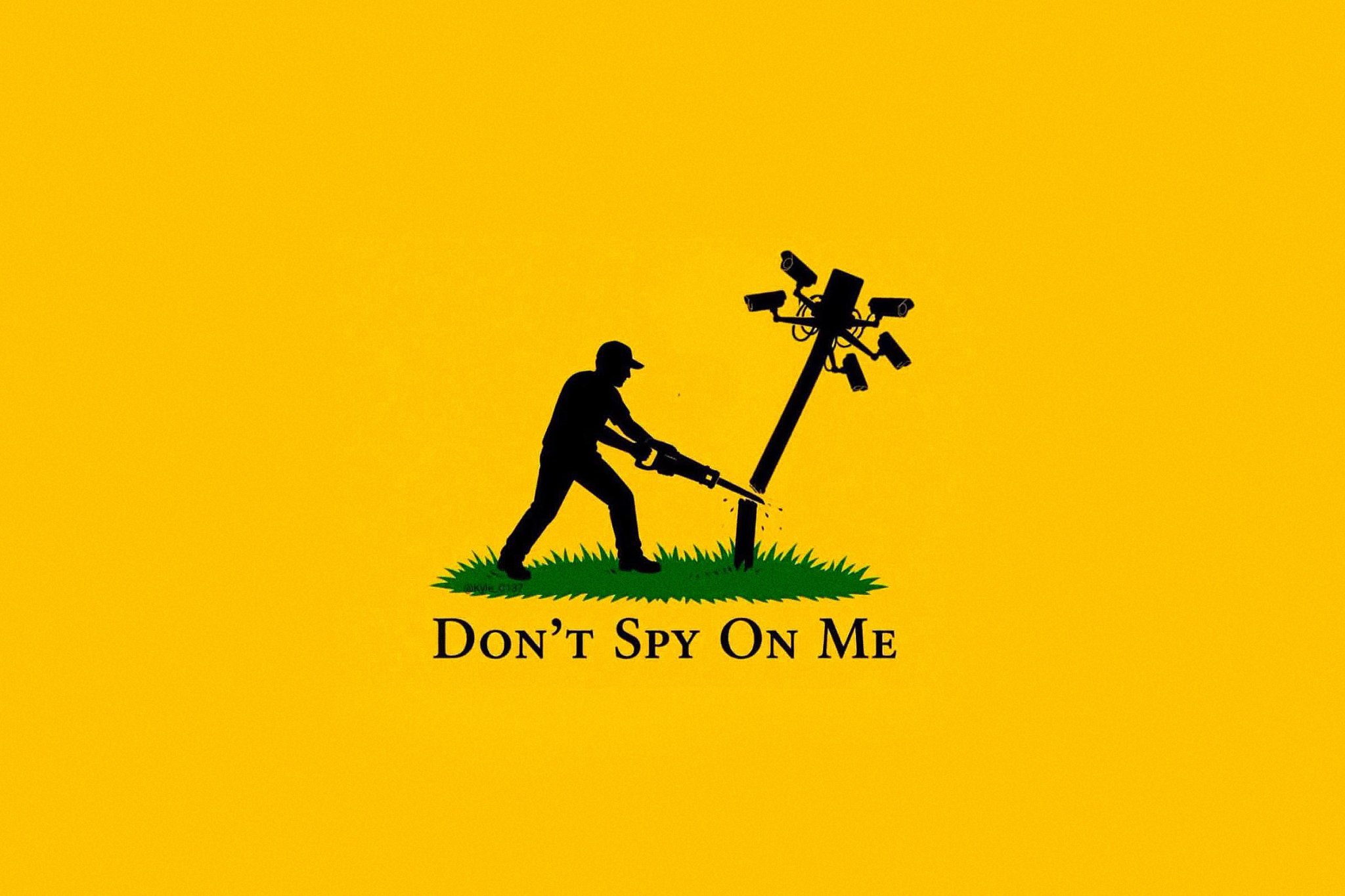
Some of the top posts on the subreddit are memes celebrating Flock vandalism: there are crude Photoshop jobs re-imagining covers of the Berenstain Bears as anti-Flock activists, hand-drawn signs encouraging copper thieves to cash in on Flock innards, and an ALPR-themed redesign of the Gadsden flag, to name a few.

Those who’ve been caught and charged with vandalizing ALPRs become digital folk heroes on the subreddit. When news broke that US Air Force engineer Jeffrey Sovern had been charged in connection to the destruction of 13 Flock devices, redditors flooded the post with praise, sharing links to his legal defense fund and encouraging others to donate. (Sovern’s GoFundMe now stands at over $40,000, compared to around $15,440 in early July.)

“I donated to him because those charges are bulls***,” one redditor replied.

In addition to memes, the subreddit has become a destination for serious discussion around ALPRs and surveillance in general. One developer used the forum as a launch pad for their app FlockHopper, a navigation app that helps travelers avoid ALRPs. Others use it to share important developments relevant to the anti-Flock crowd, to get advice on Freedom of Information Act requests, and to dispel misinformation.

“As entertaining a trend as it is, will a few Redditors knocking a few poles over really make a difference?” one redditor asked the group.

“Even a single grain of rice can tip the scales,” a user replied.

More on Flock: Man Trapped in Dystopian Nightmare Thanks to AI Surveillance Cameras Flagging His Every Move

The post Redditors Are Celebrating the Cutting Down of Flock Surveillance Towers With Based Memes appeared first on Futurism.

  •  

LAPD Abandons Flock Contract After Making a Horrifying Discovery

Rarely has the Los Angeles Police Department found a police toy it doesn’t love. The third-largest police force in the US has major Palantir contracts in place, uses sketchy apps to track minority communities, and routinely sends drones to spy on peaceful protestors.

So when the LAPD ends a contract with a surveillance company because it thinks the technology is too dangerous, you know there’s a problem.

Over the weekend, the police department announced it was abandoning its contract with Flock Safety, the controversial company blanketing the United States in AI-integrated license plate cameras (ALPRs). Though its three-year contract with Flock is just about up, the LAPD says it won’t renew the partnership, citing residents’ concerns over privacy and civil rights, ABC reported.

“This contract is not being renewed because of serious concerns around civil liberties and civil rights issues, particularly around privacy and the data that is being collected from these cameras,” LAPD’s chief information officer Dean Gialamas told ABC in a statement. “The LAPD had to make a difficult decision, in this case discontinuing using Flock services until we can get those data, privacy, security and sharing concerns ironed out through a contractual relationship.”

The news comes just days after our sister publication The Drive‘s Joel Feder reported how he was suddenly swarmed by armed cops while test driving a Range Rover with his wife in Minnesota. Officers said they had been tracking him for days using Flock’s AI-integrated cameras, which had erroneously tagged his car as stolen.

After the latest Flock contract news broke, 404 Media revealed that a July 10 audit by the LAPD Office of the Inspector General caught the department’s ALPR cameras generating 161 false stolen-vehicle alerts in just two months — each one ending with officers pulling over an innocent driver. Factoring in 337 alerts which “resulted in the recovery of stolen vehicles,” the LAPD’s cameras carry an error rate of 32.3 percent, effectively giving officers a one-in-three chance at pulling an innocent person over.

“During the review period, officers acknowledged 161 alerts as accurate license plate matches; however, subsequent investigations determined the vehicles were not stolen,” the report reads. “In addition to creating an inconvenience for vehicle owners, these inaccuracies can affect individual liberty interests, erode public trust, and potentially create substantial legal and financial liability concerns.”

The OIG report notes that officers are required to “attempt to verify all records prior to conducting an investigative stop,” though it didn’t disclose how many of the 161 wrongful stops were the result of an officer’s failure to do so. Instead, investigators blamed license plate records it says were “not updated in a timely manner,” which “may” lead cops to “act on inaccurate or outdated information, increasing the risk of unnecessary enforcement actions, including vehicle stops and wrongful detentions, or a confrontation with serious consequences.”

As 404 flagged, the LAPD approaches potentially stolen vehicles as “high-risk” stops. For the LAPD, these stops require drastic shows of force, including “calling for back up, air support, and a supervisor and ordering the suspect out of their vehicle,” the report reads.

It doesn’t take a large language model to figure out that this is an incredibly dangerous scenario for Black people in Los Angeles, who account for 19.5 percent of those killed by the LAPD, despite making up only nine percent of the city’s population.

Whatever way you slice it, it seems one of the most notorious police departments in the US has finally met its match.

More on surveillance: Flock Cameras Screw Up, Swarm Innocent Man With Armed Police

The post LAPD Abandons Flock Contract After Making a Horrifying Discovery appeared first on Futurism.

  •  

Flock Cameras Screw Up, Swarm Innocent Man With Armed Police

Flock surveillance cameras are blanketing the country, and to no one’s surprise, innocent people are being caught in their dragnet.

At our sister publication The Drive, automotive journalist Joel Feder reports how he was suddenly swarmed by armed cops while test driving a Range Rover with his wife in Minnesota. The police used four squad cars to box him in in a coordinated maneuver; when he demanded an explanation, the officers said that they had been tracking him for days using Flock’s AI-integrated cameras, which had tagged his car as stolen — erroneously, as it turned out.

It was a startling example of how far reaching the controversial surveillance system had already become, never mind how flawed its conclusions can be.

“Whether you’ve actually stolen a car or are just rolling down the road having done nothing wrong, like me, once these systems have you in their crosshairs, there’s pretty much only one way it can go,” Feder wrote. “Welcome to the future. It’s scary out here.”

While still on the scene — every on-the-run criminal’s favorite place to lie low, a Kohl’s parking lot — the cops explained that the license plates on Feder’s Range Rover had been reported stolen by a dealership in Los Angeles. This made “absolutely no sense” to Feder, since car companies are extremely thorough about who in the media they loan their cars to. One officer presented photos taken by the cameras in the Flock app showing his SUV, plate number 34 10 DTM, confirming they had the right car — at least according to Flock.

But when Feder got Jaguar Land Rover on the phone, the automaker said that the reported plate number was 34 03 DTM, not 34 10 DTM. On New Jersey plates, the middle number is written smaller than the others, and for whatever reason, the number entered into the Flock system was recorded as 34 DTM.

This apparently drove Flock’s AI tech haywire, according to Feder. It “wasn’t registering that non-standard little number when it began picking up the Range Rover around town,” he wrote. “It just saw 34 DTM in large type and started alerting the local police.”

Because Flock’s surveillance network is so sprawling, this error was now a nationwide issue. “Anywhere a police department has a partnership with Flock,” Feder wrote, “any other JLR-owned car with the same plate structure is going to get flagged as stolen.” Later, Feder discovered that the car they were looking for wasn’t stolen after all; its license plate had been accidentally misplaced during a photo shoot.

Flock has surged to national attention in the past year, as police departments across the country partner with the firm to deploy its license plate readers and video cameras that can track vehicles and pedestrians. Often taking the form of towering pylons, it’s as if Flock wants residents to know they’re being watched, and its highly visible presence has served as a lightning rod for anxieties over privacy, surveillance, and police overreach.

Residents have fiercely protested against the deployment of Flock cameras, overrunning town meetings. Others have resorted to covering the cameras with trash bags or vandalizing them. Last month, a US Air Force engineer won public sympathy after being charged with sawing down over a dozen Flock cameras, with his legal defense’s GoFundMe page quickly raising tens of thousands of dollars.

On top of being widespread, Flock cameras are hooked into a centralized network, meaning the troves of footage they collect can easily be accessed by cops with little oversight. Flock and police departments argue that the cameras will only be used to investigate serious crimes, but there’re already mounting cases of cops being arrested for using Flock to stalk women. An investigation last year revealed that ICE was tapping into Flock’s network to conduct searches.

Flock’s overreach is already so vast that, in Feder’s case, he was warned to drive straight home and not cross into the neighboring towns — where their own Flock cameras would wrongly flag his car and sic the cops on him, too.

“You’re lucky we’re in Plymouth,” the officer who warned him said. “If you were in Minneapolis, they definitely would’ve come at you with guns drawn.”

More on surveillance: Woman Surprised When Flock Surveillance Tower Appears in Her Yard Without Warning

The post Flock Cameras Screw Up, Swarm Innocent Man With Armed Police appeared first on Futurism.

  •  

Facial Recognition on Public Buses? Kansas City Says Yes

An anonymous reader shared this report from the Associated Press: Officials in Kansas City, Missouri, are preparing to equip cameras on some public buses with facial recognition software capable of identifying passengers who appear on a list of banned riders or missing persons. Supporters and opponents alike view the effort as a major litmus test for tapping the AI-powered software on a U.S. public transportation system, positioning Kansas City as the latest epicenter of a fierce debate over whether the safety benefits of artificial intelligence are worth the privacy costs. "The idea of running face recognition on a camera that is pointed on live spaces in public is a line that until recently has never really been crossed in the last 25 years," said Jay Stanley, senior policy analyst for the Project on Speech, Privacy and Technology at the American Civil Liberties Union. The state of Missouri declined to help fund the project as expected due to concerns with the facial recognition component. Still, the city is pushing ahead with local and federal money, said Tyler Means, chief mobility and strategy officer at the Kansas City Transportation Authority. "Privacy is always a tricky thing," Means said. "We've always had cameras on our buses. It's just new technology. I think in time it'll smooth over and people will realize, 'Well, it didn't really feel any different'...." Images captured by cameras aboard the buses would immediately be checked against any active alerts, generated when a missing person, banned rider or someone on a law enforcement watch list designated by the transportation authority is identified... After the buses return to the depot, the transportation authority would archive the regular video footage on a local server for up to five years. The company partnering with Kansas City to run the cameras "started using live facial recognition years ago to alert nursing homes when residents left the building," according to the article, and then "brought the technology to correctional institutions and schools." But this is its first attempt at bringing its cameras onto public transportation. The article also includes this quote from Will Owen, communications director for the Surveillance Technology Oversight Project. "City residents should not be guinea pigs for transit systems to test Silicon Valley's latest unproven, biased surveillance tech."

Read more of this story at Slashdot.

  •  

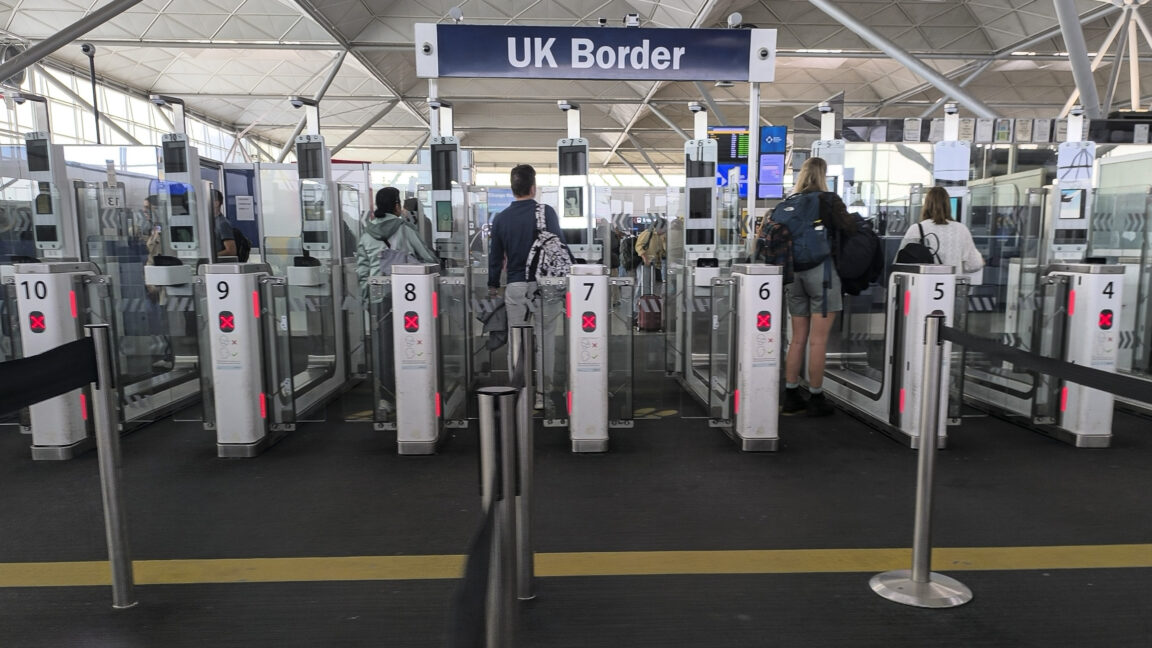
The UK will scan asylum-seekers’ faces for age checks—despite knowing the tech is flawed

Age verification is consuming the Internet. From social media bans in Australia to porn restrictions in half of US states, for many having to prove their age to access websites is becoming an everyday requirement. But one of the key technologies underpinning many of these age checks is about to seep into the offline world—with potentially life-changing consequences for people having their age predicted by AI.

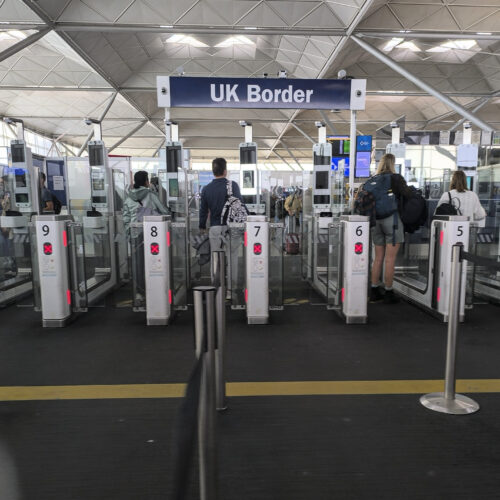
Starting next year, the British government is planning to introduce facial age estimation—where AI scans your face and suggests how old you are—to help determine the age of asylum seekers arriving at the United Kingdom’s border. The move is believed to be the first time that a so-called facial age estimation (FAE) system has been used in this way. Many asylum seekers arriving in the UK will not have documents proving their age, and if children are incorrectly classed as adults, they can be stripped of some legal protections and placed in adult-only detention centers.

An investigation by WIRED and Lighthouse Reports, in collaboration with The Independent, has obtained an internal UK government report detailing its tests of FAE technologies. It shows how the systems regularly mistake children for adults and appear to contain serious bias problems, which directly impact the largest group of migrants subject to age assessments in 2025, according to data from the Home Office. The investigation raises questions about the effectiveness of the technology and whether it should be deployed in such high-stakes scenarios.

Read full article

Comments

© Nicolas Economou/NurPhoto via Getty Images

  •  

Hacking Group Claims Major Hack of Novo Nordisk, Attempted $25 Million Extortion

Reuters reports a cyber extortion group has claimed responsibility for breaching Novo Nordisk's network, stealing roughly 1.3 terabytes of data, including source code, drug research, clinical-trial records, employee and physician information, production-system details, and internal AI model data. The group says it's exploring selling parts of the data after unsuccessfully demanding $25 million from the company. From the report: FulcrumSec, a cyber extortion group that emerged in October 2025, said in a long message posted to its website that it spent more than two months in Novo Nordisk's networks stealing data. It said that data included company source code, proprietary information on released and unreleased drugs, trial data, employee, doctor and patient data, information related to company processing facilities and internal AI model information. [...] FulcrumSec told Reuters in an email that Novo Nordisk representatives contacted the group on June 3, roughly 48 hours after the group's initial contact to unnamed company executives. The company used a random Proton Mail email address sent to email addresses that FulcrumSec used in its initial outreach, and confirmed it was the company by requesting specific files for verification only the company would know about. The FulcrumSec representative also said that the group would prefer not to sell data, "as open sourcing it is a more effective deterrent for future companies to avoid paying." [...] FulcrumSec said it would not share some of the data it stole, including information on thousands of company employees and physicians, and roughly 11,500 pseudonymized clinical trial patients. The group said it also would withhold data related to operational technology and software used to interact with sensors and machinery at Novo Nordisk production facilities as part of its "harm-reduction strategy." A Novo Nordisk spokesperson said in an email that the company "is aware of claims that data allegedly copied externally without authorization from our systems has been published online. We take this matter seriously and maintain continued operations of our main platforms. We are in contact with the relevant authorities."

Read more of this story at Slashdot.

  •  

Scientists Develop New Technique to Protect Privacy of Electrocardiogram Data

In a groundbreaking development addressing the burgeoning concern of privacy in modern medical technology, researchers at the University of Kansas have unveiled a transformative artificial intelligence (AI) model designed specifically to safeguard sensitive biometric data embedded within electrocardiograms (ECGs). This innovation is poised to reshape how medical institutions share and analyze vital cardiovascular data without compromising patient confidentiality. Electrocardiograms have long been renowned for their role in capturing the heart’s electrical activity to diagnose and monitor cardiac health; however, as AI integration deepens, these signals inadvertently reveal more than just clinical information — exposing personal attributes such as sex, age, race, and even uniquely identifiable biometric markers.

The research team at Kansas, led by doctoral candidate Fairuz Shadmani Shishir in collaboration with the KU Medical Center, has pioneered the privacy-preserving variational autoencoder (PP-VAE). This novel AI architecture is specially engineered to retain the clinical utility of ECG data while systematically obfuscating sensitive biometric features that might otherwise be inferred through advanced AI analysis. The dual objective of PP-VAE is both technically sophisticated and ethically imperative, ensuring that predictive diagnostic accuracy remains uncompromised while minimizing the risk of privacy breaches inherent in sharing raw biomedical signals.

Electrocardiograms, traditionally viewed as a straightforward diagnostic tool, have grown in complexity with modern AI techniques that can extrapolate a multiplicity of patient traits beyond the cardiovascular parameters they were designed to measure. Shishir notes that these advanced systems can uncover “soft biometrics” such as demographic information, which raises pressing data governance and patient privacy challenges. By developing PP-VAE, the researchers aim to reimagine ECG data processing whereby sensitive attributes are masked without degrading the signal quality necessary for important medical prognoses, such as identifying patients at risk of left ventricular ejection fraction (LVEF) abnormalities, a critical indicator linked to heart failure and mortality risk.

The technical underpinning of PP-VAE involves training independent convolutional neural networks to disentangle and suppress identifiable biometric markers while preserving clinically relevant features within the ECG signal. This balancing act required careful engineering to ensure that the encoded ECG data remained diagnostically rich, capable of supporting predictions related to conditions such as left ventricular hypertrophy and forecasting five-year mortality risk. The research showcased that their method consistently outperformed or competed with other state-of-the-art AI models, marking a significant stride in machine learning’s ability to harmonize privacy with clinical efficacy.

Importance of such privacy-preserving strategies becomes particularly clear against the backdrop of the healthcare industry’s increasing reliance on data sharing for collaborative research, AI model development, and multi-institutional patient care coordination. The KU team articulates that unrestricted data sharing without privacy controls introduces tangible risk vectors for patient re-identification and misuse. PP-VAE proposes a scalable approach toward enabling secure exchange of ECG data, thus fostering innovation and improving medical outcomes while staunchly protecting individual privacy rights.

This research also touches on the profound issue of bias within AI-driven medical diagnostics, which has historically contributed to disparities in healthcare delivery among marginalized populations. The team consciously incorporated balanced datasets reflective of gender and racial diversity in their model training to mitigate bias and improve generalized performance across varied demographic groups. While initial validations were primarily conducted using data from KU Medical Center and publicly available datasets, future work is projected to expand this cross-regional training, enhancing the robustness and impartiality of the model when applied globally.

Another compelling facet of this breakthrough is the planned public release of the PP-VAE model, reflecting the researchers’ commitment to transparency, collaboration, and democratization of AI tools in medicine. By allowing institutions worldwide to access and further refine the model with local datasets, the innovation promises to catalyze a new era of secure, privacy-conscious healthcare analytics. Adoption of PP-VAE could alleviate prevalent trust issues among patients concerned about the confidentiality of their biometric health information—a critical barrier to broader acceptance of AI-driven healthcare technologies.

Furthermore, the researchers discuss the broader implications for data-driven diagnosis, illustrating how balancing the protection of sensitive attributes with clinical utility could become a standard principle in biomedical AI applications beyond cardiology. This approach offers a blueprint for addressing ethical and privacy challenges that increasingly pervade the intersection of health data science and artificial intelligence.

The University of Kansas team’s work is also distinguished by its multidisciplinary nature, featuring collaboration between electrical engineering, computer science, and cardiovascular medicine experts. Such an integrated approach enabled the synthesis of advanced machine learning expertise with intimate clinical insight, culminating in a pragmatic solution tailored precisely to real-world healthcare needs.

This pioneering study was recently published in Scientific Reports, showcasing detailed methodology, experimental evaluations, and comparative performance analyses that underscore the efficacy and potential transformative impact of PP-VAE. Supported by the American Heart Association, this research is an exemplar of innovative technological stewardship addressing one of the most pressing challenges in digital health.

As AI continues to proliferate across medical diagnostics, models like PP-VAE will undeniably play a critical role in shaping ethical frameworks and technological architectures for future patient data management. By protecting sensitive biometric identifiers embedded in ECG data, the model not only preserves patient autonomy but also enhances the potential for AI-driven insights to be safely harnessed for better clinical outcomes worldwide.

The journey ahead involves validating and deploying this technology in diverse healthcare environments globally to ensure scalability, efficacy, and fairness remain intact as data heterogeneity increases. Yet, with the foundational work from the University of Kansas, a robust and privacy-conscious approach to ECG analysis and beyond appears well within reach, heralding a new era of secure AI-driven cardiovascular care.


Subject of Research: Privacy-preserving AI models for electrocardiogram data analysis
Article Title: Safeguarding Patient Privacy in Electrocardiogram Analysis with AI-driven Models
Web References: Scientific Reports Article
Image Credits: Fairuz Shadmani Shishir / University of Kansas

Keywords

Privacy-preserving AI, Electrocardiogram (ECG), Variational Autoencoder, Convolutional Neural Networks, Biomedical Data Security, Cardiovascular Diagnostics, Left Ventricular Ejection Fraction, Patient Privacy, Machine Learning Bias, Medical Data Sharing, Artificial Intelligence in Healthcare, Clinical Decision Support

  •  

FBI Issues Urgent Kali365 Security Warning For Teams, Outlook, OneDrive Users

alternative_right shares a report from The Hill: The FBI released an urgent security warning to the public about a fast-acting scam targeting Microsoft 365 users on Teams, Outlook and OneDrive. The agency warned that the hacking platform Kali365 seeks out OAuth device codes, allowing scammers to sneak past multi-factor authentication codes, and without the need for a password, to access Microsoft accounts. Scammers will send a phishing email impersonating a trusted document-sharing service with a device code and instructions on how to verify, according to the FBI. "Kali365 lowers the barrier of entry, providing less-technical attackers access to AI-generated phishing lures, automated campaign templates, real-time targeted individual/entity tracking dashboards, and OAuth token capture capabilities," the FBI stated. The platform is sold to scammers with a $250 per month subscription. The FBI, which first detected Kali365 in April, described the hacking platform as an "emerging Phishing-as-a-Service platform." Hackers with limited skills can access advanced phishing tools through the platform, according to NordPass.

Read more of this story at Slashdot.

  •  
❌