The weather forecast can get extreme in the land of Hyrule, found in the Nintendo series The Legend of Zelda. A downpour in the coastal province of Faron, for instance, prevents Link, the game’s hero, from reaching Calora Lake. And constant lightning and rain threaten the skybound Thunderhead Isles. These storms only end once Link completes a series of quests, all while dodging lightning.
Never-ending storms make for moody gameplay. But real storms “can’t last forever,” says Stephanie Spera. Storms result from imbalances between moisture and temperature. “A storm kind of fixes a temporary imbalance,” she says. This physical geographer at the University of Richmond in Virginia uses satellite data to study changes to the landscape.
“The whole purpose of anything in weather is to get the atmosphere back in balance,” explains Chris Vagasky. He directs the Wisconsin Environmental Mesonet. It’s a network of weather stations. Physical features such as mountains and oceans, even buildings, often keep that from happening, he says. Though violent at times, thunderstorms help balance and redistribute heat, moisture and electrical charges.
For constant thunderstorms like those seen in Faron, those imbalances would have to remain out of whack. But on Earth, atmospheric physics ensures that even the strongest storms eventually fade away.
No storm lasts forever
Thunderstorms form when warm, moist air rapidly rises and meets cooler air in the atmosphere. This creates the instability needed for a storm. Such moisture often comes from the evaporation of ocean water. As this moisture-filled, warm air rises, it creates updrafts — upward air movements. Water vapor in this air condenses into droplets, forming a cumulus cloud. This cloud formation, in turn, releases energy as heat. That heat fuels stronger updrafts, which power the storm.
Within the clouds, water droplets collide with ice crystals. This creates static charges and, in turn, lightning. As a cloud grows, water droplets become heavy enough to fall through it. The resulting rain and ice create cooler downward winds, or downdrafts. They cool the cloud and eventually overpower the warmer updrafts. As the atmosphere now regains its balance, the storm ends.
Most thunderstorms only last an hour at most. For constant thunderstorms, such as those seen in Faron, you’d need to maximize a storm’s ingredients, says Vagasky. For moisture, there would need to be a “persistent conveyor belt of warm, moist air.” This air would most likely be heated by 24-hour sunlight. And the Thunderhead Isles would likely need to hug mountains that could help condense that moist air into clouds.
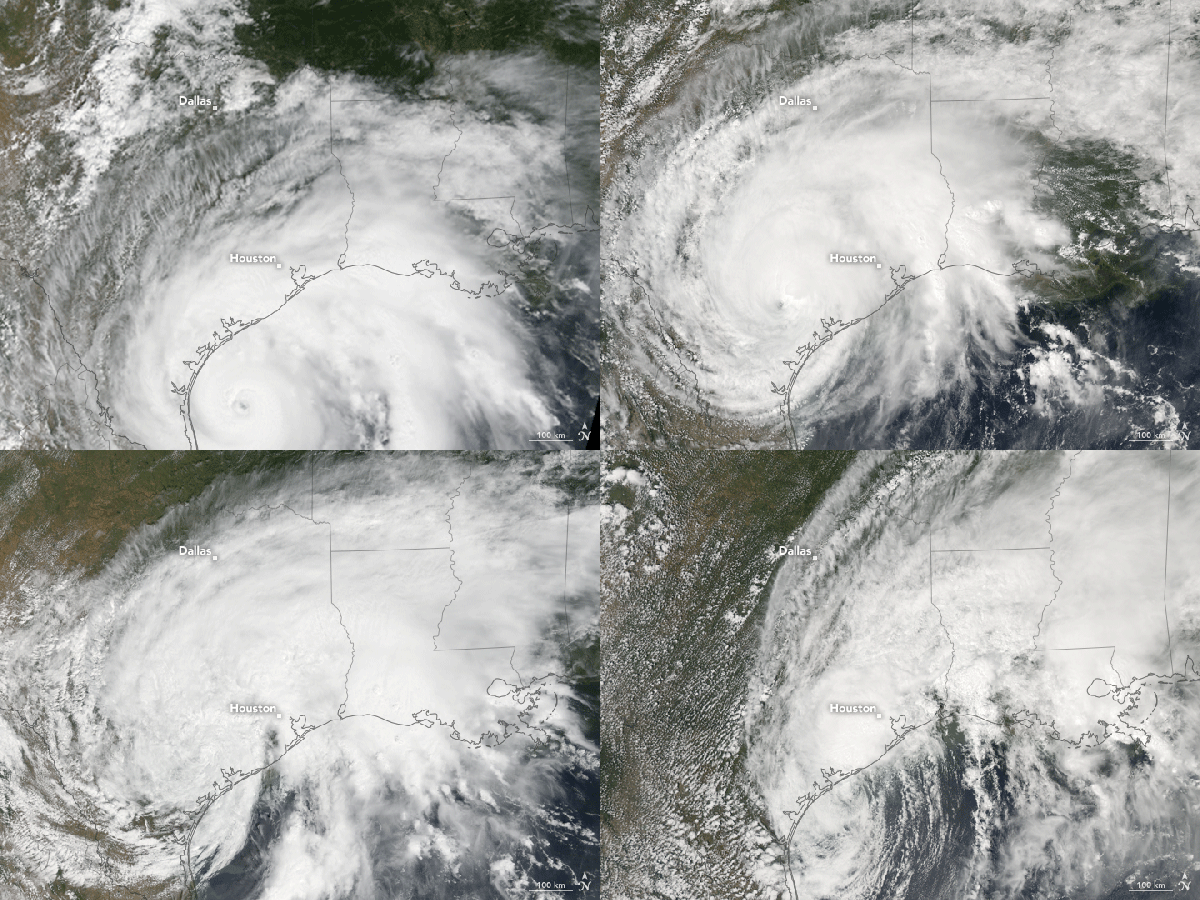
In 2017, Hurricane Harvey stalled over Houston, Texas, for about four days. During that time, some areas received more than 127 centimeters (50 inches) of rain.Jesse Allen/NASA
Keeping things moving
Even if a storm could sustain its own internal energy, it couldn’t stay in the same place forever. That’s because Earth’s atmosphere is in constant motion. Large belts of wind blow in particular directions (based on their latitude). Some storms get an extra boost from fast, narrow bands of wind called jet streams. Like conveyor belts, these streams move weather across continents. Clocking in at up to 320 kilometers (200 miles) per hour, jet streams “really help to push all of that activity from one place to another,” Vagasky says.
Sometimes these wind patterns can increase how long storms last. High-pressure systems or the jet stream can make Earth’s longest-lasting storms — tropical cyclones — sort of stall out in one place for a bit. In August 2017, for instance, weak prevailing winds let two high-pressure systems hover over the United States. In turn, Hurricane Harvey stalled over Houston, Texas, for about four days. Fueled by warm coastal waters, some areas received more than 127 centimeters (50 inches) of rain before the storm moved inland and broke up.
Like Houston, Faron lies along a coast. Depending on where Hyrule is located on the planet, it may be at risk for cyclones. But a cyclone couldn’t last year-round unless the oceans stayed consistently warm. On Earth, cyclones die when they make landfall, face windshear or reach colder water in higher latitudes. “They need to be refueled, which is why they die over land,” says Spera. “There’s no energy source.”
Learn about the basic ingredients of every thunderstorm and how weather satellites watch for developing storms.
Earth’s flashiest storms
Thanks to physics, perpetual storms like those in Faron are impossible on Earth. But certain scenarios come close.
The storm plaguing the Thunderhead Isles looks similar to a region called the Intertropical Convergence Zone (ITCZ), says Spera. This solid band of clouds encircles the globe near the equator. Here, prevailing winds from the northern and southern hemispheres meet. This lifts warm, humid air heated by the intense sunlight found in the tropics.
But the ITCZ isn’t a single, massive thunderstorm, Spera adds. Instead, a series of intense but short-lived events develop here. This zone also moves back and forth across the equator, leading to seasonal monsoon rains like those found on the Indian subcontinent. If the Thunderhead Isles were under the ITCZ, they wouldn’t have the relentless lightning storms seen in The Legend of Zelda games. Instead, it would just “be really rainy for a really long time.”
For flashier storms, the Catatumbo lightning phenomenon is truly unrivaled. This mass of thunderstorms occurs over Lake Maracaibo in coastal Venezuela. Here, lightning flashes up to 300 days per year and can last for nine hours at a stretch! Catatumbo holds the world’s record for the most concentrated lightning.
The key to Catatumbo lightning is geography. The nearby Caribbean Sea offers huge amounts of warm, humid air. Lake Maracaibo sends in added moisture. Winds whisk this moist air up the northern end of the Andes Mountains. There it meets colder air. The bowl-shaped mountains hugging the lake prevent the resulting cumulonimbus clouds from moving. This can lead to stagnant thunderstorms, ones similar to those of the Thunderhead Isles. Says Vagasky, “Catatumbo is one of the closest things that we might see to that.”
When Victoria Glynn was a teen living in Honduras, she enjoyed making art. But that wasn’t her only interest. “Growing up in Central America, I was just surrounded by all of this amazing biodiversity,” she says. So, when it came to college, Glynn opted to study environmental science.
For undergrad studies, Glynn moved to the United States to attend the University of California, Berkeley. While there, she worked in a lab that genetically engineered yeast to produce biofuel. But she had a problem: Glynn was struggling to find diagrams to accompany talks about her research. Her mom suggested that she use her skills in art and make her own. “At the time, I wasn’t seeing other people doing that,” Glynn says. “It felt like science was in one corner, and all the arts and humanities were in the other.”
Glynn soon found other ways to bridge science and art. As an undergrad, she taught refugees and children who had recently arrived in the United States. She sometimes worked in classrooms where the students spoke many different languages. Art became a “common language for all of us to be on the same page,” she says.
Now as a visiting researcher at the University of Connecticut, Avery Point, Glynn studies how plankton are adapting to high temperatures. In this interview, she shares her experiences and advice with Science News Explores. (This interview has been edited for content and readability.)
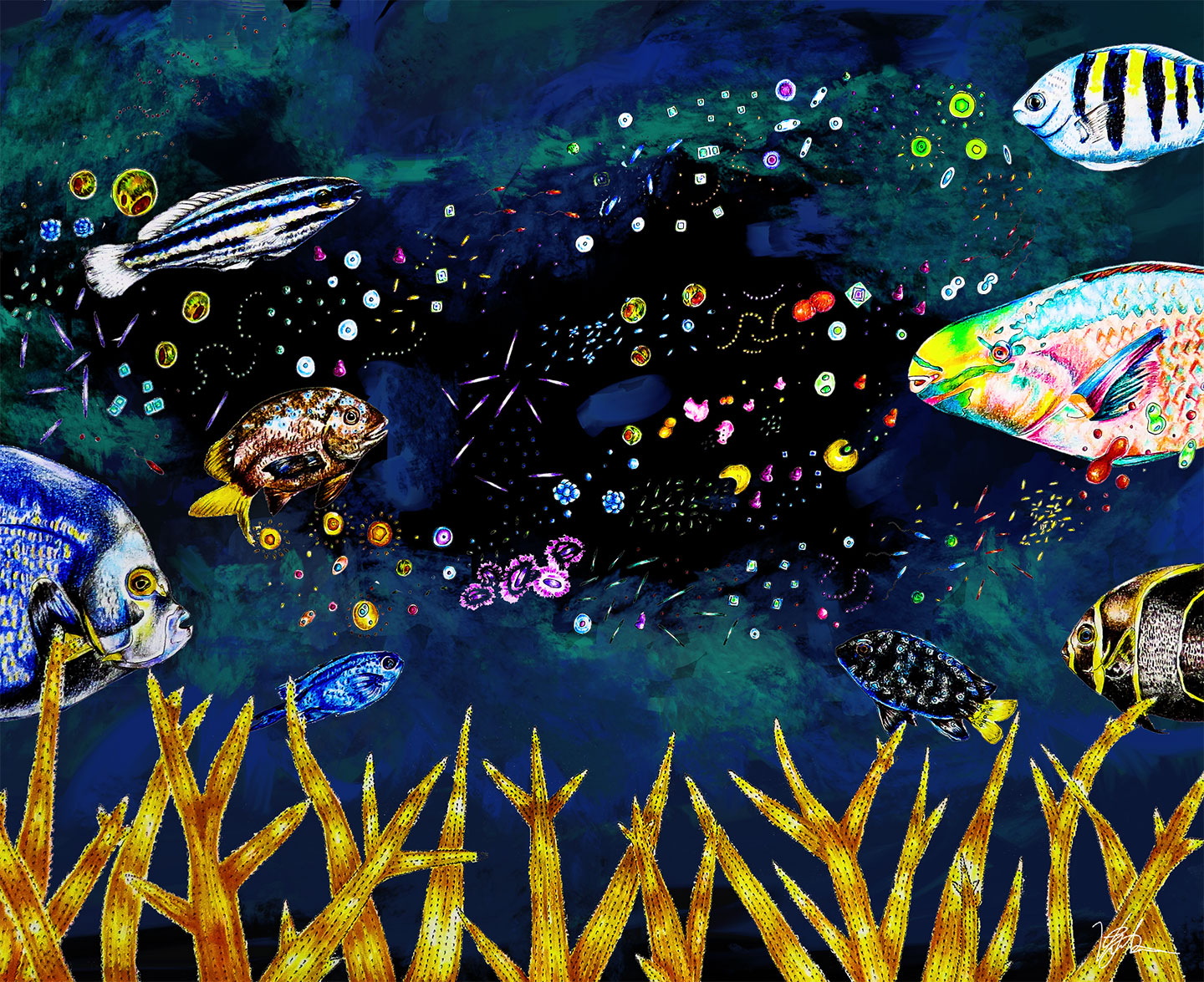
Glynn uses traditional media such as colored pencils and watercolor to create scientific illustrations.V. Glynn
What inspired your career?
I think what really inspired me was an undergrad class at Berkeley. One of my best friends recommended that I take this particular genetics course. I was unsure since the course wasn’t a requirement for my degree. The class seemed very removed from my interests at the time, but I still decided to enroll. I felt college was a time to explore and learn from various fields.
I remember something just clicking in my brain during one of the first lectures. Genetics and DNA felt so powerful. All organisms have DNA, which means you can track it and directly measure how it’s changing over time. Essentially, how it is evolving and mutating. After this class, I really wanted to dive into this topic more deeply.
How did you get to where you are today?
I didn’t do a lot of marine biology work until I was in my PhD. The lab I joined for my PhD at McGill University in Montreal, Canada, was looking for someone who did genetics work, preferably in marine invertebrates. I happened to fit the bill and was interested in the project. We would take corals from their home environment and bring them onto a boat to conduct temperature stress experiments. We were interested in seeing how they build up resistance to bleaching.
Corals are beautiful animals, but they’re very hard to rear in the lab. They’re very delicate animals that do not like being in tanks. They even struggle out on the reef. That unpredictability makes experiments very difficult.
For my post-doc, I switched to studying plankton to better understand how marine organisms are being affected by warming oceans. I needed an animal that could evolve quickly over multiple generations. Plankton are much easier to grow. In as little as 11 days, you can have adult plankton that lay eggs. Compare that to corals. Some species are so long-lived that they will not reproduce within our lifetime.
How did you decide to study science education?
I loved being an environmental science major, but I often missed that human connection when spending time in the lab. I also felt that sometimes the best researchers were not always the best at communicating their work with the general public. I wanted to share what I was learning with those who are the most affected.
Improved science communication leads to better science. In turn, embracing different backgrounds improves science education. It allows more people who are taking these courses to feel empowered and actually pursue STEM degrees. [STEM stands for science, technology, engineering and math.]
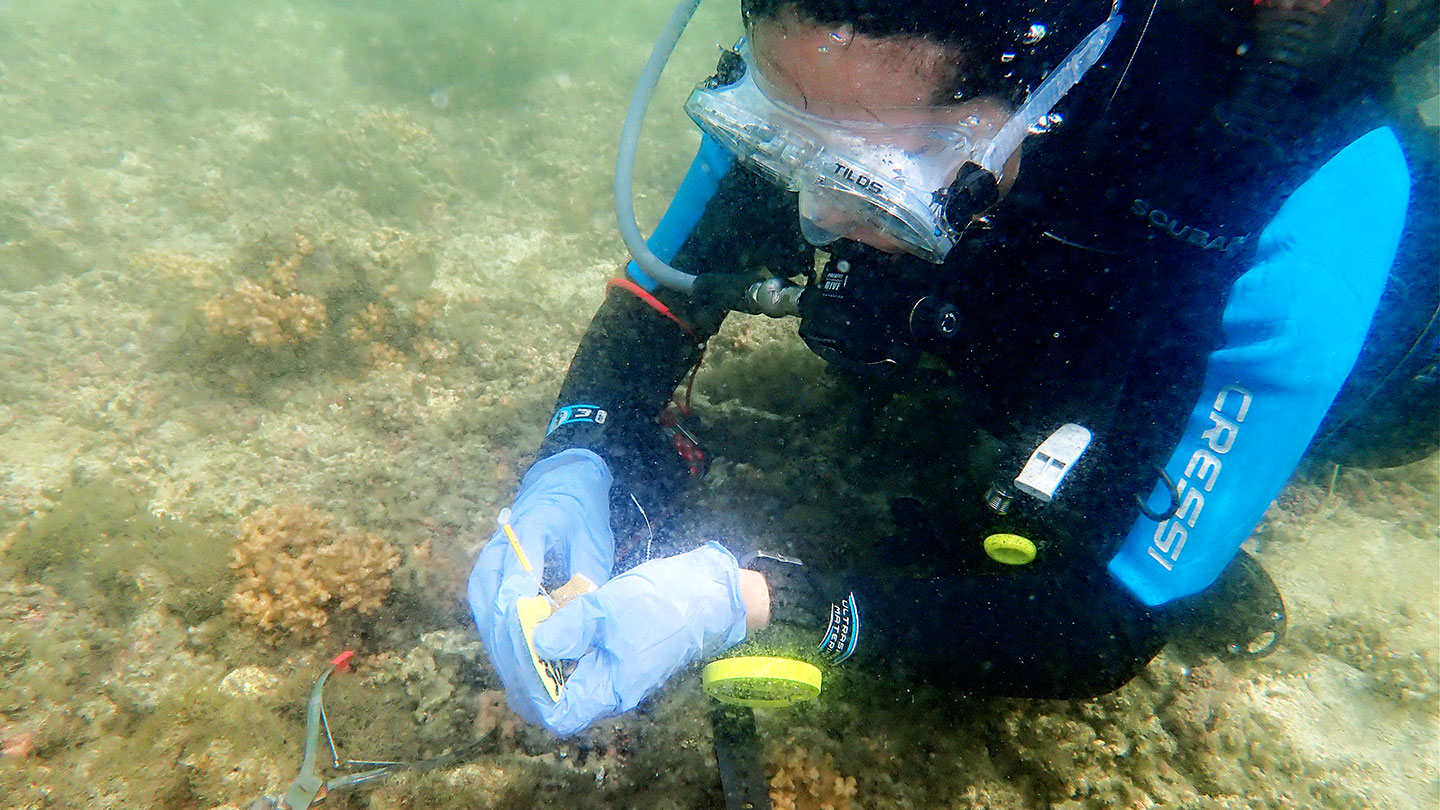
As an evolutionary biologist, Victoria Glynn has conducted field work underwater, such as sampling corals in Panama’s Las Perlas Archipelago.Michael Connelly
Scuba diving is both a hobby and part of your work. When did you pursue that?
Both of my parents are divers. When I was younger, they would always talk about it. Honduras is also one of the most affordable places to get dive certified. So when I turned 12, I decided to go for it.
As I was applying for my PhD, my mother suggested that I add diving onto my CV. [A CV, or curriculum vitae, is the academic version of a resume.] I doubted whether people were going to care but added it anyway. That was the one line out of my entire CV that my future PhD advisor picked out during our interview. He was looking for someone who could handle both diving in the field and doing molecular work in the lab.
That taught me that the experiences you may not see as valuable in professional settings may be what sets you apart. You don’t know where these experiences are going to lead.
What advice would you give those pursuing careers in STEM?
Oftentimes, you find the most unlikely mentors outside of your direct field of study. I think those can be the most important. Sometimes, those people gave me more powerful personal advice than my formal supervisors did. STEM degrees are difficult. But with a good support system, anything is possible.
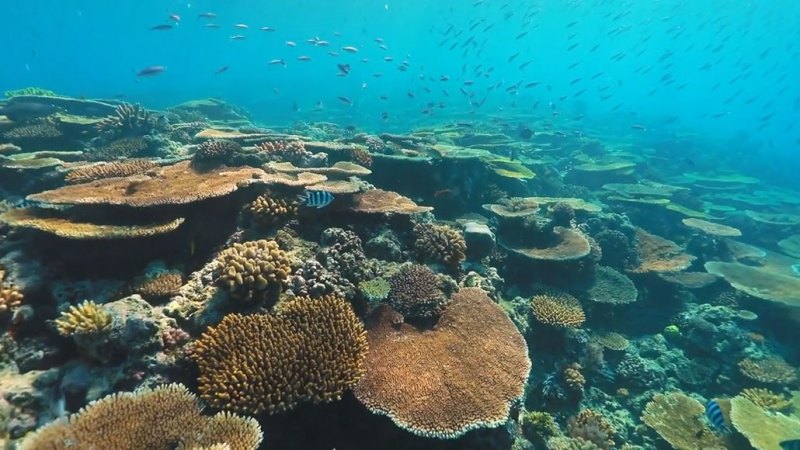
Take a plunge into Australia’s Great Barrier Reef, and you’ll come face to face with a what looks like a gorgeous rocky garden. This dazzling array of corals is the largest living structure on Earth. Some, like staghorn coral, look like leafless bushes sprouting from the ocean floor. Others, such as honeycomb coral, resemble rocks dotted with tiny holes. Then there’s brain coral, which, you guessed it, look like brains. And that’s just a small sample of the brilliant diversity to be found in a reef.
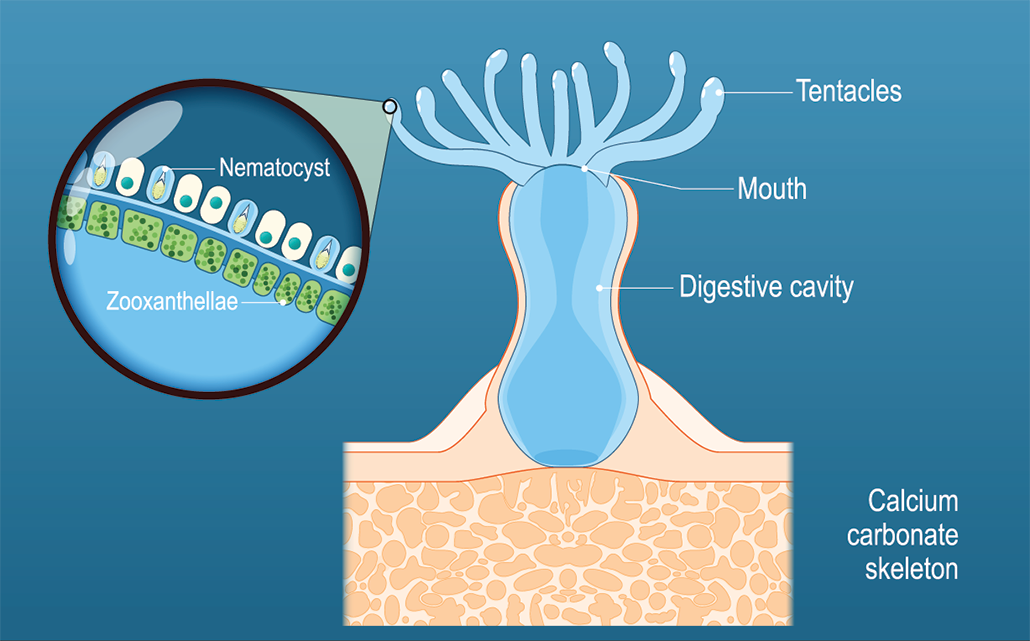
Despite their appearance, corals are animals. These invertebrates are close relatives of jellyfish and sea anemones. Most corals live in colonies of thousands of tiny individuals called polyps growing together. Each polyp sports a cylindrical body topped with a ring of tentacles surrounding its mouth.
“You can think of them as upside-down jellyfish,” says Peter Cowman. At Queensland Museum Tropics in Townsville, Australia, this marine biologist studies the evolutionary history of corals.
A coral looks somewhat like an upside-down jellyfish, one that is attached to a skeleton made of calcium carbonate. In the coral’s tentacles are stinging nematocysts that help it catch prey and zooxanthellae that make energy from sunlight.ttsz/iStock/Getty Images Plus
Like their jellyfish cousins, coral polyps use tentacles to feed and defend themselves. These appendages are packed with specialized stinging cells called nematocysts. Each contains a coiled, barbed thread. When touched, the cell “fires” this thread to inject venom into its target. Most corals hunt at night, snagging tiny zooplankton, floating eggs and small fish.
Many corals have a more laid-back way of feeding, too. Inside their tissues, they house algae called zooxanthellae (Zoh-uh-ZAN-thuh-lay). (This is an example of symbiosis, where two creatures benefit by associating together.) These single-celled organisms are photosynthetic. They use light and carbon dioxide to make sugars and proteins. Most of these nutrients are offered to the coral. “In return, the coral gives them a safe apartment to live in,” says Cowman. “They’re the solar-powered roommates.”
Corals that rely on light-powered algae live in shallow, warm waters. It’s here where you find coral reefs. These structures are made by a type of coral called hard or stony corals. “They are the engineers of the reef system,” says Cowman.
Stony corals produce hard skeletons of aragonite, a mineral made of calcium carbonate. Over hundreds to thousands of years, generations of polyps can build up massive reef systems.
Soft corals, like their name implies, don’t make these stony skeletons. Instead, they have bendy structures that move with ocean currents. They can often be found living among reefs, though. “The soft corals are like the decorators,” says Cowman. “They look like underwater swaying trees and fans.”
Some corals — both soft and hard — can live in deep water, up to 6,000 meters (20,000 feet) below the water surface. Stony corals found at these depths are often smaller than their shallow-water counterparts. Most tend to live as single polyps. Some species do create reefs, but they’re less of a team effort. Called “mounds,” these deep reefs grow over the skeletons of old or dead corals on the ocean floor.
Reefs at risk
The first true corals appeared about 500 million years ago. But many of today’s reef-building corals can be traced back to the end of the Cretaceous Period some 66 million years ago. That’s when an asteroid impact wiped out about 80 percent of all animals (including the nonbird dinosaurs).
“The mass extinction had an effect in the oceans as well,” says Cowman. Existing reef-builders died out. Their extinction allowed stony corals to take their place. Today, corals are found in all of the world’s oceans.
But many are at risk from human activities. These dangers include pollution and destructive or heavy fishing. One of the biggest threats is climate change. High water temperatures and too much sunlight can stress corals, leading to a phenomenon called coral bleaching.
When coral is stressed, such as when water temperatures are high, it can lose its algae — and its color. If the stress goes away, the algae may return. If not, the coral remain pale and vulnerable.NOAA
At higher temperatures, the algae produce toxic compounds. “When the water gets too hot, the coral gets stressed and they evict their zooxanthellae,” says Cowman. These microbes are also responsible for a coral’s bright colors. In their absence, the coral’s tissues turn transparent. All that remains visible is the coral’s white skeleton.
Bleaching doesn’t kill the coral immediately. If conditions improve, the coral may recover and even take the algae back in. But if coral go too long without their algal partners, they may get sick or die. “If they can’t get the zooxanthellae back in again, they [will] actually starve to death,” says Cowman.
This bleaching affects coral worldwide. Since 2023, the world’s corals have been experiencing the largest bleaching event on record.
Coral reefs, such as this one off Florida, face many risks, including climate change, pollution and overfishing. DurdenImages/iStock/Getty Images Plus
Rainforests of the sea
Many scientists and conservationists are concerned about corals’ future. Coral reefs are among Earth’s most diverse ecosystems. Though they cover less than one percent of the seafloor, coral reefs support at least one-fourth of all marine species. “On land, you think of rainforests as having all that diversity,” says Cowman. “The rainforests of the sea are the coral reefs.”
Corals are important for people, too. Humans rely on many reef-dwelling species for food. Reefs can also buffer coasts against damage from strong waves or storms, says Cowman. Chemical compounds from reef animals have been found to help fight pain and treat cancer. And reefs support tourism around the globe. The food, products, jobs and coastal protection provided by corals are estimated to be worth $2.7 trillion per year.
Says Cowman, “as humans, we rely on reefs a lot in our daily lives, even if we don’t think of it.”
 Login