❌

Reading view

Inbreeding Hits Small Males in Threatened Songbird

Inbreeding depression, a genetic phenomenon where offspring result from the mating of related individuals, has long been understood to compromise individual fitness and elevate the risks of population decline or extinction. However, the depth and nuances of these effects remain largely unexplored in many non-model species, especially those facing dire conservation challenges. A groundbreaking new study investigates this complex relationship in a threatened songbird species, the aquatic warbler (Acrocephalus paludicola), unveiling how inbreeding depression manifests in a phenotype-dependent manner, particularly emphasizing body size as a critical factor in male fitness outcomes.

The aquatic warbler, a habitat specialist bird known for its recent precipitous population decline, poses a unique opportunity to study the genetic intricacies and their ecological consequences. Unlike widely studied model species, this bird’s depleted genetic diversity coupled with habitat specificity creates an ideal system to understand how inbreeding depression impacts survival and reproduction under real-world environmental pressures. Employing cutting-edge genomic tools such as single nucleotide polymorphisms (SNPs), researchers could quantify inbreeding at an unprecedented resolution, offering new insights into the genetic health and viability of this endangered population.

One of the pivotal breakthroughs of this research lies in demonstrating that inbreeding depression is not a uniform or straightforward process but is intricately moderated by the physical and ecological context of the individual. For male aquatic warblers, the genomic markers revealed a pronounced negative effect of inbreeding on breeding success—but only among males characterized by smaller body size, denoted by tarsus length, an established morphological proxy. This finding highlights how phenotypic traits can mediate the severity of inbreeding effects, suggesting that smaller-bodied males experience disproportionately harsh fitness reductions as a consequence of their genetic relatedness.

Equally compelling is the study’s exploration of wing length as another morphological trait potentially influencing inbreeding depression. While the results here were more subtle, a notable weak interaction was found between the degree of inbreeding and shorter wing length in males, correlating with decreased survival probabilities. This interaction suggests that even relatively minor morphological differences may buffer or exacerbate the impacts of genetic relatedness on survival outcomes, adding another layer of complexity to how we understand inbreeding depression in natural populations.

Importantly, the research also reveals a stark contrast between sexes. Female aquatic warblers showed scant evidence of inbreeding depression affecting key fitness components such as clutch size, hatching success, nestling survival, or the number of fledged fledglings. Moreover, no interactions emerged between female fitness measures and phenotypic or environmental variables examined. This asymmetry in inbreeding effects underscores sex-specific pathways in evolutionary and ecological responses to genetic challenges, warranting further inquiry into the mechanistic underpinnings driving such differences.

Prior studies investigating inbreeding depression often relied on relatively simplistic models that did not incorporate potential interactions with individual phenotype or environmental heterogeneity. This omission might explain why many previous estimates of inbreeding load—reflecting the cumulative fitness consequences of deleterious recessive alleles—have been inconsistent or highly uncertain. By integrating detailed phenotypic data with high-resolution genomic analyses, this study advances the field by showing that accounting for individual variation unveils clearer, biologically meaningful patterns of inbreeding depression.

The implications for conservation biology are profound. Small-bodied males, disproportionately burdened by inbreeding loads, might represent a critical demographic subgroup whose reproductive success most strongly influences population trajectories. This insight challenges conventional approaches that treat all individuals as homogenous units within populations, advocating instead for conservation strategies that are finely tuned to the nuanced genetic and phenotypic architectures of endangered species.

The environmental factors considered—timing of breeding and brood size—proved less influential in mediating inbreeding depression compared to phenotypic variables, at least in this particular system. While breeding timing and brood size have been previously hypothesized to influence fitness by affecting resource allocation or offspring survival probabilities, their interaction with genomic inbreeding proved minimal. This result refines our understanding of the complex ecological determinants of fitness and suggests that underlying genetic and phenotypic factors can overshadow the modifying effects of certain environmental variables.

Methodologically, the use of SNP-based genomic inbreeding coefficients represents a significant step forward from traditional pedigree-based measures. Genetic markers enable more precise estimates of genome-wide relatedness and inbreeding, which is especially crucial for populations like the aquatic warbler, where pedigree data are incomplete or unavailable due to logistical challenges in tracking individuals across generations. This technological advance paves the way for more accurate assessments of inbreeding consequences in conservation genetics.

Another noteworthy contribution is the nuanced interpretation of inbreeding load estimates. The study found that models omitting phenotypic interactions yielded highly uncertain inbreeding load figures for both survival and breeding success in males, whereas incorporating body size interactions produced more robust and meaningful estimates. This methodological insight calls for revisiting traditional models that treat inbreeding load as a fixed entity, promoting dynamic frameworks that integrate individual heterogeneity.

The study also contributes to evolutionary theory by demonstrating how inbreeding depression may exert selective pressure that maintains or increases body size in male aquatic warblers. Since smaller males suffer more pronounced fitness detriments due to inbreeding, natural selection may favor larger males, which effectively buffer against the genetic disadvantages. This dynamic adds a rich dimension to sexual selection and life-history evolution, where morphology and genetic fitness interplay to shape population structure.

In broader ecological contexts, understanding conditional inbreeding depression helps elucidate population resilience amid environmental change. As habitats degrade or fragment, and populations become increasingly isolated, the compounding effects of genetic bottlenecks and reduced phenotypic diversity could spell catastrophic declines if certain phenotypic groups disproportionately suffer. This research underscores the urgent need to consider phenotype-genotype-environment interactions in any assessment of vulnerable species.

Moreover, the findings raise compelling questions about the management of breeding programs aiming to mitigate inbreeding effects. Conservation initiatives often emphasize genetic diversity restoration in general terms, yet this study advocates for precision strategies that recognize differential vulnerabilities among phenotypic classes. For the aquatic warbler and similar threatened species, such targeted approaches could optimize reproductive success and survival rates, substantially enhancing recovery prospects.

Overall, this study reshapes scientific paradigms surrounding inbreeding depression by foregrounding the conditionality of its effects. It insists that blanket statements about the genetic risks of inbreeding are oversimplifications. Instead, fitness consequences emerge as a complex tapestry woven from genomic architecture, individual morphology, and ecological context, challenging researchers and conservationists alike to embrace multidimensional models.

Future research inspired by these findings will likely delve deeper into the mechanistic bases for the observed interactions, exploring, for instance, how developmental pathways link body size and genetic load expressions. Additionally, cross-species comparisons incorporating habitat specialists versus generalists may reveal whether this pattern of phenotype-dependent inbreeding depression is widely applicable or highly species-specific.

In conclusion, this landmark study presents a compelling case that it is indeed “hard to be small” for male aquatic warblers facing the genetic drawbacks of inbreeding. Such a phenotype-dependent dimension to inbreeding depression not only enhances scientific understanding but also provides invaluable practical guidance for conserving one of Europe’s most threatened songbirds. As the world grapples with biodiversity loss and climate challenges, integrating genomic, phenotypic, and ecological data remains paramount in crafting effective conservation blueprints.


Subject of Research: Inbreeding depression and its phenotypic and environmental conditionality in a threatened songbird species, the aquatic warbler (Acrocephalus paludicola).

Article Title: It is hard to be small: Inbreeding depression on male breeding success depends on body size in a threatened songbird.

Article References:
Kubacka, J., Arantes, L.S., Herdegen-Radwan, M. et al. It is hard to be small: Inbreeding depression on male breeding success depends on body size in a threatened songbird. Heredity (2026). https://doi.org/10.1038/s41437-026-00859-0

Image Credits: AI Generated

DOI: 21 June 2026

  •  

These Tiny Birds Became Giants on Remote Scottish Islands

Juvenile St Kilda WrenRemote Scottish islands turned tiny wrens into giant birds that may be evolving into new species. Tiny wrens living on remote Scottish islands are providing scientists with a rare look at how evolution can reshape animals in isolated environments. A new study led by researchers at the University of Birmingham found that several island populations [...]
  •  

'They reliably chose the statistically more favorable option': A crow researcher explains how these winged geniuses process numbers, and what it could reveal about human math smarts

Corvids, including ravens and crows, have earned a reputation for being some of the smartest birds on Earth. They can recognize human faces, use tools, solve multistep puzzles and even hold funerals.

In recent years, scientists have added another surprising skill to the list: a grasp of numbers. Research suggests that corvids can distinguish between different quantities and, in some cases, even perform statistical analysis.

These discoveries have raised a provocative question: How deep do the roots of mathematical thinking go? While modern humans are the only known species to develop formal mathematics, studies of crows, monkeys and other animals suggest that the cognitive building blocks of math may have evolved hundreds of millions of years before people began doing calculations.

Few researchers have done more to uncover these abilities than Andreas Nieder, a professor of animal physiology and the director of the Institute of Neurobiology at the University of Tübingen in Germany. By examining the neural activity of both monkeys and crows, Nieder has found evidence that very different animal brains can process numerical information in surprisingly similar ways. Live Science spoke with Nieder about how these findings may reveal that the origins of mathematics are far older than our species.

Kenna Hughes-Castleberry: How did you get into researching crows and primates?

Andreas Nieder: After studying the auditory and visual systems for several years as a student, I realized that I wanted to focus on the neuronal foundations of intelligence and cognitive control functions. How does the brain give rise to abstract concepts, working memory, or the ability to follow complex rules deliberately? Of course, to study intelligence, you need intelligence specialists. I therefore began working with primates ‪—‬ more specifically, rhesus monkeys, arguably among the most intelligent mammals. They are closely related to humans, possess relatively similar brains, and share many cognitive abilities with us.

However, as a trained biologist, I was always interested in a broader evolutionary question: Are sophisticated cognitive abilities unique to mammals, or can they emerge in very different brains? Crows provided an ideal comparative species. Birds diverged from mammals more than 360 million years ago — roughly six times longer ago than the extinction of the dinosaurs. Yet despite this immense evolutionary distance, corvids display remarkably flexible behavior; in many ways, they are the feathered primates of the air.

Some are reliable, highly motivated workers that perform consistently day after day. Others are sensitive divas who seem to require special treatment before they are willing to cooperate.

Andreas Nieder

KHC: Are crows difficult to study? Are they fun? Do they have personalities?

AN: Both primates and crows are demanding to study. Because they are highly intelligent, they require special housing and care. Since we investigate cognitive abilities under tightly controlled experimental conditions, they also require extensive behavioral training by skilled personnel. And, of course, the regulations governing research with these species are particularly strict.

At the same time, they are fascinating research subjects. Individual monkeys and crows differ noticeably in temperament and behavior. Some are curious and adventurous, others are cautious and reserved, and some learn new tasks much faster than others.

Their qualities can be quite striking. Some are reliable, highly motivated workers that perform consistently day after day. Others are sensitive divas who seem to require special treatment before they are willing to cooperate. Researchers generally avoid anthropomorphizing, but there is little doubt that individual animals exhibit stable behavioral traits that we would reasonably describe as distinct characters.

KHC: You've found that crows understand the concept of zero. How do we know this?

AN: We trained crows to recognize different numbers — sets containing one, two, three, four objects, and so forth. We then included trials in which no items appeared at all. The remarkable finding was that the birds treated an empty set as a quantity and as part of the numerical continuum. They behaved as though the empty set belonged before "one." Their error patterns were particularly revealing: They confused zero more often with one than with larger numbers, exactly as one would expect if zero were mentally represented as a numerical quantity next to one. In addition, recordings from neurons in the crow brain showed cells that responded selectively to empty sets. This suggests that zero is not merely a behavioral trick but is represented neurally as a meaningful numerical category.

KHC: To play devil's advocate, is the ability to recognize the difference between something and the lack of something really that surprising? Is it akin to the human concept of zero?

AN: That's an important question. Simply recognizing that nothing is present or absent is not surprising. Many animals can distinguish between the presence and absence of objects. The key issue is whether they treat "nothing" as a quantity that can be compared to other quantities.

Our experiments suggest that crows do more than detect absence. They position empty sets within an ordered numerical sequence, at the low end of the number line, and show distance effects similar to those observed with other numbers. For example, they find it easier to distinguish zero from two than zero from one.

That said, we should not claim that crows possess the full human mathematical concept of zero. Humans use symbolic zero in arithmetic, algebra, calculus and formal mathematics. What we have demonstrated is a foundational precursor: a nonsymbolic numerical representation of zero. This may represent an evolutionary building block from which more sophisticated human concepts eventually developed.

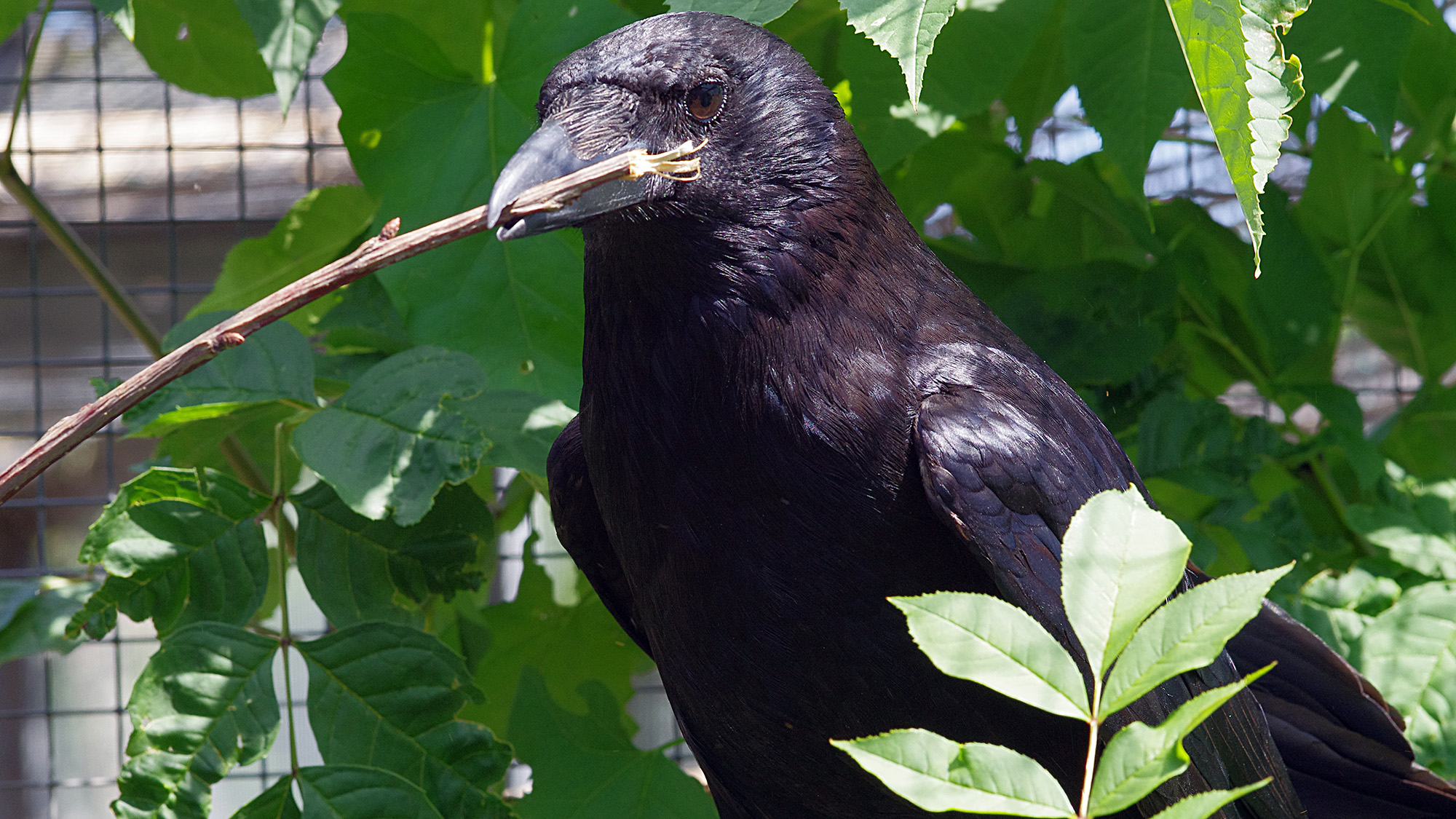
A close up of a black bird with a stick in its mouth

Crows use tools like tree branches to pick out bugs from hard-to-reach areas. (Image credit: Andreas Nieder)

KHC: You've also found that crows can perform statistical analysis. Tell me more about these findings and what you showed.

AN: We trained carrion crows [Corvus corone] to associate a series of arbitrary visual signs, colored geometric images displayed on a touch screen, with different reward probabilities. One sign might yield a food reward 90% of the time, another 70%, another 50%, and so on down to 10%. Importantly, the signs themselves carried no inherent meaning; the birds had to learn these probabilities through experience.

Once the birds had learned these sign-probability associations, we presented them with pairs of signs and asked them to choose one. To maximize their rewards, they should select the sign associated with the higher reward probability. The crows did exactly that. Even when confronted with many novel pairings, they reliably chose the statistically more favorable option.

This does not mean that crows perform formal statistics in the human sense. They are not calculating percentages or solving probability equations. However, the results show that they can extract probabilistic regularities from experience, store this information in memory, and use it flexibly to make reward-maximizing decisions under uncertainty. These are fundamental ingredients of statistical reasoning and are highly valuable in natural environments, where animals constantly have to make decisions based on incomplete information.

KHC: Have researchers tried similar tests on babies or young humans, and if so, how do we stack up?

AN: Yes. Developmental psychologists have conducted many related studies with infants and young children. Even before learning language, infants show sensitivity to quantities, numerical differences and simple probabilistic information. By around 4 years of age, children also display an intuitive understanding of empty sets.

What is striking is that the behavioral signatures observed in crows resemble those seen in preverbal human infants and nonhuman primates. Of course, human children eventually develop symbolic mathematics through language, education and culture, which takes them far beyond the abilities observed in animals.

KHC: Can these findings tell us anything about how the human understanding of math evolved?

AN: They suggest that some foundations of mathematics may predate humans by a very long evolutionary timescale. Humans did not invent numerical intuition from scratch. Rather, we appear to have inherited ancient cognitive systems that allow brains to estimate quantities, compare numbers, and represent concepts such as zero approximately.

The fact that crows and primates — two distantly related groups — show similar numerical abilities suggests that these capacities may emerge whenever evolution favors flexible intelligence. Human mathematics likely built upon these ancient cognitive foundations and then expanded dramatically through language, symbols and culture.

What is striking is that the behavioral signatures observed in crows resemble those seen in preverbal human infants and nonhuman primates.

Andreas Nieder

KHC: What's something a general audience might be surprised to learn about crows?

Many people are surprised to learn that crows are songbirds. Most people associate songbirds with melodic singers such as nightingales or blackbirds, not with the harsh cawing of a crow. Yet crows do learn a significant part of their vocal repertoire and are even known as apt imitators, even of human speech sounds — the internet is full of funny videos in which crows imitate human speech.

What makes this particularly interesting is that their vocalizations are not merely reflexive calls. In our experiments, we found that crows can exert volitional control over their vocal behavior. They can learn to produce vocalizations in response to arbitrary cues and withhold them when required, demonstrating a level of cognitive control over vocal output that is considered an important prerequisite for complex communication and, ultimately, language.

More recently, we showed that crows can even use their vocalizations to count. In a recent study published in [the journal] Science, we trained crows to produce a specific number of calls — between one and four — in response to visual or auditory cues. Remarkably, they not only generated the correct number of vocalizations but also appeared to prepare the intended number before they started calling. This suggests that they can represent numerical information and use it to guide a self-generated sequence of vocal actions.

Taken together, these findings show that crow vocalizations are far more sophisticated than most people assume. Their characteristic "caw" is not just a simple call — it can be brought under deliberate cognitive control and even used to express numerical information. For a bird, that is a remarkably advanced ability.

This interview has been edited for length and clarity.

Are you a bird nerd? Find out with our bird quiz!

  •  

Female Chickadees Select Male Partners Based on Cognitive Abilities

In a groundbreaking study recently published in eLife, researchers have unveiled compelling evidence that female North American mountain chickadees, a species traditionally characterized by socially monogamous mating systems, selectively seek out males exhibiting superior spatial cognitive abilities for extra-pair copulations. This revelation adds a fascinating dimension to our understanding of mating behavior and cognitive evolution in wild avian species, highlighting the intricate interplay between cognitive traits and reproductive strategies.

The study centers on mountain chickadees, non-migratory birds inhabiting temperate environments, renowned for their reliance on sophisticated spatial navigation to store and retrieve food caches. These birds’ survival depends heavily on their capacity for spatial learning and memory, making them an ideal model to investigate the role of cognitive function in mating preferences. By focusing on this species, the research addresses a critical question: do female birds prioritize cognitive skills of potential mates, beyond social pair bonds, to maximize reproductive success?

To quantify spatial cognition, the researchers engineered an innovative experimental setup involving ‘smart’ feeder arrays configured to dispense sunflower seeds at unique locations, individualized for each tagged chickadee. By systematically tracking how many errors each male made in locating their designated food source, the team accurately gauged spatial learning efficiency and memory retention. This mechanistic approach enabled an objective assessment of cognitive performance under naturalistic conditions, bypassing subjective behavioral observations.

Over the course of three breeding seasons, the research team meticulously documented parentage using genetic analyses to detect the prevalence and paternal identity of extra-pair offspring. Their findings revealed that nearly 70% of nests contained offspring sired by males other than the social partner, with approximately one-third of sampled chicks resulting from such extra-pair copulations. Notably, males demonstrating superior spatial cognition sired significantly more extra-pair young, suggesting these cognitive traits confer a conspicuous reproductive advantage.

Importantly, the data showed that males excelling in spatial tasks could sire between six and seven extra-pair offspring annually, dwarfed not by age but by cognitive prowess. This finding disrupts conventional assumptions that reproductive success correlates linearly with age or physical dominance, positioning advanced cognitive abilities as a pivotal determinant in extra-pair mating dynamics. Females appear to leverage these abilities when selecting mates beyond their social partner, potentially securing superior genetic quality for their progeny.

Further analyses indicated that males with higher cognitive scores did not suffer reproductive deficits within their social nests, maintaining comparable clutch sizes and chick mass relative to cuckolded males. Intriguingly, cognitive superiority was associated with heavier offspring overall, which likely translates to increased survival probabilities and long-term fitness benefits. Thus, spatial cognition appears to enhance male reproductive success both directly and indirectly.

Exploring female factors, the study unveiled a compelling pattern: females exhibiting lower spatial cognitive capabilities were more prone to have extra-pair young. This suggests a strategic response where cognitively limited females seek extra-pair copulations as an adaptive mechanism to compensate for their own deficiencies, thereby securing mates with enhanced spatial abilities. This bidirectional cognitive dynamic underscores complex sexual selection pressures governing mate choice.

Crucially, the likelihood of social males being cuckolded did not directly relate to their cognitive performance. Instead, female choice driven by assessing alternative males’ spatial skills determined extra-pair mating outcomes. This decouples social pair bond stability from cognitive prowess, signaling selective pressures favoring cognitive traits beyond social fidelity. It also emphasizes the nuanced cognitive evaluation females employ during mate selection processes.

These findings have profound implications for evolutionary biology, particularly in understanding how cognitive characteristics influence sexual selection. By demonstrating that spatial cognitive abilities contribute to reproductive success and offspring viability, the study offers robust empirical evidence supporting natural selection acting on cognitive traits in natural populations, reinforcing the theory that cognitive evolution is intertwined with reproductive strategies.

Moreover, the research methodology blending fieldwork, engineered cognitive assessments, and genetic parentage analysis exemplifies a cutting-edge interdisciplinary approach. This allows researchers to unravel the subtle yet consequential behavioral and genetic factors shaping population dynamics in wild animals, paving the way for future studies investigating cognition’s role across diverse taxa.

Senior author Vladimir Pravosudov summarizes the significance: “Our results demonstrate that sexual selection extends into cognitive domains, with females preferring males whose spatial skills enhance offspring survival. This contributes to shaping cognitive evolution in species where spatial memory directly influences fitness.” The study thereby enriches our comprehension of how natural and sexual selection jointly sculpt complex traits like cognition.

In conclusion, the evidence presented calls for a paradigm shift in considering cognitive traits as central to mating strategies and reproductive fitness. This research not only deepens insights into mountain chickadee behavior but also broadens the evolutionary narrative, spotlighting cognition’s integral role in survival and reproductive success. Future explorations may unravel similar patterns in other species, expanding our grasp of the cognitive dimensions of sexual selection.

Subject of Research: Animals

Article Title: Male chickadees with better spatial cognition sire more extra-pair young

News Publication Date: 16-Jun-2026

Web References: http://dx.doi.org/10.7554/eLife.110905.1

Image Credits: Vladimir Pravosudov (CC BY 4.0)

Keywords: Ecology, Animals, Birds, Cognition, Spatial memory, Evolutionary biology, Natural selection

  •  

Male bowerbirds prefer to dazzle females with bright human-made items

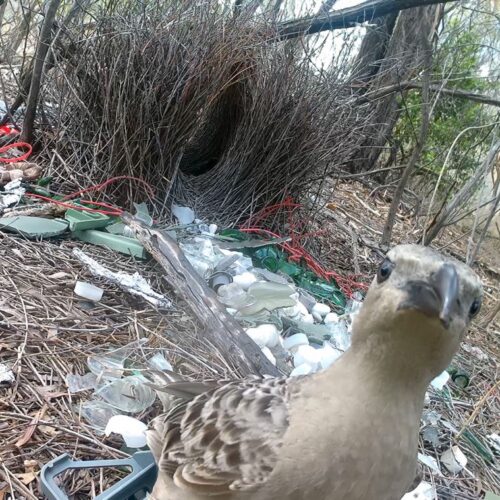
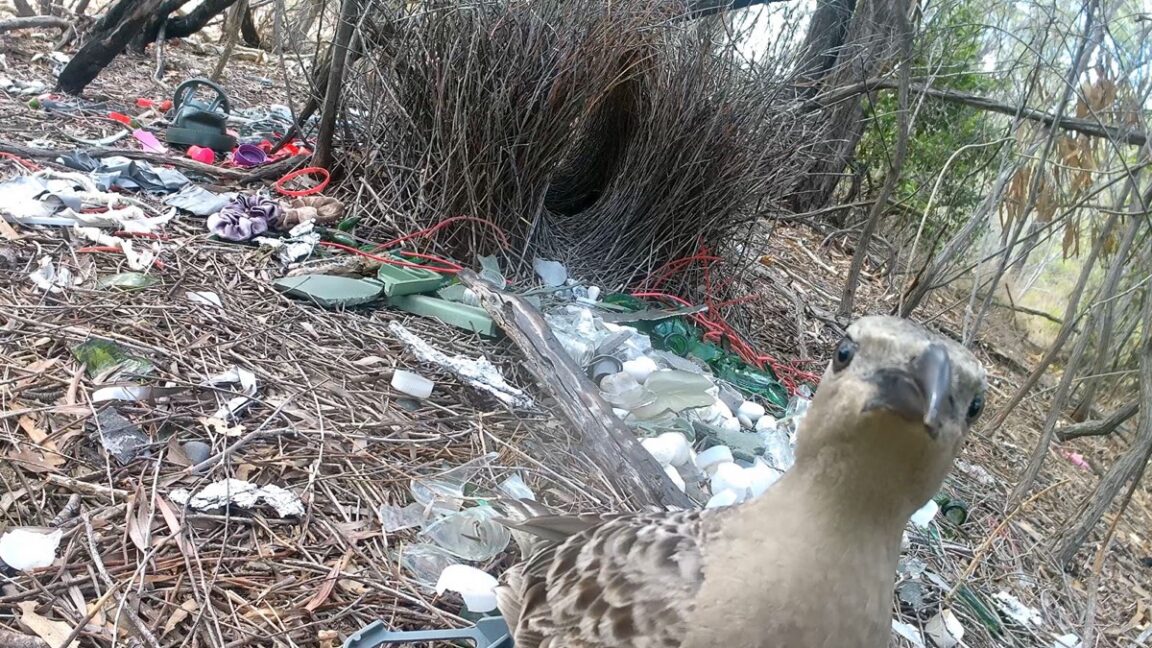
Male bowerbirds are notorious for their complex mating rituals. They build intricate tunnels out of twigs—the bowers from which they get their name—and then decorate them with random colorful items gleaned from the environment. When a female of the species shows up to check out a male's fancy digs, the male tosses his shiniest objects in her direction and shows off his plumage in hopes of impressing her.

According to a new paper published in the journal Royal Society Open Science by University of Exeter scientists, urbanization and the associated growing availability of brightly colored human-made items have had a significant impact on courtship display behavior in Australian male bowerbirds. There are marked differences in the choice of decorations for bowerbirds in urban versus rural environments. This might be because urban birds simply have greater access to the items than their rural counterparts, since birds in both environments show a marked preference for human items.

The University of Exeter researchers monitored the bowers of 61 male great bowerbirds in two sites in Australia's northern Queensland—the rural Dreghorn Cattle Station and the urban Townsville City—during the prime breeding season (September–December 2023). Then they photographed the bower decorations in situ from above in both visible and UV light (bowerbirds can see in the UV range), using an umbrella to create diffuse lighting.

Read full article

Comments

© Caitlin Evans

  •  

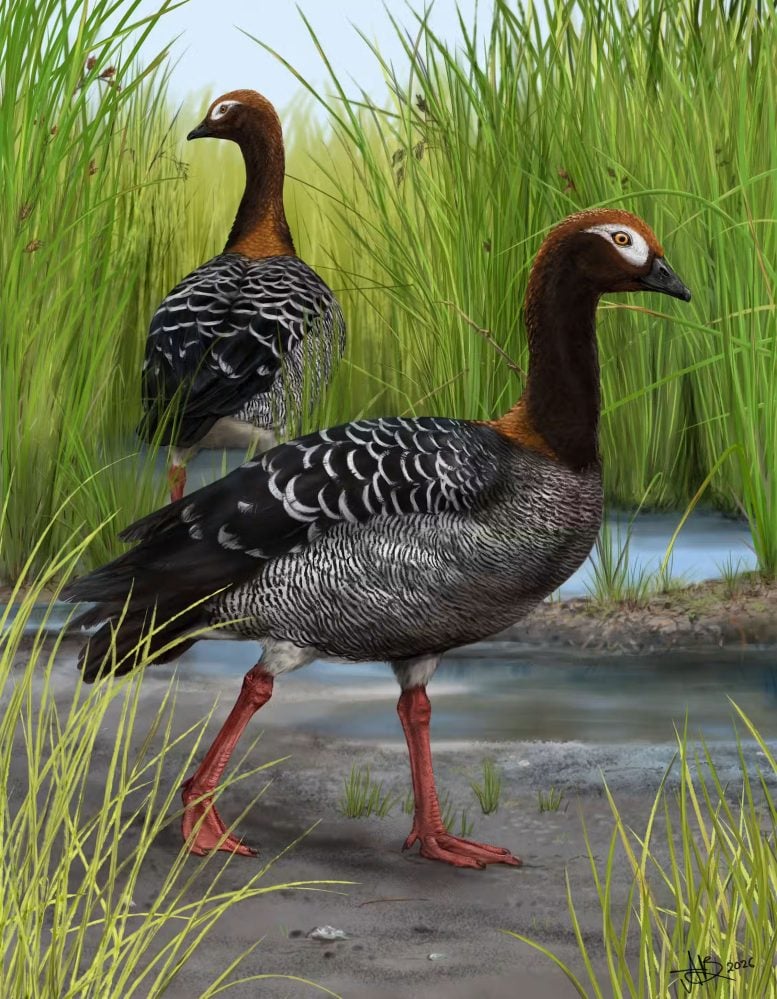
Ancient Goose Fossil Challenges Long-Held Theories About New Zealand Birds

Metechen lutiA newly described fossil goose shows that New Zealand’s bird history involved repeated arrivals, extinctions, and rapid island evolution. A rare fossil goose found in the remains of an ancient lake in Central Otago is changing how scientists understand the bird history of Aotearoa New Zealand, according to a researcher at the University of Otago [...]
  •  
❌