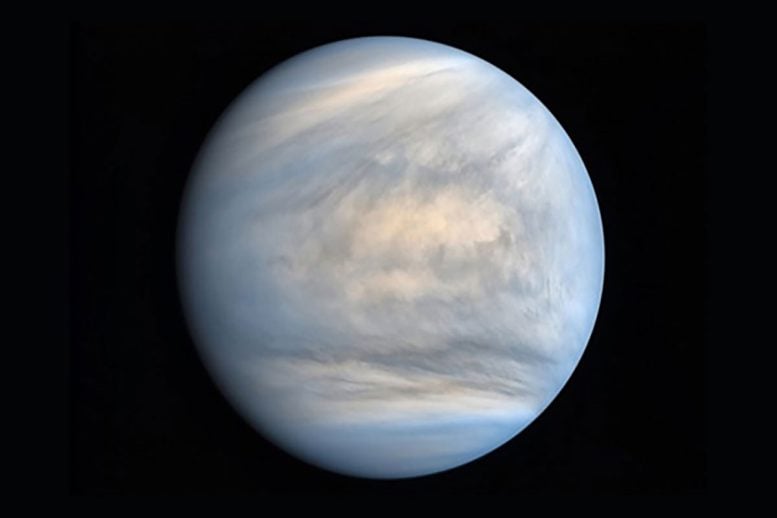
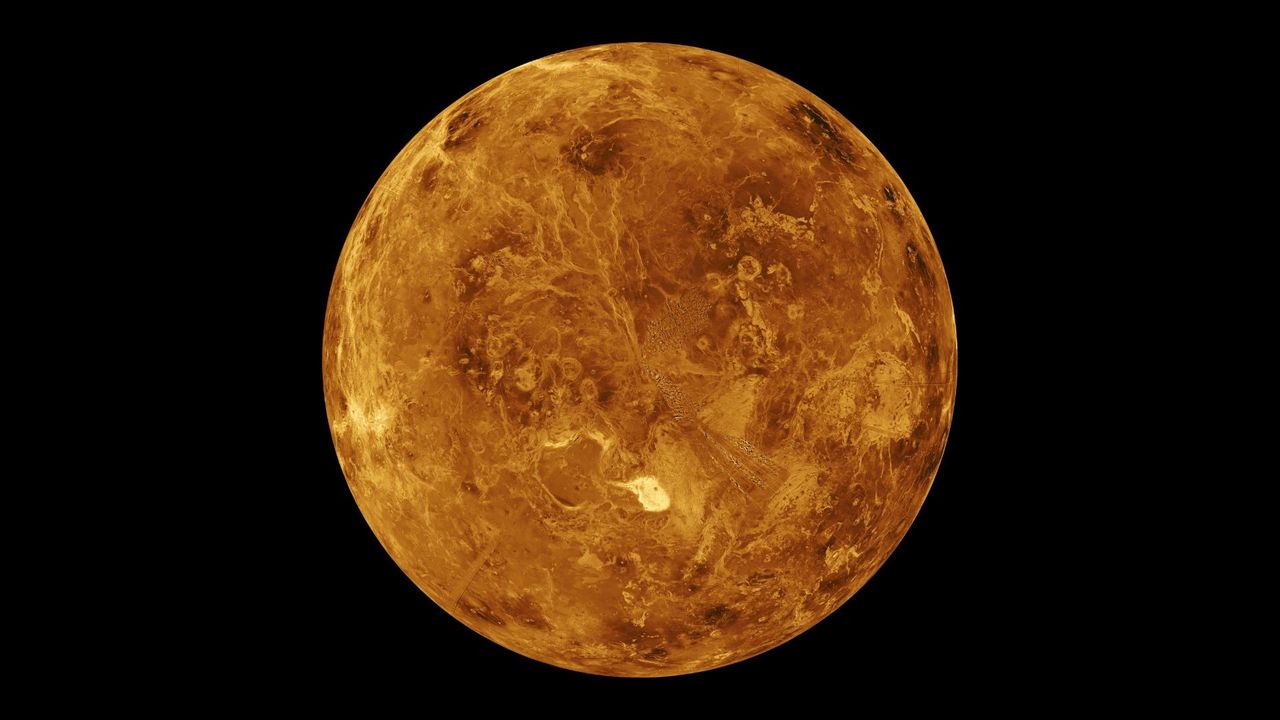
Demain soir, le spectacle ne sera pas sur le terrain. À la tombée de la nuit, Vénus aura rendez-vous avec la Lune. Que vous y voyiez un symbole ou pas, cette conjonction vaudra bien le coup d’œil.
Vénus est la seule planète du Système solaire à tourner aussi lentement et dans le sens opposé à celui de la plupart de ses voisines. Selon une nouvelle étude, cette étrange rotation pourrait être l'héritage d'un impact titanesque survenu aux débuts du Système solaire.
Ce soir, deux points brillants dans le ciel pourraient attirer votre regard : deux planètes presque collées l’une à l’autre. De quoi vous faire patienter un peu jusqu’à un autre rendez-vous avec la Lune dans quelques jours.
A disappearing Venus, a planet parade, and the start of summer make June a must-see month for skywatchers. June brings several notable skywatching events, including a close meeting between Venus and Jupiter, a rare occasion when the Moon moves in front of Venus, the arrival of astronomical summer, and the return of favorite deep-sky sights. [...]
NASA’s Parker Solar Probe captured the first visible light images of Venus from space. The images, taken during two recent flybys, show a faint glow from the surface, revealing features like continents, plains, and plateaus. The images could help scientists learn about Venus’s geology and mineral make-up and understand why it became inhospitable while Earth […]
Models suggest that impact-ejected material from Earth could reach Venus’ clouds and potentially survive there briefly. Panspermia is the idea that life, or the ingredients needed for life, can move through space on asteroids, comets, and other objects. If life’s building blocks appear on one planet, a powerful impact could blast material from its surface [...]

 Login